
Hello, I’m Taka.
In this article, I’ll share my experience from the first day of my walking pilgrimage.
I’ve put together detailed information on the route, distance, what I carried, and what I actually felt along the way.
I hope this will be helpful for anyone planning to start the pilgrimage.
Day 1 Route & Itinerary
Route
Itinerary
| Point | Name (Google Maps) | Distance to Next (km) | Walking Time (hr) |
| A | Bando Station | 1.0 | 0.3 |
| B | Temple 1: Ryozenji (MAP) | 1.4 | 0.5 |
| C | Temple 2: Gokurakuji (MAP) | 2.6 | 0.6 |
| D | Temple 3: Konsenji (MAP) | 4.0 | 1.0 |
| E | Zenko-yado (basic lodging): Mizobuchi Komuten |
Total: approx. 9 km (a manageable distance for the first day)
Start of the Walking Pilgrimage | Arrival at Bando Station
April 25th. It was a sunny day—perfect for a walking pilgrimage.
The journey begins at Bando Station on the JR local line, the nearest station to Temple 1, Ryozenji.
I arrived at around 1:00 PM.
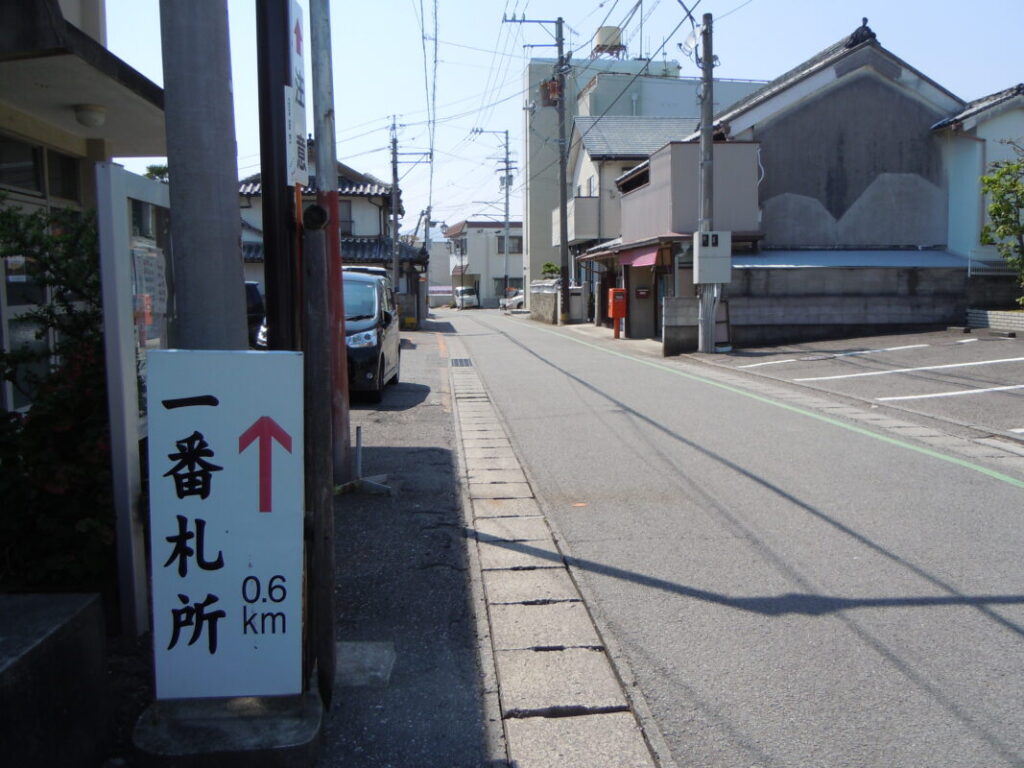
From here, the pilgrimage finally begins.
A mix of uncertainty about what lies ahead and curiosity about the unknown filled my mind.
It was a feeling I had never experienced before.
Yet somehow, my curiosity outweighed my anxiety.
Deep down, a sense of excitement was stronger than anything else.
Temple 1: Ryozenji | Preparing My Gear and My First Chanting
After about a 15-minute walk from Bando Station,
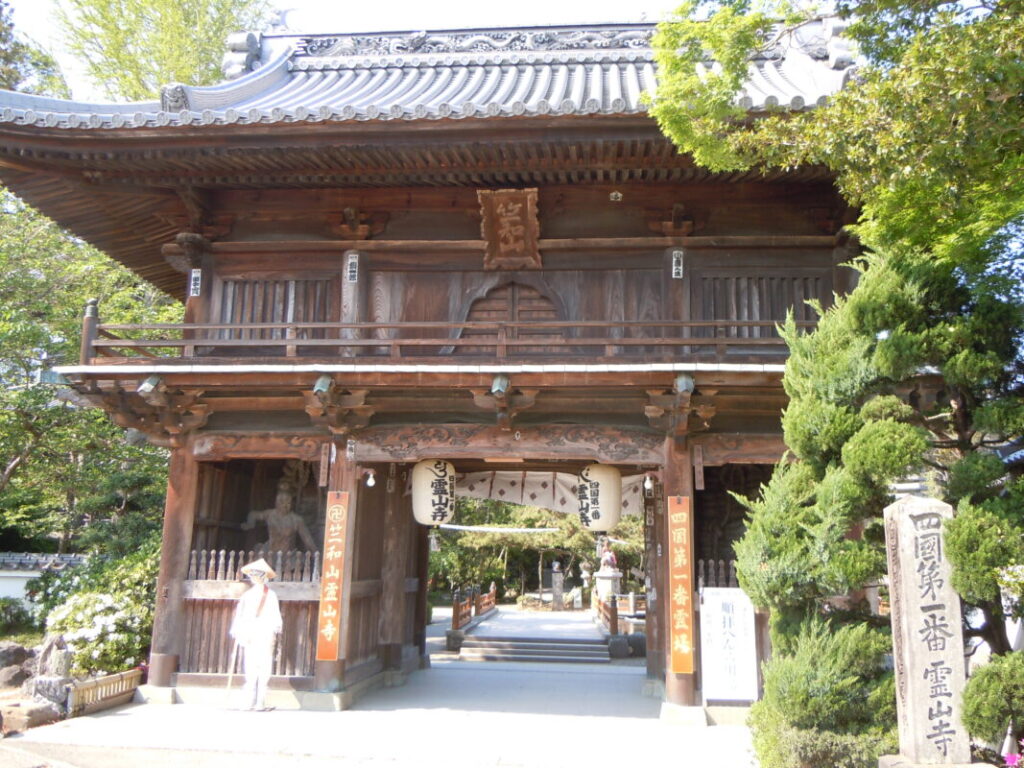
I arrived at Temple 1, Ryozenji.
This temple is known as the starting point of the Shikoku Pilgrimage.
History of Ryozenji
Ryozenji is the first temple of the Shikoku 88 Temple Pilgrimage (approximately 1,460 km in total) and is known as the “Temple of Awakening,” marking the official starting point of the journey. It is said to have been founded during the Nara period by the monk Gyoki, under the imperial order of Emperor Shomu.
In 815 (Kōnin 6) during the Heian period, Kobo Daishi (Kukai) is believed to have trained here for 37 days. During this time, he prayed for the establishment of a sacred pilgrimage to purify the 88 earthly desires of people. It is said that he envisioned Shakyamuni Buddha preaching on Vulture Peak in India, which inspired the name “Ryozenji” (Sacred Mountain Temple).
Later, the temple was destroyed by fire during the Warring States period due to the forces of Chosokabe Motochika, but was rebuilt by Hachisuka Mitsutaka, lord of the Awa domain. It suffered further damage in fires during the Meiji period, so many of the current buildings are relatively modern.
Highlights
Ryozenji plays an important role as the starting point of the pilgrimage, where pilgrims prepare themselves mentally for the journey ahead.
Key highlights include:
- Tahoto Pagoda (built during the Oei era, housing statues of the Five Wisdom Buddhas)
- Meiji Garden (a symbolic garden representing the beginning of the pilgrimage)
It is a place where pilgrims take their very first step—both physically and spiritually—on the path of the pilgrimage.
Getting Your Pilgrimage Gear Ready
At Ryozenji, you can find everything you need for the pilgrimage.
I also purchased a full set of gear here.
Main items:
- Sedge hat (Sugegasa)
- White robe (top and bottom)
- Zuta bag
- Kongozue (walking staff)
- Candles and incense
- Osamefuda (name slips)
- Nokyocho (stamp book)
- Sutra book
Even if it’s your first time, you can prepare everything here with confidence.
I chose a medium-sized hat, as I had read in advance that larger ones tend to catch on your backpack.
However, once you have everything, the weight does add up.
For a walking pilgrimage, the most important thing is to keep your pack as light as possible.
If you plan to buy your gear on-site, it’s a good idea to consider the total weight, including what you’re already carrying.
That said, there’s no need to worry if you forget something.
You can purchase necessary items at other temples as well, and you don’t have to get everything at once.
It’s often said that a Kongozue (walking staff) can wear down by several centimeters over the course of the pilgrimage.
Mine is still brand new and reaches up to my chest—but I wonder how short it will become by the time I complete the journey.
I’ve covered the gear in more detail in a separate article.
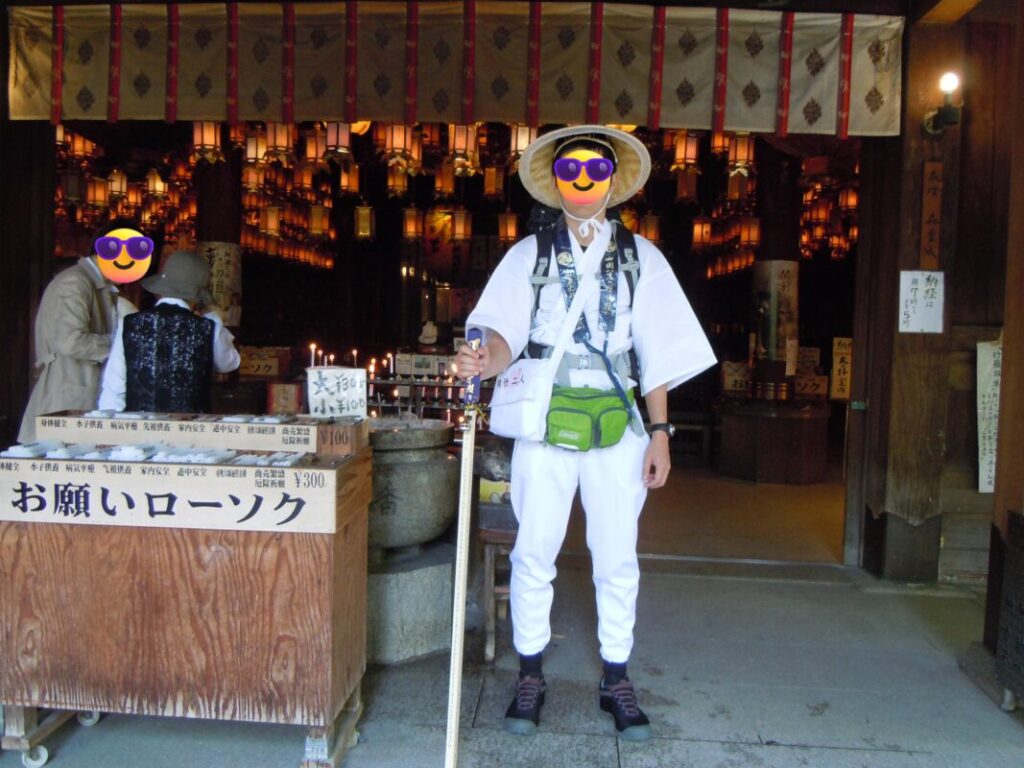
My First Chanting Experience (Heart Sutra)
Although I am not a Buddhist, I decided to follow the traditional pilgrimage practices when visiting each temple.
Here is the basic flow of worship at a temple:
1. Bow at the Sanmon Gate
Start by making a small bow in front of the entrance gate.
2. Purify yourself at the water pavilion
Cleanse your hands and mouth before entering the temple grounds.
3. Ring the bell
Ring the bell before your prayer.
Be mindful of the time and nearby residents.
4. Pray at the Main Hall (Hondo)
- Offer an Osamefuda (name slip)
- Light candles and incense
- Make a small donation
- Chant the sutra
5. Pray at the Daishi Hall
Follow the same steps as at the Main Hall.
6. Receive a stamp at the Nokyo Office
After your visit, have your stamp book (Nokyocho) signed and stamped.
7. Bow at the gate before leaving
Make one final bow as you exit the temple.
Notes & Tips
- Always ring the bell before praying
Ringing it afterward (“modori-gane”) is said to diminish spiritual benefits. - Be careful during busy times at the Nokyo Office
If it’s crowded (e.g., tour groups), you can leave your stamp book there in advance.
Chanting the Heart Sutra for the first time was far more difficult than I expected.
I struggled especially with the breathing rhythm, and it felt quite exhausting.
I remember thinking:
“Will I ever get used to this…?”
I’ve explained the temple etiquette in more detail in a separate article.
Departing at 2:30 PM | Heading to Temple 2: Gokurakuji
After finishing my preparations and prayers, I left Ryozenji at 2:30 PM.
It’s about 1.5 km to Temple 2, Gokurakuji.
The road is easy to follow, and there’s little chance of getting lost.
Encounters Along the Way
On the road from Ryozenji to the next temple,
I met two middle-aged women dressed in white pilgrimage attire, each holding a Kongozue (walking staff).
We exchanged a brief greeting, and they smiled and said,
“We’re also starting the pilgrimage on foot.”
Knowing that there were others beginning the same long journey gave me a quiet sense of reassurance.
Tokushima is known as the “Dōjō of Awakening”, the place where the pilgrimage begins.
Each person walks this path with their own thoughts and reasons.
Yet everyone carries something in their heart as they take their first steps.
It was a moment when I truly felt that shared atmosphere.
Arrival at Temple 2: Gokurakuji
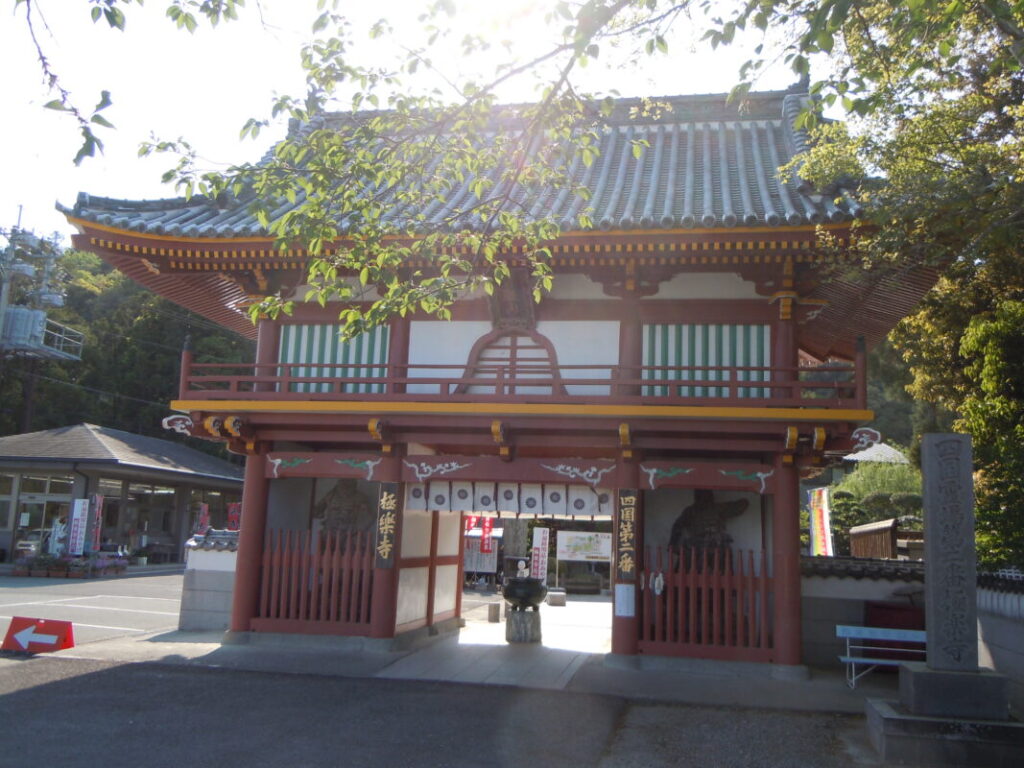
I arrived at around 3:00 PM.
Gokurakuji has a calm and peaceful atmosphere,
and I could feel the tension of the first day starting to ease.
History of Gokurakuji
Gokurakuji is said to have been originally founded by the monk Gyoki. Its true origin, however, is associated with Kobo Daishi (Kukai), who, in 815 (Kōnin 6), is believed to have trained here for 21 days while reciting the Amida Sutra. On the final day of his practice, Amida Nyorai is said to have appeared before him, and Kobo Daishi carved that image as the temple’s principal deity.
The statue of Amida Nyorai was said to emit a powerful light that reached as far as the waters off Naruto. According to legend, this light interfered with fishing, so a small hill was built to block it—giving rise to the temple’s mountain name, “Nisshōzan” (Sun-Illuminating Mountain).
Like many temples, Gokurakuji was destroyed during the Warring States period by the forces of Chosokabe Motochika. It was later rebuilt in 1659 (Manji 2) with the support of Hachisuka Mitsutaka, lord of the Awa domain.
Temple Grounds & Features
Surrounded by mountains on three sides, the temple grounds are शांत and serene. Beyond the Niomon Gate lies a garden that evokes the image of the Pure Land. Climbing the stone steps leads to the Main Hall, with the Daishi Hall located further inside.
The statue of Kobo Daishi in the Daishi Hall is worshipped as the “Anzan Daishi”, believed to grant safe childbirth.
Within the grounds stands the “Chōmei Cedar,” a sacred tree said to be around 1,200 years old. It is believed to bring blessings for family safety, recovery from illness, and longevity, and is designated as a natural monument of Naruto City.
Highlights
- Bussokuseki (Buddha’s Footprint Stone)
- Wish-granting Jizo Statue
- Principal Image: Amida Nyorai (hidden Buddha)
Gokurakuji is a tranquil temple where nature and faith exist in harmony, offering a peaceful atmosphere for pilgrims.
Temple 3: Konsenji | The Goal of Day One
Next, I headed to Temple 3, Konsenji.
The distance is about 2.6 km, and like the previous stretch, the road is easy to follow, allowing for a smooth arrival.
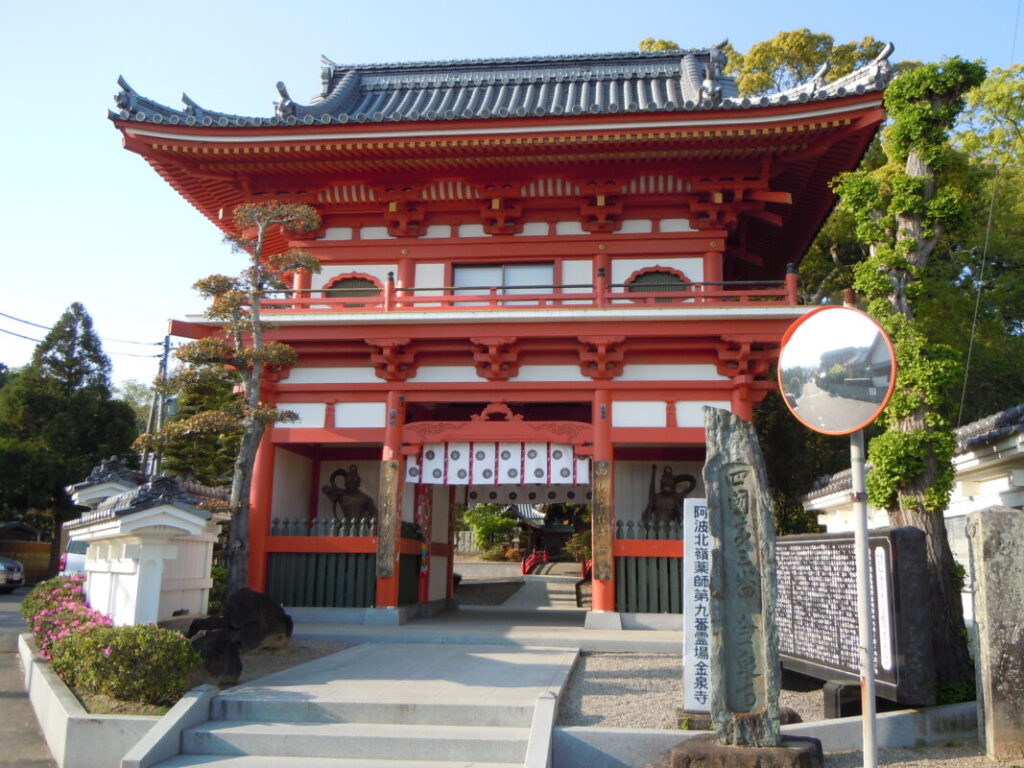
History of Konsenji
Konsenji was founded during the Nara period by the monk Gyoki, under the imperial order of Emperor Shomu. Originally, it was called “Kōmyōji” (Temple of Golden Light), and enshrined a triad centered on Shakyamuni Buddha, accompanied by Amida Nyorai and Yakushi Nyorai.
During the Heian period, Kobo Daishi (Kukai) visited the area and, seeing the people suffering from drought, dug a well. Sacred water is said to have sprung forth, believed to bring longevity. This “golden well” gave rise to the temple’s current name, Konsenji (“Golden Spring Temple”).
Later, Emperor Kameyama (as a retired emperor) stayed here and ordered the construction of a hall modeled after Sanjusangendo, enshrining a statue of Senju Kannon. The temple’s mountain name was also changed to “Kikōzan.” From that point on, the temple developed strong ties with the imperial family, and the mausoleum of Emperor Chōkei is said to be located within the grounds.
It is also believed that Minamoto no Yoshitsune stopped here to pray for victory during the Genpei War.
Temple Grounds & Features
The temple grounds contain several notable sites, including:
- Jibo Kannon Koyasu Daishi, associated with safe childbirth, child-rearing, and good fortune
- Benkei Stone, connected to the legendary warrior monk Benkei
With its deep historical roots and strong spiritual significance, Konsenji attracts many visitors seeking blessings for good fortune, safe childbirth, and family well-being.
Highlights
- Sarasoju (Sala tree)
- Kumambachi (large carpenter bees often seen around the grounds)
Konsenji is a temple rich in both history and legend, offering many points of interest for pilgrims and visitors alike.
Heading to a Zenko-yado | Fatigue and the Evening Road
The Nokyo (stamp) office is open from 8:00 AM to 5:00 PM.
After that, you can no longer receive temple stamps.
So, I decided to end the day at Konsenji.
Now, it was time to find a place to stay for the night.
Since it was my first day, I chose to head to a Zenko-yado I had researched in advance.
What is a Zenko-yado?
A Zenko-yado is a place—often a private home or simple lodging—where pilgrims of the Shikoku 88 Temple Pilgrimage can stay for free or at a very low cost.
It is part of Shikoku’s long-standing culture of “osettai” (acts of kindness toward pilgrims).
These acts include:
- Offering food
- Providing a place to rest
- Letting pilgrims stay overnight
Such actions are considered a way of accumulating good deeds (zenko), which is why these lodgings are called Zenko-yado.
The Evening Road | Fatigue Setting In
By the time it was past 5:00 PM,
I was still walking, facing the setting sun.
I had only walked about 10 km that day.
On paper, it doesn’t sound like much.
But carrying a 10 kg backpack is not something you do in everyday life.
Little by little, I began to feel fatigue in my shoulders and legs.
Even so, I kept moving forward—
step by step, toward my next destination.
This day ended at Temple 3.
Rather than pushing too hard from the beginning,
I felt it was important to take it slow and gradually get used to the rhythm of the pilgrimage.
Encounter at the Lodging | The Moment My Anxiety Faded
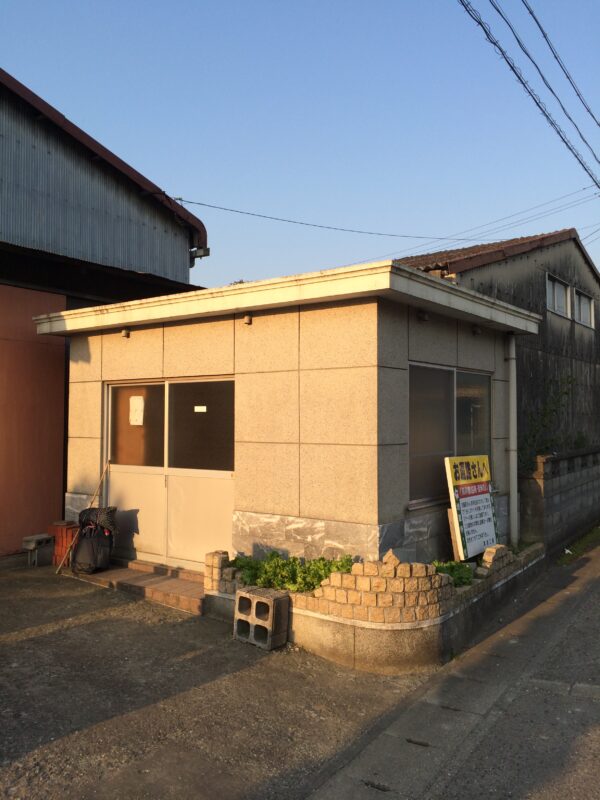
I arrived at the Zenko-yado “Mizobuchi Komuten.”
It’s a self-service lodging where you place 300 yen in a payment box.
Electricity and water are available, but there is no Wi-Fi.
A simple six-tatami room would be my home for the night.
There was already another guest inside—a woman in her 70s.
When we started talking, I learned that she had already completed the entire pilgrimage on foot.
As I listened to her advice and stories from the road,
the anxiety I had been feeling since the first day slowly began to fade.
Strangely, the path ahead started to feel brighter.
I couldn’t help but wonder if this was the guidance of Kobo Daishi.
Dinner was simple—rice balls and sweet bread I had picked up at a convenience store along the way.
Even in April, the night air was colder than expected.
Wrapped in my sleeping bag, I let myself sink into the quiet of the night.
Summary | End of Day 1
The first day of the walking pilgrimage was a unique mix of anxiety and excitement.
Here are the key takeaways from my experience:
- Don’t push too hard on the first day — visiting 3–4 temples is enough
- Keep your luggage as light as possible
- Be mindful of Nokyo office hours (8:00 AM – 5:00 PM)
- Zenko-yado are incredibly helpful, but good manners are essential
Above all,
the encounters and atmosphere along the way are something you can only truly understand by walking it yourself.
It was only half a day into the pilgrimage,
yet it already felt like a day full of meaningful experiences.
FAQ
- QCan foreigners do the Shikoku pilgrimage?
- A
Yes, absolutely. While walking, I met many international pilgrims along the route.
- QCan I do the pilgrimage even if I’m not Buddhist?
- A
Yes, no problem at all. The pilgrimage is open to everyone, regardless of religion. Many people walk it for sightseeing or personal reflection.
- QCan a woman walk the pilgrimage alone?
- A
Yes, it’s possible. I met solo female pilgrims, international travelers, and even elderly women in their 70s. With proper planning and basic safety precautions, it can be done safely.
- QDo I have to walk the entire route?
- A
No. Many people travel by car or tour bus—in fact, that’s quite common. The meaning and spiritual benefits of the pilgrimage do not significantly depend on the method.
- QDo I need to complete it all at once?
- A
No. You can complete the pilgrimage over multiple trips. It’s important to go at your own pace and continue in a way that suits you.
Comments