
Hello, I’m Taka.
In this article, I’ll share my experience from Day 2 of the walking Shikoku Pilgrimage.
For many pilgrims, the first day often ends up being only a half-day of walking.
Because of that, Day 2 is usually considered the real start of the journey.
Day 2 is the first major challenge, as the walking distance increases and foot pain starts to appear.
If you plan to walk around 30 km, managing your pace and taking proper care of your feet becomes especially important.
In this guide, I’ve summarized the common issues you may face on Day 2—especially foot pain—and how to deal with them. I hope you find it helpful.
- Route & Itinerary for Day 2 of the Walking Shikoku Pilgrimage (Tokushima Temples 4–10)
- Day 2 Begins : The Pilgrimage Truly Starts Here
- Leaving the Zenkonyado : Heading to Temple 4, Dainichi-ji
- Heading to Temple 5, Jizo-ji : The Most Common Deity in Japan
- Heading to Temple 6, Anraku-ji : Famous for Its Onsen
- No.7 Jūraku-ji – 20 Minutes on Foot from Anraku-ji
- Heading to Kumagai-ji (Temple 8) – Feeling a Strain in My Legs
- To Hōrin-ji (9th Temple) : Bustle of Group Visitors
- Heading to the Day’s Final Temple: No.10 Kirihata-ji
- After Today’s Pilgrimage : Heading to the Lodging
- Summary: Tips for Surviving the Second Day of the Walking Pilgrimage
- Frequently Asked Questions (FAQ)
Route & Itinerary for Day 2 of the Walking Shikoku Pilgrimage (Tokushima Temples 4–10)
Day 2 Route (Tokushima Temples 4–10)
The route is simple—just follow Prefectural Route 12 heading west.
Itinerary
| Point | Name (Google Maps) | Distance to Next (km) | Walking Time (hrs) |
| A | Zenkonyado Mizobuchi Construction | 5.0 | 1.4 |
| B | Temple 4: Dainichi-ji (MAP) | 2.0 | 0.5 |
| C | Temple 5: Jizo-ji (MAP) | 5.3 | 1.3 |
| D | Temple 6: Anraku-ji (MAP) | 1.2 | 0.3 |
| E | Temple 7: Juraku-ji (MAP) | 4.2 | 1.2 |
| F | Temple 8: Kumadani-ji (MAP) | 2.4 | 0.6 |
| G | Temple 9: Horin-ji (MAP) | 3.8 | 1.0 |
| H | Temple 10: Kirihata-ji (MAP) | 9.0 | 2.5 |
| I | Zenkonyado Kamojima Onsen |
Total: Approx. 32 km
This is quite a challenging distance for beginners.
- The typical daily distance for pilgrims is around 20–25 km
- Pushing too hard may lead to having to quit as early as Day 2
Day 2 Begins : The Pilgrimage Truly Starts Here
April 26th, sunny. Today marks Day 2 of my walking pilgrimage.
Since I only started walking in the afternoon yesterday, today feels like the real beginning.
I had little to no fatigue left from the previous day, and my body felt great.
With the weather on my side, I set off feeling positive and ready to walk a solid distance again.
Heading to the Pilgrimage’s Toughest Stage Tomorrow : Destination: Kamojima Onsen
Tomorrow, I will head toward one of the most challenging sections of the Shikoku pilgrimage — Temple 12, Shosan-ji.
This area is known as “Henro Korogashi”, a term used to describe steep and demanding mountain paths where pilgrims might feel like they could “tumble down.” In other words, it refers to some of the toughest parts of the entire route.
These difficult sections are scattered throughout the pilgrimage.
Since this route involves long and strenuous mountain trails, it’s best to stay as close to Shosan-ji as possible.
With that in mind, I decided to make Kamojima Onsen, located just before Temple 11, my destination for today.
What is Kamojima Onsen? : A Free Stay Option for Pilgrims
Kamojima Onsen is a hot spring facility, but it also has a simple lodging hut on its grounds.
What makes it unique is that you can stay overnight for free if you use the hot spring (500 yen).
For walking pilgrims, this is an incredibly helpful option, and many pilgrims take advantage of it.
It’s also an important stop where you can rest and recover properly before taking on the climb to Shosan-ji the next day.
Leaving the Zenkonyado : Heading to Temple 4, Dainichi-ji
On Day 2, I woke up at 5:30 a.m., got ready quickly, and left the lodging at 6:00.
The woman I shared the room with was still asleep, so I quietly slipped out.
My first destination was Temple 4, Dainichi-ji, located halfway up a mountain at an elevation of about 100 meters.
Climbing uphill with a 10 kg backpack on my back was more physically demanding than I had expected.
However, by making good use of my walking stick, I was able to take my time and fully enjoy the fresh, crisp mountain air of the early morning.
Early Morning at the Temple : A Quiet Moment of Prayer
I arrived at Dainichi-ji at 7:00 a.m.
At that early hour, I was the only one in the temple grounds.
There was no sign of anyone else — just a deep, peaceful silence that filled the air.
Taking in the atmosphere, I slowly offered my prayers.
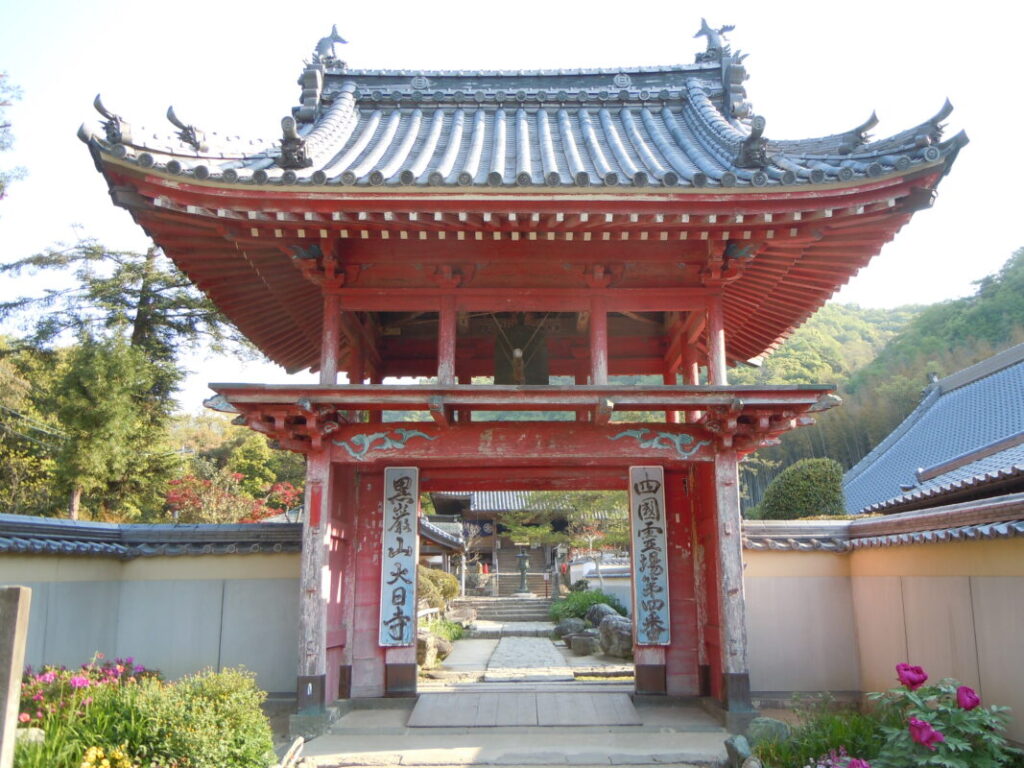
History of Dainichi-ji
Dainichi-ji is a temple complex facing south, situated along the Kurotani River in the Asan Mountain Range.
It is said to have been founded in 815 by Kūkai (Kobo Daishi), who, after experiencing a vision of Dainichi Nyorai (Mahāvairocana), carved a small statue of the deity measuring about 5.5 cm.
The temple is also locally known as “Kurotani-dera,” and this name is believed to be the origin of the mountain’s name, Kuroiwa-san.
Highlights of the Temple Grounds
- Seated Wooden Statue of Dainichi Nyorai
The principal image of the temple, kept hidden from public view (hibutsu), and believed to have been created around 1407. - Main Hall (Dainichi-do)
Built in 1649 during the early Edo period. - Kobo Daishi Hall
Constructed in 1863, toward the end of the Edo period.
Dainichi-ji is a prestigious Esoteric Buddhist temple, featuring a layout that makes use of the natural terrain of the Kurotani valley, along with historically significant structures.
Heading to Temple 5, Jizo-ji : The Most Common Deity in Japan
After descending the mountain I had just climbed, I continued on toward Temple 5, Jizo-ji, about 2 km away.
Jizo-ji is located along the same route I had taken on my way to Dainichi-ji, making it easy to follow.
The path is straightforward, so there’s little chance of getting lost.
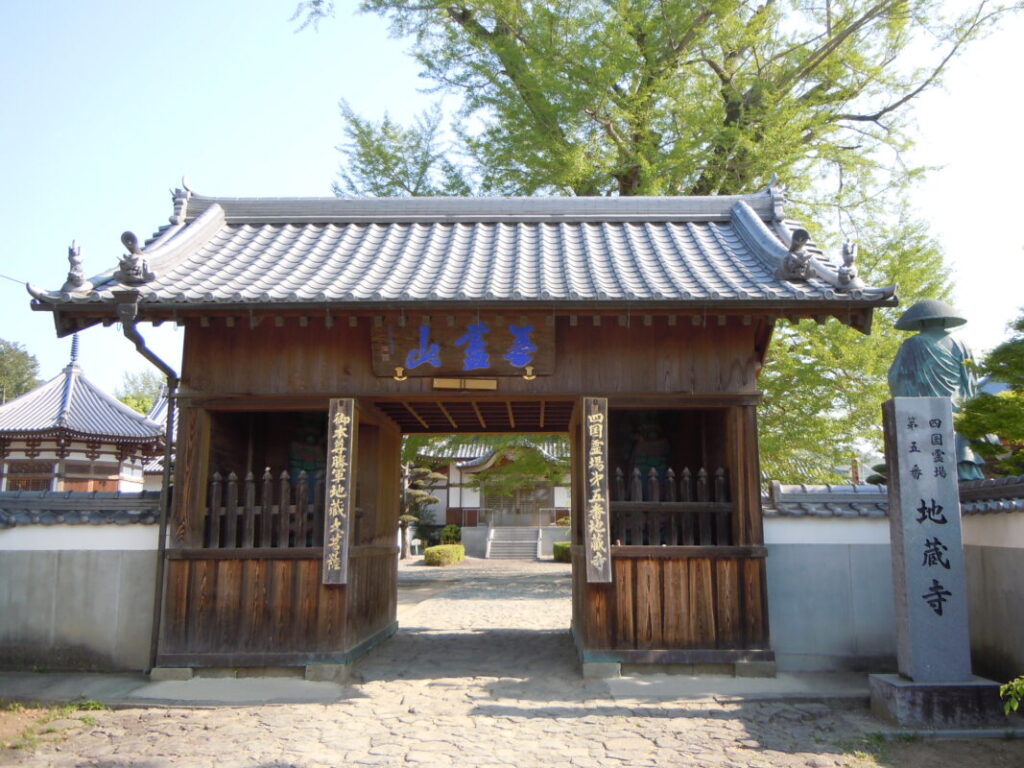
The Main Deity of Jizo-ji : Who is Jizo Bosatsu?
The principal deity of Jizo-ji is Jizo Bosatsu (Kṣitigarbha).
Jizo is considered one of the most commonly found Buddhist figures in Japan.
You can see Jizo statues in many places — along roadsides, in the mountains, and within temple grounds.
Jizo Bosatsu is widely believed to protect children, travelers, and the souls of the deceased.
For this reason, Jizo has been deeply loved and worshipped by people throughout Japan for centuries.
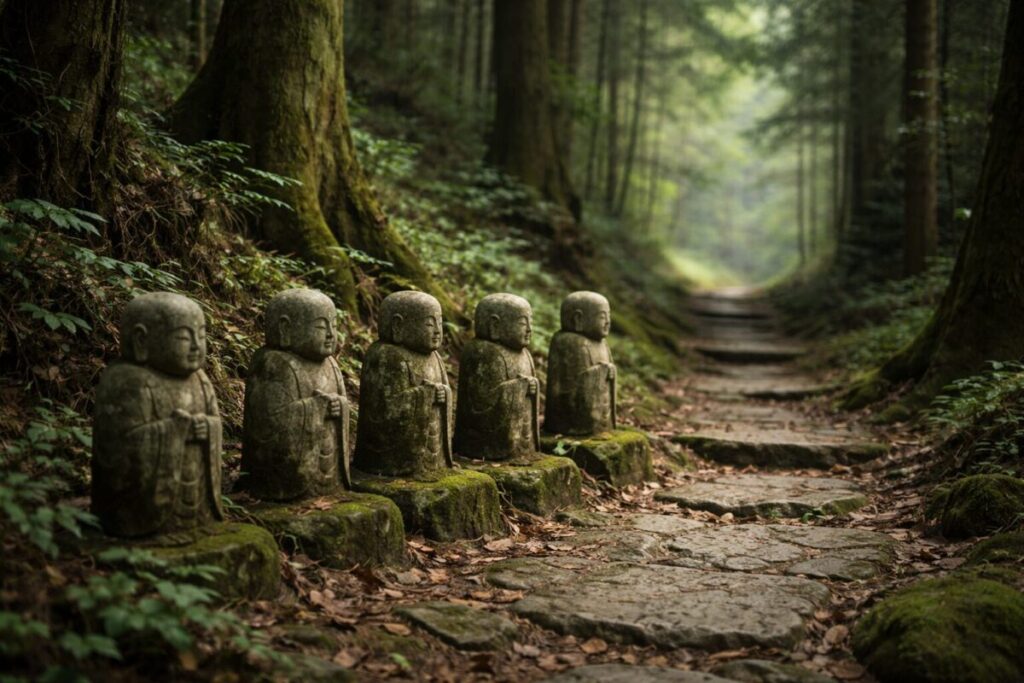
History of Jizo-ji
Jizo-ji is said to have been founded around 821 by Kūkai (Kobo Daishi), under the imperial order of Emperor Saga.
Kūkai himself is believed to have carved a small statue of Shōgun Jizo Bosatsu (approximately 5.5 cm), which was enshrined as the temple’s principal image.
Highlights
- Shōgun Jizo Statue
- Awashima Hall
- Suikinkutsu (Water Harp Cave)
Jizo-ji is an ancient temple with a long history, where visitors can feel a deep sense of faith alongside the beauty of nature.
Heading to Temple 6, Anraku-ji : Famous for Its Onsen
It’s about 5 km from Jizo-ji to Temple 6, Anraku-ji.
You retrace part of the route and then continue west along Prefectural Route 12, making it easy to follow without getting lost.
✅ Reliable Wayfinding on the Pilgrimage Route
The Shikoku pilgrimage trail is well-marked with directional signs and stickers placed along the route.
You’ll find them on utility poles, guardrails, and even in the mountains. By simply following the arrows, it’s easy to stay on track.
Once you get used to it, you can continue the pilgrimage without relying on a smartphone, using only these markers.
On the other hand, if you stop seeing the signs, it’s a good indication that you may have strayed off the route — so be careful.
Personally, I was able to complete this section using just a map and a compass, without relying on my smartphone.
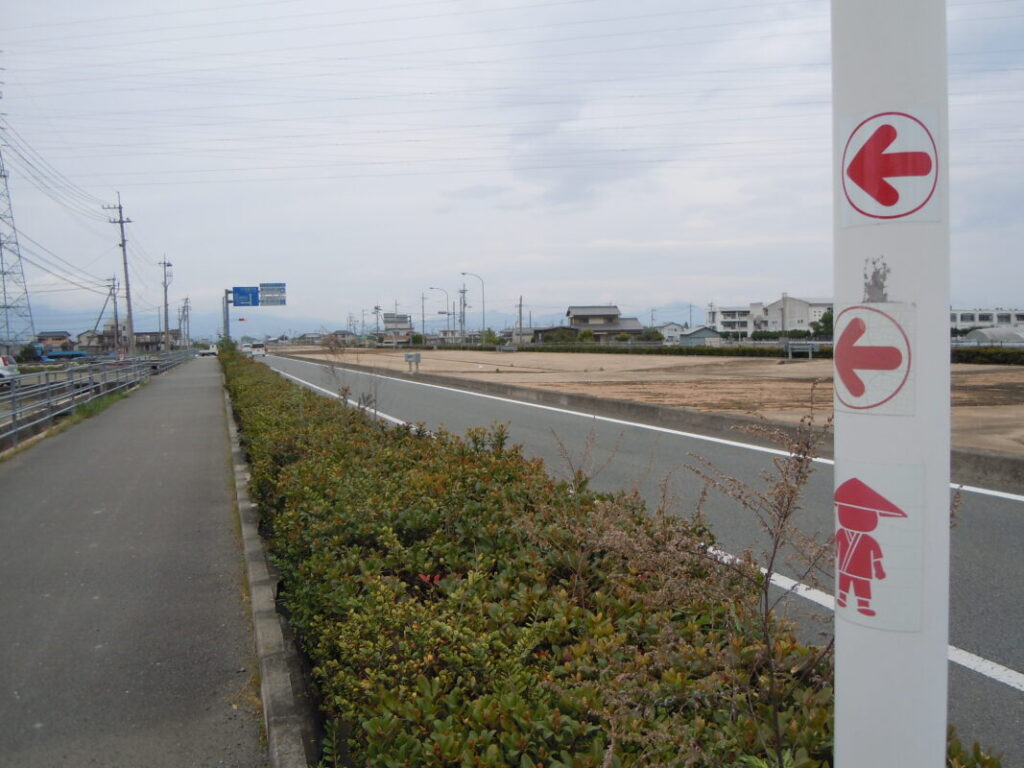
Multiple waymark signs posted at a confusing section of the trail
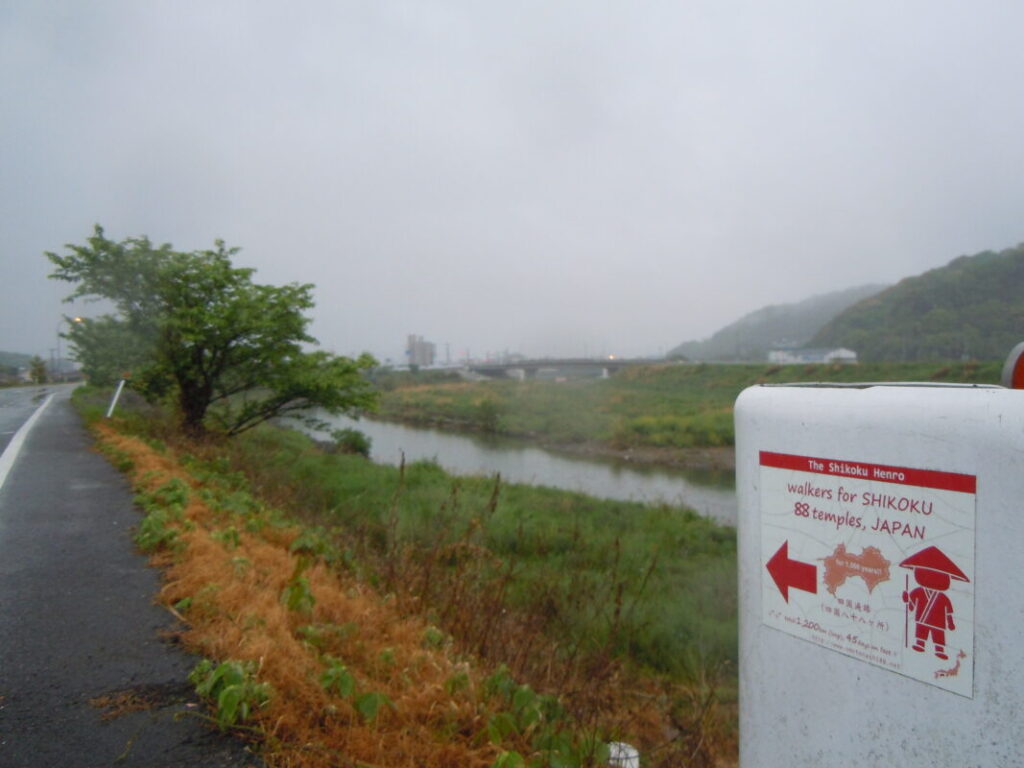
Waymark sign attached to a guardrail along the pilgrimage route
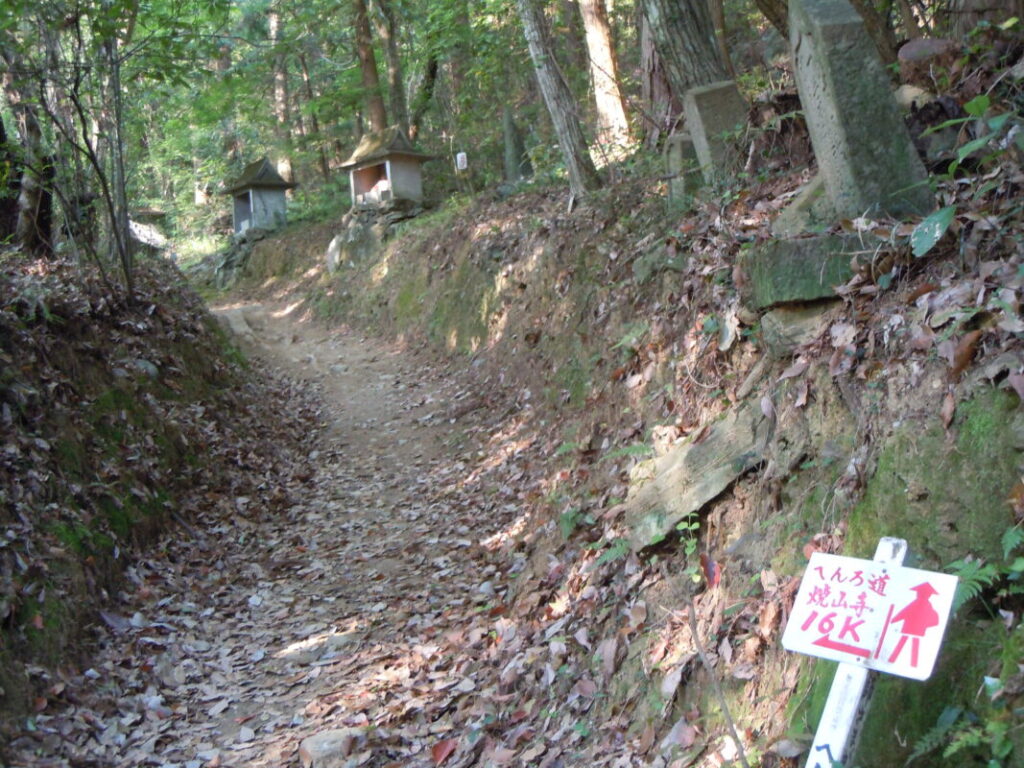
Waymark sign in the mountains along the pilgrimage route
9:30 a.m. — Arrived at Anraku-ji
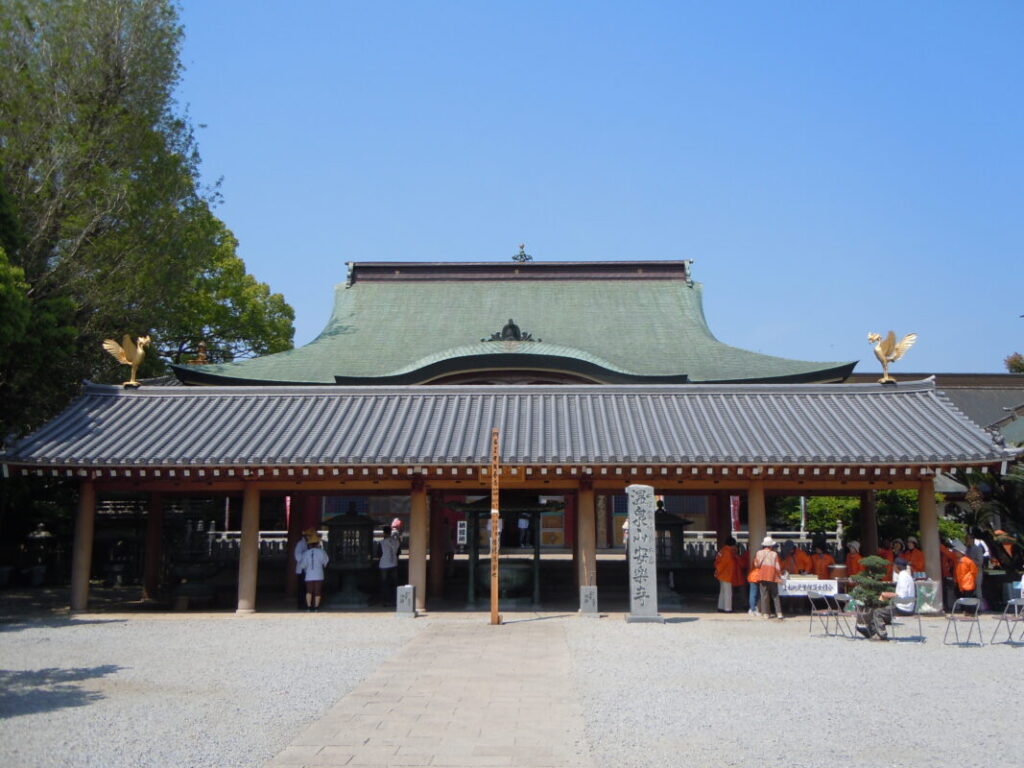
At Anraku-ji, the local people offered me a cup of sweet sake (amazake) as part of their traditional hospitality.
It warmed my tired body and gave me a comforting moment of rest.
Anraku-ji also has a temple lodging with an onsen (hot spring bath), where you can stay overnight.
The natural sacred spring bath is perfect for soothing your muscles after a long day of walking.
There are plans with meals included or simple overnight stays, making it convenient not only for pilgrims but also for general travelers.
History of Anraku-ji
Anraku-ji is an ancient temple, recorded in the Shikoku Reijōroku in 1689 (Genroku 2).
Its temple grounds once stretched from the foot of the Awa-San mountain range to its current location.
The temple’s mountain name, Onsen-san, reflects its association with hot springs.
It is said that Kōbō Daishi promoted the healing benefits of these hot springs, and even today, hot spring water still flows from the area in front of the Daishi Hall.
Highlights of Anraku-ji
- Niō Statues at the Main Gate – Crafted by Matsumoto Meikei.
- Worship Hall in Front of the Main Hall – Features carvings depicting the life of Kōbō Daishi.
- Tahōtō Pagoda & Sakamatsu – Traditional architecture with historical significance.
- Shukubō (Temple Lodging) – Over 400 years of history, featuring a large natural hot spring bath popular with pilgrims.
Anraku-ji is a historic temple where faith and hot springs come together. Its architecture, statues, and sacred spaces offer many points of interest for visitors.
No.7 Jūraku-ji – 20 Minutes on Foot from Anraku-ji
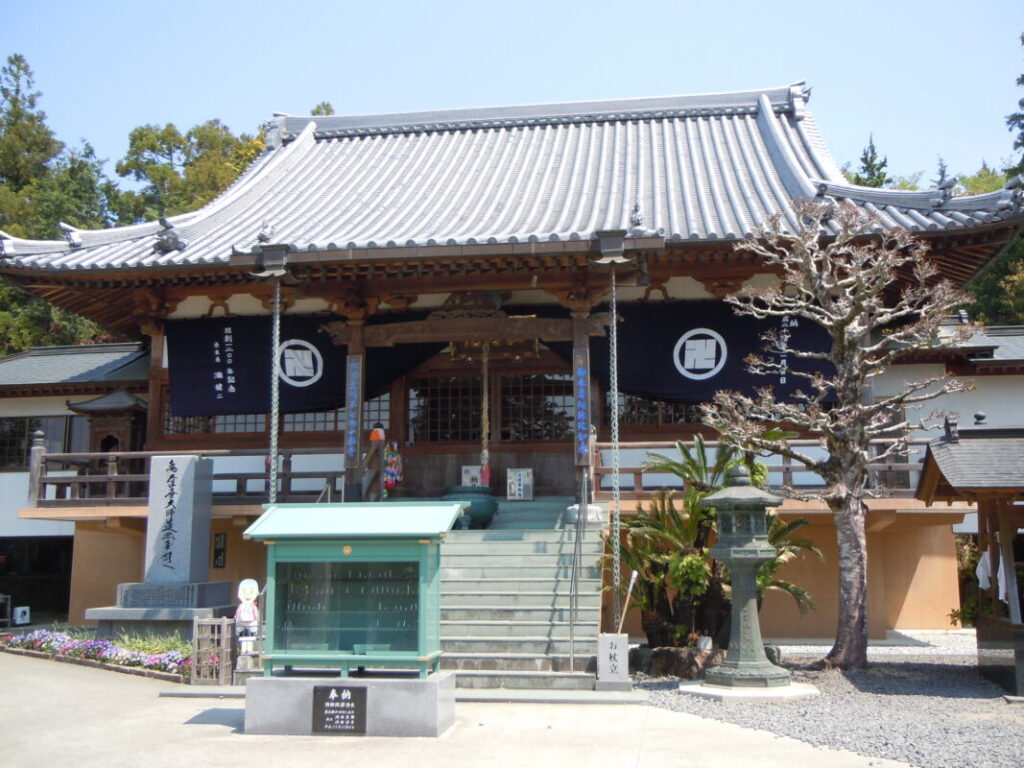
Jūraku-ji is approximately 1.2 km from Anraku-ji, about a 20-minute walk.
The route is straightforward—just head west—so it’s easy to follow without getting lost.
History of Jūraku-ji
Jūraku-ji was founded during the Daidō era when Kōbō Daishi, while traveling for missionary work, experienced a vision of Amida Nyorai and enshrined a statue he personally carved as the temple’s principal image.
He named the temple Kōmyōzan Jūraku-ji, wishing that people could attain the “ten lights and joys” beyond the inevitable sufferings of birth, aging, illness, and death.
Highlights of Jūraku-ji
- Sanmon (Main Gate)
- Mizuko Jizō – located directly in front of the gate
- Jigan-shitsu Myōjin Jizō – a deity worshipped for healing eye diseases
- Aizen Myōō – worshipped for good relationships and resolving bad relationships
Many visitors come to pray for eye health or relationships, making Jūraku-ji a temple with deep spiritual significance.
Heading to Kumagai-ji (Temple 8) – Feeling a Strain in My Legs
Pain in the Soles – An Unexpected Early Challenge
Around 11:30 a.m., after walking roughly 15 km, I began to feel pain in the soles of my feet.
Although I usually exercise and have confidence in my stamina, the pilgrimage proved to be an entirely different challenge.
The pain didn’t subside; it intensified, and my walking pace gradually slowed.
I thought, “This early on, this is tough…” but stopping was not an option.
I was determined to complete my planned one-week segment of the pilgrimage.
However, I might not reach the originally planned destinations. That’s okay—pushing too hard is forbidden. (In the end, I was able to walk all the way to Cape Muroto as planned.)
At this stage, I was walking while enduring the pain, but later I learned techniques for walking in ways that reduce foot pain.
💡 Note
The causes of foot pain and tips for walking without pain are detailed in a separate article:
⇒ “Guide to Walking the Pilgrimage Without Foot Pain”
Along the way, I noticed Jizo statues.
They seemed to gently push me forward, and somehow gave me strength.
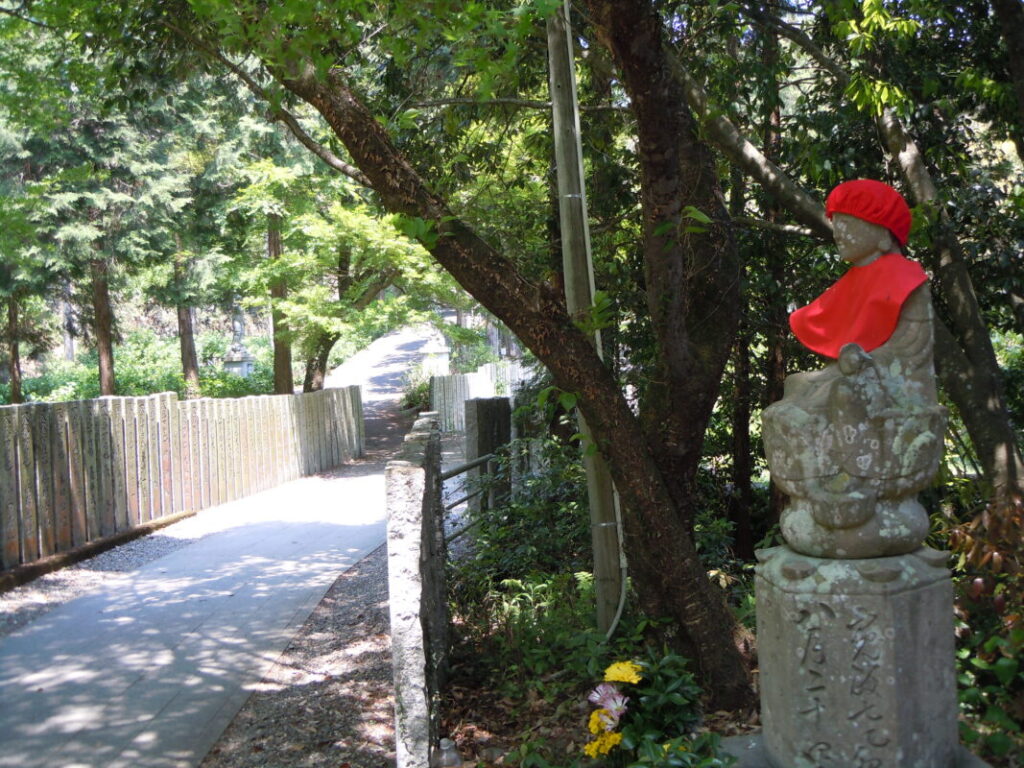
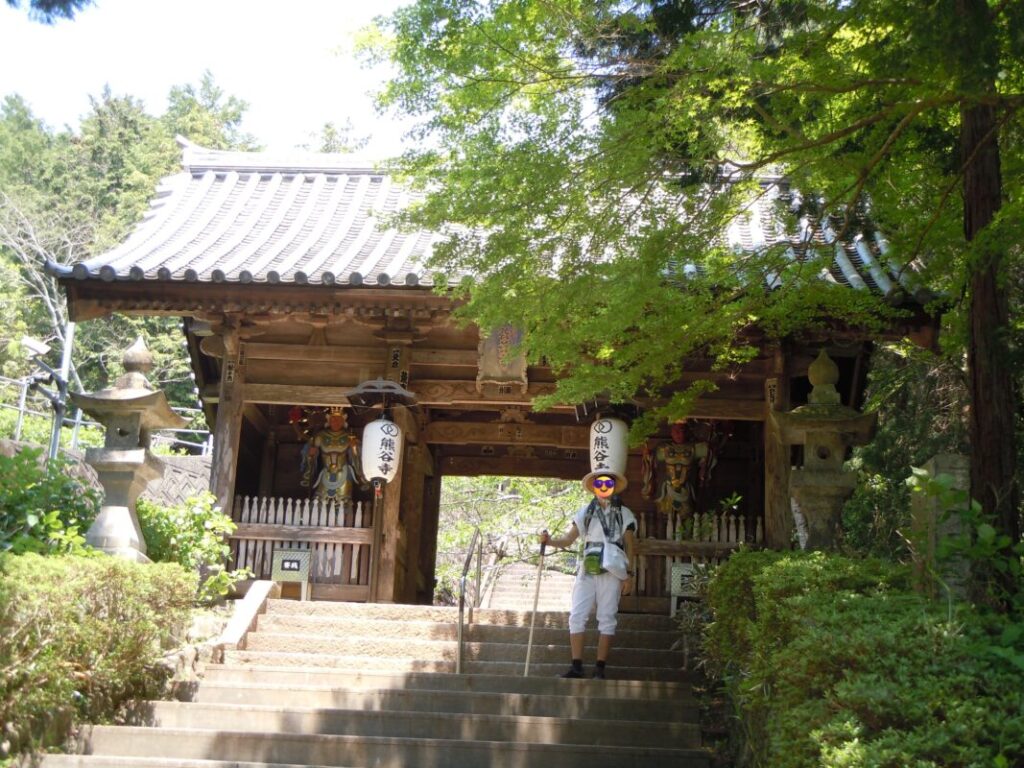
Arriving at Kumadani-ji While Enduring Foot Pain
Enduring the pain in my feet, I finally arrived at Kumadani-ji.
Upon entering the temple grounds, the first thing I did was set down my backpack.
The moment I did, my body felt instantly lighter, and I couldn’t help but feel a sense of relief.
I wanted to rest my feet even a little and allow them to recover.
With that thought, I composed myself and proceeded to pay my respects.
History of Kumadani-ji
Kumadani-ji is an ancient temple known for having one of the largest Niomon gates among the Shikoku Pilgrimage temples.
Its origins date back to 815 (Kōnin 6), when Kōbō Daishi was training in Ao Valley.
He was instructed by the Kumano Gongen of Kishu to “save sentient beings in the latter age of the world,”
and was granted a 5.5 cm golden statue of Kannon Bosatsu (the Bodhisattva of Compassion).
Highlights / Points of Interest
- Daishi Hall: Houses a seated statue of Kōbō Daishi dating back to the Muromachi period.
- Tahōtō Pagoda: A classic two-storied pagoda typical of Shingon temples.
- Benten Island: Located next to the temple office, featuring a drum bridge; a site for prayers for safe childbirth.
Kumadani-ji is an important temple on the Shikoku Pilgrimage, where historic architecture and deep-rooted faith remain vividly present.
To Hōrin-ji (9th Temple) : Bustle of Group Visitors
At 1:00 PM, I arrived at Hōrin-ji.
The temple grounds were lively, with a tour bus parked and about 30 group visitors.
“Are you walking the pilgrimage? Keep it up!”
Hearing such encouragement gave me a little boost.
While the fluent chanting of the group echoed across the grounds, I was still clumsily reciting my sutras.
It’s not easy to get used to it, but I felt that each step, however awkward, is part of the pilgrimage experience.
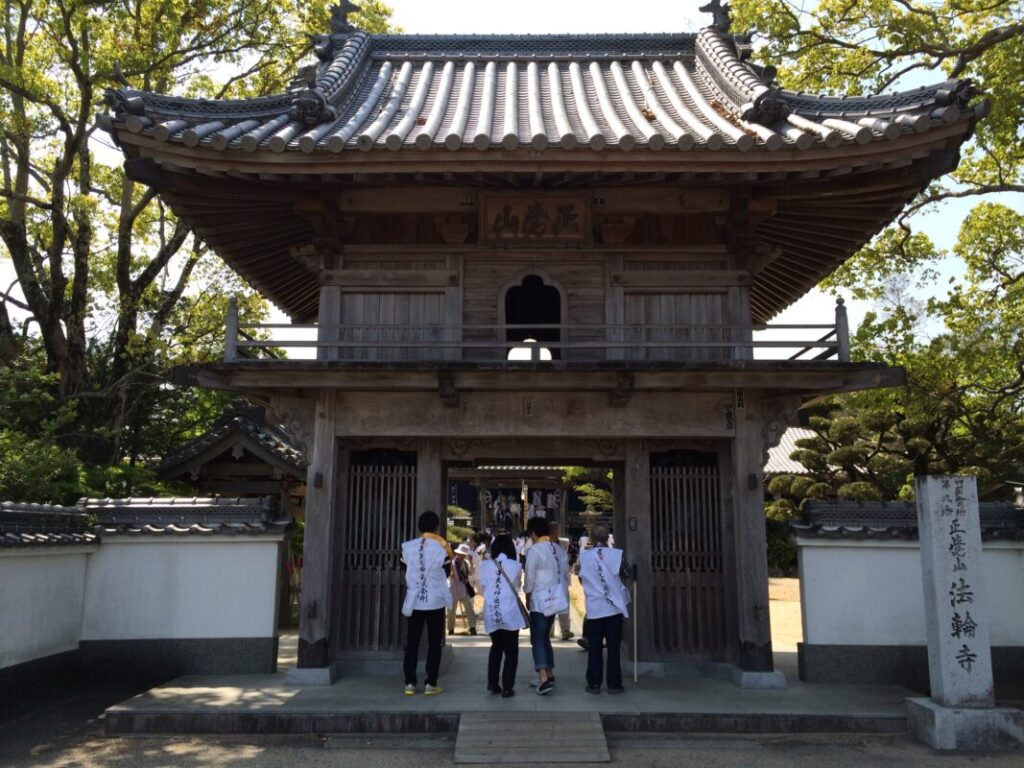
History of Hōrin-ji
In 815 (Kōnin 6), during his pilgrimage, Kōbō Daishi encountered a white snake, considered a messenger of Buddha. Inspired by this, he carved a statue of the Buddha’s Nirvana as the temple’s principal image and established the temple.
Highlights / Points of Interest
- Straw Sandal Amulets at the Main Hall – A unique charm offered to visitors.
- The temple retains a rich history tied to the white snake legend and the spiritual legacy of Kōbō Daishi.
Heading to the Day’s Final Temple: No.10 Kirihata-ji
We headed to Kirihata-ji, the last temple of the day.
It’s about 4 km from Hōrin-ji, but the temple is located on the mountainside, requiring a final climb of roughly 100 meters.
By this point, the pain in my feet had reached its limit.
The uphill path was honestly very tough, but leaning on my walking stick, I forced myself to take it one step at a time and finally made it to the top.
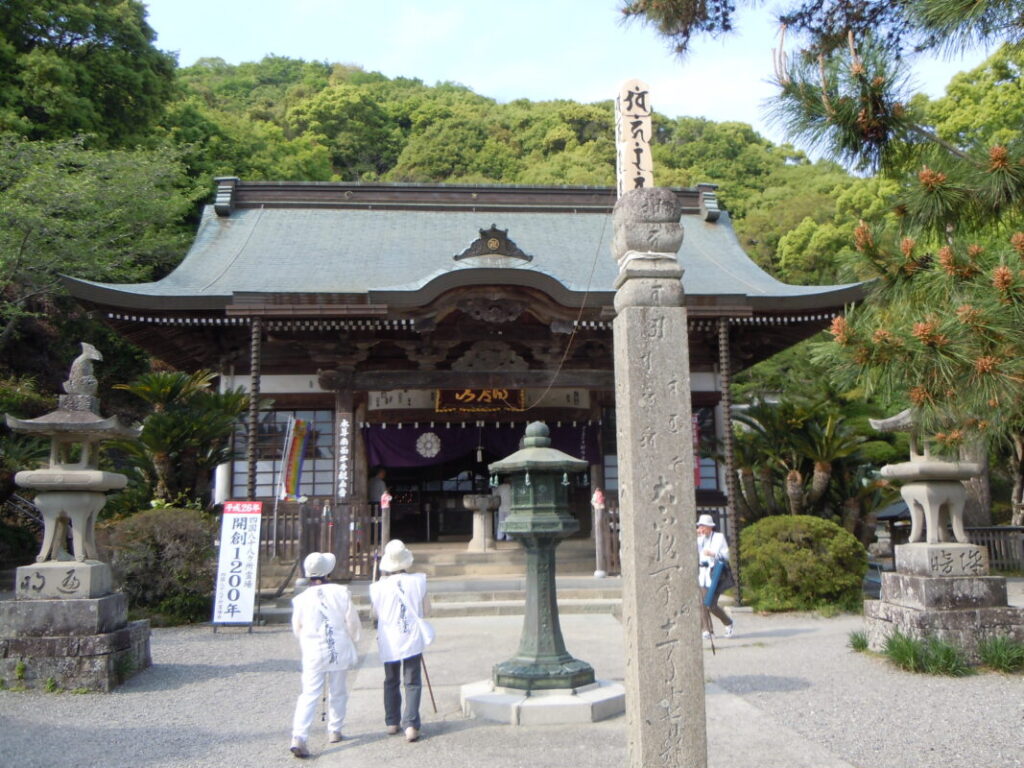
History of Kirihata-ji
Kirihata-ji is located on the mountainside of Mount Kirihata at an elevation of 155 meters.
According to legend, Kōbō Daishi received cloth from a young maiden who was weaving. The maiden had enshrined Kannon for her parents and later entered the Buddhist path, achieving sokushin jōbutsu (attaining Buddhahood in this lifetime).
Kōbō Daishi enshrined her as a manifestation of the Thousand-Armed Kannon, turning her image into the deity.
Because of this, the temple became known as a place where women could attain enlightenment in life, and it has long been popular among female pilgrims.
Highlights of Kirihata-ji
- The Approach from the Foot of the Mountain to the Main Hall – a scenic pilgrimage path winding up the hillside.
- Kirihata-ji Great Pagoda – designated as an Important Cultural Property of Japan.
- Hatakiri Kannon – a bronze statue representing the maiden who attained sokushin jōbutsu and transformed into Kannon; she holds scissors in her right hand and cloth in her left.
The temple is renowned for its legends of the virtuous woman who emits seven-colored light, making it a spiritually captivating site for pilgrims.
After Today’s Pilgrimage : Heading to the Lodging
I successfully completed one of today’s goals: visiting Kirihata-ji (No. 10).
The other goal was reaching today’s lodging, Kamojima Onsen.
It’s just past 3:00 PM, and the distance to Kamojima Onsen is about 9 km.
I hope to arrive before sunset.
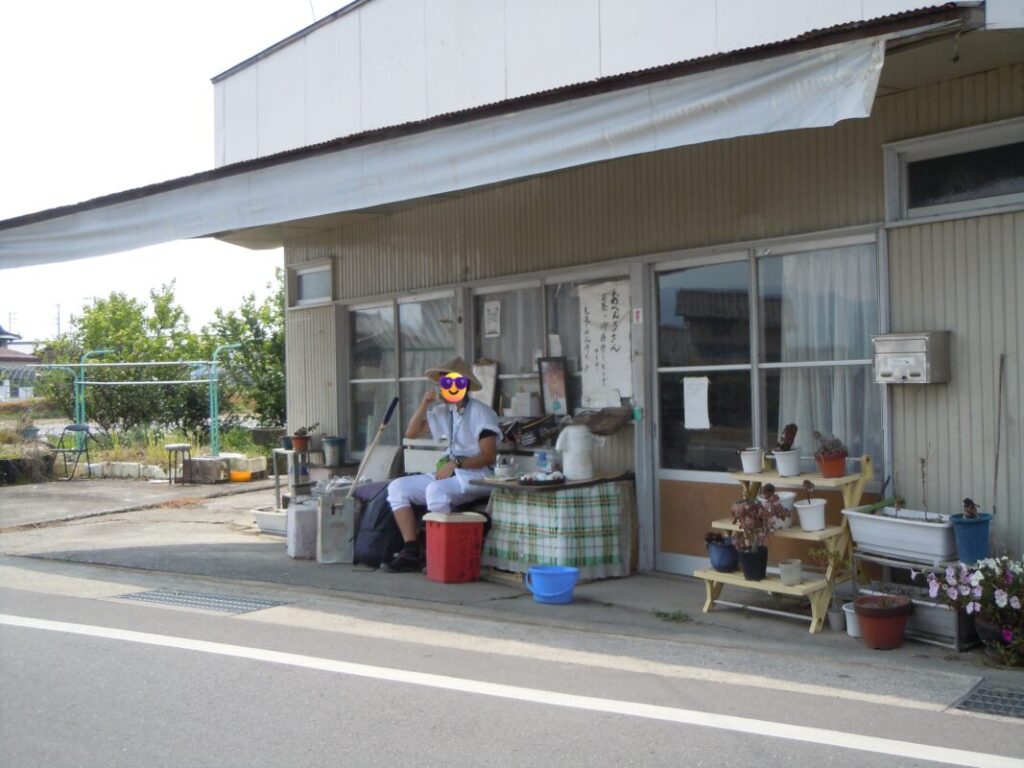
A 10-Minute Break at a Free Rest Stop Along the Way
Just taking off my backpack for a few minutes made my body feel much lighter.
I had some tea, offered as a self-service act of hospitality, which I truly appreciated.
I took off my shoes and gently massaged the soles of my feet.
Looking down, I noticed that the soles were bright red and swollen, with a noticeable heat.
After 6 PM, Complete Darkness Settles In
With the pain in my feet, my pace had clearly slowed.
Normally, walking in the dark would be unwise, but right now, I had no choice but to keep going.
I felt a natural sense of urgency, which made my steps faster—but that only increased the strain on my feet.
“Don’t rush.”
I kept telling myself this, taking one steady step at a time.
7:00 PM – Arrival at Kamojima Onsen
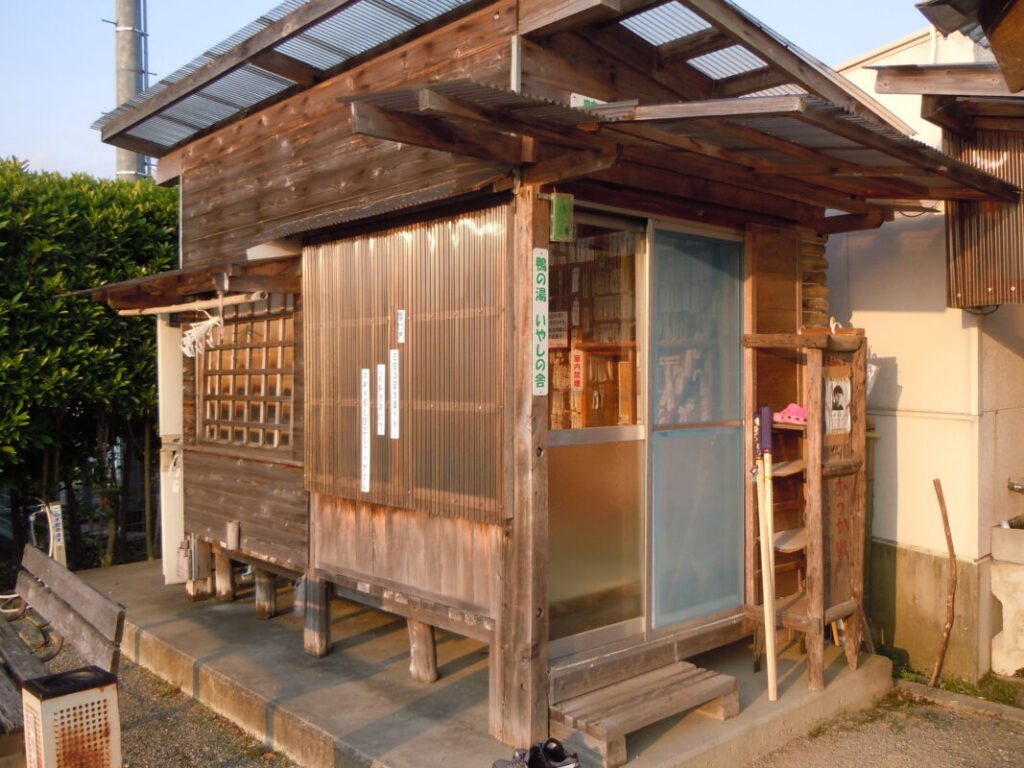
I finally made it safely and felt a wave of relief.
The photo was taken the next morning.
Since I hadn’t been able to take a bath yesterday, this was my first bath in a day.
The moment I immersed myself in the hot water, all the fatigue from my body melted away.
The lodging was a small hut of about six tatami mats, and a few other pilgrims were already staying there.
There was a man in his seventies, a regular pilgrim who walks the route every year around this time. On days when he’s particularly ambitious, he reportedly walks up to 50 km in a single day.
Hearing him say, “Tomorrow I’ll go past Mount Yaku and reach Dainichi-ji,” I could really sense his incredible determination.
Then there was a young man in his twenties, quite a large figure.
He was around 190 cm tall and probably weighed about 120 kg, and his presence naturally drew attention.
The backpack he carried was massive too, probably around 20 kg.
Even from the heft of his gear, you could tell how seriously he was preparing for tomorrow.
Everyone at the lodging seemed fully prepared for the challenge of Mount Yaku tomorrow.
There really are all kinds of people on the walking pilgrimage.
Each walks in their own style, each with their own purpose.
That diversity is one of the charms of the pilgrimage.
Summary: Tips for Surviving the Second Day of the Walking Pilgrimage
The second day of the walking pilgrimage is often the first real test, as distance, fatigue, and foot pain all hit at once.
- Walking around 30 km is quite tough.
- Foot care is essential.
- Aim to reach your destination before sunset.
But along with the challenges come the rewards:
- The warmth of pilgrim hospitality.
- Quiet, serene temples in the early morning.
- Scenery that can only be appreciated on foot.
Above all, it’s important to go at your own pace and avoid overexertion.
Frequently Asked Questions (FAQ)
- QI’m worried about getting lost on the pilgrimage.
- A
The Shikoku pilgrimage routes are well-marked with small stickers and arrows along the way, making it easy to follow. If you walk along the arrows, it’s unlikely that you will get lost.
However, if you don’t see any route markers for a while, you might have strayed from the path. In that case, don’t force yourself forward—stop and double-check your route.
It also helps to wear clothing that clearly identifies you as a pilgrim. If you accidentally take a wrong turn, locals often notice and may offer guidance.
- QHow can I prevent foot pain while walking the pilgrimage?
- A
It’s difficult to completely eliminate foot pain, but the following tips can help reduce strain:
- Choose trekking shoes that fit your feet well.
- Wear socks that support the arches of your feet.
- Use cushioned insoles for extra comfort.
- Tie your shoelaces securely.
- Focus on walking with a stable heel-to-toe motion.
- Take frequent breaks to rest your feet.
Dragging your feet or walking noisily increases strain. If pain becomes strong, it’s important to rest rather than push yourself.
- QWhy do my feet hurt while walking the pilgrimage?
- A
The main reasons are carrying a heavy backpack for long hours and walking continuously on hard asphalt surfaces.
To reduce strain:
- Keep your load as light as possible.
- Whenever possible, walk on softer surfaces like dirt paths or over drainage covers, which absorb impact better than hard roads.
- QIs it safe to walk at night?
- A
No, walking at night is very dangerous.
- It is harder for drivers to see you.
- Trail markers may not be visible.
- There is a higher risk of falling or injury.
Tip: Carry reflective gear for safety in case you must walk in low-light conditions.

Comments