
“What is the Shikoku pilgrimage?”
“Can beginners do it?”
“How much does it cost, and how long does it take?”
Hello, I’m Taka, the creator of this blog.
I have completed the Shikoku pilgrimage twice—both clockwise and counterclockwise.
In both cases, I walked in sections (kugiri-uchi) and experienced all four seasons: spring, summer, autumn, and winter.
In this article, I’ll explain the basics of the Shikoku pilgrimage in a clear and beginner-friendly way.
- What Is the Shikoku Pilgrimage? Meaning and History of the 88-Temple Journey
- Pilgrimage Route: Order and Distance of the Shikoku 88 Temples
- What Are the Different Ways to Complete the Pilgrimage? Estimated Time and Cost
- Spiritual Benefits and Completion of the Pilgrimage: Does the Method Matter?
- Essential Items for the Shikoku Pilgrimage: What Beginners Should Prepare
- Pilgrimage Etiquette
- Can Non-Buddhists Do the Shikoku Pilgrimage? What About Religious Sects?
- Why Is the Shikoku Pilgrimage So Popular? Reasons and Appeal
- Frequently Asked Questions (FAQ)
- Summary: The Shikoku Pilgrimage Is a Journey Anyone Can Begin
- Related Articles
What Is the Shikoku Pilgrimage? Meaning and History of the 88-Temple Journey
The Shikoku pilgrimage is a spiritual journey that involves visiting 88 temples located across Shikoku, Japan.
Formally known as the Shikoku 88 Temple Pilgrimage, it traces sites associated with Kobo Daishi (Kukai).
Its origins date back to the Heian period, when Kukai is believed to have traveled throughout Shikoku as part of his spiritual training.
During the Edo period, the pilgrimage became more widespread among ordinary people, and the structure of visiting all 88 temples gradually took shape.
At that time, the journey was deeply rooted in religious devotion and was often physically demanding.
It was also during this period that the culture of osettai—acts of kindness and support offered to pilgrims by local people—became established.
Today, the pilgrimage is not only a religious practice but also a journey for tourism and self-discovery, attracting people from all walks of life.
With its long history and enduring traditions, the Shikoku pilgrimage continues to inspire and draw people from around the world.
Pilgrimage Route: Order and Distance of the Shikoku 88 Temples
The route of the Shikoku pilgrimage forms a loop around the four prefectures of Shikoku.
The total distance is approximately 1,200 km.
The walking pilgrimage route follows the shortest possible paths, unlike roads for cars.
Instead of gentle detours, it often involves steep ascents and descents.
As a result, the elevation changes are significant. Based on my calculations, the total elevation gain is about 16,000 meters.
This is equivalent to climbing Mount Fuji (3,776 m) roughly four times.
There is no fixed starting point, but many people begin at Temple No. 1 in Tokushima.
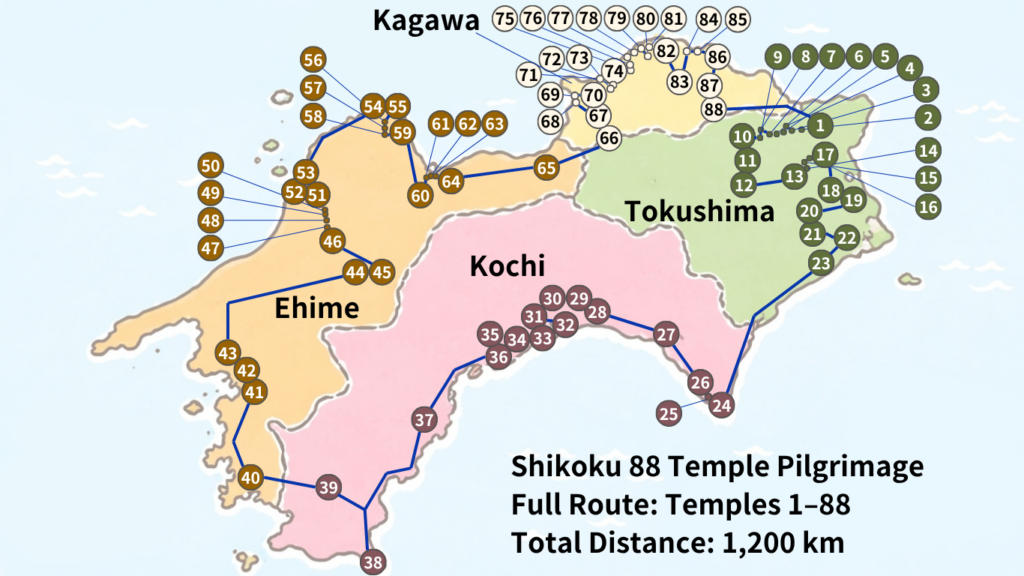
| Prefecture (Stage) | Temples | Distance (km) | Total Elevation Gain (m) | Characteristics |
|---|---|---|---|---|
| Tokushima (Awakening) | 1–23 | 220 | 3,700 | The starting point of the pilgrimage and a mental beginning. |
| Kochi (Training) | 24–39 | 385 | 3,300 | Long distances between temples with monotonous roads. A physically and mentally demanding section. |
| Ehime (Enlightenment) | 40–65 | 360 | 5,500 | A tough section with large elevation changes and long distances. A path where the mind becomes more refined through challenges. |
| Kagawa (Nirvana) | 66–88 | 153 | 3,500 | The final stage toward completion. A time to reflect on the journey so far. |
Tokushima: The Place of Awakening (Hosshin no Dōjō)
Tokushima is known as the “Place of Awakening” (Hosshin no Dōjō) and serves as the starting area of the pilgrimage.
It is where pilgrims make their decision to begin the journey and marks a mental starting point.
The routes are relatively flat, and the distances between temples are shorter, making it accessible for beginners.
However, there are also challenging sections early on, such as the mountain path to Temple 12, Shosanji, which tests physical endurance from the start.
This stage is an important period for building the fundamentals of a walking pilgrimage—finding your pace, adjusting your gear, and learning how to manage your physical condition.
The experience gained here has a significant impact on the rest of the journey.
Related Articles
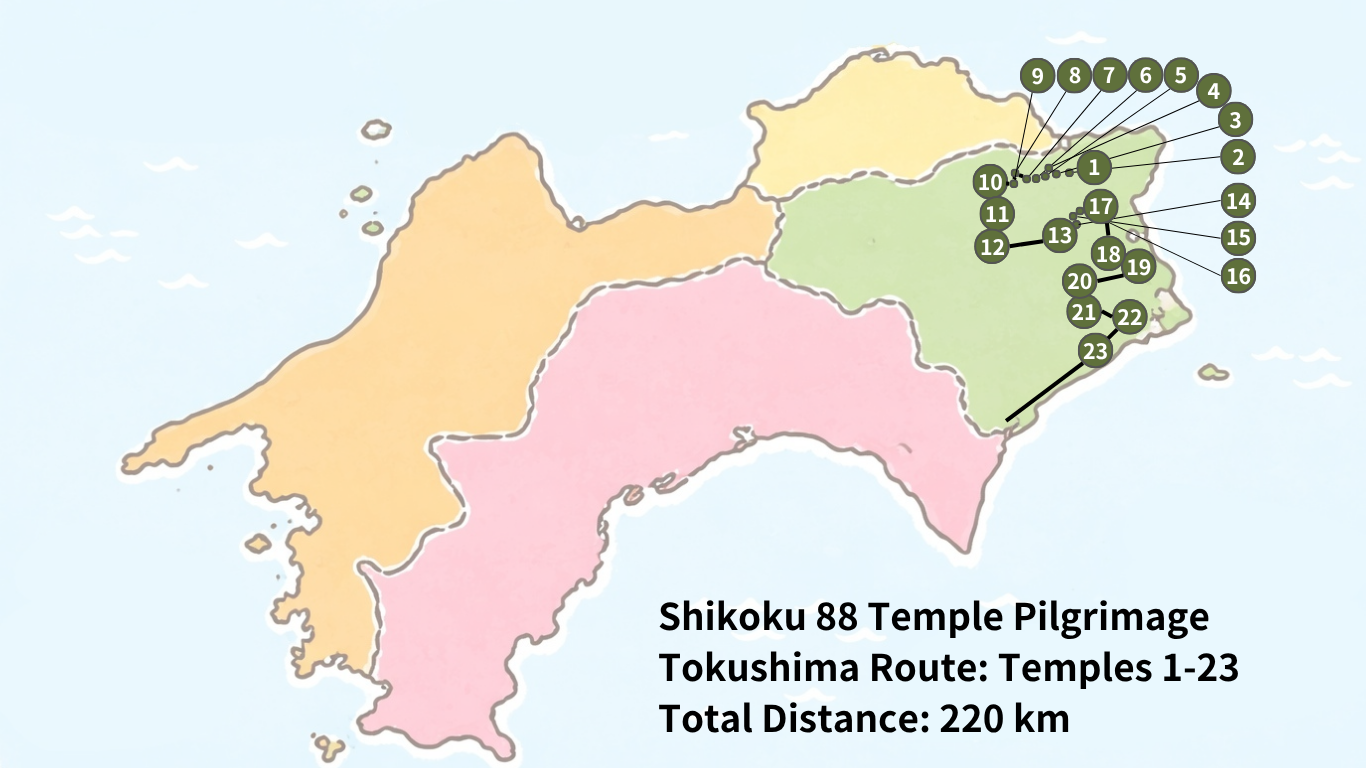
Explore the first 23 temples of the Shikoku 88 Temple Pilgrimage in Tokushima. Find temple history, Goshuin, walking routes, distances, travel times, Google Maps, and personal walking pilgrimage experiences.
Kochi: The Place of Training (Shugyō no Dōjō)
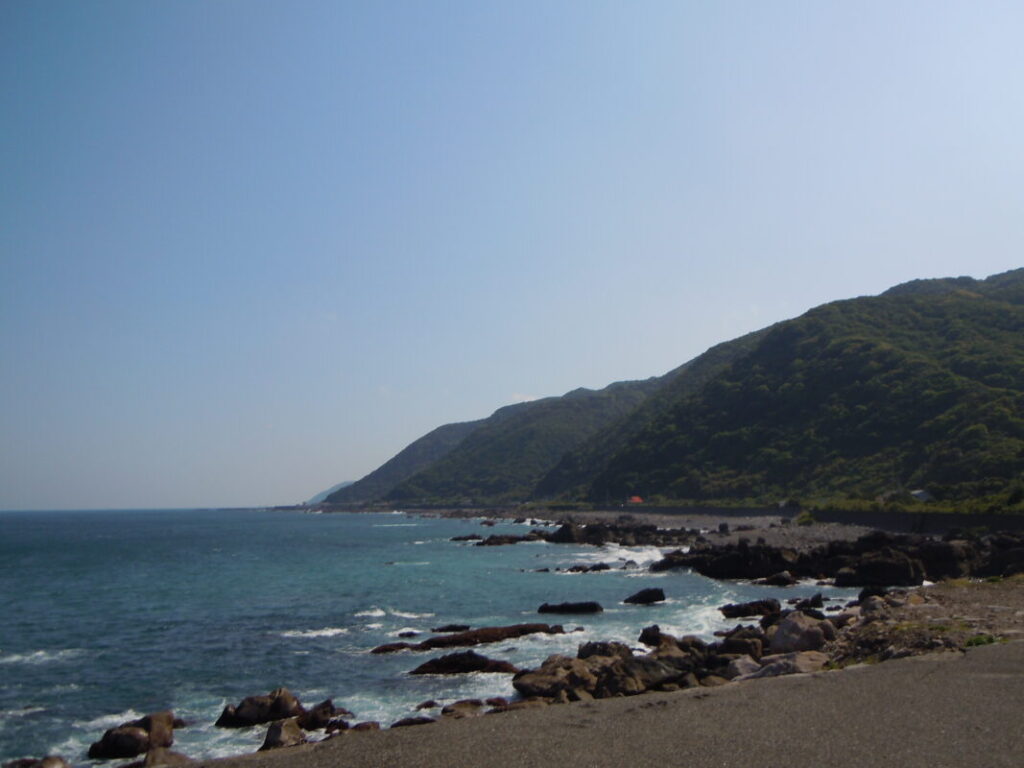
Kochi is known as the “Place of Training” (Shugyō no Dōjō) and is considered the most demanding area of the Shikoku pilgrimage.
One of its defining features is the long distances between temples.
For example, it is about 75 km to Temple 24, Hotsumisakiji, located at Cape Muroto, and about 80 km to Temple 38, Kongofukuji, at Cape Ashizuri—both requiring extended stretches of walking.
There are also many long, monotonous coastal roads, making this section not only physically demanding but mentally challenging as well.
At times, the scenery changes very little, and it’s easy to feel a sense of isolation.
Facing yourself in those moments is part of what makes this stage so meaningful.
It is truly an area that lives up to the word “training.”
Related Articles
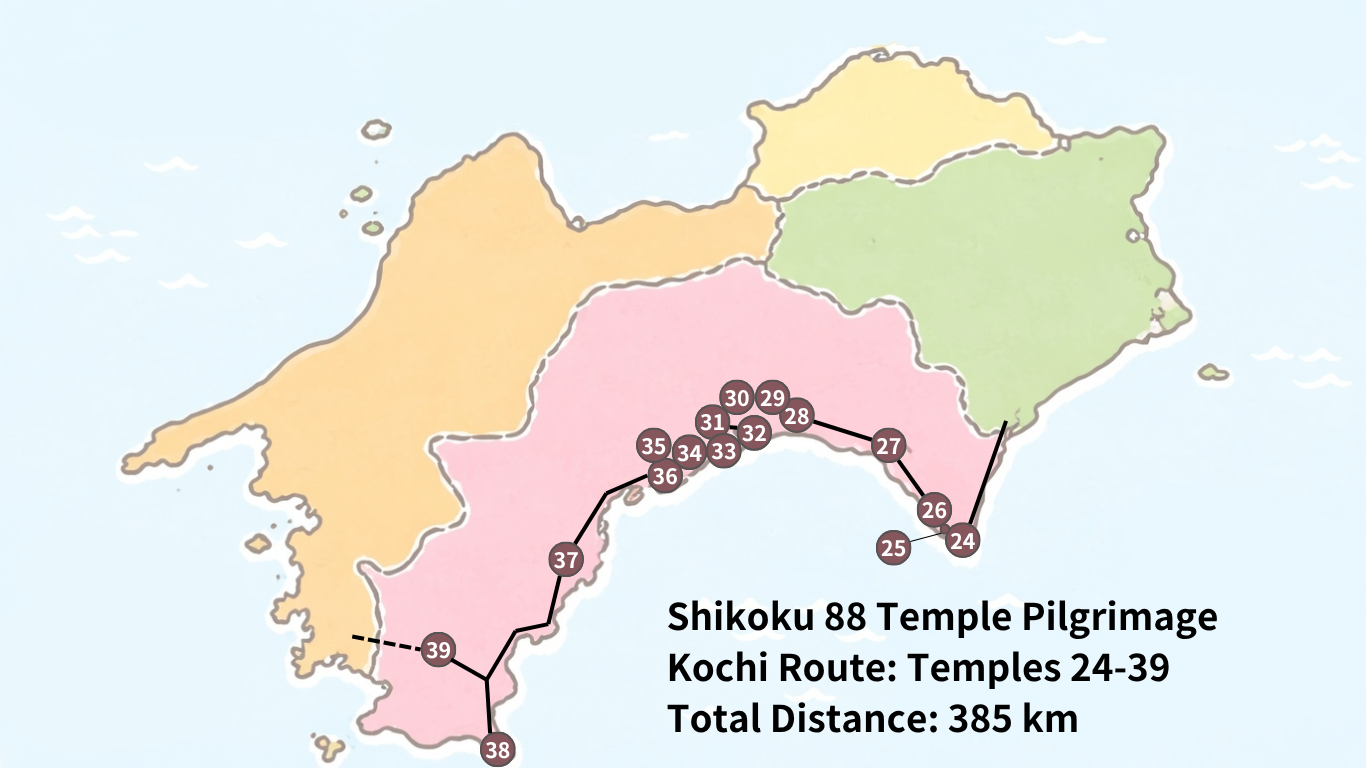
Explore Temples 24–39 of the Shikoku Pilgrimage in Kochi Prefecture. Discover temple history, goshuin, walking routes, distances, Google Maps, and first-hand tips from an experienced walking pilgrim.
Ehime: The Place of Enlightenment (Bodai no Dōjō)
Ehime is known as the “Place of Enlightenment” (Bodai no Dōjō) and represents the middle to later stages of the pilgrimage.
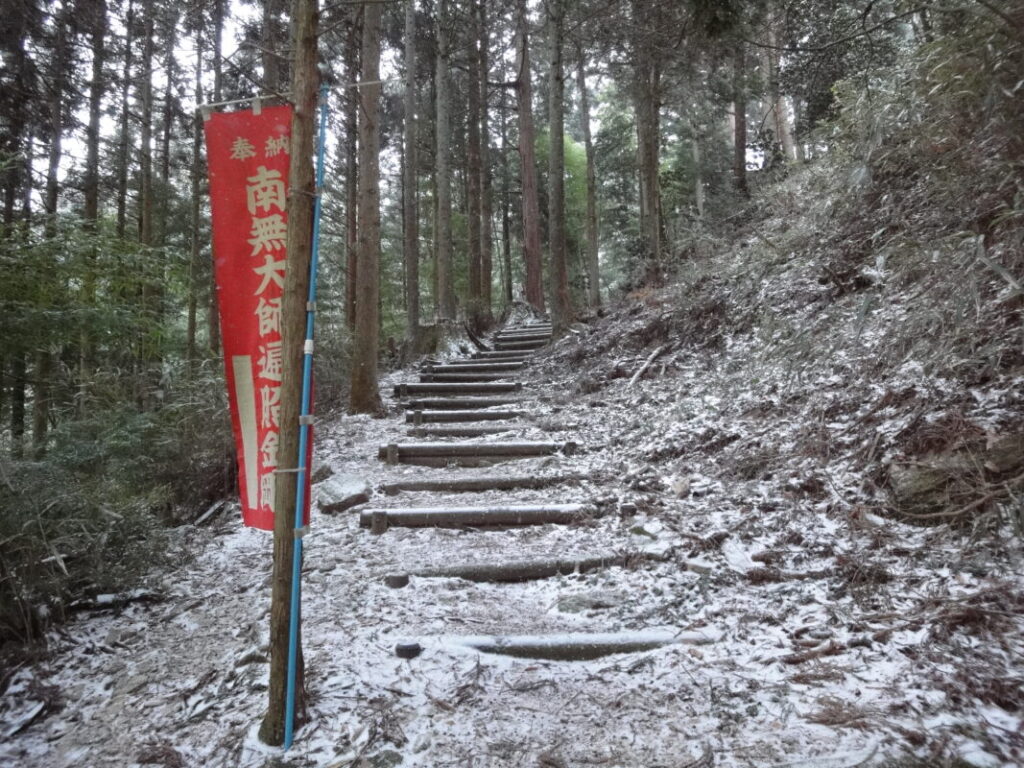
While the distances between temples are relatively consistent, there are many mountain paths with significant elevation changes, making it more physically demanding than it may appear. It is by no means an easy section, especially as fatigue from earlier stages begins to accumulate.
At the same time, as you continue walking, you may begin to feel a growing sense of mental clarity and find your own rhythm. This is one of the defining characteristics of this stage.
Amid the challenges, your mind gradually becomes more balanced—
a stage where you can truly experience a sense of “enlightenment.”
Related Articles
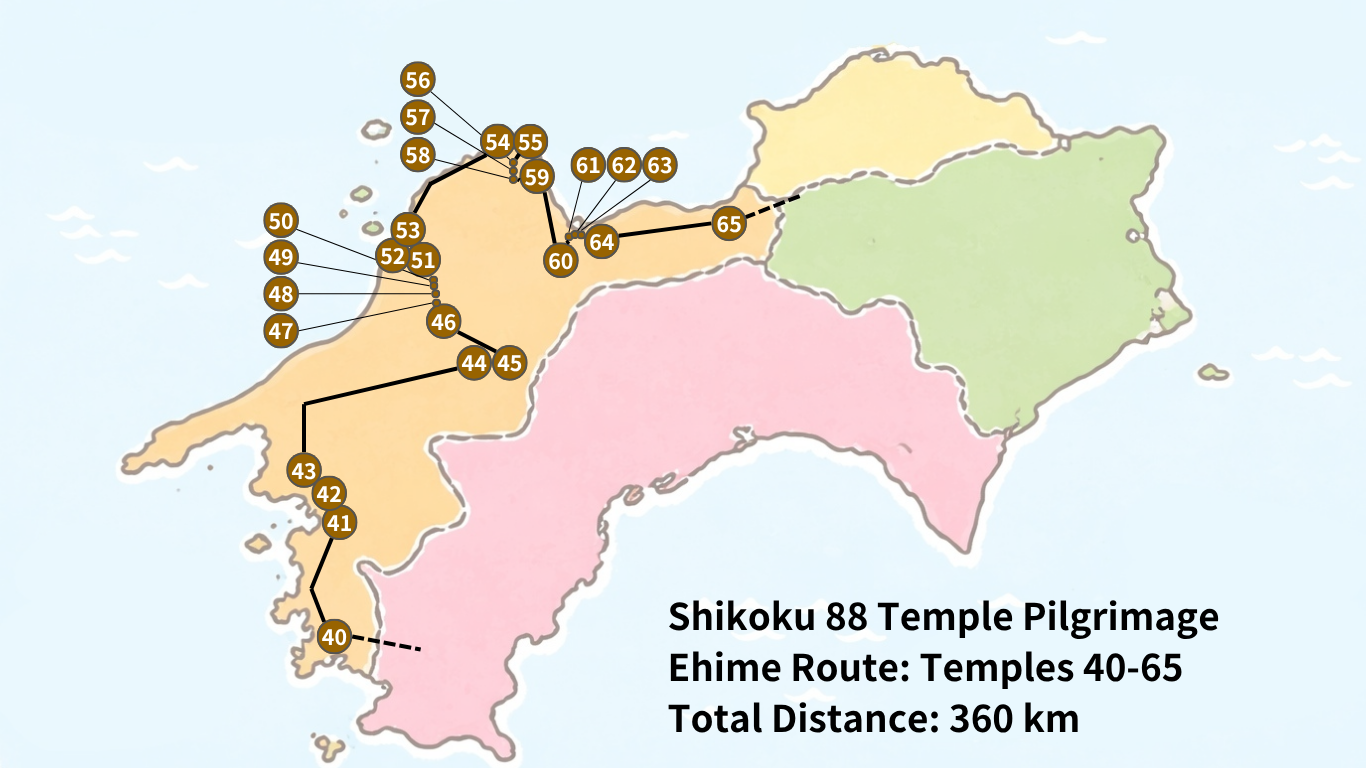
Explore Temples 40–65 of the Shikoku 88 Temple Pilgrimage in Ehime Prefecture. Discover temple histories, highlights, Goshuin, Omie, walking routes, distances, and personal experiences from the pilgrimage trail.
Kagawa: The Place of Nirvana (Nehan no Dōjō)
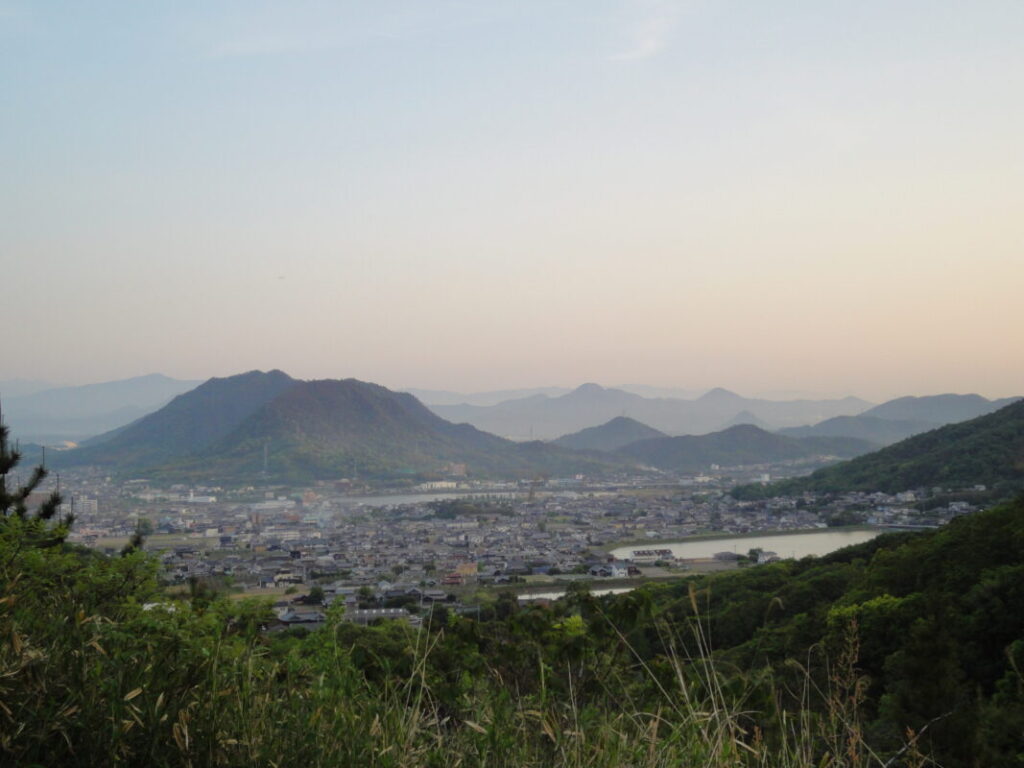
Kagawa is known as the “Place of Nirvana” (Nehan no Dōjō) and marks the final stage of the Shikoku pilgrimage.
The distances between temples are relatively short, and many of the paths are easy to walk. Compared to the long and demanding journey so far, both your body and mind begin to feel more at ease.
At the same time, this is a stage for reflection—looking back on the days you’ve walked and quietly contemplating the meaning of the pilgrimage.
As you move toward completion, your mind naturally becomes more settled—
a fitting final chapter to the journey.
Related Articles
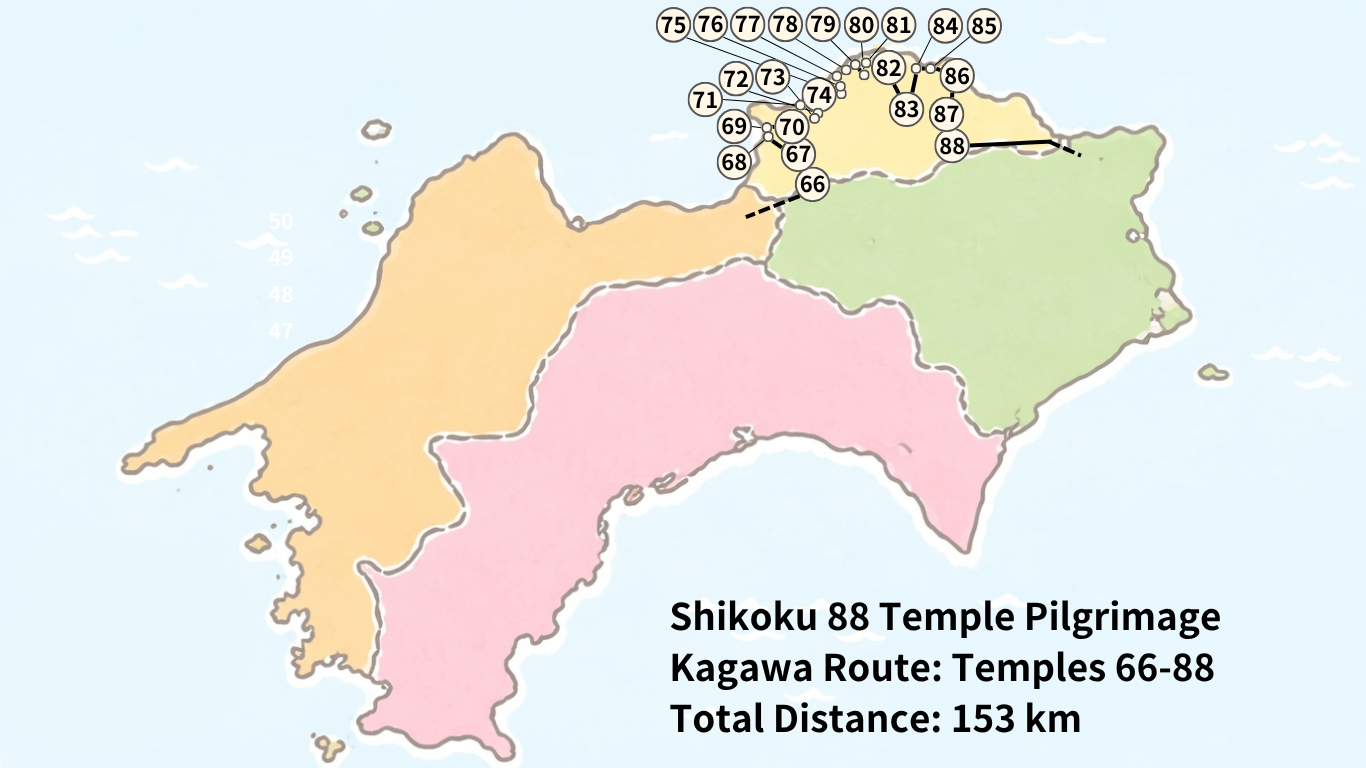
Explore Temples 66–88 of the Shikoku 88 Temple Pilgrimage in Kagawa Prefecture. Discover temple histories, highlights, Goshuin, Omie, walking routes, distances, and the journey to complete the pilgrimage at Ōkubo-ji Temple.
What Are the Different Ways to Complete the Pilgrimage? Estimated Time and Cost
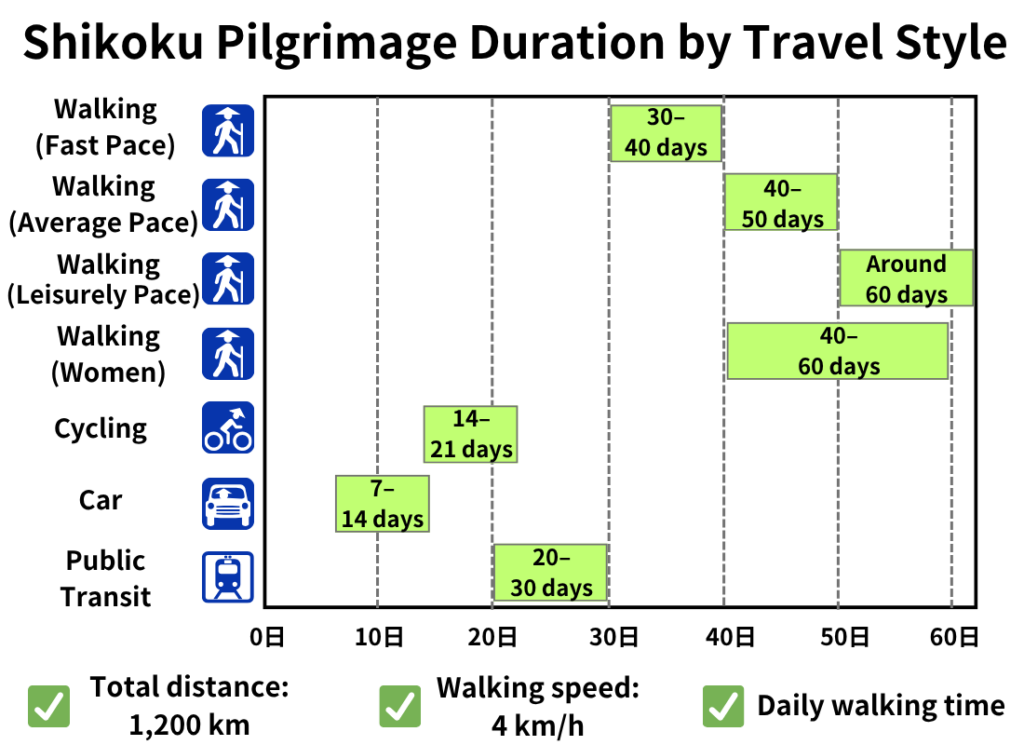
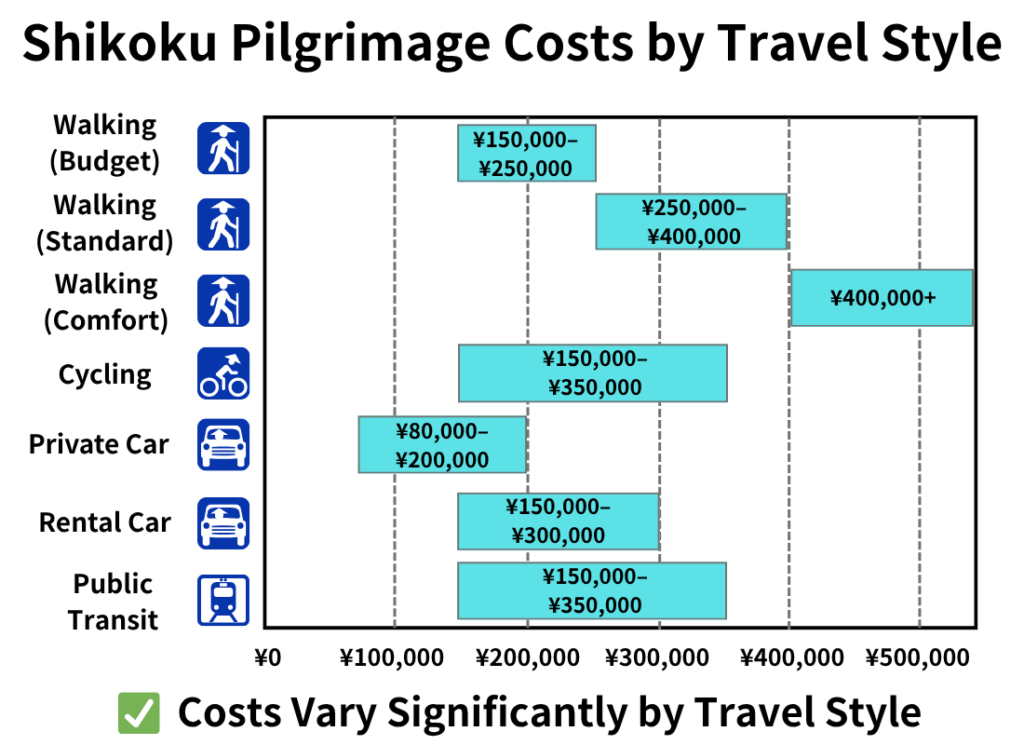
There are several ways to complete the Shikoku pilgrimage.
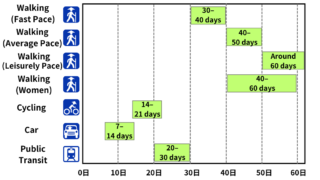
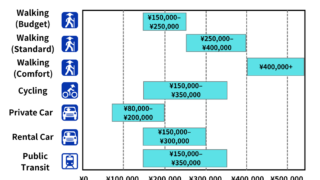
The table below summarizes the main styles, along with approximate timeframes and costs.
Pilgrimage Styles, Duration, and Cost
| Method | Duration | Cost (Approx.) |
|---|---|---|
| Walking | 40–60 days | ¥300,000–¥500,000 |
| Bicycle | 14–25 days | ¥150,000–¥250,000 |
| Car | Around 10 days | ¥100,000–¥150,000 |
| Tour | 10–14 days | ¥200,000–¥400,000 |
Transportation to Shikoku is not included.
If you collect temple stamps (goshuin), additional costs apply:
¥500 × 88 temples + a stamp book (¥2,000), totaling approximately ¥46,000.
Related Articles
① Walking (On Foot)
This is the most traditional way to complete the pilgrimage, covering the entire route of about 1,200 km on foot.
The total duration varies by individual, but on average:
- Men: about 40–50 days
- Women: about 50–60 days
It can vary greatly depending on fitness level, weather, and rest days, so planning at a manageable pace is essential.
In my case, it took about 38 days to complete the pilgrimage.
By using wild camping and zenkon-yado (free lodging), I was able to keep the total cost to around ¥200,000.
Related Articles
② Bicycle
Cycling the pilgrimage has become more popular in recent years.
However, the route includes many steep mountain sections, so it is not necessarily easy.
In some areas, you may need to get off and push your bike.
In fact, some pilgrims I met who had tried cycling said that walking was actually easier.
③ Car
Traveling by car allows you to complete the 88 temples in a short period of time.
It is efficient and less physically demanding, but costs can add up due to fuel, highway tolls, and parking fees at some temples.
In mountainous areas, roads can be narrow, so careful driving is required.
Even when traveling by car, some temples in the mountains require a long walk from the parking area to the main hall, often involving steep slopes or stairs.
Wearing comfortable clothing and proper walking shoes is recommended.
In winter, some areas may have snow or icy roads, so using winter tires is strongly advised.
Related Articles
④ Bus Tours and Taxis
This method involves visiting the temples by bus tour or taxi and is recommended for beginners.
With a guide accompanying you, you can visit the temples without worrying about routes or proper pilgrimage etiquette.
It allows you to complete the pilgrimage efficiently in a short time, making it suitable for those with limited physical stamina or first-time pilgrims.
However, it tends to be more expensive compared to other methods.
What Are “Through Pilgrimage” and “Segmented Pilgrimage”?
There are two main ways to complete the Shikoku pilgrimage: through pilgrimage and segmented pilgrimage.
A through pilgrimage means visiting all 88 temples in a single continuous journey.
It requires a significant amount of time, but walking the entire route without interruption brings a strong sense of accomplishment.
On the other hand, a segmented pilgrimage means completing the route over multiple trips.
For example, you might do “Tokushima this time” and “Kochi next time,” progressing at your own pace.
Because it can be adjusted to fit work and daily life, many beginners choose the segmented approach.
What Are “Jun-uchi” (Clockwise) and “Gyaku-uchi” (Counterclockwise)?
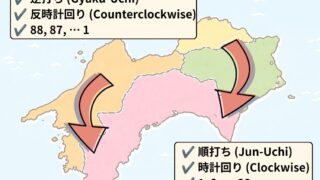
There are two main ways to approach the Shikoku pilgrimage: jun-uchi (clockwise) and gyaku-uchi (counterclockwise).
Jun-uchi (Clockwise Route)
Jun-uchi is the standard route, visiting the temples in numerical order from Temple 1 to Temple 88.
It is the most common choice, especially for first-time pilgrims, as the route is easier to follow and well-marked.
Gyaku-uchi (Counterclockwise Route)
Gyaku-uchi follows the reverse order, starting from Temple 88 and ending at Temple 1.
It is generally considered more challenging than jun-uchi, but it is also said to bring greater spiritual benefits.
It is also believed that completing the pilgrimage in reverse during a leap year brings especially good fortune.
For this reason, more pilgrims choose gyaku-uchi in leap years.
There is no right or wrong choice—what matters most is selecting the style that suits you best.
Why Is Gyaku-uchi More Difficult?
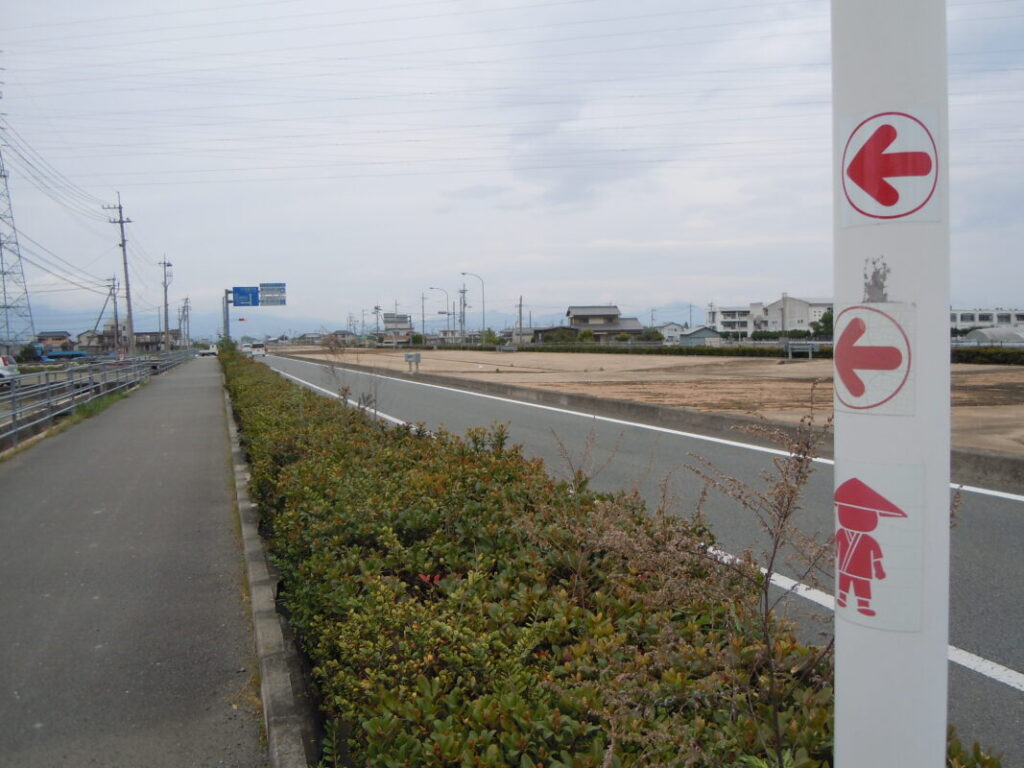
Along the pilgrimage route, there are many signposts and markers to guide pilgrims, making it relatively easy to follow.
However, most of these signs are designed for the clockwise (jun-uchi) direction.
As a result, when traveling in reverse, you may find fewer signs, and at times it can feel like guidance has suddenly disappeared.
Because of this, extra attention is required when following the gyaku-uchi route.
Related Articles
Everyone Has Their Own Way to Pilgrimage
There are no strict rules for how to complete the pilgrimage.
You don’t have to walk the entire route—using a car or public transportation is perfectly acceptable.
The most important thing is to choose a style that matches your physical ability and personal goals, and to proceed at a comfortable pace.
Spiritual Benefits and Completion of the Pilgrimage: Does the Method Matter?
Completing all 88 temples of the Shikoku pilgrimage is called ketsugan (fulfillment of the pilgrimage).
There is no difference in spiritual benefits based on how you complete the pilgrimage.
No matter which method you choose, the blessings are considered the same.
Some people say that “it only counts if you walk the entire route in one continuous journey,” but there is no such rule.
Every style of pilgrimage offers its own unique experience, and each has equal value.
Essential Items for the Shikoku Pilgrimage: What Beginners Should Prepare
When starting the pilgrimage, beginners should prepare at least the following essential items:
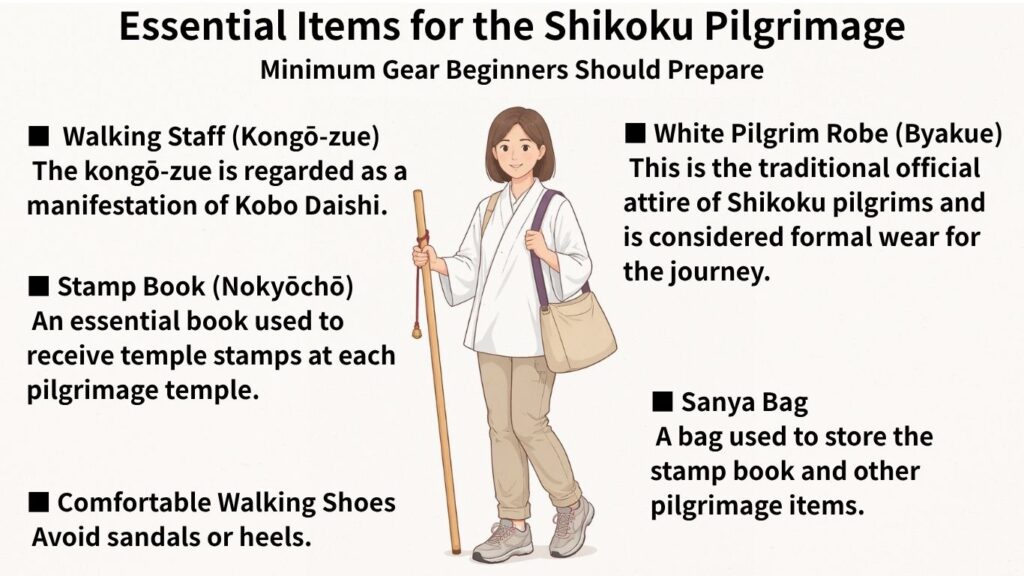
Byakue (White Pilgrim Robe)
This is the traditional attire of pilgrims and serves as formal wear for the journey.
Kongō-zue (Walking Staff)
Considered a symbolic representation of Kobo Daishi, this staff helps support walking, especially on steep slopes and stairs within temple grounds.
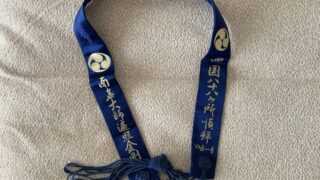
Wagesa
A ring kesa is a simplified form of a Buddhist monk’s kesa (robe) worn around the neck by pilgrims, such as those on the Shikoku Pilgrimage.
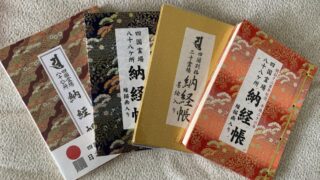
Nokyōchō (Stamp Book)
An essential book used to collect temple stamps (goshuin) at each pilgrimage site.
Sanya Bag
A small bag used to carry the nokyōchō and other prayer items, making it convenient to manage belongings while walking.
Comfortable Walking Shoes
Pilgrimage paths and temple grounds often include steep hills and stairs. Avoid sandals or heels, and choose shoes that are comfortable for long-distance walking.
Pilgrimage Etiquette
There are several unique manners to observe during the Shikoku pilgrimage:
- Be quiet and respectful when praying at the Main Hall and Daishi Hall
- Do not take photos in areas where photography is prohibited
- Greet local residents politely
- Accept osettai (acts of kindness) with gratitude
What is “Osettai”?
Osettai is a traditional custom in which local people offer food, drinks, or other support to pilgrims free of charge. It is an expression of goodwill and hospitality that has long been part of the pilgrimage culture.
Related Articles

Can Non-Buddhists Do the Shikoku Pilgrimage? What About Religious Sects?
You do not need to be a Buddhist to take part in the Shikoku pilgrimage.
Originally, it was a religious journey, but today many people undertake it for various reasons such as sightseeing, personal growth, or simply to refresh their minds.
In terms of religious sects, the pilgrimage is associated with Kobo Daishi (Kukai), the founder of Shingon Buddhism.
However, there is no requirement to belong to any specific sect.
For this reason, anyone—regardless of religion or beliefs—is free to take on the pilgrimage.
Why Is the Shikoku Pilgrimage So Popular? Reasons and Appeal
In recent years, the number of people starting the pilgrimage has been increasing year by year.
So why do so many people choose to walk around Shikoku?
Here, we’ll explore the key attractions and reasons behind its popularity.
Time to Reflect on Yourself
During the pilgrimage, you spend long hours walking alone over great distances.
By stepping away from your smartphone and everyday life, and simply continuing to walk, you naturally create time to reflect on yourself.
Many people say that “their thoughts became clearer” or “they felt mentally lighter,”
which is one of the greatest appeals of the Shikoku pilgrimage.
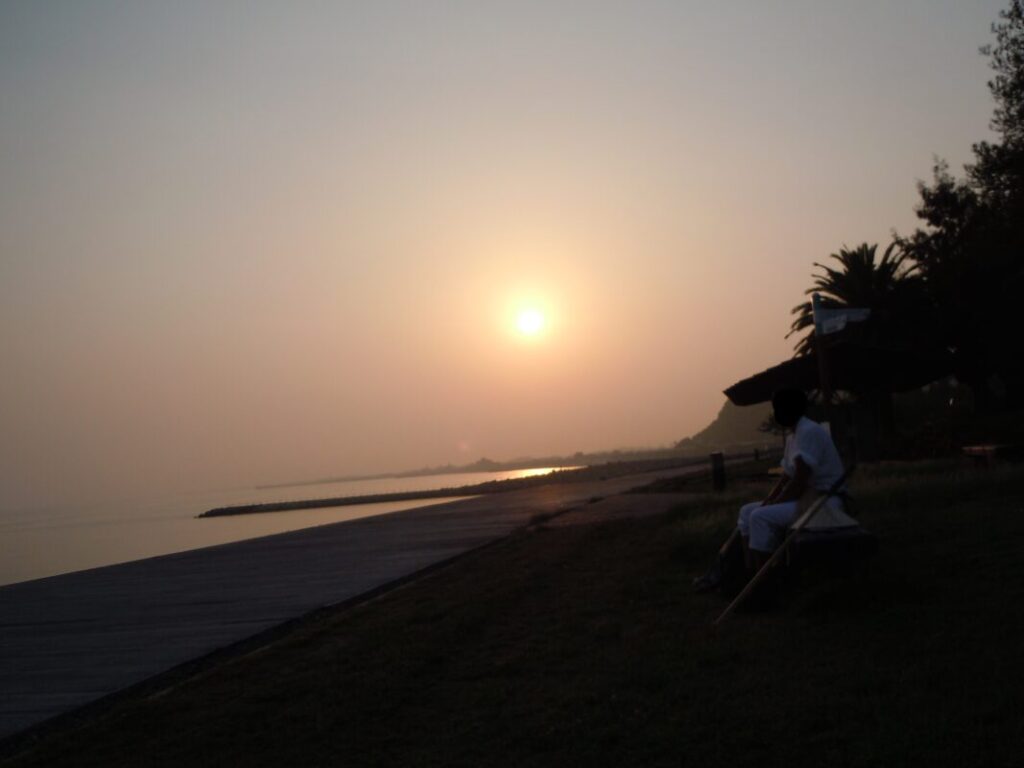
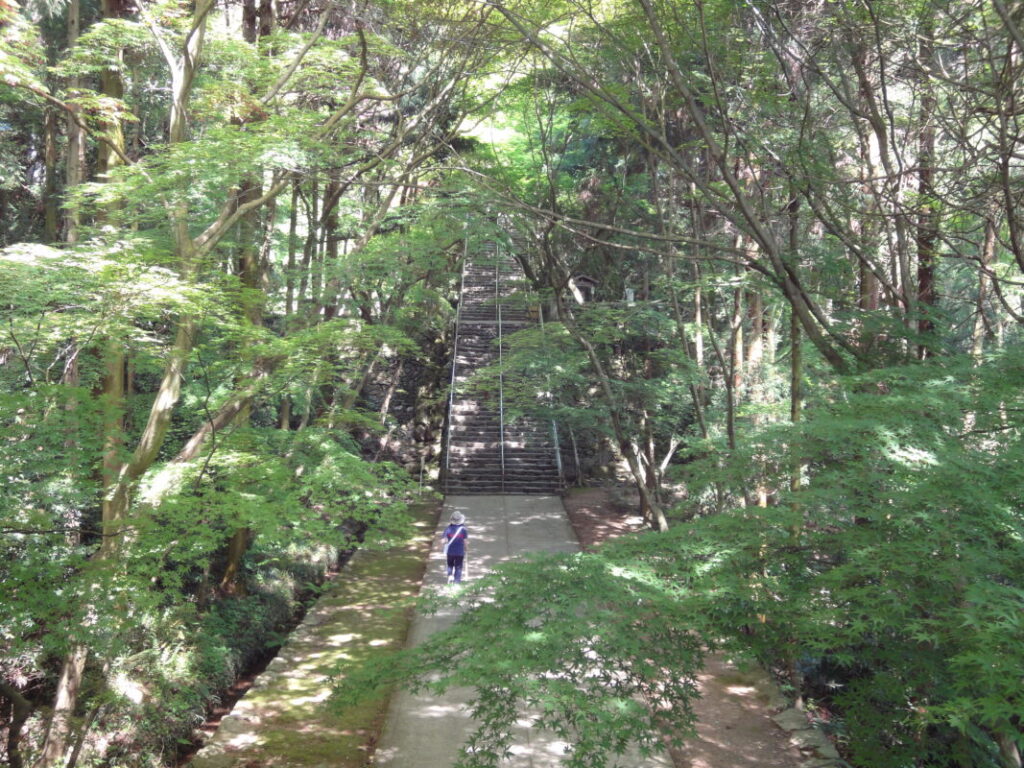
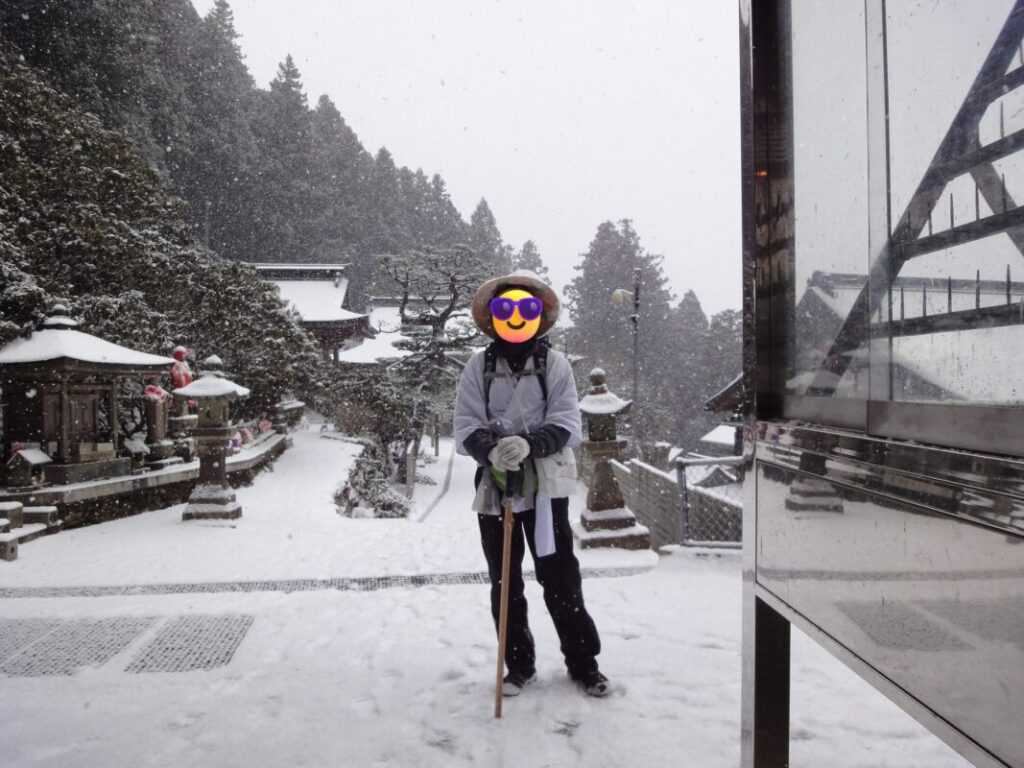
Connection with Nature: An Extraordinary Experience
Experiencing the nature of Shikoku is something you rarely encounter in everyday life.
Along the pilgrimage, the scenery changes dramatically depending on where you are—mountain trails, coastal paths, and quiet rural villages.
Each place offers a fresh and memorable experience.
In spring, you’ll see cherry blossoms and vibrant greenery.
In summer, strong sunlight and clear blue skies.
In autumn, colorful foliage.
In winter, crisp air and deep silence.
Each season brings completely different landscapes, and every visit offers something new to discover.
However, nature is not always gentle.
You may face harsh conditions such as intense summer heat, sudden rain, or the difficulty of mountain paths.
That is precisely why overcoming these challenges makes the sense of achievement even greater,
and the beauty of nature stays with you on a much deeper level.
Related Articles
Encounters with People
During the pilgrimage, you meet a wide variety of people.
Fellow pilgrims walking the same path, local residents, and people you meet at accommodations—
one of the unique aspects of the journey is how naturally conversations arise with people you would not normally meet in everyday life.
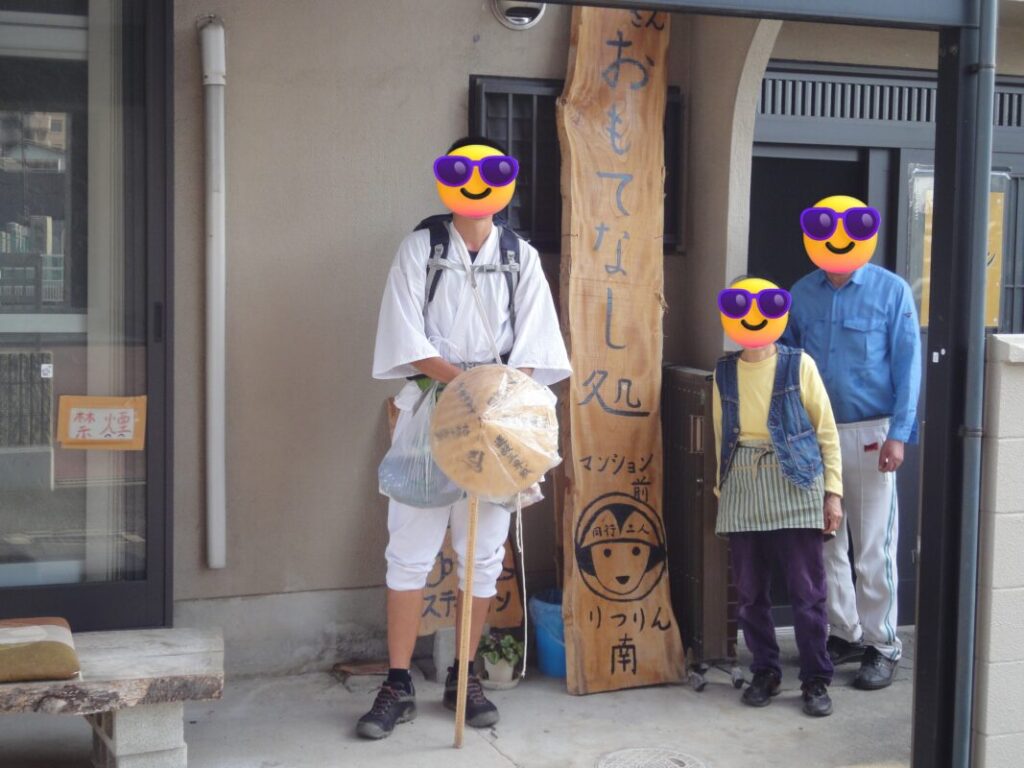
Experiencing the Culture of Osettai
In Shikoku, there is a unique tradition called osettai.
It is a custom in which local people offer food, drinks, and other support to pilgrims free of charge, expressing their kindness and encouragement.
By experiencing this warm culture, many pilgrims come to truly feel the generosity and compassion of others.
Related Articles
A Strong Sense of Accomplishment
The Shikoku pilgrimage is not an easy journey.
There are many challenges, including long distances, physical strain, and changing weather conditions.
That is exactly why the sense of accomplishment when you complete the pilgrimage is so great.
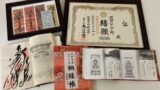
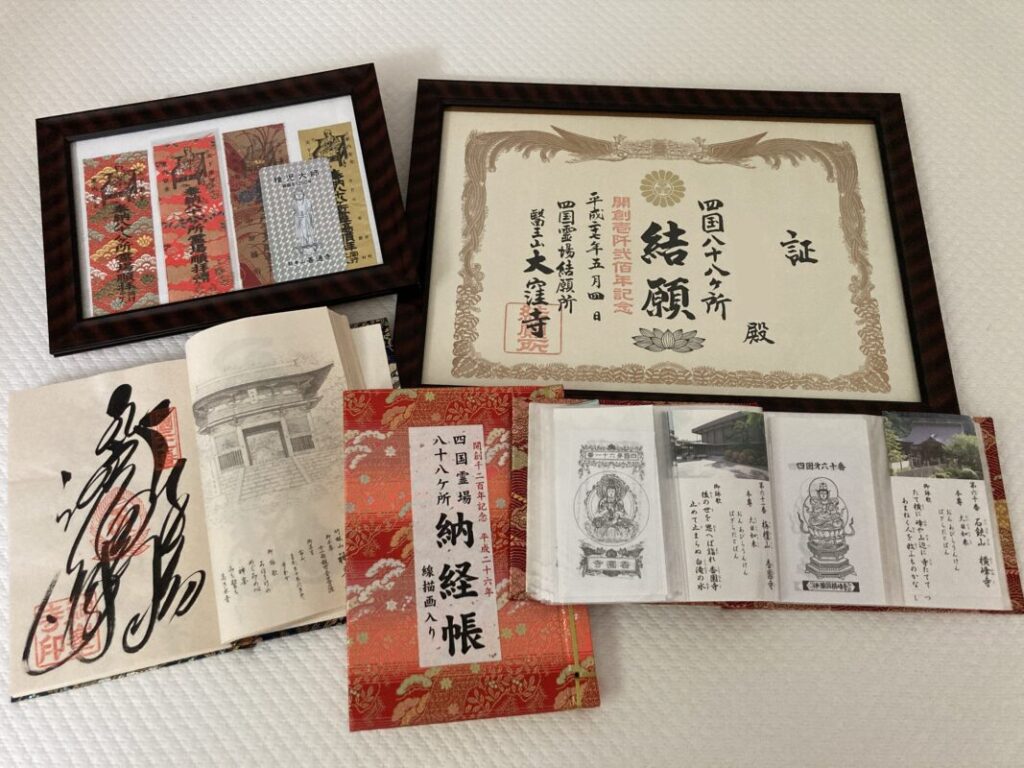
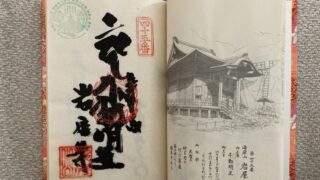
At each temple, you can receive a goshuin (temple stamp) at the nōkyō office.
Originally, these are given as proof of your visit and prayer, but in recent years, more people also collect them as a personal record of their journey.
Related Articles
Frequently Asked Questions (FAQ)
- QCan I do the Shikoku pilgrimage alone?
- A
Yes, you can absolutely do it on your own.
In fact, many pilgrims travel alone.Along the way, you’ll often have natural conversations with fellow pilgrims and local people, so it’s rare to feel completely isolated.
I personally walked the pilgrimage alone, and rather than feeling anxious, I strongly appreciated the freedom of being able to go at my own pace.
- QIs it safe for women to travel the pilgrimage alone?
- A
In general, it is considered safe, but there are a few important precautions to keep in mind.
- Try to finish walking before sunset, especially on mountain trails or quiet roads
- Avoid wild camping in isolated or low-traffic areas
- Take basic safety measures, such as sharing your location and keeping a reliable means of communication
Shikoku has a deeply rooted pilgrimage culture, and many locals are kind and supportive. However, it is important to remember that it is still a journey with potential risks.
Traveling with awareness and preparation is key to staying safe.
- QCan foreigners do the Shikoku pilgrimage?
- A
Yes, foreigners can absolutely do the Shikoku pilgrimage without any issues.
In fact, in recent years the number of international pilgrims has been increasing, and the overall acceptance and support systems across Shikoku have become more developed.
- QHow hard is the Shikoku pilgrimage?
- A
To be honest, walking the Shikoku pilgrimage is physically demanding.
You may walk 20–30 km a day, and there are many mountain paths and stairways, which can be quite tiring.
However, you don’t have to walk the entire route without help. You can also combine walking with buses or trains.
One of the good things about the pilgrimage is that you can adjust it according to your own physical condition and pace.
- QWhich pilgrimage style is recommended for beginners?
- A
For beginners, a “segmented pilgrimage” (kugiri-uchi) is recommended.
Instead of completing all 88 temples at once, you divide the journey into smaller sections—for example, “start with Tokushima only”—so you can continue without overexerting yourself.
At the beginning, it is also a good idea not to insist on walking only. Combining walking with cars or public transportation is also a perfectly valid approach.
- QDo I need special knowledge or religious faith to do the Shikoku pilgrimage?
- A
No, you do not need any special knowledge or religious faith.
Although the Shikoku pilgrimage originally has religious roots, today many people travel it for tourism, personal growth, or self-reflection.
You are free to start the pilgrimage regardless of your religion or beliefs.
- QHow should I arrange accommodation?
- A
There are several main options:
- Inns, ryokan, or guesthouses
- Zenkon-yado (free or low-cost pilgrim lodging)
- Wild camping
For beginners, staying at regular accommodations is the safest and most comfortable choice.
As you become more experienced, it is recommended to expand your options depending on the situation and your comfort level.
- QDo I need a smartphone or navigation system?
- A
It is very useful to have one.
Although there are signposts along the pilgrimage routes, some areas can be confusing or difficult to follow. Using map apps or pilgrimage-specific apps can help reduce the risk of getting lost.
In particular, if you are doing the reverse pilgrimage (gyaku-uchi), having smartphone navigation is especially reassuring.
Summary: The Shikoku Pilgrimage Is a Journey Anyone Can Begin
The Shikoku pilgrimage is something anyone can start—no special qualifications or religious beliefs are required.
You can choose a style that suits you, whether walking, cycling, or traveling by car, and each approach offers its own unique value and experience.
For beginners, starting with a segmented pilgrimage is often a good option.
The nature of Shikoku, encounters with people, and time to reflect on yourself—
the pilgrimage is sure to become a truly special journey in your life.
Related Articles
This article summarizes things you should not do on the Shikoku Pilgrimage.
Shikoku Pilgrimage Rules & Prohibited Actions: Essential Etiquette for Beginners
If you would like to learn how to worship at a Japanese temple, please see this page.
How to Worship at Japanese Temples : Shikoku Pilgrimage Guide
This article provides a complete list of the Shikoku 88 Temple pilgrimage route, including distances, travel times, and temple lodging (shukubo).
Temple List and Full Route
Essential Gear for Walking the Shikoku Pilgrimage: Complete Packing List.
Essential Gear for the Shikoku Pilgrimage
What Is the Purpose of the Shikoku Pilgrimage? Real Experiences from 88 Temples.
Purpose of the Shikoku pilgrimage
Who Was Kūkai? Life, Teachings, and Connection to the Shikoku Pilgrimage.
Who Was Kūkai?