“I’m worried I can really finish this in one day…”
“How tough is Mt. Shosan-ji?”
Hello, I’m Taka, the author of this blog.
I have completed the Shikoku Pilgrimage on foot, going both clockwise and counterclockwise for two full rounds.
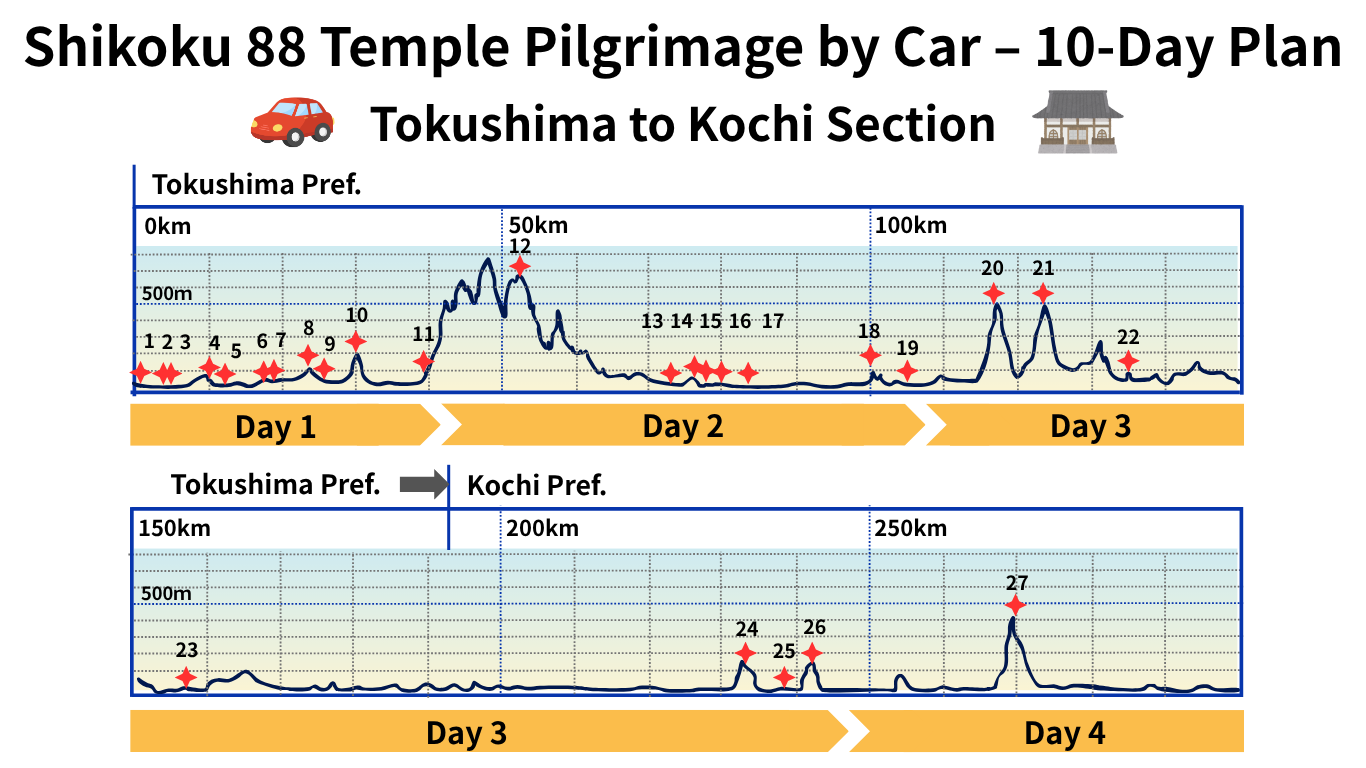
In this article, I will give a complete explanation of Day 2 of the car pilgrimage (Temple 12 Shōsan-ji to Temple 19 Tatsue-ji), including the actual route I took, travel time, and even the mistakes I made.
To put it simply, the key points of this day are:
- You will spend a significant amount of time at Shōsan-ji
- Your early morning schedule determines the difficulty of the entire day
Summary of the route
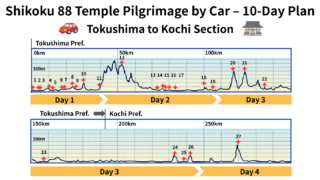
- Distance: approx. 60 km
- Required time: approx. 12 hours (including driving and temple visits)
- Efficient section:
→ Temples 13 to 17 are clustered closely together, making them relatively easy to visit efficiently
- Best Day 2 Schedule (Time Allocation)
- Shikoku Pilgrimage by Car – Day 2: From Mt. Shōsan-ji Back to Tokushima City Area
- Highlights of Day 2: Nature and History of Shōsan-ji
- Roadside Station Information: Tokushima City Area
- Recommended accommodation: from Shōsan-ji to Kakurin-ji
- Common Mistakes at Shōsan-ji
- FAQ: Day 2 of the Shikoku Pilgrimage by Car
- Summary
- Related Article
Best Day 2 Schedule (Time Allocation)
As a guideline, allocate about 30 minutes per temple for the visit. This is intentionally generous, so you can adjust flexibly depending on the situation.
- 6:30Breakfast & Departure
1 hr 30 min travel
- 8:00Temple 12: Shosanji
30 min worship + 1 hr travel
- 9:30Temple 13: Dainichiji
30 min worship + 10 min travel
- 10:10Temple 14: Jorakuji
30 min worship + 5 min travel
- 10:45Temple 15: Kokubunji
30 min worship + 10 min travel
- 11:25Temple 16: Kannonji
30 min worship + 20 min travel
- 12:15Lunch
- 13:00Temple 17: Idoji
30 min worship + 1 hr travel
- 14:30Temple 18: Onzanji
30 min worship + 15 min travel
- 15:15Temple 19: Tatsueji
30 min worship
- 15:45Finish
Shikoku Pilgrimage by Car – Day 2: From Mt. Shōsan-ji Back to Tokushima City Area
On Day 2, the plan covers Temples 12 through 19.
The total distance is approximately 60 km, and the key highlight of this day is Temple 12, Shōsan-ji, located in a mountainous area.
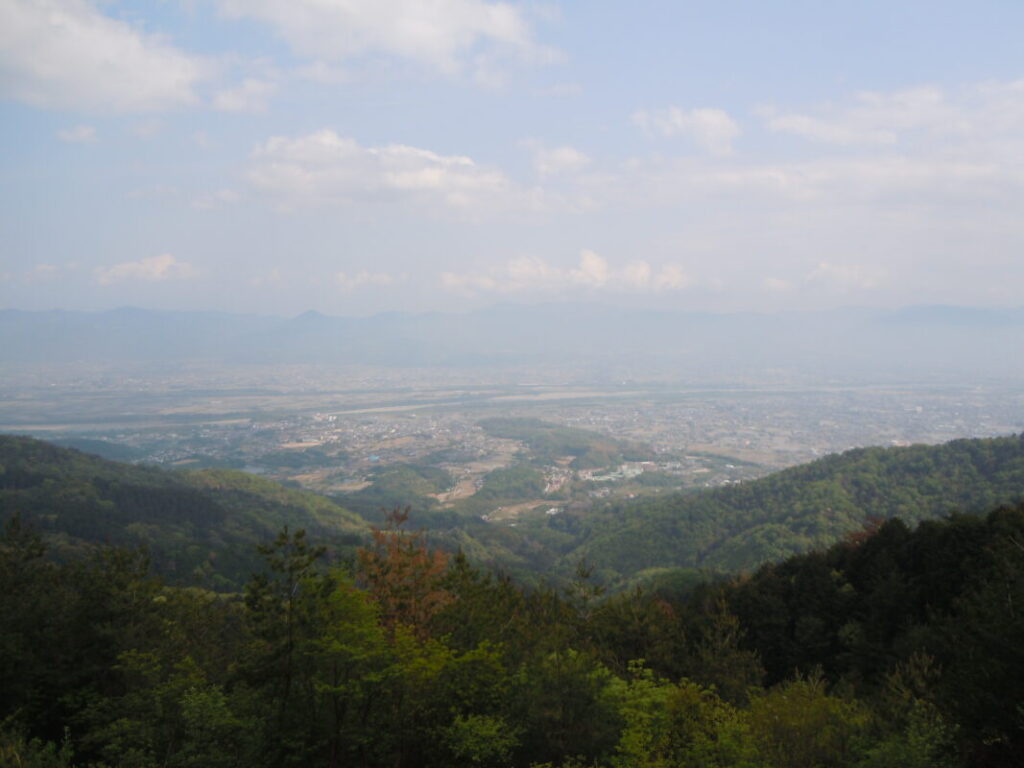
To reach Shōsan-ji, you will be driving through mountain roads, so extra caution is required.
There are sections with sharp curves and narrow lanes, so make sure to allow plenty of time for travel.
After passing Shōsan-ji, the route returns back toward urban areas.
Because of this, finding accommodation and meals is generally not an issue along the way.
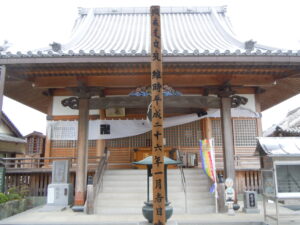
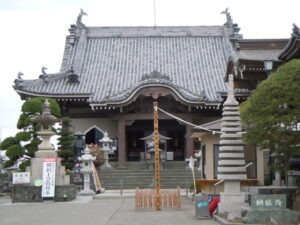
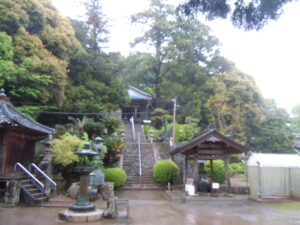
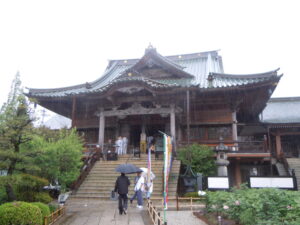
Information on Temples No. 12 to No. 19
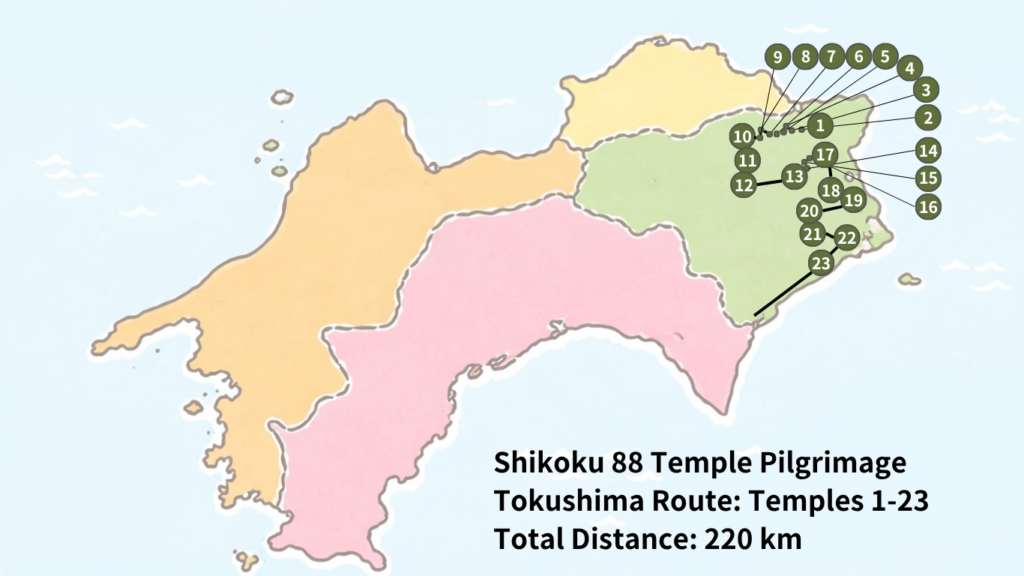
Detailed guides for each temple include route maps, history, goshuin, and highlights.
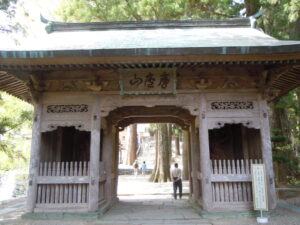
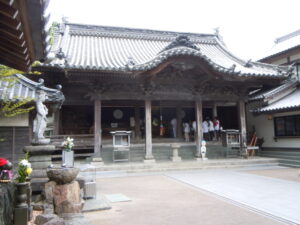
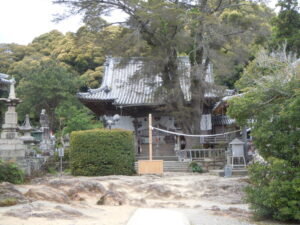
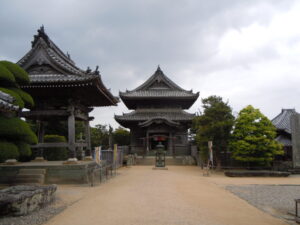
A complete list of all temples up to No. 88 is available in the article below.
Temple List and Full Route
Key Point of Day 2: Making the Most of Early Morning Hours
The biggest highlight of this day is Temple 12, Shōsan-ji, located at an elevation of approximately 700 meters.
Because it is situated in a mountainous area, travel time is longer, making it the most critical part of the day’s schedule.
If you have already completed up to Temple 11 the previous day, starting early the next morning allows you to allocate sufficient time for the drive and move efficiently through the route.
On the other hand, Temples 13 through 17 are relatively close to each other, making them easier to visit in a short amount of time.
Ideally, this section should also be completed within the same day.
Highlights of Day 2: Nature and History of Shōsan-ji
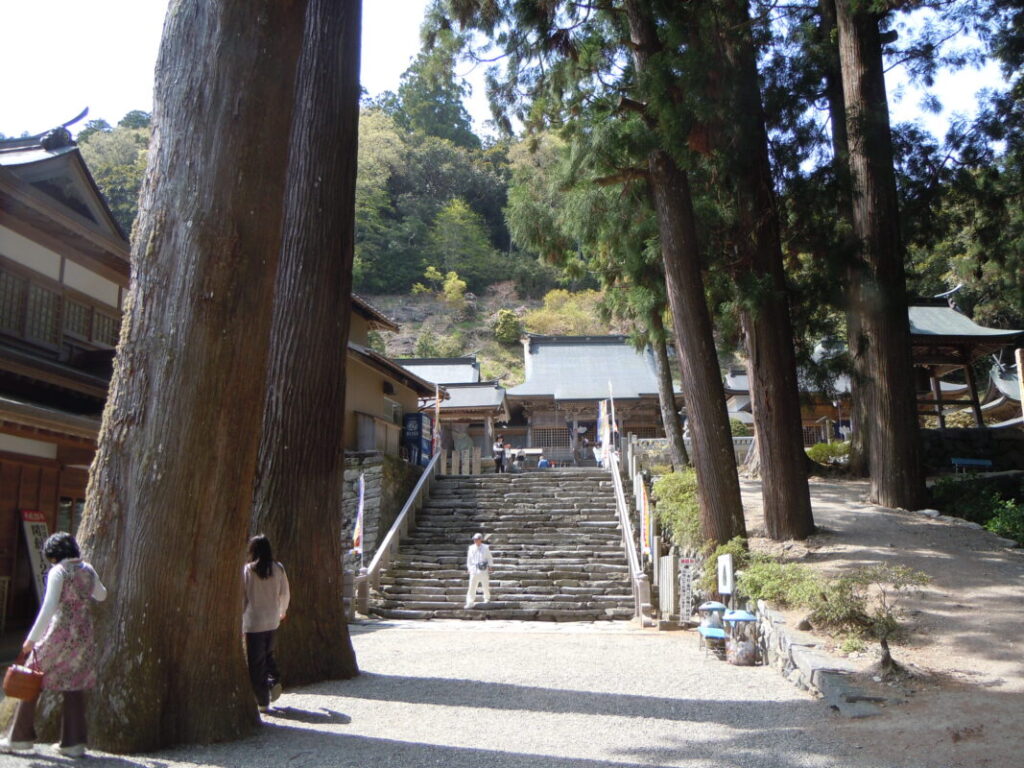
The Great Cedar Trees of Shōsan-ji
Temple 12, Shōsan-ji, is a sacred site located deep in the mountains and is often regarded as the first major challenge of the Shikoku Pilgrimage.
For walking pilgrims, it can take anywhere from 6 to 9 hours just to reach the temple for worship.
Within the temple grounds stand towering cedar trees, some said to be several hundred years old, creating a solemn and mystical atmosphere.
Their overwhelming presence leaves a strong impression on visitors and is one of the most memorable highlights of Shōsan-ji.
Jōshin-an
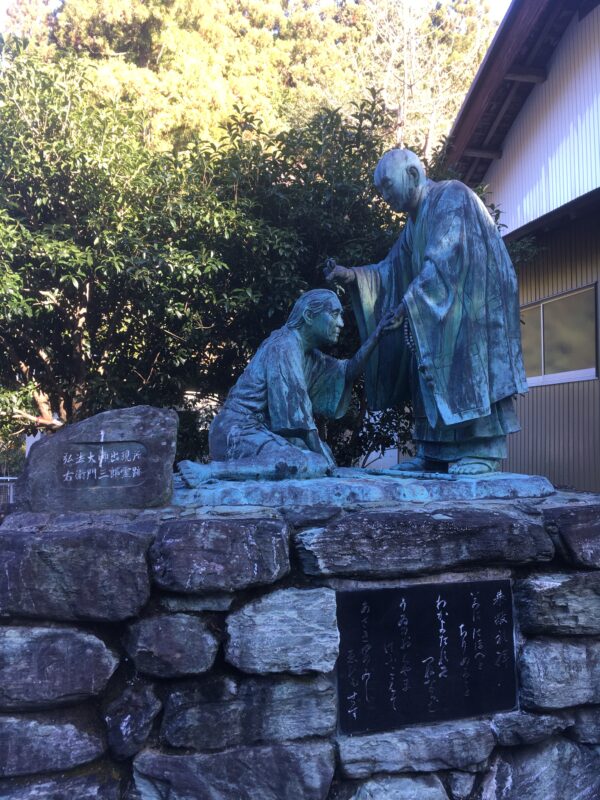
Located about 2 km after descending from Shōsan-ji, Jōshin-an is known as a sacred site associated with the legend of Emon Saburō.
Emon Saburō was a man from Iyo Province during the Heian period.
After regretting his disrespect toward Kōbō Daishi (Kūkai), he set out on a pilgrimage to follow him.
He is said to have repeatedly completed the circuit, and on his 21st attempt, he collapsed near Mt. Shōsan-ji.
According to legend, Kōbō Daishi witnessed his final moments and planted the staff Emon Saburō had been holding into the ground as a grave marker.
That staff is said to have taken root and grown into a massive cedar tree over time.
Although it is a small hall nestled quietly in the mountains, it is a deeply spiritual stop where history and faith intersect, making it a place to pause and reflect.
Roadside Station Information: Tokushima City Area
We have compiled a list of roadside stations that are easily accessible from the pilgrimage route.
Kamiyama


| Parking | 50 |
| Nearest Temple | No. 12 |
| Facilities | – |
| Google Maps | MAP |
| Rating | ★★★★☆ (4/5) |
It is located halfway up Mt. Shōsan-ji and serves as a convenient base before visiting the temple.
Nakagawa

| Parking | 80 |
| Nearest Temple | No. 19 |
| Facilities | – |
| Google Maps | MAP |
| Rating | ★★★☆☆ (3/5) |
It is located along National Route 55 and is slightly away from the pilgrimage route.
Katsuura

| Parking | 25 |
| Nearest Temple | No. 20 |
| Facilities | Wi-Fi, Campground |
| Google Maps | MAP |
| Rating | ★★★★☆ (4/5) |
It is located at the base of Temple 20, Kakurin-ji, so if you have already visited up to Temple 19, it is also recommended as a convenient base.
Here is a list of roadside stations (Michi-no-Eki) convenient for the Shikoku Pilgrimage.
Best roadside stations for Shikoku pilgrims
Recommended accommodation: from Shōsan-ji to Kakurin-ji
SUPER HOTEL Tokushima Komatsushima Natural Hot Spring
A convenient hotel for the Shikoku Pilgrimage by car, especially after visiting Mt. Shōsan-ji.
- Natural hot spring bath for recovery after long driving and temple visits
- Free breakfast for an easy and early start
- Free parking, ideal for car pilgrims
- Good access to Tokushima City and surrounding pilgrimage routes
A comfortable base to rest and recover before continuing the pilgrimage.
Other Recommended Accommodation List
Other recommended accommodations are explained in detail in this article.
Recommended Accommodation: Temples 12–19 in Tokushima
Common Mistakes at Shōsan-ji
Not arriving in time for the temple office (nokyōsho) due to long travel time
Because Shōsan-ji is located in a mountainous area, the travel time is often longer than expected.
The temple’s stamp office (nokyōsho) is open from 8:00 to 17:00, so it is important to plan your schedule with enough buffer time.
If your timing is too tight, you may end up arriving after closing hours and miss the opportunity to receive your temple stamp.
Mistaking the Route to Shōsan-ji
If you take the wrong road to Shōsan-ji, you may end up entering extremely narrow mountain paths that are difficult to drive and require advanced handling skills.
For a safer route, it is recommended to use Prefectural Routes 20 and 21, and then access the area from the southern side via National Route 438.
Sticking to this route helps avoid tight, challenging mountain roads and makes the drive significantly safer and more manageable.
FAQ: Day 2 of the Shikoku Pilgrimage by Car
- QHow long does it take to reach Shōsan-ji?
- A
The estimated time is about 1 hour by car from the base of the mountain.
However, since the route includes winding mountain roads with many curves, it may take longer if you are not used to driving in such conditions.
- QIs the road to Shōsan-ji easy to drive?
- A
It is moderately difficult.
There are narrow sections and sharp curves, so you should drive slowly and carefully. Be especially cautious of oncoming vehicles.
- QHow long does it take to visit Temples 13 to 17?
- A
Approximately 1 to 2 hours.
Since these temples are located relatively close to each other, they can be visited quite smoothly and efficiently.
- QWhere is a good place to stay overnight on Day 2?
- A
Either around Temple 19, Tachii-ji, or in Tokushima City is recommended.
Both locations connect smoothly to the next day’s route, allowing you to continue your pilgrimage efficiently.
Summary
On Day 2 of the Shikoku Pilgrimage by car, everything comes down to how you approach Shōsan-ji.
- Start early in the morning
- Plan with the assumption that mountain roads will take more time
- Efficiently cover the city-area temples afterward
By keeping these three points in mind, it is possible to complete the entire day’s route without unnecessary strain.
Related Article
Shikoku Pilgrimage by Car Day 3: Temples 20–26 Route Guide (Tokushima to Muroto)
Day 3: Tokushima & Kochi Temples 20–26
Shikoku Pilgrimage by Car Day 1 Guide | Tokushima Temples 1–11 Route, Time & Map
Day 1: Tokushima Temples 1–11
Shikoku Pilgrimage by Car: 10-Day Route, Cost & Essential Tips.
Shikoku Pilgrimage by Car