Hello, I’m Taka, the person who runs this blog.
I completed the Shikoku Pilgrimage on foot twice, combining both the clockwise and counterclockwise routes.
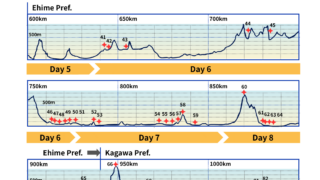
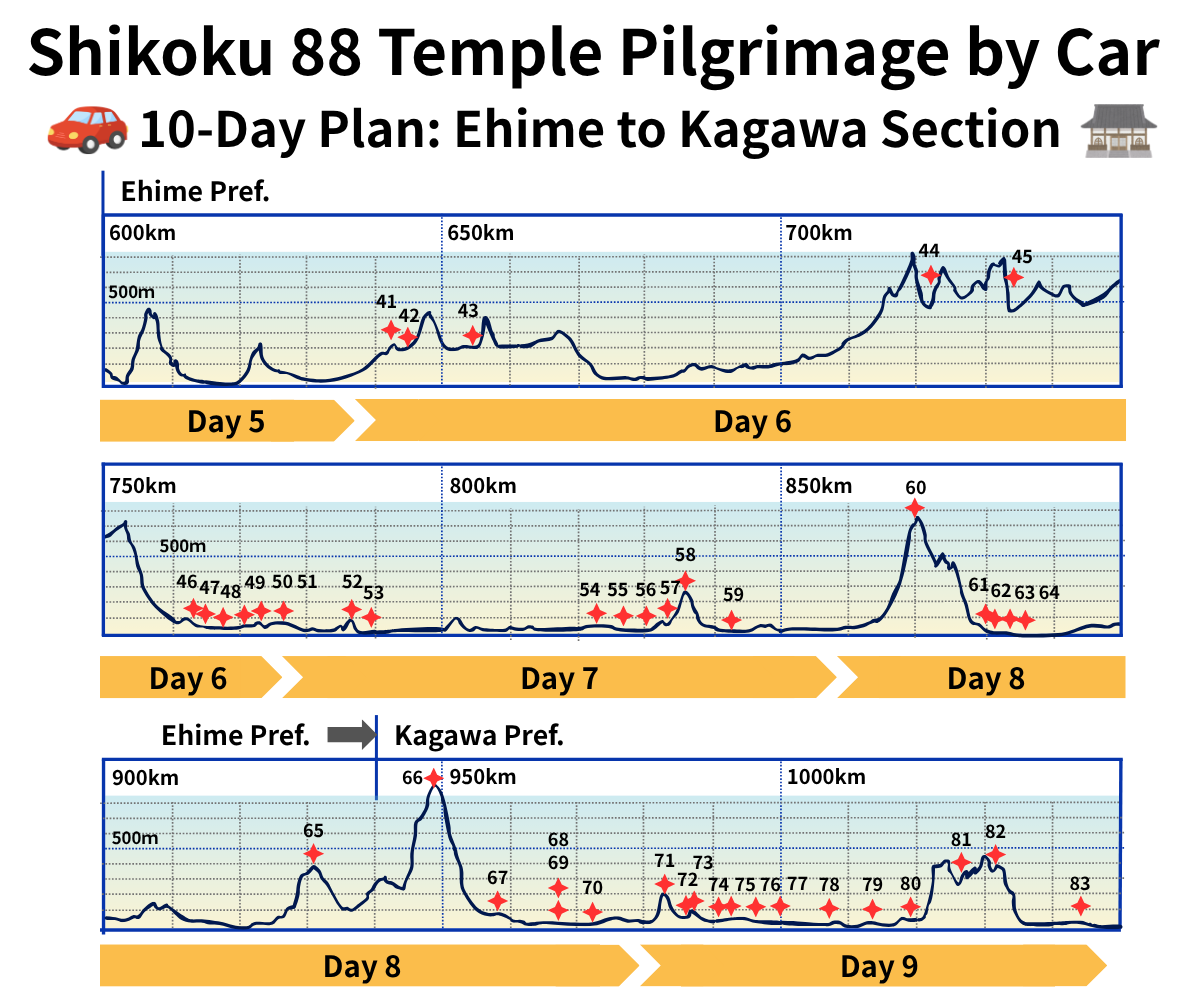
Day 6 of the Shikoku Pilgrimage by car covers the route from Temple No. 41, Ryukoji, to Temple No. 50, Hantaji in Ehime. It is a day of major changes, traveling from the Uwajima area through the mountainous temples of Kumakogen and then into central Matsuyama.
The biggest challenges of the day are Temple No. 44, Daihoji, and Temple No. 45, Iwayaji. In particular, Iwayaji requires a walk uphill from the parking lot, so managing your time carefully is important.
In this article, I will clearly explain the most efficient way to visit Temples No. 41 to No. 50, important tips for the Kumakogen area, as well as roadside stations and accommodation options for Day 6 of the car pilgrimage.
In this article, you will learn about:
- The most efficient way to visit Temples No. 41 to No. 50
- Important tips for the Kumakogen area
- Recommended accommodations and roadside stations
- How much time to allow for visiting Iwayaji Temple
- Best Day 6 Schedule (Time Allocation)
- Shikoku Pilgrimage by Car – Day 6: Uwajima to Kumakogen to Matsuyama
- Day 6 Highlight
- Roadside Station Information: Ainan to Uwajima to Matsuyama
- Common Mistakes in the Kumakogen Area
- Recommended Accommodations: Uwajima, Kumakogen, and Matsuyama
- Frequently Asked Questions
- Summary
- Related Article
Best Day 6 Schedule (Time Allocation)
As a guideline, allocate about 30 minutes per temple for the visit. This is intentionally generous, so you can adjust flexibly depending on the situation.
- 7:30Breakfast & Departure
30 min travel
- 8:00Temple 41: Ryukoji
30 min worship + 10 min travel
- 8:40Temple 42: Butsumokuji
30 min worship + 30 min travel
- 9:40Temple 43: Meisekiji
30 min worship + 1 hr travel
- 12:00Lunch
- 12:10Temple 44: Daihoji
30 min worship + 20 min travel
- 13:00Temple 45: Iwayaji
30 min worship + 1 hr travel
- 14:30Temple 46: Joruriji
30 min worship + 5 min travel
- 15:05Temple 47: Yasakaji
30 min worship + 10 min travel
- 15:45Temple 48: Sairinji
30 min worship + 10 min travel
- 16:25Temple 49: Jodoji
30 min worship + 5 min travel
- 17:00Temple 50: Hantaji
30 min worship
- 17:30Finish
Shikoku Pilgrimage by Car – Day 6: Uwajima to Kumakogen to Matsuyama
Day 6 covers a route visiting Temples No. 41 through No. 50.
If you start the day from Uwajima, the total driving distance will be approximately 130 km.
The most challenging part of the day is visiting Temples No. 44 and No. 45, located in Kumakogen.
At the highest points, the elevation reaches around 700 meters, bringing the unique difficulties of a mountainous area.
Temple No. 45, Iwayaji, is especially demanding, as you must walk up the temple approach from the parking lot, so even pilgrims traveling by car should not underestimate it.
After passing Iwayaji, you will enter the Matsuyama area.
With the famous Dogo Onsen nearby, this is a great point in a 10-day itinerary to relax and recover in the hot springs.
Information on Temples No. 41 to No. 50
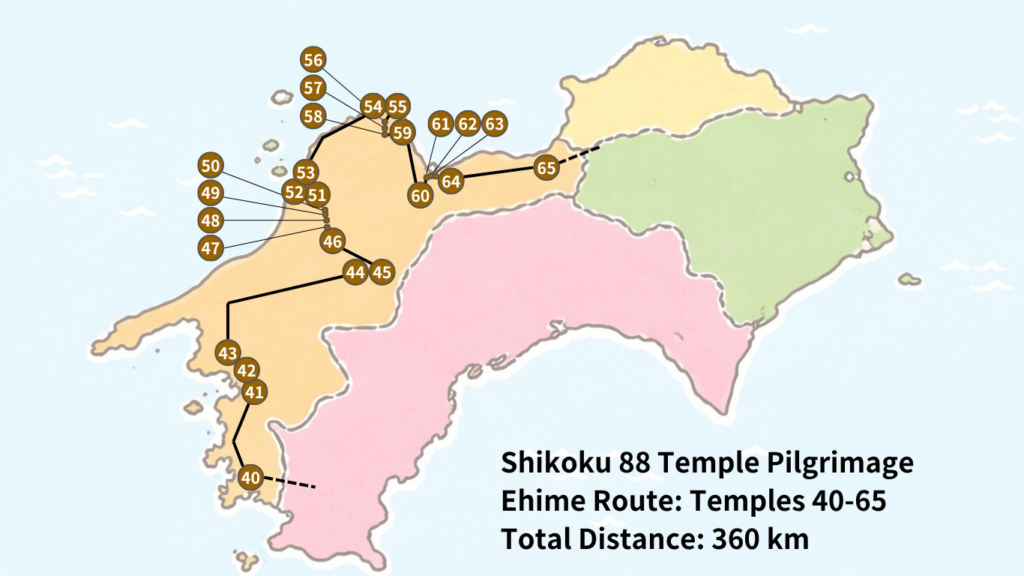
Detailed guides for each temple include route maps, history, goshuin, and highlights.
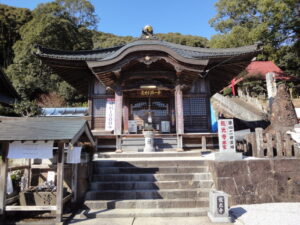
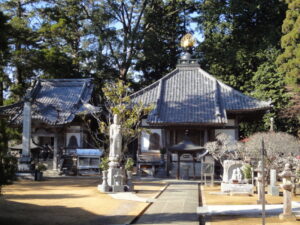
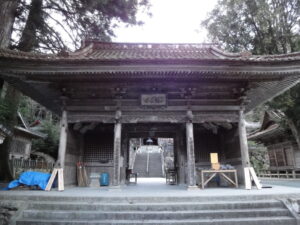
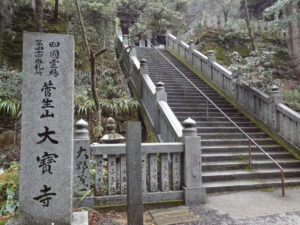
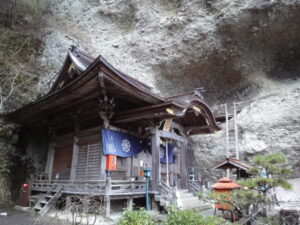
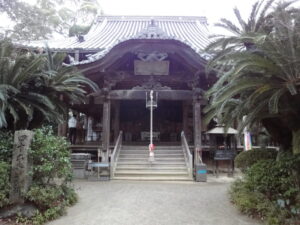
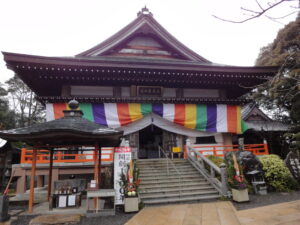
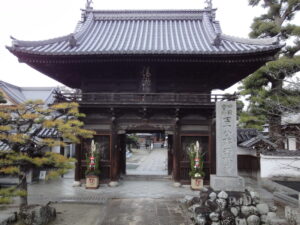
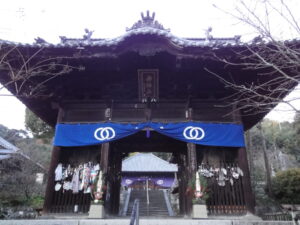
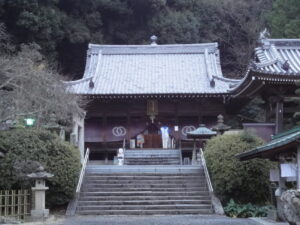
A complete list of all temples up to No. 88 is available in the article below.
Temple List and Full Route
Day 6 Highlight: The Kumakogen Area at Elevations of Around 700 Meters
Kumakogen is home to Temple No. 44 and Temple No. 45.
It is also known as one of the few areas in Shikoku with ski resorts.
The roads leading into this area include several stretches of steep and winding mountain roads.
Temple No. 45, Iwayaji, is especially demanding, with a steep uphill walk of about 20 minutes from the parking lot to the temple grounds.
Even on a car pilgrimage, you will need to complete the final approach on foot, so it is best to be mentally prepared.
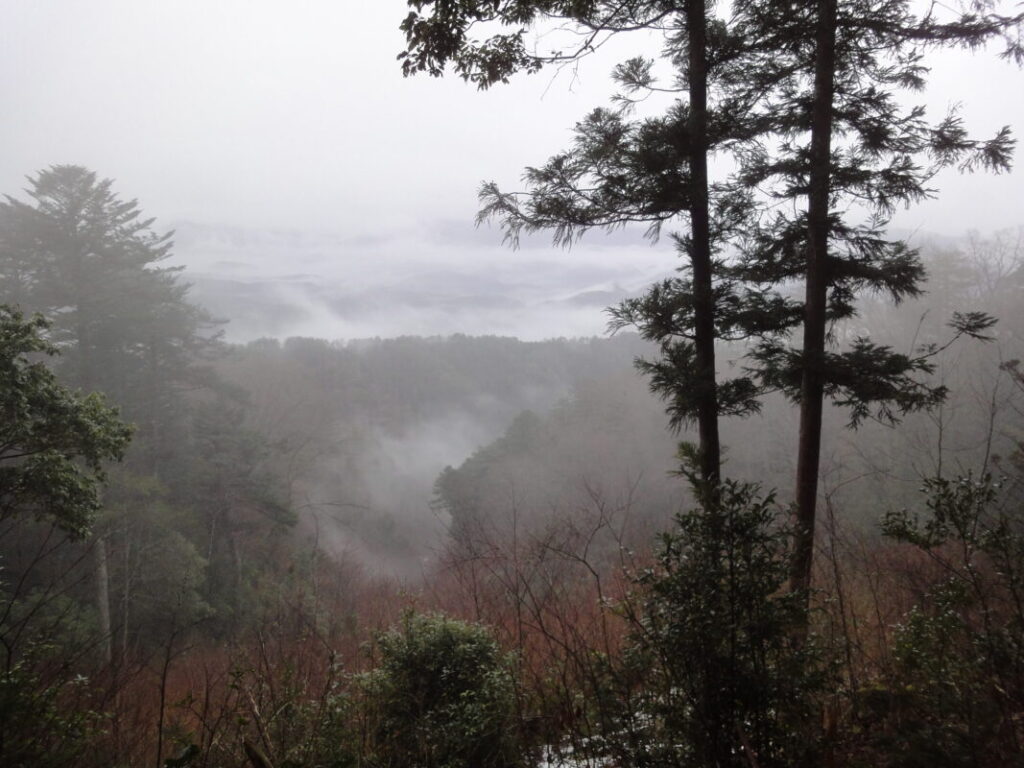
After passing Temple No. 45, you will enter the Matsuyama city area.
From this point onward, the temples are relatively close together, making this section easier and more efficient to visit.
Matsuyama also offers many hot springs, making it an attractive base for an overnight stay.
If your schedule allows, it is also recommended to take your time and continue sightseeing over the next day.
Day 6 Highlight
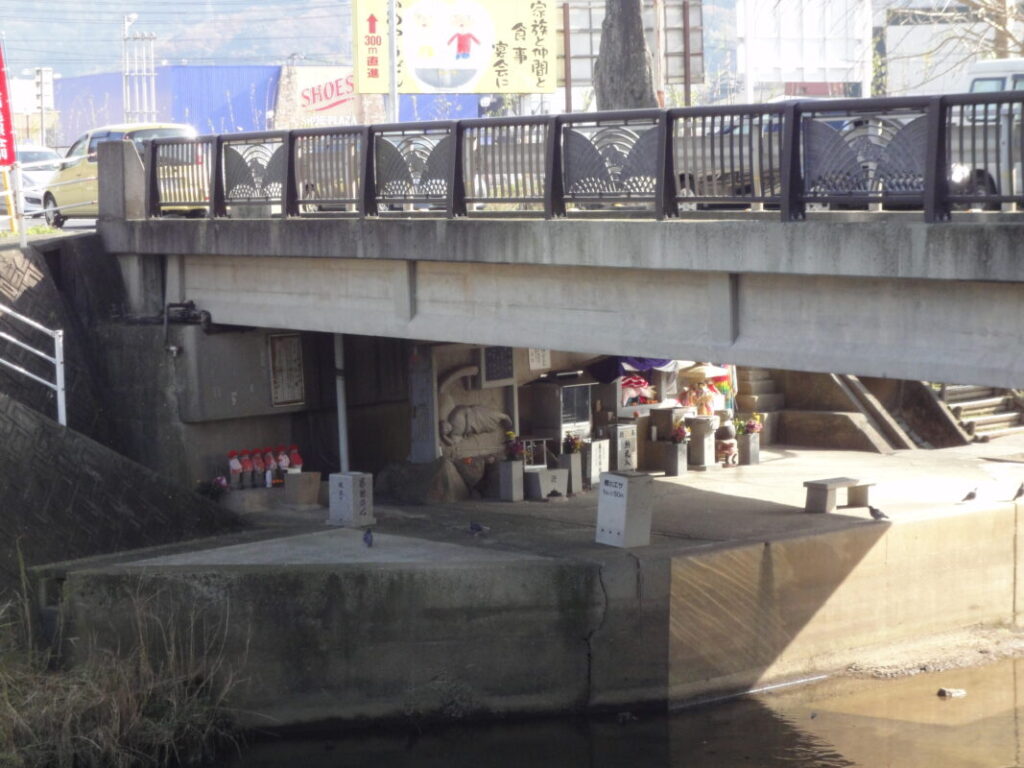
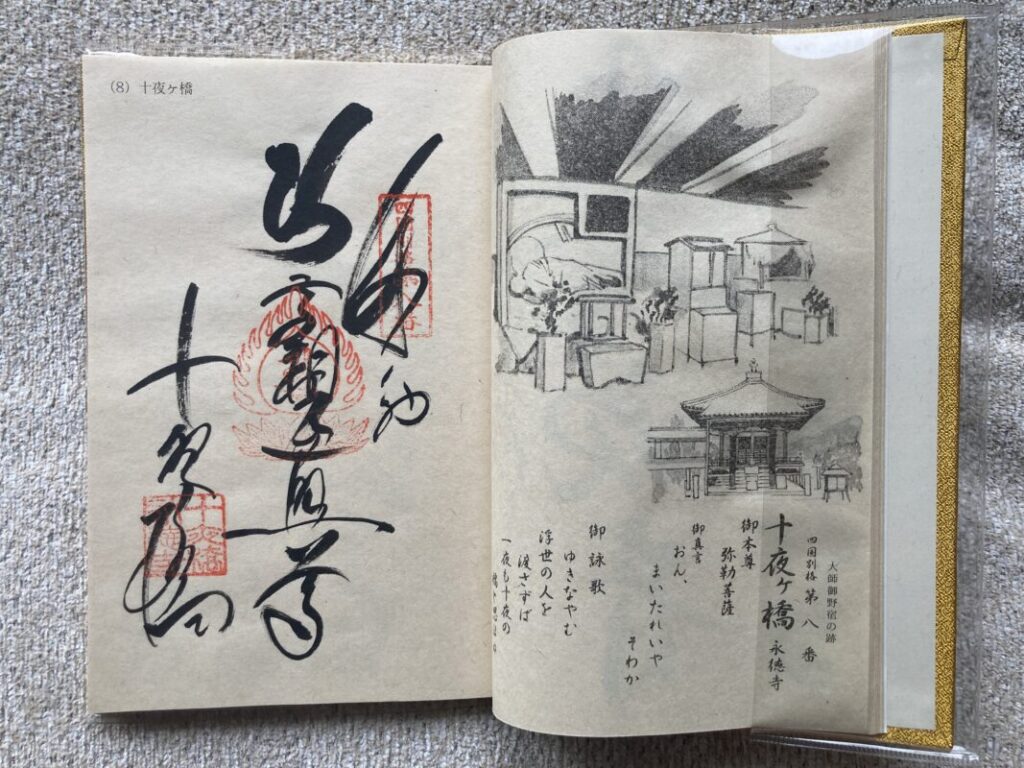
Bangai Sacred Site No. 8 – Toyogahashi
More than 1,200 years ago, when Kobo Daishi Kukai was training throughout Shikoku, he is said to have visited what is now the Ozu area.
At that time, there were very few places to stay in the region.
Unable to find lodging, Kobo Daishi is believed to have spent the night hungry beneath an earthen bridge crossing the river.
That night was said to be extremely cold and felt unbearably long—so long that one night seemed like ten nights.
Because of this story, the place came to be known as “Toyogahashi” (Bridge of Ten Nights).
Toyogahashi is known as:
- Located between Temple No. 43, Meisekiji, and Temple No. 44, Daihoji
- The 8th temple of the Shikoku Bangai 20 Sacred Sites
- One of the important sacred places of the Shikoku Pilgrimage
Today, it is widely known as a place where many pilgrims stop and pay their respects.
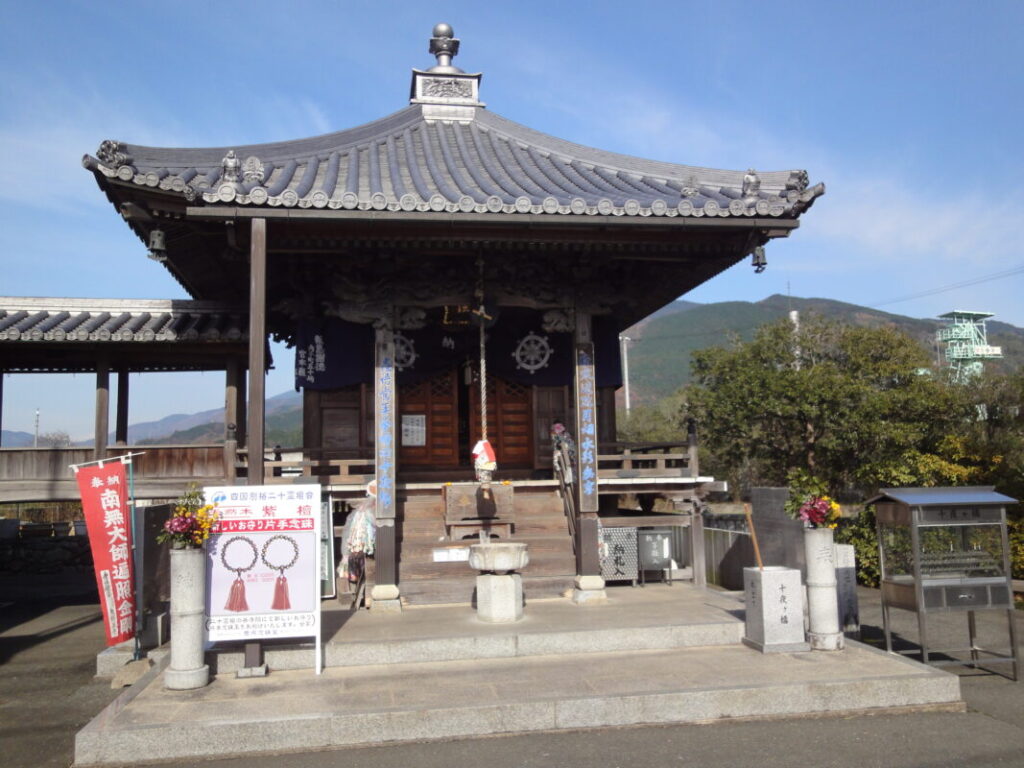
Check the location on Google Maps.
Pilgrims do not use their walking staffs while crossing the bridge.
It is said that Kobo Daishi is still resting beneath the bridge even today.
For that reason, pilgrims cross the bridge quietly and without touching the bridge with their staffs.
National Route 56 in Ozu
Temple stamp
The dramatic scenery of the Iwayaji area
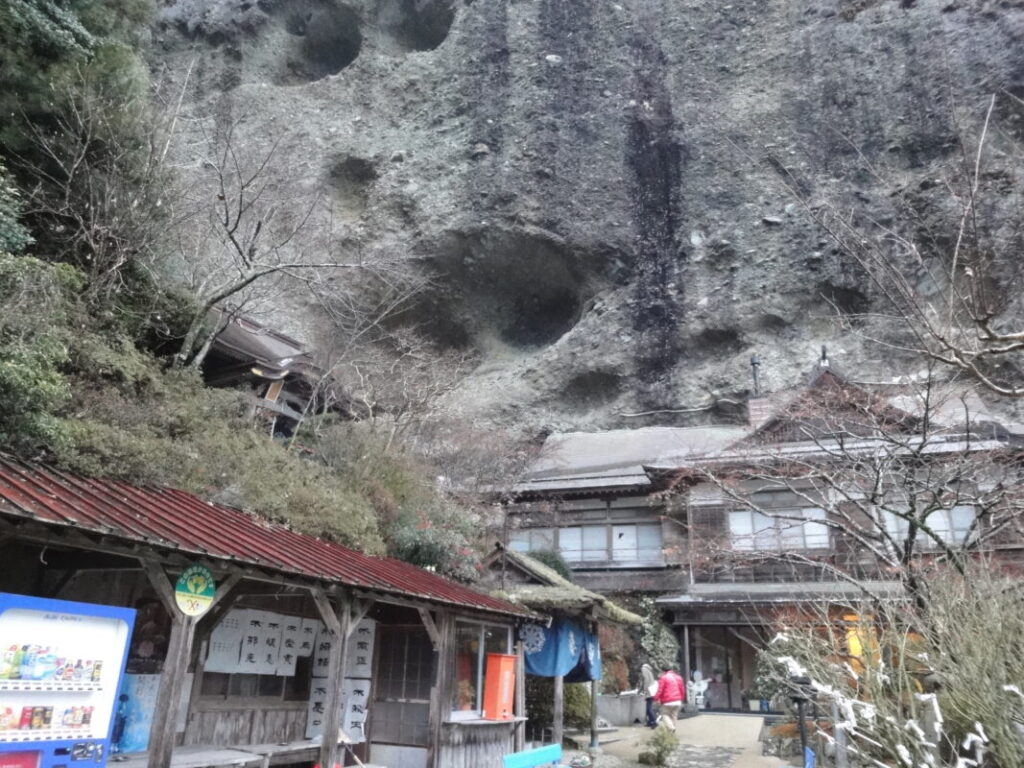
Iwayaji Temple’s main hall stands quietly at the foot of towering cliffs.
Though modest in appearance, your eyes are naturally drawn to the massive rock wall rising behind it.
The main hall is relatively small because the mountain itself is regarded as the principal object of worship.
A scenic area depicted in the Ippen Hijiri-e (National Treasure)
Along the pilgrimage path leading to Iwayaji Temple lies the scenic area known as Furuiwaya.
The Ippen Hijiri-e (a National Treasure housed at Shojokoji Temple in Kanagawa) portrays the mid-Kamakura period monk Ippen Shonin training in this area.
It preserves the temple grounds and history of a region that has long attracted the faith of pilgrims and worshippers.
You can also view the Ippen Hijiri-e as a mosaic mural in the lobby of Kokumin Shukusha Furuiwayaso. (National Lodge)
The massive mosaic artwork, rising about five meters high in the open atrium lobby, is truly impressive.
It depicts the same landscape as the Furuiwaya scenery outside, giving a sense that the view has remained unchanged for more than 700 years.
If you have extra time, it is well worth a visit.
Scenic spot: Furuiwaya
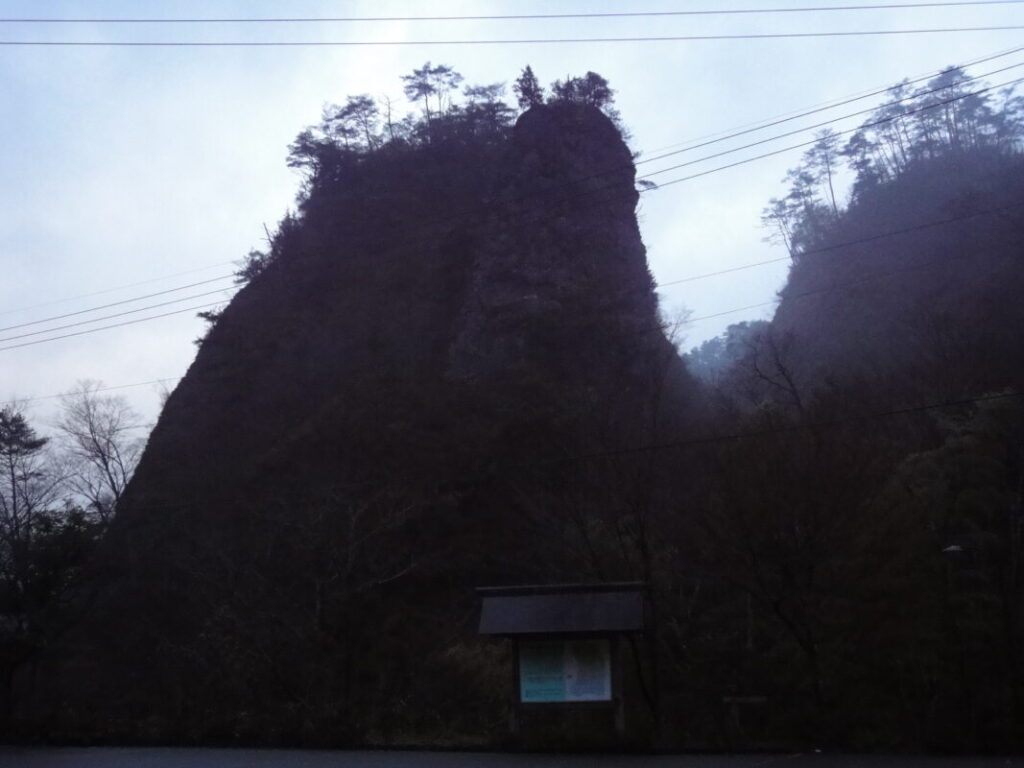
The same landscape as depicted in the Ippen Hijiri-e
National Lodge Furuiwayaso
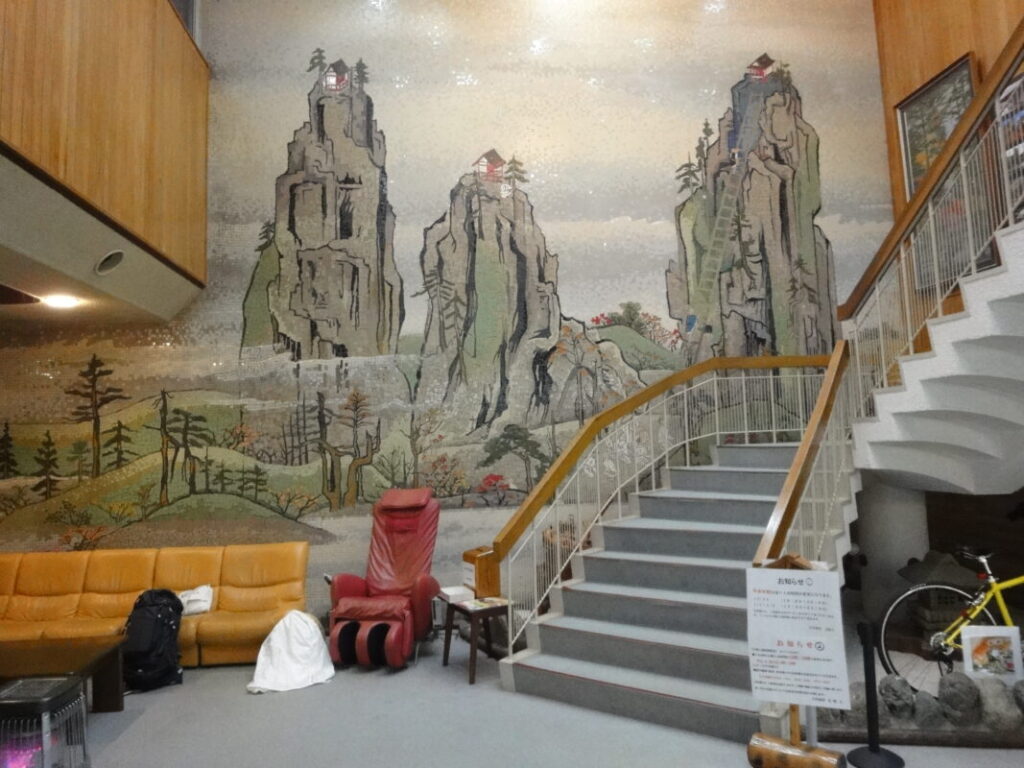
Lobby mosaic art: Ippen Hijiri-e
Drone aerial footage is available on the official website
On Iwayaji Temple’s official website, you can watch drone footage of the area.
The scenery is impressive from the ground, but the aerial video allows you to appreciate the scale and dramatic terrain even more vividly.
Visit Iwayaji Temple’s official website here.
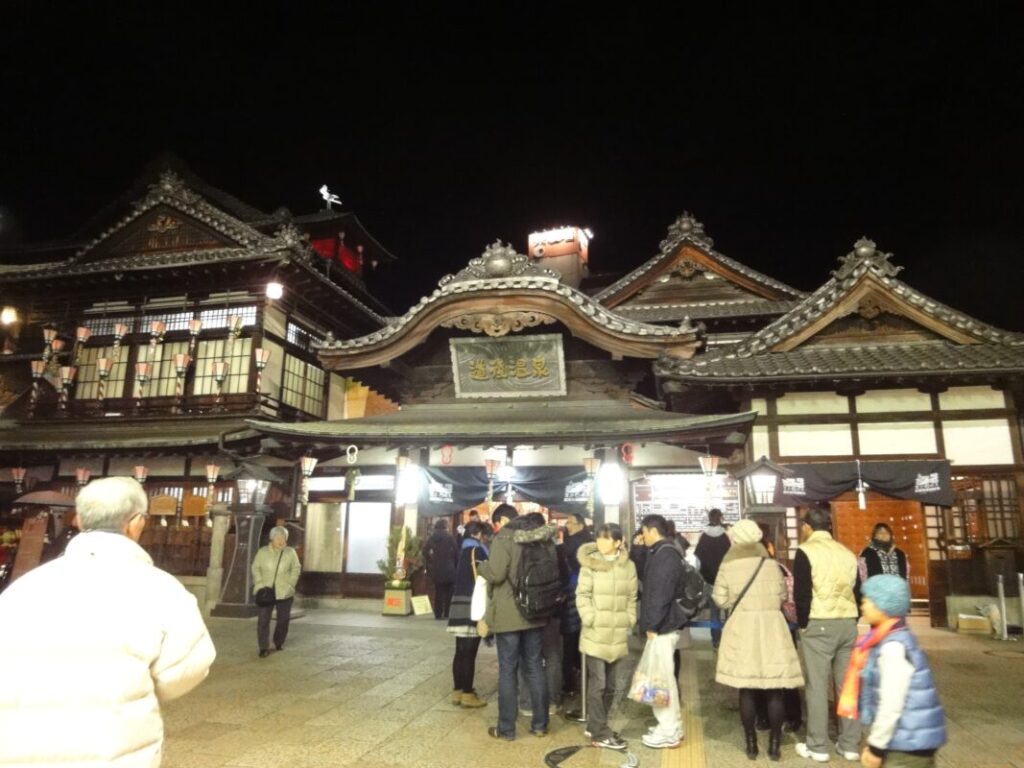
Dogo Onsen
Dogo Onsen is one of Japan’s most famous hot spring resorts.
It is located along the pilgrimage route between Temple No. 51, Ishiteji, and Temple No. 52, Taisanji, making it an easy and convenient stop.
It is especially recommended as a great way to make use of the time after the temple offices have closed and to relax after a long day of travel.
Dogo Onsen Main Building
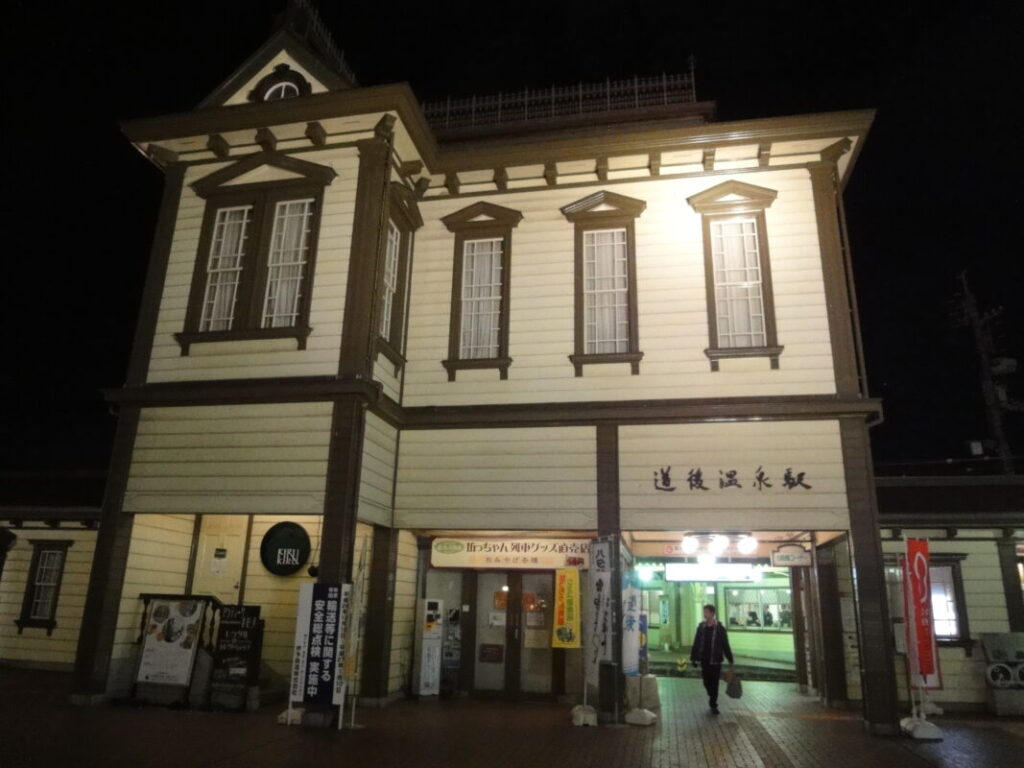
Dogo Onsen Station
Roadside Station Information: Ainan to Uwajima to Matsuyama
Here is a list of roadside stations that are easily accessible from the pilgrimage route.
Tsushima Atsuta Onsen

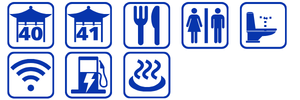
| Parking | 60 |
| Nearest Temple | No. 40, 41 |
| Facilities | Wi-Fi, Hot spring |
| Google Maps | MAP |
| Rating | ★★★★★ (5/5) |
It is located roughly midway between Temples 40 and 41. Renovated in 2026, it also features an attractive hot spring available for 850 yen.
Uwajima
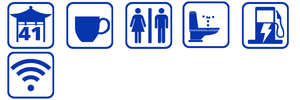
| Parking | 220 |
| Nearest Temple | No. 41 |
| Facilities | Wi-Fi |
| Google Maps | MAP |
| Rating | ★★★★☆ (4/5) |
It is located in central Uwajima, with convenient access to Temple 41, Ryūkō-ji. It is a practical and easy-to-use base for pilgrims.
Mima
| Parking | 100 |
| Nearest Temple | No. 41 |
| Facilities | Wi-Fi |
| Google Maps | MAP |
| Rating | ★★★★☆ (4/5) |
It is located about 1 km south of Ryūkō-ji Temple, making it easily accessible and a convenient roadside station for a quick stop.
Donburikan

| Parking | 100 |
| Nearest Temple | No. 43 |
| Facilities | – |
| Google Maps | MAP |
| Rating | ★★★☆☆ (3/5) |
It is located near Temple 43, Akashi-ji, along Prefectural Route 29.
Uchiko
| Parking | 170 |
| Nearest Temple | No. 43, 44 |
| Facilities | – |
| Google Maps | MAP |
| Rating | ★★★★☆ (4/5) |
It is located roughly midway between Temples 43 and 44, at the base of the mountain road leading to Temple 44, making it a suitable place to prepare before the ascent.
Oda no Sato
| Parking | 40 |
| Nearest Temple | No. 43, 44 |
| Facilities | – |
| Google Maps | MAP |
| Rating | ★★★☆☆ (3/5) |
It is located along National Route 380 on the way to Temple 44.
Tenku no Sato Sansan
| Parking | 70 |
| Nearest Temple | No. 44 |
| Facilities | Wi-Fi |
| Google Maps | MAP |
| Rating | ★★★★☆ (4/5) |
It is located very close to Temple 44. Due to its high elevation, caution is needed in winter when car camping because of cold temperatures and potentially icy road conditions.
Umiterasu

| Parking | 40 |
| Nearest Temple | No. 53 |
| Facilities | Wi-Fi, Shower |
| Google Maps | MAP |
| Rating | ★★★★☆ (4/5) |
It is located about 6 km north of central Matsuyama and is one of the more convenient spots for car camping in the Matsuyama area.
Here is a list of roadside stations (Michi-no-Eki) convenient for the Shikoku Pilgrimage.
Best roadside stations for Shikoku pilgrims
Common Mistakes in the Kumakogen Area
Taking longer than expected to visit Iwayaji Temple.
At Iwayaji Temple, the approach from the parking lot to the temple grounds involves an uphill walk of about 20 minutes.
Depending on the season, weather, and your physical condition, it may take longer than you expect.
After passing Iwayaji, the Matsuyama area becomes much easier to travel, with shorter distances between temples.
There is no need to rush—continue your pilgrimage at a steady and relaxed pace.
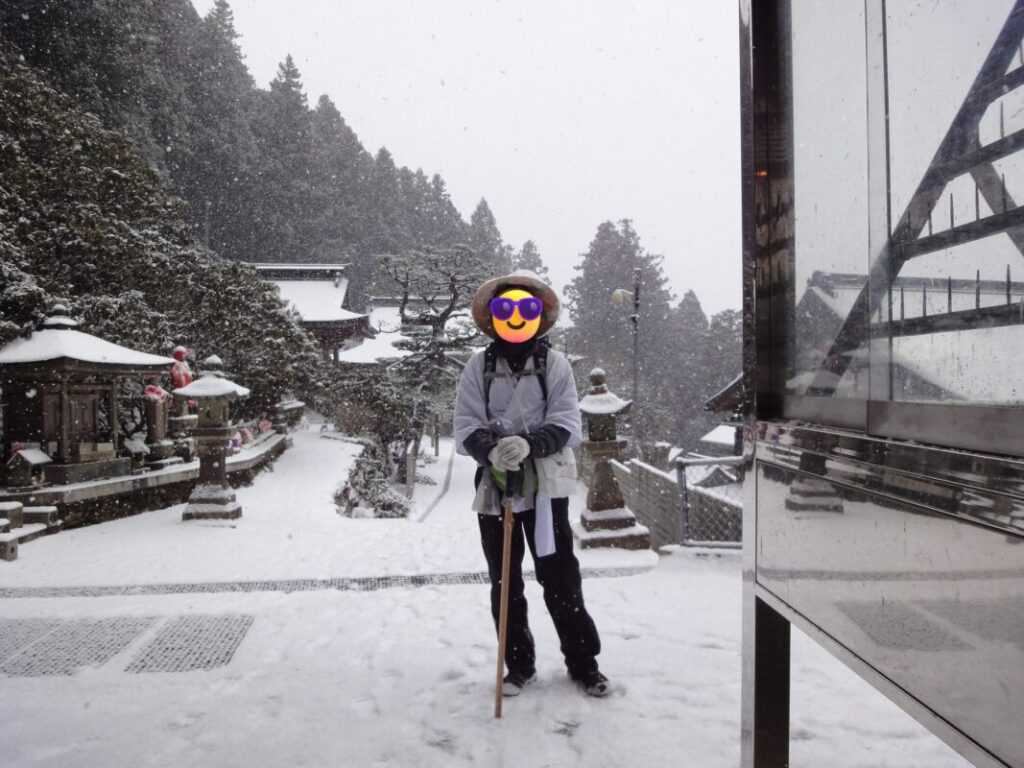
Got caught in snow in Kumakogen during winter.
Kumakogen includes areas at elevations of around 700 meters and is known as a region with ski resorts.
During winter, snowfall and icy road conditions are possible, and the weather can change suddenly.
If you are planning a car pilgrimage in winter, be sure to prepare for snow conditions with winter tires, tire chains, or other appropriate equipment.
Recommended Accommodations: Uwajima, Kumakogen, and Matsuyama
Super Hotel Uwajima Ekimae Natural Hot Spring
Super Hotel Uwajima Ekimae Natural Hot Spring is located about a four-minute walk from JR Uwajima Station in Ehime. Opened in 2022, this modern hotel features separate natural hot spring baths, a complimentary healthy breakfast buffet, and parking.
With its clean facilities, good value, and convenient location, it is a popular base for car pilgrims and travelers exploring the Uwajima and Nanyo areas.
Kokumin Shukusha Furuiwayaso
Kokumin Shukusha Furuiwayaso is a public lodge located directly in front of Furuiwaya, a scenic natural landmark in Kumakogen, Ehime Prefecture. Surrounded by striking rock formations and rich natural beauty, it offers a peaceful setting and is a popular base for visiting Temple No. 44, Daihoji, and Temple No. 45, Iwayaji on the Shikoku Pilgrimage.
The lodge also features Furuiwaya Onsen, where guests can relax in a stone bath made with natural rocks and soothe the fatigue of travel. Day-use bathing is also available, so non-guests may use the hot spring facilities as well.
Business Hotel Taihei
Business Hotel Taihei is a comfortable hotel located on Heiwadori in Matsuyama, at the foot of Matsuyama Castle. It is about a 2–3 minute walk from Iyotetsu Shimizumachi Station, making it convenient for sightseeing and business trips.
The hotel offers a range of rooms from single rooms to Japanese-style rooms. Guests can also enjoy the natural hot spring public bath and open-air bath in the main building, making it a relaxing choice for car pilgrims and travelers seeking good value in central Matsuyama.
Other Recommended Accommodation List
Other recommended accommodations are explained in detail in this article.
Recommended Accommodation: Temples 41–43 in Ehime
Recommended Accommodation: Temples 43–44 in Ehime
Recommended Accommodation: Temples 44–45 in Ehime
Recommended Accommodation: Temples 46–52 in Ehime & Dogo Onsen
Frequently Asked Questions
- QHow long does it take to visit Iwayaji Temple?
- A
You need to walk uphill from the parking lot to the main hall area. Including the round trip, it is best to allow about 30 minutes to 1 hour. The actual time may vary depending on the weather and your physical condition.
- QAre the roads in the Kumakogen area difficult to drive?
- A
Compared with city roads, there are more curves, steep slopes, and mountain sections. Drive at a moderate speed and watch carefully for oncoming traffic and falling rocks.
- QCan I travel this route by car in winter?
- A
Yes, but snowfall and icy roads are possible in Kumakogen. It is recommended to prepare winter tires, tire chains, or other snow-driving equipment before going.
- QAre the temples in the Matsuyama area easy to visit?
- A
Yes. From Temple No. 46, Joruriji onward, the temples are relatively close together, making it one of the easier pilgrimage areas in Ehime.
- QWhich area is best for an overnight stay: Uwajima, Kumakogen, or Matsuyama?
- A
For convenience, Matsuyama is the best choice. For preparing for the mountain temples, Kumakogen is recommended. If you want to explore the Nanyo area at a relaxed pace, Uwajima is a good option. Choose according to your itinerary.
Summary
The atmosphere of Temples No. 41 to No. 50 changes greatly between the first half in the Uwajima area and the second half in the Matsuyama area.
The biggest challenges of the day are Temple No. 44, Daihoji, and Temple No. 45, Iwayaji.
Once you pass these temples, visiting the pilgrimage sites in Matsuyama city becomes much easier.
Manage your time carefully and continue your pilgrimage with safe driving.
Related Article
Shikoku Pilgrimage by Car Day 7: Complete Route Guide (Temples 51–59, Ehime)
Day 7: Ehime Temples 51–59
Shikoku Pilgrimage by Car Day 5: Kochi to Ehime (Temples 35–40, 300km Route Guide, Map & Tips)
Day 5: Kochi & Ehime Temples 35–40
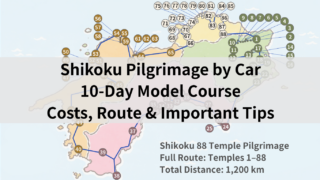
Shikoku Pilgrimage by Car: 10-Day Route, Cost & Essential Tips.
Shikoku Pilgrimage by Car