Hello, I’m Taka, the person who runs this blog.
I completed the Shikoku Pilgrimage on foot twice, covering both the clockwise and counterclockwise routes.
In this article, I’ll explain in detail how to complete Day 7 of the Shikoku Pilgrimage by car, covering Ehime Temples 51 to 59.
- The most efficient pilgrimage route
- Required time and driving distance
- Tips for preparing for Yokomineji Temple
- Recommended accommodations in Imabari
- Common mistakes to avoid
This guide is designed so even first-time car pilgrims can follow the route without getting lost.
Best Day 7 Schedule (Time Allocation)
As a guideline, allocate about 30 minutes per temple for the visit. This is intentionally generous, so you can adjust flexibly depending on the situation.
- 7:30Breakfast & Departure
30 min travel
- 8:00Temple 51: Ishiteji
30 min worship + 30 min travel
- 9:00Temple 52: Taisanji
30 min worship + 10 min travel
- 9:40Temple 53: Enmyoji
30 min worship + 1 hr travel
- 11:10Temple 54: Enmeiji
30 min worship + 15 min travel
- 11:55Temple 55: Nankobo
30 min worship + 15 min travel
- 12:30Lunch
- 13:00Temple 56: Taisanji
30 min worship + 10 min travel
- 13:40Temple 57: Eifukuji
30 min worship + 20 min travel
- 14:30Temple 58: Senyuji
30 min worship + 30 min travel
- 15:30Temple 59: Kokubunji
30 min worship
- 16:00Finish
Shikoku Pilgrimage by Car – Day 7: Matsuyama to Imabari
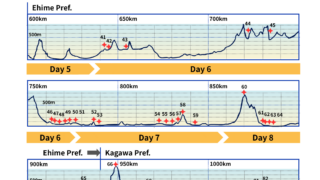
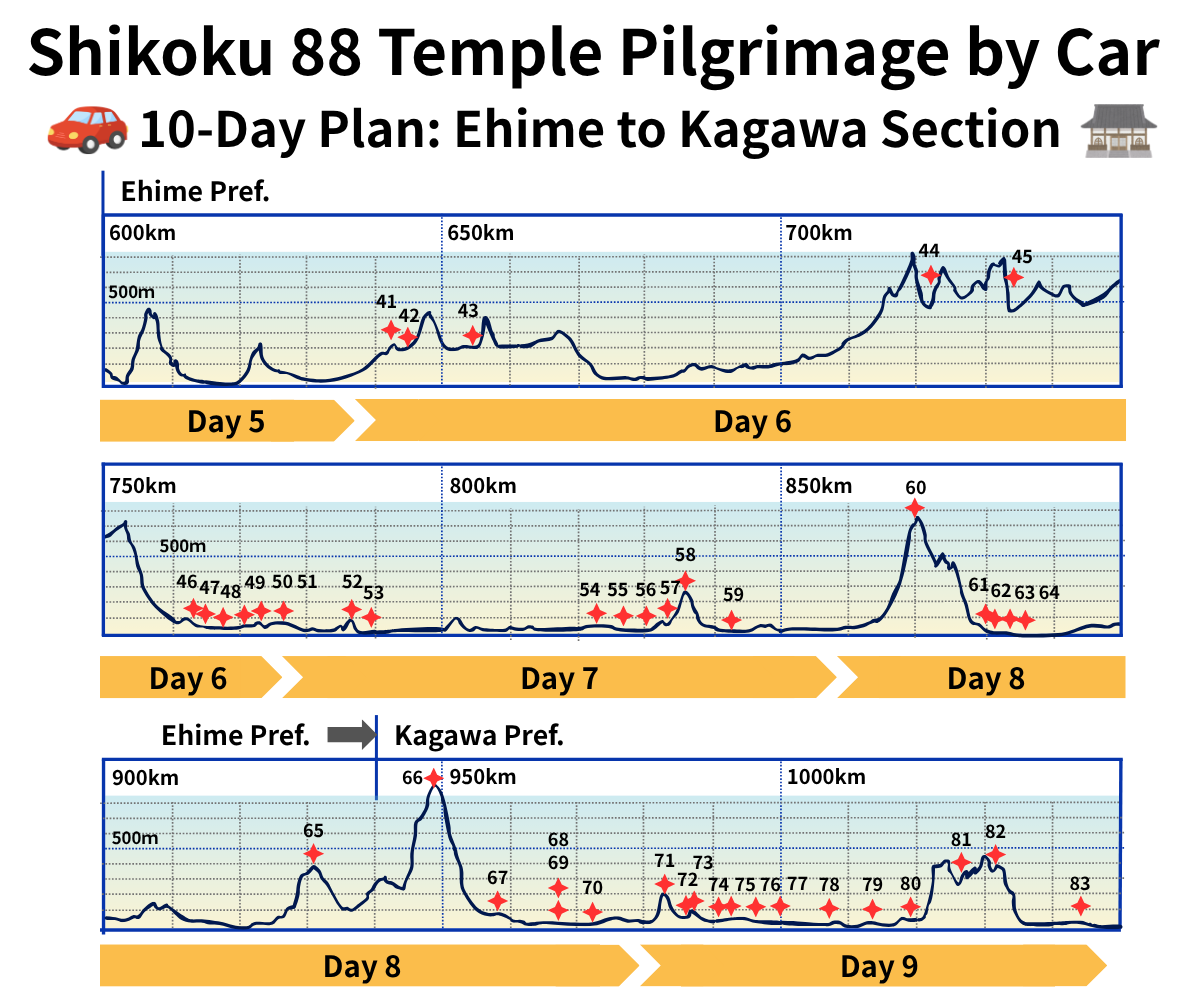
Day 7 covers Temples 51 to 59. The total driving distance is approximately 100 km.
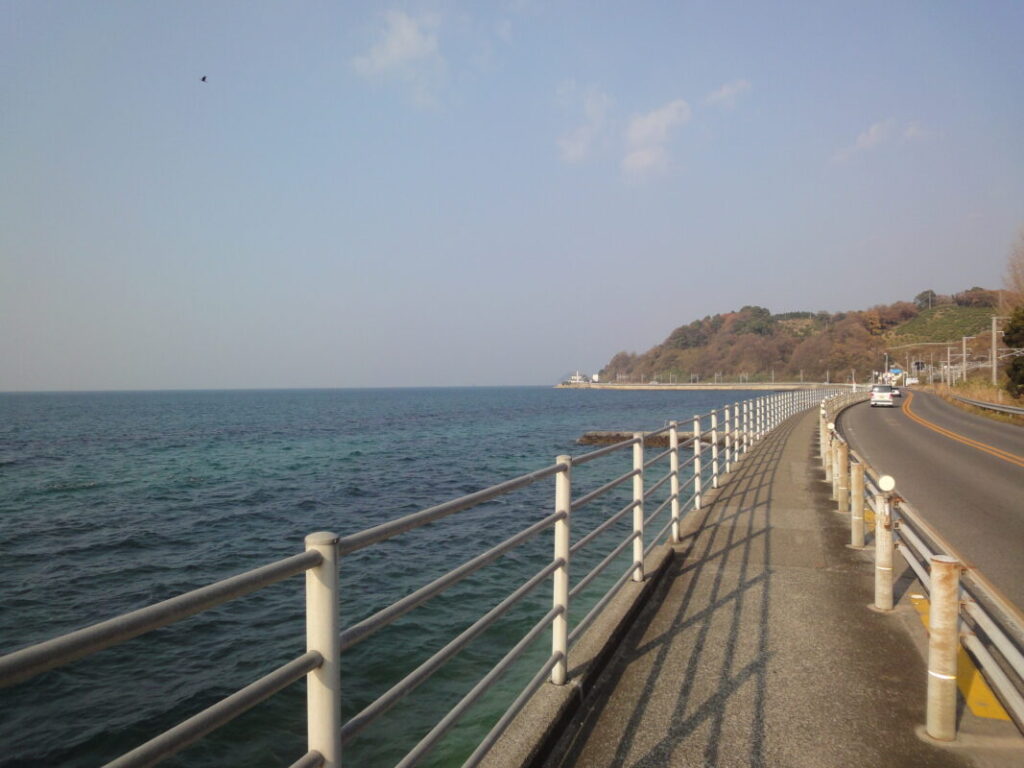
The roughly 35 km stretch of National Route 196 from Temple 53 to Temple 54 follows the coastline once again. Unlike the rugged open sea scenery of Kochi Prefecture, you can enjoy the calm and peaceful views of the Seto Inland Sea and Iyo-nada.
Temples 54 to 59 are located within Imabari City and concentrated within an area of about 18 km, making this section relatively easy to visit.
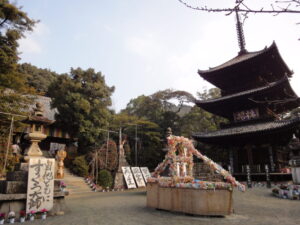
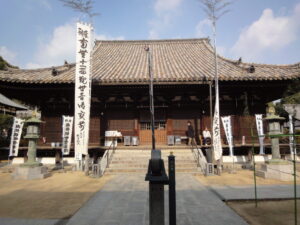
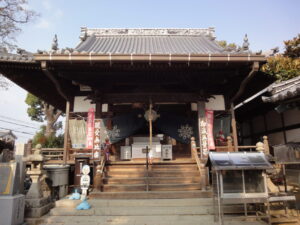
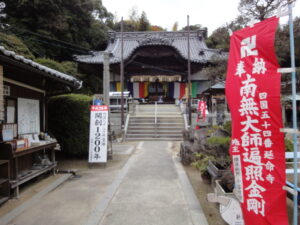
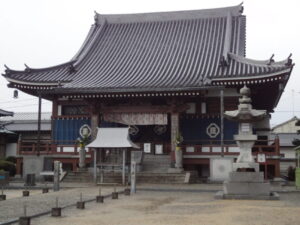
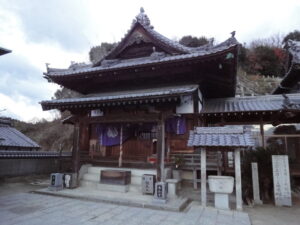
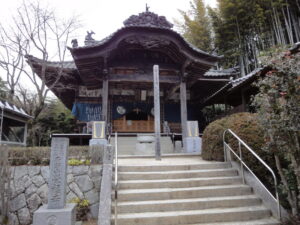
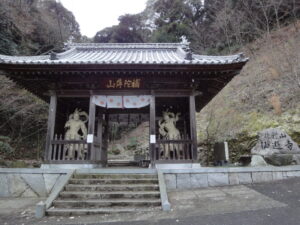
Information on Temples No. 51 to No. 59
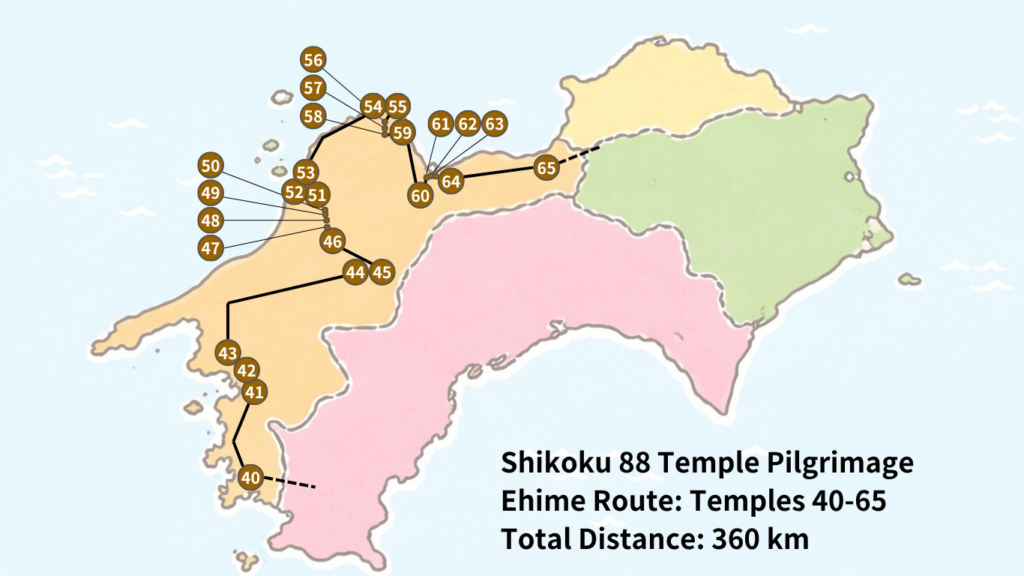
Detailed guides for each temple include route maps, history, goshuin, and highlights.
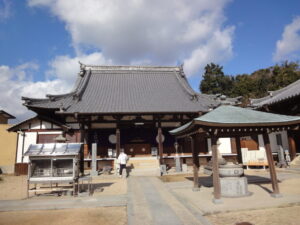
A complete list of all temples up to No. 88 is available in the article below.
Temple List and Full Route
Day 7 Highlight: Preparation for the Challenging Temple 60, Yokomineji
Day 7 is planned up to Temple 59. Temple 60, Yokomineji, is well known as a difficult temple route called Henro Korogashi (“Pilgrim’s Fall”).
- It is located at an elevation of approximately 750 meters.
- From the parking area, it takes about 10 minutes on foot to reach the temple grounds.
- It is about 27 km from Temple 59 and takes around 1 hour and 30 minutes by car.
For these reasons, it is best to allow extra time in your schedule. Rather than forcing a same-day visit, I recommend using the early morning of the following day to make your pilgrimage visit.
Imabari is a convenient area for setting up a base
Imabari has a good selection of accommodations and restaurants, making it an easy area to use as a base. You are unlikely to have trouble finding lodging or meals, and it is also recommended as a place to rest and recover during your pilgrimage.
Temple 58, Senyūji offers a shukubō (temple lodging) option
The shukubō at Senyūji includes a hot spring, making it a popular place to recover from the fatigue of pilgrimage. From its elevated position at about 250 meters above sea level, it also offers beautiful views. Staying overnight allows you to experience unique temple lodging activities such as participating in the morning Buddhist service (morning prayers).
If you plan to stay at Senyūji’s shukubō, it is more efficient to visit Temple 59 first before checking in.
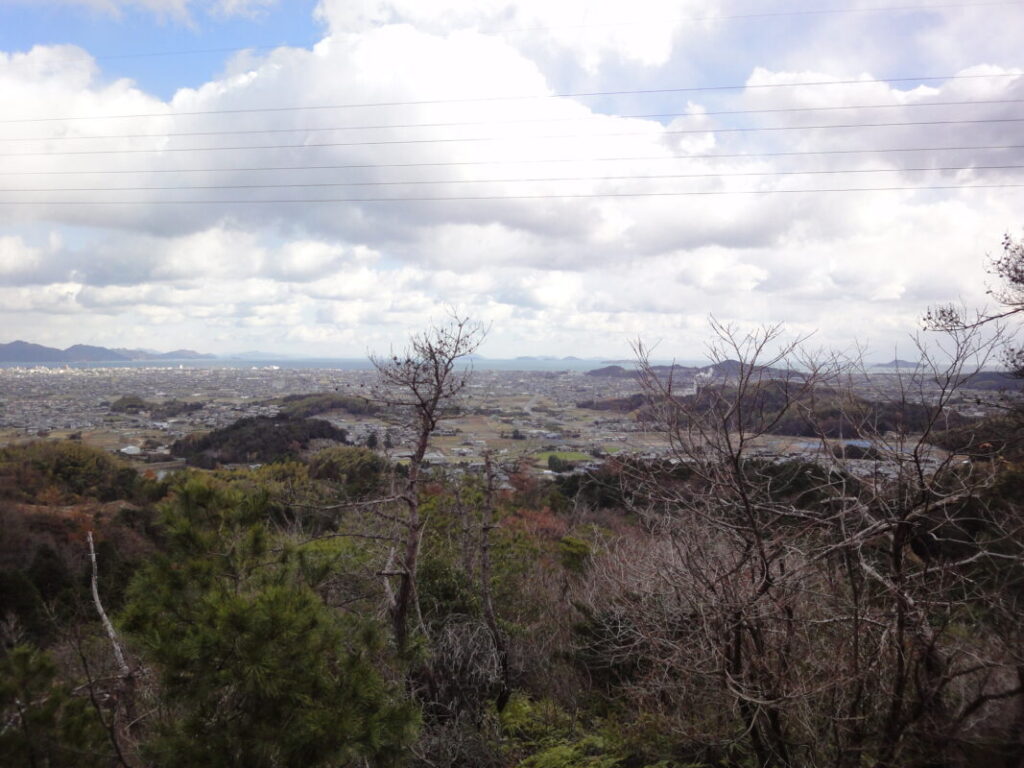
Highlights of Day 7
Calm Inland Sea scenery and local history
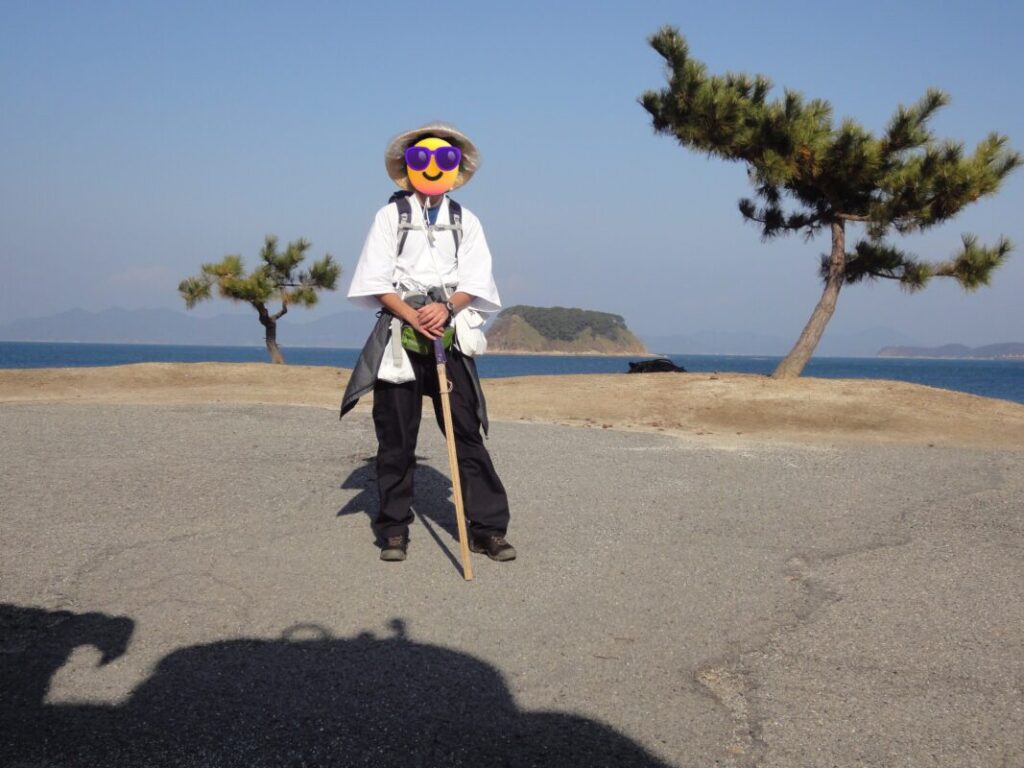
The approximately 35 km stretch of National Route 196 from Temple 53 to Temple 54 is a scenic route where you can enjoy the calm sea views of the Iyo-nada Inland Sea. In contrast to the rough, open-sea landscapes of Kochi Prefecture, this area offers the quiet and gentle beauty characteristic of the Seto Inland Sea, allowing for a peaceful driving experience.
The region has many sunny days due to the Seto Inland Sea climate, making it favorable for pilgrimage travel.
Historically, it flourished as an important hub of maritime transportation and developed as a castle town and port town with deep historical roots.
This area offers the appeal of both natural beauty and cultural heritage.
Along the way, Kikuma Town is well known as a production area for Kikuma roof tiles (Kikuma-gawara). At rest stops along the pilgrimage route, visitors are sometimes offered small accessories made from local ceramic crafts, providing a warm and welcoming experience unique to the region. It is a pleasant moment where pilgrims can connect with local culture during their journey.
Kikuma Town is a famous production area for roof tiles.
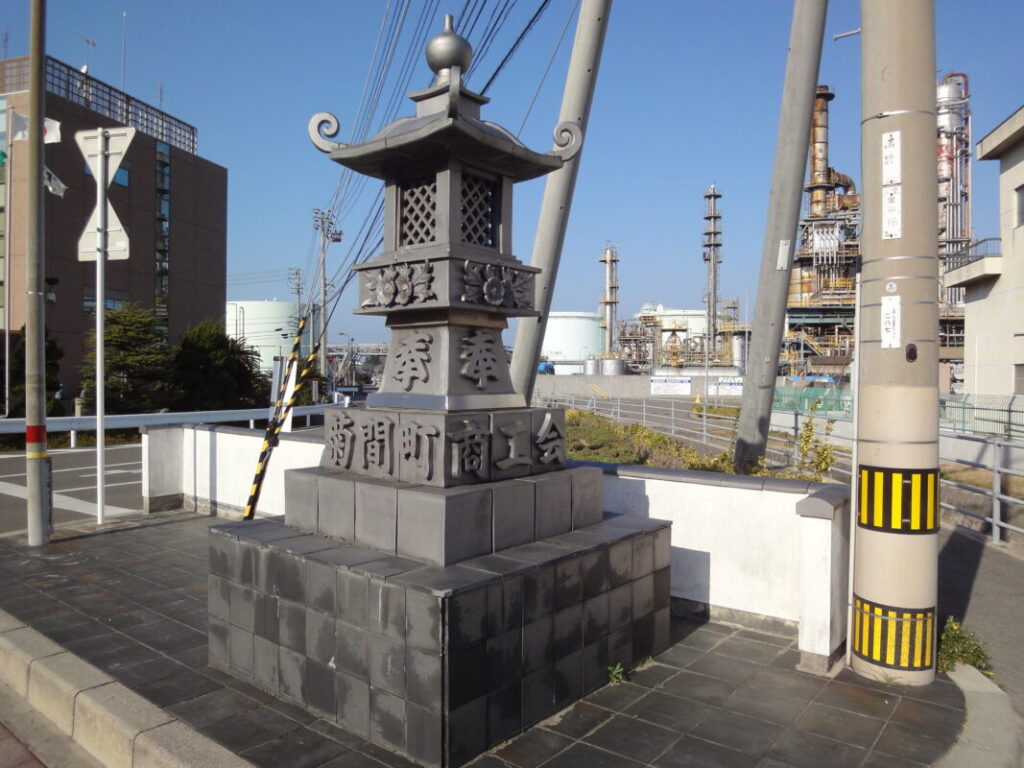
Kikuma Town: a monument made of roof tiles.
A hospitality rest spot in Kikuma Town.
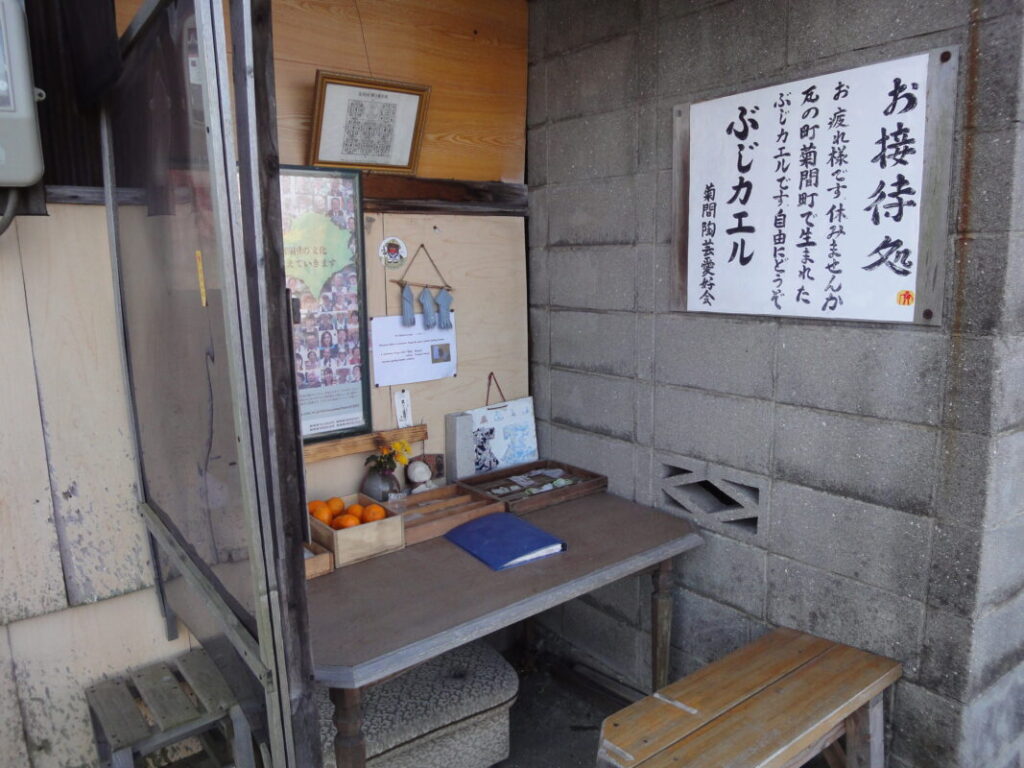
A hospitality rest spot suddenly appearing along the pilgrimage route. If traveling by car, it is located in a place that is easy to miss.
Roadside Station Information: Matsuyama to Imabari
Here are roadside stations (Michi-no-Eki) that are easily accessible from the pilgrimage route.
Kazahaya no Sato Fuwari

| Parking | 180 |
| Nearest Temple | No. 53, 54 |
| Facilities | Wi-Fi |
| Google Maps | MAP |
| Rating | ★★★★☆ (4/5) |
It is located roughly midway between Temple 53 and Temple 54. Situated along National Route 196, it is easily accessible.
Imabari Yunoura Onsen

| Parking | 30 |
| Nearest Temple | No. 59 |
| Facilities | – |
| Google Maps | MAP |
| Rating | ★★★★☆ (4/5) |
It is located along National Route 196, on the southern side of Temple 59, Kokubunji.
Here is a list of roadside stations (Michi-no-Eki) convenient for the Shikoku Pilgrimage.
Best roadside stations for Shikoku pilgrims
Common mistakes in the Imabari area
Missing the visit to Temple 60, Yokomineji
Temple 60, Yokomineji is a difficult mountain temple known as Henro Korogashi (“Pilgrim’s Fall”), and it requires a significant amount of time to visit. If you arrive after the official stamp (nokyō) hours, you will need to return another day to complete the pilgrimage there.
When traveling by car, you must pass through the Hirano Forest Road toll gate. As of October 2024, the fee is 2,000 yen for standard passenger cars.
When including Yokomineji in your schedule, it is strongly recommended to allow ample time for both travel and worship, and to plan with extra flexibility.
For details on using the Hirano Forest Road, please refer to the official website of the Ishizuchi Forest Cooperative.
Recommended Accommodation: Imabari
MACCHI Hostel (Imabari) – Dormitory Summary
MACCHI Hostel in Imabari is a simple, budget-friendly dormitory-style accommodation ideal for pilgrims and backpackers.
It offers clean shared rooms, free Wi-Fi, and basic communal facilities such as bathrooms and lounge space. The hostel is located within easy reach of central Imabari, making it convenient for sightseeing and pilgrimage routes.
This accommodation is especially suited for Shikoku pilgrims and cyclists traveling the Shimanami Kaido, providing an affordable and practical place to rest overnight.
Other Recommended Accommodation List
Other recommended accommodations are explained in detail in this article.
Recommended Accommodation: Temples 46–52 in Ehime & Dogo Onsen
Recommended Accommodation: Temples 53–55 in Ehime
Recommended Accommodation: Temples 56–64 in Ehime
Frequently Asked Questions (FAQ)
- QAre there any narrow roads between Temples 51 and 59?
- A
Most of this section consists of urban roads and main coastal highways, making it generally easy to drive. However, Temple 58, Senyūji, is located in a mountainous area, so drivers should be cautious of slopes and winding roads.
- QCan Yokomineji be visited by car in winter?
- A
In principle, it is accessible by car even in winter, but caution is required depending on weather conditions. Temple 60, Yokomineji, is located at an elevation of about 750 meters, where snow, icy roads, and dense fog may occur during the winter season.
It is recommended to check road conditions in advance and prepare studless tires or chains. For safety reasons, visiting during clear daytime conditions is ideal.
- QAre there benefits to staying overnight in Imabari?
- A
Yes. Imabari has many accommodation and dining options, and it provides convenient access to Temple 60, Yokomineji, on the following day. It is a very practical base point for a car-based pilgrimage.
- QCan anyone stay at the shukubō (temple lodging) at Senyūji?
- A
Yes, it is open to the general public. It is popular among pilgrims for its hot spring and scenic views. Advance reservation is recommended if you plan to stay.
- QAre there rest areas between Matsuyama and Imabari?
- A
Yes. Along National Route 196, there is the roadside station “Kaze-za no Sato Fuwari.” It has a large parking area and is convenient for rest and meals.
Summary
From Temple 51, Ishiteji, to Temple 59, Kokubunji, this is a varied and scenic day traveling from Matsuyama to Imabari. You can enjoy beautiful coastal views along the way, and within Imabari City, the temples are efficiently clustered, allowing for smooth pilgrimage progress.
Since Temple 60, Yokomineji, on the following day is a challenging mountain temple, it is recommended to finish Day 7 at Temple 59. Please plan a realistic schedule and prioritize safety throughout your pilgrimage.
Related Article
Shikoku 88 Temple Pilgrimage by Car Day 8: Temples 60–70 Route, Distance (110km), and Mountain Challenges.
Day 8: Ehime & Kagawa Temples 60–70
Shikoku Pilgrimage by Car Day 6: Temples 41–50 Route Map, Time & Tips.
Day 6: Ehime Temples 41–50
Shikoku Pilgrimage by Car: 10-Day Route, Cost & Essential Tips.
Shikoku Pilgrimage by Car