
Hello, I’m Taka, the creator of this blog.
I completed the Shikoku 88 Temple Pilgrimage twice on foot, both clockwise and counterclockwise.
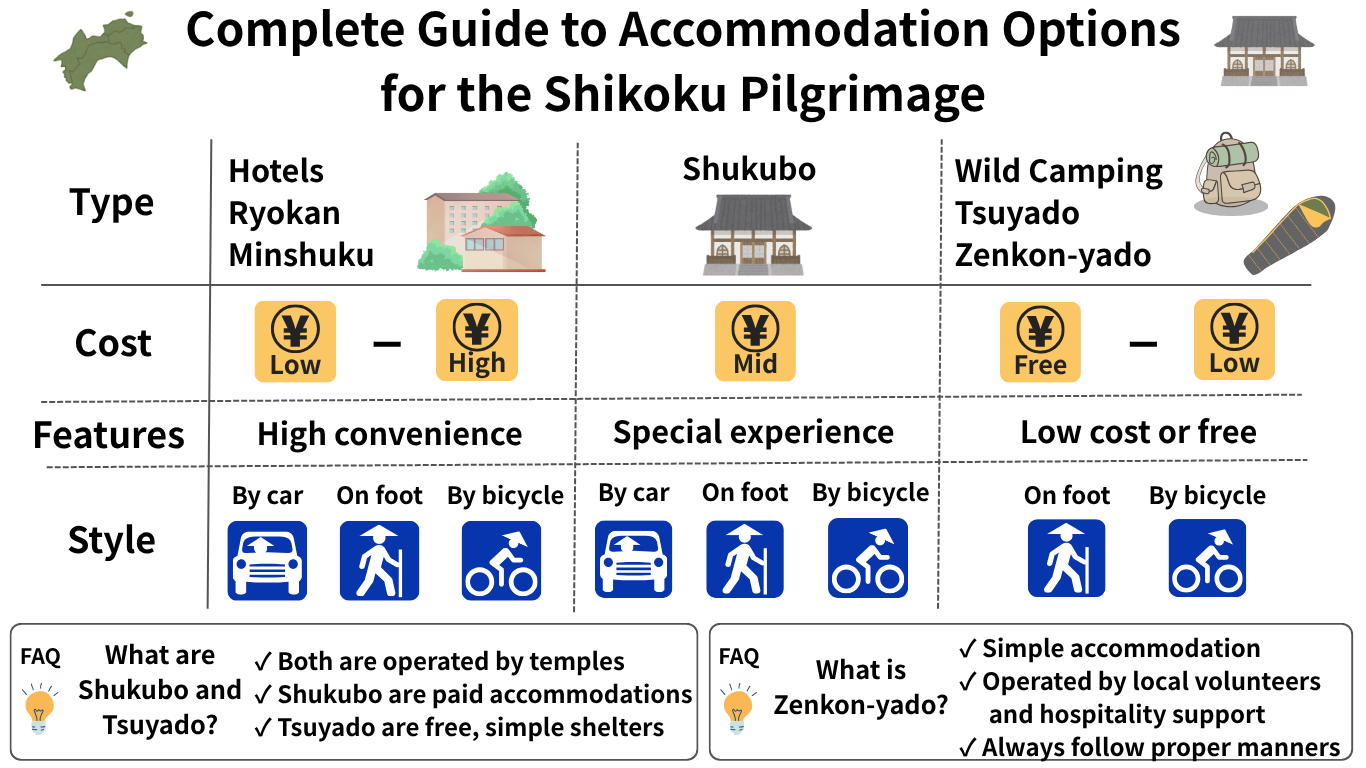
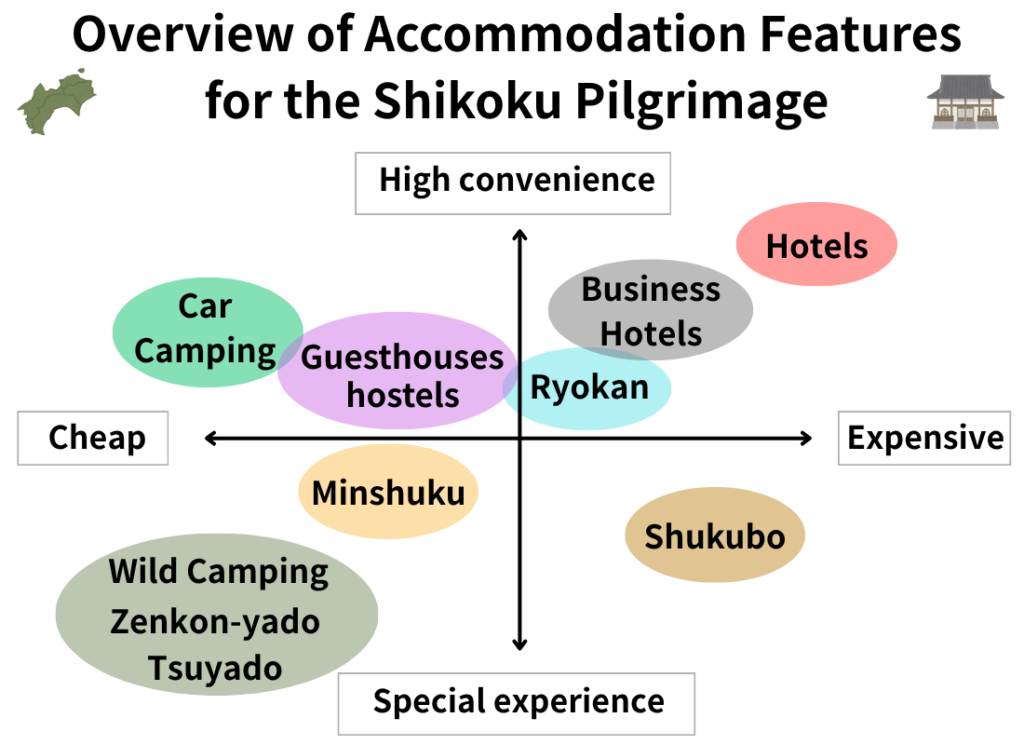
There are nine main accommodation options for pilgrims on the Shikoku Pilgrimage: hotels, ryokan inns, minshuku guesthouses, hostels, temple lodgings (shukubo), tsuyado shelters, zenkon-yado free lodgings, camping, and sleeping in your car.
If you want to keep costs low, camping and zenkon-yado are good options. If comfort is your priority, hotels and ryokan are recommended. For a more traditional and spiritual experience, staying at a temple lodging can be especially memorable.
For beginners, it is best not to rely on only one style of accommodation. Combining different options throughout the journey allows you to travel more comfortably, efficiently, and flexibly.
In this article, I’ve put together accommodation information specifically for people undertaking the Shikoku Pilgrimage.
Find Accommodation Near the Pilgrimage Route
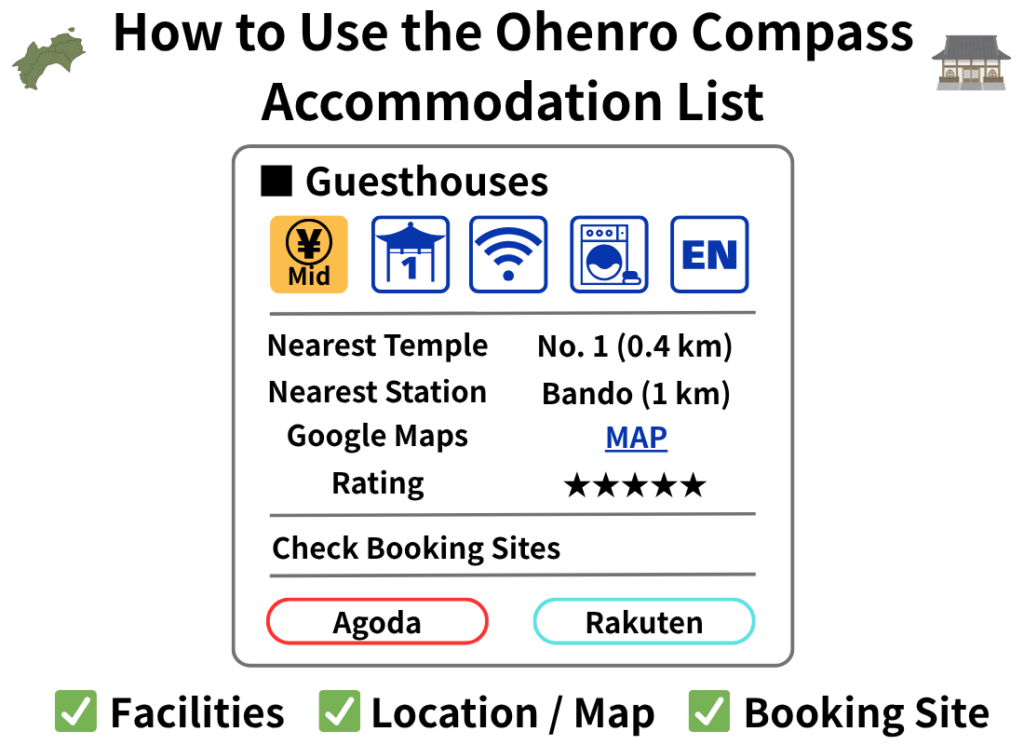
The links below provide lists of accommodations that are conveniently located near the Shikoku pilgrimage route and temples.
Search by Temple
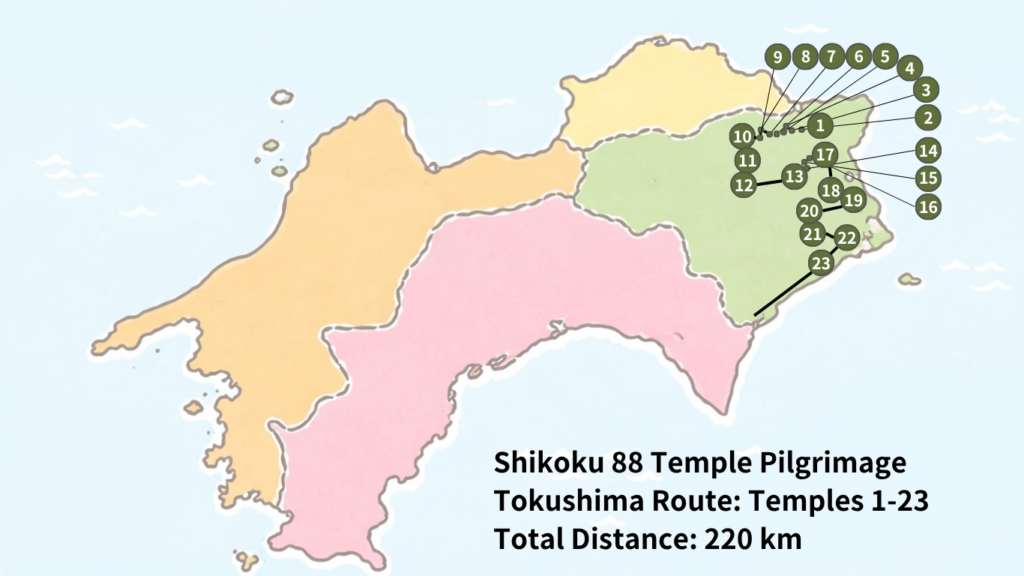
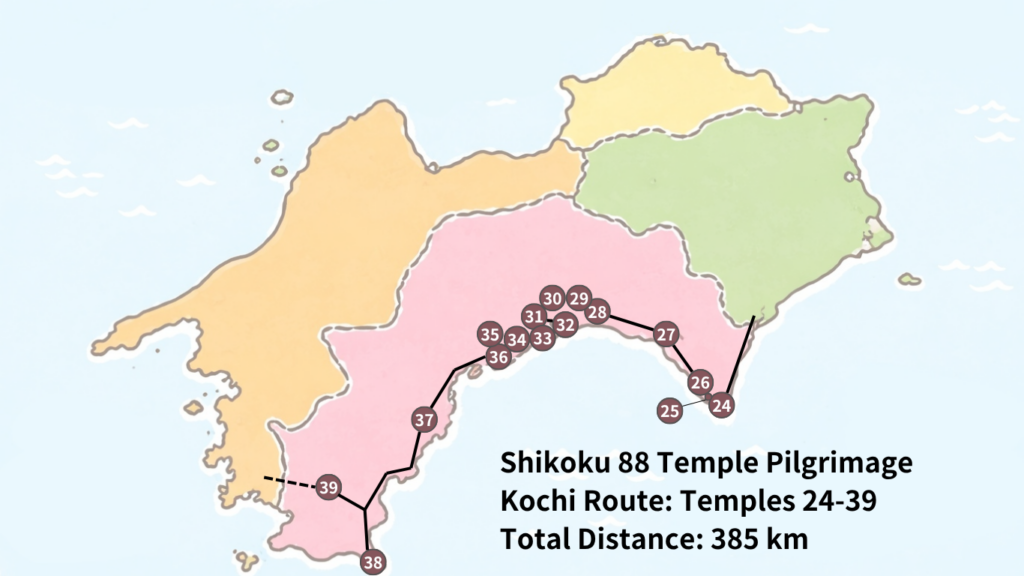
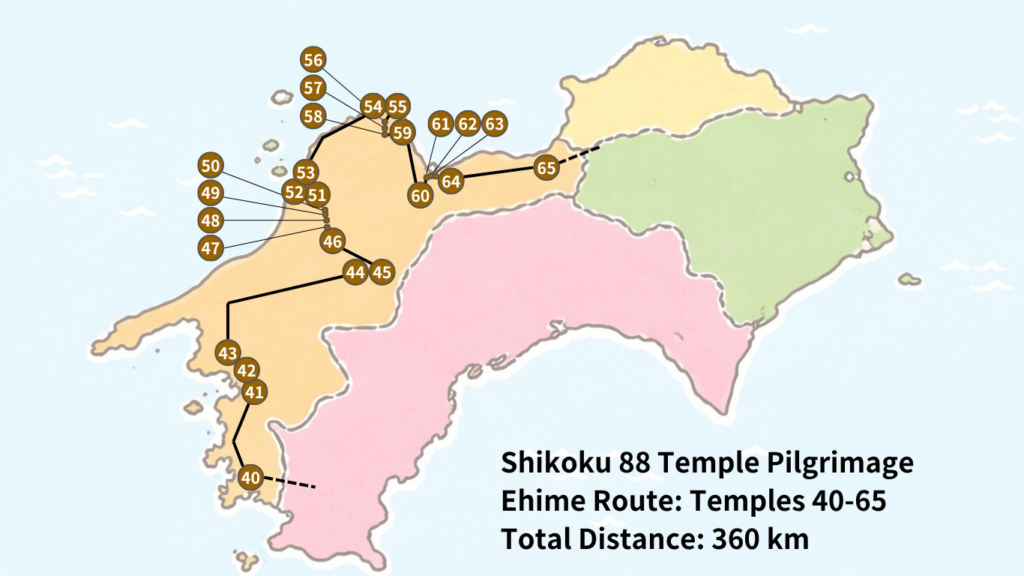
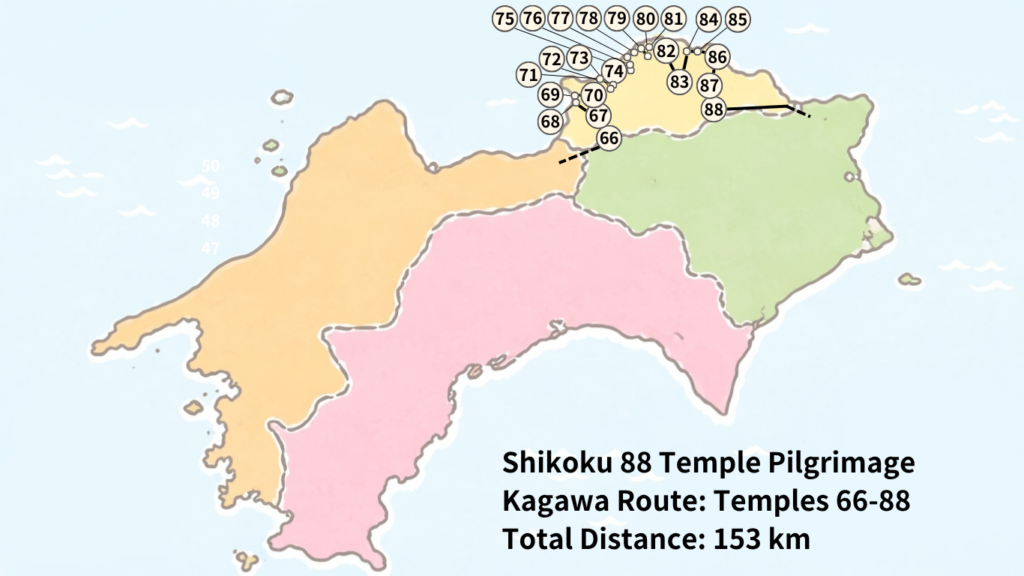
Types of Accommodation Available on the Shikoku Pilgrimage
Hotels & Business Hotels
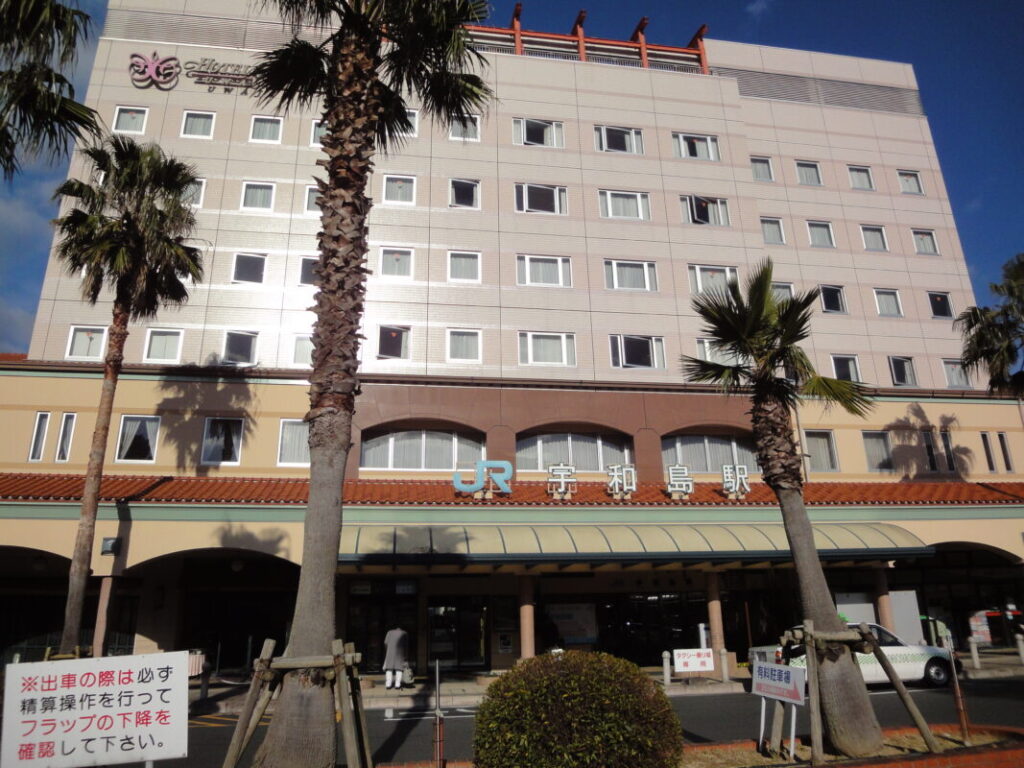
Hotels and business hotels are popular among pilgrims because of their convenient locations near train stations and easy access from major cities. They usually offer reliable facilities, private rooms, laundry services, and a comfortable stay, making them a safe and stress-free option for beginners.
However, compared with other accommodation styles, prices tend to be slightly higher.
With the increase in international visitors to Japan, more hotels are also offering multilingual support and foreigner-friendly services.
Recommended for:
- Pilgrims traveling mainly by train
- Travelers who also want to enjoy sightseeing and local food during the pilgrimage
- Beginners looking for comfort and convenience
Ryokan (Traditional Japanese Inns)
Ryokan offer a calm and traditional Japanese atmosphere, making them a popular accommodation style for pilgrims who want to experience local culture during the Shikoku Pilgrimage. Many ryokan are reasonably priced and serve meals prepared with local ingredients, allowing guests to enjoy regional cuisine and hospitality.
On the other hand, some buildings are older, and sound insulation may be limited, meaning that noise from neighboring rooms or hallways can sometimes be heard.
Recommended for:
- Travelers who want to experience traditional Japanese culture
- Pilgrims interested in local food and regional cuisine
- Those looking for a quiet and relaxing stay while keeping costs reasonable
Guesthouses & Hostels
Guesthouses and hostels are one of the most budget-friendly accommodation options for the Shikoku Pilgrimage, making them especially suitable for long-distance pilgrims. Many facilities mainly offer dormitory-style shared rooms, although some also provide private rooms.
One of the biggest attractions is the opportunity to meet and interact with other pilgrims and travelers, making it easy to exchange travel information and experiences. In recent years, with the increase in international visitors to Japan, more guesthouses have begun offering multilingual support and foreigner-friendly services.
Recommended for:
- Pilgrims who want to keep accommodation costs as low as possible
- Travelers who enjoy meeting and talking with other pilgrims and backpackers
- International travelers or those who enjoy a multicultural atmosphere
Minshuku (Family-Run Guesthouses)
Minshuku are traditional family-run guesthouses known for their warm and home-like atmosphere. Compared with hotels and ryokan, they are often more affordable, making them a popular option among pilgrims traveling on a budget.
Many minshuku are operated by local residents with deep knowledge of the area, so guests can often receive useful information about nearby temples, restaurants, and pilgrimage routes. In recent years, more private-home-style accommodations similar to vacation rentals have also become available.
Especially in rural areas away from major cities, minshuku are often an essential accommodation option for walking pilgrims. They provide a safe and comfortable place to rest during long days on the pilgrimage.
Recommended for:
- Pilgrims looking to reduce accommodation costs
- Travelers who want to connect with local people and learn regional information
- Those who prefer a quiet, home-like atmosphere during their journey
Temple Lodgings (Shukubo) & Tsuyado Shelters
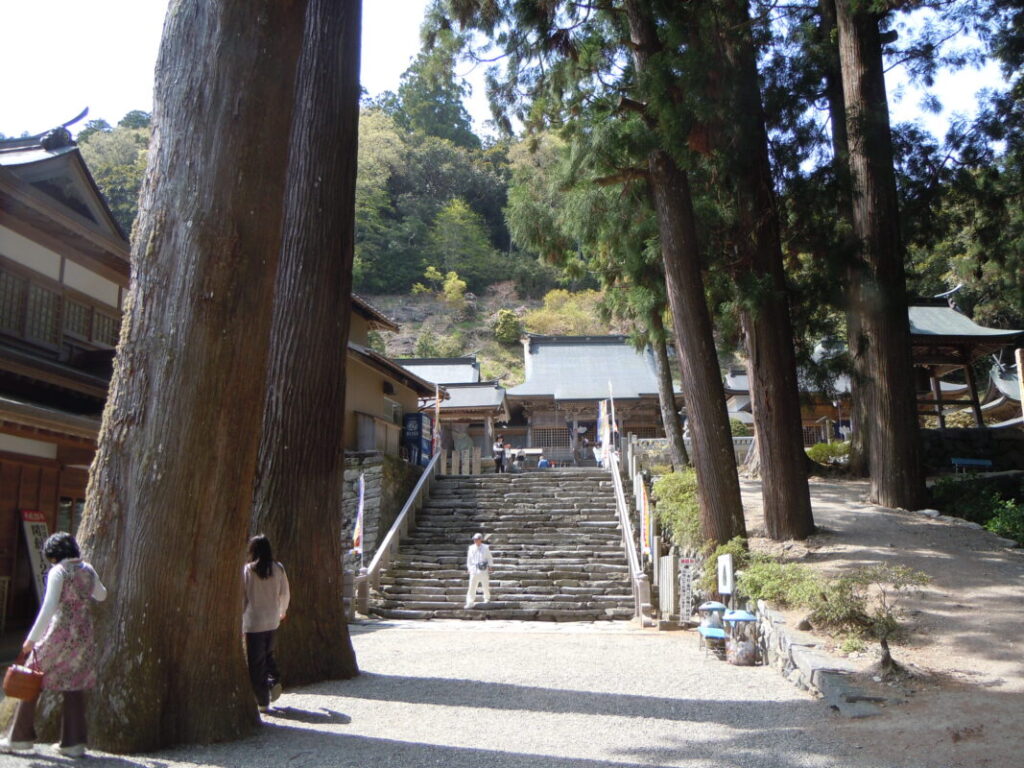
Both shukubo and tsuyado are accommodation facilities associated with temples along the Shikoku Pilgrimage route.
The main differences are:
- Shukubo are paid temple lodgings
- Tsuyado are free simple shelters for pilgrims
- Both are usually located within temple grounds
Shukubo generally provide a more comfortable and traditional stay, sometimes including vegetarian Buddhist meals and opportunities to experience temple culture. Tsuyado, on the other hand, are very simple overnight shelters intended mainly for pilgrims who need a place to rest.
Features of Shukubo (Temple Lodgings)
Shukubo are known for their clean and well-maintained facilities, offering pilgrims a comfortable and unique accommodation experience. Some temple lodgings provide meals and even hot spring baths, allowing guests to relax after a long day on the pilgrimage.
Although accommodation fees tend to be slightly higher, staying at a shukubo offers experiences that cannot easily be found elsewhere. Depending on the temple, guests may be able to participate in morning and evening Buddhist services and listen to talks given by the temple priest.
Reservations are usually made by contacting the temple directly in advance by phone.
Recommended for:
- Pilgrims who want a more authentic and spiritual pilgrimage experience
- Travelers interested in staying at a temple and experiencing a traditional Buddhist atmosphere
- Anyone who wants to try staying at a shukubo at least once during the pilgrimage
Features of Tsuyado (Temple Overnight Shelters)
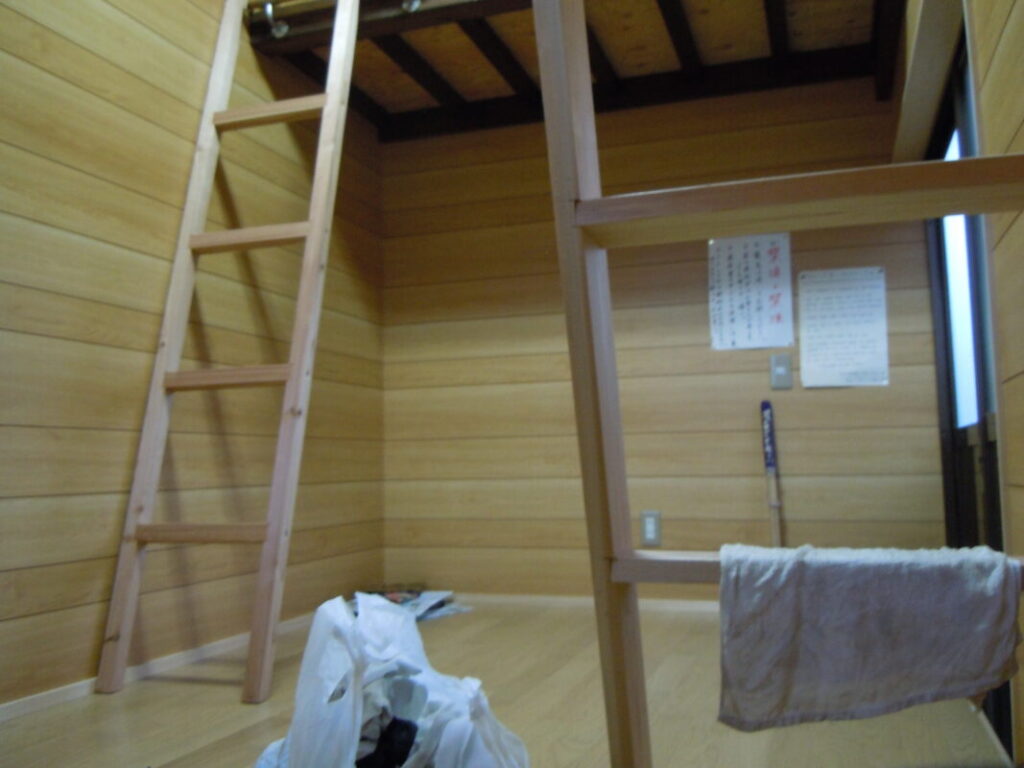
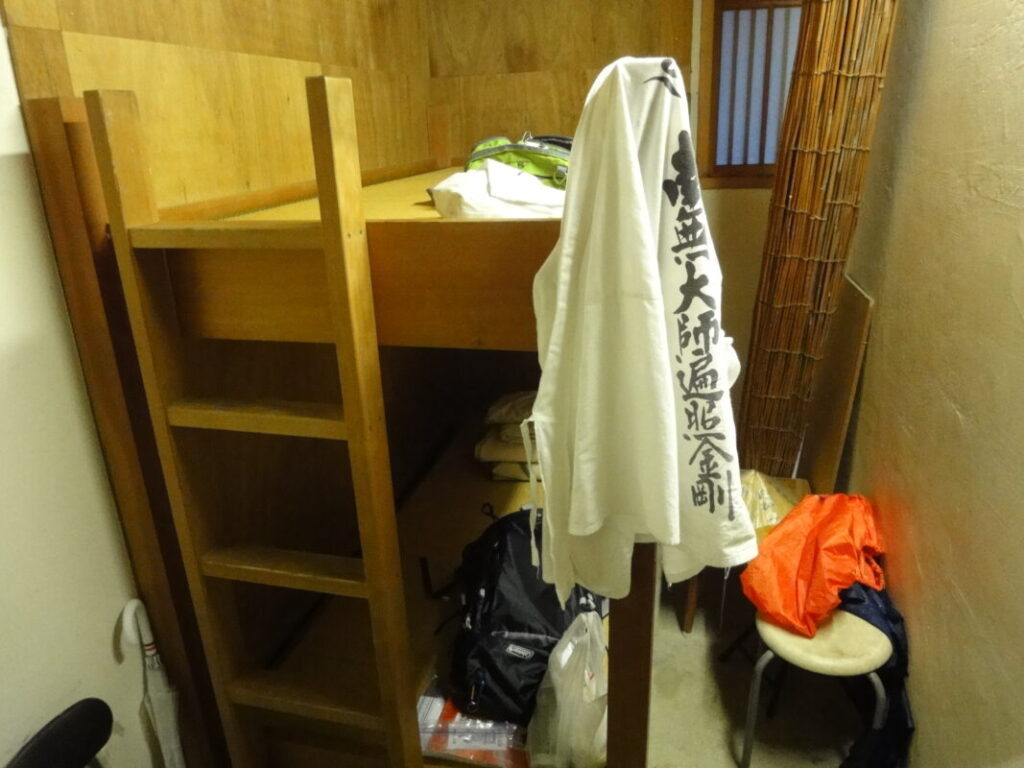
Tsuyado are simple overnight shelters located within temple grounds. They are usually very basic and often consist of dormitory-style shared spaces for pilgrims.
In many cases, air conditioning or heating is not available, so extra care is needed when staying during extreme summer or winter conditions. Water facilities and toilets are typically those available within the temple precincts.
To use a tsuyado, it is common practice to confirm availability in advance by phone or to ask directly at the temple’s reception office (nokyosho) upon arrival.
Please note that not all temples offer shukubo (temple lodgings) or tsuyado (overnight shelters).
Tsuyado at Temple 40, Kanjizaiji.
Tsuyado at Temple 56, Taisanji.
For a detailed list of temples with available shukubo and tsuyado facilities, please refer to the article below.
Zenkon-yado (Free Pilgrim Lodgings)
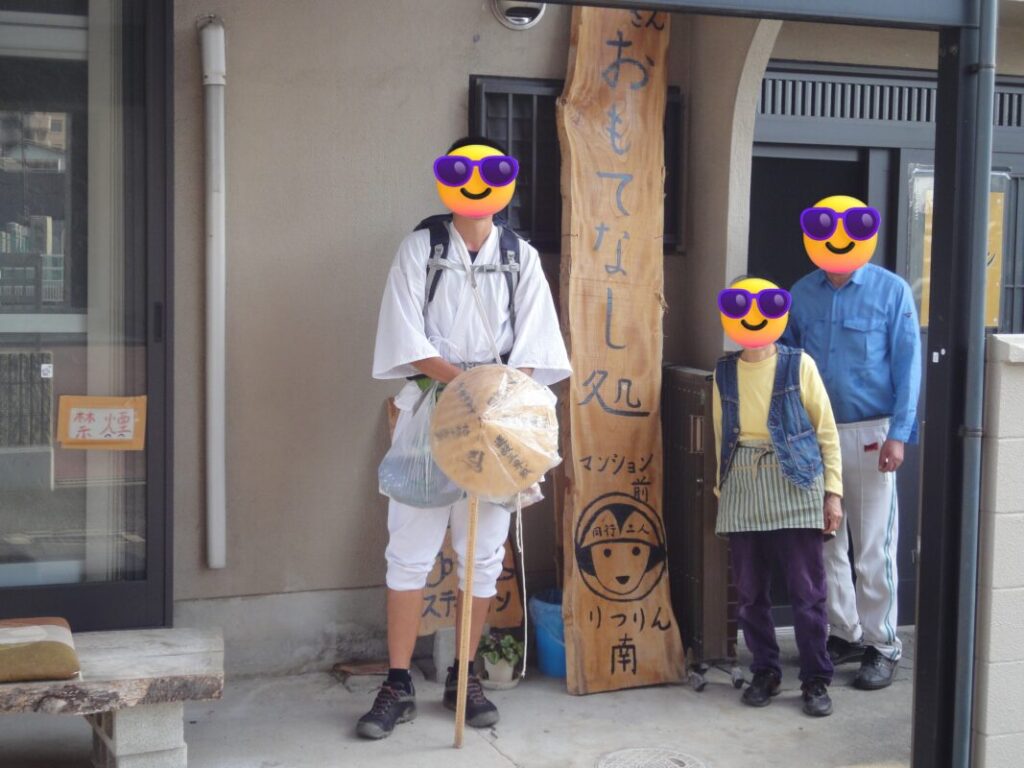
Zenkon-yado are accommodation facilities provided through the goodwill of local people. They are usually offered free of charge or at a very low cost, and are considered part of the traditional osettai (hospitality) culture of the Shikoku Pilgrimage.
Facilities vary by location, but some may include access to water, toilets, electricity, and even Wi-Fi. Because these lodgings are supported by local kindness, it is important to use them with proper manners, respect, and gratitude, without taking them for granted.
Recommended for:
- Pilgrims who want to keep travel costs as low as possible
- Those who value interaction and connection with local people
- Travelers who want to experience the cultural and spiritual aspects of the pilgrimage more deeply
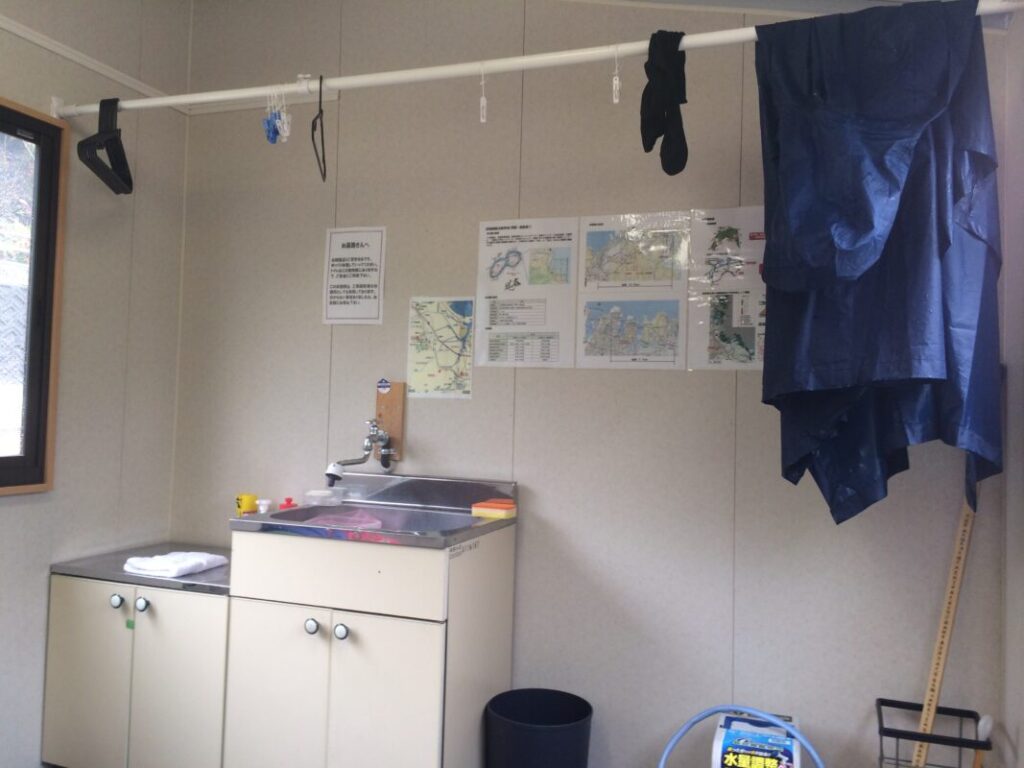
A Zenkon-yado located within the Kamojima Onsen complex.
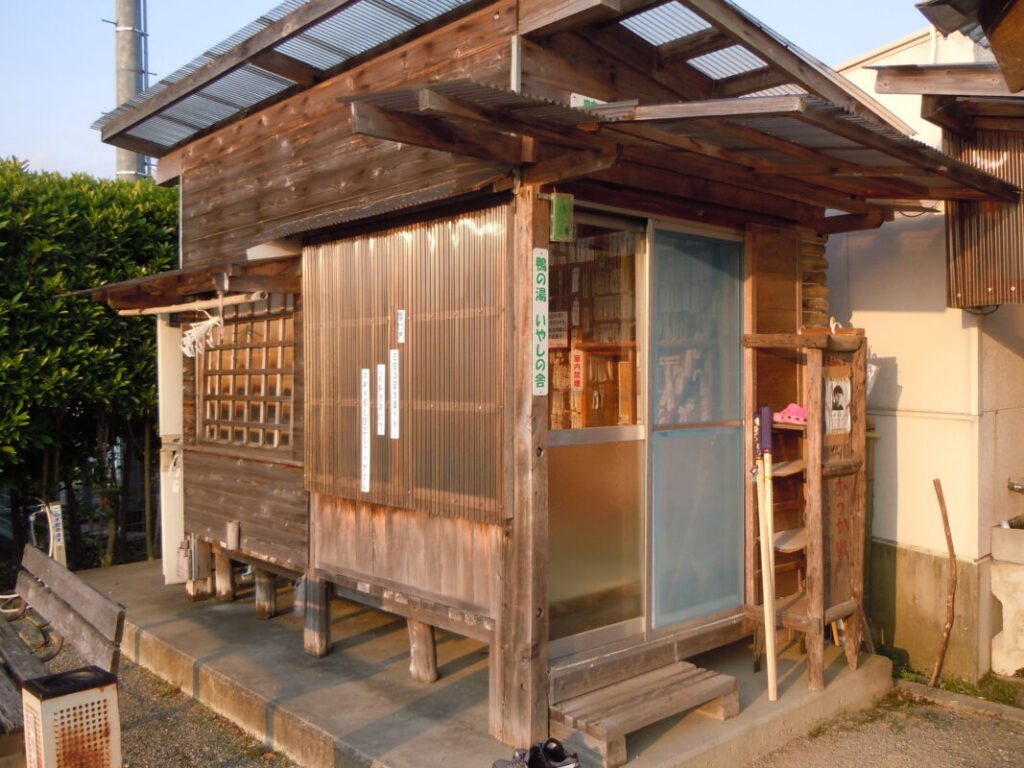
Zenkon-yado near Temple 19, Tatsue-ji
Wild Camping
On the Shikoku Pilgrimage, wild camping (nojuku) is relatively common and can be done in certain areas with some preparation. Throughout the route, there are pilgrim rest huts (henro-goya), gazebos, and public rest areas where travelers can take shelter. In some parks, toilets and water facilities are also available, making it easier for walkers and cyclists to rest overnight.
One of the unique aspects of nojuku is the opportunity to meet other pilgrims at rest spots and share experiences and stories along the journey.
Important notes:
- Proper gear and preparation are essential
- Always be considerate of the surrounding environment and local residents
Recommended for:
- Travelers looking to minimize costs
- Those who prefer a flexible and highly independent travel style
- Pilgrims who enjoy meeting and interacting with others along the route
Camping under temple eaves
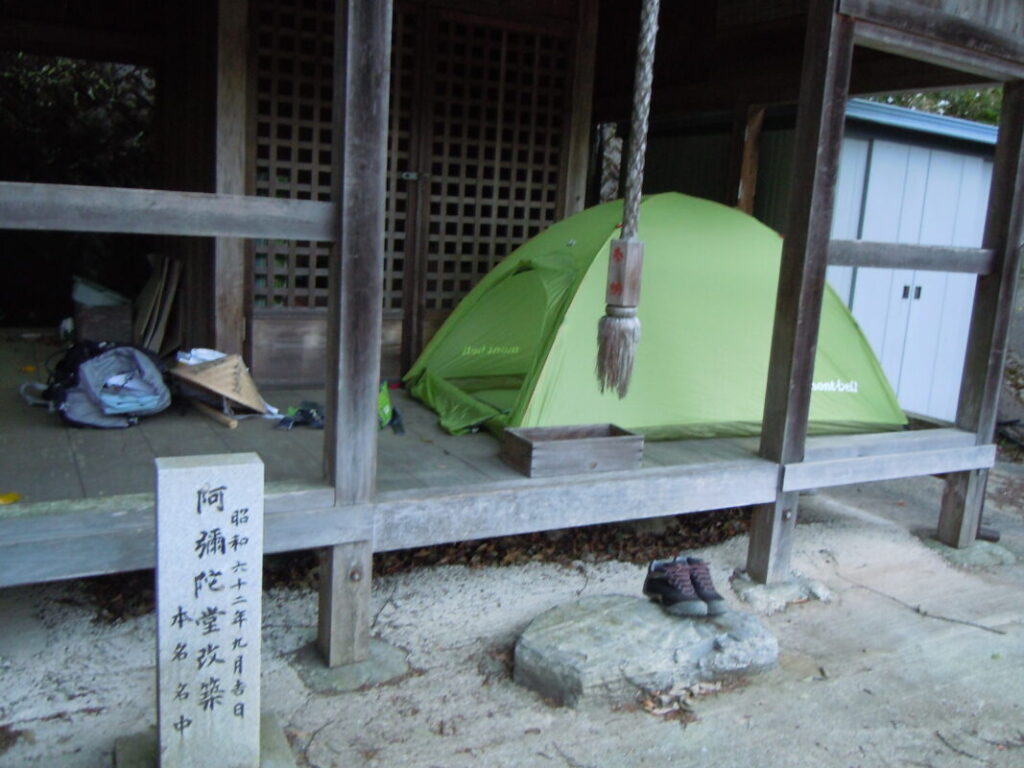
Camping at a pilgrim rest hut
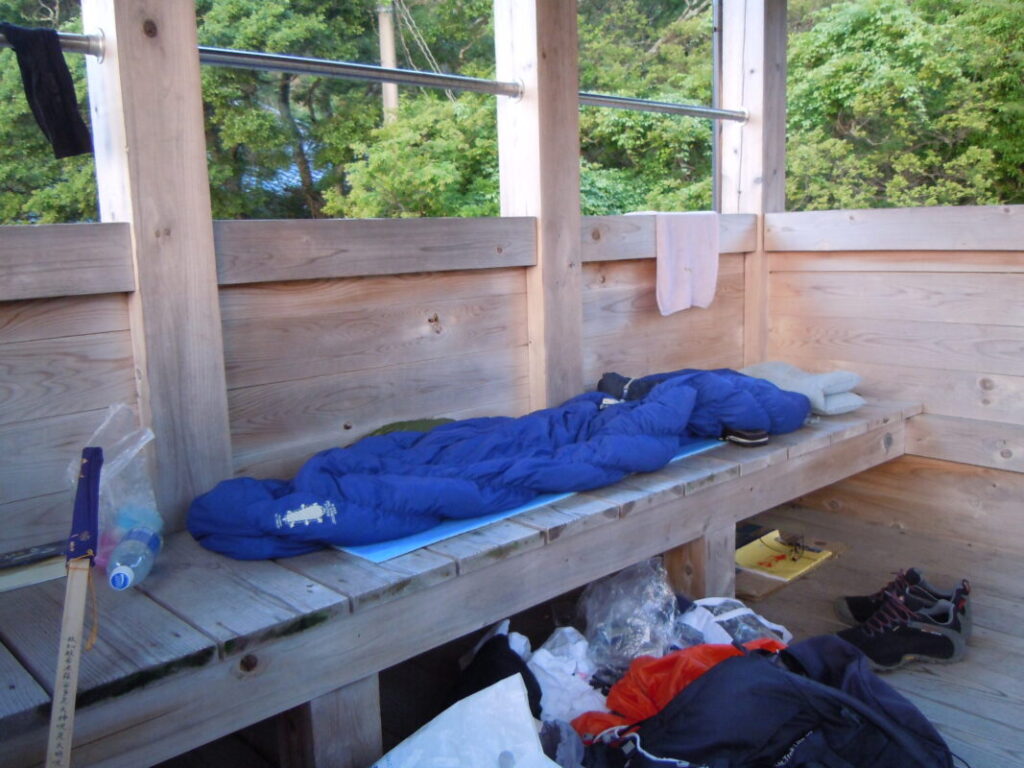
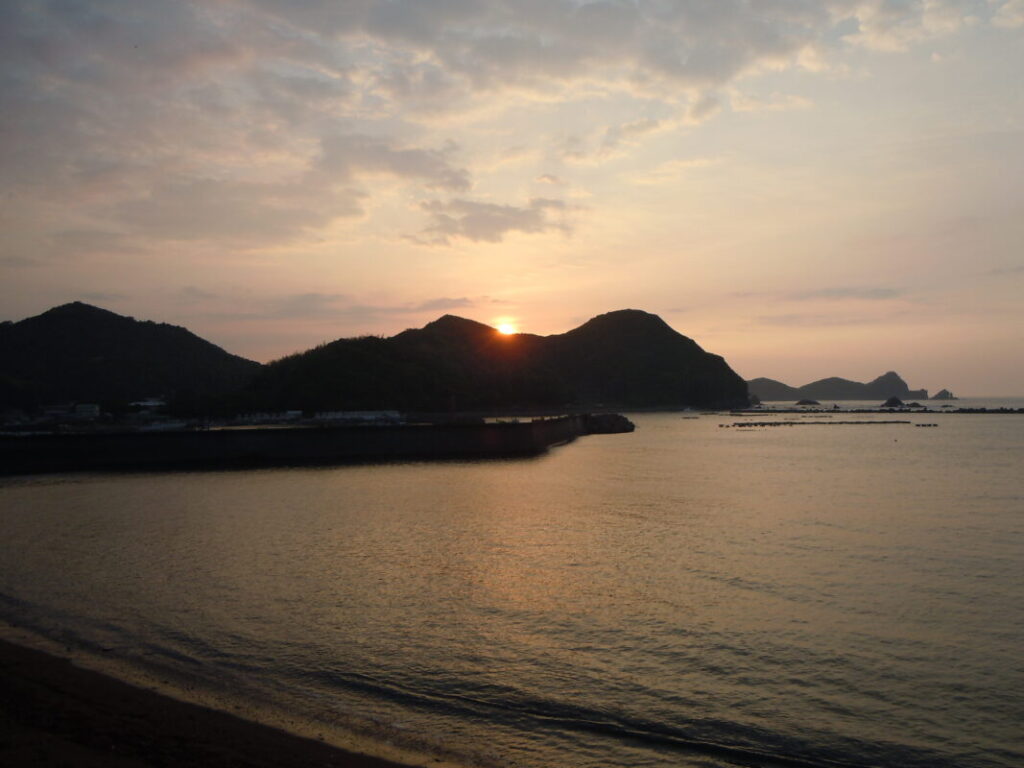
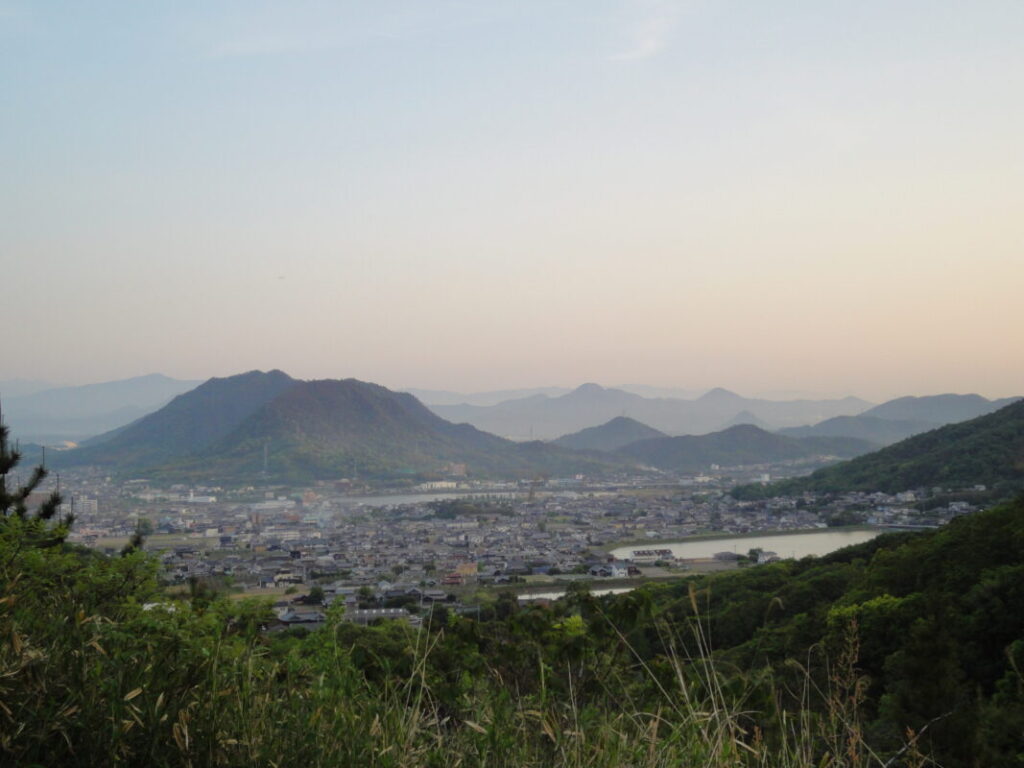
Another appeal of wild camping is the chance to feel close to nature. On the Shikoku Pilgrimage, you can experience deep mountain paths and breathtaking coastal scenery up close.
Sunrise over the Pacific Ocean in Kochi Prefecture.
Scenery from Goshikidai in Kagawa Prefecture.
Car Camping (Sleeping in Your Vehicle)
Car camping is a highly flexible and convenient accommodation style for those traveling the Shikoku Pilgrimage by car. Along the pilgrimage route, there are many roadside stations (michi-no-eki) where overnight stays in vehicles are relatively easy and commonly practiced.
With proper planning, it is even possible to complete the entire pilgrimage while staying in your car each night.
Recommended for:
- Pilgrims traveling by car
- Those who want to reduce accommodation costs
- Travelers who prefer a flexible, self-paced journey
My 34-Day Walking Pilgrimage Accommodation Data
In my first round of the Shikoku Pilgrimage, I completed the journey on foot over 34 days.
I stayed a total of 33 nights, broken down as follows:
- Wild camping (nojuku): 21 nights
- Paid accommodation: 6 nights
- Zenkon-yado (free/donation-based lodgings): 3 nights
- Tsuyado (temple shelters): 2 nights
- Shukubo (temple lodging): 1 night
For preparation, I spent around 60,000 yen on gear for wild camping, including a tent and sleeping bag.
If we assume an average accommodation cost of 5,000 yen per night, the break-even point would be about 12 nights.
Since I stayed 21 nights in the wild, I was able to more than recover the cost of my equipment in the end.
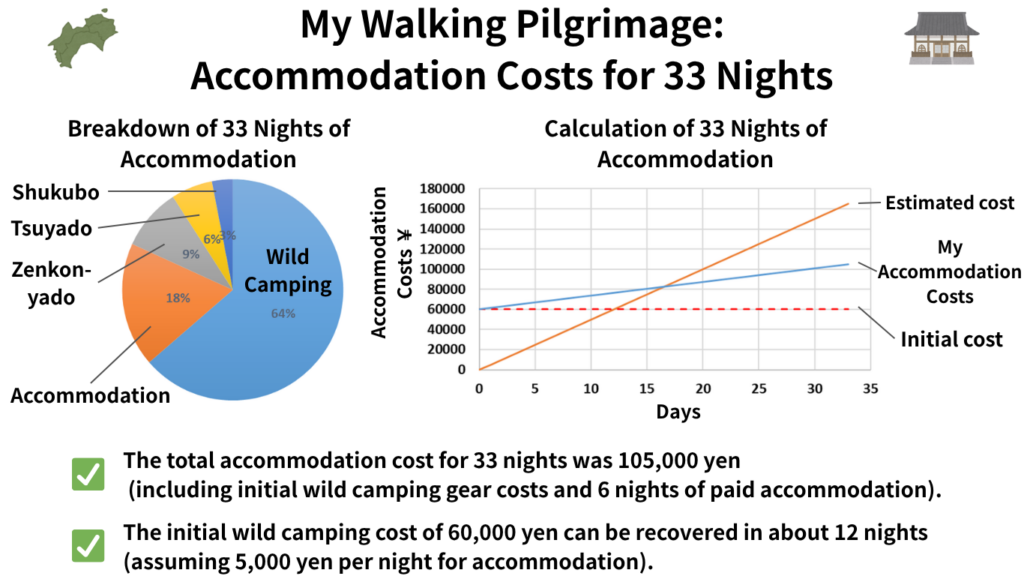
Total Accommodation Cost
The total cost for 6 nights in paid accommodation plus 1 night at a temple lodging (shukubo) was approximately 45,000 yen.
In addition, I spent around 60,000 yen on gear for wild camping, bringing the overall total to roughly 100,000 yen.
By combining different accommodation styles, it is possible not only to reduce costs but also to gain unique experiences that are only possible on the Shikoku Pilgrimage.
How to Choose Accommodation Wisely
In general, it is important to choose accommodation that matches your own pilgrimage style. However, since the Shikoku Pilgrimage is a once-in-a-lifetime journey for many people, it is also recommended not to stick to a single style, but to combine the best aspects of each option and enjoy a flexible “best-of-each” approach.
For a Meaningful Experience: Stay at a Shukubo at Least Once
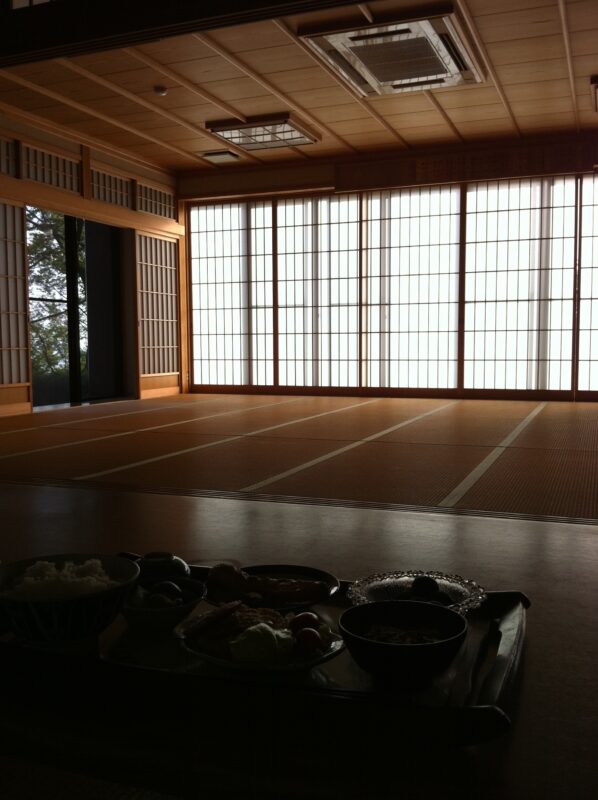
If you value experience over convenience, staying at a shukubo (temple lodging) is highly recommended. It offers a special atmosphere that cannot be found in ordinary hotels or inns.
Even a single night can be meaningful enough to deepen your understanding of the pilgrimage. That is why many pilgrims choose to include at least one shukubo stay in their journey.
Local Ryokan and Minshuku Run by Residents
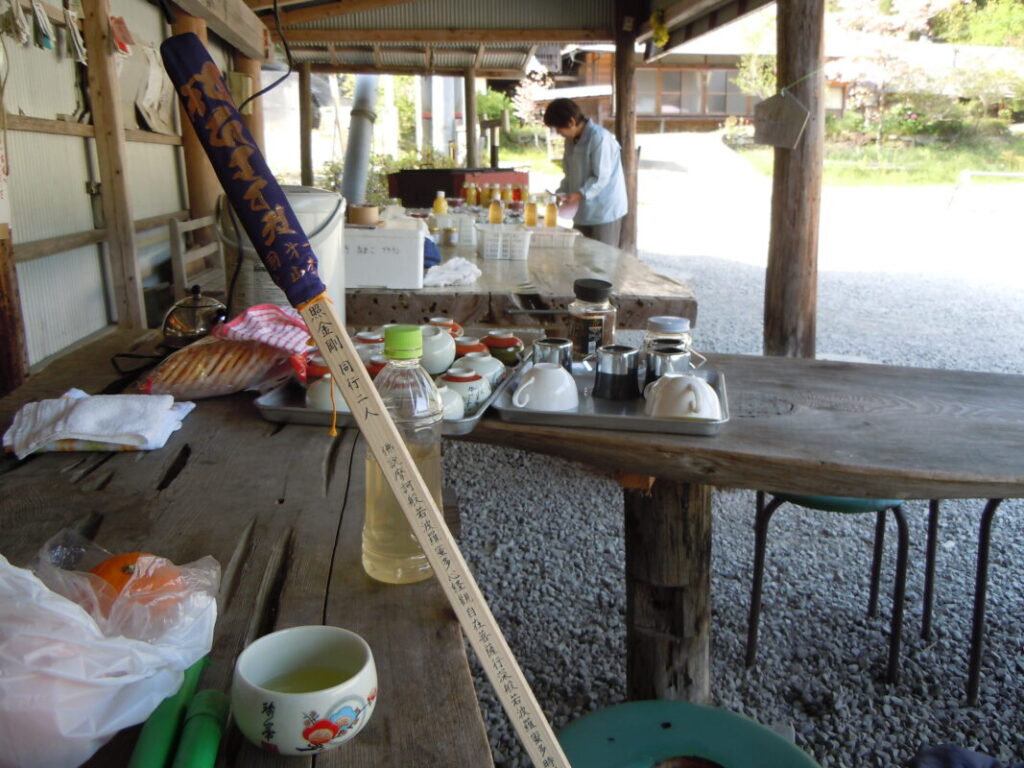
Many ryokan and minshuku in Shikoku are operated by local people who are deeply familiar with the area. One of their main attractions is the opportunity to experience the region’s culture, lifestyle, and atmosphere in a very authentic way.
Unlike standard tourist accommodations, these stays allow you to feel the “real” local environment more closely, offering experiences that go beyond sightseeing.
It is a recommended accommodation style to try at least once during the Shikoku Pilgrimage.
Choosing Accommodation for Sightseeing as Well
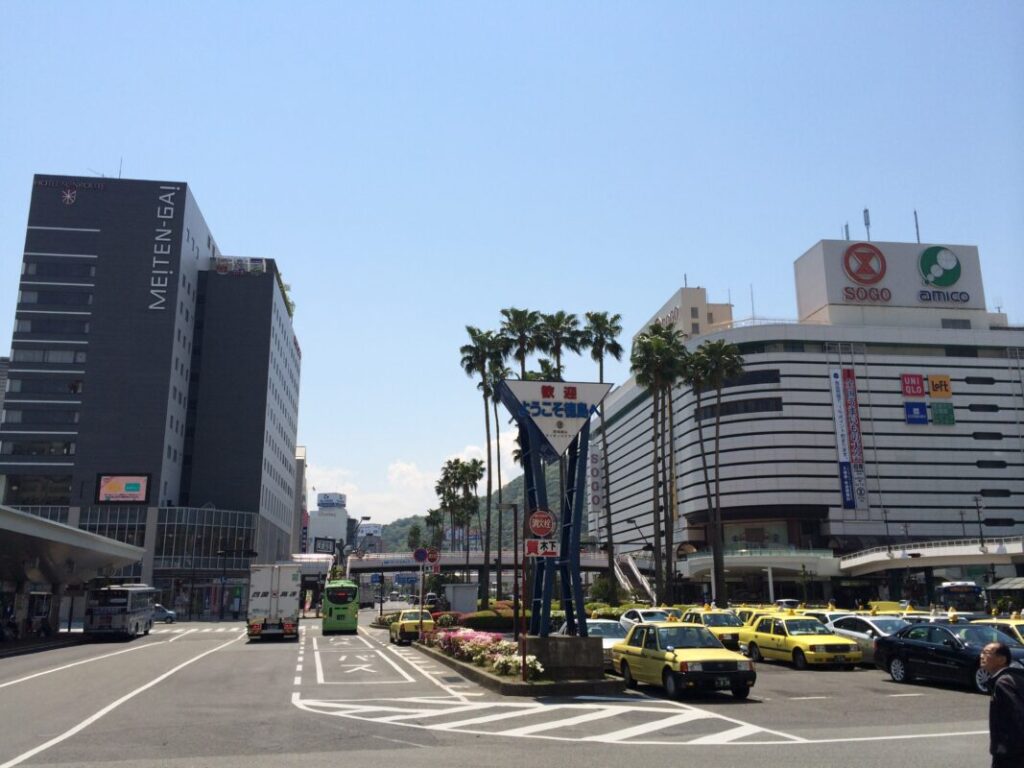
Shikoku offers not only temple pilgrimages, but also a wide range of attractions such as historical sites, nature spots, and local cuisine. If you want to enjoy sightseeing alongside your pilgrimage, staying at hotels near major train stations is a convenient and efficient option.
In particular, the prefectural capitals—Tokushima City, Kochi City, Matsuyama City, and Takamatsu City—offer excellent transportation access and well-developed facilities. Using well-located hotels in these areas allows you to balance sightseeing and the pilgrimage smoothly.
Relaxing at Hot Spring Inns
For those who want to fully recover from fatigue during the journey, staying at a hot spring inn is highly recommended.
Well-known hot spring areas such as Ashizuri Onsen in Kochi Prefecture, Dogo Onsen in Ehime Prefecture, and Konpira Onsen in Kagawa Prefecture are relatively accessible from the pilgrimage route, making them convenient places to stop along the way.
Each area is well-equipped and offers a calm, relaxing atmosphere where you can spend time at a slower pace. In addition to soothing your body in the hot springs, the warm hospitality of the inns is also one of the great pleasures of the experience.
Tips to Reduce Accommodation Costs
Using Room-Only Plans
Choosing a room-only plan (without meals) can reduce accommodation costs by around 20–30%. Meals can easily be arranged at convenience stores or supermarkets, and dining at local restaurants or izakaya also allows you to enjoy regional specialties.
In addition, casual conversations with local people during meals can become one of the memorable highlights of the journey.
Make Use of Day-Use Hot Springs
Along the pilgrimage route, there are also many day-use hot spring facilities. By making good use of them, you can continue your journey in greater comfort.
When combined with wild camping or car camping, it is even possible to keep accommodation costs low while still enjoying regular baths to relax your body and recover from fatigue.
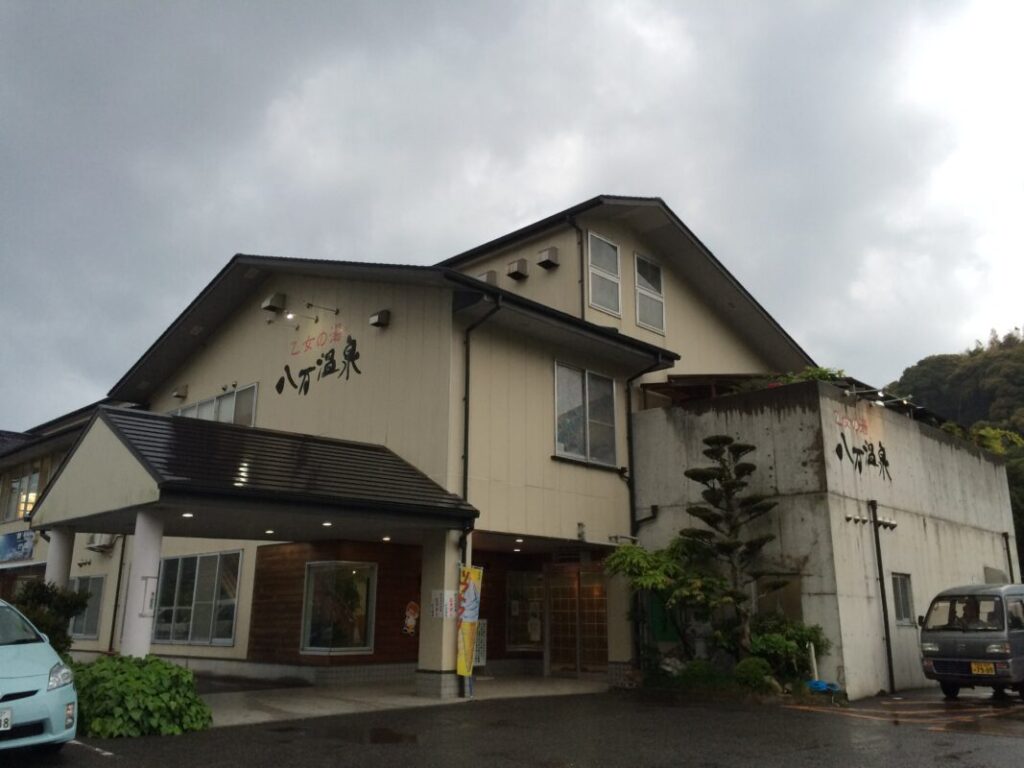
Hachiman Onsen in Tokushima Prefecture.
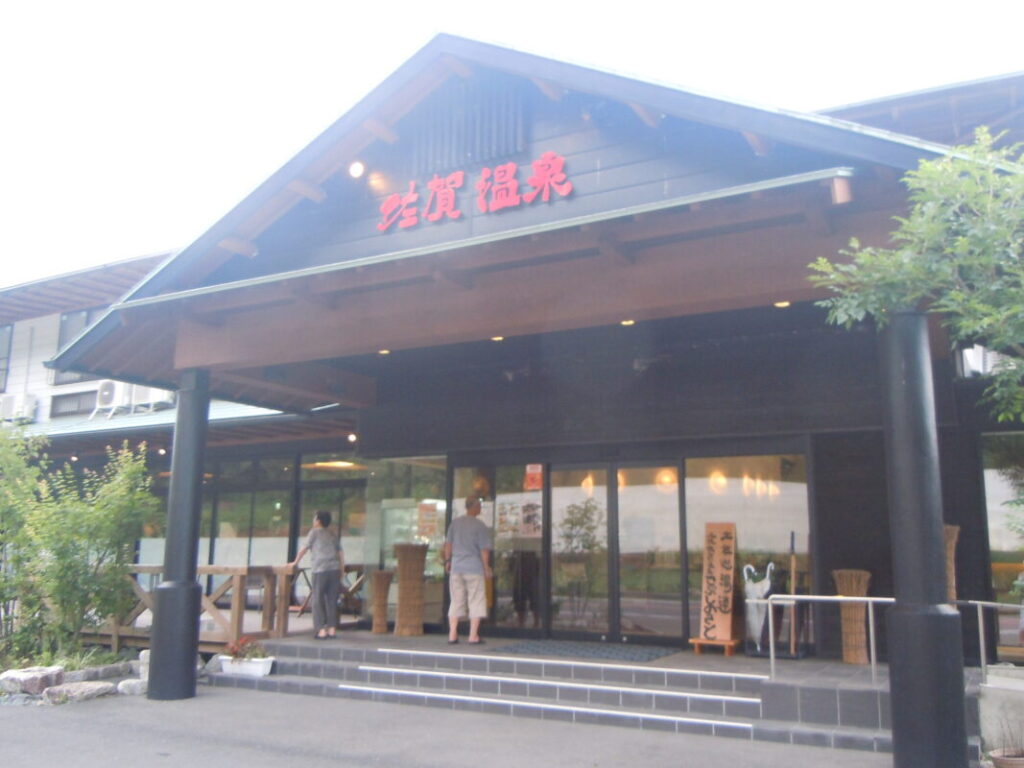
Tosa Saga Onsen in Kochi Prefecture.
Common Mistake
Not Being Able to Book Accommodation Due to Local Events
When your travel dates overlap with major local events or holiday periods, accommodation can become fully booked very quickly. In particular, it is often difficult to secure rooms during events such as the Awa Odori Festival in Tokushima, the Yosakoi Festival in Kochi, as well as during New Year holidays and Golden Week.
To avoid this issue, it is important to either plan your trip outside these peak periods or make reservations well in advance. Careful preparation helps ensure a smoother and more comfortable pilgrimage experience.
Be Careful in Remote Sections with Few Accommodations | Planning Ahead Is Essential
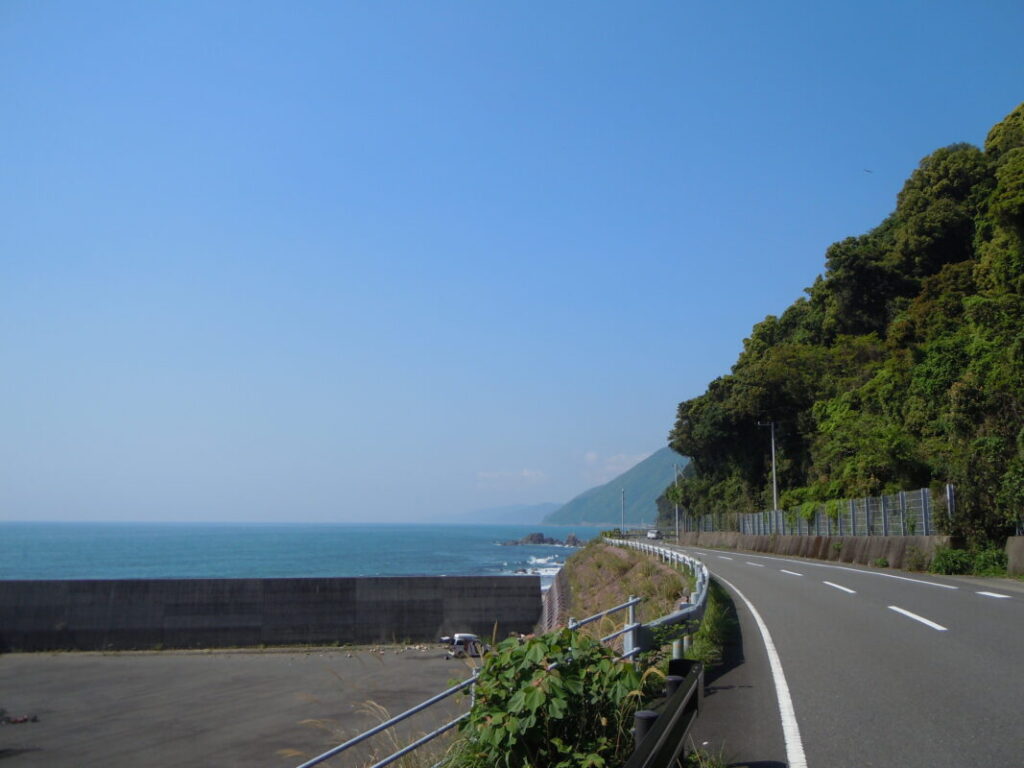
Along the Shikoku Pilgrimage route, there are many areas far away from cities where accommodation and dining options are limited. In these sections, careful advance planning is extremely important.
In Kochi Prefecture in particular, the stretches toward Muroto Cape (Hotsumisaki-ji Temple) and Ashizuri Cape (Kongofuku-ji Temple) are especially challenging. These two temples are more than 70 km apart, and for walking pilgrims, the journey typically takes about three days.
Because there are very few inns and restaurants in this area, it is essential to check accommodation options and resupply points in advance.
Planning a realistic schedule with enough flexibility will lead to a safer and more comfortable pilgrimage experience.
Relying Only on General Travel Websites
While general travel booking websites are convenient, they do not always provide enough detailed information specific to the Shikoku Pilgrimage. Details such as distances between temples, suitability for walking pilgrims, and information about tsuyado or zenkon-yado can be difficult to find.
For the pilgrimage, it is recommended to use specialized pilgrimage resources and real experience-based guides. This makes it easier to find accommodations that fit your route and helps ensure a smoother and more efficient journey.
Frequently Asked Questions (FAQ)
- QShould I book accommodation in advance for the Shikoku Pilgrimage?
- A
In general, it is recommended to book hotels and popular accommodations in advance, especially in city areas. During peak seasons such as long holidays, Obon, and Golden Week, many places become fully booked early. On the other hand, some minshuku and guesthouses may accept same-day reservations depending on availability.
- QIs it safe for solo female travelers to stay overnight?
- A
Yes, it is generally safe, but choosing accommodation carefully is important. Staying in private rooms (hotels, ryokan, or guesthouses with private rooms) is recommended for added security. If using wild camping or tsuyado shelters, it is safer to stay in well-traveled areas or where other pilgrims are present.
- QCan anyone use shukubo or tsuyado?
- A
In most cases, yes, but confirmation is required. Shukubo usually require advance reservations, while tsuyado rules vary by temple. It is best to check at the temple office or contact them by phone in advance.
- QWhich areas have fewer accommodations?
- A
The Muroto Cape and Ashizuri Cape areas in Kochi Prefecture are known for having limited accommodation and dining options. It is important to plan your lodging in advance in these sections.
- QIs wild camping easy on the walking pilgrimage?
- A
It is relatively possible, but conditions vary greatly by season. From mid-August to early October, typhoons frequently affect Shikoku, sometimes with strong intensity. While there are no bears, caution is still needed regarding snakes (such as mamushi), bees, and wild boars. In winter, snowfall may occur in mountainous areas, so proper cold-weather gear is essential.
- QCan I use car camping during a driving pilgrimage?
- A
Yes. There are many roadside stations (michi-no-eki) along the pilgrimage route where car camping is possible. Combining this with day-use hot springs can make the experience relatively comfortable.
- QCan zenkon-yado be used for car pilgrims?
- A
In general, it is not recommended. Zenkon-yado are primarily intended for walking pilgrims. If you are traveling by car, it is considered good manners to avoid using them so that they remain available for those who truly need them.
Summary
Accommodation options on the Shikoku Pilgrimage can be broadly divided into nine types: hotels, ryokan, minshuku, guesthouses/hostels, temple lodgings (shukubo), tsuyado shelters, zenkon-yado, wild camping (nojuku), and car camping.
Each option has its own characteristics, and it is important to choose based on a balance of cost, comfort, and experience.
- For comfort: hotels and ryokan
- For balance of cost and comfort: minshuku and guesthouses
- For a unique experience: shukubo
- For saving money: zenkon-yado, wild camping, and car camping
For first-time pilgrims, it is best not to limit yourself to just one style, but to combine different accommodation types depending on the situation.
In addition, accommodation can become difficult to secure in remote areas or during peak travel seasons, so advance planning is essential.
In my own case, during my 34-day walking pilgrimage, I combined multiple accommodation styles. This allowed me to reduce costs while also gaining valuable experiences unique to the Shikoku Pilgrimage.
Accommodation on the pilgrimage is not just a place to sleep—it is a key element that greatly influences the overall quality of the journey.
I hope you can find a style that suits you and enjoy the Shikoku Pilgrimage with a well-balanced and realistic plan.