Hello, I’m Taka, the creator of this blog.
I completed the Shikoku Pilgrimage on foot twice, combining both the clockwise and counterclockwise routes.
In this article, I’ll clearly explain the best way to travel by car on Day 10 of the Shikoku Pilgrimage route (Temples 84–88), including distances, travel times, and highlights along the way.
This guide is for people who:
- Want to know the best route for the final day
- Hope to complete the pilgrimage smoothly
- Are unsure whether to include the final thanksgiving visit (Orei-mairi)
- Best Day 10 Schedule (Time Allocation)
- Day 10 of the Shikoku Pilgrimage by Car: Kagawa City Area
- Highlights of Day 10
- Roadside Station Information: From the Kagawa City Area to Okubo-ji
- Common Mistakes on the Final Day of the Pilgrimage
- Recommended Accommodation Around Takamatsu
- Frequently Asked Questions (FAQ)
- Summary
- Related Article
Best Day 10 Schedule (Time Allocation)
As a guideline, allocate about 30 minutes per temple for the visit. This is intentionally generous, so you can adjust flexibly depending on the situation.
- 7:30Breakfast & Departure
30 min travel
- 8:00Temple 84: Yashimaji
30 min worship + 15 min travel
- 8:45Temple 85: Yaguriji
30 min worship + 15 min travel
- 9:30Temple 86: Shidoji
30 min worship + 15 min travel
- 10:15Temple 87: Nagaoji
30 min worship + 40 min travel
- 11:25Temple 88: Okuboji
30 min worship + 45 min travel
- 12:00Lunch
- 13:00Temple 1: Ryozenji
30 min worship
- 13:30Finish
Day 10 of the Shikoku Pilgrimage by Car: Kagawa City Area
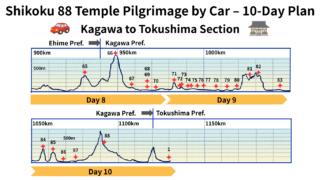
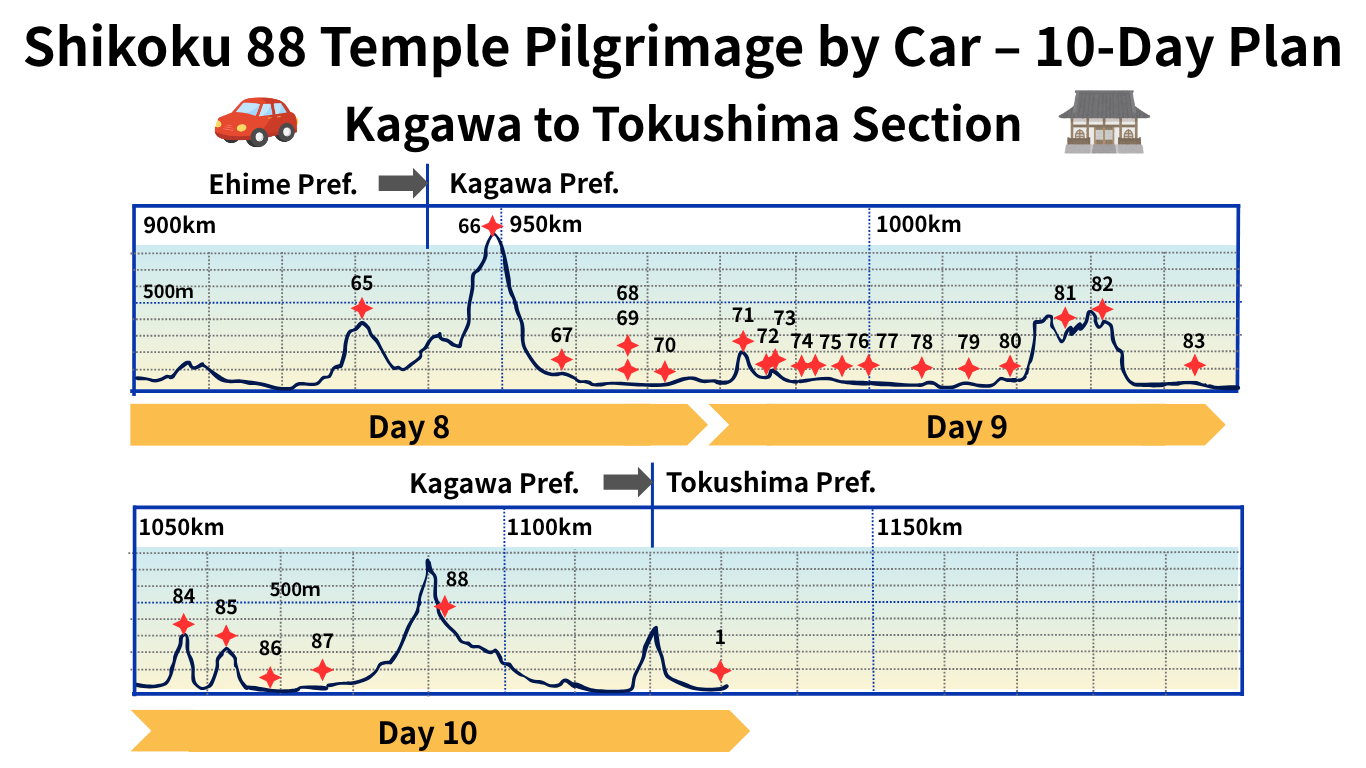
Day 10 covers a route from Temple 84 to Temple 88. Including a final thanksgiving visit to Temple 1, the total driving distance is approximately 90 km.
On the final day, there are mainly two possible options:
- Finish the pilgrimage at Temple 88 and complete the journey there
- Continue on to Temple 1 for a final thanksgiving visit (Orei-mairi)
The choice depends on each person’s preferences and schedule, so it’s important to create a plan that matches your goals and allows you to travel comfortably without rushing.
Information on Temples No. 84 to No. 88
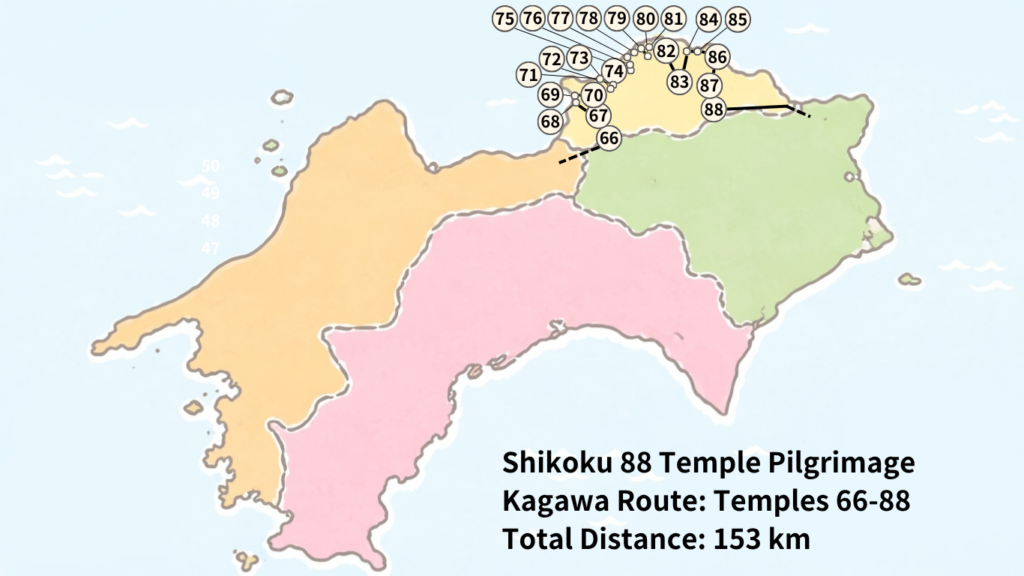
Detailed guides for each temple include route maps, history, goshuin, and highlights.
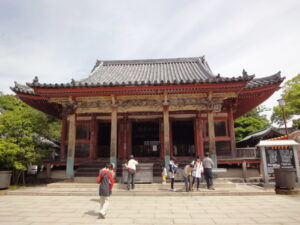
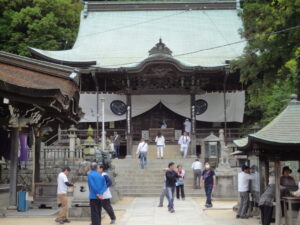
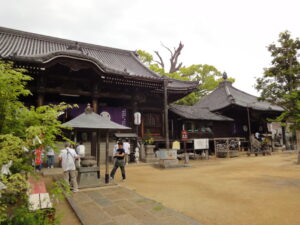
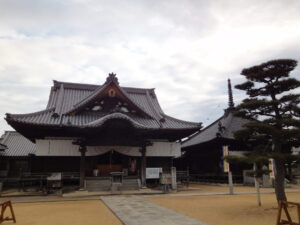
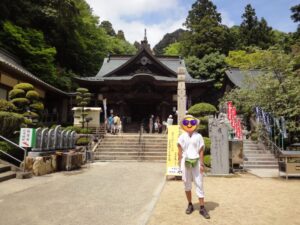
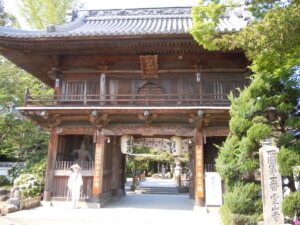
A complete list of all temples up to No. 88 is available in the article below.
Temple List and Full Route
Key Points for Day 10
In the final stage of the pilgrimage, you will encounter several mountain temples that are considered the last major challenge of the journey.
- Temple 84, Yashima-ji, is located on a mountain at an elevation of about 300 meters.
- Temple 85, Yakuri-ji, sits at an elevation of about 200 meters.
- To reach Yakuri-ji, you must first descend from Yashima-ji and then climb again.
- Finally, Temple 88, Okubo-ji — the temple where the pilgrimage is completed — is a mountain temple located at an elevation of around 500 meters.
However, when traveling by car, the parking areas are relatively close to the temple grounds, making the visits more manageable and less physically demanding.
Highlights of Day 10
The Scenery and History of Yashima
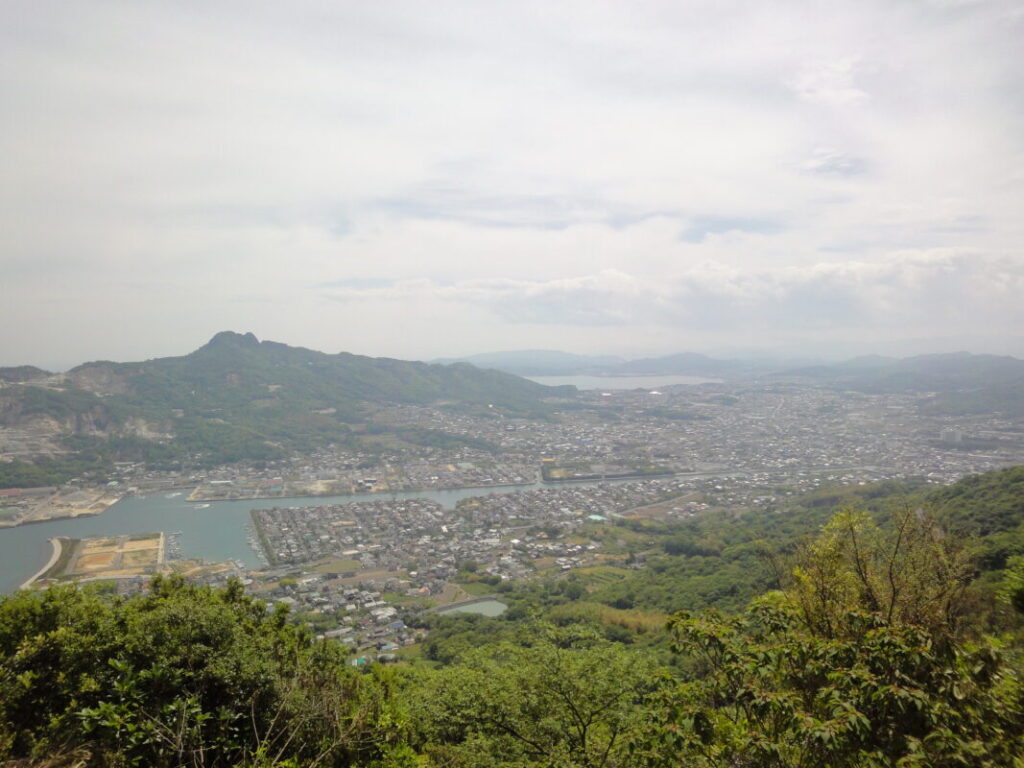
Yashima-ji is located on a plateau about 300 meters above sea level, offering panoramic views of the Yashima area from the mountaintop.
Yashima is also known as a historic site connected to the Genpei War. In particular, the Battle of Yashima fought in 1185 is regarded as one of the key battles that led to the downfall of the Taira clan.
One of the most famous legends from the battle is the story of Nasu no Yoichi, who shot and struck a fan target with a single arrow from a great distance.
Along the route, you can also find decorative manhole covers inspired by this famous scene.
The mountain visible across from here is Mount Yakuri, home to Temple 85, Yakuri-ji.
Sanuki City Henro Museum
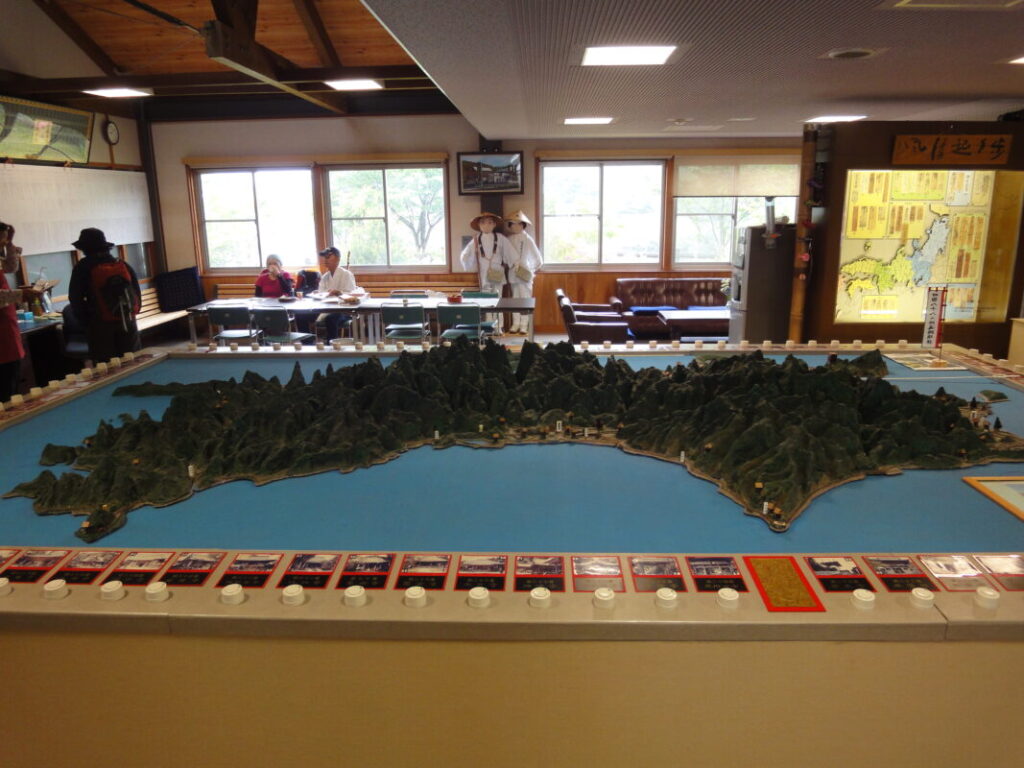
Sanuki City Henro Museum is a museum where visitors can learn about the history and culture of the Shikoku Pilgrimage.
It is located along Prefectural Route 3 on the way to Okubo-ji.
Inside the museum, you can find exhibits such as:
- The origins of the pilgrimage and its connection to Kukai
- Traditional pilgrimage clothing and old stamp books (nokyocho)
- A large-scale diorama showing the geography of the Shikoku Pilgrimage route
The museum also introduces local religious traditions and the historical changes to the pilgrimage paths, making it an insightful place for both beginners and experienced pilgrims.
With its quiet atmosphere and relaxed setting, it offers a great opportunity to deepen your understanding of the spiritual and cultural background of the pilgrimage, allowing you to appreciate the journey on a deeper level.
Commemorative Gifts for Walking and Cycling Pilgrims
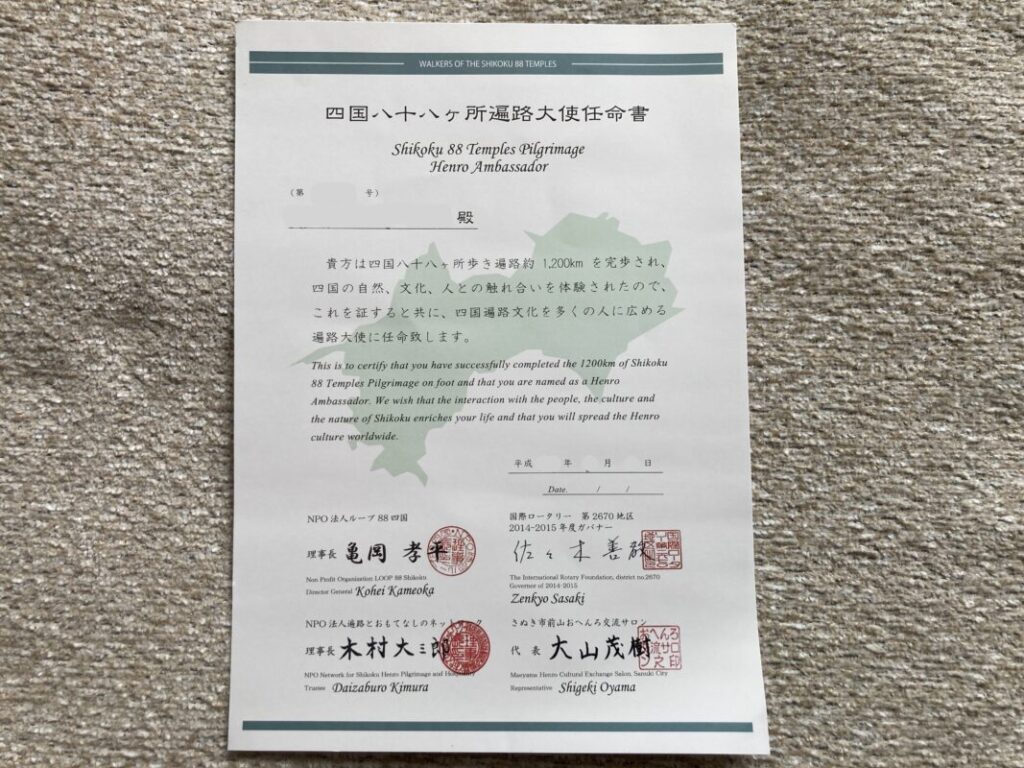
Pilgrims who complete the Shikoku Pilgrimage on foot or by bicycle are awarded a “Shikoku 88 Pilgrimage Ambassador Certificate” along with a commemorative badge.
If you traveled the route by walking or cycling, be sure not to miss the opportunity to receive these special souvenirs.
Many other materials and exhibits are also on display, making the museum well worth a visit. If you have the chance, be sure to stop by and experience it for yourself.
Please note that the museum is open from 8:00 a.m. to 4:00 p.m.
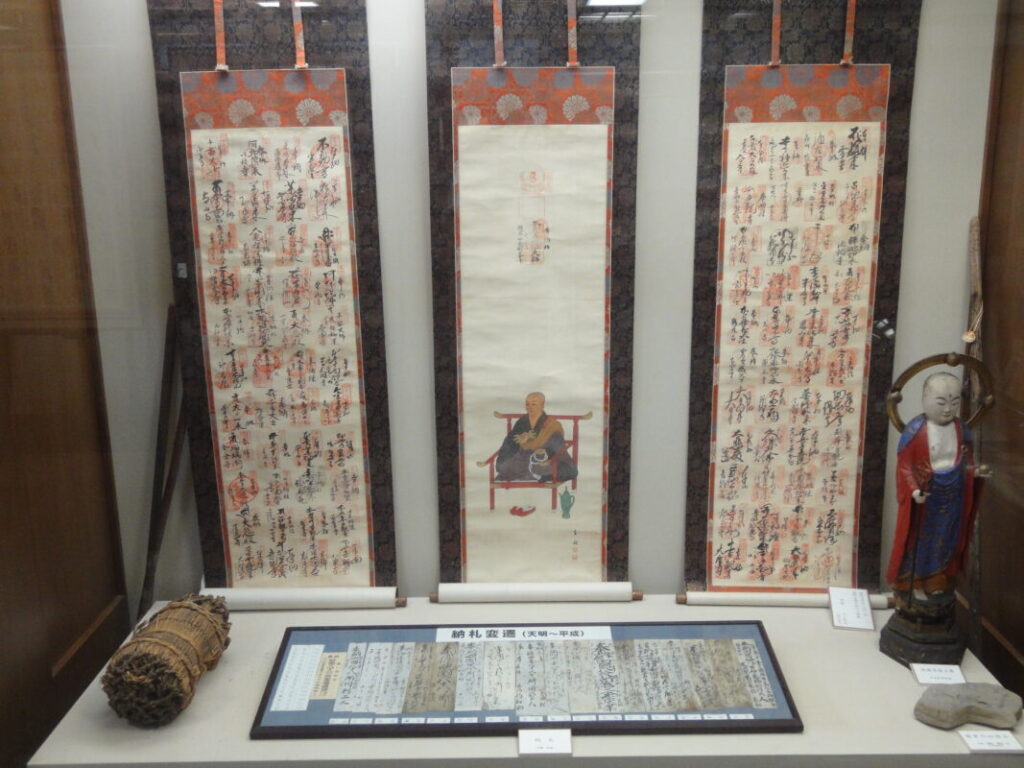
Valuable historical materials: hanging scrolls and sacred talismans.
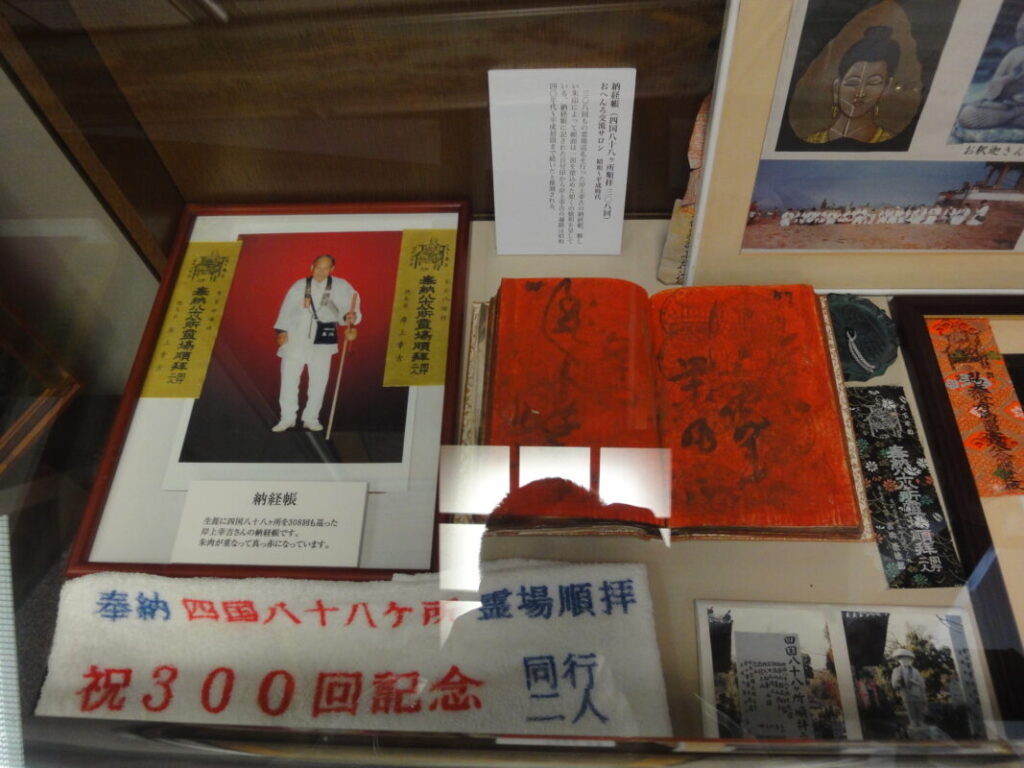
Materials documenting 308 complete circuits of the Shikoku Pilgrimage.
The Temple of Completion: Temple 88, Okubo-ji
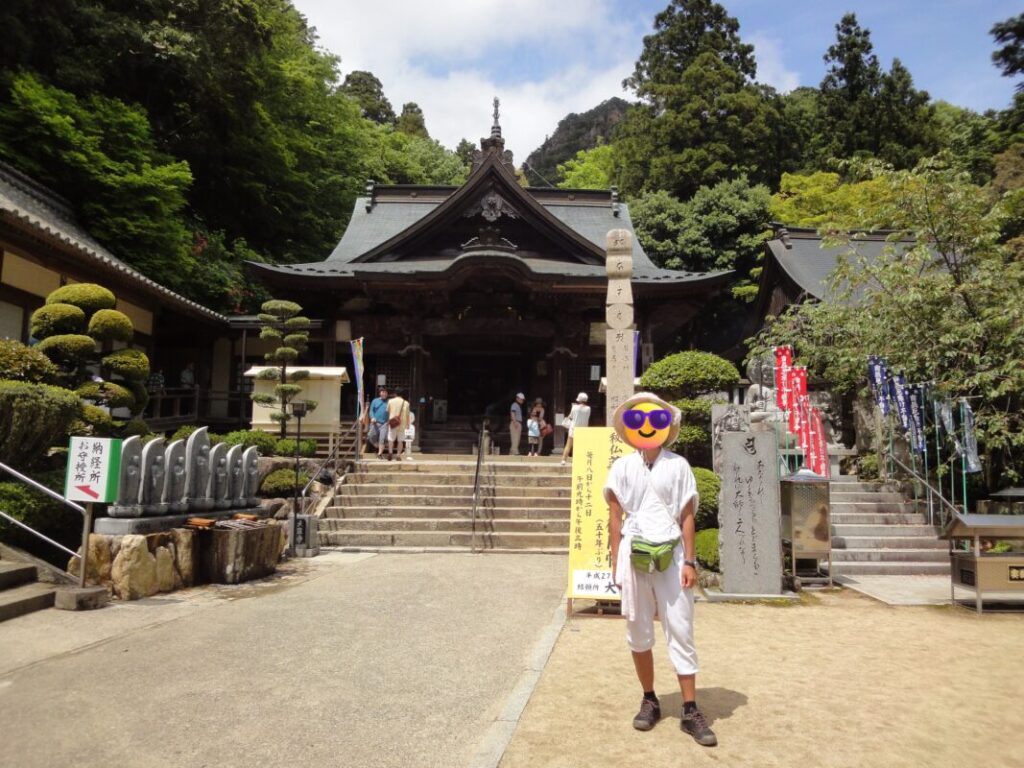
Many pilgrims arrive here with a deep sense of accomplishment after completing their journey, and there is often a special atmosphere reflected in the expressions of the visitors.
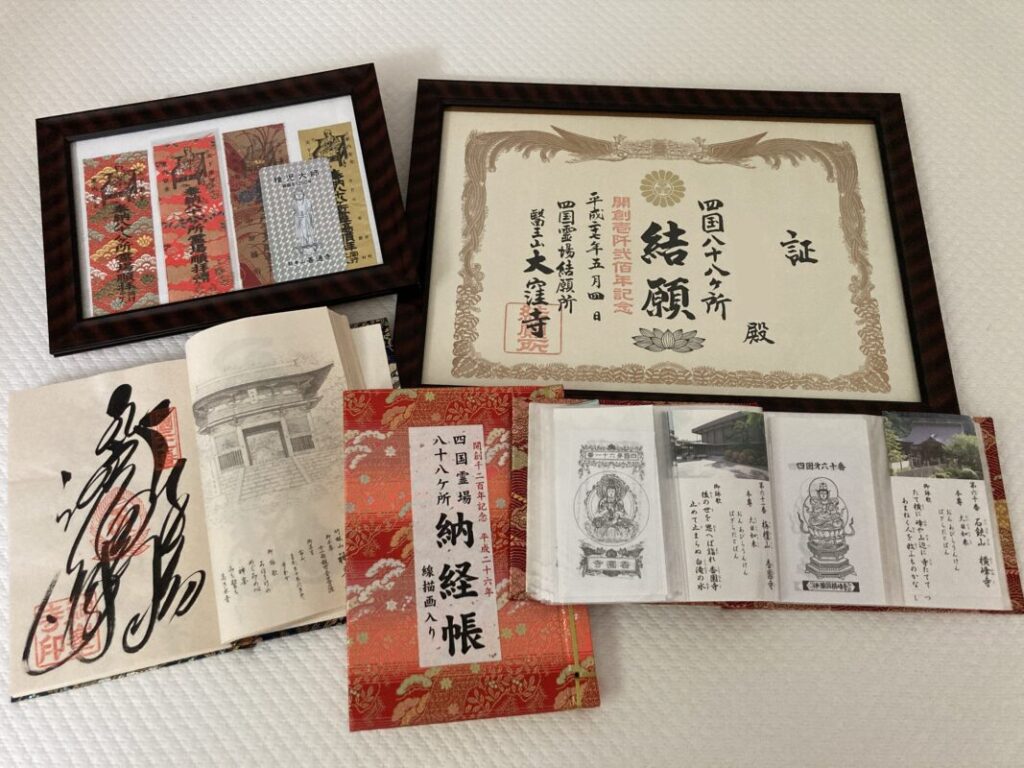
At Okubo-ji, you can also receive a certificate commemorating the completion of your pilgrimage. The fee is 2,000 yen per certificate.
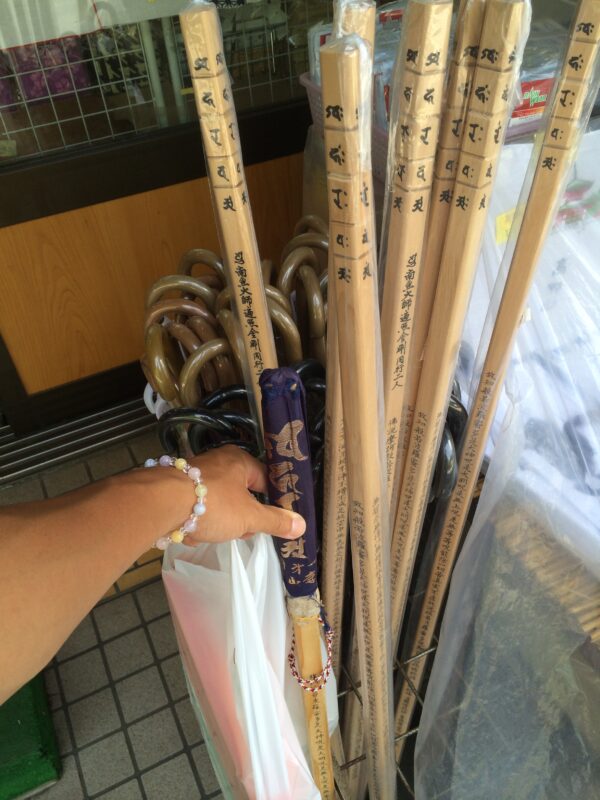
You can also leave your kongō-zue (pilgrimage walking staff) at the temple grounds.
I chose to take mine home as a keepsake, and I still treasure it today. It is often said that a kongō-zue becomes worn down and shorter after completing the pilgrimage on foot, and in my case, mine became about 25 cm shorter by the end of the journey.
Proof of Completing the Pilgrimage
My shortened pilgrimage walking staff
The Osunafumi Pilgrimage Hall at Okubo-ji
The Osunafumi pilgrimage hall contains sacred sand collected from each of the 88 temples of the Shikoku Pilgrimage, arranged in order along the path. It is said that by walking this route, visitors can receive the same spiritual blessings as if they had actually completed the entire pilgrimage.
Osunafumi sites like this can be found in various places throughout Japan, but experiencing one at the temple where the pilgrimage officially ends felt especially meaningful.
Many walking pilgrims visit this hall after completing the full journey themselves, and the space carries a uniquely calm and special atmosphere.
I also walked the entire path there, quietly reflecting on the emotions and sense of fulfillment that came with completing the pilgrimage.
Simmered Udon at Yasohachi-an
After completing the pilgrimage, it is considered something of a tradition to enjoy a bowl of simmered udon at Yasohachi-an, located in front of Okubo-ji.
When I visited, however, it was an especially busy season and the restaurant was crowded, so unfortunately I was unable to try it myself.
Thanksgiving Visit: Returning to Temple 1, Ryozen-ji
An “Orei-mairi” (thanksgiving visit) refers to returning once more to the temple where you first began your pilgrimage. It is not something pilgrims are required to do, and many people choose to consider their journey complete upon reaching Temple 88.
Since I began my pilgrimage at Ryozen-ji, I decided to return there as well. Before setting out on the journey, I remember feeling both excitement and uncertainty, not really knowing what awaited me.
Although the scenery itself had not changed, I could clearly feel that something inside me had changed.
Rather than simply returning to where I started, it felt more like climbing one step higher on a spiral staircase — a quiet but genuine sense of personal growth.
Along the way, I passed pilgrims who were just beginning their own journeys, and we exchanged words of encouragement like, “Good luck on your pilgrimage.” It was a memorable moment that reminded me of my former self at the very beginning of the path.
Roadside Station Information: From the Kagawa City Area to Okubo-ji
Here is a list of roadside stations (Michi-no-Eki) that are easily accessible from the pilgrimage route.
Genpe no Sato Mure


| Parking | 40 |
| Nearest Temple | No. 85, 86 |
| Facilities | Wi-Fi |
| Google Maps | MAP |
| Rating | ★★★★☆ (4/5) |
It is located between Temples 85 and 86, along the pilgrimage route, making it an easy place to stop by during your journey.
Nagao

| Parking | 60 |
| Nearest Temple | No. 87, 88 |
| Facilities | Museum |
| Google Maps | MAP |
| Rating | ★★★★★ (5/5) |
It is located along Prefectural Route 3, between Temples 87 and 88. Together with the adjacent pilgrimage museum, it is a facility well worth stopping by.
Here is a list of roadside stations (Michi-no-Eki) convenient for the Shikoku Pilgrimage.
Best roadside stations for Shikoku pilgrims
Common Mistakes on the Final Day of the Pilgrimage
Not Taking Enough Time to Enjoy the Town’s History and the Pilgrimage Museum
If you rush through the final stage of the journey, the pilgrimage experience you have carefully built up along the way can start to feel hurried and incomplete.
Precisely because it is the last day, it is important to allow yourself extra time and appreciate each place at a relaxed pace. With a flexible schedule, you can fully savor the final moments leading up to the completion of the pilgrimage.
Failing to Reach the Final Temple on Schedule and Extending the Trip by an Extra Day
If your timing does not work out well, you may end up needing an additional night of accommodation and other expenses, which can easily cost around 10,000 yen extra.
Especially in the final stage of the pilgrimage, the spacing between temples and the overall travel distances begin to change. For that reason, it is a good idea to review your schedule for the Kagawa Prefecture section of the journey once you reach around Imabari in Ehime Prefecture.
By adjusting your plans in advance, you can complete the pilgrimage more smoothly and comfortably without unnecessary rushing.
Recommended Accommodation Around Takamatsu
Business Hotel Sunshine Takamatsu
Business Hotel Sunshine Takamatsu is a budget-friendly hotel conveniently located just a few minutes from Ritsurin Station in Takamatsu. It offers clean, simple rooms with free Wi-Fi and easy access to Ritsurin Garden and local udon restaurants. Popular among pilgrims and business travelers, the hotel provides practical amenities such as laundry facilities and parking.
Other Recommended Accommodation List
Other recommended accommodations are explained in detail in this article.
Recommended Accommodation: Temples 84–88 in Kagawa
Frequently Asked Questions (FAQ)
- QCan I visit Temples 84–88 by car in one day?
- A
Yes, it is possible. The driving distance is around 50 km (about 90 km if you include the thanksgiving visit to Temple 1), and the total time required is generally about 6–8 hours including temple visits. However, if you would like to spend more time sightseeing and exploring, it is best to allow for a more relaxed schedule.
- QWhere is the official completion point of the pilgrimage?
- A
In general, the pilgrimage is considered complete upon reaching Temple 88, Okubo-ji. However, many pilgrims also return to Temple 1, Ryozen-ji, for a final thanksgiving visit, so the choice depends on personal preference.
- QIs the thanksgiving visit (Orei-mairi) mandatory?
- A
No, it is not required. Many pilgrims finish their journey at Temple 88. Others choose to return to the first temple as a symbolic way to bring the pilgrimage to a meaningful close.
- QCan I drive directly to Yakuri-ji?
- A
Yes. Although there is also a cable car route to the temple, it is accessible by car as well. From the parking area, you can walk to the temple grounds.
- QWhat can I do at Okubo-ji?
- A
As the final temple of the pilgrimage, visitors can receive temple stamps, pray, and obtain an official certificate of pilgrimage completion for a fee. It is also possible to leave your kongō-zue (pilgrimage walking staff) there.
- QWhere can I eat or take a break?
- A
You can use roadside stations (Michi-no-Eki) and restaurants located near the temples. Around Okubo-ji, many pilgrims enjoy a meal after completing the pilgrimage. During busy seasons, it is wise to allow extra time because restaurants can become crowded.
- QIs completing the pilgrimage in 10 days realistic?
- A
Yes, it is realistic when traveling by car. However, the schedule can be quite tight, so it is important to plan your daily driving distances and temple visits in advance.
Summary
Day 10 of the Shikoku Pilgrimage by car is the final stage of the journey, covering Temples 84 through 88. Since this section includes several mountain temples and longer travel distances, it is important to plan a comfortable schedule without rushing.
On the final day, pilgrims can choose either to complete the pilgrimage at Temple 88, Okubo-ji, or to continue on to Temple 1, Ryozen-ji, for a thanksgiving visit. Neither choice is right or wrong — the best plan is the one that matches your own goals and available time.
It is easy to become hurried during the final stage, but allowing yourself extra time gives you the chance to reflect on the journey and bring the pilgrimage to a thoughtful and meaningful close.
The sense of accomplishment that comes with completing the pilgrimage is one of the greatest rewards of the experience. On this final day especially, try not to rush, and take the time to appreciate each temple along the way.
Related Article
Shikoku 88 Temple Pilgrimage by Car – Day 9: Kagawa Route (Temples 71–83) Guide.
Day 9: Kagawa Temples 71–83
Shikoku Pilgrimage by Car: 10-Day Route, Cost & Essential Tips.
Shikoku Pilgrimage by Car