
Hello, I’m Taka, the creator of this blog.
I have completed the Shikoku 88 Temple Pilgrimage twice on foot, including both the traditional route and the reverse route.
During my journeys, I received many acts of osettai along the way.
“What exactly is osettai?”
“What should I do when someone offers it to me?”
If you’ve just started your walking pilgrimage, there are often many things that may not be immediately clear.
In this article, I’ll explain the meaning of osettai, the different forms it can take, the etiquette for accepting it, and also share some of my own personal experiences.
- Osettai in the Shikoku Pilgrimage
- Types of Osettai
- Manners When Receiving Osettai
- Personal Osettai Experiences from Walking the Pilgrimage Twice
- The Mysterious Appeal of Osettai Culture
- Are There Conditions That Make It Easier to Receive Osettai?
- Frequently Asked Questions About Osettai
- Summary | Osettai Is a Culture of Receiving People’s Thoughts, Not Just Things
Osettai in the Shikoku Pilgrimage
Osettai refers to acts of generosity and support given to pilgrims walking the Shikoku Pilgrimage.
This is a long-standing tradition in Shikoku, where local people offer pilgrims drinks or food, provide places to rest, and sometimes even help with lodging or transportation.
While walking the pilgrimage route, you may suddenly be offered a drink or hear someone say, “Please take a rest here.” Many first-time pilgrims are often surprised by this experience.
I myself received osettai many times during my walking pilgrimage. At first, I remember feeling a bit confused, thinking, “Is it really okay to accept such kindness from strangers?”
The Meaning of Osettai
Osettai is not simply an act of kindness or charity.
It is rooted in a spirit of encouragement and support for pilgrims. At the same time, there is also the idea that offering help to pilgrims allows one to accumulate merit or receive spiritual blessings in return.
Even when walking the pilgrimage alone, it often feels like you are being supported by many people along the way.
Even something as small as a bottle of water or a piece of snack can carry the feeling of, “Please carry my thoughts with you as you walk.”
Why the Culture of Osettai Began
In the past, the Shikoku Pilgrimage was far more difficult than it is today.
The roads were not well developed, and pilgrims had to walk long distances on foot while struggling to find places to stay and food to eat. It is said that some even lost their lives while traveling through mountains and coastal paths.
Osettai is believed to have originated as a way for local people to support these exhausting journeys by offering food and lodging.
Over time, this practice evolved from simple mutual aid into a unique cultural tradition of the Shikoku Pilgrimage.
Today, although there are more convenience stores and accommodations available, the spirit of supporting pilgrims remains unchanged.
“Dōgyō Ninin” and Osettai
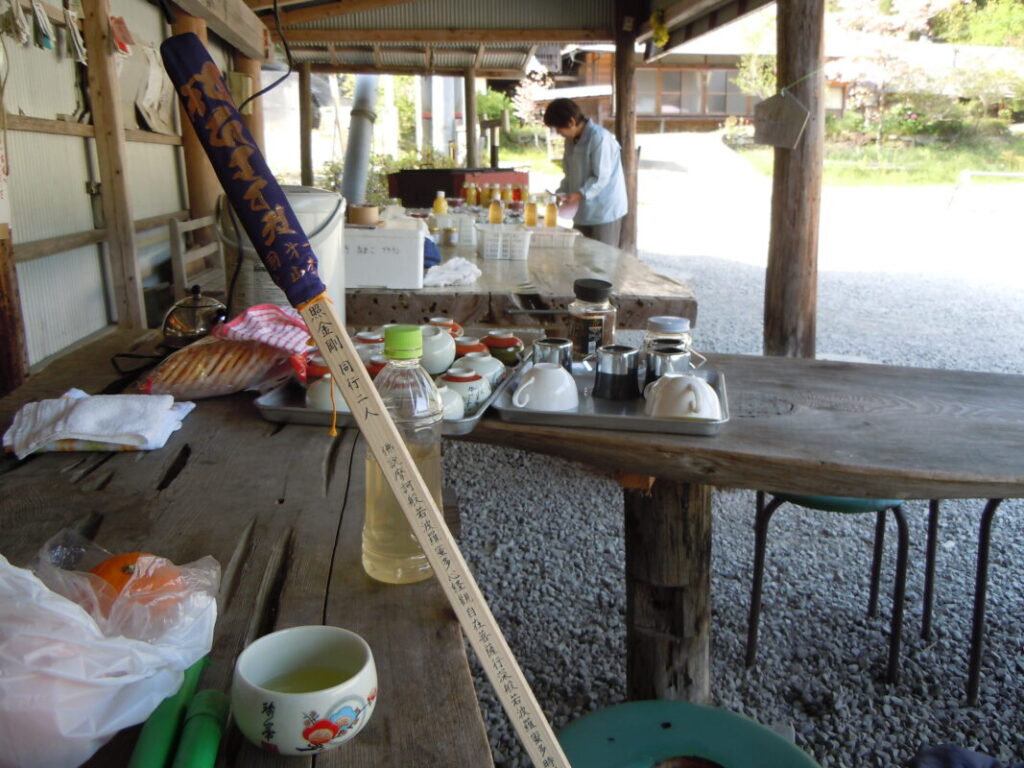
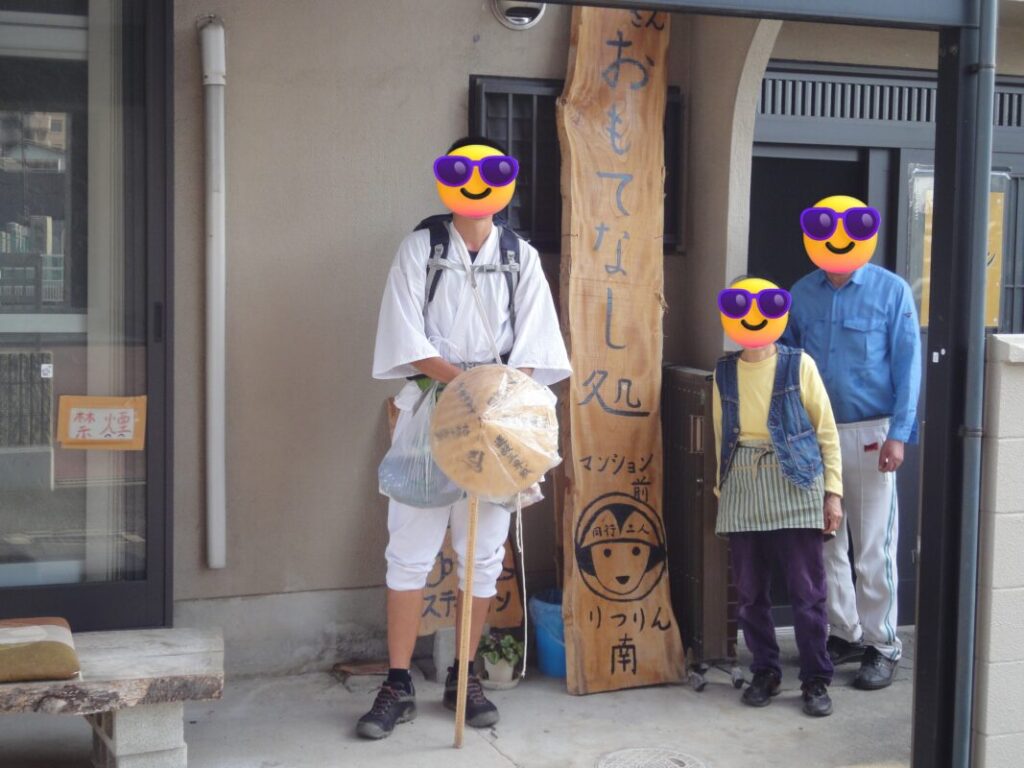
In the Shikoku Pilgrimage, there is a phrase called dōgyō ninin (同行二人), which means “two traveling together.”
It expresses the belief that pilgrims walk together with Kōbō Daishi.
Even when walking alone, it is believed that Kōbō Daishi is always by your side.
When I first received osettai, I honestly felt confused.
I wondered, “Is it really okay for me to accept this?”
However, as I continued walking the pilgrimage, my perception gradually changed. Instead of thinking, “I am receiving this,” I began to feel that “we—Kōbō Daishi and I—are receiving this together as dōgyō ninin.”
Of course, interpretations vary from person to person, but since I started thinking this way, I’ve been able to accept osettai with a lighter heart and deeper gratitude.
Types of Osettai
When people hear the word osettai, they may first imagine receiving snacks or drinks.
However, when you actually walk the Shikoku Pilgrimage, you realize that osettai comes in many different forms.
It is not limited to receiving physical items—pilgrims are also supported in less visible ways, such as being offered places to rest or receiving help with transportation.
Here are some of the forms of osettai I personally experienced during my pilgrimage.
Receiving Drinks, Snacks, and Food
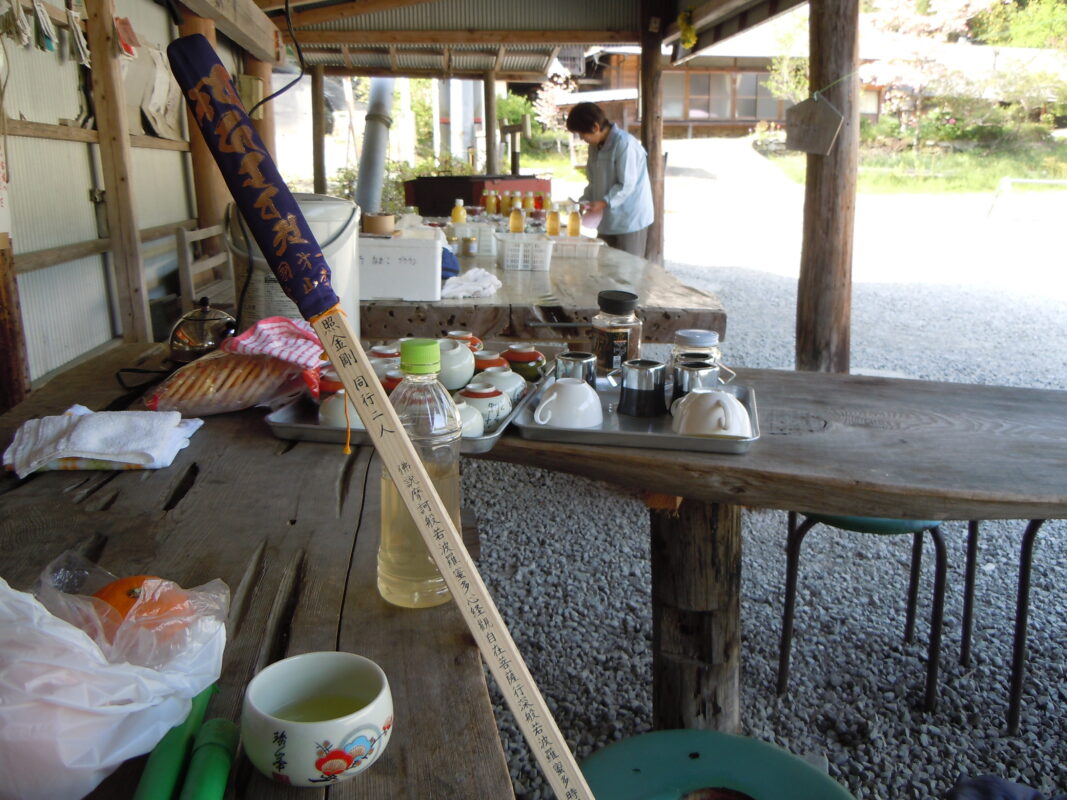
While walking, you may suddenly be called out and offered tea, juice, sweets, or fruit.
I myself received many kinds of osettai, including candy, snacks, vegetables, and fruit.
Receiving Money as Osettai
In some cases, pilgrims are given money as osettai.
I have also received it a few times during my walking pilgrimage.
The first time I received money, I felt quite confused, wondering, “Is it really okay to accept this?”
It wasn’t about the amount—it was the weight of the feeling behind it that stayed with me.
Being Offered a Ride
While walking, someone may say, “Would you like a ride?”
This often happens on mountain roads, in areas with little traffic, or on very hot or rainy days.
However, some pilgrims prefer to walk every step on their own.
How much assistance to accept depends entirely on each pilgrim’s personal style.
Rest Areas and Osettai Shelters
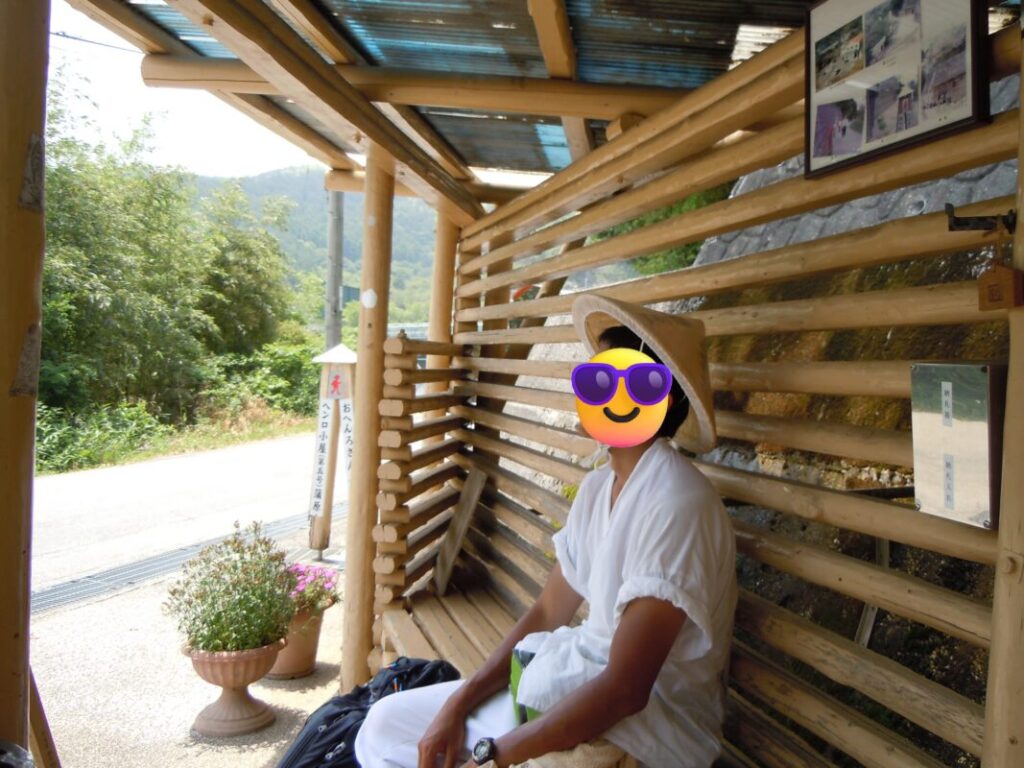
Along pilgrimage routes, there are rest areas and small shelters that pilgrims can use freely.
These places usually have benches and roofs, allowing pilgrims to sit down and rest when tired.
Some even provide tea, kettles, or notebooks for visitors.
They are especially helpful for taking shelter from rain or escaping the summer heat.
These facilities are also an important form of osettai that supports pilgrims.
Osettai from Shops and Local Activities
Some osettai is offered by local communities or businesses.
I have personally received small services or discounts at restaurants and convenience stores simply because I was a pilgrim.
There are also community-led activities.
For example, during Golden Week at Temple No.6, Anraku-ji, I received sweet sake (amazake) as osettai at the temple.
At Temple No.60, Yokomine-ji, I was given warm ginger tea during the cold winter season.
This shows that the pilgrimage is supported not only by individuals but also by entire communities.
Zenkon Yado (Charity Lodging)
Zenkon yado refers to accommodation offered to pilgrims either for free or at a very low cost.
In Kagawa, I once unexpectedly met someone who offered me a place to stay and said, “You can stay here tonight.”
Even today, this tradition still remains in parts of Shikoku.
When staying at such places, it is important to show gratitude and follow proper manners.
Maintenance of Pilgrimage Routes
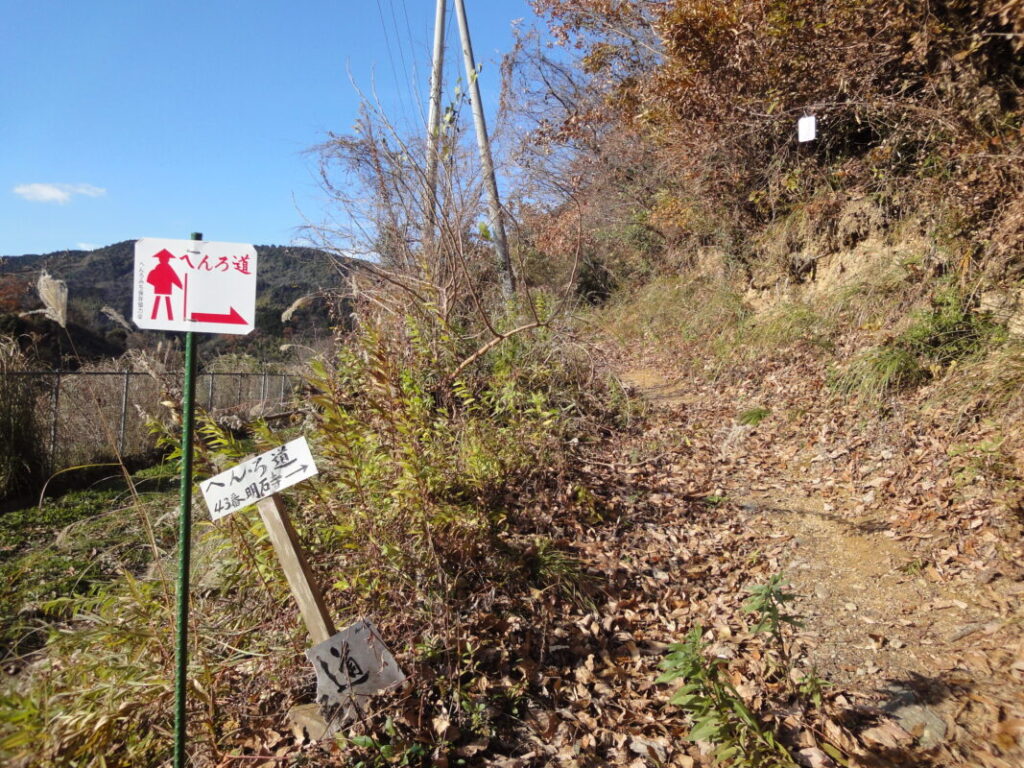
While walking the pilgrimage, you often pass through mountain paths and rural roads.
You may notice that the grass is neatly cut, dangerous areas are marked with ropes, and signposts are clearly maintained.
Without this kind of maintenance, some paths would become extremely difficult or even impossible to walk.
I believe that the people who quietly maintain these paths are also providing an important form of osettai that supports pilgrims in an invisible way.
Manners When Receiving Osettai
When you first receive osettai, you may feel unsure—“Is it okay to accept this?” or “Should I give something in return?”
Osettai is a culture based on receiving people’s goodwill. There are no strict rules or formal etiquette, but I believe the most important thing is simply to accept it with gratitude.
Accepting with Gratitude
Osettai is usually offered with the sincere wish to support pilgrims.
For this reason, it is most natural to accept it with gratitude.
When I received osettai, I would often say, “Thank you very much,” and join my hands in appreciation.
Offering an Ofuda (Nōsatsu) in Return
During a walking pilgrimage, some people choose to give a nōsatsu (offering slip) when receiving osettai.
However, this is not something you are required to do.
A nōsatsu is a slip of paper on which pilgrims write their name or wishes and offer at temples. Some pilgrims use it as a way to express gratitude when receiving osettai.
Personal Osettai Experiences from Walking the Pilgrimage Twice
Up to this point, I have introduced the meaning and different forms of osettai. However, when you actually experience it, there is something almost indescribable that goes beyond words.
Having completed the Shikoku 88 Temple Pilgrimage twice on foot—both the standard route and the reverse route—here are some of the most memorable osettai experiences I had.
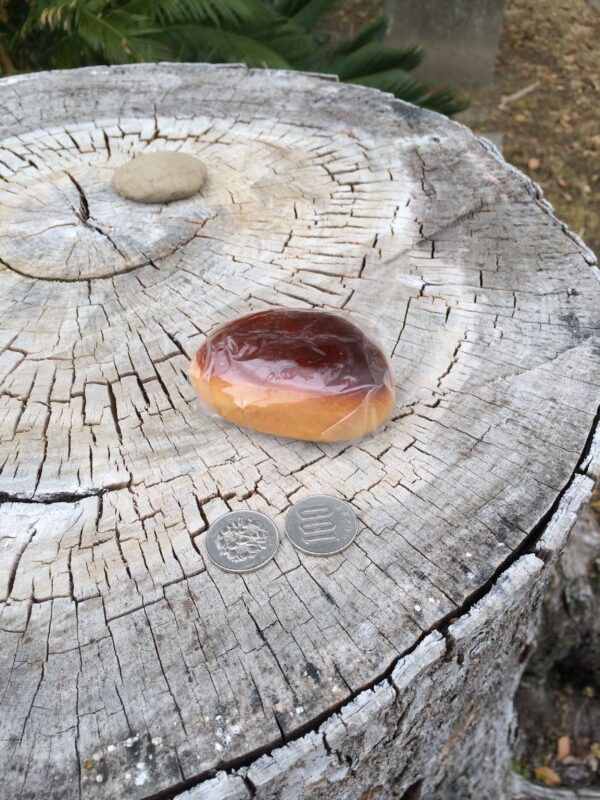
The First Osettai: A Bun and 200 Yen in Tokushima
My very first experience of osettai was in Tokushima Prefecture.
While I was walking, an elderly man on a bicycle suddenly stopped right in front of me.
As I wondered what was happening, he handed me a bun and 200 yen, saying, “Keep going.”
I had never experienced receiving something from a complete stranger like that, so it felt very unusual and almost surreal.
Even now, my first osettai remains strongly etched in my memory.
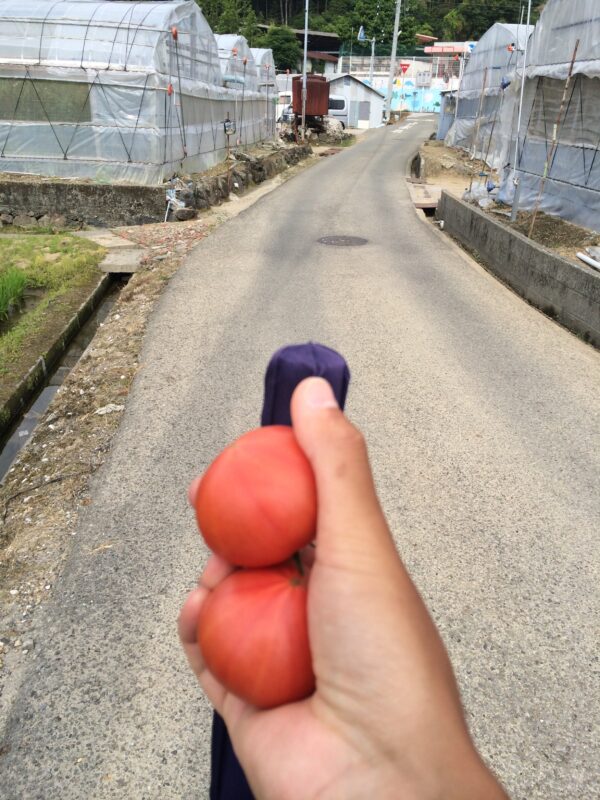
Tomatoes from a Farmer in Kōchi
While walking through Kōchi, I received tomatoes from a farmer.
It was after hours of walking in the intense heat, and those tomatoes tasted more delicious than anything I had ever eaten before.
A “Discharge Celebration” in Ehime
In Ehime Prefecture, I received a particularly memorable osettai from an elderly woman.
She told me:
“Today, I was discharged from the hospital.”
And then she offered me osettai.
I had not done anything special to deserve it.
But later, I began to think that perhaps she was expressing gratitude to Kōbō Daishi, dōgyō ninin, for recovering her health.
An Unexpected Stay at a Zenkon Yado in Kagawa
In Kagawa, I was suddenly approached and told:
“You should stay here tonight.”
It was so sudden that I was surprised, but I was also very tired from walking that day, so I gratefully accepted and stayed the night.
In ordinary life, it is rare to either host or stay with someone you have just met.
But on the pilgrimage, such things can happen quite naturally.
It was an experience that made me strongly feel the mysterious nature of the culture of osettai.
The Mysterious Appeal of Osettai Culture
While walking the Shikoku Pilgrimage, one thought kept coming back to me: “Osettai is truly mysterious.”
It is not just about receiving snacks or drinks. Rather, it is the unique sense of distance between people, which feels slightly different from everyday life.
As I kept walking, I came to feel that this is one of the great attractions of the Shikoku Pilgrimage.
Why Can We Naturally Accept Kindness from Strangers?
When you think about it, it is quite mysterious.
In everyday life, if someone suddenly handed you a drink on the street, most people would likely feel confused.
“Why?”
“Is this safe?”
That would be the normal reaction.
However, on the pilgrimage, such interactions naturally take place.
My Own Perspective on Osettai
When I first started walking the pilgrimage, I often found myself thinking, “Is it really okay for me to receive this much kindness?”
Especially when I received money for the first time, I felt quite overwhelmed.
But as I continued walking, my way of thinking gradually began to change.
Rather than feeling that “I am receiving this,” I started to feel that “we—Kōbō Daishi and I, as dōgyō ninin—are receiving this together.”
Of course, this is just my personal perspective.
I believe everyone may interpret it differently.
However, since I began to see it this way, I found myself feeling less hesitant and more able to accept things with genuine gratitude.
Perhaps osettai is not simply about receiving material things, but about accepting people’s thoughts and goodwill itself.
Are There Conditions That Make It Easier to Receive Osettai?
Osettai is an act of human kindness, so there is no way to guarantee that you will receive it.
However, having walked the pilgrimage twice on foot, there were certain situations where I personally felt that people were more likely to speak to me or offer osettai.
This is purely based on my own experience, but I will share it here for reference.
Walking Pilgrims Are Easy to Recognize
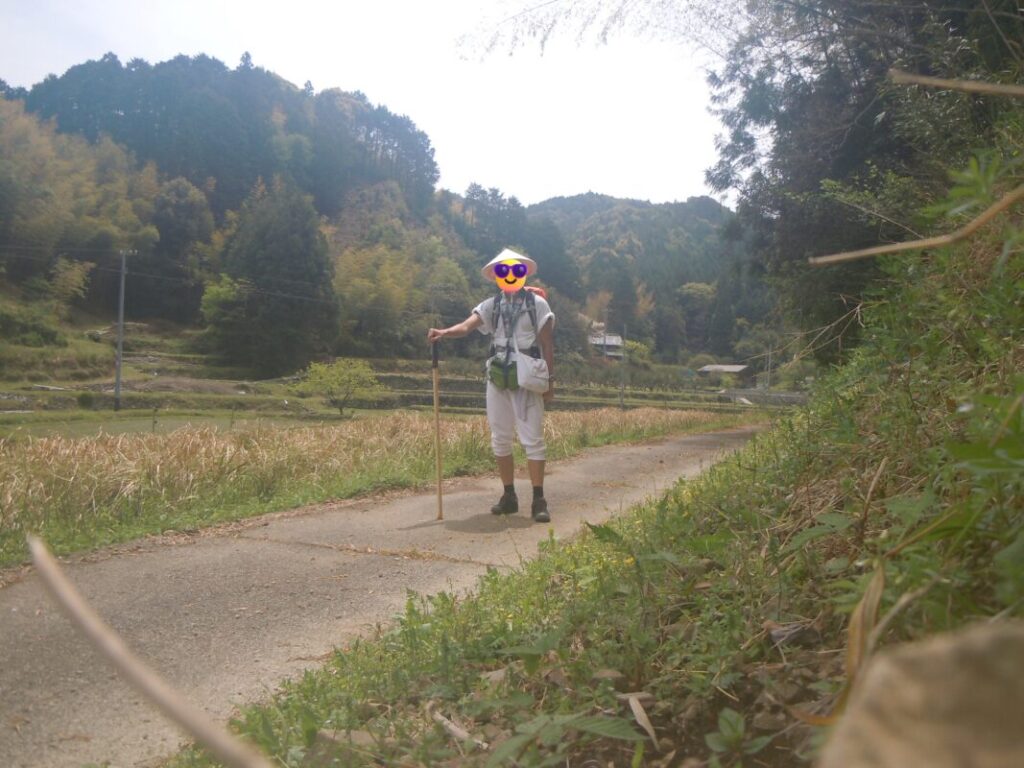
When wearing a white pilgrimage outfit, a kongō-tsue (walking staff), and a sedge hat, it is easy for others to recognize you as a pilgrim from a distance.
In fact, while walking, I often felt that my distance from local people became much closer.
Even in places where a car would simply pass by, walking often naturally creates opportunities for conversation.
Reverse Pilgrimage May Lead to More Encounters
From my experience, I had slightly more opportunities to receive osettai while doing the reverse pilgrimage (gyaku-uchi), where you walk from Temple 88 back to Temple 1.
Because reverse pilgrims are relatively rare, I was sometimes asked, “Are you doing the reverse route?”
Of course, this may vary depending on the region and season, but I felt that being “unusual” may have helped draw attention.
More Encounters on Less-Traveled Routes
Another interesting thing I noticed was that I often received osettai on less-traveled routes.
For example, when visiting the “Bekkaku” temples outside the main 88-temple route, I felt that I received osettai more frequently.
Since fewer people walk to these additional temples, pilgrims may stand out more.
Also, while traveling from Temple 38 to Temple 39, I once took the Mutsuki coastal route toward Cape Ashizuri instead of the usual route through the Shimanto area.
Even though it was a less commonly used path, I was still offered osettai several times along the way.
It may have been coincidence, but I felt that kindness tends to leave a stronger impression in quieter places.
Osettai Should Not Be Expected
That said, I do not believe osettai is something you should expect while walking the pilgrimage.
Rather, one of the true charms of the pilgrimage is encountering unexpected kindness from people along the way.
Frequently Asked Questions About Osettai
- QIs it okay to refuse osettai?
- A
Since osettai is offered out of kindness, most pilgrims choose to accept it with gratitude.
However, there is no need to force yourself to accept it if you have health reasons or personal circumstances.
In such cases, it is perfectly fine to politely decline while saying, “Thank you very much,” and briefly explaining your situation.
- QDo I need to give something in return for osettai?
- A
In principle, no return gift is required.
Osettai is usually given without expecting anything in return, as it is based on support and goodwill toward pilgrims.
That said, some walking pilgrims choose to offer a nōsatsu (offering slip) as a small token of gratitude.
It is not required, but some people give it as an expression of appreciation.
Summary | Osettai Is a Culture of Receiving People’s Thoughts, Not Just Things
Osettai refers to acts of generosity and support offered to pilgrims walking the Shikoku Pilgrimage.
It can take many forms—such as receiving drinks or food, or being offered rest areas, zenkon yado (charity lodging), or even directions and guidance along the way.
In everyday life, it is not very common to have deep interactions with strangers.
However, on the pilgrimage, you may find yourself naturally connecting with people in a way that feels almost unusual.
For those who are planning their first pilgrimage, there is no need to overthink it when you receive osettai.
The most important thing is simply to accept it with sincerity and say, “Thank you very much.”