

“Isn’t the Shikoku Pilgrimage supposed to be done on foot? Isn’t taking trains or buses against the spirit of the pilgrimage?”
Have you ever thought about it that way?
I completed the Shikoku 88-temple pilgrimage in 38 days on foot, so I understand the unique challenges and sense of accomplishment that come with walking the entire route.
There is certainly something special about completing the pilgrimage on foot. In that sense, a walking pilgrimage and one that relies on public transportation cannot be considered exactly the same experience.
However, in today’s world, many people cannot take enough time off work or away from their families to complete the journey on foot. With the rising cost of living, others may be interested in the pilgrimage but hesitate because of the financial commitment.
For those people, I’d like to explore the advantages and disadvantages of using public transportation, such as trains and buses, during the Shikoku Pilgrimage.
If you are considering undertaking the pilgrimage, I hope this article will help you plan your journey.
Advantages of Using Public Transportation
1. Save Time and Money
One of the biggest advantages of using public transportation is that it can significantly reduce the time needed to travel between temples.
Some sections of the pilgrimage route involve particularly long distances between temples.
Let’s look at the five longest sections, measured by the distance from the previous temple.
| Rank | Temple | Distance from Previous Temple | Estimated Walking Time |
|---|---|---|---|
| 1 | No. 38 Kongōfukuji | Approx. 80 km | 3–4 days |
| 2 | No. 24 Hotsumisakiji | Approx. 75 km | 3–4 days |
| 3 | No. 44 Daihōji | Approx. 68 km | 3–4 days |
| 4 | No. 37 Iwamotoji | Approx. 58 km | About 3 days |
| 5 | No. 39 Enkōji | Approx. 53 km | About 3 days |
Distances and walking times may vary depending on the route and walking pace.
Walking all five sections would take approximately 18 days in total.
On the other hand, by using trains and buses, it is possible to travel each section in just one day.
This means you could reduce 18 days of walking to just 5 days, saving approximately 13 days.
But what about the financial benefits?
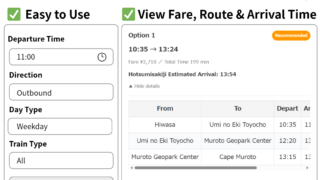
Using the Ohenro Compass public transportation route planner, I estimated the transportation costs for each section.
| Section | Estimated Public Transportation Fare |
|---|---|
| To Temple No. 38 Kongōfukuji | Approx. ¥3,000 |
| To Temple No. 24 Hotsumisakiji | Approx. ¥3,000 |
| To Temple No. 44 Daihōji | Approx. ¥4,000 |
| To Temple No. 37 Iwamotoji | Approx. ¥2,000 |
| To Temple No. 39 Enkōji | Approx. ¥2,500 |
| Total | Approx. ¥14,500 |
The total transportation cost for these five sections is approximately ¥14,500.
Now, let’s assume that accommodation and food cost around ¥10,000 per day, which is a relatively conservative estimate.
By reducing your journey by 13 days, you could save approximately ¥130,000 in daily living expenses.
Even after subtracting the ¥14,500 transportation cost, you would still save around ¥115,500.
In other words, using public transportation for just these five particularly long sections could potentially save you more than ¥110,000.
Of course, actual costs will vary depending on accommodation, transportation schedules, and connections. Nevertheless, the potential savings in both time and money are considerable.
2. Safer Travel in Bad Weather
Another major advantage is safety.
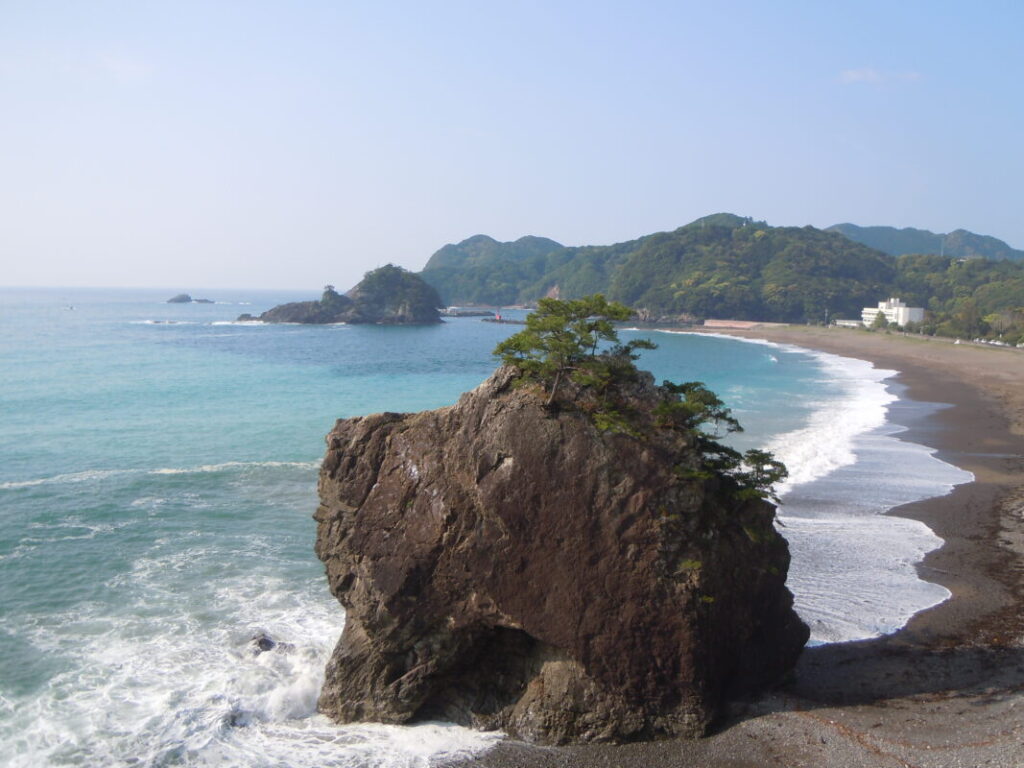
The pilgrimage route includes coastal roads and challenging mountain trails.
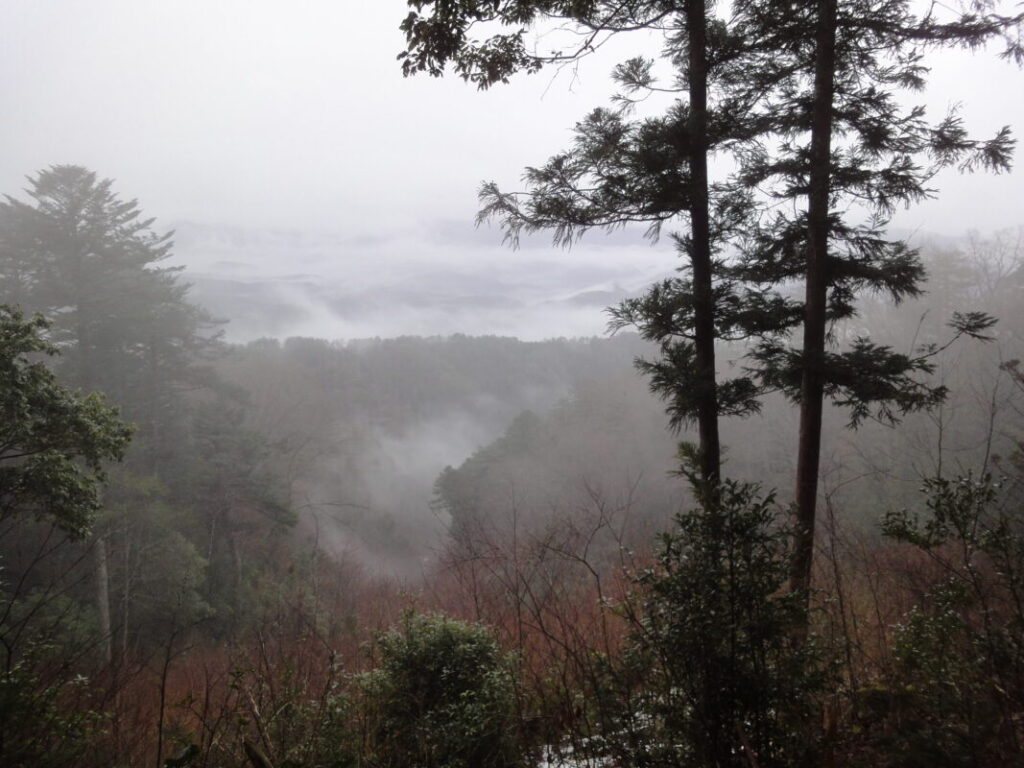
Depending on the season, pilgrims may also encounter typhoons, high waves, snow, and icy roads. Nature can sometimes make the journey quite dangerous.
When walking long distances, bad weather can increase the risk of unexpected accidents.
In such situations, choosing to take a train or bus instead of walking is certainly not a bad decision.
Prioritizing your safety is important, especially if you want to complete the entire pilgrimage.
Rather than insisting on walking every section, using public transportation when necessary can be a sensible choice for modern-day pilgrims.
Disadvantages of Using Public Transportation
You May Miss Some of the Unique Experiences of Walking the Pilgrimage
The biggest disadvantage is that you may miss out on some of the special experiences that only come from walking the pilgrimage.
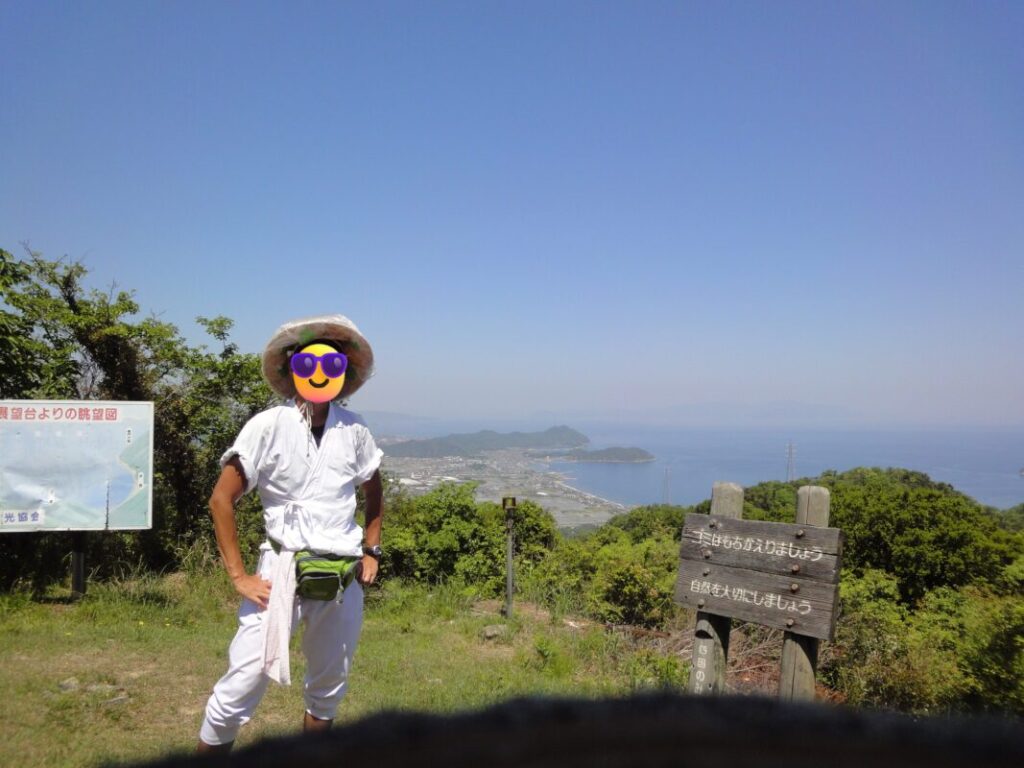
There are beautiful landscapes and small, unexpected moments that you can discover only by traveling long distances on foot.
Receiving Osettai, the traditional practice of local people offering help and hospitality to pilgrims. Having casual conversations with local residents. Discovering the beautiful nature of Shikoku along the way.
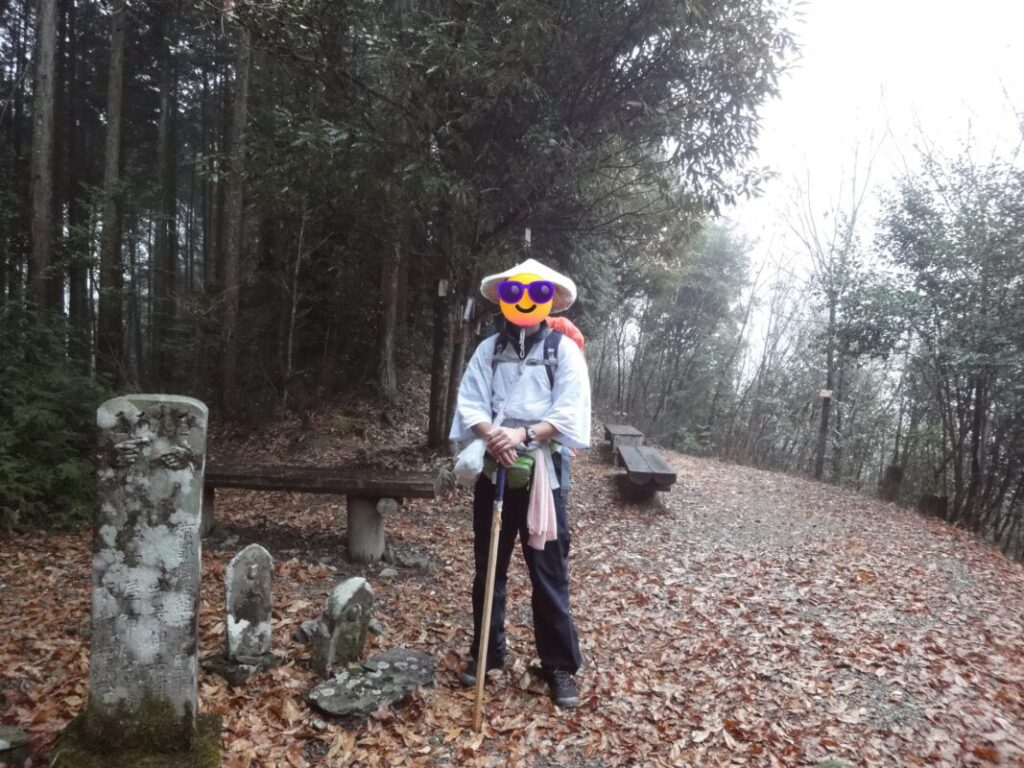
And, as you overcome the physical challenges of the journey, experiencing the deeper meaning of Dōgyō Ninin (同行二人), the belief that you are never walking alone, but are accompanied by Kōbō Daishi (Kūkai).
These are experiences that are difficult to gain when traveling only by train or bus.
A walking pilgrimage is about more than simply reaching your destination.
I believe that the journey itself has its own special meaning.
Make the Most of Public Transportation and Plan Your Own Pilgrimage
The Shikoku Pilgrimage is not an easy journey to undertake. Time, physical fitness, expenses, and finding accommodation can all be sources of concern, making it difficult for some people to take the first step.
However, I don’t think you need to insist on walking every single section from the beginning.
For example, you could take a bus or train for particularly long and challenging sections. You could also use public transportation when the weather makes walking unsafe.
Even making these small adjustments can make the pilgrimage much more accessible.
Another option is to return to the sections you traveled by public transportation and walk them on foot after completing the pilgrimage.
By doing so, you can gradually complete those remaining sections on foot and create your own walking pilgrimage through a series of shorter journeys, known as Kugiri-uchi.
The important thing is not to try to do everything perfectly from the beginning, but to find a way that works for you.
Why not consider public transportation as one of your options and plan a Shikoku Pilgrimage that suits your own circumstances?
Related Article



Comments