
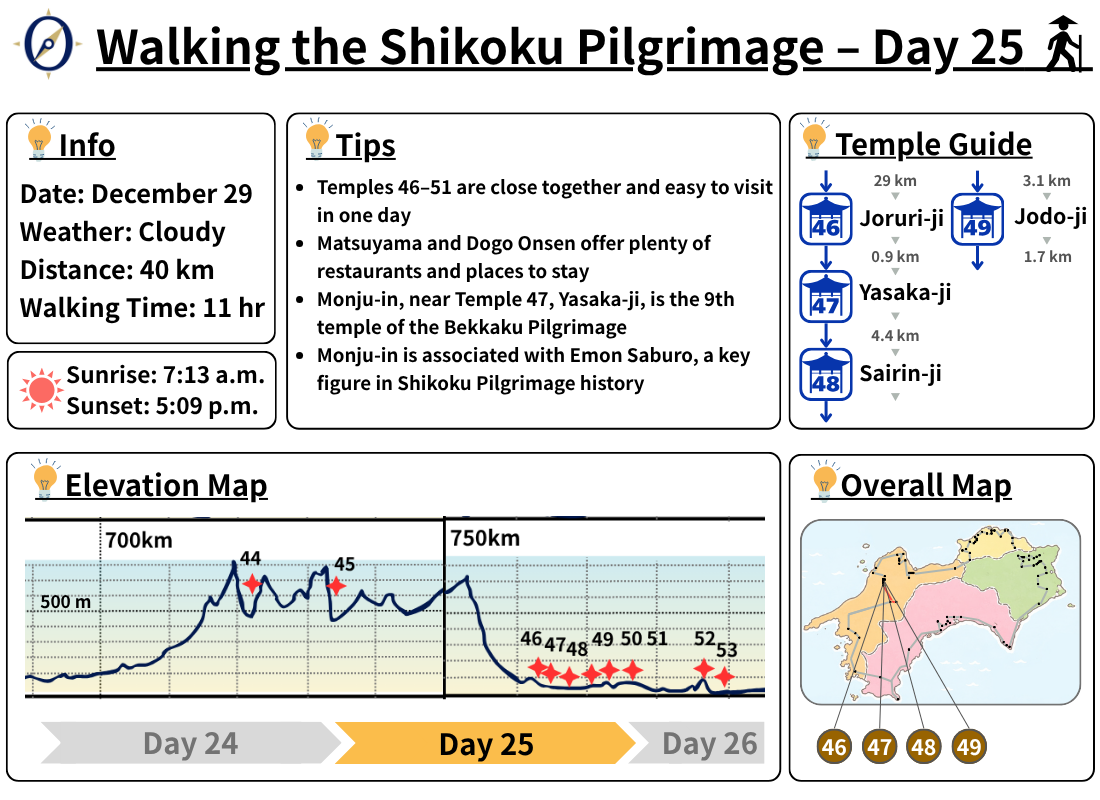
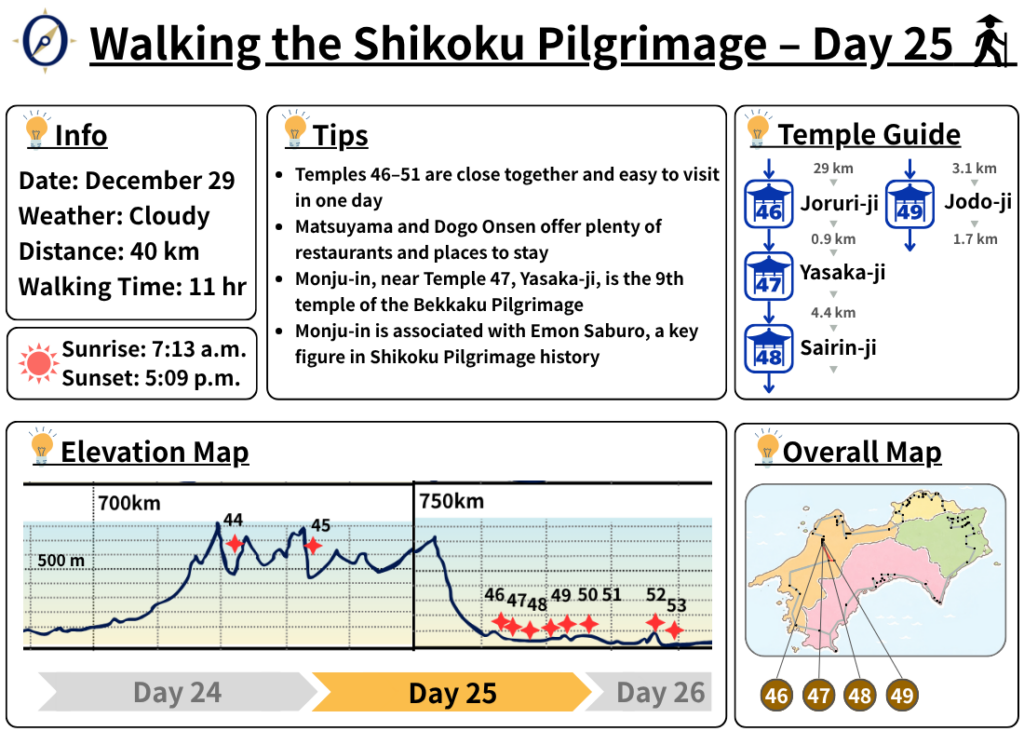
December 29 marked Day 25 of my Shikoku Pilgrimage on foot.
I left Furuiwaya-so at 7:00 a.m. and descended the Misaka Pass Pilgrimage Trail toward Matsuyama. Along the way, I visited four temples: Joruri-ji, Yasaka-ji, Sairin-ji, and Jodo-ji. I also stopped at Monju-in, associated with Emon Saburo, and Fudahajime Daishi-do.
In the evening, I relaxed at Dogo Onsen before spending the night outdoors in Dogo Park. It was a day of leaving the remote mountain trails behind and making my way toward central Matsuyama.
- Itinerary
- Getting Ready in the Morning
- The Strange Rock Formations of Furuiwaya
- Heading for Misaka Pass
- Sakamotoya, a Traditional Pilgrim Welcome House
- Visiting Temple 46, Joruri-ji
- Heading to Temple 47, Yasaka-ji
- Exploring Sites Associated with Emon Saburo
- Visiting Temple 48, Sairin-ji
- Visiting Temple 49, Jodo-ji
- Relaxing at Dogo Onsen
- Spending the Night Outdoors in Dogo Park
- Temple Information
Itinerary
- 7:00Departure
- Furuiwaya-so
- Furuiwaya Daishi-do
- Kumakogen Town
- Misaka Pass
- Sakamotoya
- 13:30Temple No. 46, Joruri-ji
- 14:00Temple No. 47, Yasaka-ji
- Monju-in
- Fudahajime Daishido
- 15:30Temple No. 48, Sairin-ji
- 16:45Temple No. 49, Jodo-ji
- 19:00Dogo Onsen
- 21:00Dogo Park
Overnight stay
Getting Ready in the Morning
December 29 — Cloudy
Day 25 of my Shikoku Pilgrimage on foot. Yesterday, I left Ose at 3:00 a.m., crossed Hiwata Pass, and visited Temples 44, Daiho-ji, and 45, Iwaya-ji. After hours of walking along rugged mountain trails and barely sleeping the previous night because of the cold, I was finally able to get a good night’s sleep in a warm lodging and recover from the day’s exhaustion.
Today’s destination was central Matsuyama. I would cross Misaka Pass from Kumakogen Town, descend the mountain trails, and make my way toward the Matsuyama Plain.
Temples 46 to 51 are relatively close together, making this a convenient stretch for visiting several temples in one day. The area is also close to central Matsuyama and Dogo Onsen, with plenty of restaurants and accommodation options.
Unlike the remote mountain trails of the previous few days, today promised to be a day when I could enjoy the convenience of the city.
The Strange Rock Formations of Furuiwaya
At 7:00 a.m., I left Furuiwaya-so, where I had spent the night.
First, I headed west toward National Route 440.
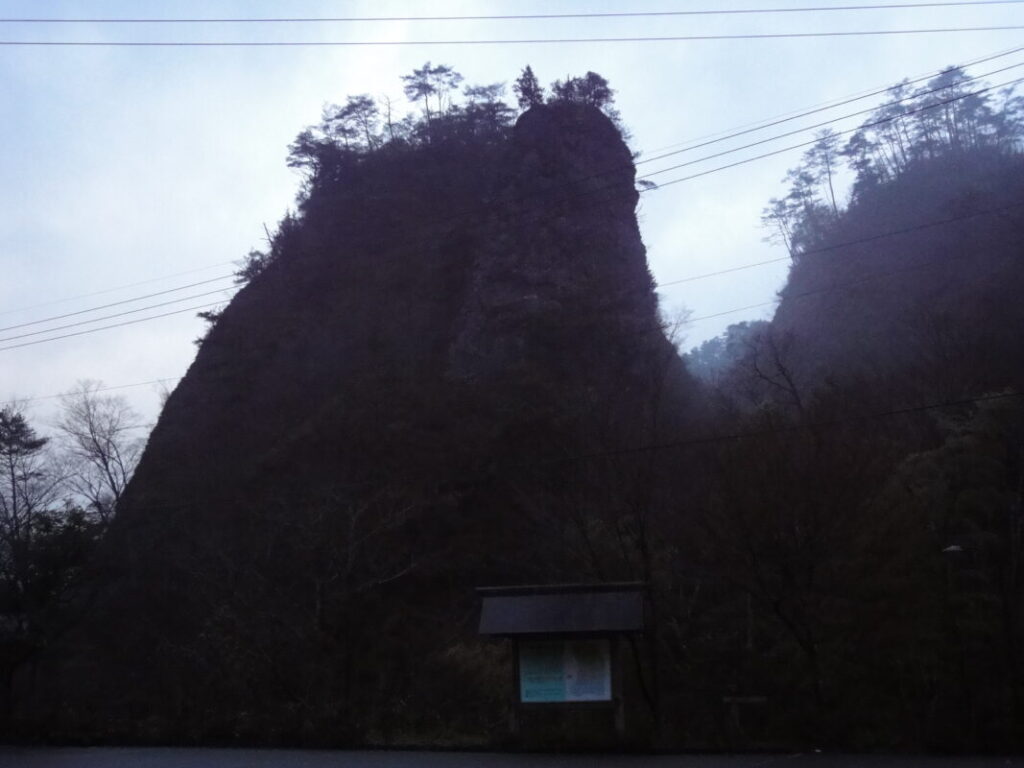
I had arrived at the lodging after dark the previous evening, so I had barely noticed the surrounding scenery. But in the morning light, I discovered that this area was a scenic spot known as Furuiwaya.
Unusual rock formations, shaped by nature over countless years, rose up along the road. Each had its own distinctive contours, and I found myself looking up in admiration at every turn.
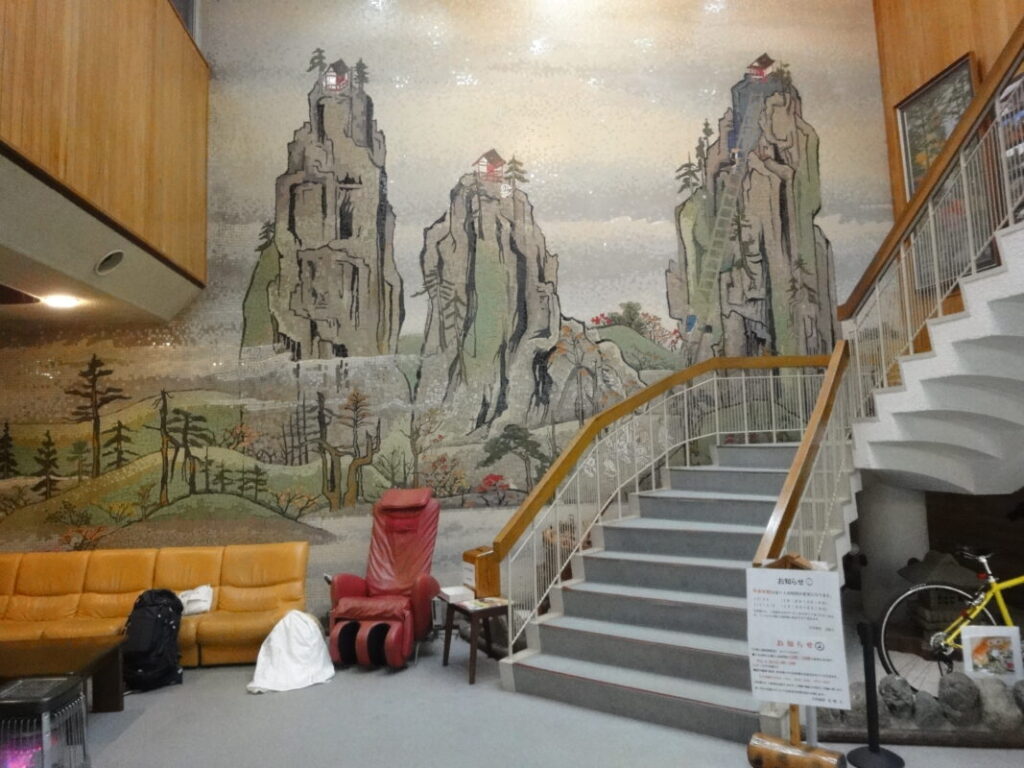
Some of the rocks reminded me of the formations depicted in the mosaic artwork I had seen in the lobby of Furuiwaya-so the night before.
Had people once climbed these pointed rock pinnacles using ladders and built small temple halls at their summits? As I imagined what life might have been like here, I was reminded that this was more than just a scenic destination. It was also a place with a long history of ascetic religious practice.
Furuiwaya Daishi-do
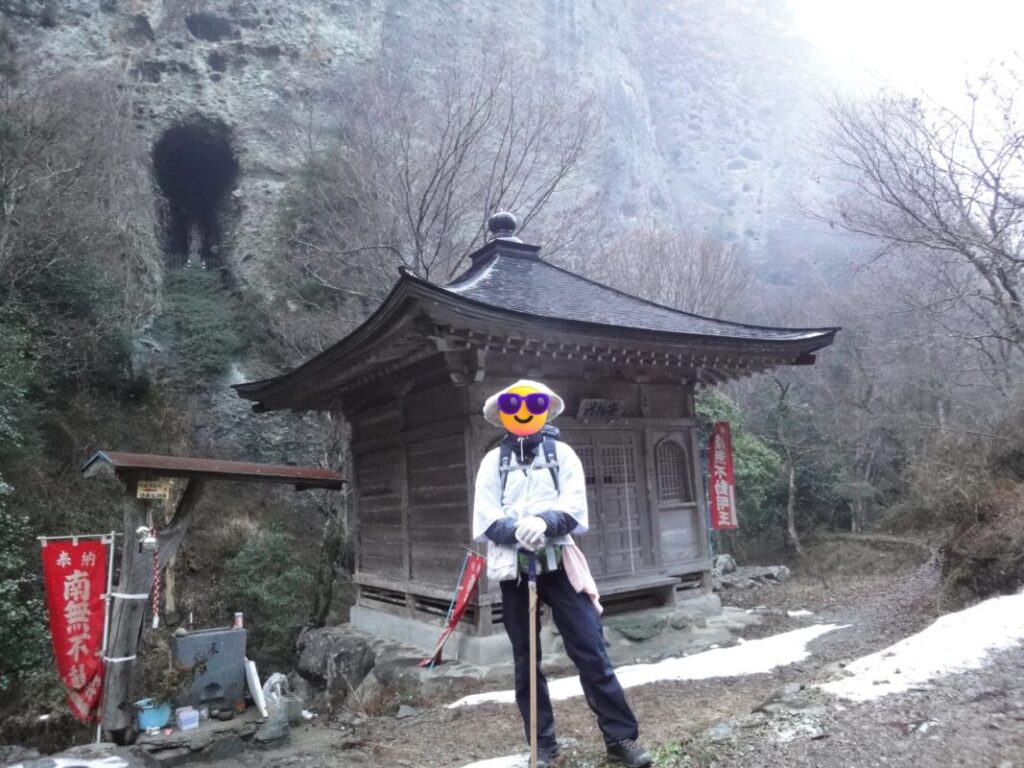
Following the pilgrimage trail signs, I soon came across a small temple hall. This was Furuiwaya Daishi-do.
Looking up at the sheer cliff rising behind the hall, I spotted a statue of Fudo Myo-o holding a sword, enshrined in a hollow in the rock face.
How on earth had anyone managed to place a statue in such a location?
Standing before the rugged cliff, I could only imagine the effort it must have taken to install the statue. It was a striking example of how the natural landscape itself had become a place of worship in this area.
I pressed my hands together in prayer before the hall, quietly expressing my gratitude for having been able to escape the cold in a warm lodging the previous night.
Heading for Misaka Pass
As I continued walking, still amazed by the unusual rock formations of Furuiwaya, I eventually reached National Route 440.
From here, I would head toward Matsuyama via the mountain trails to the north, on my way to Temple 46, Joruri-ji. Along the route lay the Misaka Pass Pilgrimage Trail.
Although today’s journey would mainly involve descending mountain trails, crossing rugged passes still required plenty of stamina. I stopped along the way to buy food and made sure I had enough drinks for the journey ahead.
A Rest Area Along the National Highway
11:00 a.m.
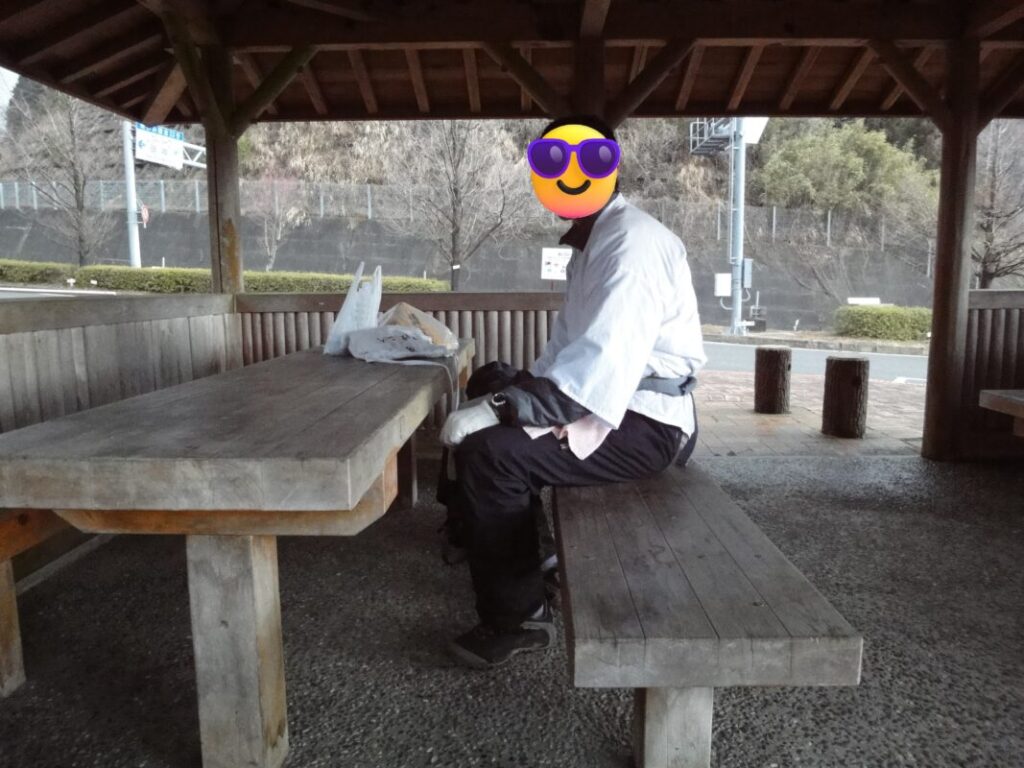
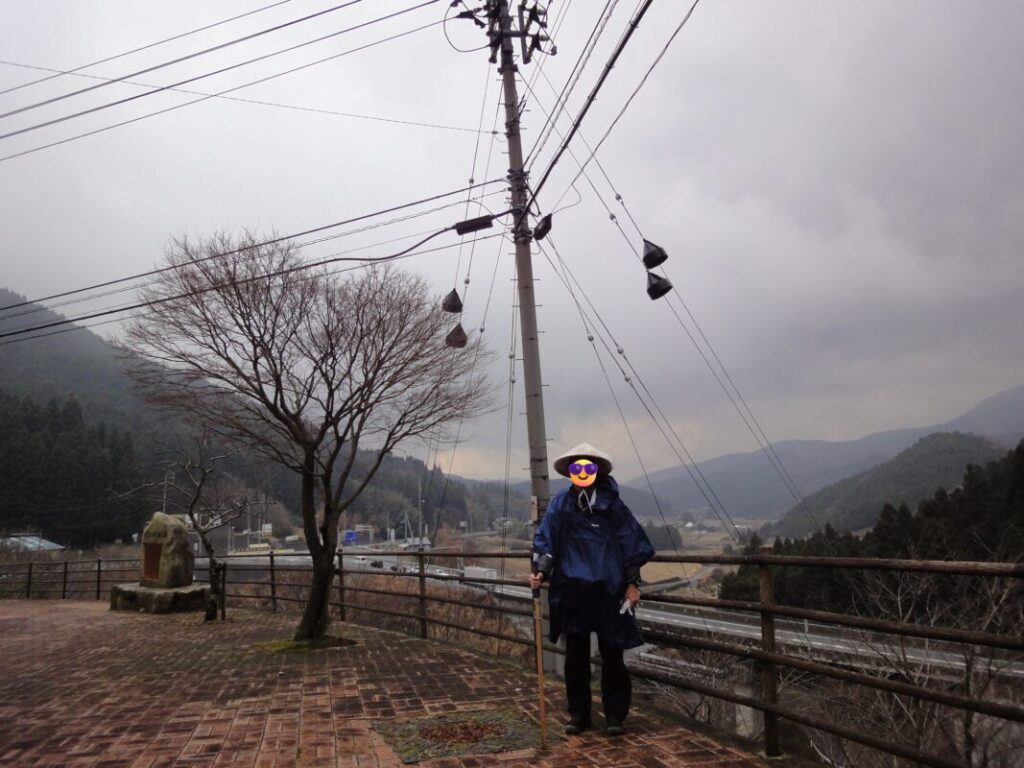
Just before the Misaka Pass Pilgrimage Trail, I came across a rest area with a good view. It also had a restroom, making it a convenient place to take a break before entering the mountain trail.
From here, I could look out over the town of Kumakogen.
As I gazed at the mountains I had walked through, I was reminded of Hiwata Pass, which I had crossed the previous day. After tackling one challenging mountain trail after another, I was gradually getting closer to Matsuyama.
Descending the Misaka Pass Pilgrimage Trail
The weather was steadily worsening. Mist drifted across the area, and sleet began to fall.
I needed to get down the pass before conditions deteriorated further.
With that thought in mind, I entered the Misaka Pass Pilgrimage Trail.
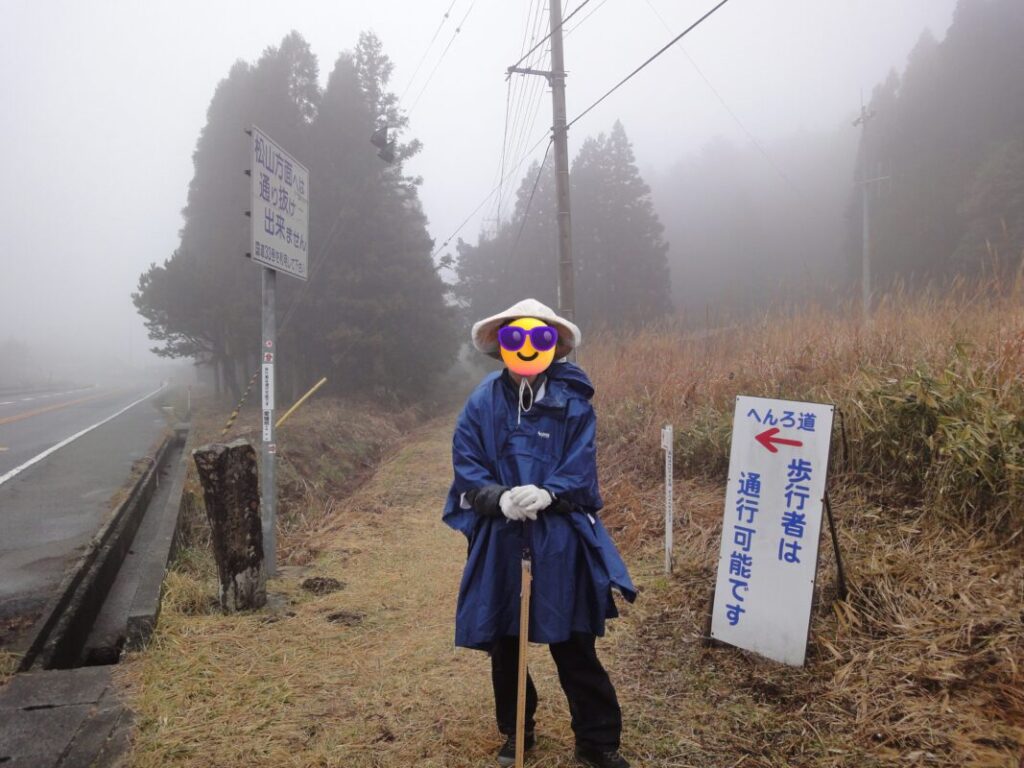
The path descended steeply for much of the way. Before modern roads were built, this trail had served as an important route traveled by local people. It was apparently known as a particularly demanding climb for those approaching from Matsuyama.
One interesting aspect of the Shikoku Pilgrimage on foot is how differently a trail can feel depending on the direction of travel. A descent when following the traditional route can become a steep climb when walking in reverse. The same path can be either a difficult challenge or a relatively easy stretch, depending on which way you go.
Watching my footing carefully, I continued down the steep slope for about 30 minutes. Gradually, the mist began to clear.
Ichinooji Shrine Ruins Rest Area
Along the way, I came across a large rest area known as the Ichinooji Shrine Ruins Rest Area.
A small stream flowed nearby, its gentle babbling creating a pleasant sound. It was an ideal place to rest after the descent.
I decided to eat the boxed lunch I had bought at a convenience store earlier.
Beyond the rest area, I eventually reached a paved road. The mountain trail was drawing to an end, and signs of human habitation gradually became more noticeable.
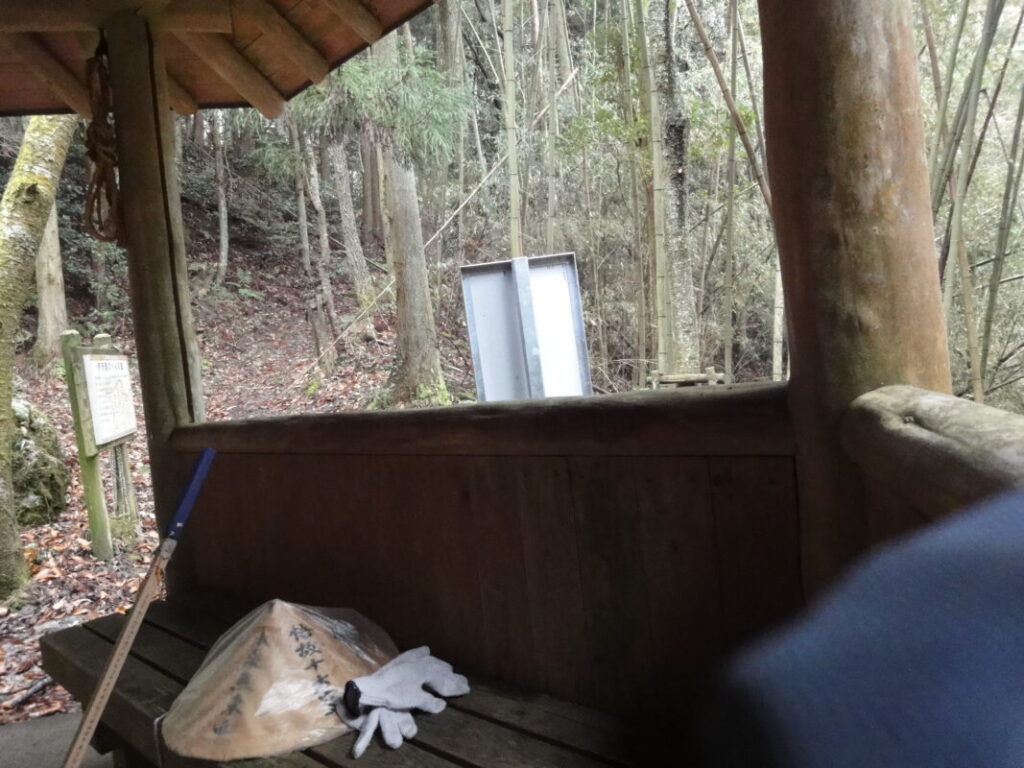
Sakamotoya, a Traditional Pilgrim Welcome House
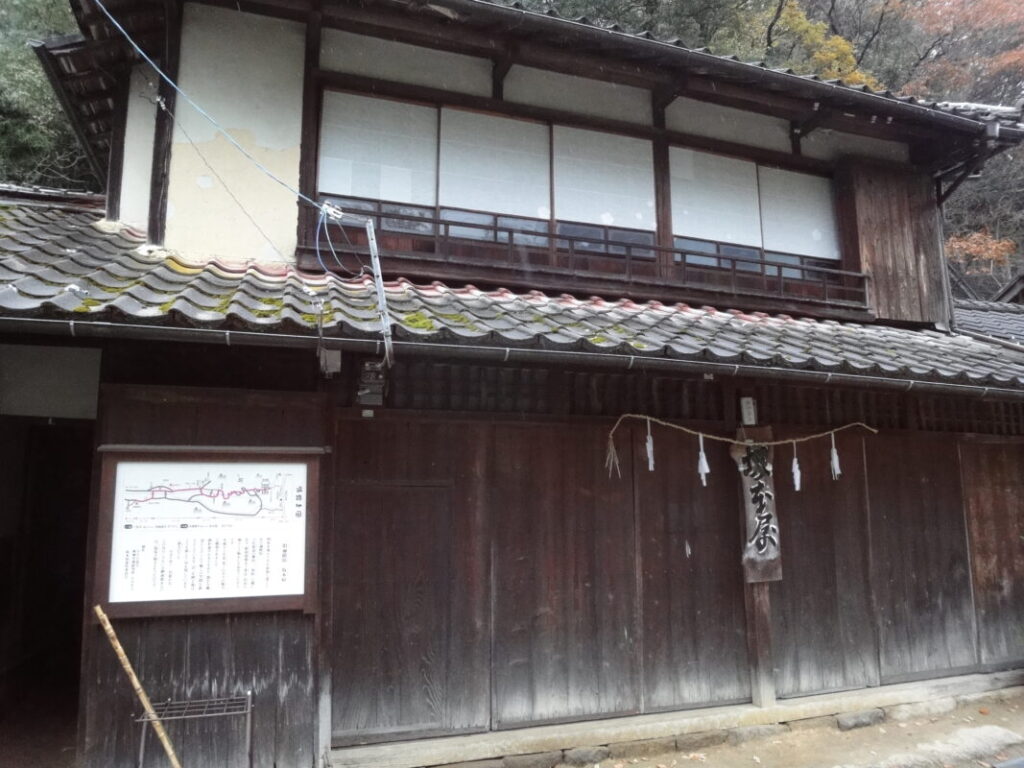
After walking for a while, I spotted a wooden building. It was Sakamotoya, a traditional place offering osettai to pilgrims.
Sakamotoya once welcomed pilgrims traveling along the old pilgrimage trail. Although it closed down for a time, it has since been preserved and brought back into use by local residents.
Unfortunately, it was the winter off-season, so I couldn’t go inside during this visit.
As a pilgrim traveling on foot, I was grateful to see places like this being protected and maintained by the local community. I hoped to return someday when it was open.
Beyond Sakamotoya, fields and houses gradually became more common.
The crops in the winter fields had already been harvested. Withered grasses swayed in the wind, creating the quiet, nostalgic atmosphere of a rural Japanese landscape in winter.
After making my way through the rugged mountain pass, I had finally descended into a small mountain village. The Matsuyama Plain was now close.
Visiting Temple 46, Joruri-ji
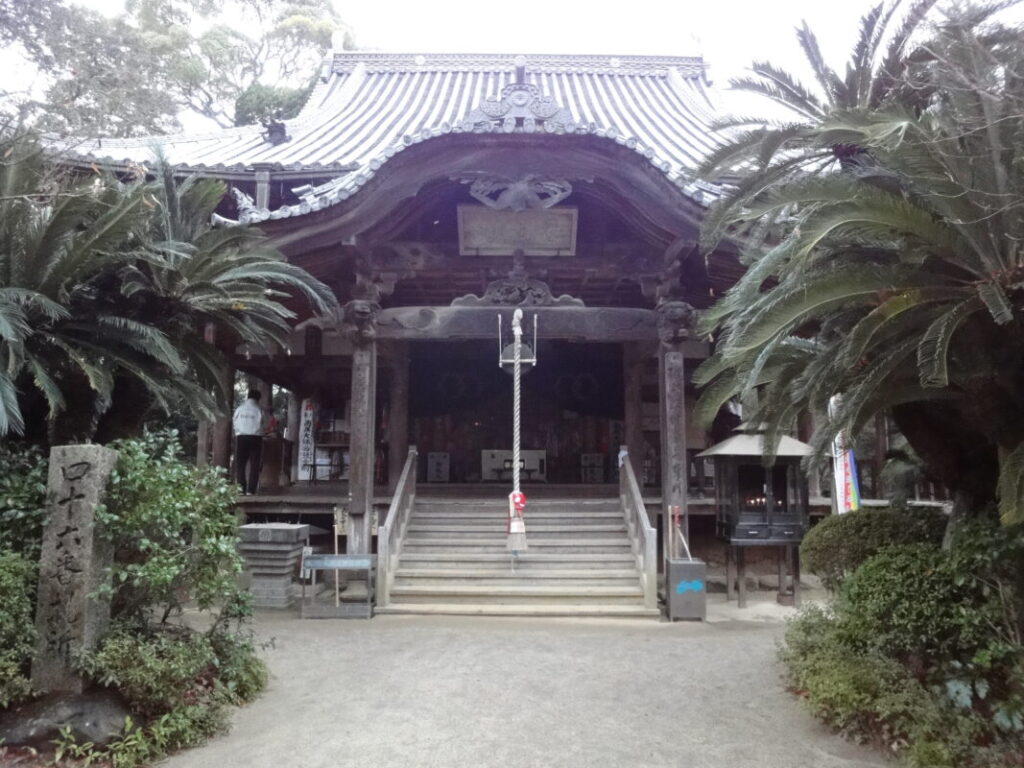
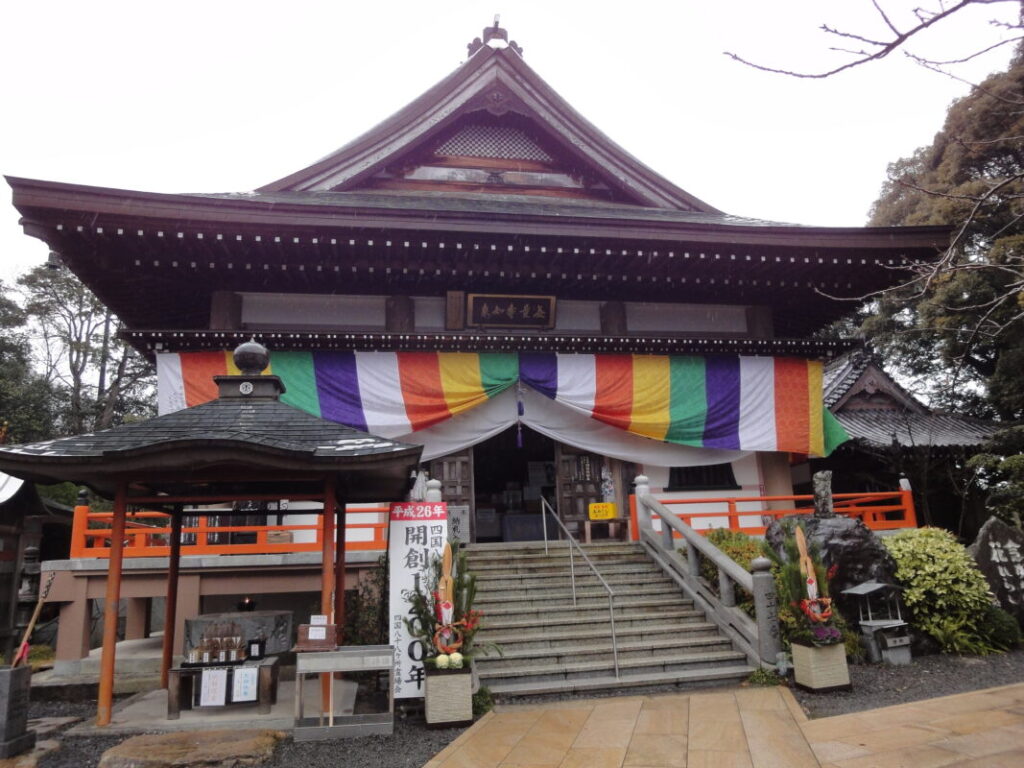
I arrived at Temple 46, Joruri-ji, at 1:30 p.m.
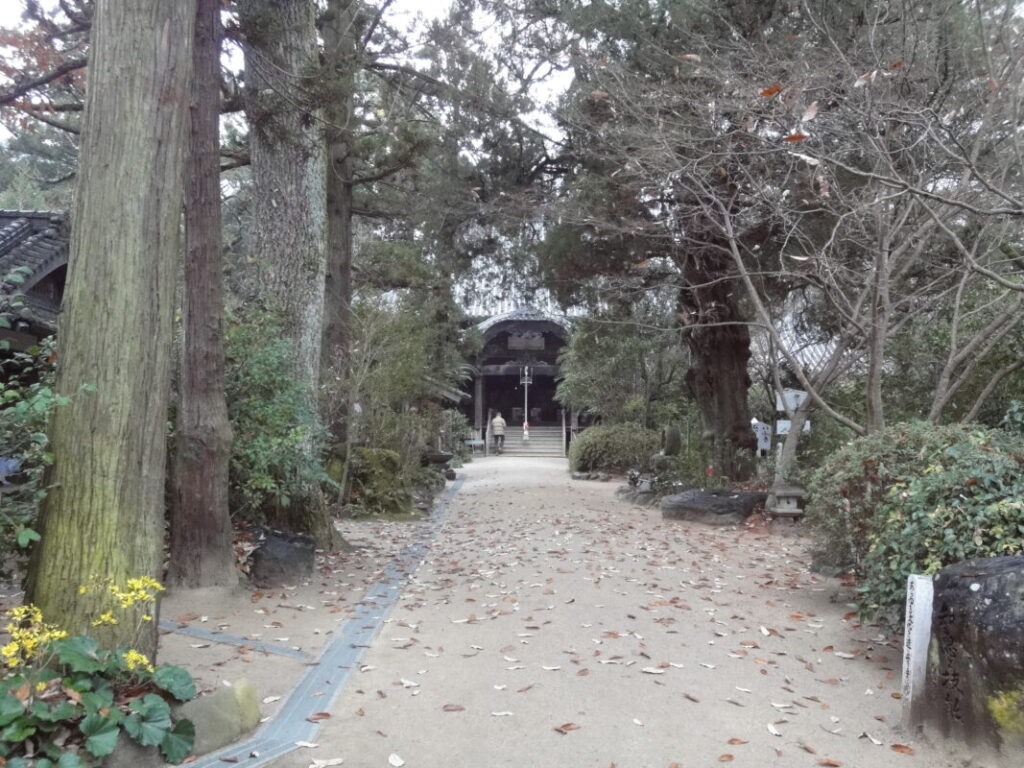
The first thing that caught my eye as I entered the grounds was an Ibuki Byakushin tree, said to be more than 1,000 years old.
Its rugged, twisting trunk gave me a sense of the long centuries it had survived. A large sago palm also stood in front of the main hall, adding to the peaceful atmosphere of the temple, surrounded by nature.
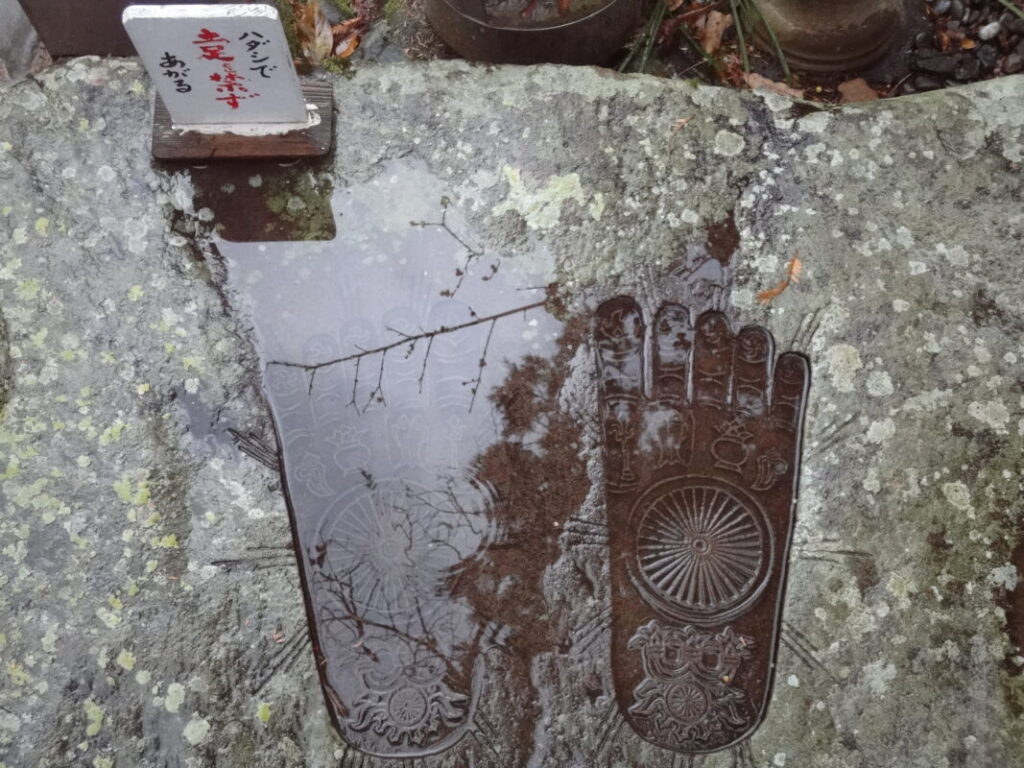
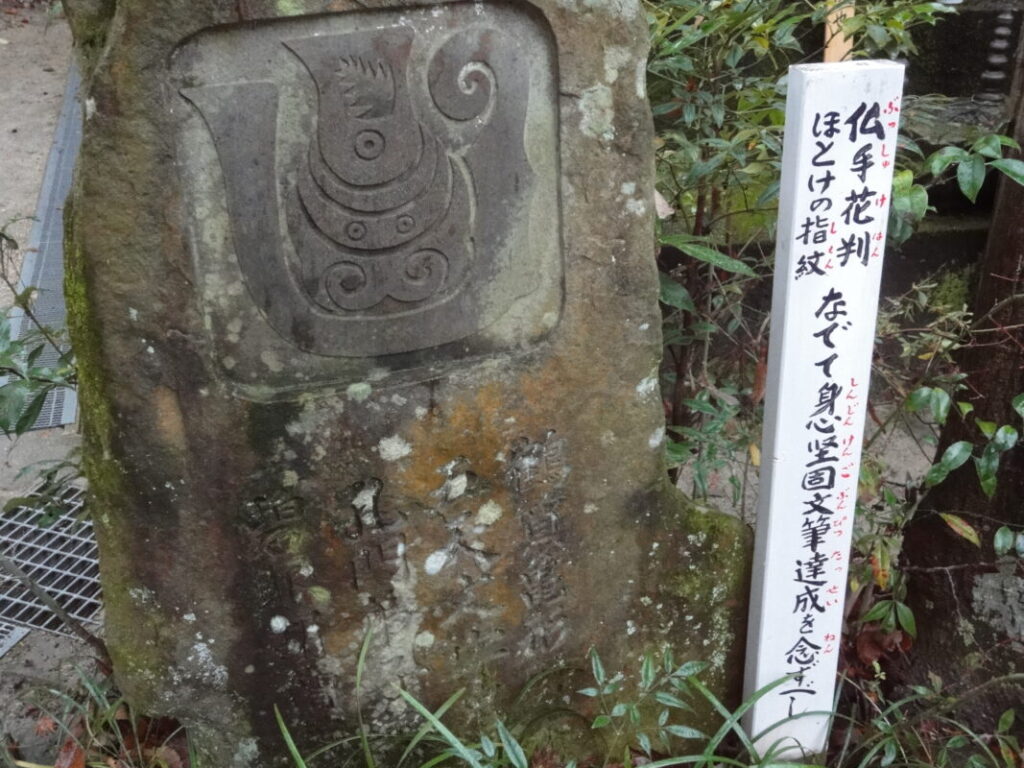
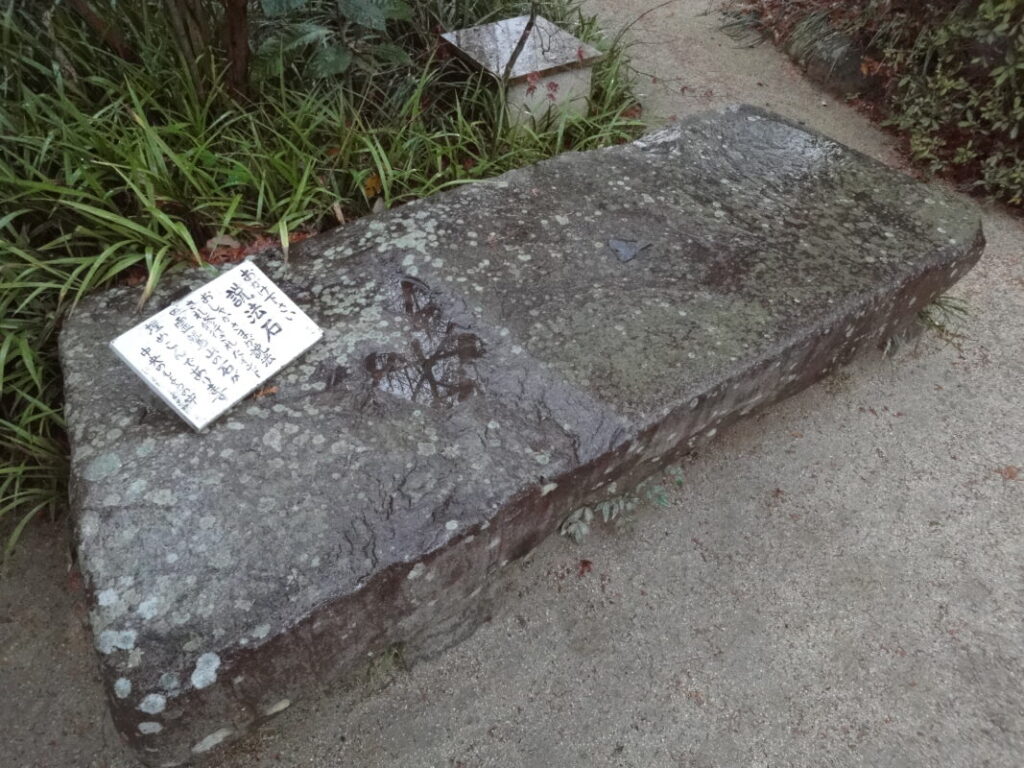
The grounds also feature a Bussokuseki, a stone said to bear the footprints of the Buddha, as well as stone carvings depicting fingerprints. One of the highlights of Joruri-ji is the chance to explore the grounds while discovering the traditions and beliefs associated with these sacred objects.
Heading to Temple 47, Yasaka-ji
From Joruri-ji to Temple 47, Yasaka-ji, it is about 1 kilometer north.
Signposts along the way make the route easy to follow, so there is little chance of getting lost as long as you follow the arrows.
The pilgrimage trail gently descends through terraced fields and rural landscapes. With little traffic, it was a peaceful walk through the traditional countryside.
Visiting Yasaka-ji
I arrived at Yasaka-ji at 2:00 p.m.
One of the temple’s highlights is the Mantai Amida, located in the basement beneath the main hall. It houses numerous statues of Amida Buddha donated by people from all over Japan.
The space offered a quiet and solemn atmosphere, quite different from the temple grounds above.
Exploring Sites Associated with Emon Saburo
The next stop after Yasaka-ji was Temple 48, Sairin-ji.
The distance from Yasaka-ji to Sairin-ji is about 5 kilometers. There is a straightforward route along the prefectural road, but this time I decided to follow the signposts along the pilgrimage trail.
Taking this route allows you to visit several historic sites associated with Emon Saburo, including Monju-in, the 9th temple of the Bekkaku 20 sacred sites, and Fudahajime Daishido. The overall distance is not much different, making it a good option for those who want to experience the history of the Shikoku pilgrimage along the way.
Monju-in, Bekkaku Temple 9
After leaving Yasaka-ji, I followed the path north alongside the pond directly in front of the temple.
After walking about 1 kilometer, Monju-in came into view on the left.
Monju-in is associated with Emon Saburo, a figure known for his deep connection to the origins of the Shikoku pilgrimage. The temple is also said to stand on the former site of his residence, making it an important place in the history of the pilgrimage.
Fudahajime Daishido
Continuing north from Monju-in, I crossed a bridge over the reed-lined Misaka River and arrived at Fudahajime Daishido.
According to tradition, this is where Emon Saburo left his first pilgrimage slip when he set out to follow Kobo Daishi.
The hall is also a memorable place for pilgrims walking the route today. It is possible to borrow the hall for an overnight stay, and some pilgrims reportedly take advantage of this option.
Visiting Temple 48, Sairin-ji
To reach Sairin-ji, I continued north from Fudahajime Daishido, crossed a bridge over the Shigenobu River, and then passed beneath an elevated section of the Matsuyama Expressway.
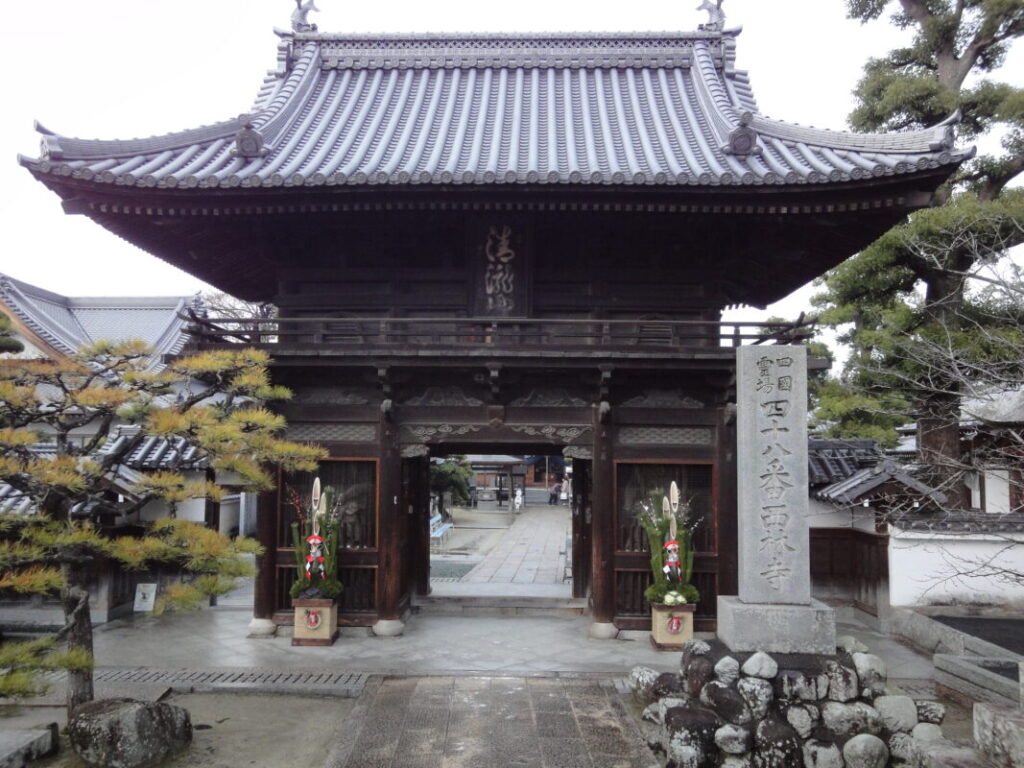
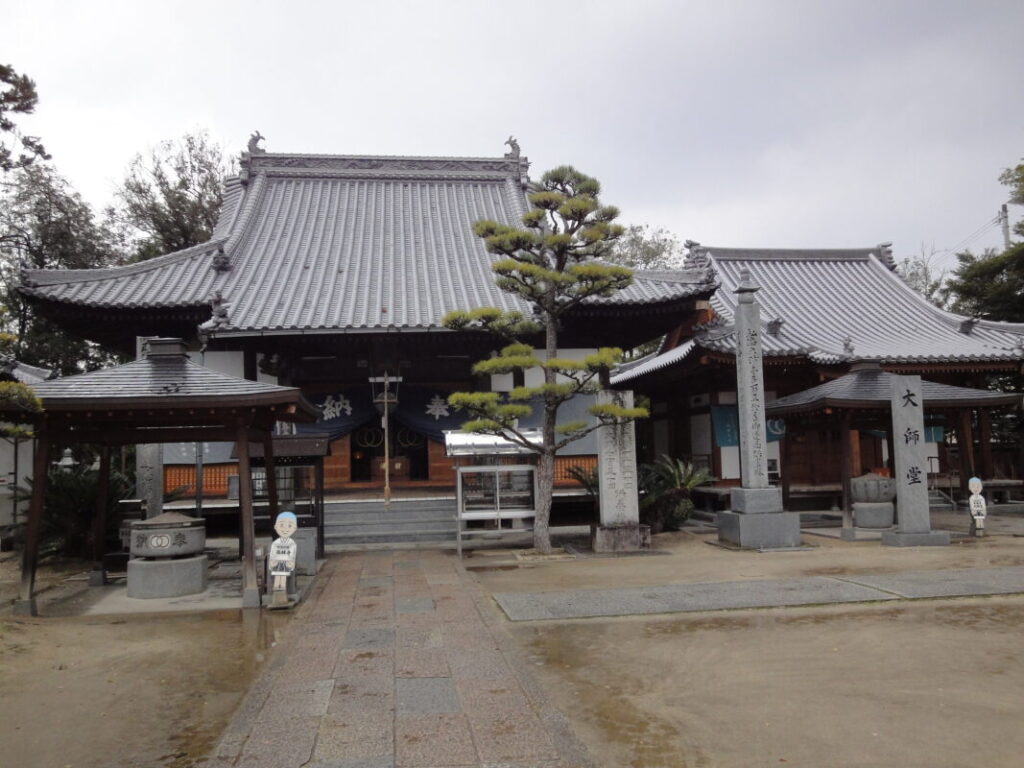
I arrived at Temple 48, Sairin-ji, at 3:30 p.m.
Kadomatsu, traditional New Year decorations made from pine and bamboo, stood at the temple entrance. It was a seasonal sight that reflected the approach of the end of the year.
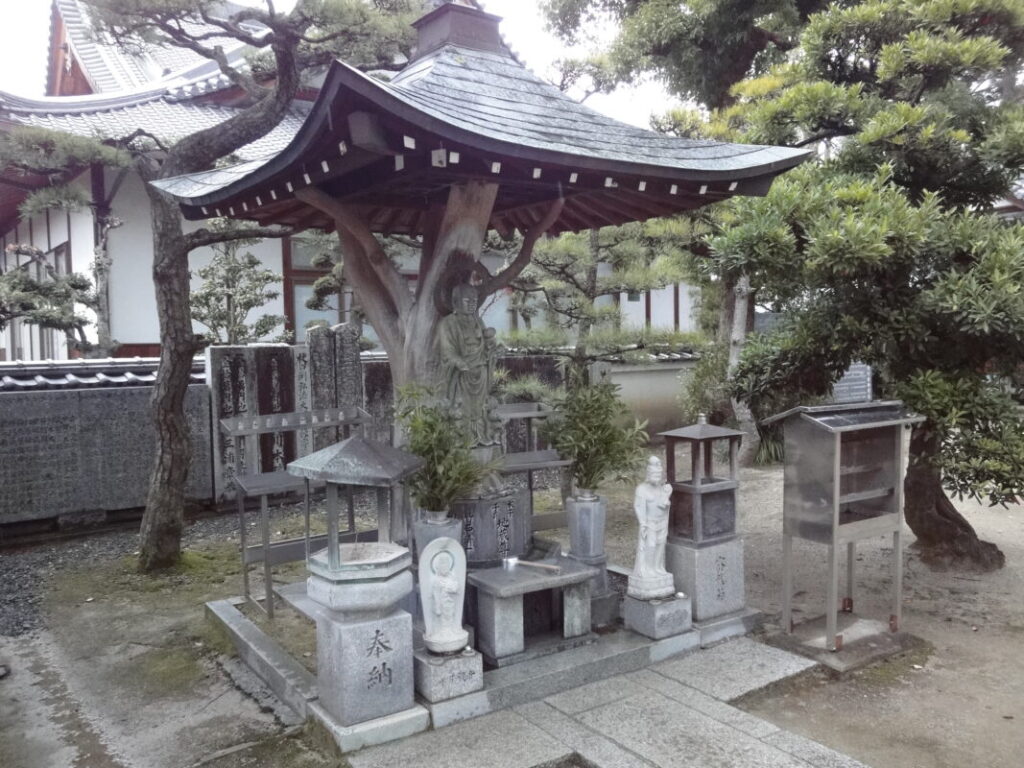
The temple grounds were beautifully maintained, with carefully tended pine trees and other greenery creating a calm, peaceful atmosphere.
The area around Sairin-ji also preserves a local culture associated with a water plant called teiregi. Known as a local specialty of Matsuyama, this plant is also enjoyed as a food ingredient.
Walking from temple to temple allows me to discover not only their history but also the landscapes and cultural traditions unique to each area.
By the time I finished my visit to Sairin-ji, it was already past 4:00 p.m.
Next was Temple 49, Jodo-ji, about 3 kilometers north of Sairin-ji.
With sunset approaching, I figured that reaching Jodo-ji and paying my respects there would be enough for the day. With that in mind, I continued along the trail.
Visiting Temple 49, Jodo-ji
The old pilgrimage trail to Jodo-ji followed a narrow residential street west for about 500 meters before turning north.
Farmland gradually gave way to houses and other buildings. The changing scenery made it clear that I was getting closer to central Matsuyama.
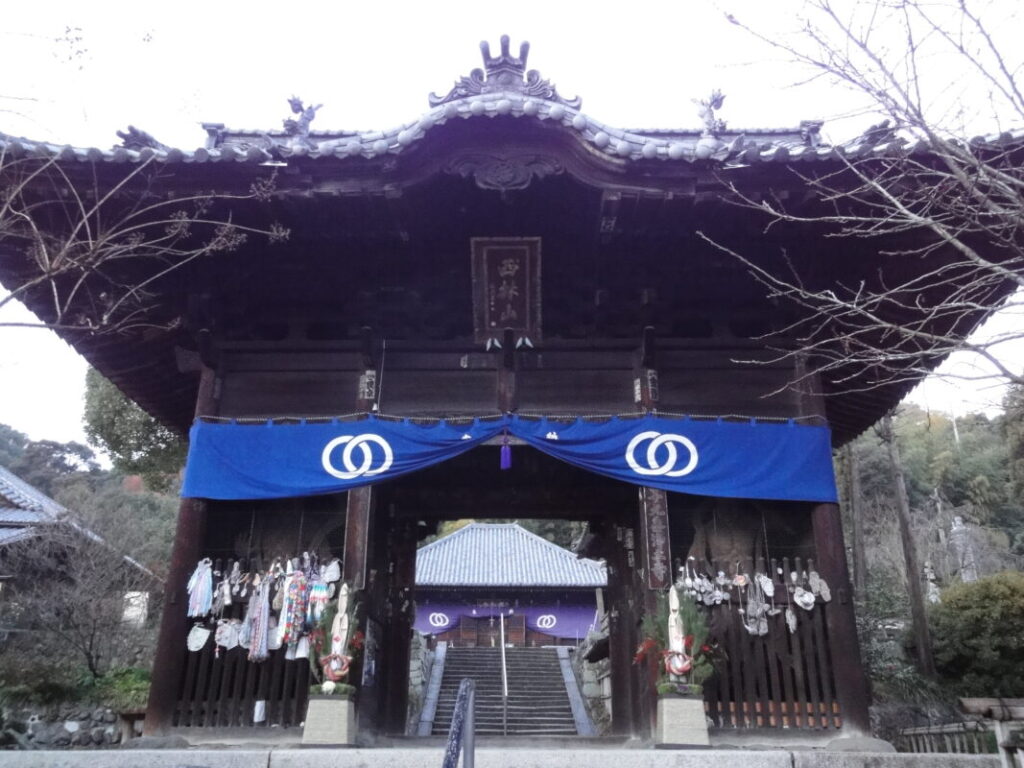
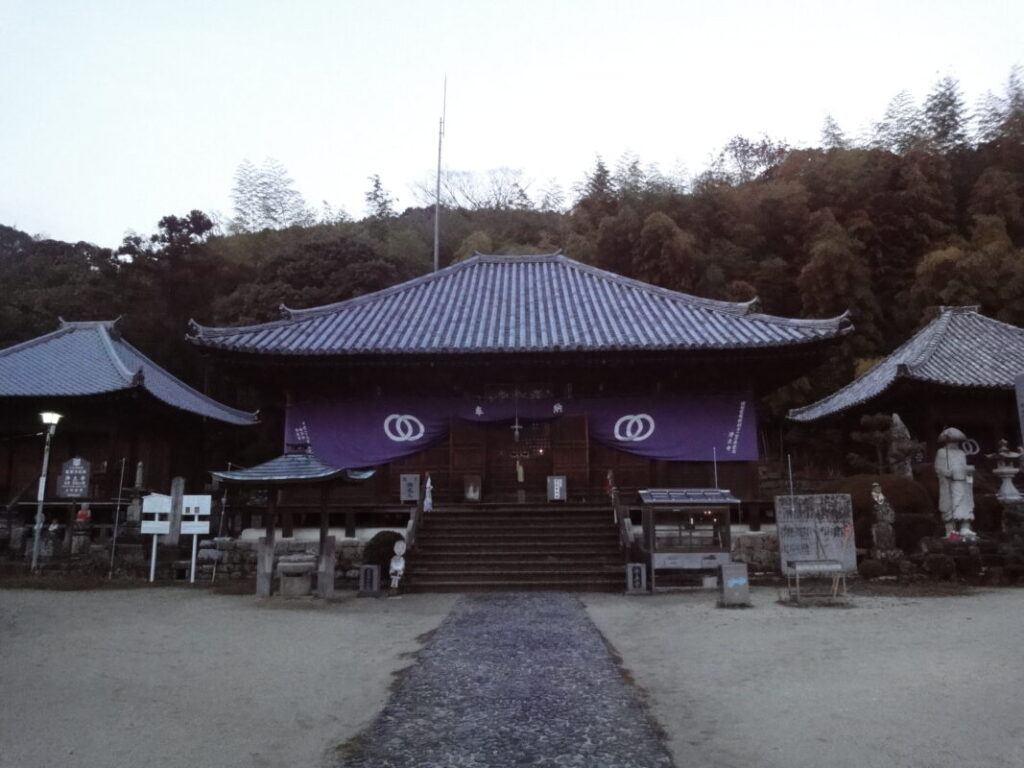
Just before 5:00 p.m., I managed to reach Jodo-ji shortly before the temple office closed.
With dusk beginning to fall over the temple grounds, I hurried to complete my visit.
Jodo-ji is known for its connection to Kuya Shonin, a Buddhist monk who spread the practice of chanting the Buddha’s name during the Heian period.
Kuya Shonin is particularly famous for a statue depicting six miniature Amida Buddhas emerging from his mouth. These six figures represent the six syllables of the Buddhist invocation “Namu Amida Butsu,” symbolizing his efforts to spread the practice of chanting the Buddha’s name.
Jodo-ji houses a statue of Kuya Shonin, but it is not normally open to the public, so visitors should keep this in mind when planning their visit.
Relaxing at Dogo Onsen
That marked the end of today’s temple visits.
It was past 5:00 p.m., and the temple offices had closed. I still needed to find dinner and a place to sleep for the night.
For now, I decided to head for Dogo Onsen.
Located about 5 kilometers north of Jodo-ji, Dogo Onsen is one of Japan’s most famous hot spring destinations.
I walked through the city streets after sunset, keeping a close eye on traffic.
Along the way, I came across a teppanyaki restaurant and ordered okonomiyaki, a Japanese savory pancake. I quickly finished dinner on a bench on the premises before setting off toward Dogo Onsen again.
Even after dark, central Matsuyama did not feel nearly as cold as the mountainous area around Kuma Kogen, where I had been walking over the previous few days.
At this temperature, I thought I could probably spend the night outdoors with the gear I had.
Exploring Dogo Onsen
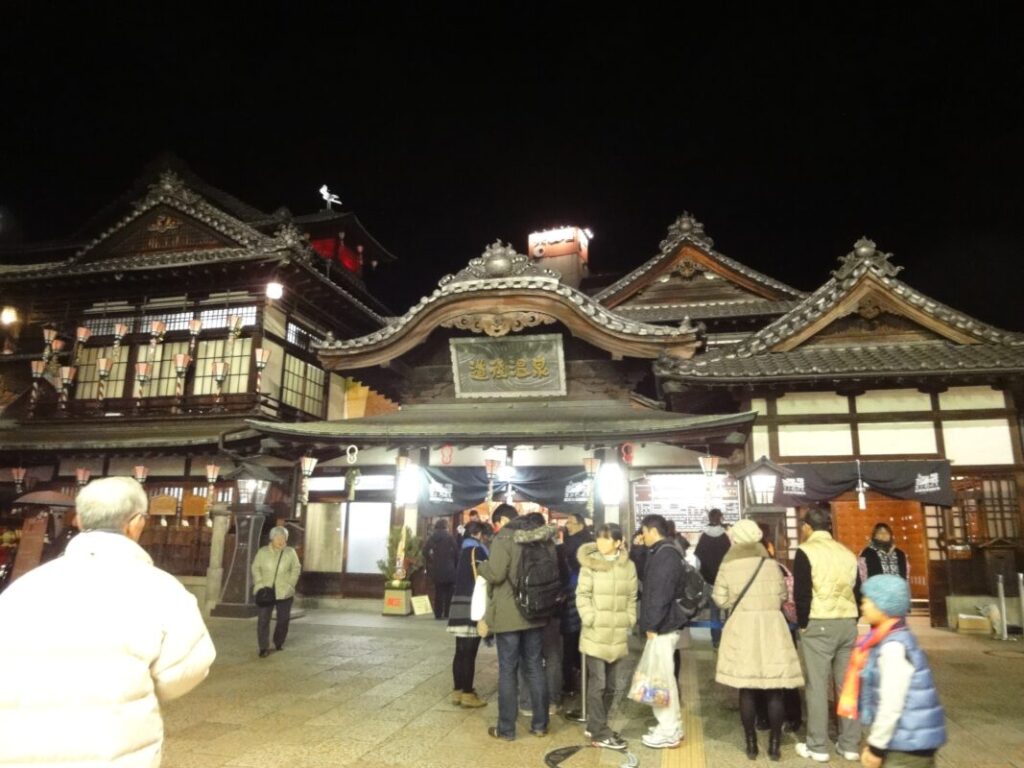
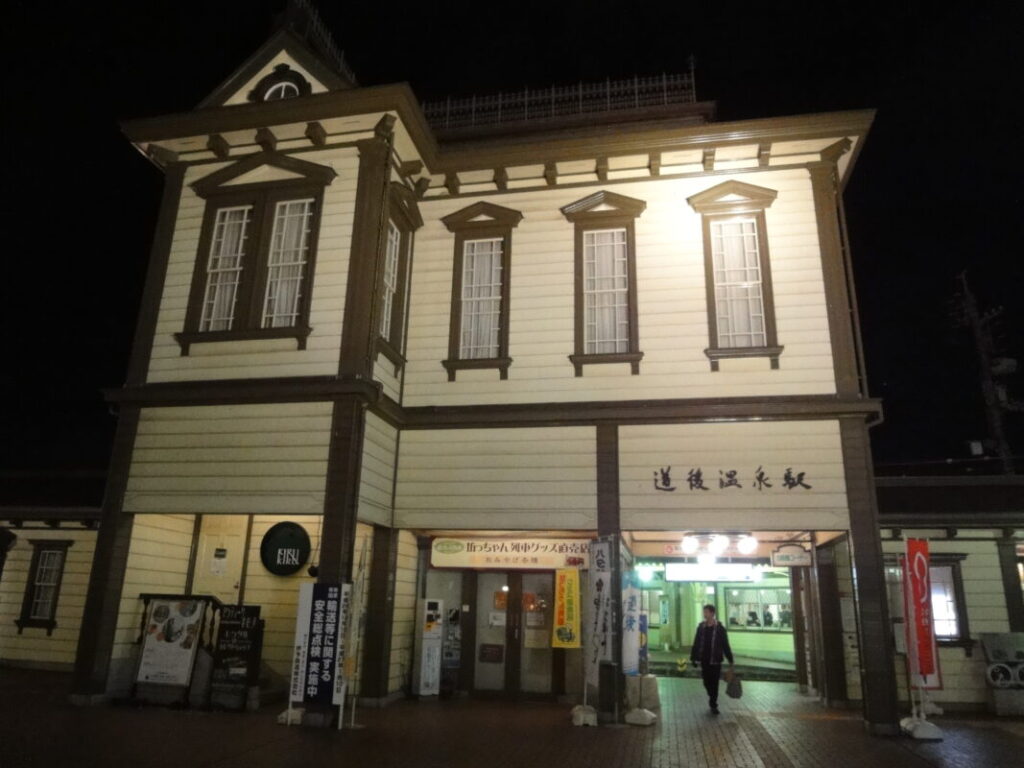
I arrived at Dogo Onsen at around 7:00 p.m.
The hot spring district was bustling with tourists at the end of the year. Since I had come all this way, I decided to take a bath.
A line had formed at Dogo Onsen, with people waiting to buy admission tickets. I joined them, bundled up in my cold-weather clothing, and waited for my turn.
I was able to get in within 30 minutes and warm up my chilled body.
After my bath, I spent some time browsing the souvenir shops and other stores in the area.
Spending the Night Outdoors in Dogo Park
Before I knew it, it was past 8:00 p.m.
It was time to find a place to sleep for the night.
I headed to nearby Dogo Park to look for a suitable spot.
As I walked through the park, I came across several gazebos. In a few of them, people had already spread out their sleeping bags and settled in for the night.
Were they fellow Shikoku pilgrims?
At 9:00 p.m., I found a place of my own and spread out my sleeping bag.
Two nights earlier, the cold in the mountains had been so severe that I had been forced to start walking at 3:00 a.m. But after descending to the lower elevations of central Matsuyama, the temperature felt much more comfortable.
It seemed that sleeping outdoors in the lowlands was manageable with the gear I had.
Looking Back on the Day
In the morning, I admired the unusual rock formations at Furuiwaya before descending the steep mountain trail over Misaka Pass. After that, I visited Joruri-ji, Yasaka-ji, Sairin-ji, and Jodo-ji before finally reaching central Matsuyama.
I was also relieved to have safely completed visits to Daiho-ji and Iwaya-ji, two of the major challenging sections of the pilgrimage in Ehime Prefecture.
Tomorrow, I would set off along the pilgrimage trail once again.
Temple Information
- No. 46
- No. 47
- No. 48
- No. 49


Comments