
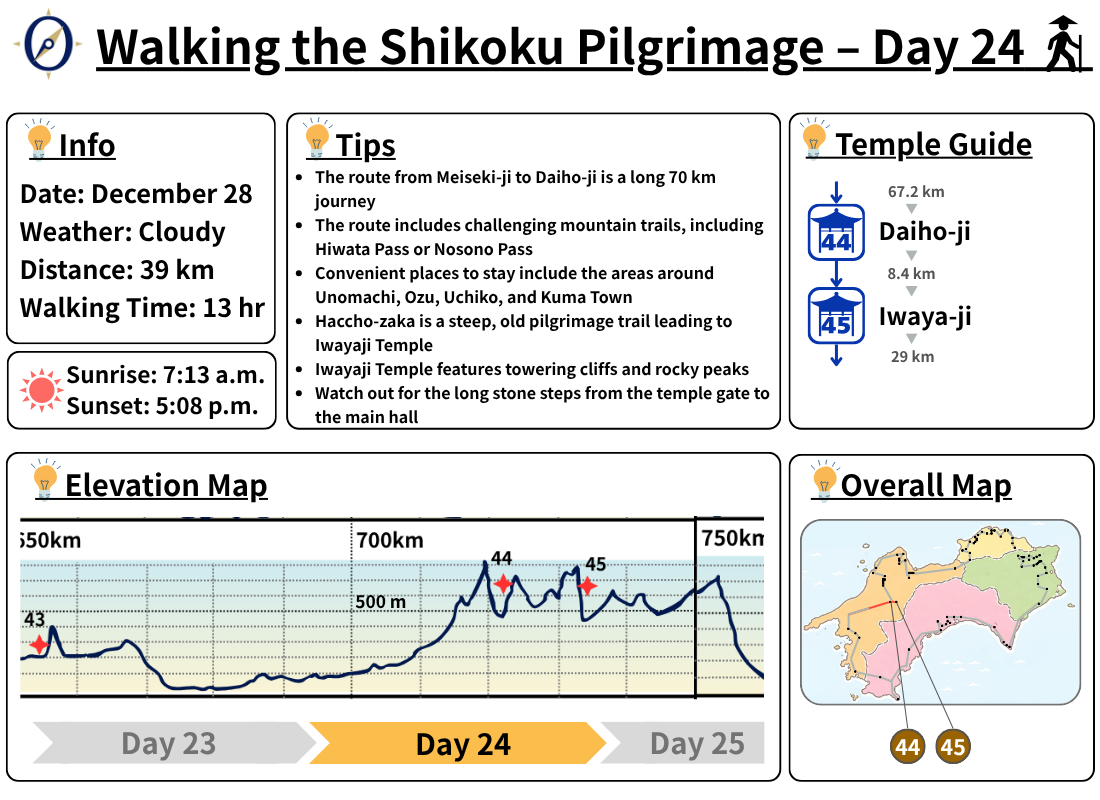
Day 24 of my Shikoku Pilgrimage on foot began at 3:00 a.m., when I left Ose after being unable to sleep because of the cold. I made my way along the dark pilgrimage trails before dawn, crossing Shimosakaba Pass and Hiwata Pass on my way to Temple 44, Daiho-ji.
Along the way, I enjoyed meeting a fellow pilgrim from my hometown and taking in the unique winter scenery of the mountain trails. I arrived at Daiho-ji at 1:00 p.m. and reached Temple 45, Iwaya-ji, at 4:30 p.m. After tackling the steep mountain trail over Haccho-zaka, I finally settled in for the night at Furuiwaya-so.
Despite the challenges of the cold and the long journey, it was a fulfilling day in which I managed to visit two temples.
- Itinerary
- The Pilgrimage Trail Before Dawn
- Heading for Temple 44, Daiho-ji
- A Short Rest at Tado Yakushi-do
- Making My Way Along the Winter Mountain Trails
- Walking Across Hiwata Pass
- Arriving in Kumakogen Town
- Visiting Temple 44, Daiho-ji
- Heading for Temple 45, Iwaya-ji
- Walking Along Haccho-zaka
- Visiting Temple 45, Iwaya-ji
- Through the Winter Mountains to Furuiwaya-so
- Staying at Furuiwaya-so
- Temple Information
Itinerary
- 3:00Departure
- Ose
- Tado Yakushi-do
- Shimosakaba Pass
- Nimyo
- Hiwata Pass
- Kumakogen Town
- 13:00Temple No. 44, Daiho-ji
- Haccho-zaka
- 16:30Temple No. 45, Iwaya-ji
- 18:00Furuiwaya-so
Overnight stay
The Pilgrimage Trail Before Dawn
December 28 — Cloudy
Day 24 of my Shikoku Pilgrimage on foot. The previous day, I had traveled from Unomachi, crossed Uchiko, and spent the night sleeping rough in a roadside shelter in Ose. However, unable to endure the bitter cold, I decided to set off on foot at 3:00 a.m.
As expected, it was pitch-dark, and I could see nothing around me.
For a while after leaving Ose, the road followed a straight stretch of National Route 379, so I didn’t think there was much risk of taking a wrong turn. What proved useful at a time like this was a small LED flashlight. I occasionally shone it on the ground and into the surrounding darkness, checking for dangerous spots such as cliffs as I made my way forward.
About fifteen minutes after I started walking, my body began to warm up. Just a few hours earlier, I had been unable to sleep because of the cold, yet as soon as I started walking, my body began to heat up. I couldn’t help but marvel at the wonders of the human body.
The national highway, surrounded by mountains, remained shrouded in darkness. The only sound I could hear was the tap of my walking staff against the ground. Occasionally, the wind rustled the leaves in the forest. From somewhere beyond the darkness came the cries of wild animals unlike anything I had ever heard before.
And yet, strangely enough, I felt no fear.
What was even more mysterious was the sense that Kobo Daishi was following somewhere far behind me, accompanying me on my journey.
Kobo Daishi, silently watching over me. Whenever I sensed his presence, I was enveloped in an indescribable feeling of reassurance.
Dōgyō Ninin — Two traveling together.
I did not look back. I simply kept my eyes ahead and continued walking.
Heading for Temple 44, Daiho-ji
Today’s destination was Temple 44, Daiho-ji.
There are several routes from Uchiko to Daiho-ji, but one of the main options is the trail that crosses Hiwata Pass. At an elevation of around 800 meters, the pass is a challenging stretch that requires not only physical stamina but also careful preparation of food and drinking water.
Beyond the pass lies Kumakogen Town, where restaurants and accommodation are scattered throughout the area. If possible, I wanted to push on and cross the pass in one go.
One point along the route required particular attention: the junction about 15 kilometers from Uchiko, where the Oda River and the Tado River meet. To reach Hiwata Pass, I needed to turn left here and continue along National Route 379.
Fortunately, by the time I reached this junction, the surroundings were beginning to grow faintly brighter. I was able to read the signpost and continue on my way without getting lost.
A Short Rest at Tado Yakushi-do
It was just before 8:00 a.m.
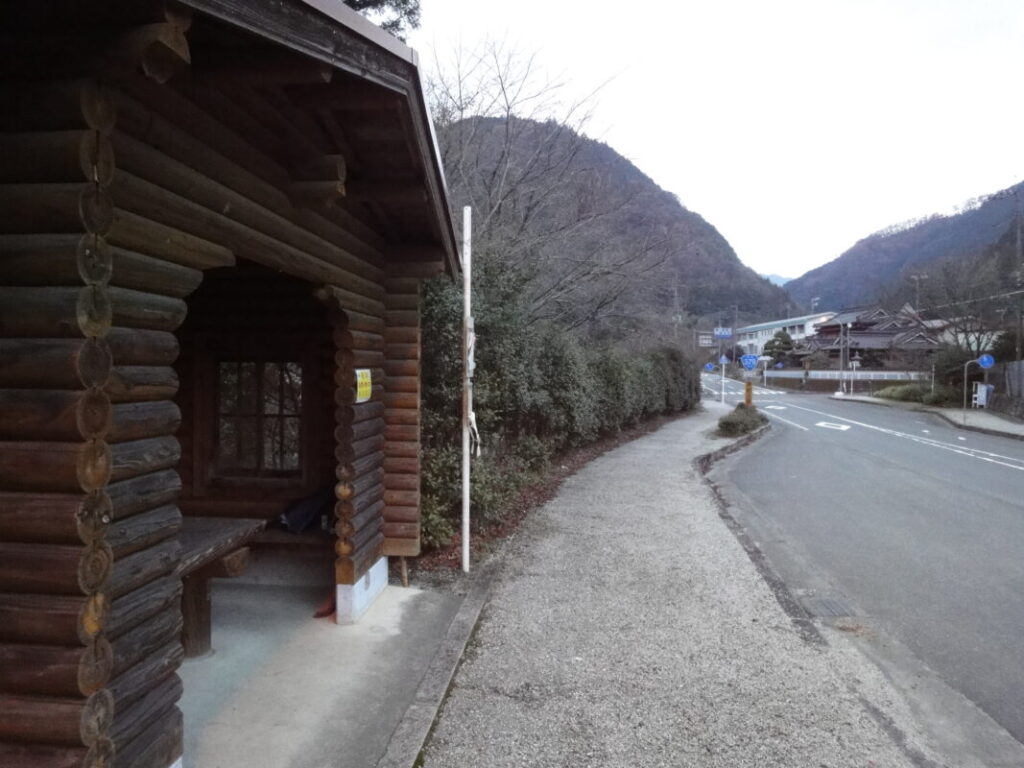
After walking along the Tado River for a while, I spotted a small temple hall. It was Tado Yakushi-do.
There was a small hut and a restroom nearby, so I decided to take a break here.
Nearly five hours had passed since I began walking at 3:00 a.m. After using the restroom, I ate the rice balls and sandwiches I had bought at a convenience store the previous day. I then spread out my map and checked the route ahead.
The Route from Tado Yakushi-do to Daiho-ji
There were still about 15 kilometers to go from Tado Yakushi-do to Daiho-ji. The elevation, which was around 200 meters here, would gradually increase as I continued. I expected the climbs to become increasingly steep from this point onward.
I also needed to watch for the turnoff toward Hiwata Pass. After passing through Ochiai Tunnel, I would need to turn right onto Prefectural Route 42.
Meeting a Fellow Pilgrim and Receiving Osettai
As I studied the map and considered the journey ahead, a fellow pilgrim traveling on foot happened to pass by.
“Good morning.”
We exchanged greetings and chatted for a while. To my surprise, he was from the very same town as me. He also gave me two steamed buns as osettai, a traditional act of generosity toward pilgrims.
With the end of the year fast approaching, what were the chances of meeting someone from my hometown in such a remote mountain area?
Perhaps this, too, was a special connection that Kobo Daishi had brought about.
Making My Way Along the Winter Mountain Trails
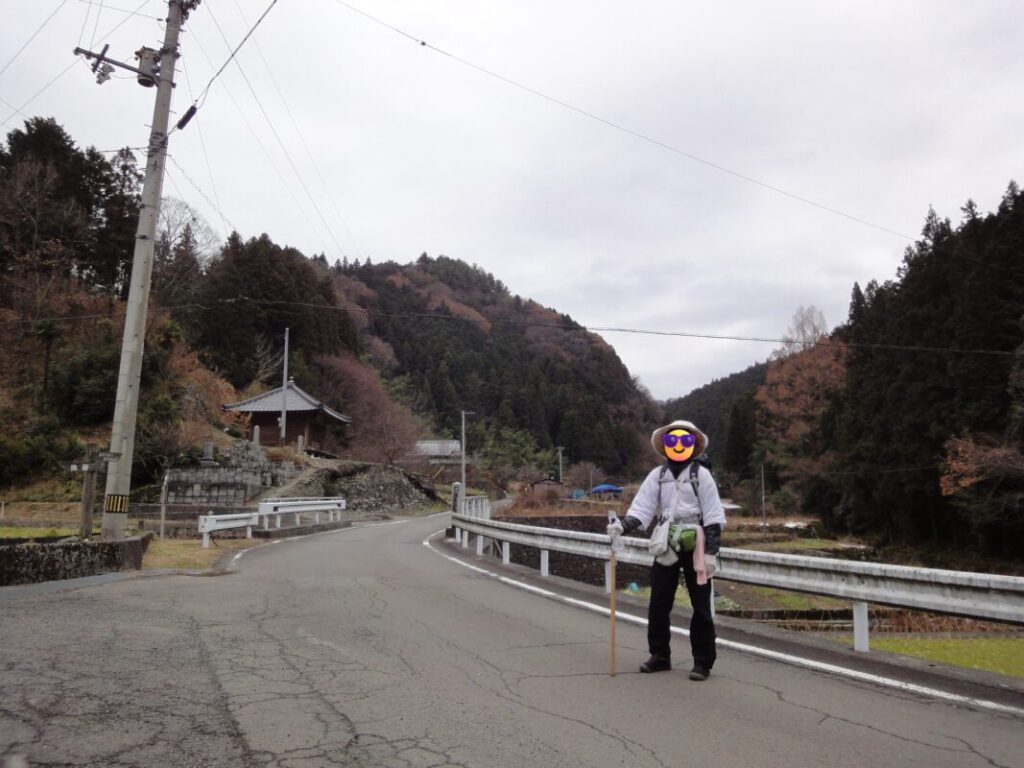
I left Tado Yakushi-do and, as planned, passed through Ochiai Tunnel before joining Prefectural Route 42.
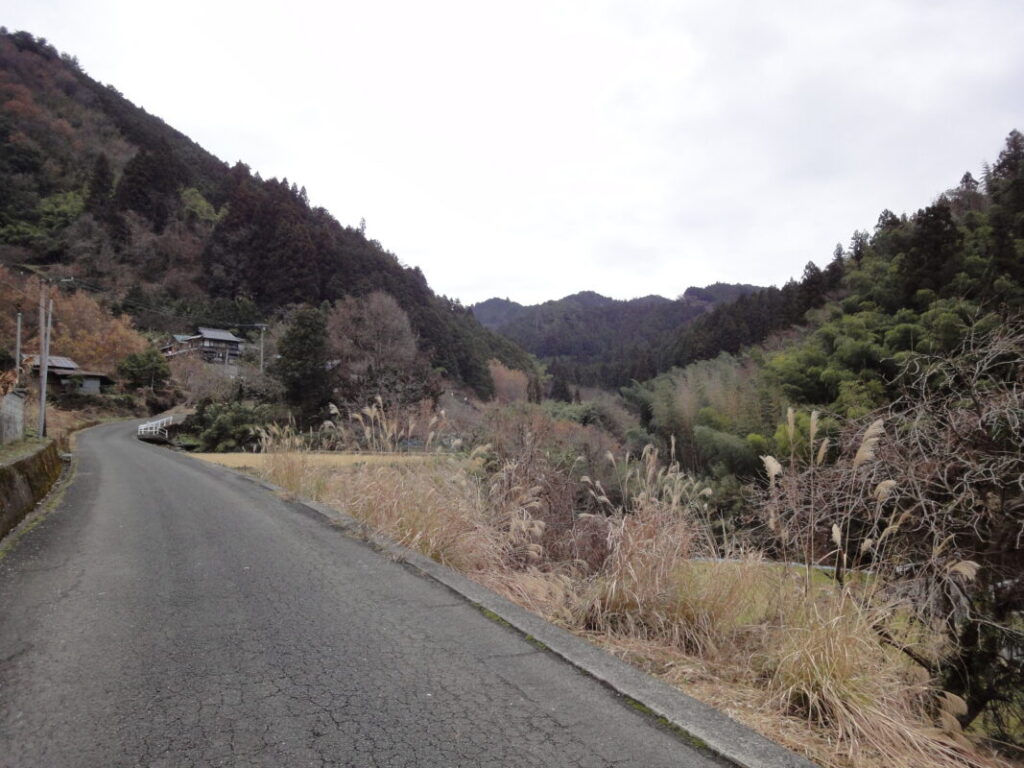
The road gradually narrowed, and the climb became increasingly steep. Along the roadside, withered Japanese silver grass swayed in the wind, creating a lonely landscape unique to winter.
The sky was covered with thick clouds, and sleet occasionally began to fall. The cold cut right through me, so I pulled my neck warmer up over my face to protect myself from the chill.
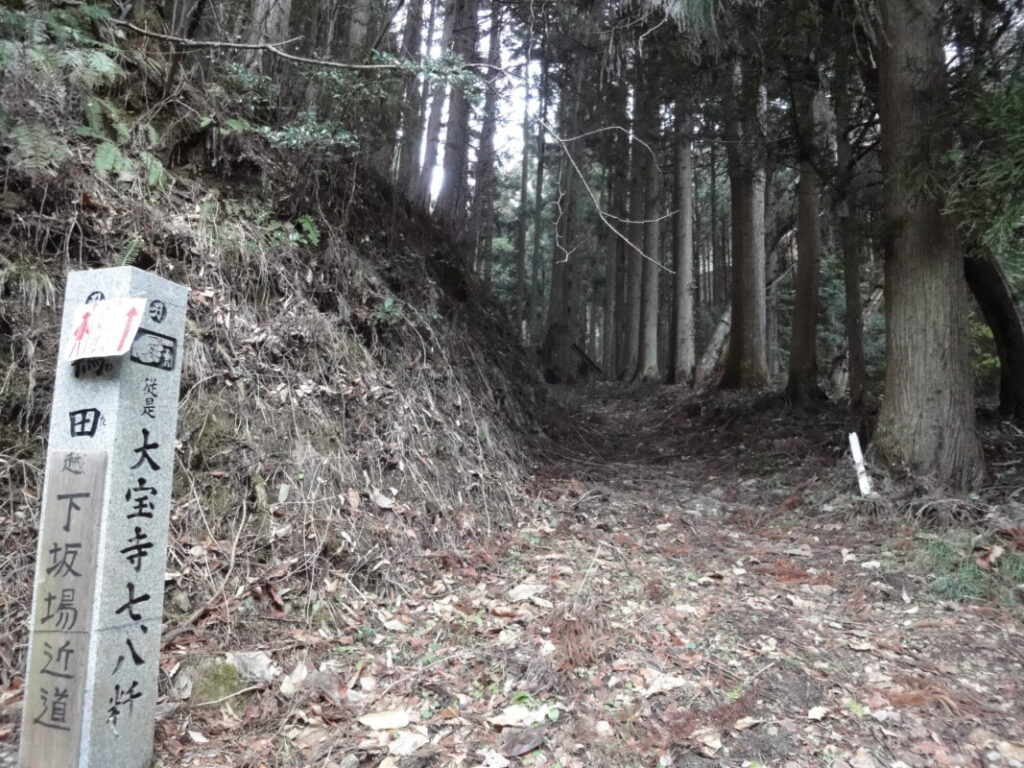
The Shimosakaba Pass Pilgrimage Trail
9:30 a.m.
I entered the Shimosakaba Pass Pilgrimage Trail.
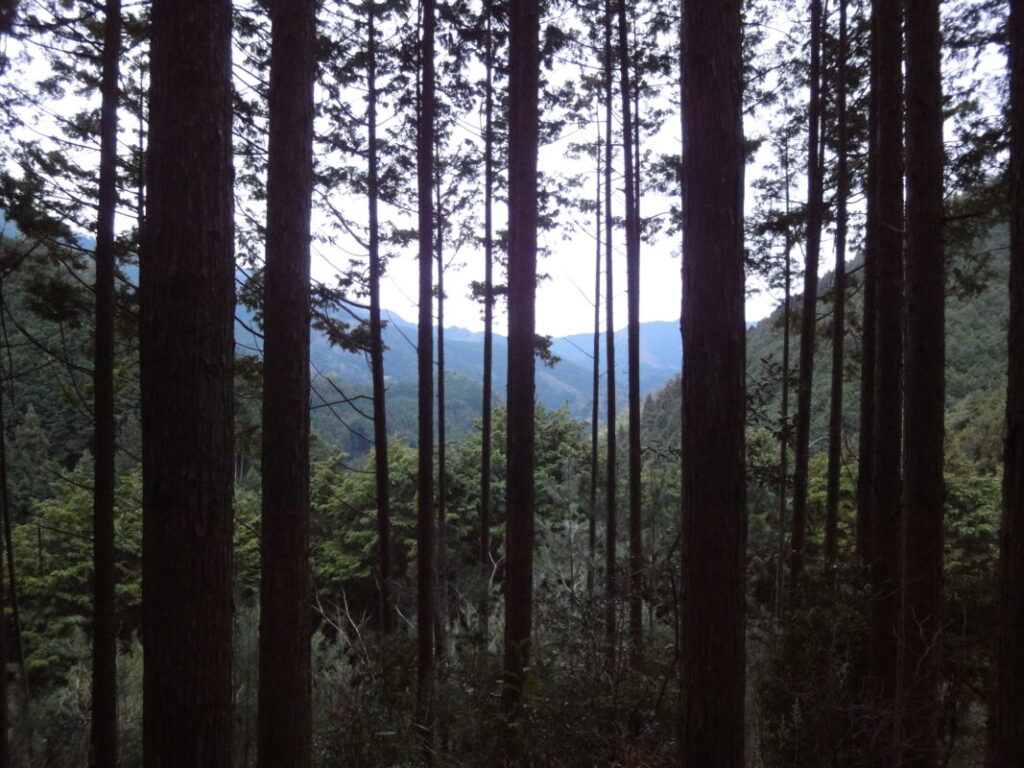
This convenient trail offers a shortcut around the winding road for vehicles. The path runs through a forest of conifers and, despite the quiet winter season, was well maintained and easy to walk.
I thought it was one of the trails that anyone undertaking the Shikoku Pilgrimage on foot should definitely consider taking.
Through the Nimyo District
After crossing Shimosakaba Pass, I entered the Nimyo district.
Located at an elevation of about 500 meters, this area had a small stretch of flat land in the valley of the Nimyo River, with fields and small settlements scattered around it.
There were about eight kilometers left to Daiho-ji.
After passing eastward through the quiet mountain hamlets, the trail toward Hiwata Pass finally began.
Walking Across Hiwata Pass
The trail toward Hiwata Pass was paved with asphalt for a while, before eventually turning into an unpaved mountain path.
Personally, I find unpaved trails more forgiving than asphalt, providing better cushioning and putting less strain on my feet. Feeling the firm earth beneath my feet, I continued climbing one step at a time.
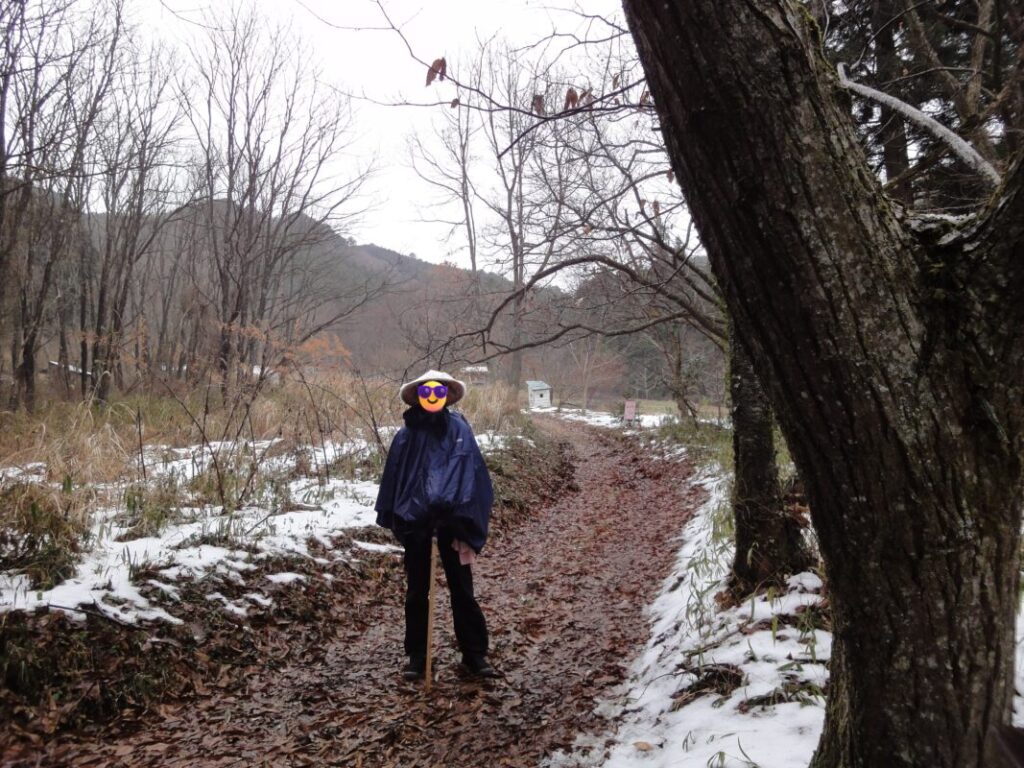
Patches of snow remained here and there along the trail.
It was a reminder that I had steadily gained elevation.
Danjiri Rock
One of the most memorable sights along the Hiwata Pass Pilgrimage Trail was a place known as Danjiri Rock.
A large, flat rock lay exposed along the trail, its surface seemingly wide enough to cover an area of about ten tatami mats.
According to the information board nearby, Kobo Daishi once visited this spot while undergoing ascetic training. Overcome by hunger and exhaustion, he reportedly lost his temper. To admonish himself for giving in to his anger, he is said to have stamped his feet on this very rock.
If even Kobo Daishi could lose his temper, then perhaps it was only natural for an ordinary person like me to do so from time to time.
I remember thinking something along those lines.
The History of Hiwata Pass
11:00 a.m.
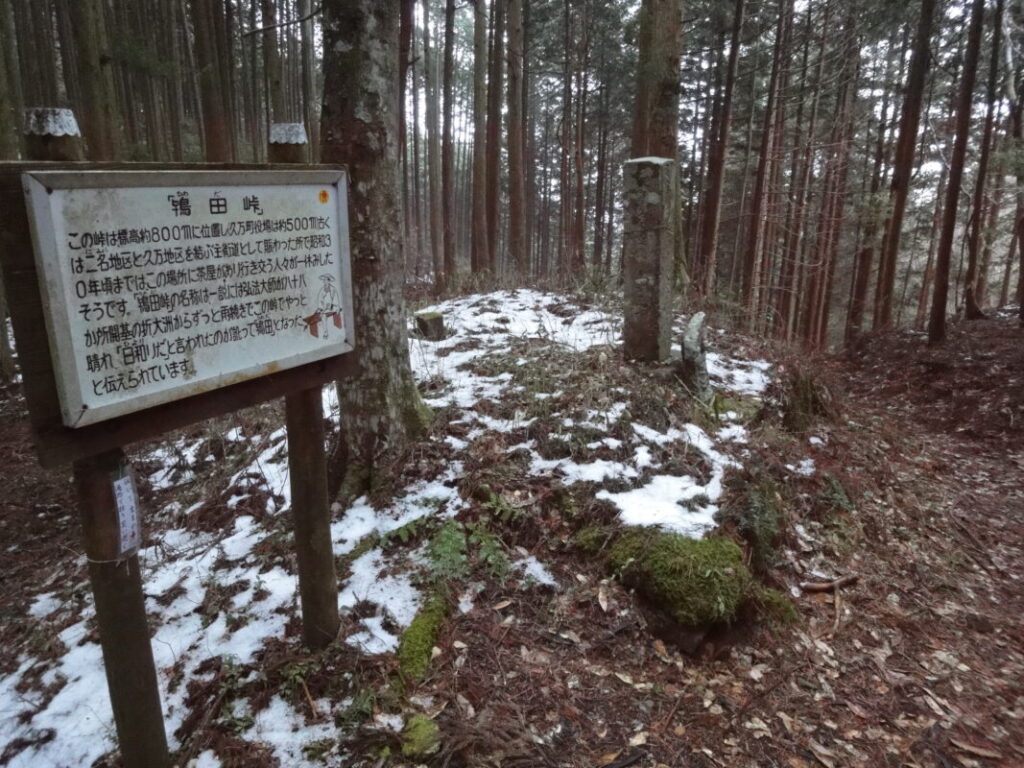
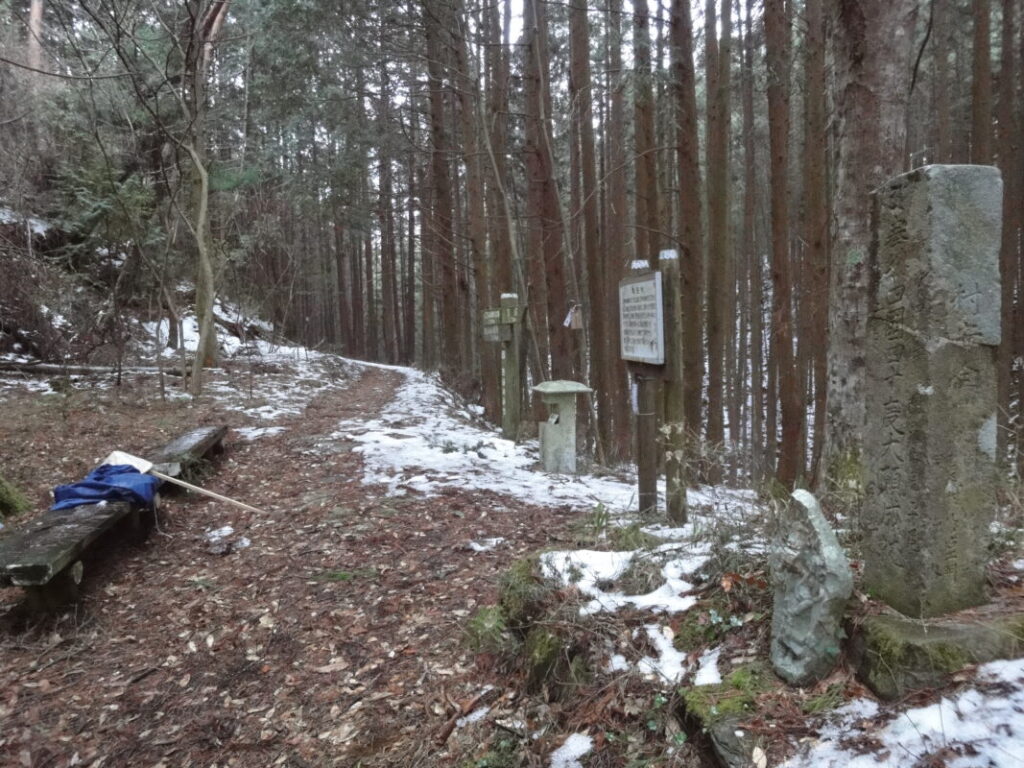
I arrived at an open area marked by a sign for Hiwata Pass. This was probably the pass itself.
I sat down on a nearby bench and rested for a while.
According to the information board, Hiwata Pass flourished as a major route until around 1950. There were once teahouses along the way, offering travelers a place to rest and recover from their journeys.
Along the pilgrimage trails I had walked so far, I had come across many paths that were once busy with travelers but had since fallen into silence.
Whenever I stood in such places, I always felt a sense of sadness.
I would imagine the bustle of the past, while reflecting on how the passage of time had gradually reduced the flow of travelers, allowing these roads to quietly fade from use. There was something deeply melancholy about it.
Hiwata Pass Rest Area
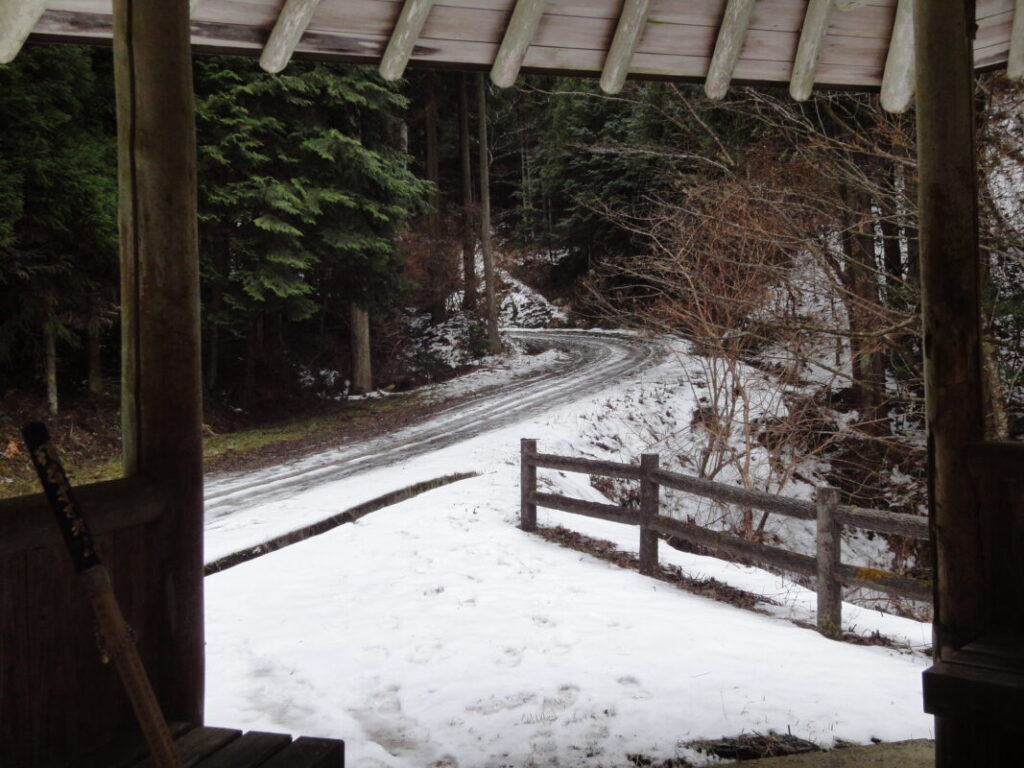
After crossing Hiwata Pass, the trail finally began a long descent.
In places, the surface was covered with ice, so I shortened my stride and made my way down carefully to avoid slipping.
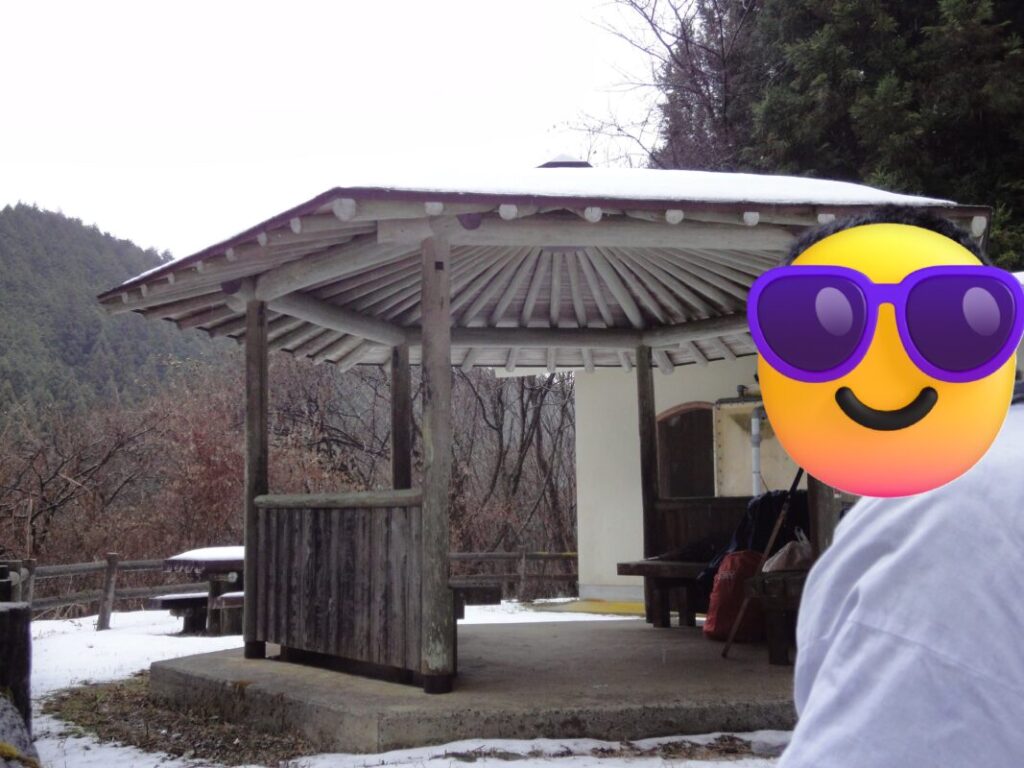
After walking a little farther, I came across a rest area. It even had a restroom, making it a welcome place to catch my breath after crossing the challenging pass.
Arriving in Kumakogen Town
Beyond the rest area, houses began to appear along the paved road.
I had arrived in Kumakogen Town.
The town stretches a considerable distance from north to south, following the Kumagawa River, which flows through the area. Along the national highway, there were restaurants and convenience stores, making it a convenient place to stop along the pilgrimage route.
Temple 44, Daiho-ji, lay ahead, but so did the next destination, Temple 45, Iwaya-ji. Keeping the journey ahead in mind, I stopped at a convenience store to stock up on food.
From Kumakogen Town, I continued through dimly lit woods toward Daiho-ji. There were some uphill stretches, but compared with the mountain trails I had crossed earlier, the going was not particularly difficult.
Visiting Temple 44, Daiho-ji
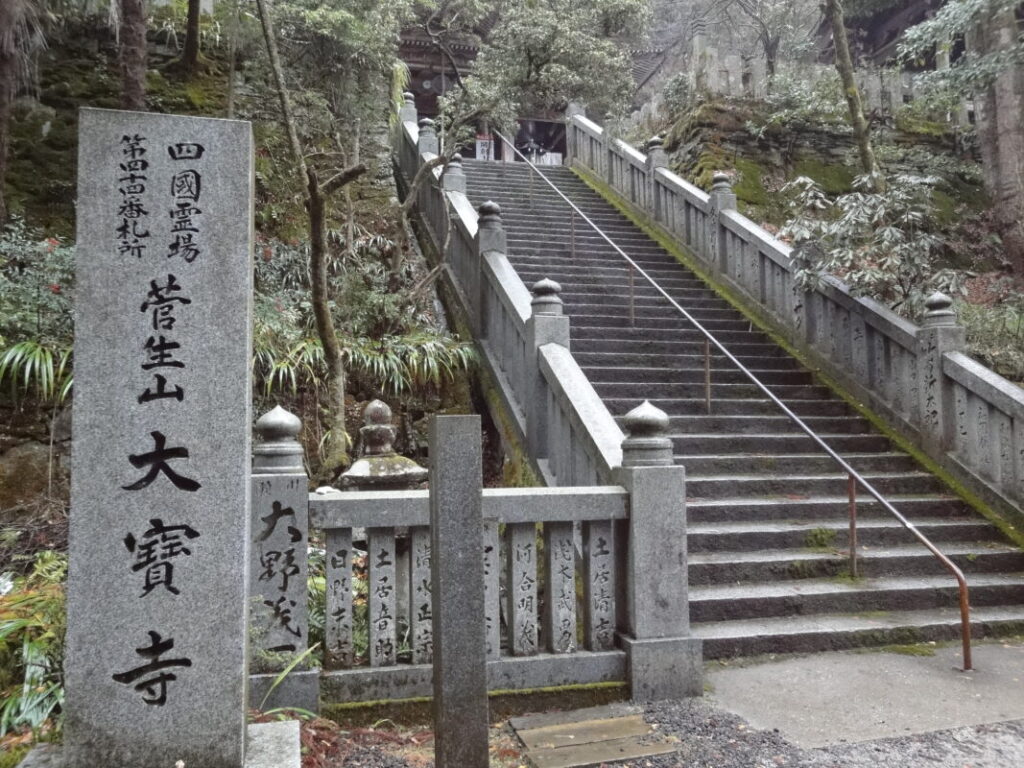
At 1:00 p.m., I arrived at Temple 44, Daiho-ji.
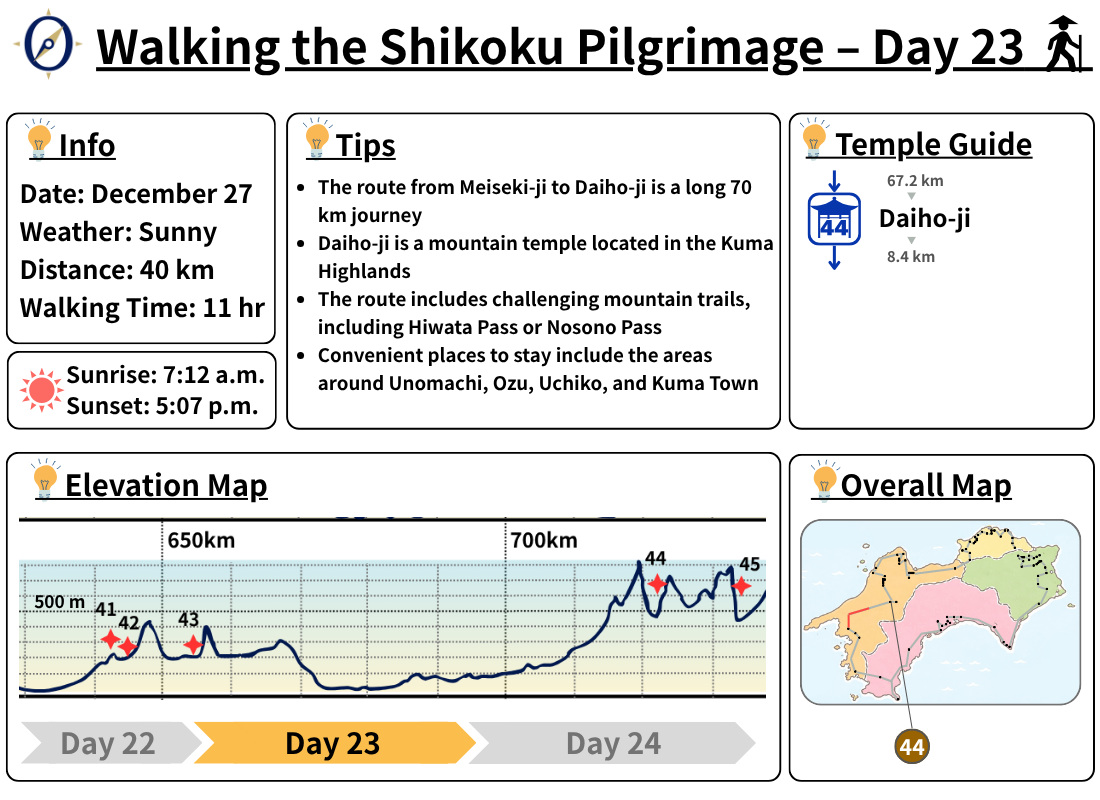
I had walked approximately 70 kilometers from Temple 43, Meisekiji. The journey had taken about a day and a half.
Daiho-ji marks the halfway point of the eighty-eight temples on the Shikoku Pilgrimage. As I reflected on the distance I had traveled to reach this point, I remember being overcome by a special sense of accomplishment.
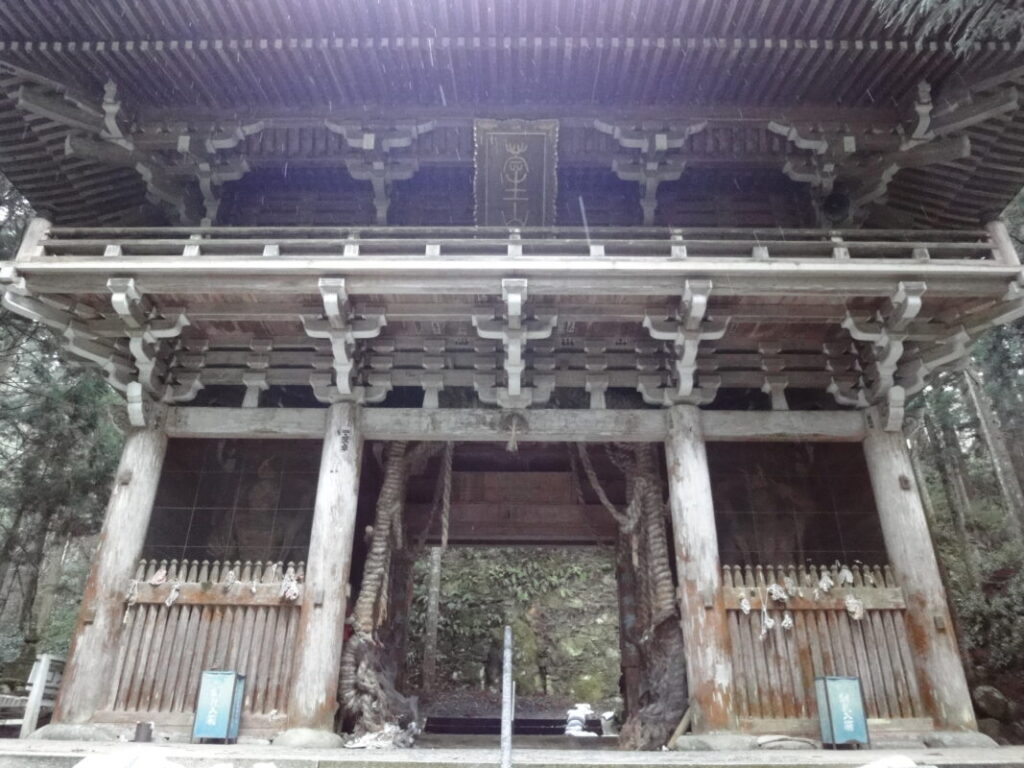
What first caught my eye at Daiho-ji was a pair of enormous straw sandals hanging on either side of the temple gate. I was astonished by their sheer size. Surely, the only one capable of wearing sandals that large would be the Great Buddha of Nara!
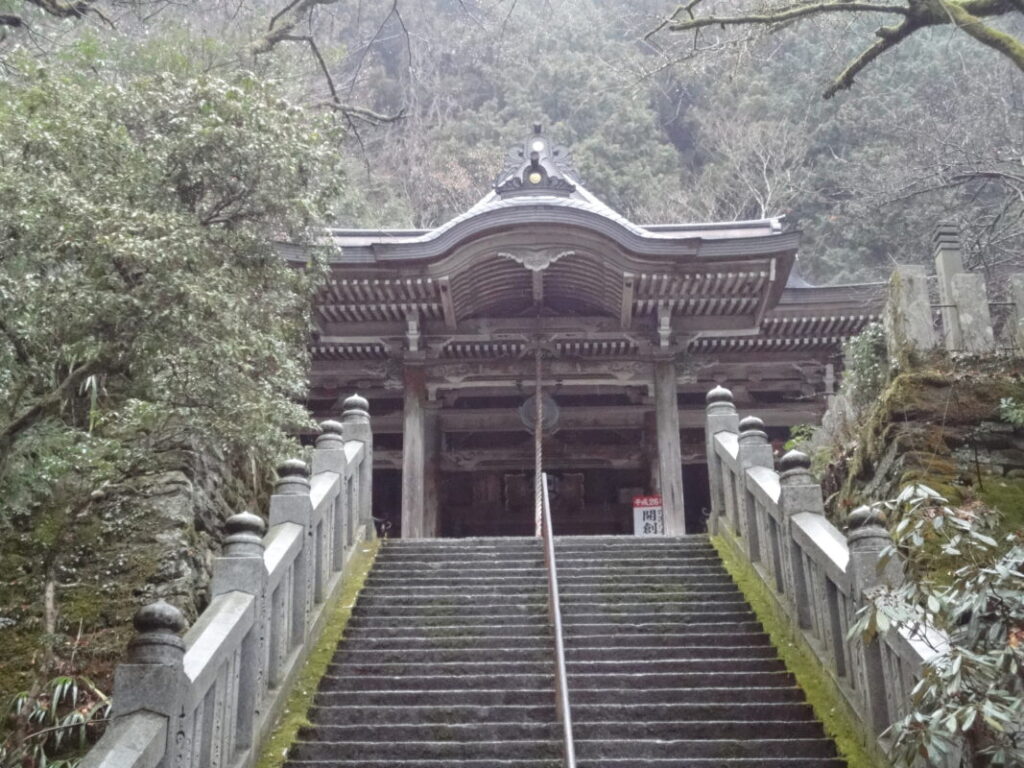
Just as I had imagined, Daiho-ji was a solemn temple surrounded by mountains, with an atmosphere of quiet reverence.
As I entered the temple grounds, the pleasant scent of incense drifted near the halls. Surrounded by its fragrance, I felt a sacred atmosphere so profound that it seemed as though the Buddha might descend before me at any moment.
Heading for Temple 45, Iwaya-ji
The next destination after Daiho-ji was Temple 45, Iwaya-ji.
Iwaya-ji lies about eight kilometers east of Daiho-ji, deep in the mountains. Along the way, I would have to tackle a challenging stretch known as Haccho-zaka, a steep and demanding route for pilgrims traveling on foot.
Time-wise, it was entirely possible to visit Iwaya-ji before the end of the day. The real concern, however, was where to spend the night afterward.
The previous night, I had tried sleeping rough in a roadside shelter in the mountains, but the cold had made it almost impossible to get any sleep. With even more remote mountain terrain ahead, spending another night outdoors was simply not an option with the equipment I had.
So I studied the map, searched for nearby accommodations, and began making phone calls. Fortunately, I was able to book a room at Furuiwaya-so, a lodging facility near Iwaya-ji.
With my accommodation secured, I no longer had to worry about where to stay. Having settled the day’s plans, I set off toward Iwaya-ji.
From Daiho-ji, the route follows Prefectural Route 12 eastward. At first glance, it looks like an ordinary road for vehicles, but it has more ups and downs than expected, gradually wearing down your energy. It was a stretch where I needed to stay alert and avoid becoming complacent.
Scattered along this prefectural road are family-run inns that have welcomed pilgrims for generations. After visiting Iwaya-ji, I would return to this same road to continue toward the next temple. For that reason, many pilgrims apparently leave their luggage at an inn before heading to Iwaya-ji.
Walking Along Haccho-zaka
About six kilometers from Daiho-ji, I reached the trailhead for Haccho-zaka.
Several benches had been set up just before the entrance to the trail. A steep climb lay ahead, so I was grateful for the chance to sit down and catch my breath before continuing.
What Makes Haccho-zaka Challenging
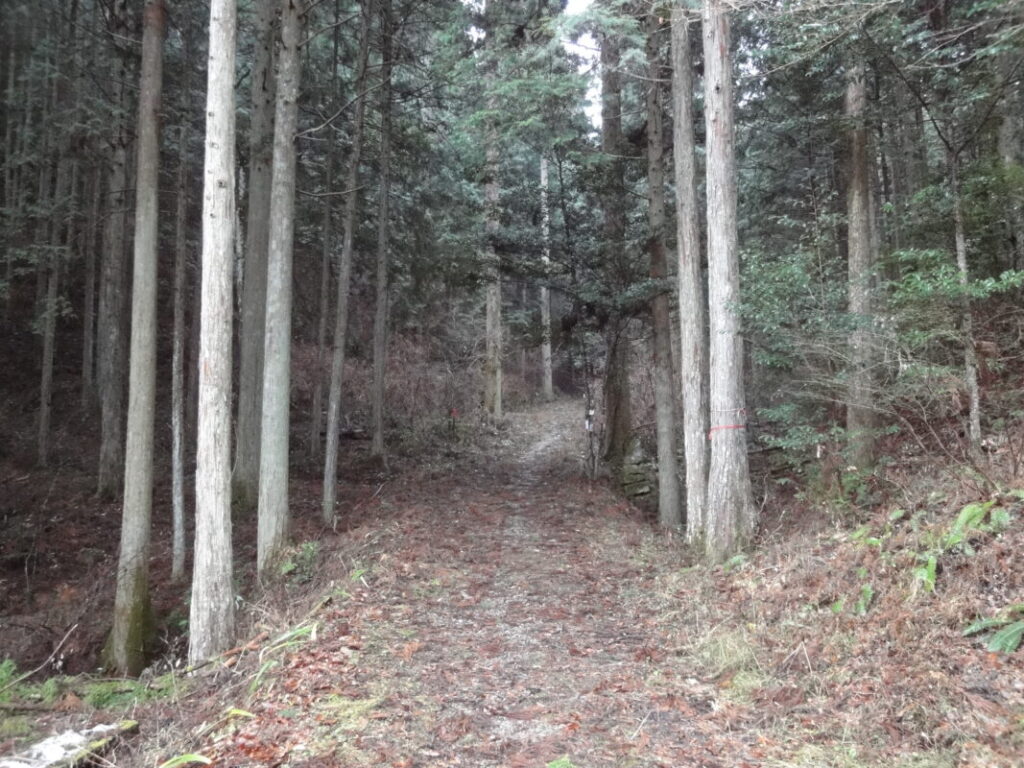
The most distinctive feature of Haccho-zaka is the steep initial ascent.
Although the climb is only about 600 meters long, the elevation gain is approximately 160 meters. It is a slope that gains height rapidly over a short distance, truly deserving of its reputation as a path of ascetic training.
The steep climb continued relentlessly. I imagined the ascetics of centuries past making their way up this same slope toward Iwaya-ji. With that image in mind, I pressed onward, one step at a time.
As I climbed the steep slope, my body warmed up until I was sweating.
The Approach to Iwaya-ji
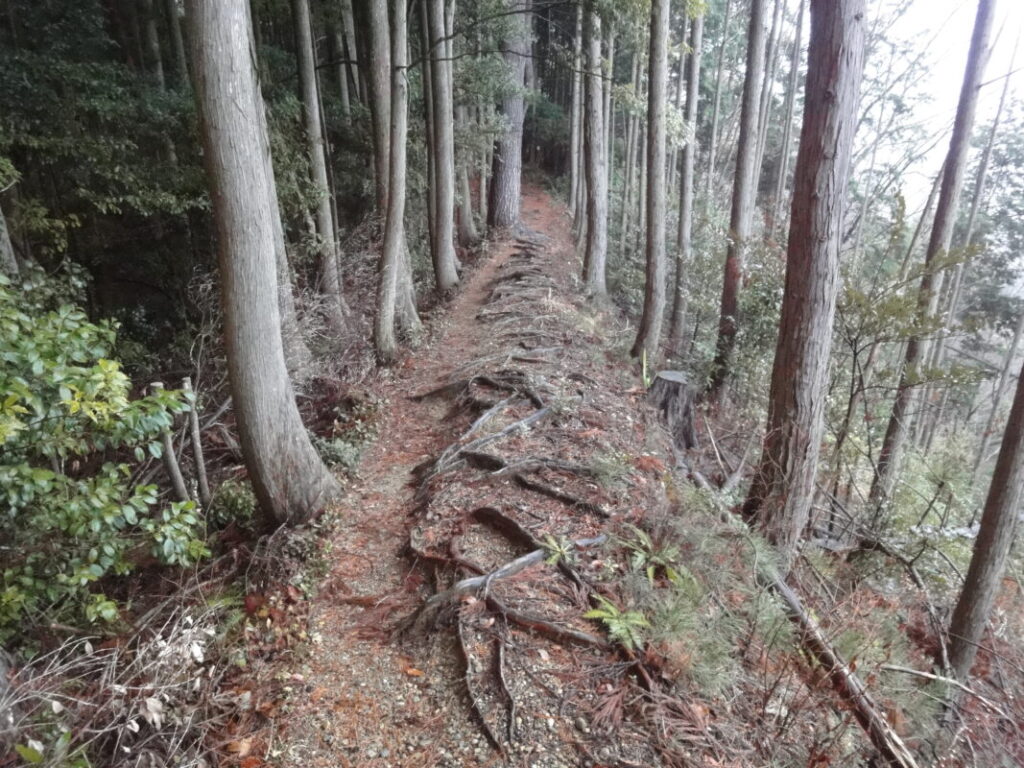
At last, I reached the top of the steep ascent. The trail then continued along the ridge, leading to the rear gate of Iwaya-ji.
Even here, I couldn’t let my guard down. Some sections were narrow, with sheer drops on both sides like the edge of a knife. In other places, tree roots protruded from the ground. I had to pay close attention to where I placed my feet.
In bad weather, when the trail becomes slippery, it would probably be safer to avoid taking unnecessary risks and use the prefectural road as an alternative route.
Iwaya-ji Is Just Ahead
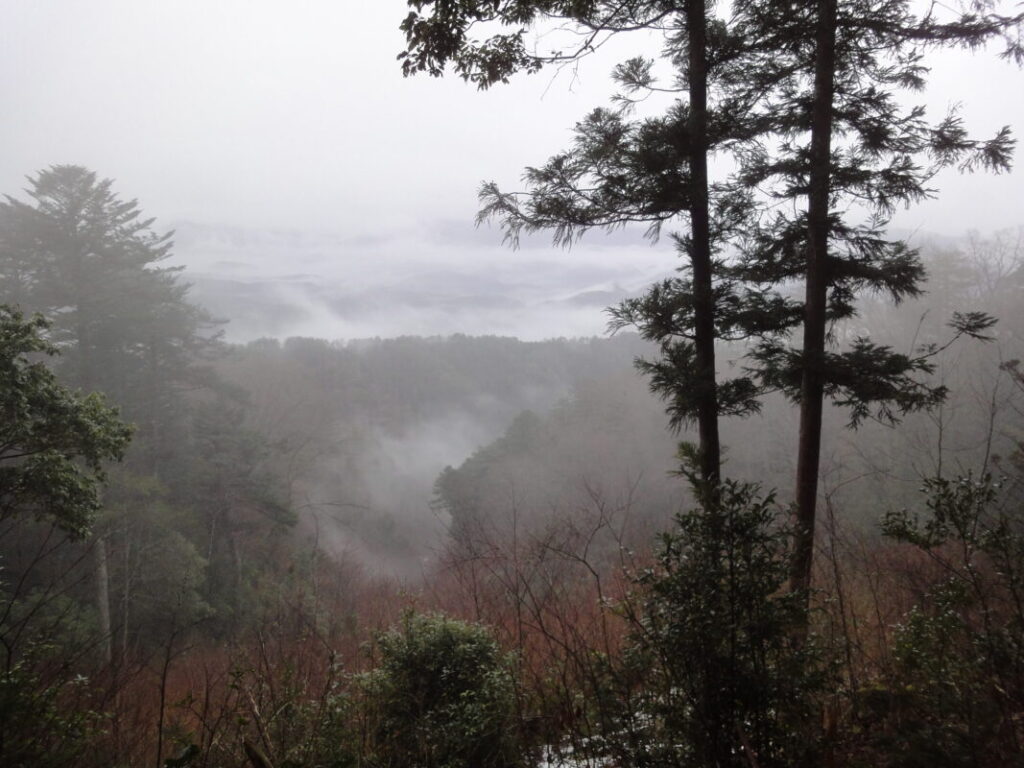
As I walked through the mountains, where a thin mist hung in the air, I heard the sound of a bell coming from somewhere nearby.
Iwaya-ji had to be close.
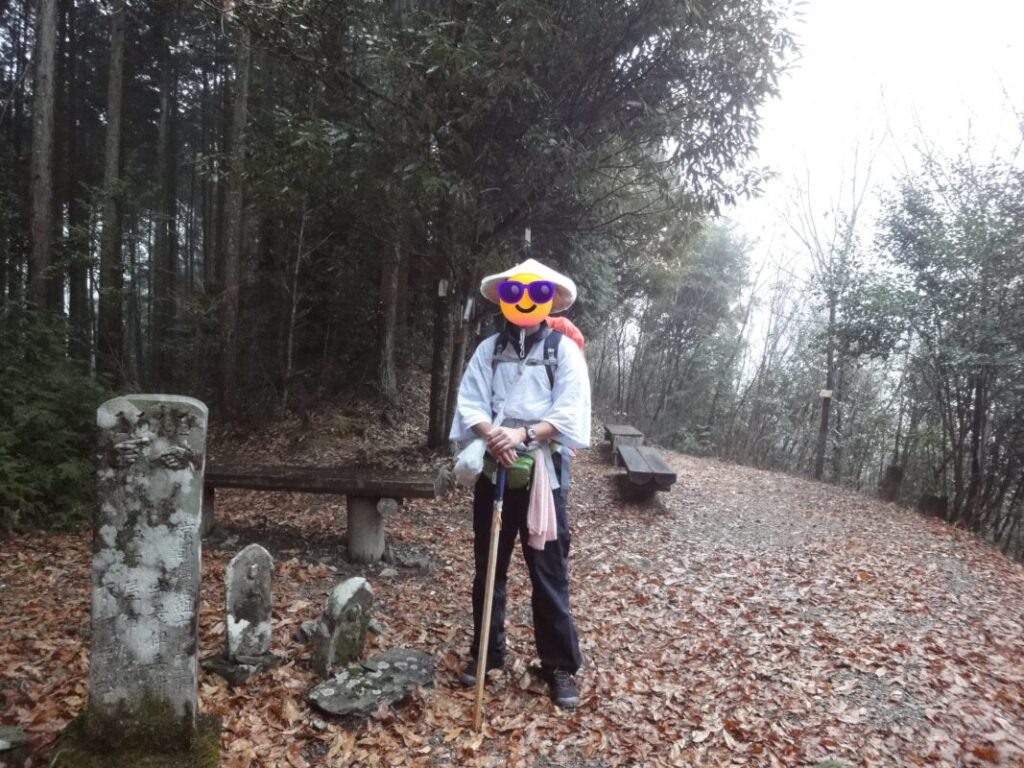
As I continued along the trail, I noticed numerous statues of Jizo and Fudo Myo-o enshrined along the path.
Looking at these Buddhist figures standing quietly beside the rugged mountain trail, I could truly appreciate how this path had served as a place of ascetic training for centuries. It was a trail that made me feel as though the mountain itself was a sacred place of worship.
Visiting Temple 45, Iwaya-ji
It was 4:30 p.m.
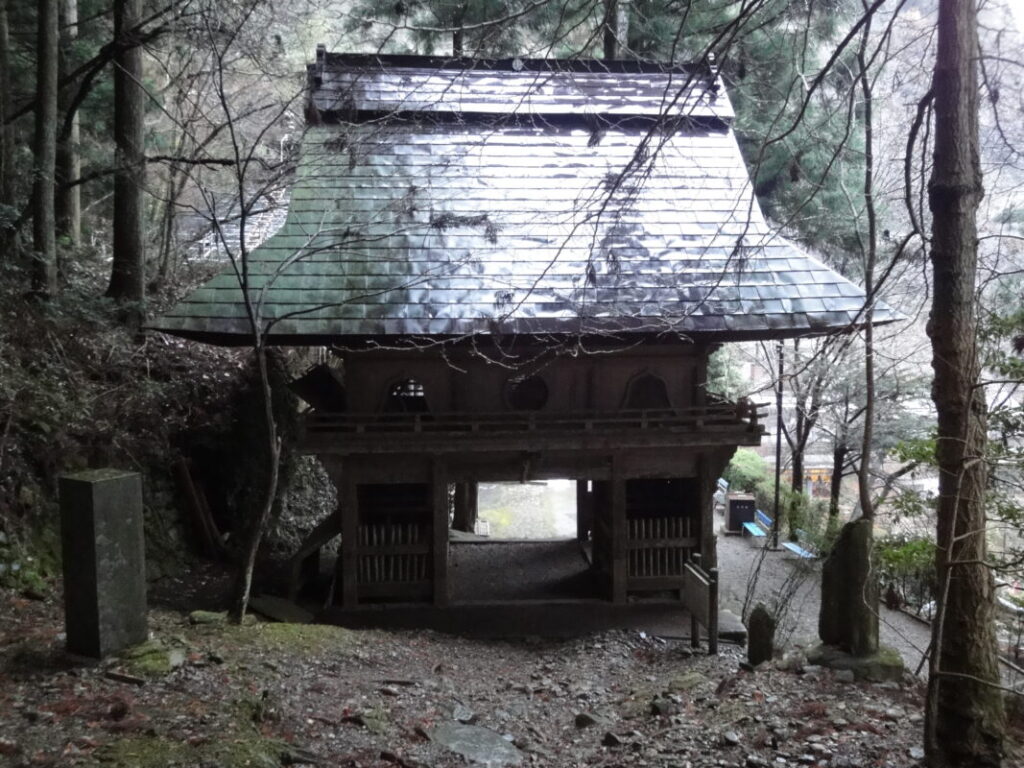
I somehow managed to reach Iwaya-ji with about 30 minutes to spare before visiting hours ended. I had arrived just in time.
Iwaya-ji is one of the most memorable temples among the eighty-eight temples of the Shikoku Pilgrimage.
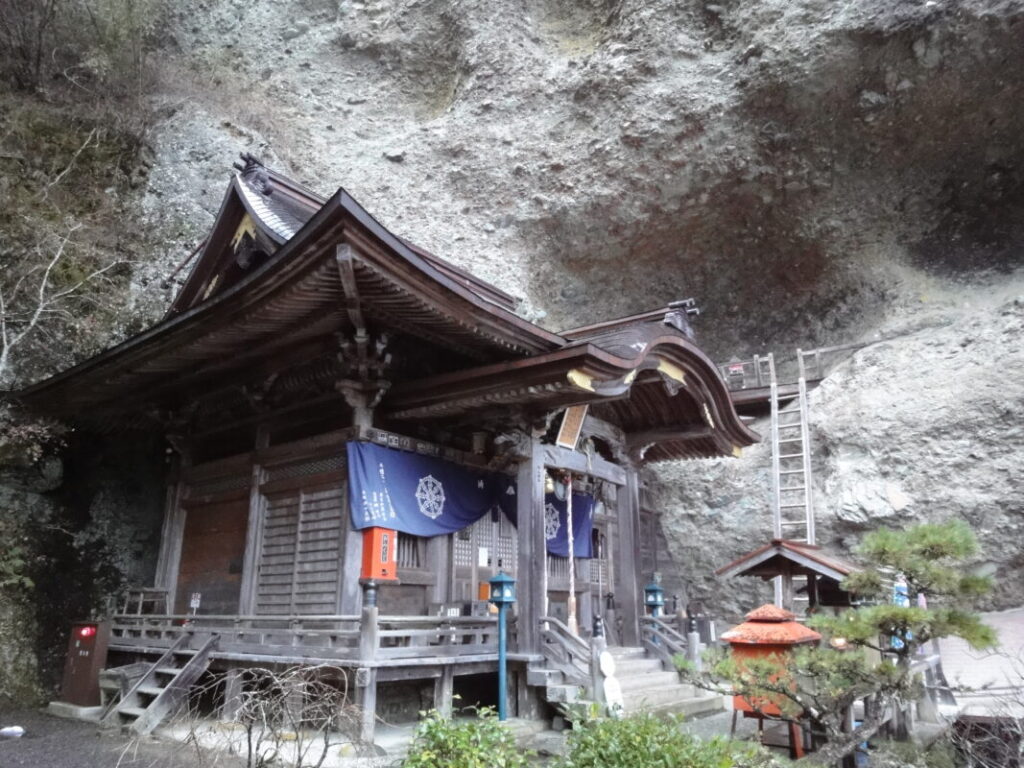
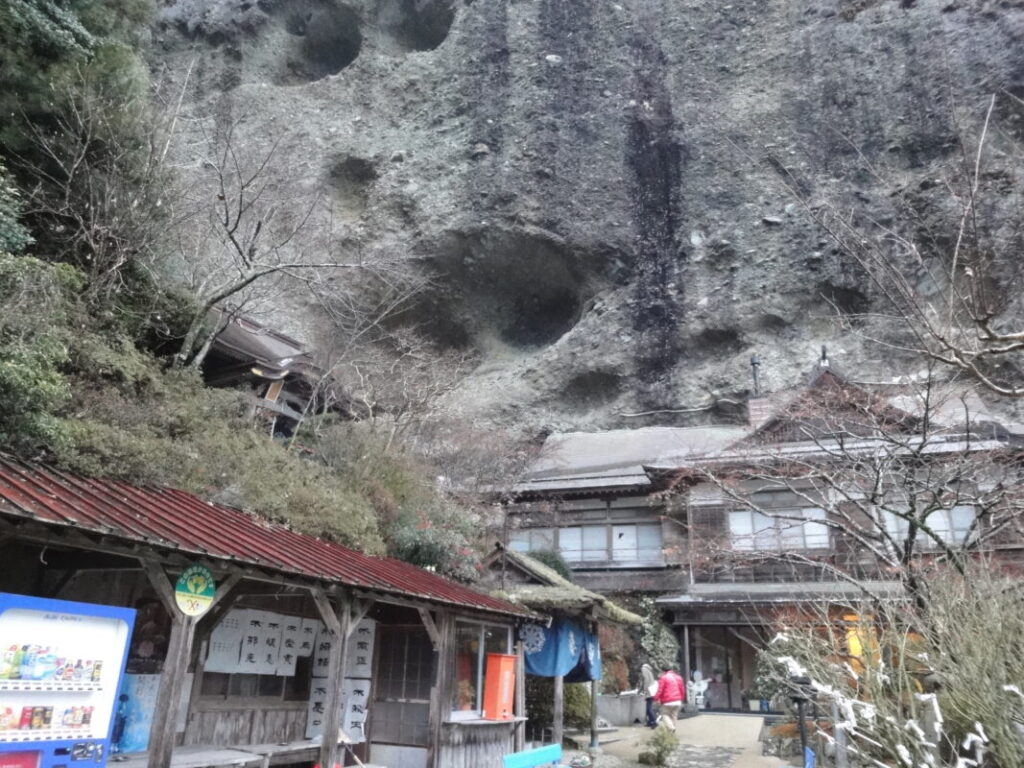
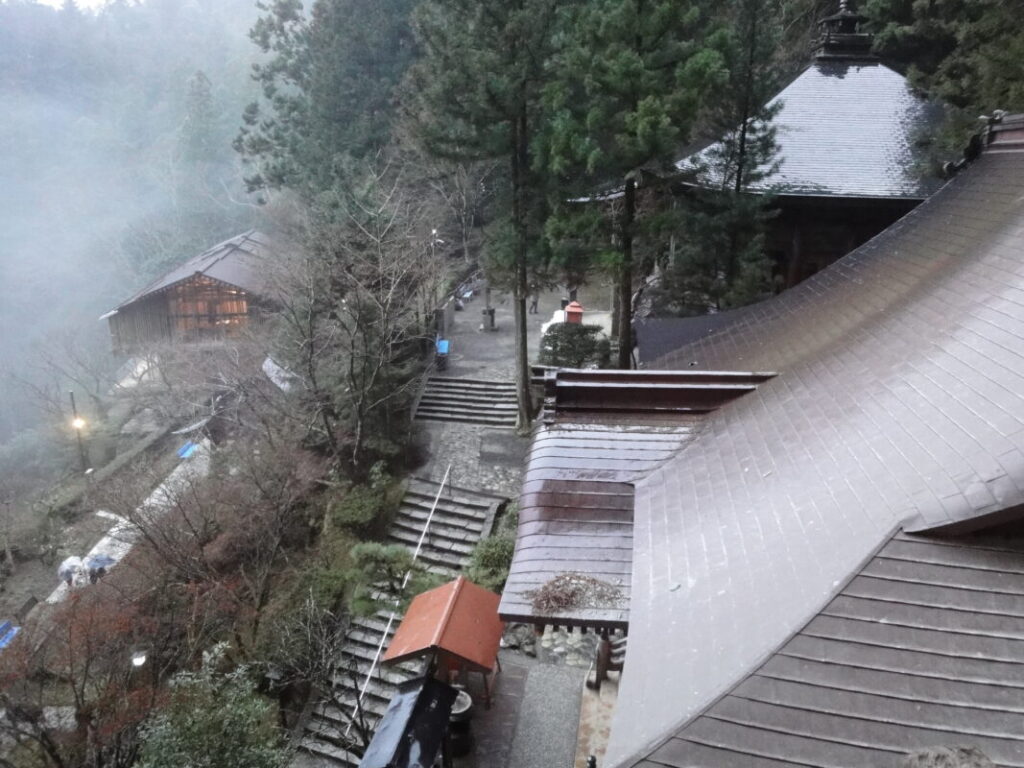
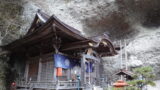
The first thing that catches your eye is the enormous sheer cliff rising directly behind the main hall. The sight is overwhelming, bringing together two powerful elements: a natural formation that no human hands could ever create, and the long history of mountain worship that has developed here over the centuries.
After crossing the rugged mountain trails, I had finally reached Iwaya-ji. Overawed by its history and the grandeur of the surrounding landscape, I made my way around the temple grounds.
The Ruins of Hokke Sennin-do
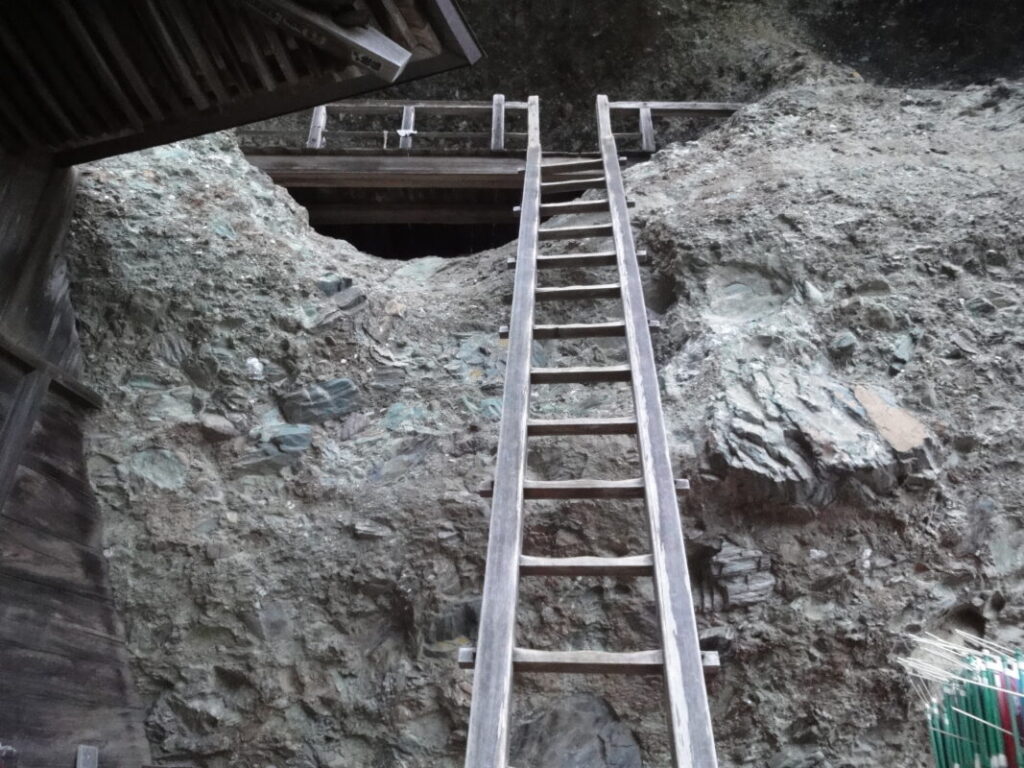
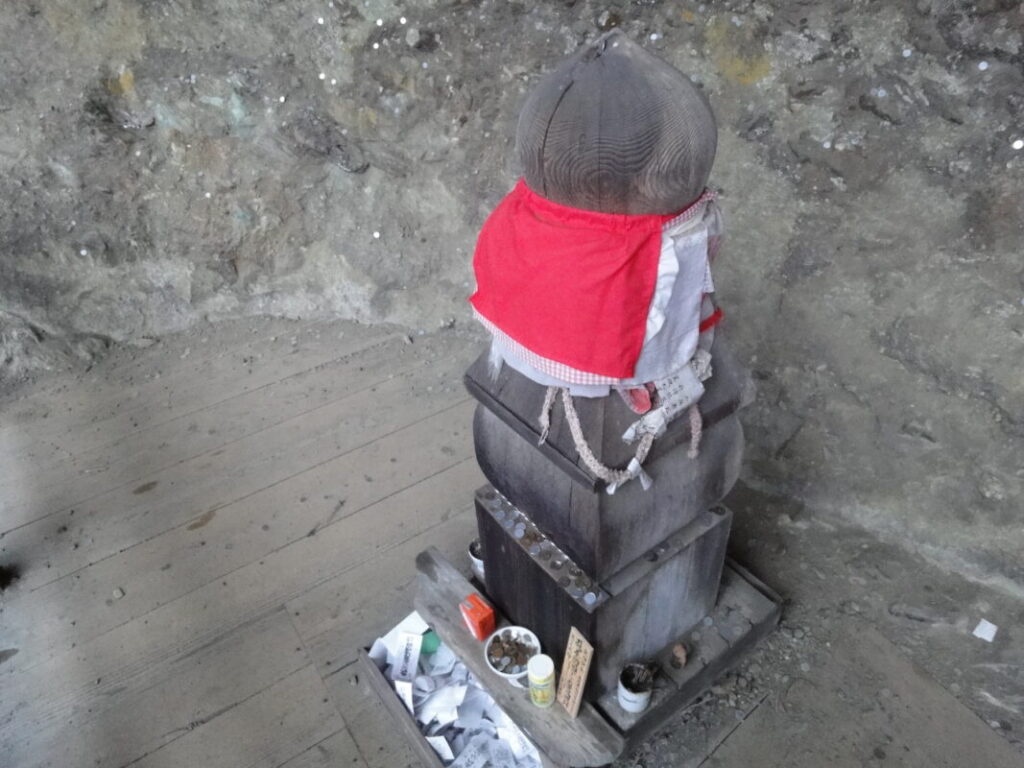
On the rock face to the right of the main hall, a ladder leads upward. At the top lies the site of Hokke Sennin-do, a small sanctuary once built into a hollow in the cliff.
This place has long been regarded as a site of ascetic practice, making it a particularly striking reminder of Iwaya-ji’s history as a sacred mountain pilgrimage site.
Important Things to Keep in Mind at Iwaya-ji
Even after leaving the temple grounds, there are numerous steps to descend before reaching the main entrance area, where the parking lot is located.
Those planning to visit from the main entrance should take this into account and allow plenty of time for the visit.
Through the Winter Mountains to Furuiwaya-so
At 5:00 p.m., I finished my visit to Iwaya-ji, only to find that the mountains were already shrouded in darkness.
As soon as the sun set, the temperature dropped sharply. Furuiwaya-so was about three kilometers from Iwaya-ji. I hurried along the prefectural road, keeping a close eye on passing vehicles.
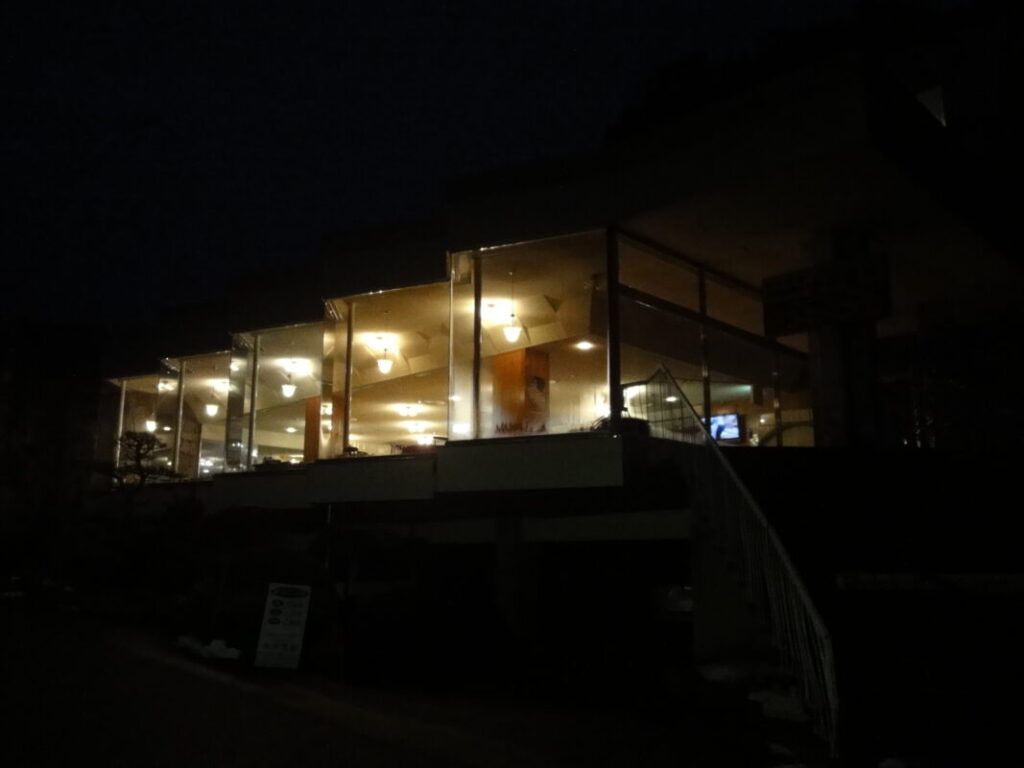
Finally, at around 6:00 p.m., I arrived at Furuiwaya-so.
Staying at Furuiwaya-so
As soon as I entered the building, I was greeted by the warmth of the heating.
After checking in, I headed straight for the stove in the lobby to warm myself. The heat slowly seeped into my chilled body, bringing a welcome sense of relief.
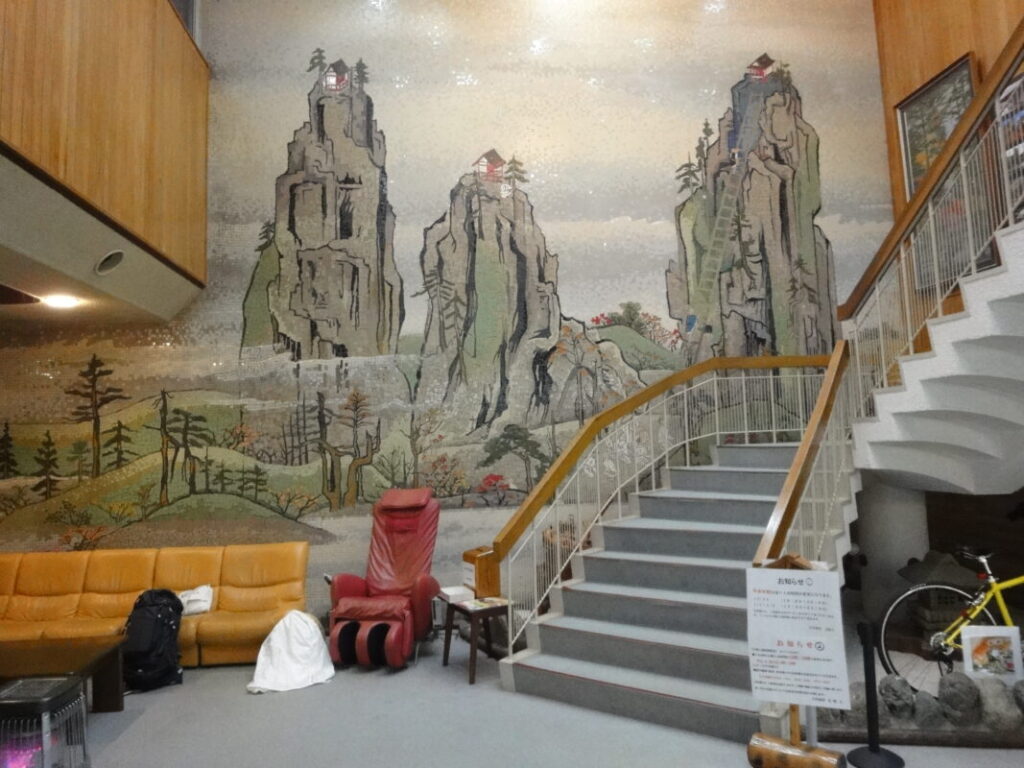
What particularly caught my eye in the lobby was a large mosaic artwork covering the wall of the atrium.
Perhaps it depicted the landscape of unusual rock formations characteristic of this area. A small temple hall stood atop one of the pointed rock pinnacles. The artwork portrayed the close connection between these rugged mountains and religious faith, conveying how this area had long served as a place of ascetic training.
Looking Back on the Day
Looking back, I had been unable to sleep because of the cold and had started walking at 3:00 a.m.
I made my way through the darkness before dawn, crossed Hiwata Pass, and visited two temples: Temple 44, Daiho-ji, and Temple 45, Iwaya-ji. Along the way, I struggled with the bitter cold and steep climbs, but I was also fortunate to meet a fellow pilgrim from my hometown and experience the unique scenery of these remote mountain sanctuaries.
It had been a long day.
The previous night, I had barely slept because of the cold. Tonight, however, I could finally rest peacefully in a warm room.
Tomorrow, I would walk the pilgrimage trail once again.
With that thought in mind, I drifted off to sleep, feeling safe and at ease.
Temple Information
- No. 44
- No. 45
Comments