
Now that you’ve learned the basics of the Shikoku Pilgrimage and made your travel plans, it’s time to begin your journey.
As you travel around Shikoku, you may encounter unexpected challenges, such as getting lost, finding places to rest or use the restroom, or having to change your plans.
Since the pilgrimage involves traveling long distances, knowing where to find useful information and facilities along the way can make your journey much easier.
In this guide, we’ll cover everything you need to know while on the pilgrimage, from the steps for visiting temples to travel tips and useful maps for finding facilities along the route.
Enjoy your journey through Shikoku at your own pace, taking one step at a time.
- 1. Before Setting Out on Your Pilgrimage
- 2. What to Do When You Arrive at a Temple
- 3. Travel Tips for Your Pilgrimage
- 4. Useful Maps and Information for Your Pilgrimage
- 5. Food and Shopping Along the Pilgrimage Route
- 6. What to Do When Problems Arise
- 7. Enjoy the Encounters and Experiences Along the Way
- 8. Continue Your Pilgrimage at Your Own Pace
- Related Articles
1. Before Setting Out on Your Pilgrimage
Before beginning your pilgrimage, take one final look at your belongings, equipment, and travel routes.
The journey is a long one, and even small oversights can cause inconvenience along the way.
Check Your Belongings and Equipment
If you’re walking the pilgrimage route, comfortable shoes, a backpack, and rain gear are especially important. You’ll be walking for long hours each day, so choose shoes you’ve already broken in and try to keep your luggage as light as possible.
If you’re traveling by car, make sure you have comfortable clothing and footwear, and check that your vehicle is in good condition before setting out.

Prepare Your Smartphone
A smartphone is an extremely useful tool for today’s pilgrims.
You can use it to check maps, transportation information, accommodation, and much more.
However, mobile reception may be weak or unavailable in some mountainous areas. Check important maps and information in advance, and bring a portable power bank to keep your phone charged.

Double-Check Your Schedule and Reservations
If you’re using accommodation or public transportation, confirm your reservations and schedules before departure.
In rural areas, some accommodations and restaurants have limited opening hours.
Checking these details in advance will help you avoid unexpected problems along the way.
2. What to Do When You Arrive at a Temple
During the Shikoku Pilgrimage, you’ll visit 88 temples and pay your respects at each one.
If it’s your first time visiting a temple, you may be unsure where to enter or where to pray.
Knowing the basic order of a temple visit will help you feel more comfortable.
For more detailed information about temple etiquette and manners, see our guide in Step 1.
3. Travel Tips for Your Pilgrimage
The Shikoku Pilgrimage involves traveling long distances. Knowing what to watch out for along the way is important for a safe and enjoyable journey.
For Walking Pilgrims
Walking pilgrims cover long distances every day.
If your feet hurt or you feel tired, take a break rather than pushing yourself too hard.
Mountain trails and passes may have slippery surfaces or uneven terrain. Be especially careful in the rain and after rainfall.
Trails can also become difficult to see after dark, so try to reach your accommodation while it is still light.


For Pilgrims Traveling by Car
Traveling by car allows you to move efficiently between temples, but some mountain roads are narrow and steep.
Some roads have limited space for passing oncoming vehicles, and parking may be limited at certain temples.
Check your route and parking options in advance, and always drive carefully without rushing.
For Pilgrims Using Public Transportation
If you’re traveling by train or bus, check timetables and connections in advance.
In rural areas, buses may run infrequently, and missing one could mean a long wait for the next service.
It’s a good idea to consider alternative transportation options in case you miss your planned connection.
4. Useful Maps and Information for Your Pilgrimage
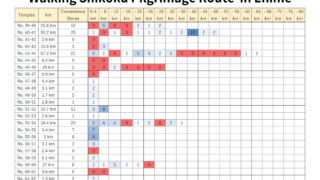
During the pilgrimage, you’ll need to find more than just routes between temples. You may also need places to rest, public toilets, and accommodation.
Our website provides a collection of maps and useful information to help you along the way.
You can access them on your smartphone, both when planning your journey and while traveling around Shikoku.
Shikoku Pilgrimage Google Maps
Use this map to check pilgrimage trails and driving routes between the 88 temples.
It includes routes for both walking and driving pilgrims. We’ve also added custom routes for mountain trails and historic pilgrimage paths that are not recognized by standard Google Maps.
In addition to challenging traditional pilgrimage paths, the map includes easier alternatives using national roads and other accessible routes for beginners.
Rest Stop Map
Find places where you can take a break along the pilgrimage route.
It’s useful when you’re tired from walking or simply need a place to sit and rest.

Public Toilet Map
Find public toilets along the pilgrimage route, including toilets in parks and other public facilities.
Onsen and Day-Use Bathing Facility Map
Find hot springs and bathing facilities that you can use during your pilgrimage or before settling in for the night.
They’re a great way to relax and soothe tired muscles after a long day of walking.
Campground Map
Find campgrounds conveniently located along the pilgrimage route.
This map is especially useful for pilgrims carrying a tent or those looking to reduce accommodation costs.

Overnight Parking and Car Camping Map
If you’re traveling by car, use this map to find facilities where overnight stays in vehicles are permitted.
It includes roadside stations, RV parks, and campgrounds. Rules vary by facility, so always check the conditions before staying overnight.
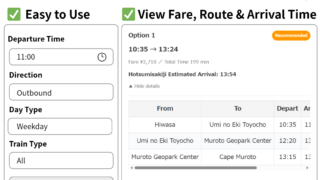
Public Transportation Guide
Find useful information for traveling between temples by train, bus, and other forms of public transportation.
Accommodation Guide for Pilgrims
Find accommodation options along the pilgrimage route.
Consider the distance to the next temple and your plans for the following day when choosing where to stay.

5. Food and Shopping Along the Pilgrimage Route
Finding food and drinks is another important part of the pilgrimage.
Shikoku has convenience stores, supermarkets, and restaurants, but some rural areas have limited options and shorter opening hours.
In particular, there may be few places to eat in mountainous areas or locations far from the temples.
Stay Hydrated and Bring Snacks
Staying hydrated is especially important during the warmer months.
In addition to drinks, carrying easy-to-eat snacks or energy bars can help when you need a quick energy boost during a break.
Listen to your body and take breaks for food and water whenever necessary.
Plan Your Meals and Shopping in Advance
For walking pilgrims, the distance to the next place to eat can sometimes be considerable.
When you come across a convenience store or supermarket, consider buying drinks and snacks for later.
If you’re traveling by car, it’s also a good idea to stock up on food and drinks before entering mountainous areas.

6. What to Do When Problems Arise
Unexpected problems can happen during a long journey.
Knowing how to respond can help you stay calm and deal with difficulties safely.
If You Get Lost
If you lose your way, stop somewhere safe and check your current location rather than continuing in the wrong direction.
Don’t rely only on your smartphone map. Also look for road signs and pilgrimage trail markers.
On mountain trails, taking a wrong turn can make it difficult to find your way back. If you’re unsure, ask local residents or someone nearby for directions.
If You Feel Unwell
If you feel unwell due to exhaustion, heat, or cold, stop and rest rather than pushing yourself.
If you can’t continue walking, it’s perfectly reasonable to change your plans for the day.
If your symptoms are serious or you need urgent medical assistance, do not try to continue traveling. Call 119 for emergency assistance in Japan.
If the Weather Turns Bad
The weather can change suddenly, bringing rain, strong winds, or thunderstorms.
Mountain trails are particularly affected by weather conditions. If you feel that it is unsafe to continue, stop and move to a safe place.
Check the weather forecast regularly and be prepared to change your plans when necessary.
If Your Smartphone Battery Runs Out
If you rely on your smartphone for maps and communication, running out of battery can cause serious inconvenience.
Carry a portable power bank and charge your devices whenever you have the opportunity, such as at your accommodation.
It’s also a good idea to keep important information, such as accommodation addresses and destinations, written down or saved somewhere you can access offline.
7. Enjoy the Encounters and Experiences Along the Way
The Shikoku Pilgrimage is about more than visiting 88 temples.
The natural beauty of Shikoku, its towns and villages, and the people you meet along the way are all part of the experience.
Connect with Local People
During your pilgrimage, local residents may greet you, offer directions, or simply stop for a friendly conversation.
These small encounters can become some of the most memorable moments of your journey.
Appreciate the Tradition of Osettai
Shikoku has a special tradition called Osettai, in which local people offer pilgrims food, drinks, or other forms of assistance.
If someone offers you Osettai, accept it with gratitude and express your thanks.
You don’t need to feel obliged to accept every offer, but it’s important to appreciate the kindness behind it.
Enjoy Shikoku’s Nature and Local Food
Shikoku is blessed with beautiful natural scenery, including mountains, rivers, and coastlines.
Each area also has its own food culture, so sampling local dishes and regional specialties is another pleasure of the journey.
Don’t focus only on reaching the next temple. Take time to enjoy the scenery, visit local shops, and discover what makes each part of Shikoku special.
8. Continue Your Pilgrimage at Your Own Pace
The Shikoku Pilgrimage is a long journey, and you don’t have to stick to your schedule every day.
Rest when you’re tired, and change your plans when the weather is bad. It’s important to listen to your body and travel at your own pace.
You don’t have to visit all 88 temples in one trip. You can also divide the pilgrimage into several shorter journeys.
The most important thing is to enjoy the experience safely without pushing yourself too hard.
Take time to appreciate Shikoku’s nature, culture, and the people you meet along the way. Continue your pilgrimage in a way that feels right for you.
The experiences, encounters, and scenery you discover during your journey will become memories that stay with you for years to come.
Related Articles



Comments