
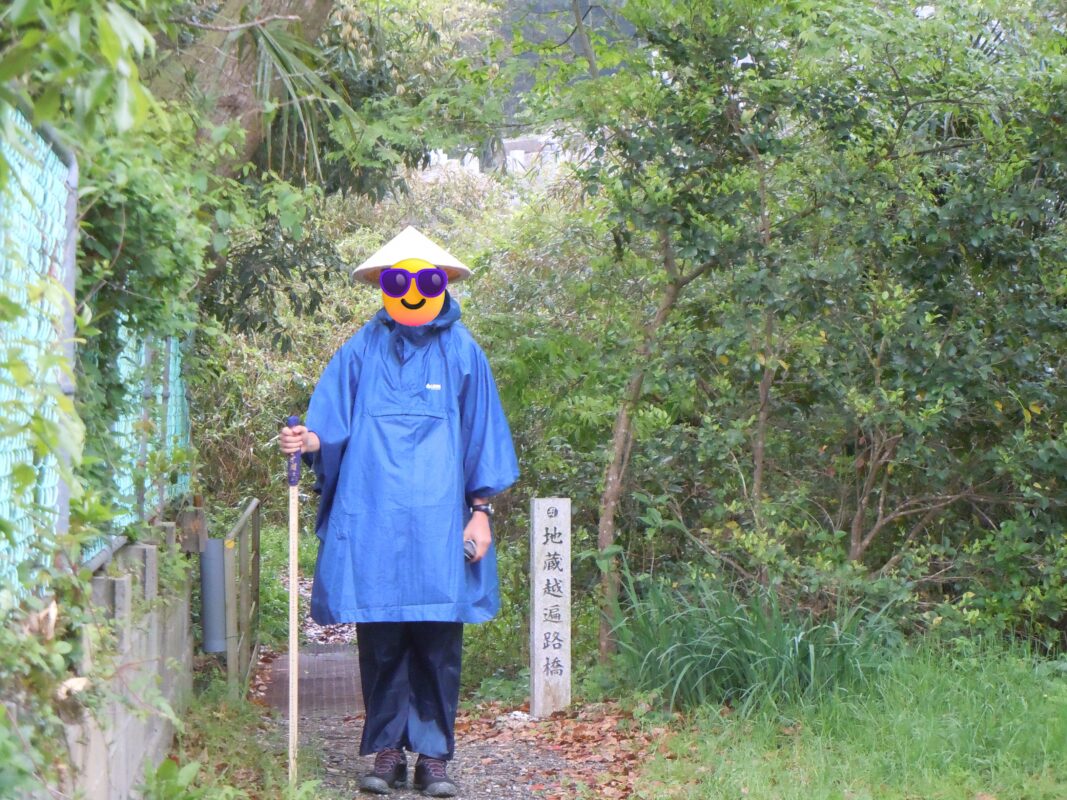
In a 50-day walking pilgrimage, you can expect to encounter rain on about 17 days on average.
Even for a driving pilgrimage, it’s safer to plan for around 4 rainy days.
For the Ohenro pilgrimage, what matters is not preparing to avoid rain, but preparing so that you can keep going even when it rains.
In this article, we’ll explain the risk of rain and practical countermeasures based on weather data.
- Weather Data Across Shikoku’s Four Prefectures
- Expected Rain Exposure for Walking and Driving Pilgrimages
- Essential Rain Gear for the Ohenro Pilgrimage
- Important Things to Keep in Mind During Rainy Days on the Ohenro Pilgrimage
- Sections of the Ohenro Pilgrimage That Require Extra Caution in Rainy Weather
- Shosanji Temple | The First Major Challenge for Walking Pilgrims
- Kakurinji Temple → Tairyuji Temple | Mountain Trails Become Much Harder in Rain
- Hotsumisakiji Temple (Cape Muroto) | Coastal Route Exposed to Rain and Wind
- Kongofukuji Temple (Cape Ashizuri) | Area Strongly Affected by Typhoons and Wind
- Daihoji Temple → Iwayaji Temple | National Roads May Be a Better Option in Bad Weather
- Unpenji Temple | High Elevation Area with Frequent Fog and Wind
- Frequently Asked Questions (FAQ)
- Summary | Preparing for Rain Is an Essential Part of the Ohenro Pilgrimage
- Related Article
Weather Data Across Shikoku’s Four Prefectures
To understand rain risks during the Ohenro pilgrimage, it is first important to understand the climate differences among Shikoku’s four prefectures.
Rainfall patterns vary considerably from prefecture to prefecture. To better reflect the actual experience of pilgrims, we will look not only at annual rainfall totals but also at the number of rainy days per year (days with 1 mm or more of precipitation).
| Prefecture (Representative City) | Annual Rainfall | Annual Rainy Days (1 mm+) | Climate Characteristics |
|---|---|---|---|
| Tokushima (Tokushima) | Approx. 1,620 mm | Approx. 119 days | Moderate |
| Kochi (Kochi) | Approx. 2,666 mm | Approx. 141 days | Highest rainfall in Shikoku |
| Ehime (Matsuyama) | Approx. 1,405 mm | Approx. 122 days | Slightly higher rainfall |
| Kagawa (Takamatsu) | Approx. 1,117 mm | Approx. 102 days | Dry Seto Inland Sea climate |
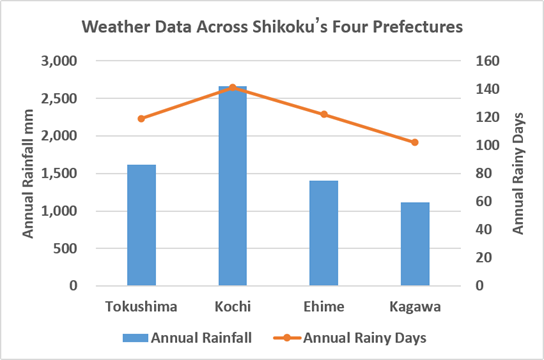
Source: Japan Meteorological Agency (Climate Normals: 1991–2020)
For this calculation, the focus is not on how heavily it rains, but rather on how many days a pilgrim is likely to encounter rain. Therefore, the analysis mainly uses the annual number of rainy days.
In addition, pilgrims spend different amounts of time in each prefecture because travel distances vary. The estimated proportions are:
- Tokushima: approximately 19.7%
- Kochi: approximately 34.5%
- Ehime: approximately 32.3%
- Kagawa: approximately 13.5%
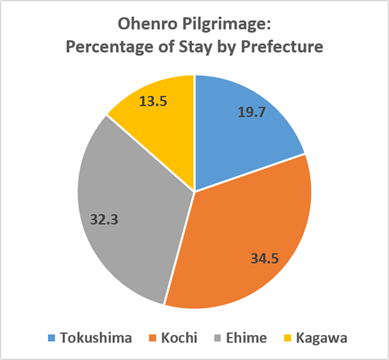
This means that about 70% of the entire Shikoku pilgrimage route is spent in Kochi and Ehime.
Kochi experiences the highest rainfall in Shikoku, and Ehime also has more rainy days than Kagawa. As a result, the overall pilgrimage route can be considered relatively likely to expose pilgrims to rainy conditions.
Expected Rain Exposure for Walking and Driving Pilgrimages
Basic Rain Probability
By weighting each prefecture’s number of rainy days according to the proportion of pilgrimage distance spent there, the overall daily probability of encountering rain during the Shikoku pilgrimage can be estimated as follows:
Daily probability of rain: approximately 34.3% (about once every three days)
This means that, on average, pilgrims can expect rainy conditions about one day out of every three.
Applying This to Actual Pilgrimage Durations
The figure above represents a per-day probability.
However, actual pilgrimage durations vary. A walking pilgrimage typically takes around 50 days, while a driving pilgrimage generally takes about 12 days.
Applying the estimated rain probability to these typical schedules gives the following results:
- 50-day walking pilgrimage: approximately 17 rainy days
- 12-day driving pilgrimage: approximately 4 rainy days
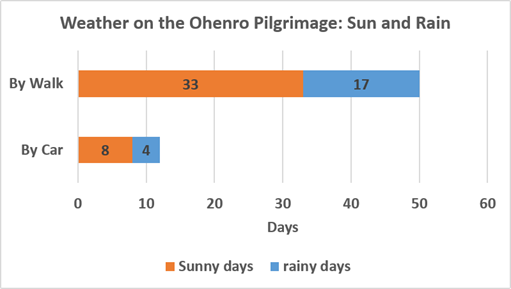
For walking pilgrims in particular, this means rain preparation may be necessary roughly every two to three days.
As a result, rain preparation and planning should be considered an essential part of the pilgrimage experience.
The next section explains rain strategies in detail, including equipment, practical actions, and mindset.
Essential Rain Gear for the Ohenro Pilgrimage
Because the Ohenro pilgrimage involves long hours of walking, it is difficult to completely avoid getting wet. What matters most is not:
“gear that keeps you perfectly dry,”
but rather:
“gear that allows you to keep going even if you get wet.”
In particular, focusing on these three areas can significantly reduce the burden of walking in the rain:
- Your body
- Your belongings
- Your feet
Prioritizing protection in these areas will make rainy days on the pilgrimage much more manageable.
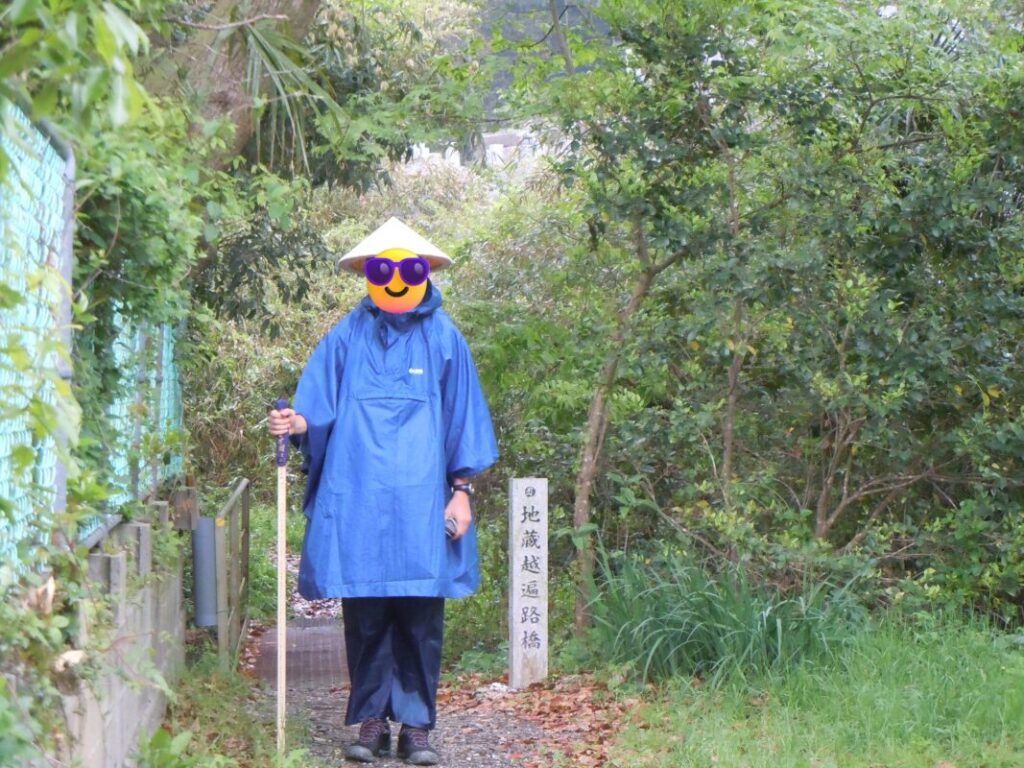
Rainwear
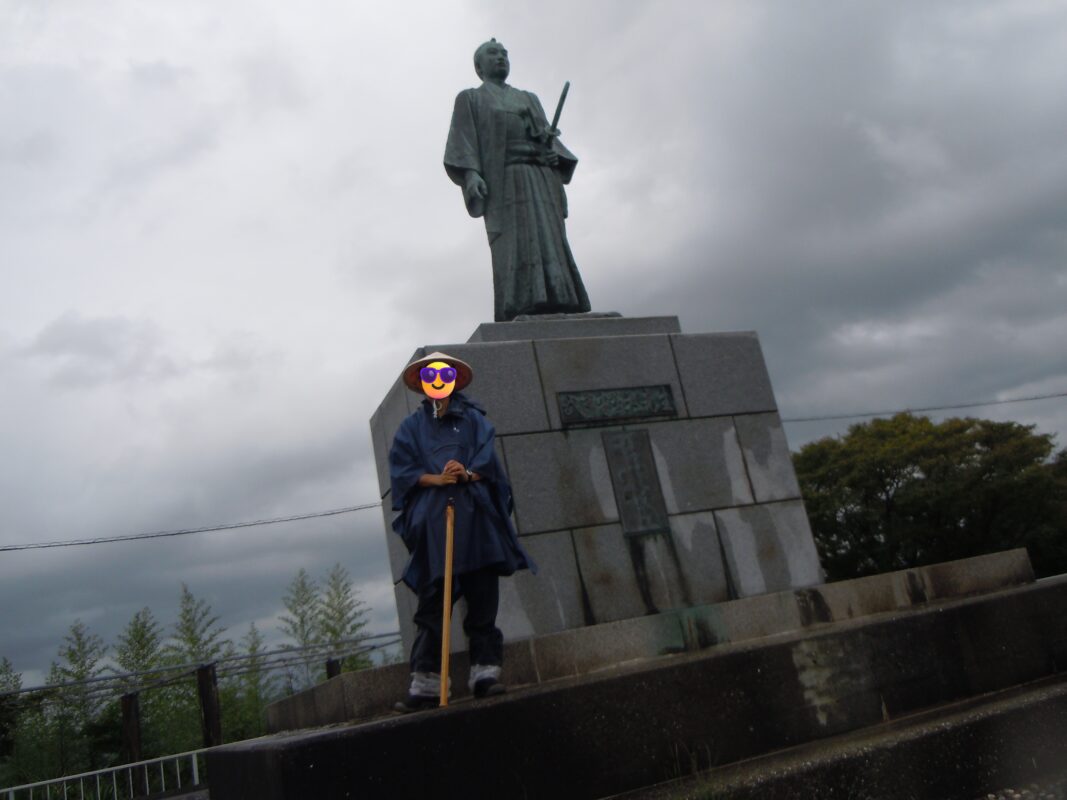
A poncho-style rain cover is generally recommended.
- Covers both you and your backpack
- Easy to put on and take off during intermittent rain
- Allows better ventilation
For walking pilgrims, it is often more practical than using an umbrella.
Backpack Rain Cover
This is considered almost essential.
It helps protect important items such as:
- Spare clothes
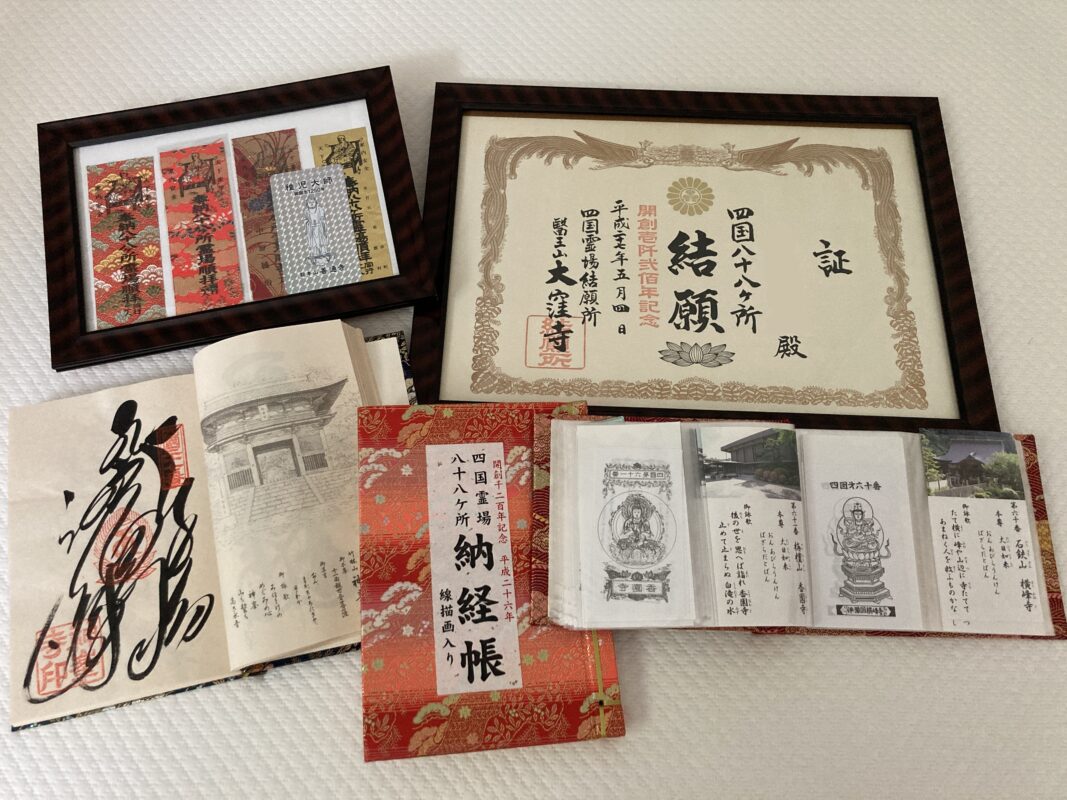
- Stamp books (Nokyocho)
- Smartphones and other electronic devices
from rain and moisture.
Hat (Sugagasa)
A hat is useful for protecting your head from rain.
The traditional Sugagasa hat is especially effective because its wide shape extends forward. Simply lowering your chin slightly can help reduce rain hitting your face.
Trekking Shoes
Strongly recommended for walking pilgrims.
Look for:
- Slip-resistant soles
- Waterproof materials (such as Gore-Tex)
Since the pilgrimage route can include mountain paths and wet stone steps, trekking shoes generally provide more security than regular sneakers.
Spare Socks and Newspaper
Especially useful for driving pilgrims.
Putting newspaper inside wet shoes helps absorb moisture and speeds up drying.
For walking pilgrims, keeping shoes completely dry during long rainy days is difficult, but carrying spare socks for use at accommodations can greatly improve comfort.
Waterproof Protection for Personal Items
Items such as your Nokyocho and smartphone should ideally be stored individually in waterproof bags such as zip-lock bags.
A backpack rain cover alone may not provide complete protection from rain.
Important Things to Keep in Mind During Rainy Days on the Ohenro Pilgrimage
Do Not Push Yourself to Cover More Distance
Rainy days can significantly increase physical fatigue. Rather than trying to stay perfectly on schedule, prioritize safety.
There are several reasons for this:
Wet clothing and rain gear often become much heavier than expected. Shoes and socks also absorb water, making your feet feel heavier and sometimes causing shoes to feel tighter than usual.
With every step, these extra burdens gradually add up, which means that even the same distance can feel much more exhausting on a rainy day.
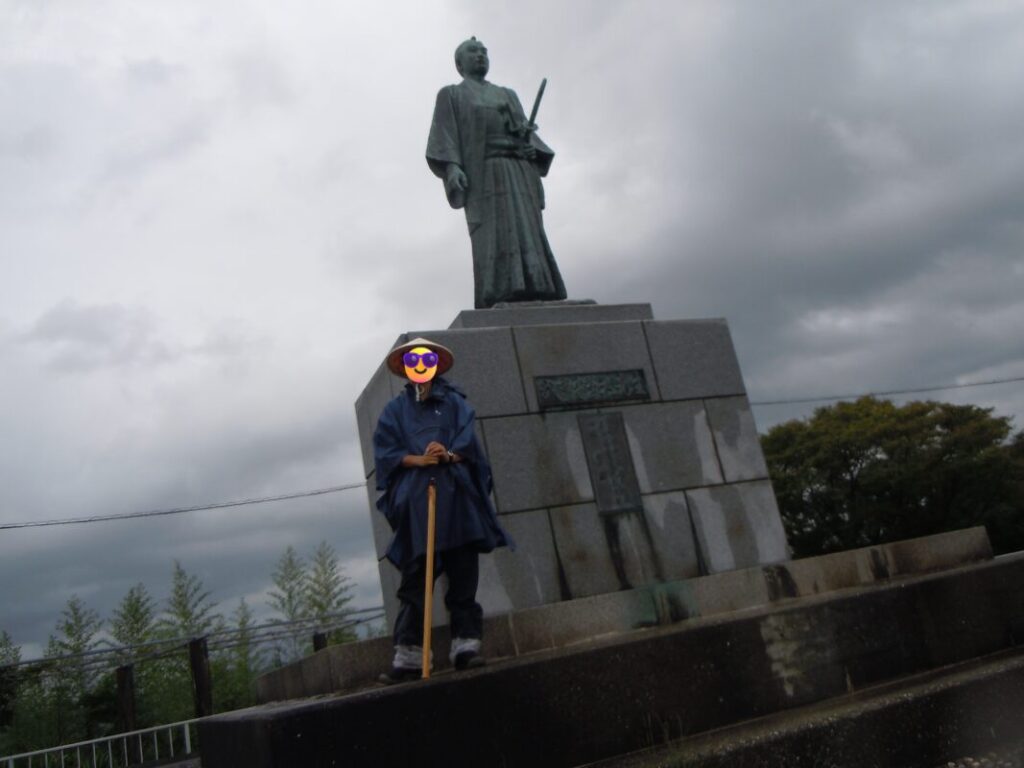
Take More Frequent Breaks
Walking continuously in the rain can drain energy quickly.
It is a good idea to use pilgrimage shelters and temples along the route, taking opportunities to rest and wait out the rain when needed.
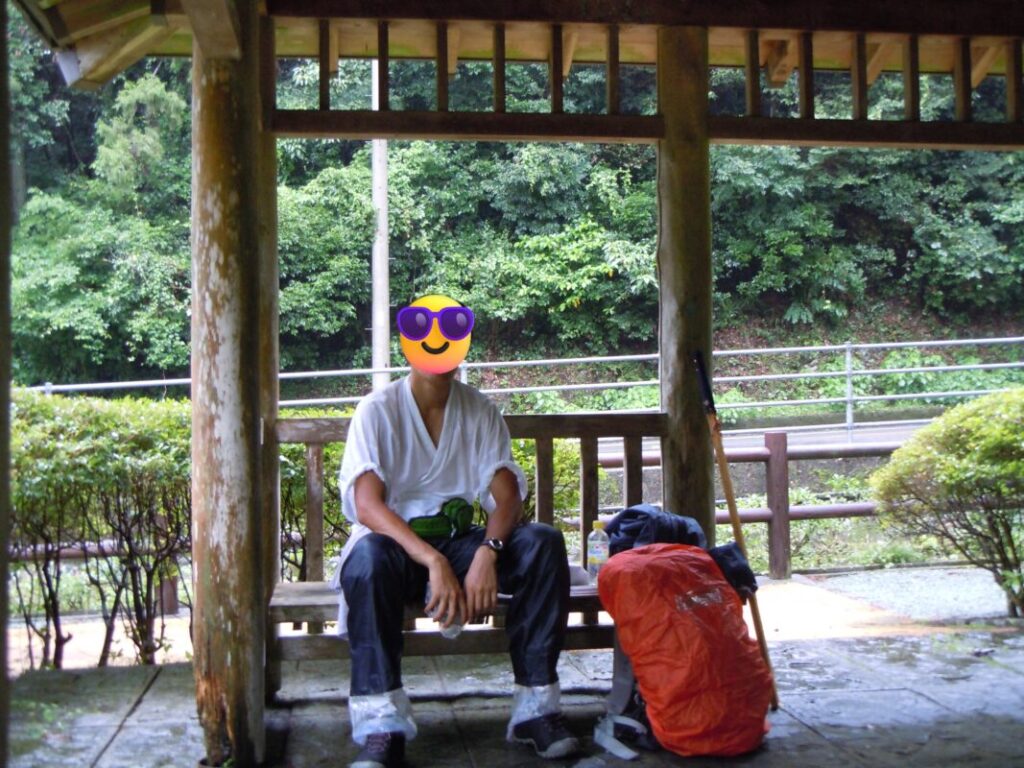
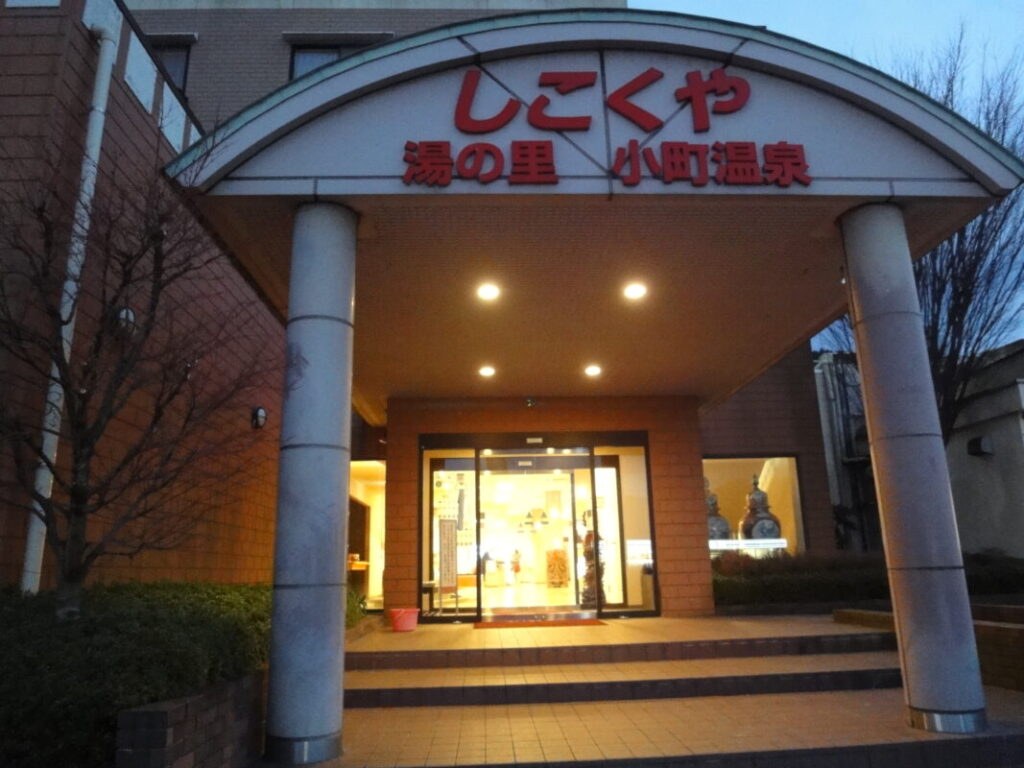
Book Accommodation Early When Rain Is Forecast
You do not always need to force yourself to complete the planned distance.
Stopping earlier while there is still daylight can often be the better choice.
Saving energy and covering longer distances on clear, easier walking days is often more efficient overall.
Check Conditions on Rivers, Mountain Trails, and Pilgrimage Paths
Rainy conditions can cause rivers and streams to rise quickly.
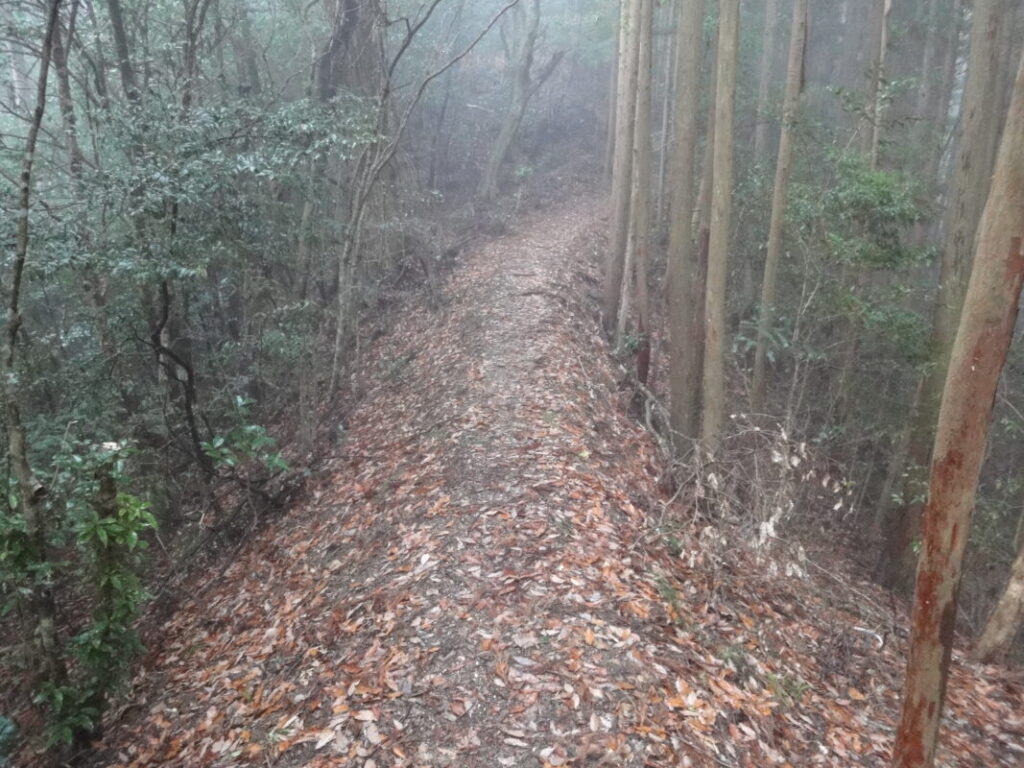
Mountain sections of the pilgrimage route are especially prone to:
- Risk of falling rocks
- Slippery or unstable footing
- Reduced visibility caused by fog
If conditions feel unsafe, do not hesitate to change plans and use paved roads or alternate routes. Safety should always take priority.
Sections of the Ohenro Pilgrimage That Require Extra Caution in Rainy Weather
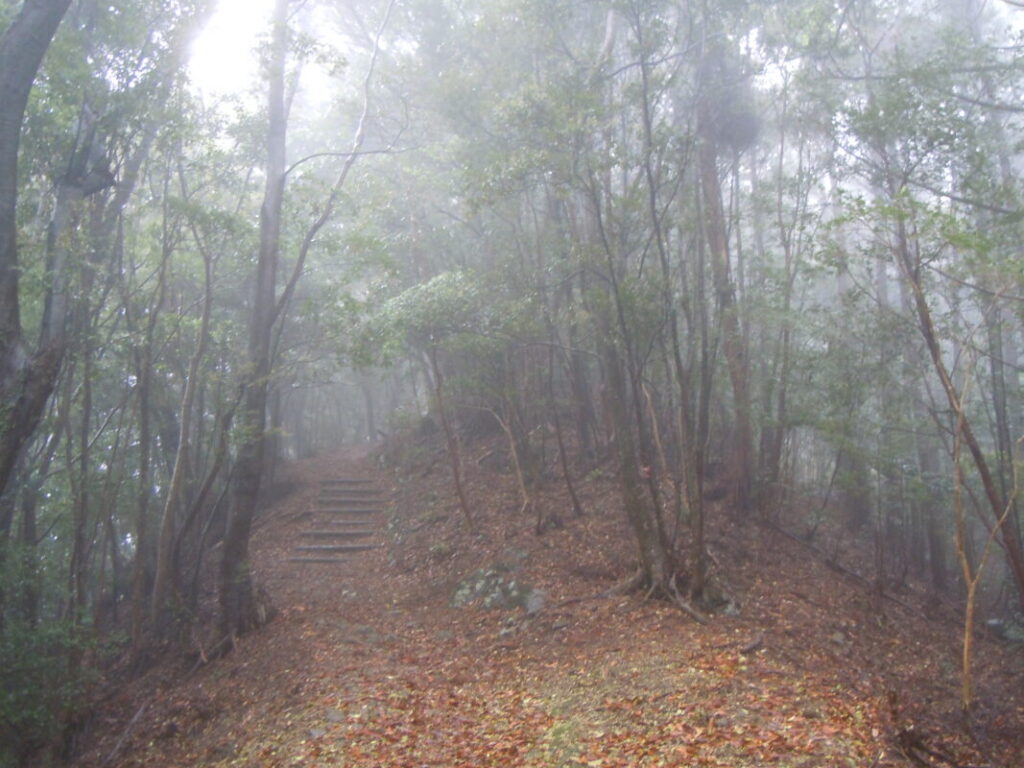
Rain calls for extra care throughout the pilgrimage, but some sections—especially mountain areas and coastal routes—can become significantly more difficult depending on weather conditions.
Shosanji Temple | The First Major Challenge for Walking Pilgrims
Characteristics
This is often considered the first major challenge of the walking pilgrimage. The long mountain section can take approximately 6–9 hours on foot.
Things to watch for in rainy weather
- Mountain trails and stone steps become slippery
- Muddy paths increase physical fatigue
- Rest stops are limited once you enter the route
Recommended precautions
On days with poor weather, avoid forcing your pace and carry extra water and energy snacks.
Kakurinji Temple → Tairyuji Temple | Mountain Trails Become Much Harder in Rain
Characteristics
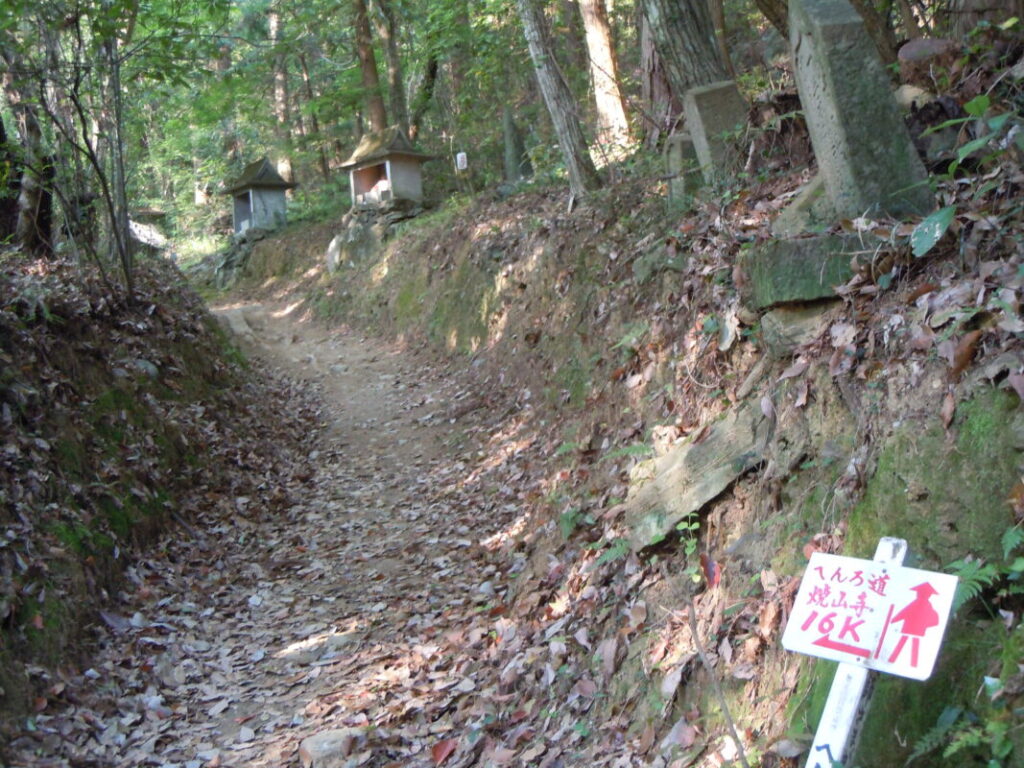
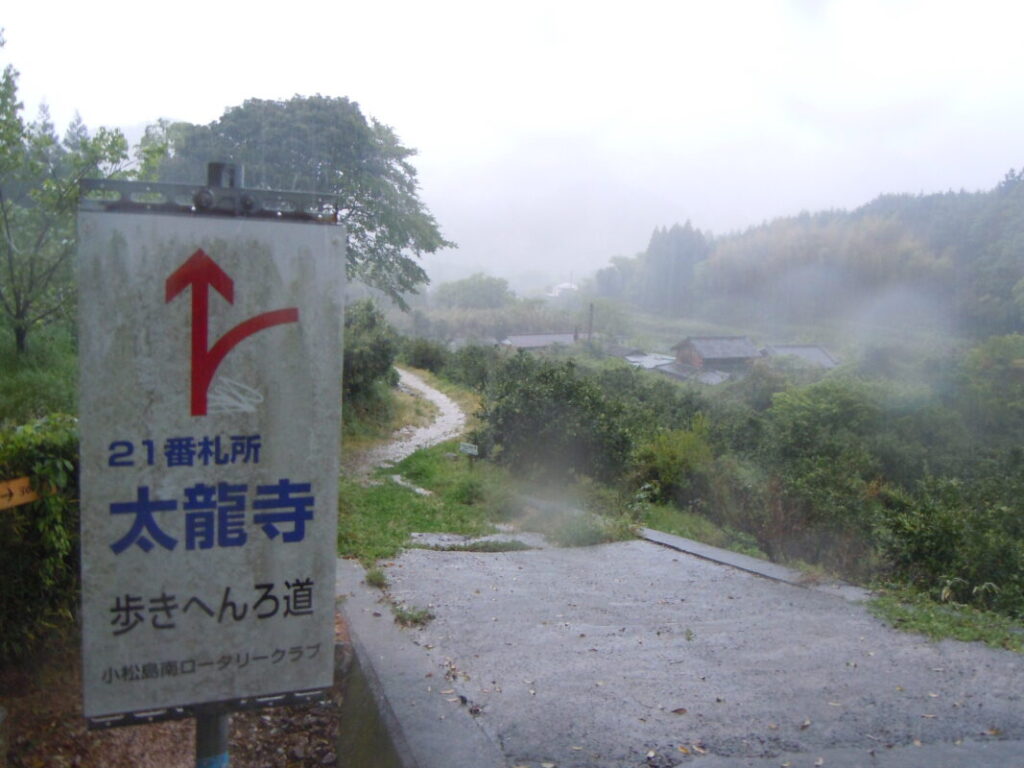
Both temples are located in mountain areas at around 500 meters above sea level.
Things to watch for in rainy weather
- Frequent steep climbs and descents
- Wet surfaces become slippery
- Rain noticeably increases the perceived difficulty
Recommended precautions
Trekking shoes with good grip are strongly recommended.
Hotsumisakiji Temple (Cape Muroto) | Coastal Route Exposed to Rain and Wind
Characteristics
This section follows the coastline.
Things to watch for in rainy weather
- Few places for shelter
- Strong winds are common
- Rain often blows sideways
Recommended precautions
Rainwear should be your primary choice rather than an umbrella.
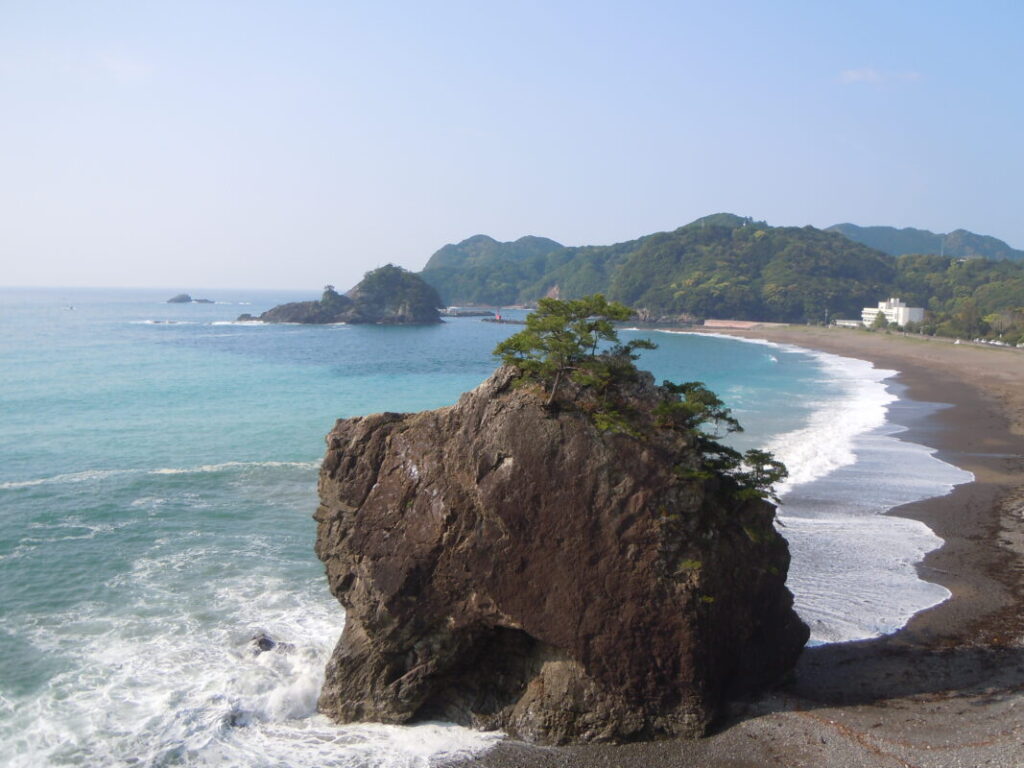
Kongofukuji Temple (Cape Ashizuri) | Area Strongly Affected by Typhoons and Wind
Characteristics
This section lies at the southernmost point of Shikoku.
Things to watch for in rainy weather
- Greater impact during typhoon season
- Strong winds and poor weather may continue for extended periods
Recommended precautions
Check weather forecasts early and avoid overly aggressive schedules.
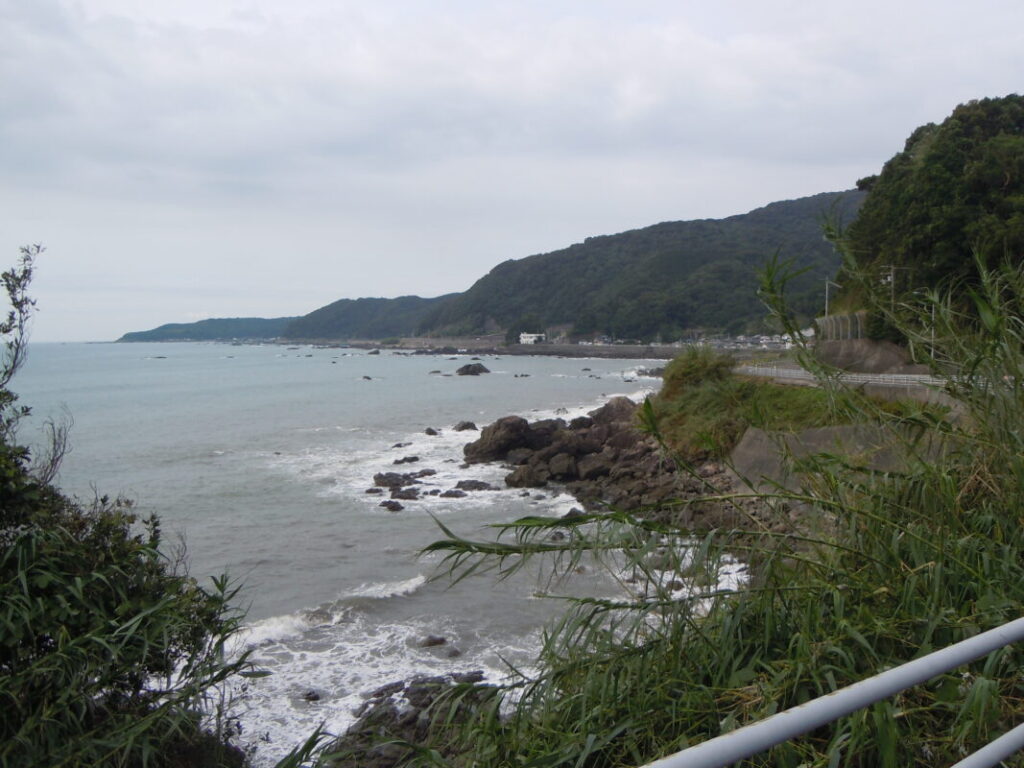
Daihoji Temple → Iwayaji Temple | National Roads May Be a Better Option in Bad Weather
Characteristics
This is a long and demanding mountain route.
Things to watch for in rainy weather
- Trail conditions can deteriorate quickly
- Poor visibility may occur
- Fatigue can build up easily
Recommended precautions
During severe weather, consider using national road routes rather than insisting on the traditional pilgrimage trail.
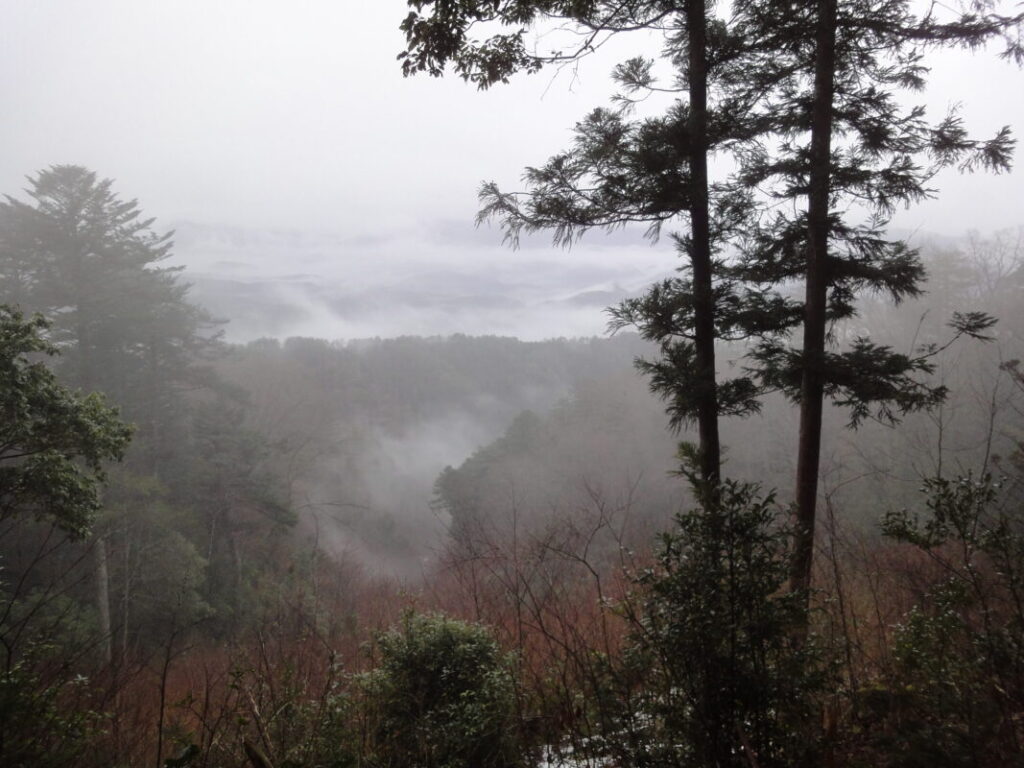
Unpenji Temple | High Elevation Area with Frequent Fog and Wind
Characteristics
At around 900 meters above sea level, this is the highest temple location among the 88 pilgrimage sites.
Things to watch for in rainy weather
- Rapid weather changes
- Frequent fog and strong winds
Recommended precautions
When conditions are poor, consider using the ropeway instead of walking.
Rainy days are a reminder that completing every traditional pilgrimage trail section is less important than reaching your next destination safely. Prioritizing safety often leads to a better overall pilgrimage experience.
Frequently Asked Questions (FAQ)
- QCan you still walk the Ohenro pilgrimage on rainy days?
- A
Yes, walking is possible, but mountain and coastal sections can become significantly more difficult.
Extra caution is needed in areas around Shosanji Temple, the route from Kakurinji Temple to Tairyuji Temple, and around Iwayaji Temple, where slippery surfaces and poor visibility can become serious issues.
- QShould walking pilgrims avoid using umbrellas?
- A
Generally, yes.
Umbrellas are usually not recommended because:
- One hand is often occupied by a pilgrimage staff (Kongozue)
- Strong winds can easily damage umbrellas
- Sideways rain is difficult to block
- They add extra luggage
- Clear days are more common than rainy days
For walking pilgrims, lightweight rainwear is usually more practical than carrying an umbrella.
- QWhen does the Ohenro pilgrimage experience the most rain?
- A
The rainy season (June–July) and typhoon season (August–September) tend to bring the most precipitation.
Coastal areas around Cape Muroto and Cape Ashizuri can be particularly affected by prolonged rain and strong winds.
- QAre waterproof shoes necessary for a walking pilgrimage?
- A
They are not absolutely required, but they are highly recommended if rain is expected.
Wet stone steps and mountain trails become slippery, so shoes with strong grip and waterproof materials can provide additional safety and comfort.
- QShould I continue following my planned schedule on rainy days?
- A
Pushing yourself is generally not recommended.
Rain-soaked clothing and shoes become heavier, increasing fatigue even over the same distance.
In many cases, booking accommodation early and conserving energy can make the pilgrimage easier and more enjoyable overall.
- QIf I am doing the pilgrimage by car, do I still need rain preparation?
- A
Yes.
Driving pilgrims face less physical strain than walking pilgrims, but some temples still require substantial walking from parking areas.
Examples include:
- Tairyuji Temple
- Iwayaji Temple
- Iyadaniji Temple
These locations may involve long walks or many stairs, which can become slippery in rainy weather.
Even for driving pilgrims, basic rain gear such as rainwear and shoes with good traction can be helpful.
- QAre there coin laundries during the pilgrimage?
- A
Yes.
However, the pilgrimage route passes through mountain areas and rural sections as well as cities, so nearby laundries may not always be available.
Many accommodations also provide washing machines and dryers, so checking in advance can be helpful.
For more details about coin laundries and laundry facilities, please refer to the accommodation guide article.
Summary | Preparing for Rain Is an Essential Part of the Ohenro Pilgrimage
To summarize the key points covered in this article:
- Around 70% of the Shikoku pilgrimage route passes through Kochi and Ehime, areas with relatively higher rainfall.
- The estimated daily probability of rain is approximately 34.3%.
- During a typical 50-day walking pilgrimage, you can expect about 17 rainy days, while a 12-day driving pilgrimage may involve around 4 rainy days.
- Rain preparation should focus less on “staying completely dry” and more on “being able to continue comfortably even if you get wet.”
- On rainy days, avoid forcing extra distance and prioritize safety over schedules.
While it is difficult to avoid rain entirely during the Ohenro pilgrimage, good preparation can make a significant difference in reducing stress and maintaining comfort along the journey.
Related Article
Best Time to Walk the Shikoku Pilgrimage: Seasons Explained for Beginners.
Best Seasons for the Shikoku Pilgrimage
Shikoku Pilgrimage During Typhoon Season: Risks, Safety Tips & Real Experience.
Shikoku Pilgrimage during Typhoon Season
Comments