
- What Is a Kongozue? Its Meaning and Role in the Shikoku Pilgrimage
- Proper Ways to Use and Carry a Kongozue
- Etiquette and Customs of the Kongozue: Things Pilgrims Should Avoid
- Where Can You Buy a Kongozue? Prices and Buying Tips
- Do You Need Only One Kongozue? Replacement Timing and Key Considerations
- What to Know to Avoid Mistakes When Using a Kongozue
- Frequently Asked Questions (FAQ)
- Conclusion: The Kongozue as “Kobo Daishi Walking with You”
- Related Articles
What Is a Kongozue? Its Meaning and Role in the Shikoku Pilgrimage
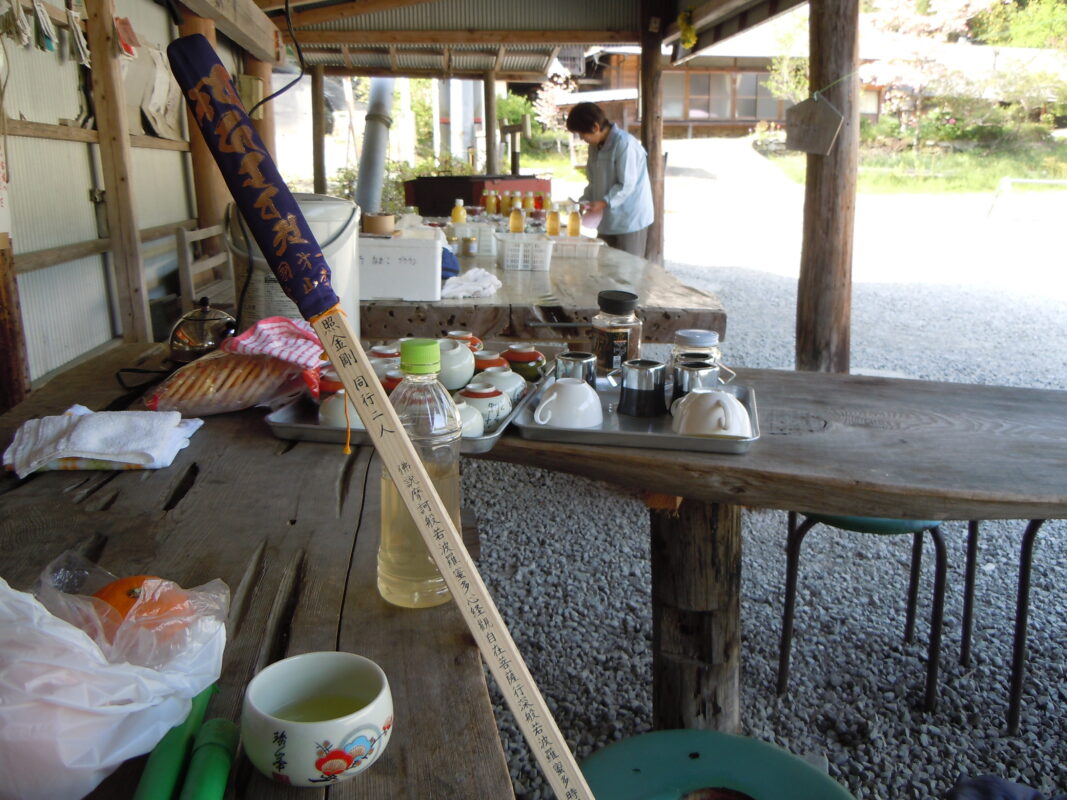
In the Shikoku Pilgrimage, the Kongozue is much more than a walking aid. For pilgrims traveling the 88 sacred temples of Shikoku, it serves as a source of spiritual support and symbolizes the deeper meaning of the journey itself. Although it appears to be a simple wooden staff, it carries profound religious and historical significance.
Why the Kongozue Is Considered the Embodiment of Kobo Daishi
One of the most distinctive aspects of the Kongozue is that it is regarded not merely as a walking stick, but as the symbolic embodiment of Kobo Daishi (Kukai), the founder of Shingon Buddhism.
A central concept in the Shikoku Pilgrimage is Dōgyō Ninin, which literally means “two traveling together.” This teaching holds that even when a pilgrim appears to be walking alone, Kobo Daishi is always accompanying and guiding them along the journey. The Kongozue serves as a visible symbol of this belief, representing the presence of Kobo Daishi at every step.
Because of this sacred role, the Kongozue is treated with great respect. Pilgrims are traditionally discouraged from placing it carelessly on the ground or stepping over it. When staying at inns, temples, or guesthouses, the staff should be handled with care and reverence. Rather than being viewed as a simple piece of equipment, the Kongozue is regarded as an object of faith and an important spiritual companion throughout the pilgrimage.
More Than a Walking Stick: The Spiritual Meaning of the Kongozue
While the Kongozue serves a practical purpose by helping pilgrims walk long distances, it is also regarded as a powerful symbol of spiritual practice and self-discipline.
The Shikoku Pilgrimage is traditionally viewed not as a sightseeing trip, but as a journey of spiritual reflection and personal growth. In this context, the Kongozue supports pilgrims not only physically through difficult terrain but also spiritually, reminding them to confront their own weaknesses and cultivate inner strength.
Many Kongozue staffs are inscribed with the phrase “Namu Daishi Henjō Kongō” (Homage to Kobo Daishi, the All-Illuminating Vajra). This sacred invocation expresses devotion to Kobo Daishi and serves as a constant reminder of the spiritual purpose of the pilgrimage. By seeing these words throughout their journey, pilgrims are encouraged to treat each step as an act of prayer and mindfulness.
For this reason, the Kongozue is far more than a tool for physical support. It functions as a spiritual pillar—an enduring companion that helps sustain both body and mind throughout the pilgrimage.
Why Is the Kongozue Considered Essential for the Shikoku Pilgrimage?
The Kongozue is widely used by pilgrims because it offers both practical benefits and deep spiritual significance.
From a practical standpoint, the Shikoku Pilgrimage involves long days of walking, steep mountain trails, and uneven terrain. Using a staff can significantly reduce the strain on the knees, ankles, and lower body. For older pilgrims and those who are not accustomed to long-distance walking, the Kongozue provides valuable stability and support, helping them complete the journey more safely and comfortably.
On a spiritual level, the Kongozue reinforces the belief that pilgrims are walking alongside Kobo Daishi throughout their journey. This sense of companionship can deepen the meaning of the pilgrimage and provide encouragement during moments of fatigue, hardship, or loneliness.
As a result, the Kongozue serves as both a physical aid and a spiritual companion. Its unique ability to support the body while strengthening the mind is one of the reasons it remains an indispensable part of the Shikoku Pilgrimage tradition.
Proper Ways to Use and Carry a Kongozue
In the Shikoku Pilgrimage, the Kongozue is regarded as the symbolic embodiment of Kobo Daishi. At the same time, it is also a practical tool that helps pilgrims endure long days of walking. By learning how to use it correctly, pilgrims can reduce physical strain and travel more safely and comfortably.
Basic Grip and Walking Technique
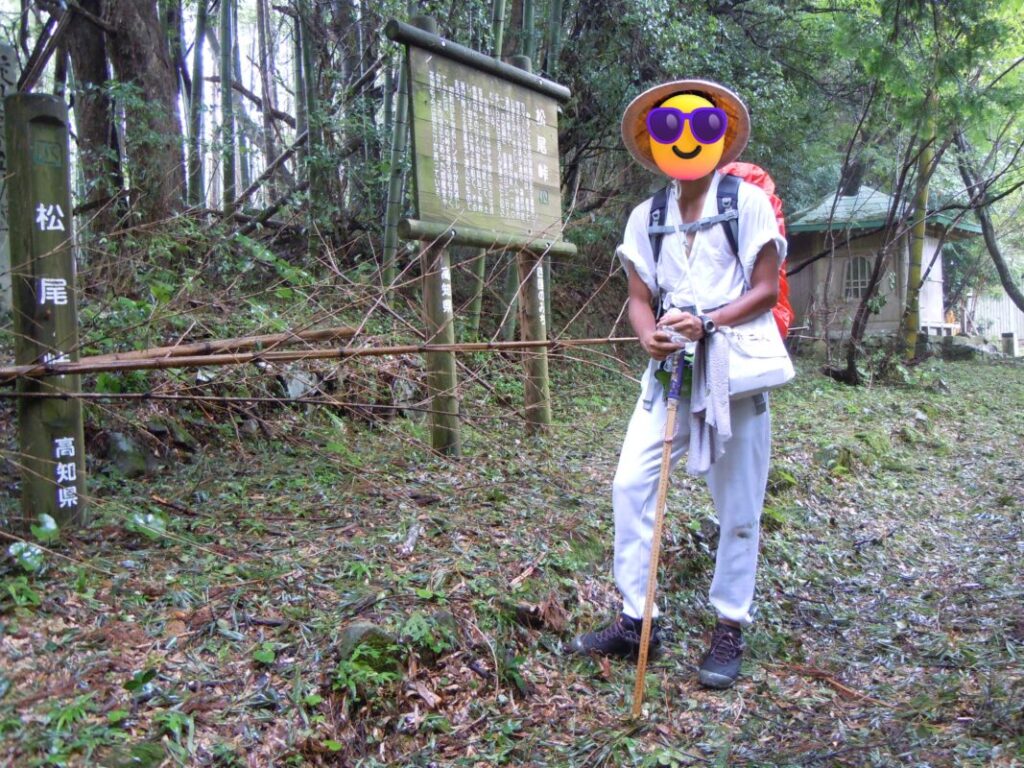
The basic way to use a Kongozue is to hold it firmly in your dominant hand and plant it on the ground in rhythm with your steps. Coordinating the movement of the staff with your walking pattern helps improve balance and stability, especially on uneven terrain.
There is no strict rule about which hand should hold the Kongozue. Pilgrims may carry it in either the left or right hand, depending on what feels most comfortable. Many walkers switch hands periodically throughout the day to distribute fatigue more evenly and reduce strain on one side of the body.
When walking, place the staff slightly ahead of you and use it as a light point of support rather than relying on it to bear your full weight. The Kongozue is intended to assist your movement and help maintain a steady rhythm, not to function as a crutch. Used properly, it can make long-distance walking more stable and less tiring.
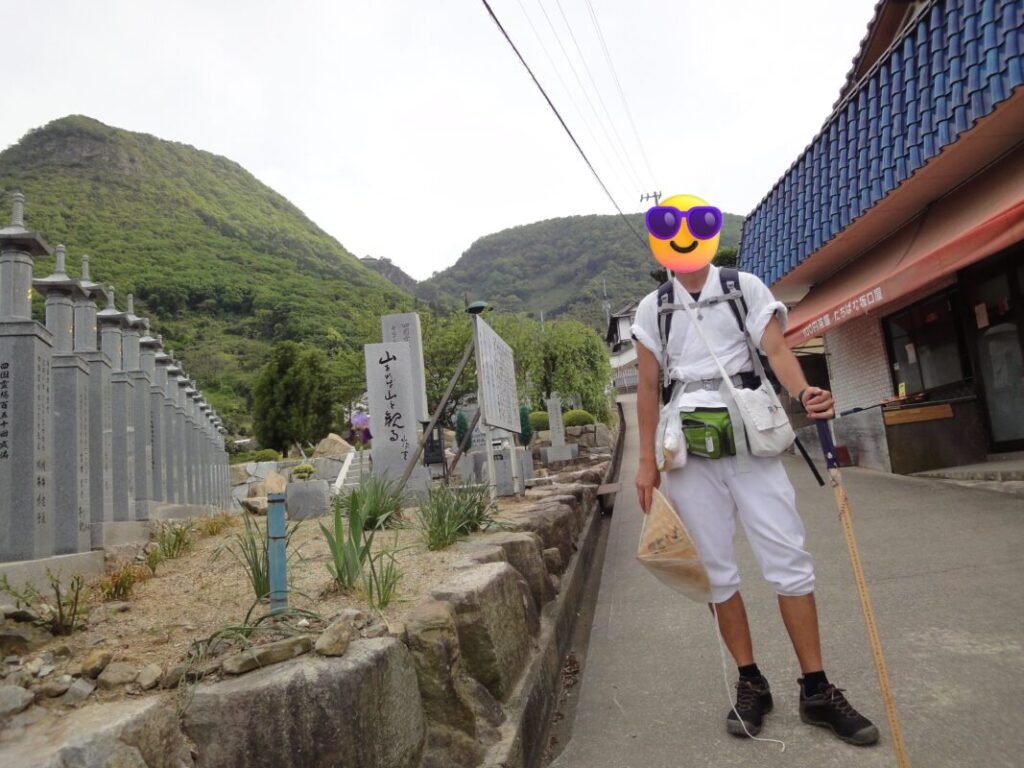
Tips for Preventing Uneven Wear on Your Kongozue
Because a Kongozue is traditionally made of wood, the tip gradually wears down as it repeatedly comes into contact with the ground. Over time, one side of the staff may wear more quickly than the others, creating an uneven tip that can reduce stability and affect walking comfort.
To help prevent this, many experienced pilgrims gently rotate the staff from time to time during their journey. By changing the contact point with the ground, wear is distributed more evenly around the tip, allowing it to maintain a more balanced and rounded shape.
This simple practice not only helps extend the life of the Kongozue and preserve its functionality, but also reflects an important value of the pilgrimage tradition: treating one’s belongings with care and respect. By maintaining the staff thoughtfully, pilgrims honor both its practical purpose and its spiritual significance.
Using a Kongozue for Awareness and Safety Around Wildlife
Parts of the Shikoku Pilgrimage pass through mountainous and rural areas, so encounters with wildlife are possible. However, large predators are not a common concern along most pilgrimage routes. The animals pilgrims are more likely to encounter are wild boars and, in some areas, venomous snakes such as the mamushi pit viper.
Mamushi snakes are generally shy and highly sensitive to vibrations, sounds, and human activity. When walking through tall grass, dense vegetation, or areas with limited visibility, some pilgrims lightly tap the ground or nearby vegetation with their Kongozue. This can help alert wildlife to their presence and reduce the chance of a surprise encounter.
If you encounter a wild boar, the most important thing is to remain calm and avoid provoking the animal. Do not approach it, corner it, or attempt to scare it away. Running may trigger a chase response, so it is generally safer to keep your distance and slowly leave the area while maintaining awareness of the animal’s movements. In such situations, the Kongozue can serve as a useful tool for maintaining personal space and improving balance while retreating carefully.
It is important to remember that the Kongozue is not intended to be used as a weapon. Its primary role is to assist with safe travel, improve awareness of your surroundings, and provide support while walking. Respecting nature, staying alert, and acting calmly remain the most effective ways to stay safe on the pilgrimage.
Etiquette and Customs of the Kongozue: Things Pilgrims Should Avoid
Because the Kongozue is regarded as an important symbol of faith in the Shikoku Pilgrimage, there are several traditional customs and etiquette practices associated with its use. While these rules are not strictly enforced, understanding them helps pilgrims show respect for the spiritual significance of the staff and the traditions of the pilgrimage.
Why Pilgrims Do Not Bring a Kongozue into the Restroom
Since the Kongozue is traditionally considered the symbolic embodiment of Kobo Daishi, it is treated with a high degree of respect and reverence. For this reason, it is generally considered inappropriate to bring it into places regarded as impure, such as restrooms.
When entering a restroom or a building where the staff should not be taken inside, the customary practice is to leave it neatly outside the entrance or place it carefully in a designated area before entering.
This custom is not simply a matter of superstition. Rather, it reflects a long-standing pilgrimage tradition that emphasizes treating the Kongozue as a sacred object and maintaining its symbolic purity throughout the journey. By handling the staff respectfully, pilgrims honor both Kobo Daishi and the spiritual values that the Kongozue represents.
Why Pilgrims Traditionally Avoid Cutting or Carving a Kongozue
As a Kongozue is used over many miles of walking, the tip naturally becomes worn from contact with the ground. It may develop rough edges, splinters, or uneven wear. While it can be tempting to trim or reshape the staff with a knife or other cutting tool, traditional pilgrimage customs generally discourage intentionally carving or modifying a Kongozue.
The reason lies in the staff’s spiritual significance. Because the Kongozue is regarded as the symbolic embodiment of Kobo Daishi, it is treated as more than a simple wooden object. Deliberately cutting, carving, or reshaping it may be viewed by some pilgrims as inconsistent with the respect traditionally shown to the staff.
For the same reason, modifications such as reshaping the grip, carving decorative features, or altering the original form of the staff are generally avoided. The Kongozue is traditionally used in the form in which it was received, reflecting the spirit and customs of the pilgrimage.
There are, however, some alternative interpretations. For example, a person who makes a pilgrimage staff from scratch before beginning the pilgrimage may choose to carve Sanskrit seed characters (bonji) or inscriptions such as “Namu Daishi Henjō Kongō” onto the wood. In this view, the piece of wood has not yet assumed its role as a Kongozue and is therefore not yet treated as the symbolic presence of Kobo Daishi.
As with many aspects of pilgrimage culture, customs can vary among individuals and temples. The underlying principle is not strict prohibition, but rather treating the Kongozue with sincerity, gratitude, and respect throughout the journey.
Why Pilgrims Traditionally Avoid Using a Kongozue on Bridges
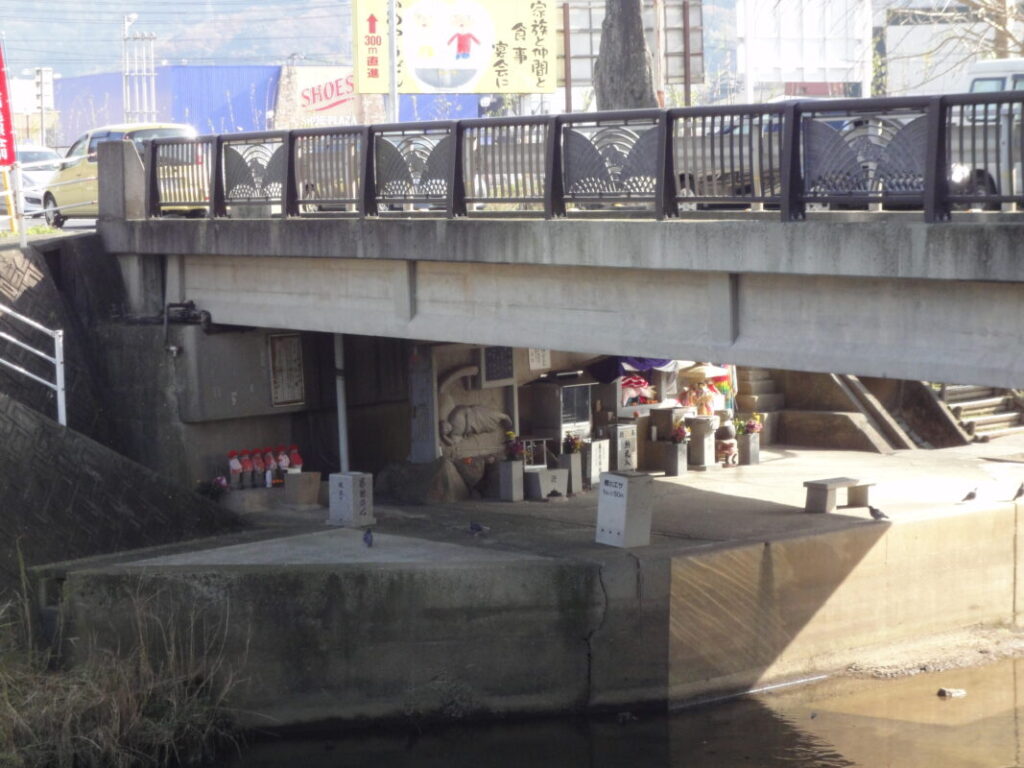
One of the well-known customs of the Shikoku Pilgrimage is the belief that pilgrims should avoid striking or planting their Kongozue on a bridge while crossing it.
According to pilgrimage tradition, this custom is connected to the belief that Kobo Daishi watches over travelers from beneath bridges. Out of respect, pilgrims refrain from tapping their staff on the bridge deck so as not to disturb his rest. While this belief is symbolic rather than doctrinal, it remains one of the most widely recognized customs among Shikoku pilgrims.
A site closely associated with this tradition is Toyogahashi in Ōzu, Ehime Prefecture, a place deeply connected to stories about Kobo Daishi. The site is also recognized as the 8th temple of the Bekkaku Twenty Sacred Temples pilgrimage route, an auxiliary pilgrimage associated with the Shikoku 88 Temple Pilgrimage.
There is also a practical explanation for the custom. Historically, many bridges along pilgrimage routes were constructed from wood. Repeated impacts from walking staffs could contribute to wear and damage, so avoiding the use of a staff on bridges may have helped preserve these structures.
For this reason, the tradition is often understood as a combination of spiritual respect and practical consideration. Whether motivated by faith, custom, or courtesy, many pilgrims still lift their Kongozue slightly off the surface while crossing a bridge, continuing a practice that has been passed down for generations.
Bekkaku Temple No. 8: Toyogahashi
How to Treat a Kongozue at Inns and Temples
Pilgrims are also expected to handle their Kongozue with care when entering temples, inns, guesthouses, or other accommodations along the pilgrimage route.
As a general rule, it is considered good etiquette to:
- Remove dirt and mud from the staff before entering.
- Place it in a designated storage area when one is provided.
- If bringing it indoors, keep it in a clean and respectful location.
Many pilgrim-friendly inns along the Shikoku route provide a bucket of water, a wash area, or towels near the entrance. These are often intended to help pilgrims clean their Kongozue after a day of walking and have become a familiar part of pilgrimage hospitality.
Upon arriving at an inn, it is customary to clean the tip of the staff before settling in. Pilgrims typically rinse away any dirt or mud and gently wipe the Kongozue dry with a towel. This practice is not merely about cleanliness. It is also viewed as a gesture of gratitude toward the staff that has accompanied and supported them throughout the day’s journey.
From a traditional perspective, cleaning the Kongozue can be seen as allowing it to “rest” after traveling together over many miles. The act reflects the respect pilgrims show toward the staff as both a practical companion and a symbol of Kobo Daishi’s presence on the pilgrimage.
By caring for the Kongozue in this way, pilgrims participate in a long-standing tradition of mindfulness, appreciation, and respect that is deeply woven into the culture of the Shikoku Pilgrimage.
Where Can You Buy a Kongozue? Prices and Buying Tips
A Kongozue can be purchased either before beginning the Shikoku Pilgrimage or after arriving in Shikoku. Because different purchasing options offer different advantages, it is worth choosing the one that best matches your pilgrimage plans and preferences.
Temple Shops, Pilgrimage Supply Stores, and Online Retailers
The most common places to buy a Kongozue are:
- Pilgrimage supply stores (henro goods shops)
- Temple shops along the pilgrimage route
- Online retailers
While online shopping is convenient, it is not always the ideal way to purchase a Kongozue. Several factors can make buying in person a better option:
- You cannot personally check the length, weight, or balance before purchasing.
- Carrying a long staff during travel to Shikoku can be inconvenient.
- Shipping costs may be significant, especially for international buyers.
Because comfort and handling are important when walking long distances, many pilgrims prefer to select a Kongozue in person whenever possible.
For this reason, purchasing at a temple or a pilgrimage supply store remains the most common choice. Many first-time pilgrims buy their staff at the beginning of their journey, particularly at Ryōzen-ji Temple, the traditional starting point of the Shikoku 88 Temple Pilgrimage.
Buying a Kongozue at the start of the pilgrimage often carries symbolic meaning as well. For many pilgrims, receiving the staff marks the beginning of their spiritual journey and their first step toward walking together with Kobo Daishi under the principle of Dōgyō Ninin (“Two Traveling Together”).
Differences Between Materials: Wood, Bamboo, and Lightweight Options
Traditional Kongozue staffs are most commonly made from wood, although bamboo and other lightweight variations are also available. Each material offers different advantages, and the best choice depends on a pilgrim’s needs and walking style.
Wooden Kongozue
Wood is the traditional and most widely used material for a Kongozue. Many pilgrims appreciate its authentic appearance and its connection to the long history of the Shikoku Pilgrimage.
A wooden staff often develops character over time as it accompanies the pilgrim through changing weather, varied terrain, and countless miles of walking. For many people, the gradual wear of the wood becomes a physical record of their journey, making the staff feel increasingly personal and meaningful.
Bamboo and Lightweight Alternatives
Bamboo and lightweight staffs are generally easier to carry and can reduce fatigue during long days on the road. They may be particularly appealing to first-time pilgrims, older walkers, or those concerned about minimizing pack weight.
Because they are lighter, these options can be more comfortable for extended use. However, some pilgrims feel that they do not provide the same level of durability, stability, or traditional character associated with a wooden Kongozue.
Which Material Is Best?
There is no universally “correct” choice. Pilgrims seeking a traditional experience often prefer a wooden Kongozue, while those prioritizing comfort and ease of use may find bamboo or lightweight models more practical.
Ultimately, the most important consideration is selecting a staff that feels comfortable in your hand and supports you throughout your pilgrimage. Regardless of the material, the Kongozue serves the same purpose: accompanying the pilgrim on both a physical and spiritual journey.
Recommended Length and Weight for Beginners
The standard Kongozue used in the Shikoku Pilgrimage is typically a square wooden staff measuring about 2.2 cm on each side and approximately 130 cm in length. It is most often made from hinoki (Japanese cypress) or tsuga (Japanese hemlock), with an average weight of around 240 grams.
For beginners, a useful guideline is to choose a staff that reaches roughly from the chest to shoulder level when standing upright. If the staff is too long, it can be difficult to handle and may feel awkward during walking. If it is too short, it can negatively affect posture and reduce stability. Finding a balanced length that suits your body is therefore essential.
Weight is also an important factor. A staff that is too light may feel unstable, while one that is too heavy can lead to unnecessary fatigue over long distances. The ideal choice is one that feels naturally balanced in your hand without causing discomfort during use.
Ultimately, the most reliable method is to hold the staff before purchasing and judge whether it feels comfortable and easy to use.
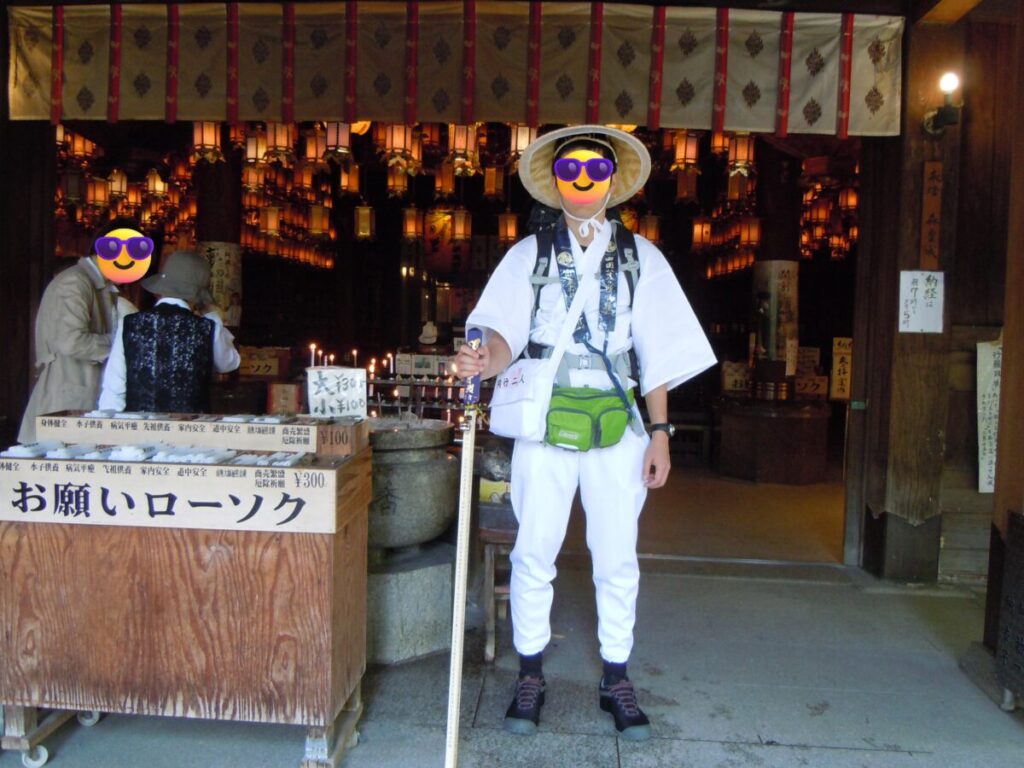
New Kongozue purchased at Ryōzen-ji Temple, the first temple of the Shikoku 88 Temple Pilgrimage.
Kongozue can also be handmade and produced at low cost
A Kongozue is not limited to commercially available products; it can also be made by hand. In addition to reducing costs, one of the major advantages is that it can be customized to suit your own body type and walking style, including adjustments to length and thickness.
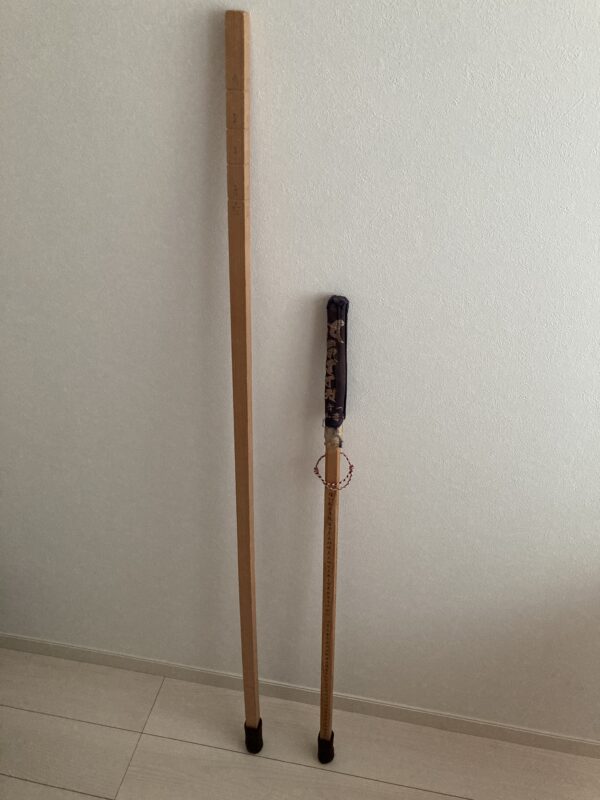
The photo below shows a Kongozue I actually made myself. The one on the left is handmade, and the one on the right is a commercially purchased Kongozue.
Handmade Kongozue and Commercially Purchased Kongozue.
Hand-carved Gorintō (Five-Ringed Stupa) made by hand.
| Type | Length | Width | Weight | Cost |
|---|---|---|---|---|
| Commercially purchased | 110 cm | 2.2 cm | 260 g | approx. ¥2,500 |
| Handmade | 150 cm | 2.5 cm | 410 g | approx. ¥1,000 |
During my first clockwise pilgrimage, I used a commercially available Kongozue. On my second pilgrimage in the reverse direction, I used a self-made staff. Both were used throughout a full walking circuit of the Shikoku Pilgrimage.
The commercial staff gradually shortened from about 130 cm to approximately 110 cm after one complete journey. In contrast, my handmade Kongozue started at 160 cm and was reduced to about 150 cm by the time I completed the pilgrimage.
As I am 180 cm tall, I found the self-made 160 cm staff more comfortable and better suited to my height compared to the standard commercial one. Although the handmade version was heavier at around 410 grams, I rarely felt the weight as a burden in practice, since the staff is almost constantly in contact with the ground during walking.
I also customized the grip area by carving a Gorin-tō (five-ringed stupa) design into the upper section. The Sanskrit seed characters (bonji) were written with a permanent marker, though they gradually faded over time with continued use on the pilgrimage. These kinds of natural changes and wear became part of the staff’s character and felt like a unique feature of a handmade Kongozue.
While commercially made staffs certainly have their own advantages in consistency and convenience, a self-made Kongozue offers the distinct benefit of being tailored to one’s own body and walking style. For me, that personalization was one of the greatest appeals of crafting my own staff.
Do You Need Only One Kongozue? Replacement Timing and Key Considerations
In principle, the Kongozue is intended to be used as a single staff throughout the entire 88-temple pilgrimage. Many pilgrims complete the journey using one continuous staff, and this practice carries symbolic meaning: the distance walked, hardships endured, and spiritual effort are all “recorded” in the wear of that single piece of wood.
However, in real-world pilgrimage conditions, there are situations where replacement or adjustments become necessary.
What to Do If Your Kongozue Breaks or Becomes Damaged
Due to long-distance walking and mountainous terrain, a Kongozue may sometimes crack, splinter, or even break during the Shikoku Pilgrimage. In such cases, it is generally recommended to prioritize safety over continuing to use a damaged staff.
If a replacement is needed during the pilgrimage, there is no need for concern. Kongozue staffs are available at many temples along the route, so pilgrims can usually obtain a new one without difficulty and continue their journey.
When a staff breaks completely, it is often treated as having “completed its role.” In many cases, pilgrims will later arrange some form of respectful disposal or memorial treatment for the broken staff, depending on local custom and personal practice. On the other hand, minor wear such as surface splintering or light damage is often tolerated, and some pilgrims continue using the same staff as long as it remains structurally safe.
Ultimately, what matters most is not the physical condition alone, but the attitude with which the Kongozue is treated. Maintaining respect as if it were the symbolic presence of Kobo Daishi, while also ensuring practical safety, is considered the essential balance throughout the pilgrimage.
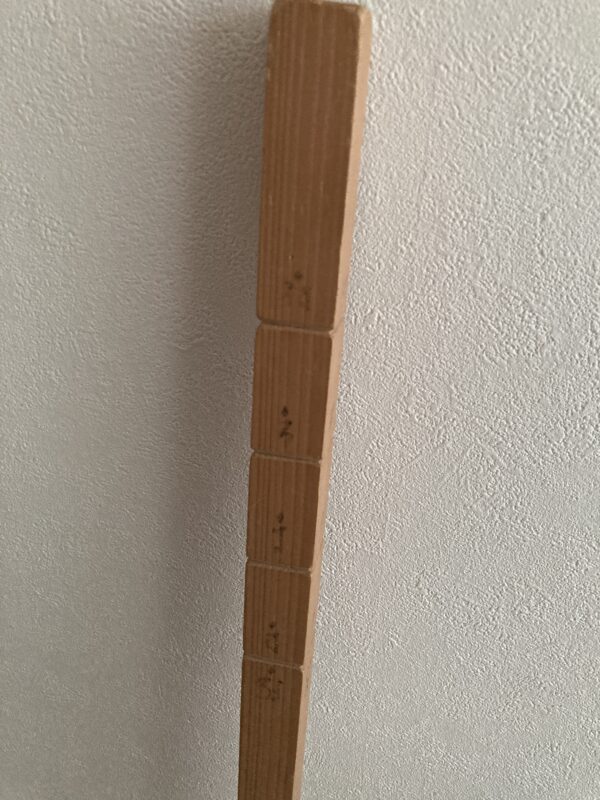
How Much Does a Kongozue Shorten During a Walking Pilgrimage?
A commercially made Kongozue typically starts at around 130 cm in length. This is the standard size many pilgrims begin with when setting out on the Shikoku 88 Temple Pilgrimage.
However, in practice, the staff gradually wears down over the course of the journey. Because it is repeatedly planted against a variety of surfaces—mountain trails, asphalt roads, gravel paths, and temple grounds—the tip slowly erodes with each step.
In my case, the Kongozue that began at approximately 130 cm had shortened to about 110 cm by the time I completed one full circuit of the pilgrimage. That means it lost roughly 20 cm in length over the course of the journey, which was more than I had initially expected.
This gradual change is one of the most distinctive aspects of using a Kongozue in a walking pilgrimage. Rather than remaining unchanged, the staff physically records the passage of distance and time through its wear. In that sense, it becomes more than just a tool—it turns into a tangible record of the journey itself, shaped by every step taken along the way.
After Completing the Pilgrimage: Kongozue Compared with a New One
What to Do with a Kongozue After Completing the Pilgrimage (Offering and Memorial Practices)
After completing all 88 temples of the Shikoku Pilgrimage, pilgrims handle their Kongozue in different ways depending on personal belief and intention. Some choose to keep it as a personal keepsake, while others offer it back to a temple for memorialization.
One of the most well-known places for this practice is Ōkuboji Temple, the traditional site of conclusion for the pilgrimage. Many pilgrims visit this temple at the end of their journey to formally complete their circuit, and it is also a place where used Kongozue staffs are respectfully offered.
Within the temple grounds, there is a designated area where countless walking staffs are collected. These Kongozue are placed there as offerings and later treated as objects of memorial and gratitude. Seeing the accumulated staffs is often interpreted as a visual record of the countless journeys completed by pilgrims over time.
In this sense, the act of leaving a Kongozue is not simply disposal. It is regarded as a symbolic completion of the journey, where the staff that supported the pilgrim throughout the pilgrimage is respectfully returned. Many pilgrims view this moment as a form of closure, and at the same time, as a continuation of tradition—passing on the spiritual “support” of the pilgrimage to those who will follow.
What to Know to Avoid Mistakes When Using a Kongozue
Keeping Your Kongozue Visible When Camping Outdoors
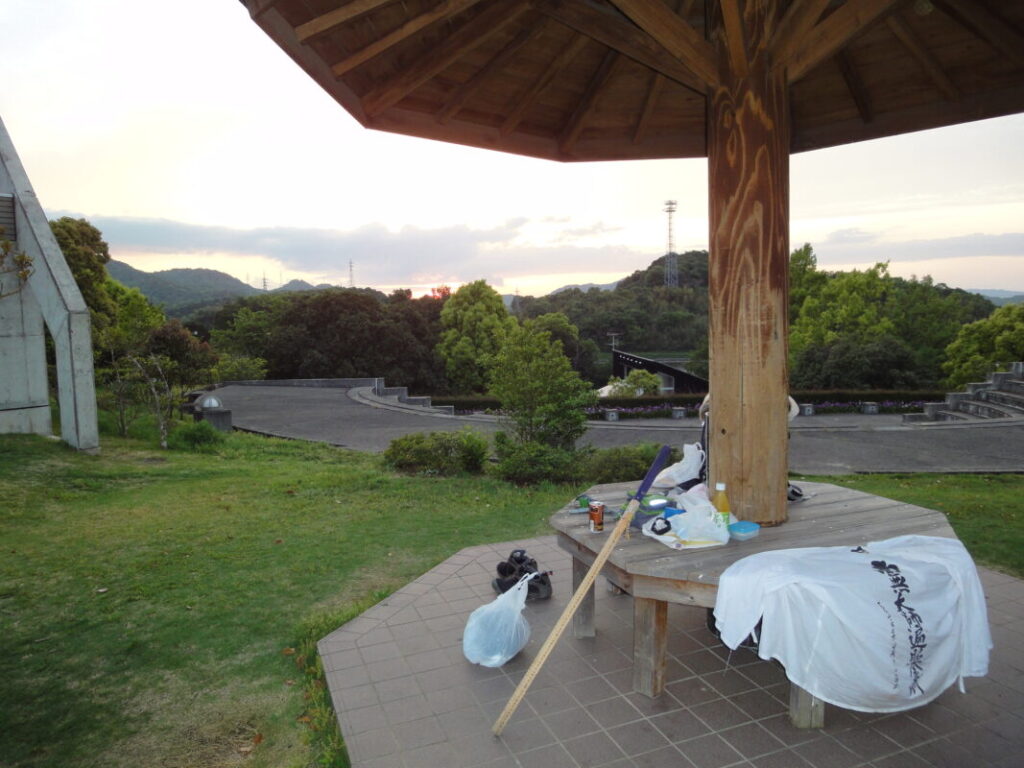
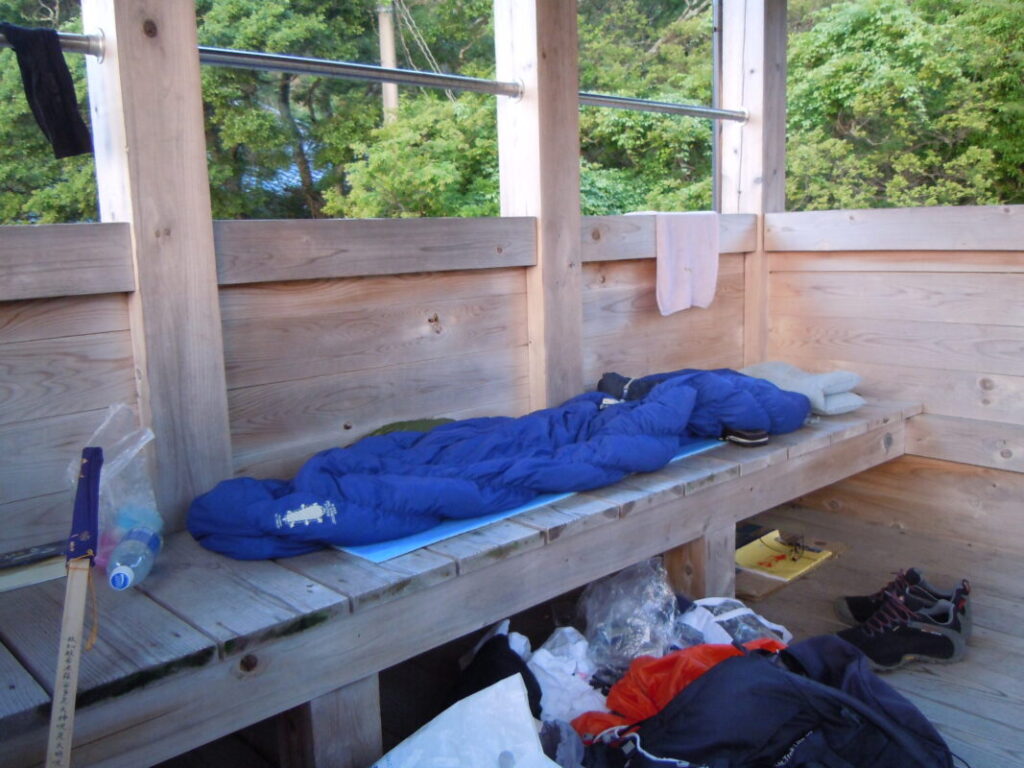
When staying outdoors during the Shikoku Pilgrimage, some pilgrims place their Kongozue near their tent entrance or lean it against the outside of the tent. Because the staff is a recognizable symbol of a pilgrim, it can help signal to local residents and passersby that the person is actively on pilgrimage.
In places where visibility matters—such as roadside camping or areas where people may pass by—the presence of a Kongozue may also help reduce misunderstandings, indicating that the individual is a pilgrim rather than someone with unclear intentions.
That said, there is no strict rule requiring the staff to be kept outside. If there are concerns about theft, weather, or safety, it is completely acceptable to bring the Kongozue inside the tent and store it securely. The decision should be based on the situation at hand.
Ultimately, the most important principle is flexibility: the Kongozue should be managed in a way that balances respect for its symbolic role with practical considerations for safety and comfort during the journey.
Why You Should Be Careful When Leaving Your Kongozue in a Staff Rack
When a Kongozue is placed in a shared staff rack (tsue-tate) at temples or lodgings, it can become difficult to distinguish one pilgrim’s staff from another. Because many Kongozue are similar in length, shape, and appearance, they are often lined up side by side, which can lead to confusion.
As a result, there have been cases where pilgrims accidentally pick up someone else’s staff. To avoid this, it is recommended to add a personal marker so you can easily identify your own Kongozue at a glance. In my case, I attached a small mizuhiki-style bracelet (misan-ga) that I had received as an offering during the pilgrimage. This made it much easier to recognize my staff among others.
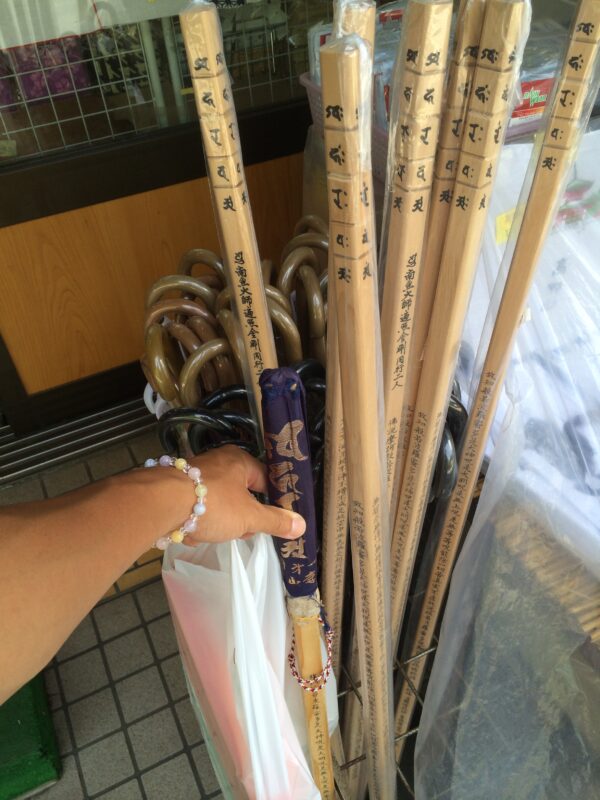
At the same time, it is also important to be mindful not to take someone else’s Kongozue by mistake. When using a shared rack, it is a good habit to double-check your staff before leaving the area.
Ultimately, this is a simple but practical point of etiquette: because the Kongozue is both a personal tool and a symbolic object, taking a moment to confirm ownership helps prevent misunderstandings and shows respect for fellow pilgrims.
Caution: Kongozue Getting Caught in Drain Gaps and Gratings
One surprisingly common issue during the Shikoku Pilgrimage is the Kongozue getting caught in roadside drainage channels or metal grates (gratings). In particular, narrow gaps or older drainage covers can cause the tip of the staff to slip in unexpectedly. If too much force is applied while it is stuck, there is a risk that the staff may crack or even break.
Because roadside drains and grates often provide a slightly more stable walking surface, many pilgrims naturally step on or along them. However, this is exactly where extra caution is needed when using a Kongozue.
How to Prevent Damage
A key technique is to avoid striking the ground too forcefully. Instead of driving the staff straight down, it is better to use a lighter, more controlled touch—almost as if the tip is gently contacting the surface rather than being planted firmly.
When walking over metal grates or drainage covers, it is also helpful to adjust the angle of the staff slightly rather than placing it vertically. A small change in contact angle can reduce the risk of the tip slipping into gaps.
The Importance of Situational Awareness
While the Kongozue is an essential tool for supporting long-distance walking, it can also become vulnerable depending on the terrain. Drainage gaps, uneven road edges, and urban infrastructure all present potential hazards.
For this reason, safe use of the Kongozue is not only about technique, but also about constantly paying attention to the walking environment. Being aware of where and how the staff makes contact with the ground is key to preventing accidents and ensuring a safe pilgrimage.
Frequently Asked Questions (FAQ)
- QCan I bring a Kongozue on public transportation?
- A
Yes, you can.
Kongozue staffs are allowed on public transportation, including airplanes, buses, and trains. I personally used flights and railways when traveling to the pilgrimage area, and there were no issues bringing the staff along.
However, it is important to be considerate in crowded spaces. The staff can easily become inconvenient for other passengers, so care should be taken not to obstruct movement. A protective cover is not mandatory, but it is useful for preventing damage during transit and for showing consideration to others. If you do not have a cover, wrapping the tip in a towel or soft material is usually sufficient.
- QCan I take my Kongozue home after completing the pilgrimage?
- A
Yes, that is perfectly fine.
In conclusion, there is no problem with keeping your Kongozue as a personal memento after completing the pilgrimage. In fact, many pilgrims choose to keep it as proof of their journey and accomplishment.
Common ways to keep it include displaying it at the entrance of a home, storing it as a travel memory, or preserving it as a personal spiritual reminder. Some pilgrims even reuse the same staff if they decide to walk the pilgrimage again in the future.
On the other hand, for those who place greater emphasis on religious tradition, offering the staff at a temple for memorial purposes is also a respected option. Neither approach is considered “correct” or “incorrect”—what matters most is choosing a way of handling it that aligns with one’s personal feelings about the pilgrimage.
- QIs a Kongozue necessary for the pilgrimage?
- A
It is not required, but highly recommended.
A Kongozue is not strictly required to complete the pilgrimage. However, it can significantly reduce physical strain during long-distance walking and serves as a symbolic reminder of the concept of Dōgyō Ninin (“Two Traveling Together”).
Because of its practical benefits and spiritual meaning, many walking pilgrims choose to carry one throughout the journey.
- QWhere can I buy a Kongozue?
- A
It is available at many temples and pilgrimage supply stores.
Kongozue staffs can be purchased at many temples along the route and at specialized pilgrimage supply shops. In particular, many pilgrims choose to buy their first staff at Ryōzen-ji Temple, the first temple of the Shikoku 88 Temple Pilgrimage.
- QDo I need a Kongozue for car pilgrimage (car henro)?
- A
Not required, but it can be useful.
For car pilgrims, a Kongozue is not essential because the amount of walking is limited. However, many temples still require walking from parking areas to the main hall, often involving slopes or stone steps, where a staff can provide useful support.
In addition, the Kongozue still carries symbolic meaning as a representation of Dōgyō Ninin, so some pilgrims choose to carry one even when traveling by car.
Some temples also provide communal walking sticks near the entrance for visitors, meaning it is not strictly necessary to purchase one. However, having your own staff can provide both practical support and a stronger sense of connection to the pilgrimage experience.
Conclusion: The Kongozue as “Kobo Daishi Walking with You”
The Kongozue is not merely a walking aid. It is a symbolic representation of Kobo Daishi and an embodiment of the principle of Dōgyō Ninin—“two traveling together.”
During the pilgrimage, it is important to treat the staff with care and respect while following proper etiquette. Rather than being just a tool, it becomes a trusted companion that walks alongside the pilgrim through the long journey across Shikoku.
From my own experience, having used the Kongozue in both clockwise and counterclockwise pilgrimages, it eventually became something far beyond a simple object. By the time the journey was complete, it felt like a presence that had accompanied me throughout every step of the way.
For those who are about to begin the Shikoku Pilgrimage, I encourage you to choose a staff that suits you well and set out on the road with Kobo Daishi as your companion, walking together through the sacred paths of Shikoku.
Related Articles
I have compiled a detailed guide to the Shikoku Pilgrimage for beginners.
What is the Shikoku Pilgrimage? Beginner’s Guide to Your First Sacred Journey in Japan
This article summarizes things you should not do on the Shikoku Pilgrimage.
Shikoku Pilgrimage Rules & Prohibited Actions: Essential Etiquette for Beginners
If you would like to learn how to worship at a Japanese temple, please see this page.
How to Worship at Japanese Temples : Shikoku Pilgrimage Guide
This article provides a complete list of the Shikoku 88 Temple pilgrimage route, including distances, travel times, and temple lodging (shukubo).
Temple List and Full Route
Essential Gear for Walking the Shikoku Pilgrimage: Complete Packing List.
Essential Gear for the Shikoku Pilgrimage