
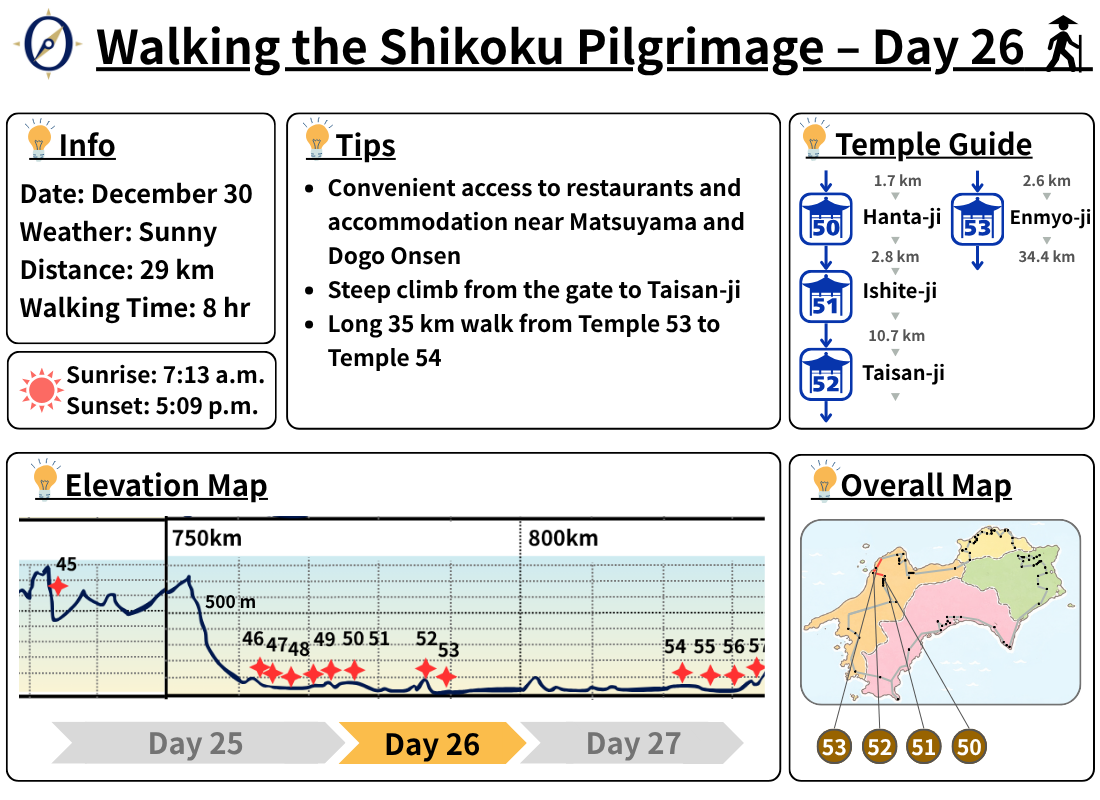
December 30 – Day 26 of the Shikoku Pilgrimage on Foot
I left Dogo Park at 6:00 a.m. and visited four temples: Hanta-ji, Ishite-ji, Taisan-ji, and Enmyo-ji. Walking through central Matsuyama, I visited historic temples, including Taisan-ji, whose main hall is a National Treasure.
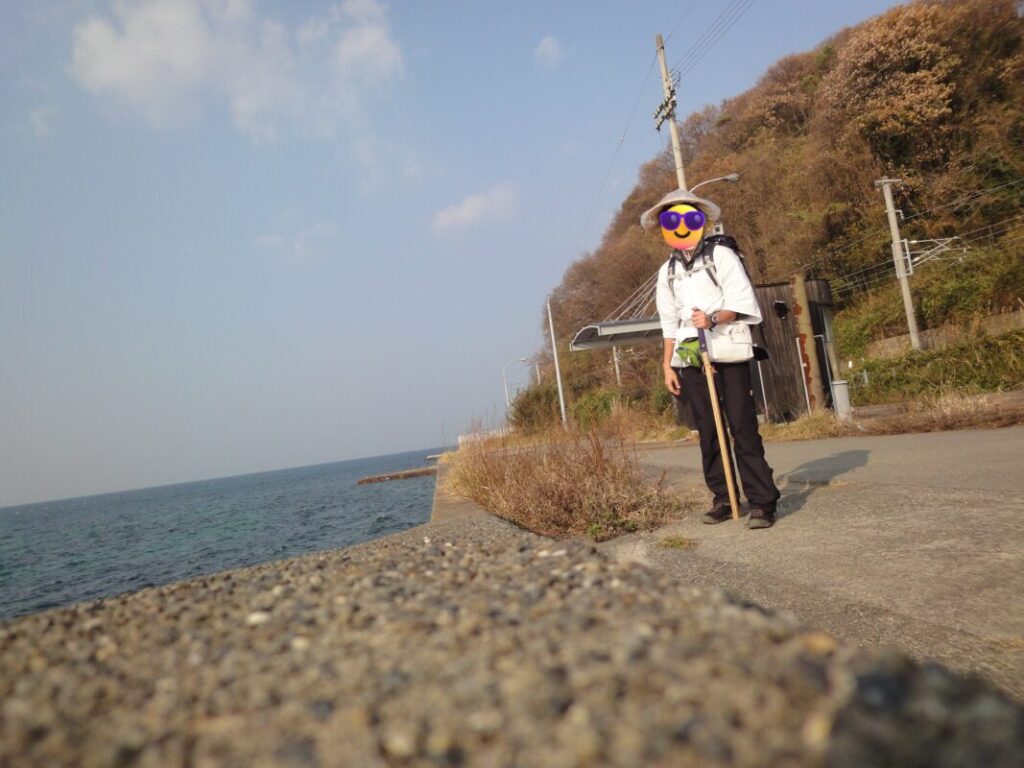
Beyond Enmyo-ji, the Iyo Sea came into view for the first time in a while. I continued north, enjoying the coastal scenery, and arrived at Bunka no Mori Park at 5:00 p.m.
I decided to camp outdoors again for the night, preparing for the next day’s walk toward Imabari.
- Itinerary
- Getting Ready in the Morning
- Visiting Temple 50, Hanta-ji
- Visiting Temple 51, Ishite-ji
- Walking Through Matsuyama to Taisan-ji
- Climbing the Mountain to Temple 52, Taisan-ji
- Heading to Temple 53, Enmyo-ji
- Planning the Next Stop
- Seeing the Iyo Sea Again
- Spending the Night Outdoors at Bunka no Mori Park
- Temple Information
Itinerary
- 6:00Departure
- Dogo Park
- 7:15Temple No. 50, Hanta-ji
- 8:30Temple No. 51, Ishite-ji
- Dogo Onsen
- Matsuyama Castle
- 12:00Temple No. 52, Taisan-ji
- 13:00Temple No. 53, Enmyo-ji
- 17:00Bunka no Mori Park
Overnight stay
Getting Ready in the Morning
December 30. Clear skies. Day 26 of the Shikoku Pilgrimage on foot.
Yesterday, I descended from Kuma Kogen Town into central Matsuyama and visited Temples 46 through 49, from Joruri-ji to Jodo-ji. Afterward, I relaxed at Dogo Onsen and spent the night outdoors in Dogo Park.
Sleeping outdoors in the mountains had been bitterly cold, making it difficult to get any proper rest. But at the lower elevation of the plains, I had managed to sleep with the gear I had.
It was cold again this morning, but after enjoying a hot spring bath last night, I felt refreshed.
My first destination today was Temple 50, Hanta-ji. To visit early in the morning, I left Dogo Park at 6:00 a.m.
After walking through the dimly lit streets before dawn for about 15 minutes, my body began to warm up. My breath formed white clouds in the cold air.
Central Matsuyama was still quiet at the end of the year, with few cars or pedestrians around. I followed the streets illuminated by streetlights, heading toward Hanta-ji.
Visiting Temple 50, Hanta-ji
I arrived at Hanta-ji at 7:15 a.m.
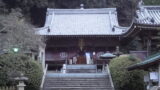
Hanta-ji sits on a hill about 80 meters above sea level. From the temple grounds, I could look out over central Matsuyama, with open views extending to a nearby irrigation pond.
Despite being close to the city, a dense forest stretches behind the temple grounds. The peaceful atmosphere felt far removed from the noise of the city, making it an ideal place for an early morning visit.
Another highlight is the ceiling of the bell tower, which is decorated with 24 painted panels. Discovering these small details is part of the enjoyment of visiting the pilgrimage temples.
After spending some time exploring the grounds and paying my respects, I continued to the next temple.
Visiting Temple 51, Ishite-ji
My next stop was Temple 51, Ishite-ji. It was only about 3 kilometers north of Hanta-ji, and the temples in Matsuyama are relatively close together. The route was easy to follow, and I arrived at Ishite-ji at 8:30 a.m.
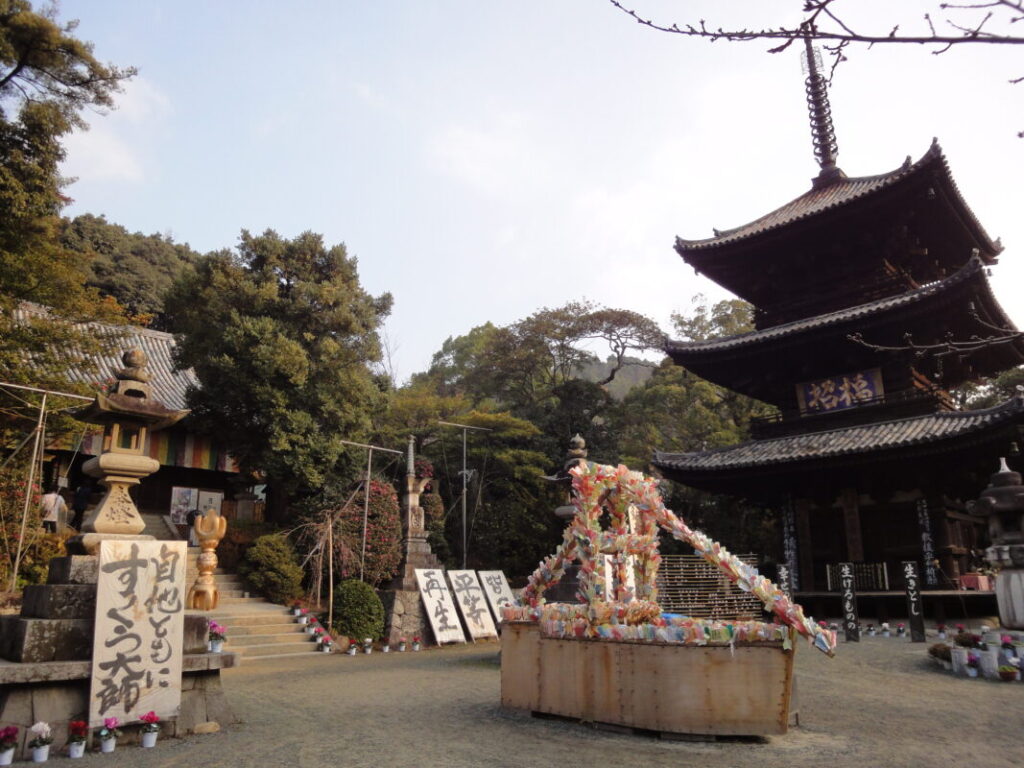
Ishite-ji is also close to Dogo Onsen and attracts many visitors, making it one of the more popular temples on the Shikoku 88 Temple Pilgrimage.
A covered walkway leads toward the temple grounds, with snack shops and souvenir stores lining the area. It has the atmosphere of a traditional temple town, and simply walking through it is an enjoyable experience.
At the end of the covered walkway stands the Nio-mon Gate, a designated National Treasure.
The gate is said to have been built in 1318 during the Kamakura period and stands about 7 meters tall. Important Cultural Property statues of the Nio guardian kings stand on either side, welcoming visitors to the temple.
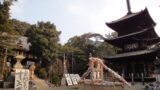
One of the most striking structures on the grounds is the three-story pagoda. Standing about 24 meters tall, it is designated an Important Cultural Property and adds to the historic atmosphere of the temple.
The name Ishite-ji is also linked to a legend from the history of the Shikoku pilgrimage.
According to the story, Emon Saburo once traveled around Shikoku in search of Kobo Daishi. After finally receiving forgiveness, he was given a stone, which was later enshrined here. The temple’s name is said to have originated from this stone.
After visiting Monju-in and Fudasho Daishido yesterday, I encountered another part of Emon Saburo’s story here. Walking the pilgrimage trail, I could feel how the temples are connected through history and legend.
After finishing my visit, I headed for my next destination, Temple 52, Taisan-ji.
Walking Through Matsuyama to Taisan-ji
Taisan-ji is located about 10 kilometers northwest of Ishite-ji.
The route passes through the Dogo Onsen area and central Matsuyama, so the streets are busier than the mountain pilgrimage trails I had walked earlier.
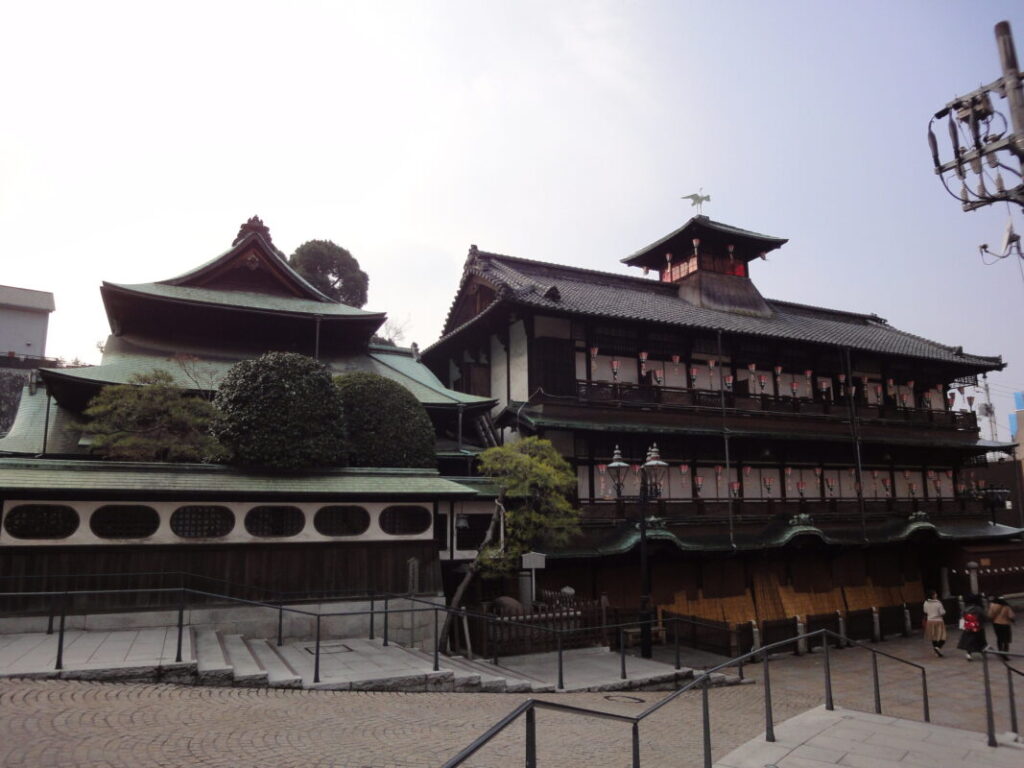
As I made my way through the city, I passed plenty of restaurants and convenience stores. One advantage of walking through an urban area is how easy it is to stock up on supplies when needed.
After walking for a while, I decided to stop for an early lunch at a gyudon restaurant, where I ordered a bowl of beef and rice.
For pilgrims walking the Shikoku route, it is important to eat whenever the opportunity arises. There is no guarantee that the next rest stop or place to get a meal will be conveniently located. I made sure to replenish my energy before continuing.
Matsuyama Castle
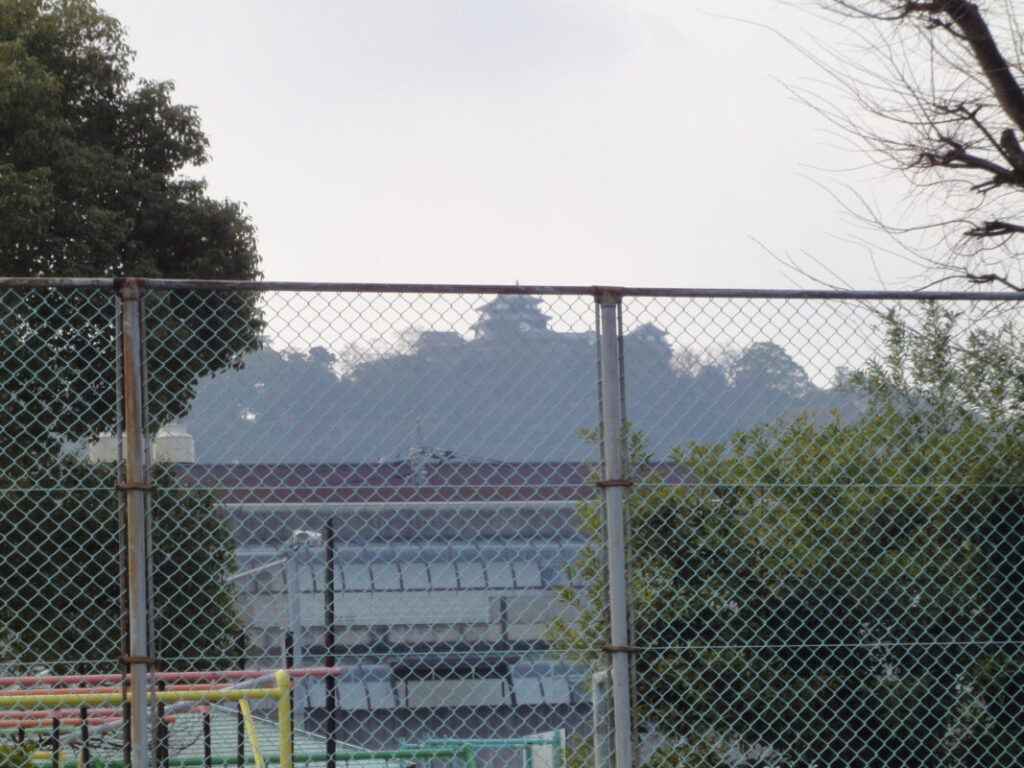
Along the way, I also caught a glimpse of Matsuyama Castle.
Walking the Shikoku pilgrimage brings more than temples and natural scenery. It also offers glimpses of the region’s history, including landscapes shaped by the old castle town.
Climbing the Mountain to Temple 52, Taisan-ji
About two hours after leaving Ishite-ji, the route gradually began to climb.
Taisan-ji is a mountain temple located on the slopes of Mount Kyogamori. Although it is not far from central Matsuyama, a substantial uphill climb awaits near the end.
Along the way, I passed a facility covered by a large net. I wondered if it was a golf driving range.
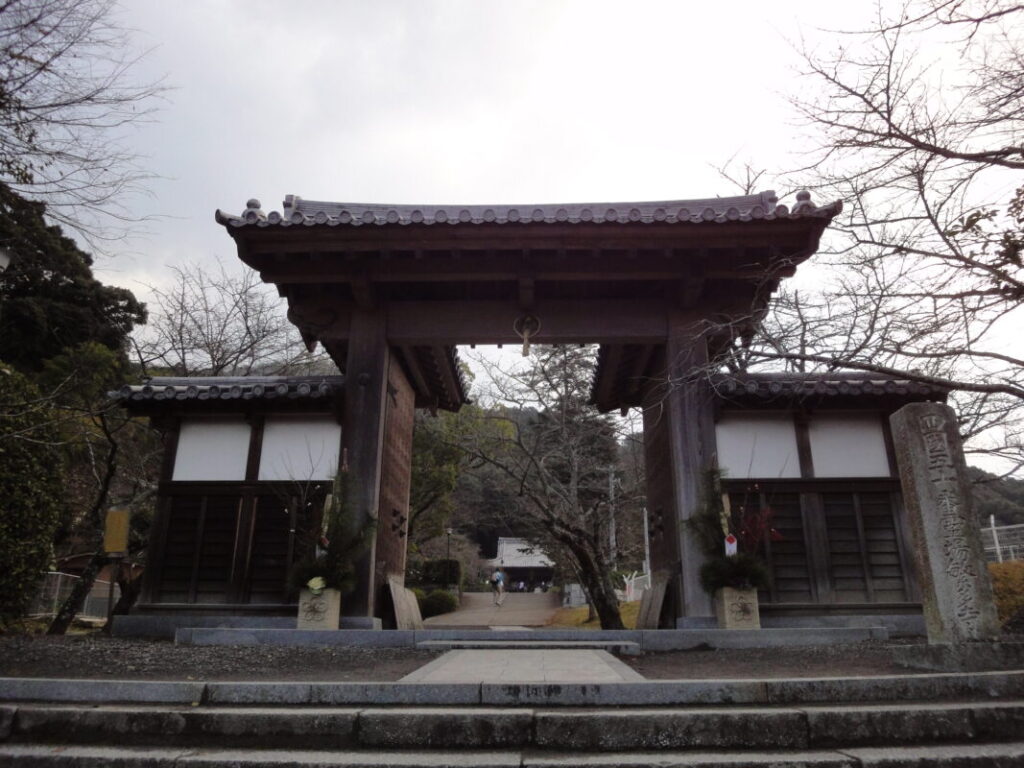
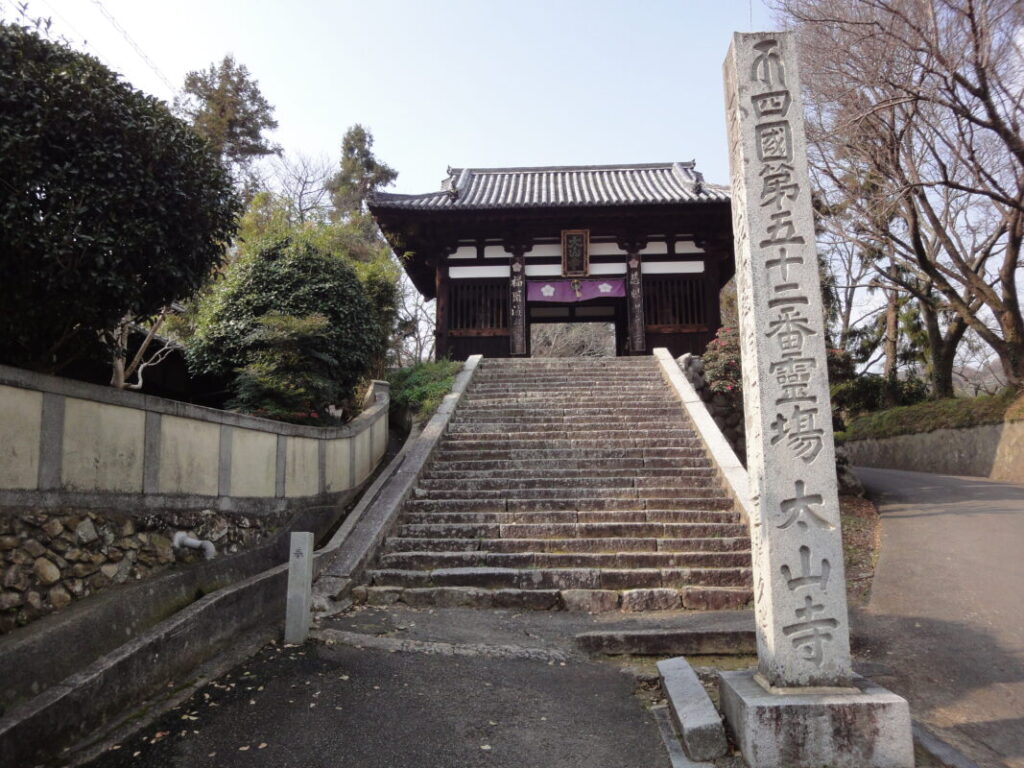
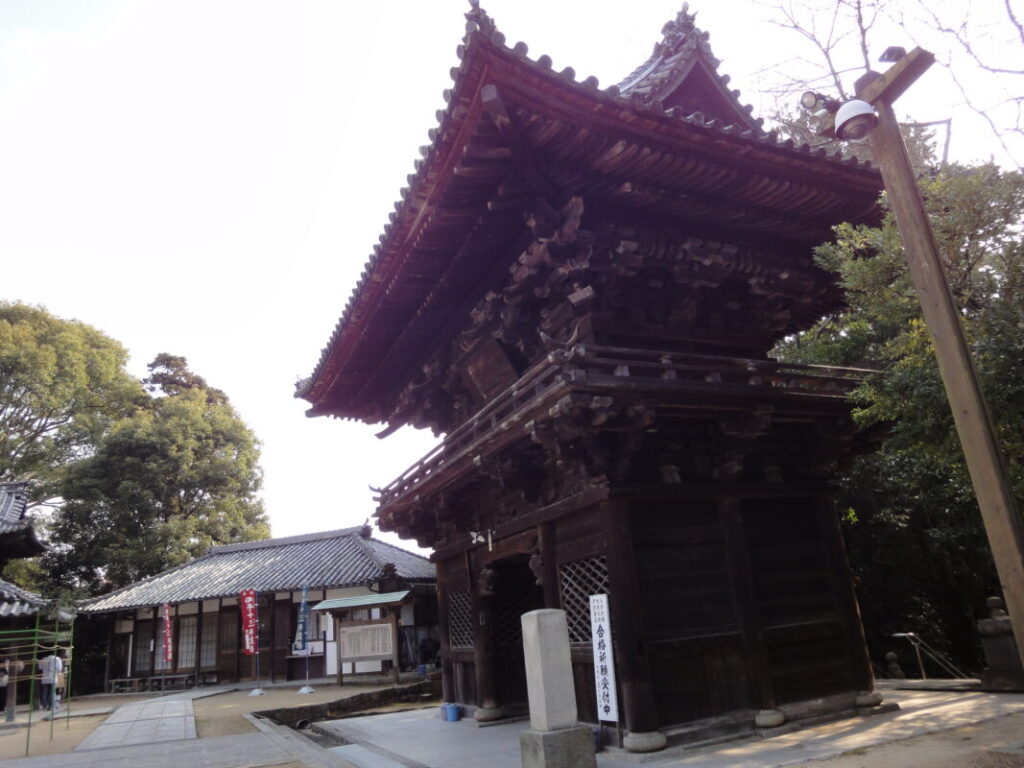
A little farther on, I came across an impressive temple gate, but the climb was not over yet.
The approach to the temple grounds was steep, and I still had to climb farther. Despite it being the end of December, in the middle of winter, I began to sweat as I made my way uphill.
Stone pillars donated to the temple lined the sides of the path. Step by step, I climbed the quiet mountain trail until the temple grounds finally came into view.
I arrived at Taisan-ji at noon.
The National Treasure Main Hall and Impressive Temple Gate
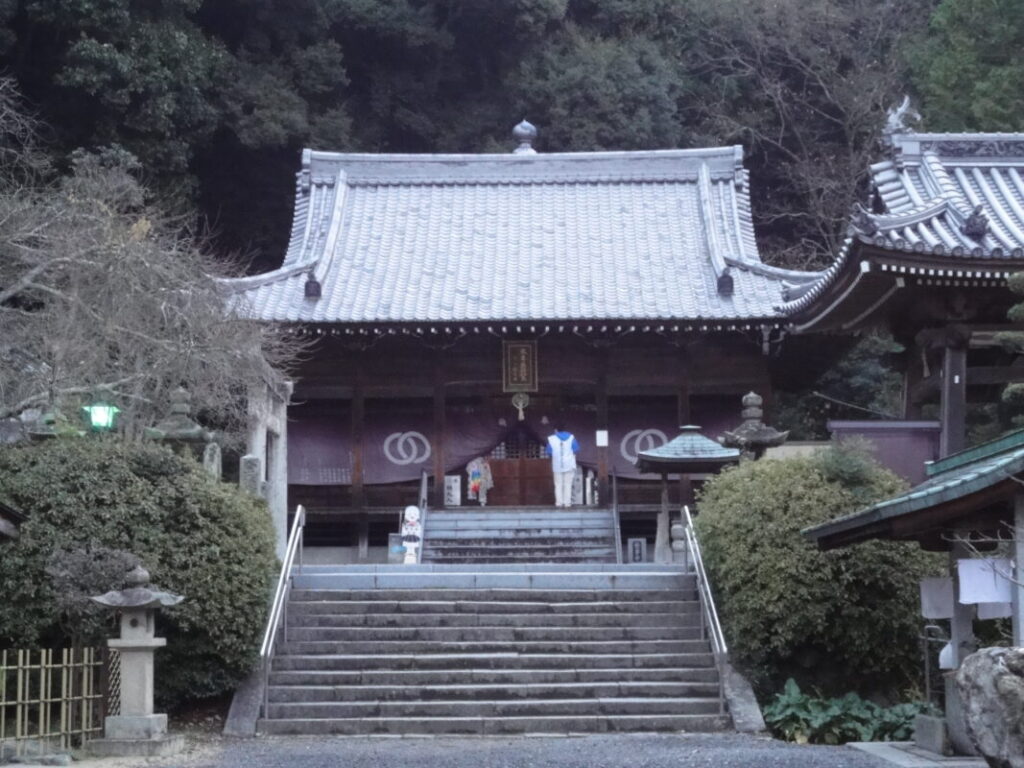
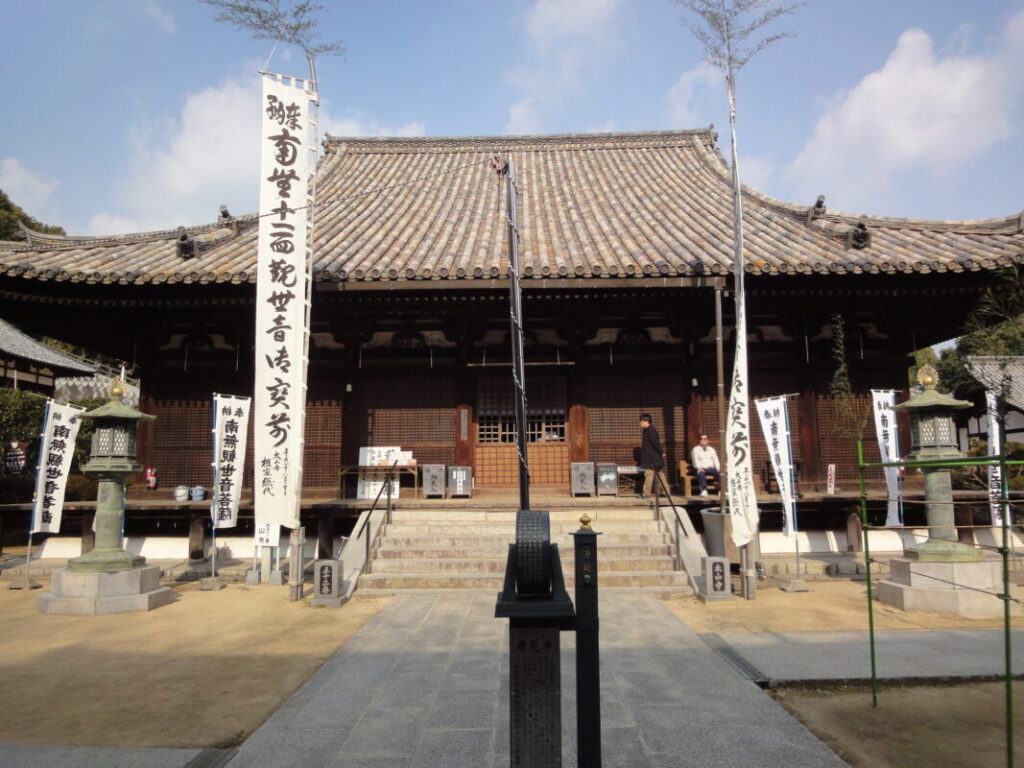
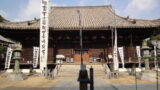
The main highlight of Taisan-ji is its main hall, which is designated a National Treasure.
Believed to have been rebuilt during the Kamakura period, the hall features an impressive hip-and-gable roof that stretches broadly across the building. The gently curving eaves are particularly beautiful, and I found myself stopping to admire them.
The main gate is another imposing structure that reflects the temple’s long history. Designated an Important Cultural Property, it stands proudly along the approach to the temple grounds.
After the bustle of central Matsuyama, Taisan-ji offered a complete change of atmosphere, surrounded by historic architecture and tranquility. Having spent so long walking through the city, I found the peaceful setting of this mountain temple especially refreshing.
Heading to Temple 53, Enmyo-ji
Temple 53, Enmyo-ji, is located about 3 kilometers east of Taisan-ji.
The route along the prefectural road was easy to follow, and after climbing the steep approach to Taisan-ji, I appreciated the flat terrain.
Fields stretched across the surrounding countryside, creating a peaceful rural landscape that was hard to associate with an area so close to central Matsuyama.
As I walked, I could see the temple’s large trees in the distance, a sign that Enmyo-ji was getting closer.
I arrived at Enmyo-ji at 1:00 p.m.
Highlights of Enmyo-ji
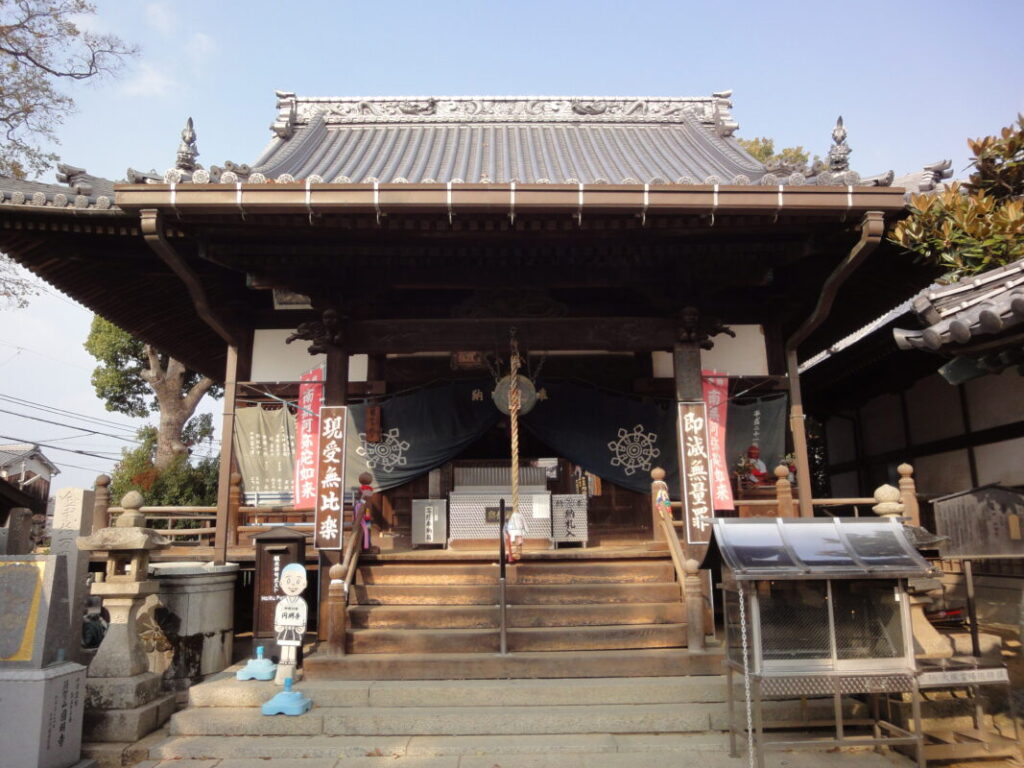
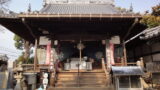
Enmyo-ji is located on flat ground, making the temple grounds relatively easy to explore. A peaceful atmosphere filled the grounds, allowing me to take my time and pay my respects.
One of the highlights is a lantern known as the Kirishitan Toro, or Christian lantern.
A human figure is carved into the lantern, and some believe it may represent the Virgin Mary. There is also a theory that it is connected to the faith of Japan’s hidden Christians, although several explanations of its origins exist.
It is fascinating that a temple on the Shikoku pilgrimage trail preserves traditions associated with Christianity.
After exploring the grounds and paying my respects, I finished my visit.
Planning the Next Stop
My next destination was Temple 54, Enmei-ji. Its name is similar to Enmyo-ji, so it is important not to confuse the two. Enmei-ji is located in Imabari, about 35 kilometers from Enmyo-ji.
It was already past 1:00 p.m. The distance was too great to reach Enmei-ji on foot and visit the temple before the end of the day.
So I unfolded my map and began looking for a place where I could spend the night outdoors.
I settled on Bunka no Mori Park, about 10 kilometers from Enmyo-ji. With that as my destination for the night, I set off north again.
Seeing the Iyo Sea Again
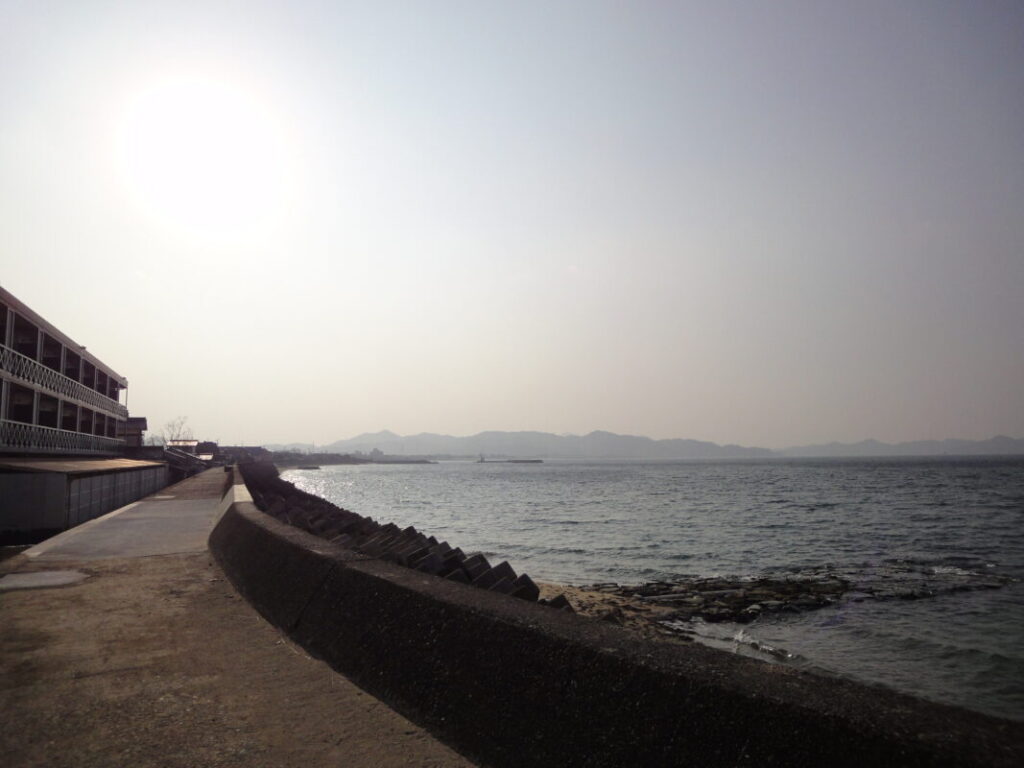
After walking north from Enmyo-ji for about an hour, the sea came into view in the distance.
It felt like the first time in a while that I had seen the sea along the pilgrimage trail.
Back when I was walking through Kochi Prefecture, I had enjoyed views of the ocean almost every day. The vast Pacific Ocean and its powerful waves crashing against the shore had left a lasting impression on me.
In contrast, my days in Ehime Prefecture had been filled with steep mountain trails. After so long walking through mountains, I was genuinely moved to see the sea again.
The Iyo Sea stretching out before me had a gentler feel. Unlike Kochi’s vast and rugged coastline, the peaceful shoreline here had a beauty of its own.
Even within Shikoku, the scenery changes from one region to another. Walking the pilgrimage allows me to experience these differences firsthand, one step at a time.
Spending the Night Outdoors at Bunka no Mori Park
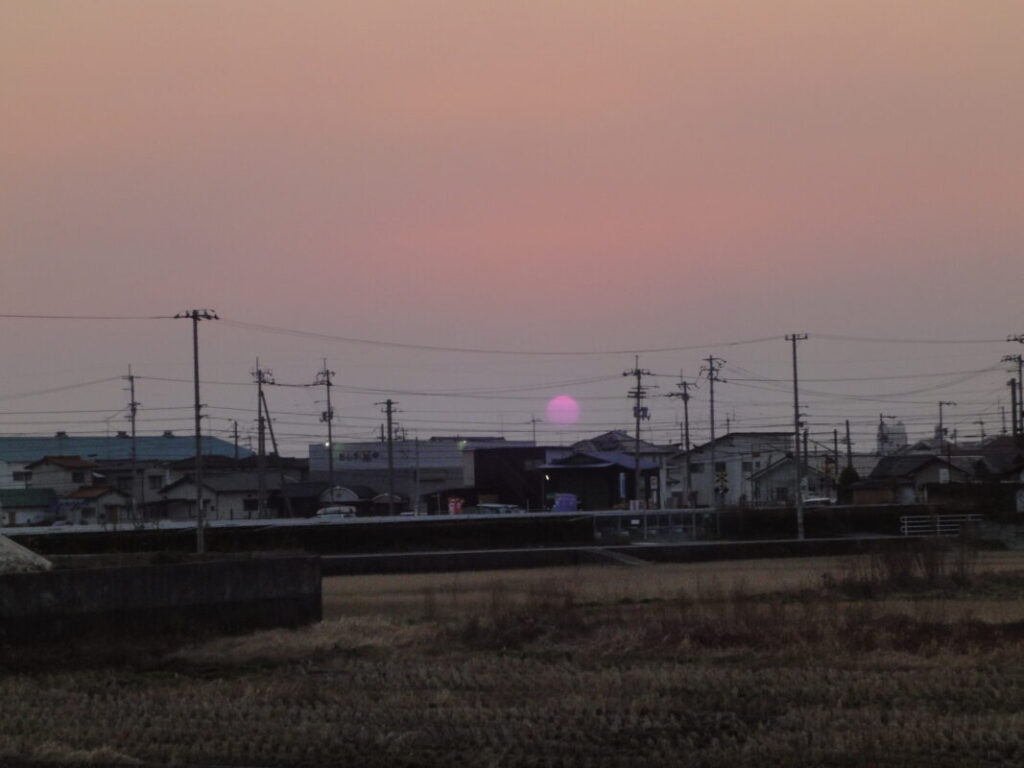
I arrived at Bunka no Mori Park at 5:00 p.m.
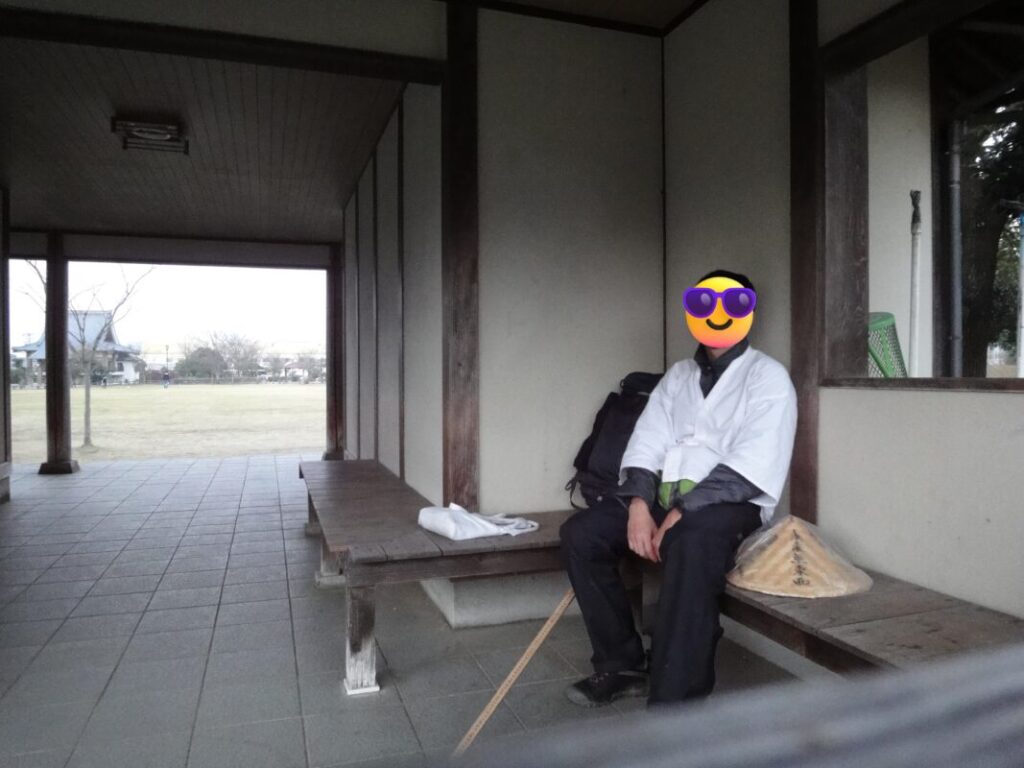
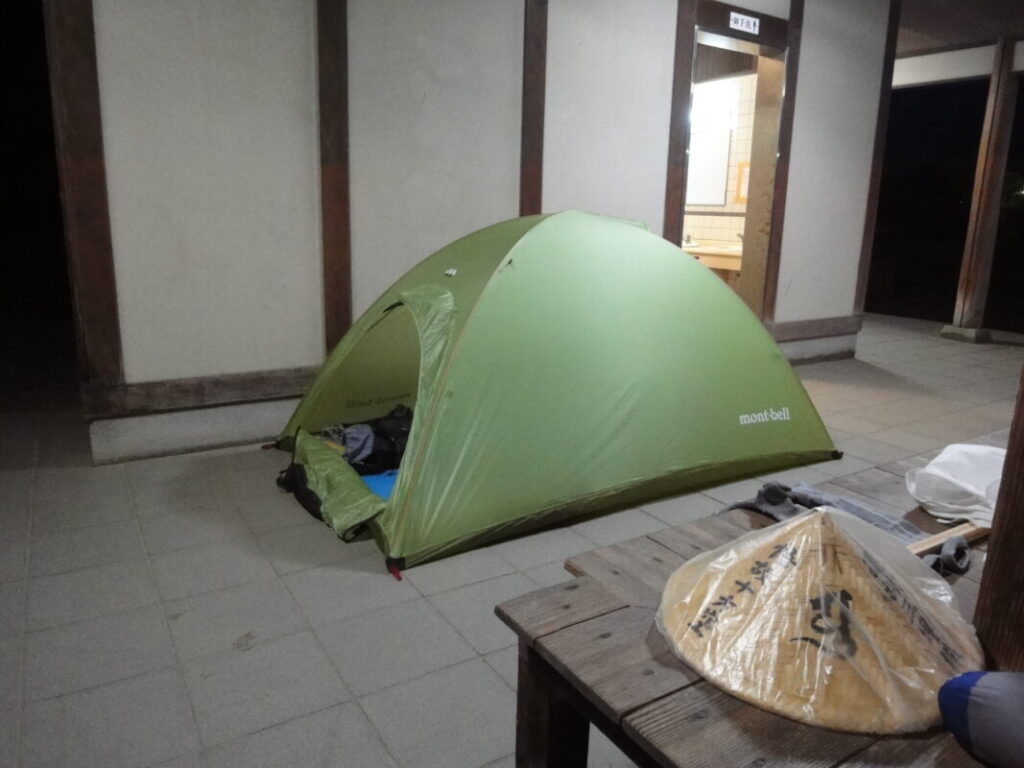
The park is close to the national highway and has a spacious grounds. There were also covered areas where I could shelter from the rain and wind, making it a suitable place to spend the night outdoors.
As darkness fell, people gradually left the park. The grounds grew quiet, and there was hardly anyone around at the end of the year.
I had bought a boxed meal at a convenience store, which I ate for dinner before preparing my sleeping spot.
Looking Back on the Day
Today, I left Dogo Park and visited four temples: Hanta-ji, Ishite-ji, Taisan-ji, and Enmyo-ji.
I walked through central Matsuyama, visited historic temples, and climbed the steep approach to Taisan-ji. After passing Enmyo-ji, I also enjoyed a view of the Iyo Sea for the first time in a while.
Unlike the mountain trails of previous days, much of today’s walk took me through urban areas. Restaurants and convenience stores were plentiful, so finding food was easy. However, spending so many hours walking on paved roads left my feet feeling tired.
Tomorrow, I would continue north toward Imabari.
Tonight, I would sleep outdoors at Bunka no Mori Park. It was time to get some proper rest and prepare for another day on the pilgrimage trail.
Temple Information
- No. 50
- No. 51
- No. 52
- No. 53
- No. 54


Comments