
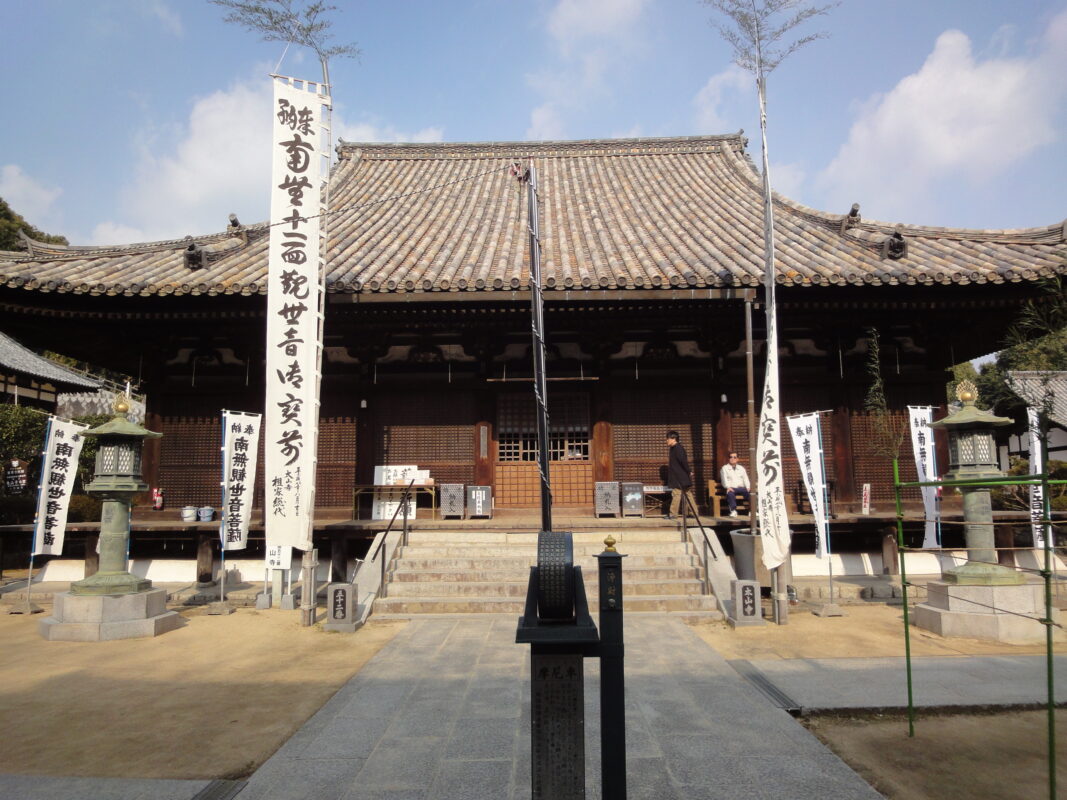
Taisanji Temple Information
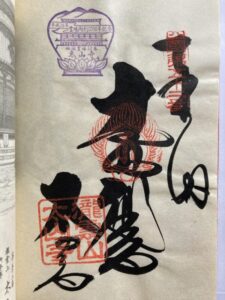
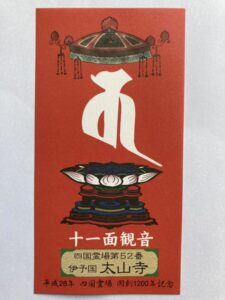
Goshuin
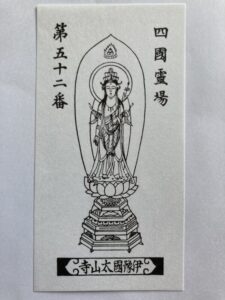
- Omie
- 1,200th Anniversary Edition
Basic Information
| Principal Deity | Eleven-Headed Kannon |
| Elevation | 75 m |
| Google Maps | MAP |
Accommodation
| Shukubo (Temple Lodging) | Not Available |
| Tsuyado (Free Pilgrim Shelter) | Not Available |
History & Highlights
Taisanji is known for the legend of its “one-night constructed hall,” said to have been built overnight by Mano Chōja. The temple later became associated with Gyōki and Kūkai (Kōbō Daishi) and is a historic pilgrimage site that preserves a National Treasure Main Hall and numerous Buddhist statues designated as Important Cultural Properties.
Notes
A steep uphill path leads from the parking lot to the temple grounds.
Route Map, Distance & Travel Time
You can switch between the tabs to view the routes to the previous and next temples.
Select “Driving Route” from the map’s upper-left menu to display the driving route.
Click the Full Screen icon in the upper-right corner of the map to open it in Google Maps for a larger, easier-to-view map.
- From Previous Temple
- To Next Temple
Previous Temple: Ishiteji
| Distance | 10.7 km |
| Walking | 3 hr |
| Driving | 30 min |
Next Temple: Enmyoji
| Distance | 2.6 km |
| Walking | 45 min |
| Driving | 10 min |
Transportation Guide
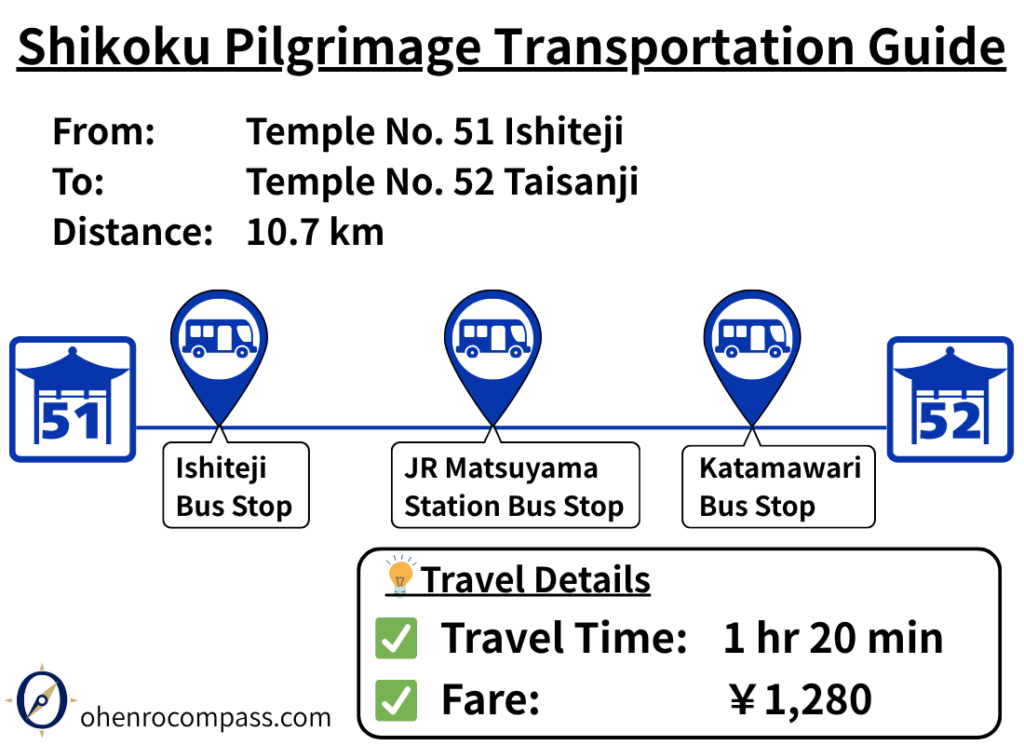
Travel from Ishiteji (51st Temple) to Taisanji (52nd Temple) by bus in about 1 hour 20 minutes for ¥1,280. Includes transfers, timetables, walking distance and route options.
My Walking Experience
Taisanji is located about 10 km (6.2 miles) northwest of Ishiteji.
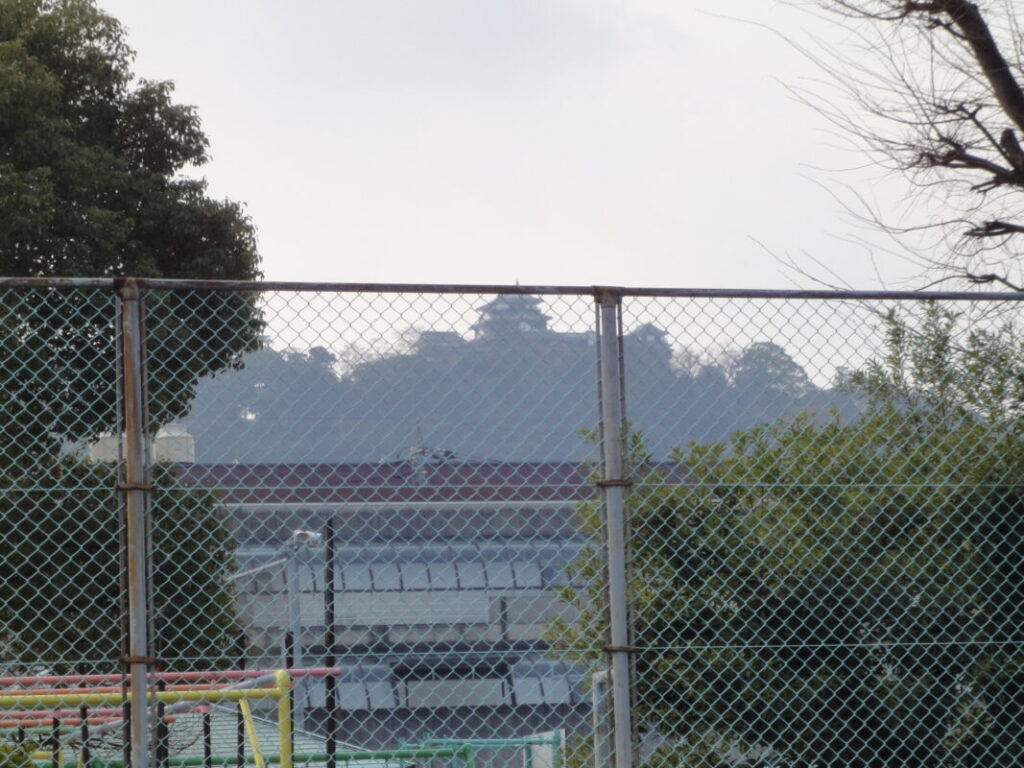
Since the route passes through Dōgo Onsen and central Matsuyama, it is one of the liveliest sections of the Shikoku Pilgrimage. Along the way, you can also catch views of Matsuyama Castle on your left, making this an enjoyable walk that combines both historical and sightseeing highlights.
However, don’t let the urban surroundings fool you. Taisanji is a mountain temple situated on the slopes of Mount Kyōgamori, at an elevation of approximately 200 m (656 ft). The final approach involves a steady climb that can be more demanding than expected.
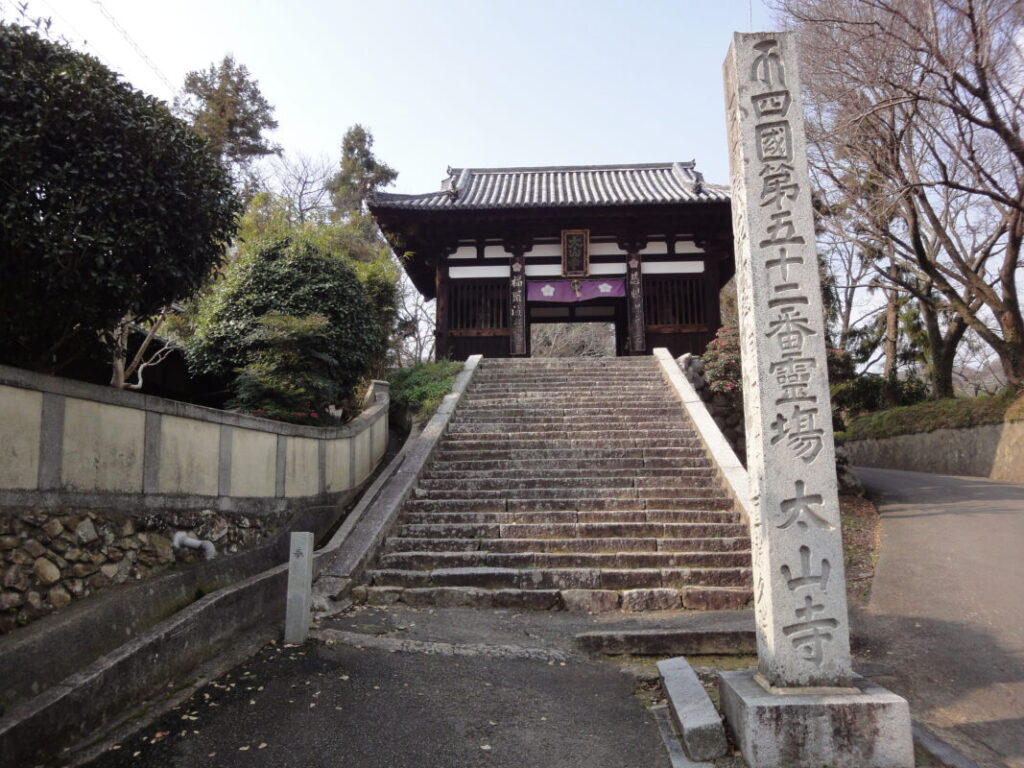
In particular, the approach from the Sanmon Gate to the temple grounds is quite steep. Even when I walked it in the middle of winter, I found myself working up a sweat by the time I reached the top.
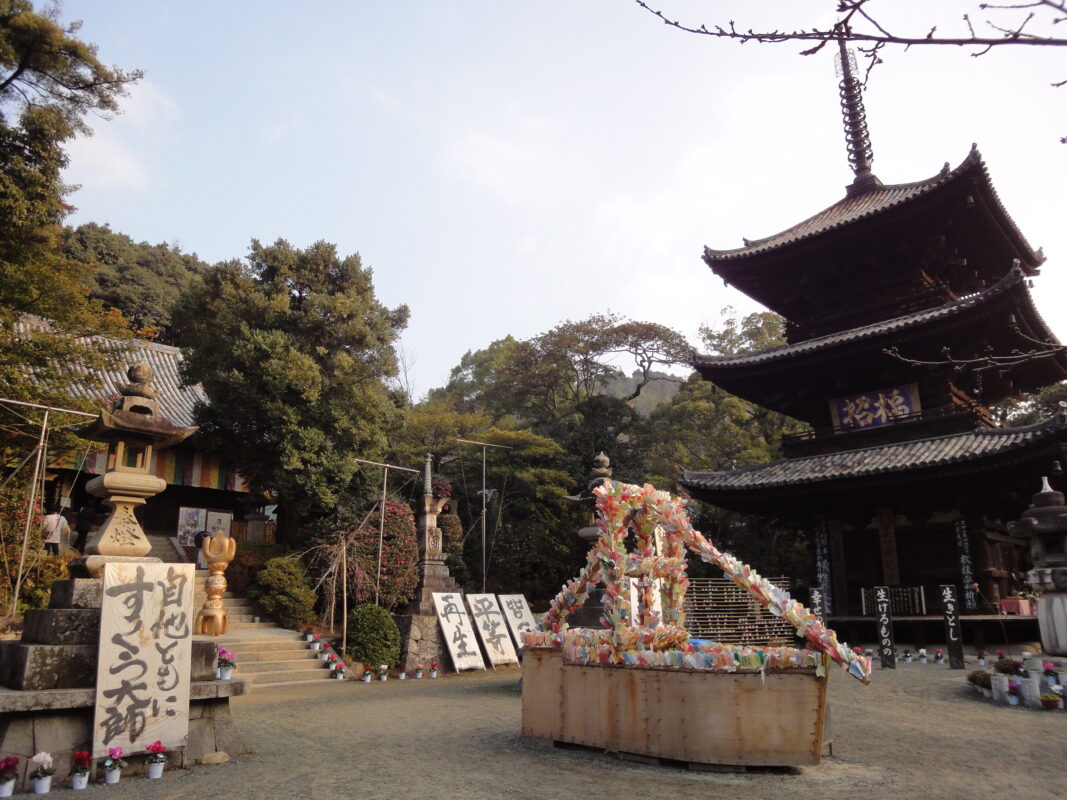
Stone pillars donated by worshippers line the approach, creating a solemn atmosphere as you make your way up the hillside toward the temple. Despite the climb, the sense of anticipation and the increasingly peaceful surroundings make the ascent a memorable part of the journey.
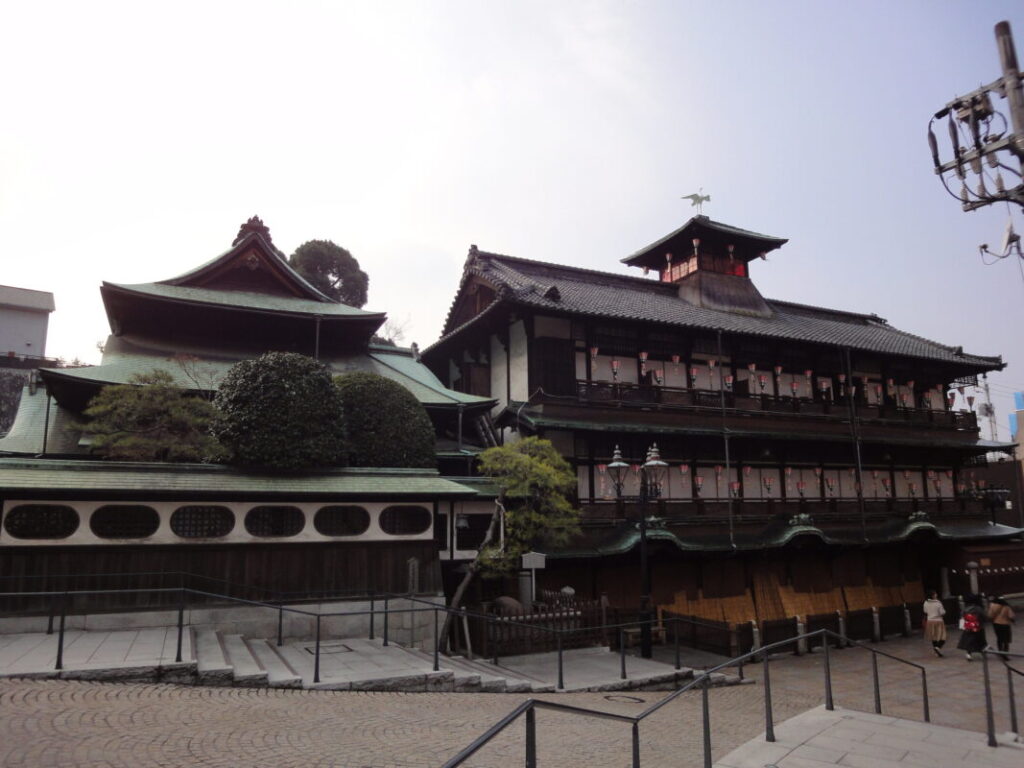
Dōgo Onsen Main Building
View of Matsuyama Castle from the pilgrimage trail
Route to Taisanji
There are two main routes to Taisanji: one approaching from the east and the other from the south.
I usually take the southern route because part of the eastern route overlaps with the road leading to the next temple, Enmyoji.
For the southern route, walk about 7 km (4.3 miles) west from Ishiteji toward Mitsuhama Station. After crossing the railway crossing near the station, continue north for approximately 3 km (1.9 miles) to reach Taisanji.
The National Treasure Main Hall and Historic Sanmon Gate
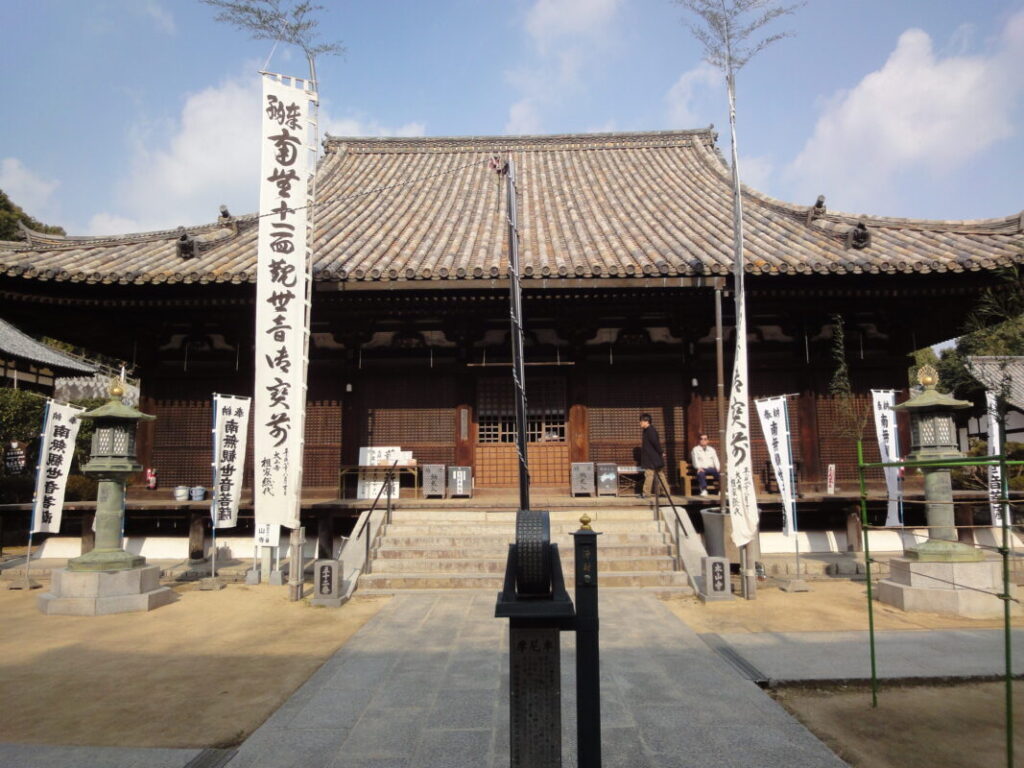
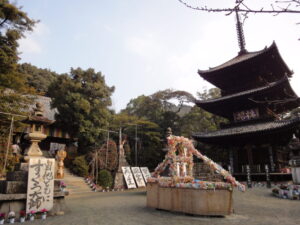
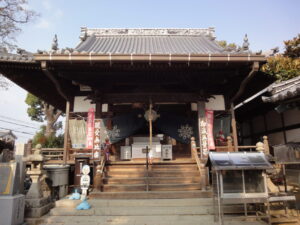
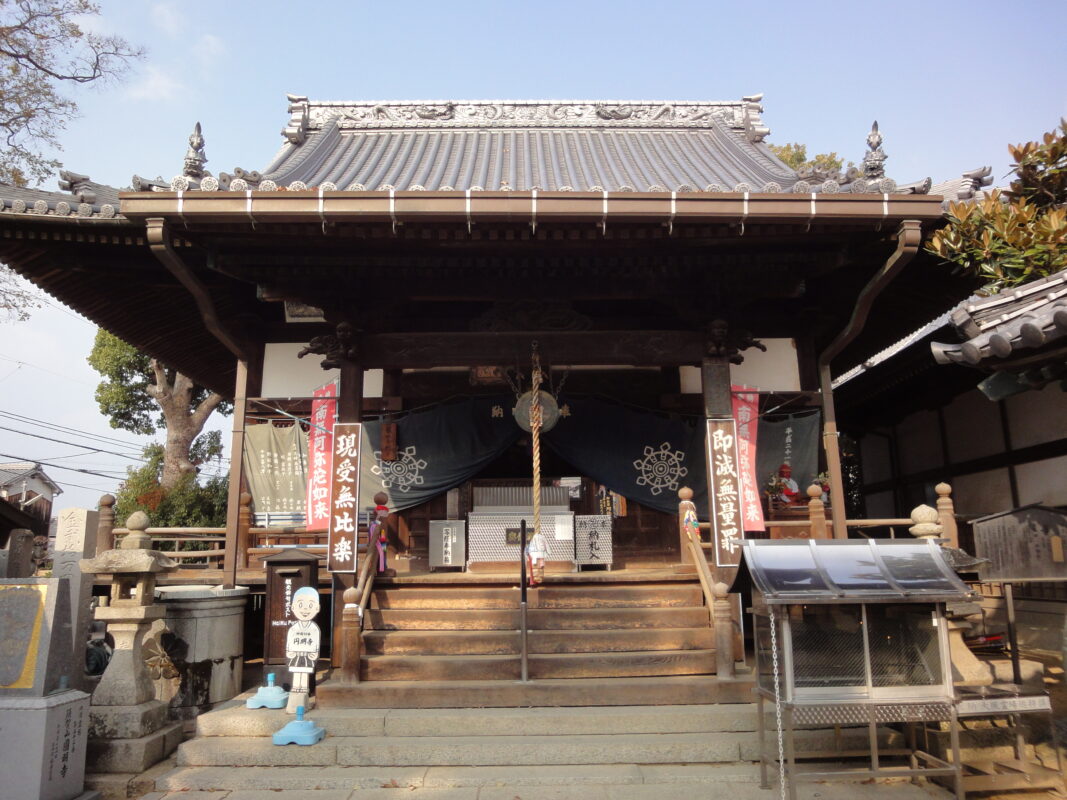
The Main Hall of Taisanji is a National Treasure that was rebuilt around the early 14th century.
Its large irimoya-style roof spreads gracefully across the building, and the gently curved eaves create an elegant silhouette that immediately draws the eye.
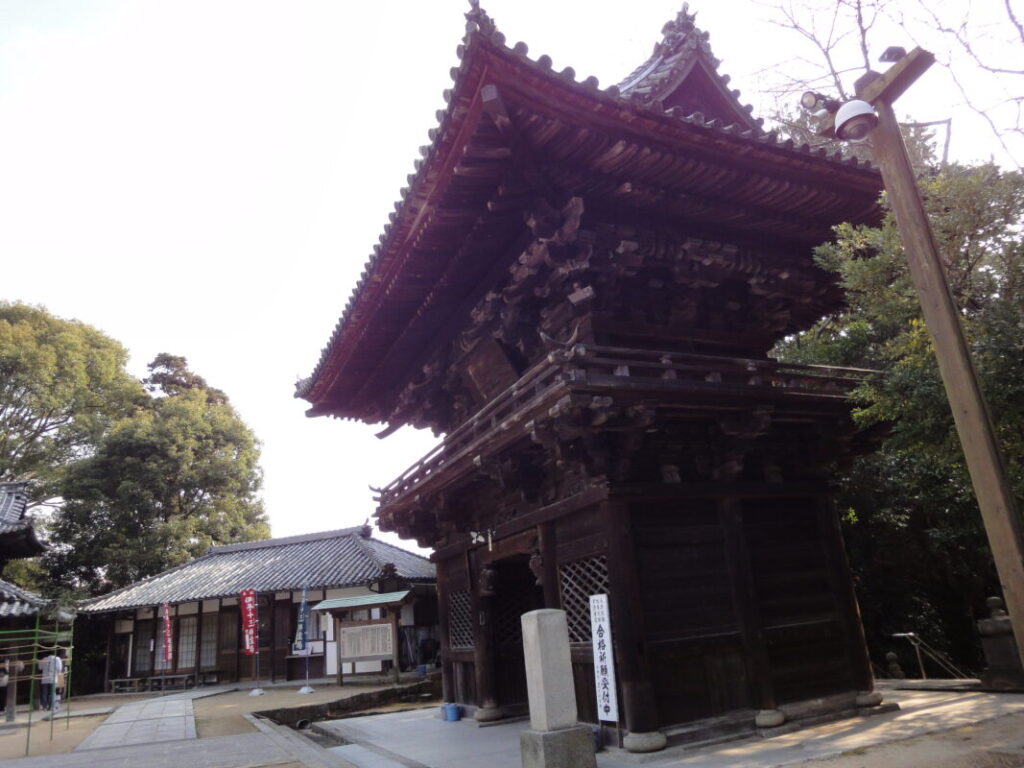
The imposing Sanmon Gate was rebuilt during the same period as the Main Hall and has been designated an Important Cultural Property. Its solid wooden structure and historic atmosphere make a strong impression on visitors approaching the temple.
After the bustle of central Matsuyama, Taisanji offers a striking contrast. Surrounded by the quiet atmosphere of a historic mountain temple, it is one of the pilgrimage sites where taking time to explore and appreciate the surroundings is especially rewarding.
Nearby Accommodation
If you plan to stay near Taisanji or between the surrounding pilgrimage temples, see the article below.
Related Articles
Shikoku 88 Temple Pilgrimage Route: Full List, Distance & Walking Time Guide.
Temple List and Full Route
Comments