
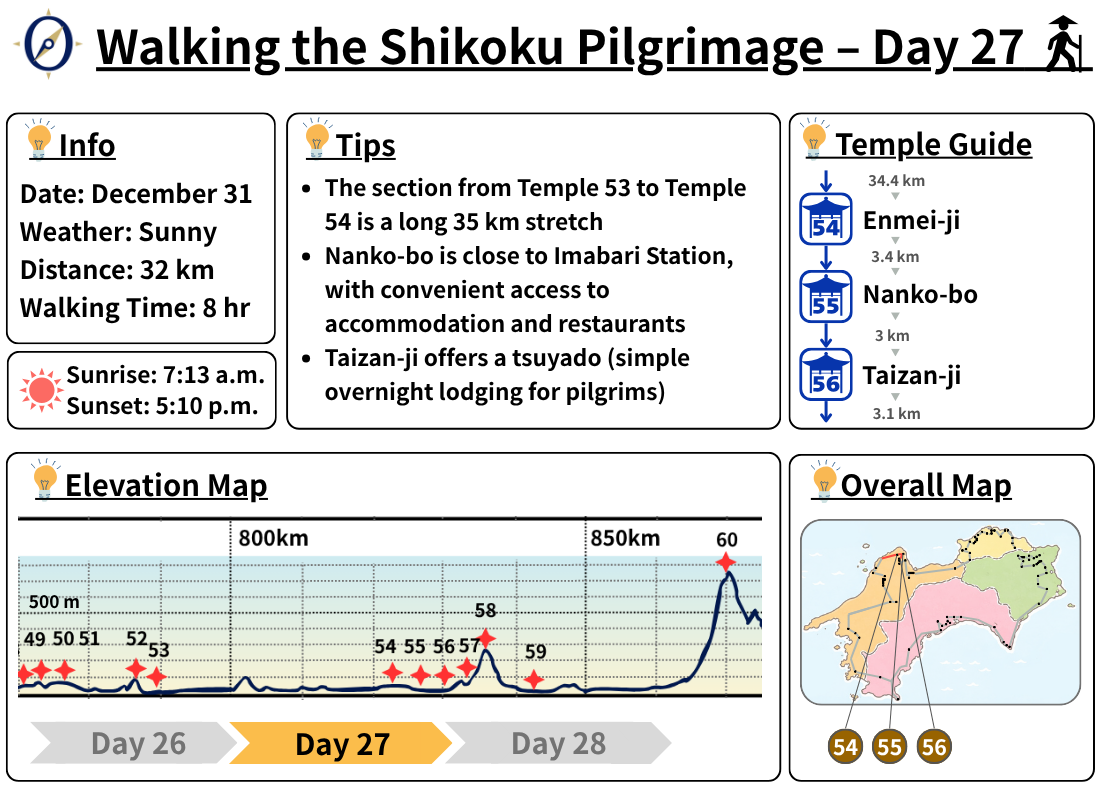
Day 27 of the Shikoku Pilgrimage on Foot
On New Year’s Eve, I left Bunka no Mori Park in the morning and walked through Kono-zaka Pass and Kikuma Town before visiting Temple 54, Enmei-ji, Temple 55, Nanko-bo, and Temple 56, Taizan-ji.
At Taizan-ji, I was allowed to stay overnight in the temple’s pilgrim lodging hall. I also had the chance to take part in the long-awaited New Year’s Eve bell-ringing ceremony.
Ringing the temple bell alongside the head priest as we welcomed the New Year made this an unforgettable New Year’s Eve.
Itinerary
- 6:30Departure
- Bunka no Mori Park
- Kono-zaka Pass
- Kama Daishi
- Kikuma Town
- Hoshi no Ura Seaside Park
- 14:00Temple No. 54, Enmei-ji
- Imabari Station
- 15:30Temple No. 55, Nanko-bo
- Oyamazumi Shrine
- 16:30Temple No. 56, Taizan-ji
Tsuyado
Getting Ready in the Morning
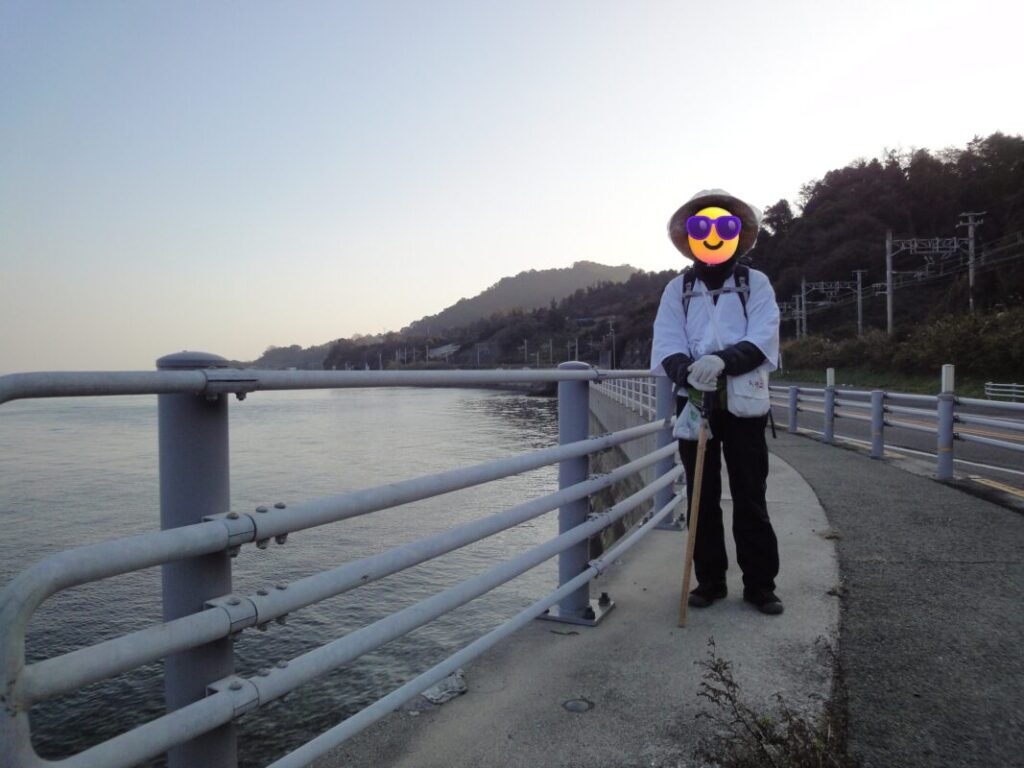
December 31. Clear skies. Day 27 of the Shikoku Pilgrimage on foot.
Yesterday, I left Dogo and visited Temples 50 through 53, from Hanta-ji to Enmyo-ji. Afterward, I spent the night outdoors at Bunka no Mori Park, on the way to Temple 54, Enmei-ji.
Today was New Year’s Eve. In Japan, there is a tradition of ringing temple bells on New Year’s Eve to let go of the worldly desires of the past year and welcome the new year.
Since I happened to be on the Shikoku pilgrimage at the end of the year, I hoped I might get the chance to ring a temple bell myself.
I had heard that Temple 56, Taizan-ji, which was on today’s route, had a pilgrim lodging hall called a tsuyado. If I were allowed to stay there, perhaps I could take part in the New Year’s Eve bell-ringing ceremony as well.
With that hope in mind, I finished getting ready and set off at 6:30 a.m.
Heading for Temple 54, Enmei-ji
My first destination of the day was Temple 54, Enmei-ji, about 25 kilometers away. The route was relatively straightforward, following National Route 196 north along the Iyo Sea. There were several towns along the way, so finding food and drinks would not be a problem.
Crossing Kono-zaka Pass
Beyond Iyo-Hojo, there are two route options: follow the coastal road or take the pilgrimage trail over Kono-zaka Pass.
The trail over the pass was a little difficult to follow, but it shortened the distance by about 1 kilometer. Wanting to make as much progress as possible, I chose this route.
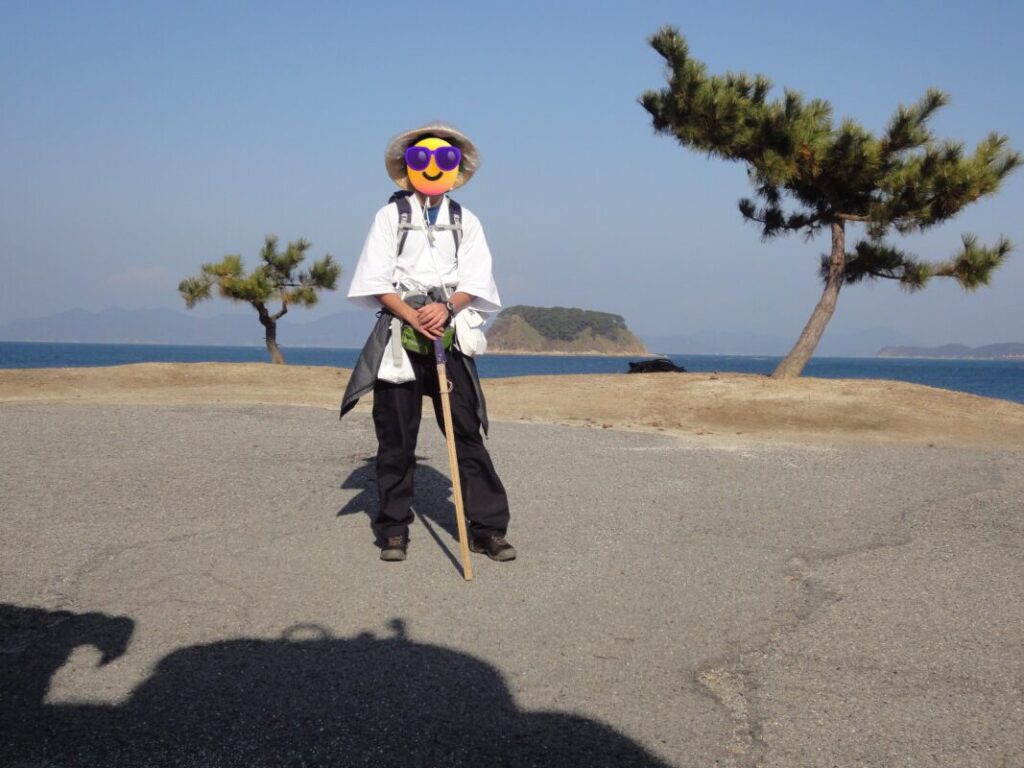
After crossing the pass, at an elevation of about 80 meters, I was rewarded with panoramic views of the Seto Inland Sea and the town below. The mountain trail offered a different kind of scenery from the coastal road.
Along the way, I also passed a sacred site known as Kama Daishi. According to legend, Kobo Daishi carved an image of himself there using a sickle.
Walking while encountering stories and legends like these is part of what makes the Shikoku pilgrimage so fascinating. It is about more than simply reaching the next destination.
A Pilgrim’s Welcome in Kikuma
It was 9:30 a.m. By then, I had walked about 20 kilometers from Temple 53, Enmyo-ji, and arrived in Kikuma Town.
Kikuma is known for its traditional Kikuma roof tiles. There was also a convenience store along the national highway, so I decided to buy a boxed lunch for later.
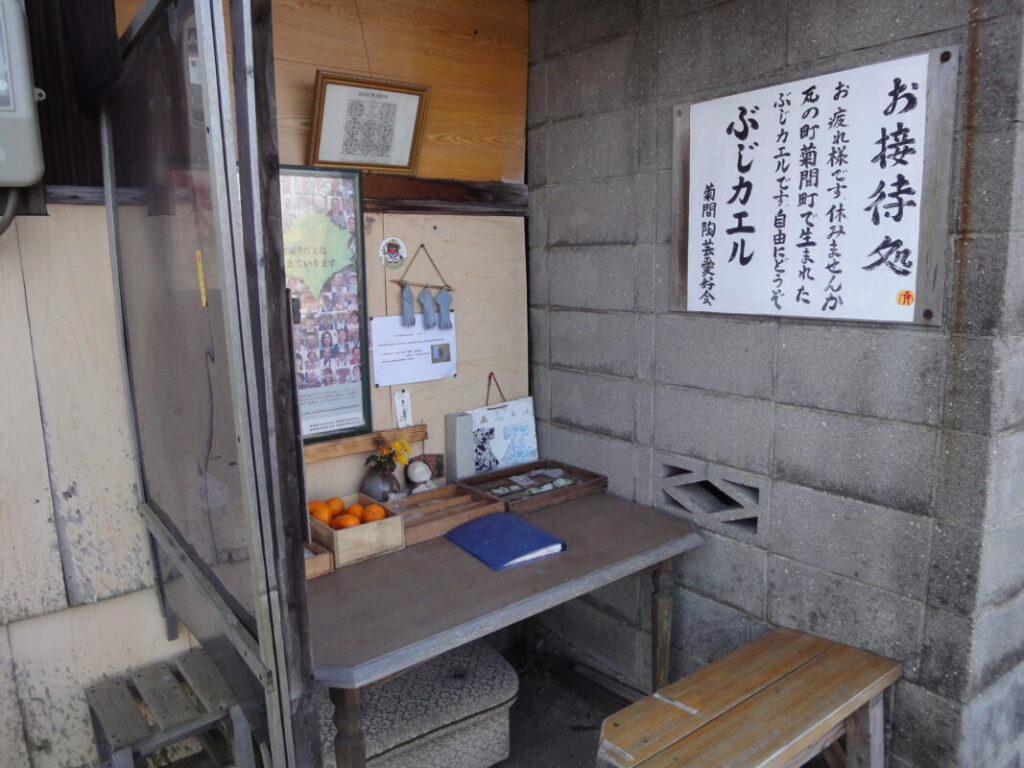
There was a settai station along the pilgrimage route, where I found people handing out small ceramic accessories made using roof tiles.
I received a tiny ceramic ornament shaped like a traditional straw sandal. Since sandals have long been associated with pilgrims traveling on foot, it was a fitting souvenir of the journey.
The Industrial Plant in Kikuma
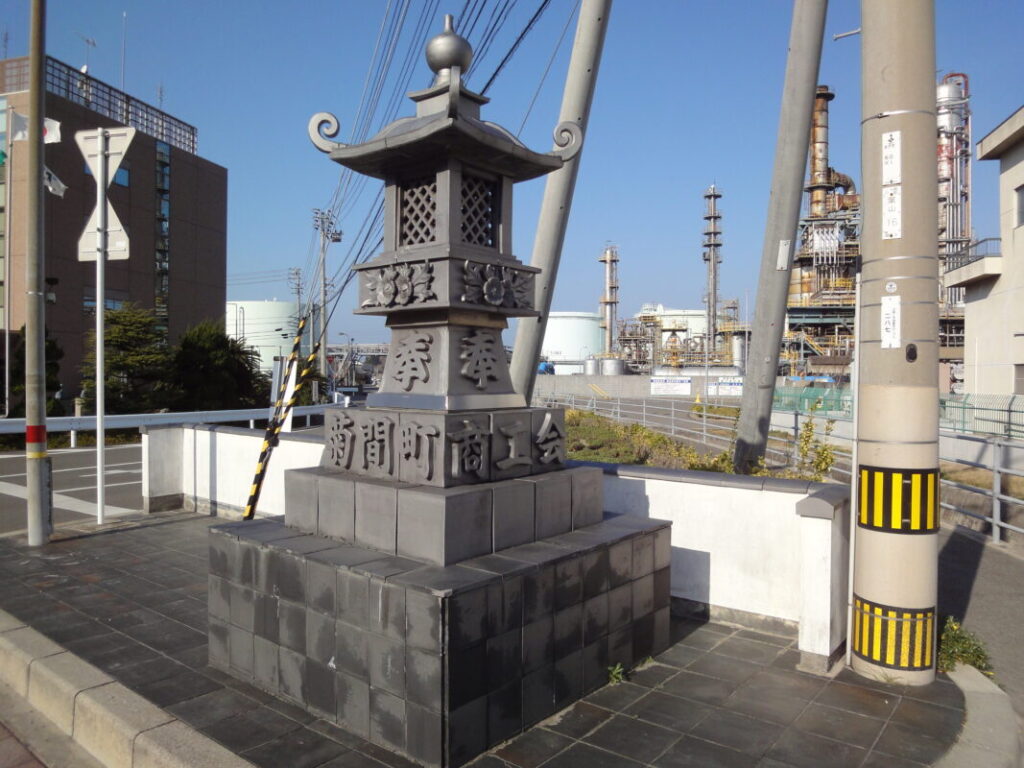
After passing through Kikuma, I came across a striking industrial plant that stood out against the surrounding landscape. It is a memorable sight often featured in online accounts of the Shikoku pilgrimage.

Taking a Break at Hoshi no Ura Seaside Park
It was noon when I arrived at Hoshi no Ura Seaside Park.
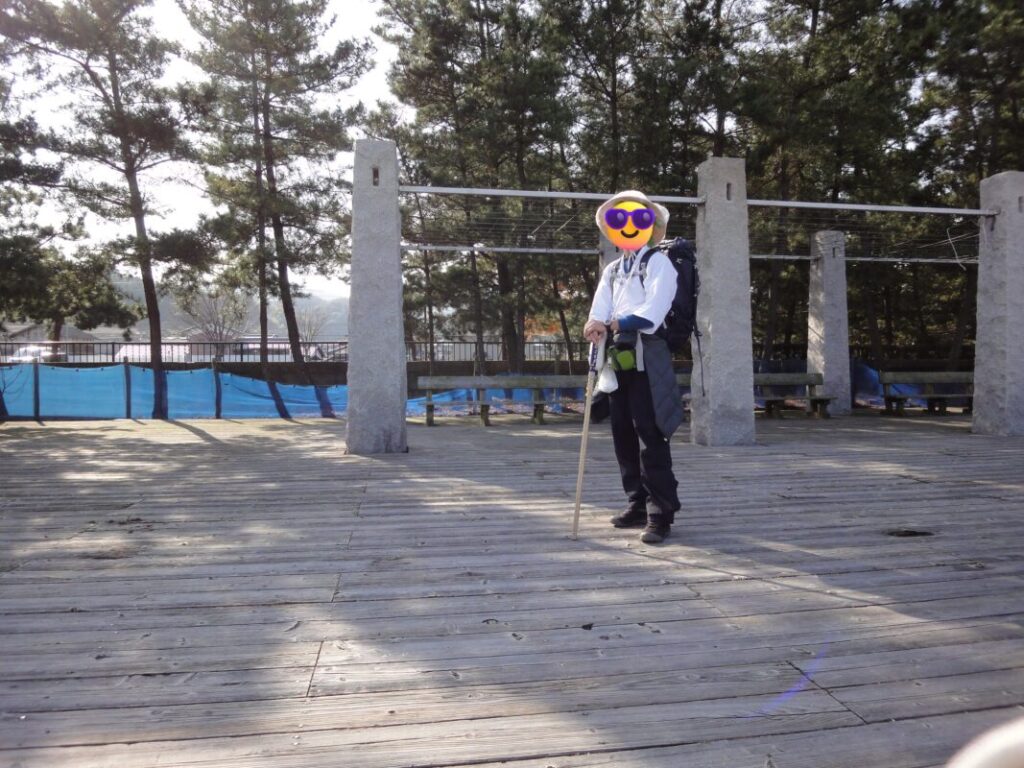
Located along National Route 196, the park is an easy place for pilgrims to stop and rest along the way. Facing the sea, it has a swimming beach and a large parking area, while the pine grove also serves as a windbreak to protect the coast from drifting sand.
I took a break among the pine trees, enjoying the sea just a short distance away. After spending so much time walking along the road, it was refreshing to find a peaceful spot by the water.
Temple 54, Enmei-ji, was about 5 kilometers away. Just a little farther to go before reaching my first temple of the day.
Visiting Temple 54, Enmei-ji
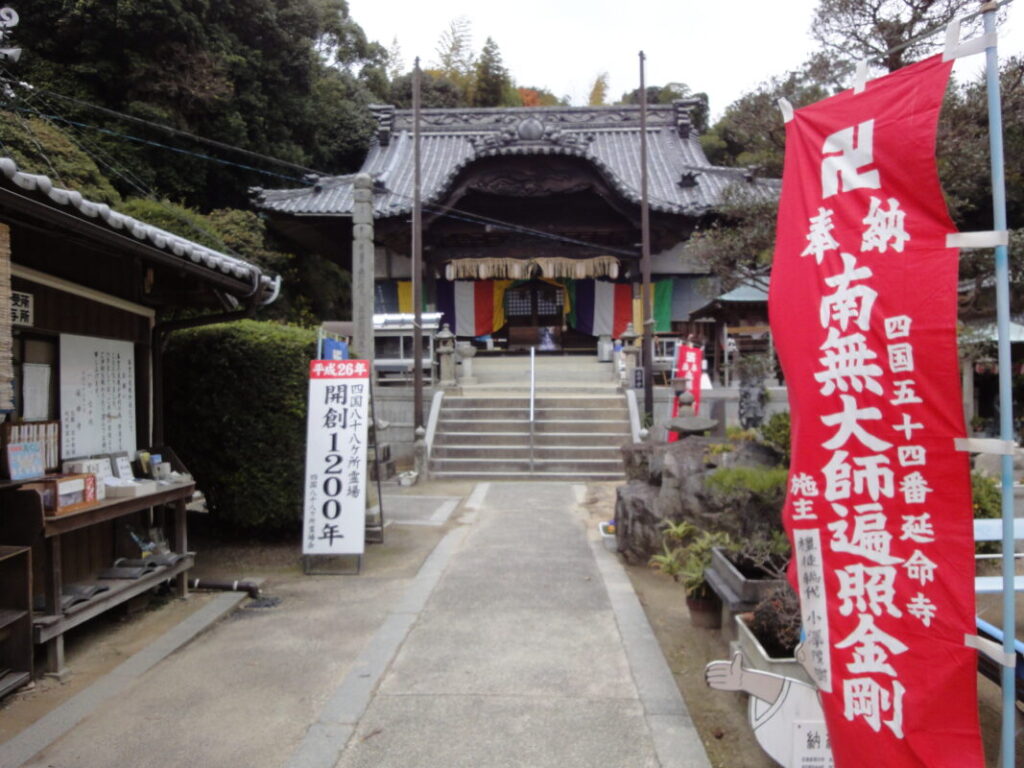
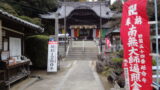
I arrived at Temple 54, Enmei-ji, at 2 p.m.
Why the Temple’s Name Changed
Enmei-ji was originally called Enmyo-ji (圓明寺). However, Temple 53 is also called Enmyo-ji (円明寺), with the same pronunciation. As a result, pilgrims sometimes confused the two temples.
To avoid this confusion, the name “Enmei-ji,” which had already been familiar to people for some time, became the temple’s official name. It remains so today.
I had also confused it with Temple 53, Enmyo-ji, on occasion.
Walking the Shikoku Pilgrimage introduces you not only to the history of each temple but also to unexpected stories like this.
Shin-nens’s Road Marker
Within the temple grounds stands a road marker erected by Shin-nenn, a well-known guide for pilgrims during the Edo period.
Thinking of Shin-nenn brings back a memory of seeing Shin-nenn-an after emerging from a long tunnel on the way to Cape Ashizuri. He left his mark in many places through his efforts to maintain and guide pilgrims along the pilgrimage routes.
This road marker is also a valuable historical site that preserves the pilgrimage culture of the Edo period. I wonder if pilgrims back then relied on this very marker as they made their way toward the next temple.
Imagining that makes me feel as though the path I am walking today connects me with the pilgrims who walked it hundreds of years ago.
Walking to Temple 55: Nanko-bo
The next stop was Temple 55, Nanko-bo, located about 3 km east of Enmei-ji.
After leaving Enmei-ji, I headed east through peaceful countryside. Following the trail signs, I came to a rather unusual section of the pilgrimage route that passed through a cemetery.
It might be a little confusing if you are walking this route for the first time, but this is part of the official Shikoku pilgrimage trail. After passing through the cemetery and crossing a small river, the scenery changed completely as I entered the urban area of Imabari. There were plenty of places to stop for food and drinks in this area.
Beigu Oyamazumi Shrine stands right next to Nanko-bo. Since the temple and shrine are adjacent to each other, it is worth taking care not to confuse the two when visiting.
Visiting Temple 55: Nanko-bo
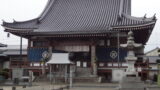
I arrived at Nanko-bo at 3:30 p.m.
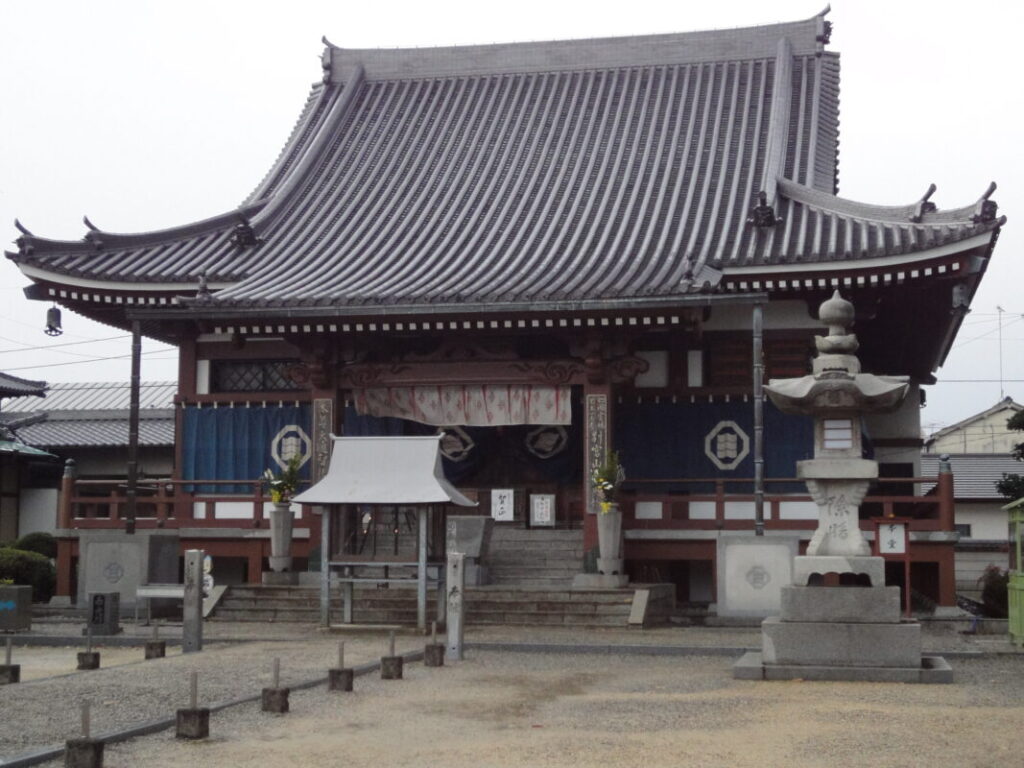
Nanko-bo originally flourished as the administrative temple of Oyamazumi Shrine, the principal shrine of Iyo Province. Today, Beigu Oyamazumi Shrine still stands right next door, creating a distinctive landscape where a Buddhist temple and a Shinto shrine sit side by side.
Before the separation of Shinto and Buddhism during the Meiji period, shrines and Buddhist temples were closely connected. Nanko-bo and Beigu Oyamazumi Shrine preserve this history of shinbutsu-shugo, the traditional blending of Shinto and Buddhism.
Nanko-bo is also known as the only temple among the 88 sacred sites of the Shikoku Pilgrimage whose name includes the word bo, meaning a Buddhist monastic establishment.
The temple’s principal object of worship is Daitsuchisho Nyorai, a relatively unusual Buddhist deity among the 88 pilgrimage temples and one of the distinctive features of Nanko-bo.
Visiting Temple 56: Taizan-ji
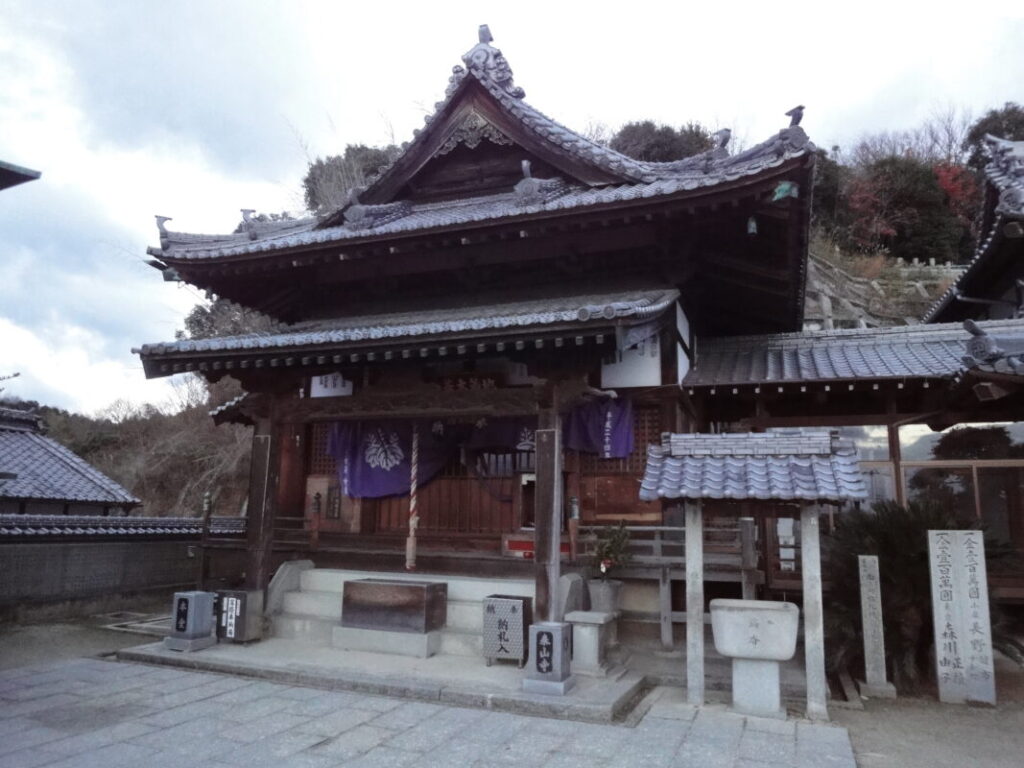
Taizan-ji is located about 3 km southwest of Nanko-bo. The route is relatively easy to follow. I passed under an elevated section of the JR Yosan Line and continued through the area around Imabari Station.
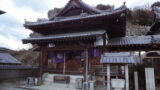
I arrived at Taizan-ji at 4:30 p.m.
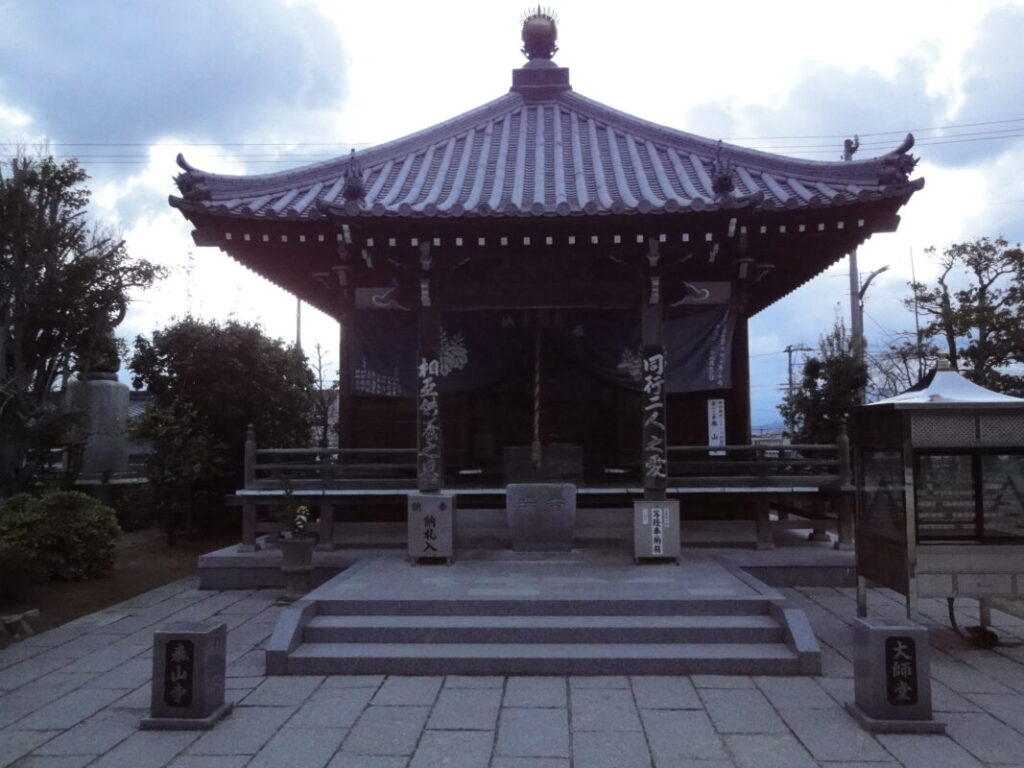
Although Taizan-ji is close to the urban center of Imabari, a forest spreads out behind the temple grounds, creating a peaceful and tranquil atmosphere.
Temples near urban areas can sometimes feel more like tourist attractions. However, Taizan-ji had a welcoming warmth that comes from being deeply rooted in the local community.
Staying Overnight in the Tsuyado
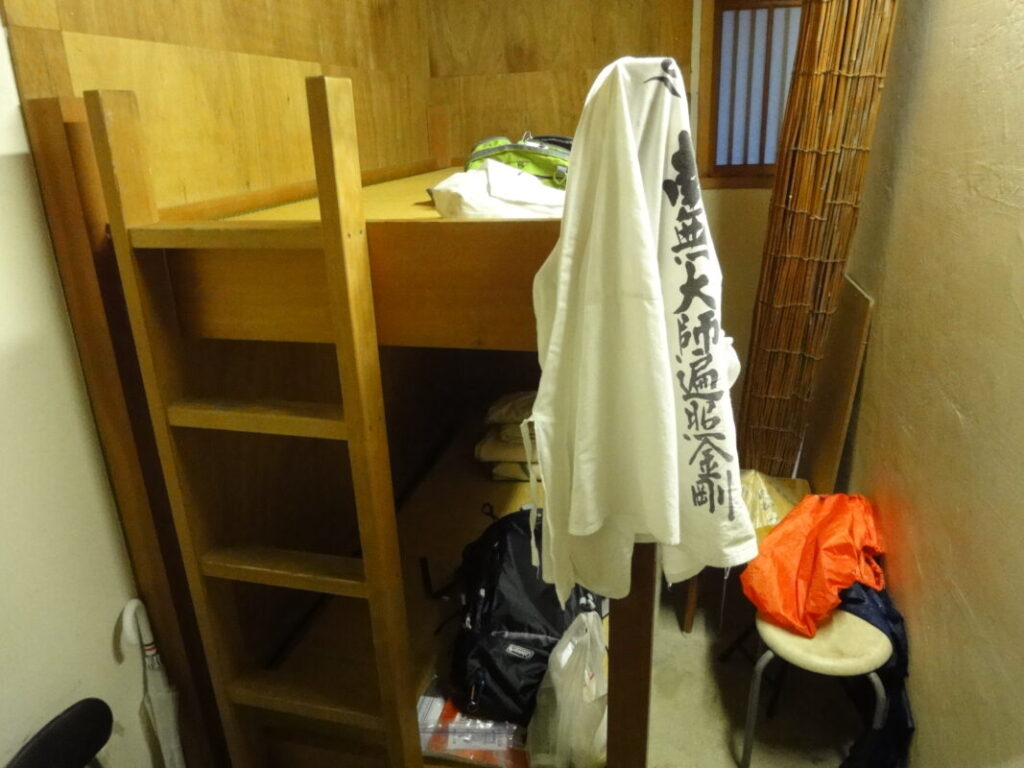
After completing my visit, I went to the temple office and asked the resident priest if I could stay overnight in the tsuyado, a simple lodging space traditionally offered to pilgrims.
He kindly gave me permission to stay. He also mentioned that the temple would hold a New Year’s Eve bell-ringing ceremony shortly before midnight and invited me to join if I was interested.
The tsuyado was set up in a dormitory style, with bunk beds inside. The room was large enough to accommodate about two people.
On a freezing winter night, I was truly grateful to have a place where I could rest sheltered from the wind.
For dinner, I ate a bento box I had bought at a convenience store along the way.
Since I wanted to attend the New Year’s Eve bell-ringing ceremony, I set my smartphone timer for 11:30 p.m. and decided to go to sleep early.
Welcoming the New Year with the Temple Bells
My timer went off, and I woke up.
When I stepped outside into the temple grounds, the resident priest and another person assisting him were standing beside the temple bell. The priest was holding a stopwatch.
They explained that if they rang the bell about once every 20 seconds, they would finish all 88 strikes around midnight. They were carefully timing each interval and preparing for the New Year.
The priest and his assistant began ringing the bell first.
On the still, quiet night of New Year’s Eve, the deep sound of the temple bell echoed through the grounds. In the bitter cold, its rich, resonant tones and vibrations spread through the surrounding darkness.
As I listened to those solemn sounds, I felt as though the worldly desires and worries of the past year were gradually falling away.
After a while, the priest handed me the wooden striker and asked, “Would you like to give it a try?”
When I thought of New Year’s Eve bell-ringing ceremonies, I imagined long lines of local people waiting for their turn to strike the bell. But that night, hardly anyone else came to the temple.
Before I knew it, I was ringing nearly half of the 88 strikes myself.
I wondered whether it was really okay for me to ring the bell so many times. Still, this was a rare opportunity. With each strike, I swung the wooden striker down, wishing not only for my own well-being but also for the sound of the bell to reach the people of the local community.
“Would you like to have a turn, too, Reverend?”
I asked the priest, who readily replied, “Sure!”
The three of us continued taking turns ringing the bell, and together we successfully completed all 88 strikes.
Then midnight arrived, and the New Year began.
The three of us exchanged a few simple New Year’s greetings and shared a quiet moment together in the temple grounds.
Spending New Year’s Eve walking the Shikoku Pilgrimage, staying overnight in a temple’s tsuyado, and welcoming the New Year by ringing the temple bell alongside the priest.
It was truly an extraordinary experience.
I am grateful to have spent the final day of the year in such a memorable way.
Day 27 of my walking pilgrimage to the 88 temples of Shikoku. It became a New Year’s Eve I will never forget.
Temple Information
- No. 54
- No. 55
- No. 56


Comments