
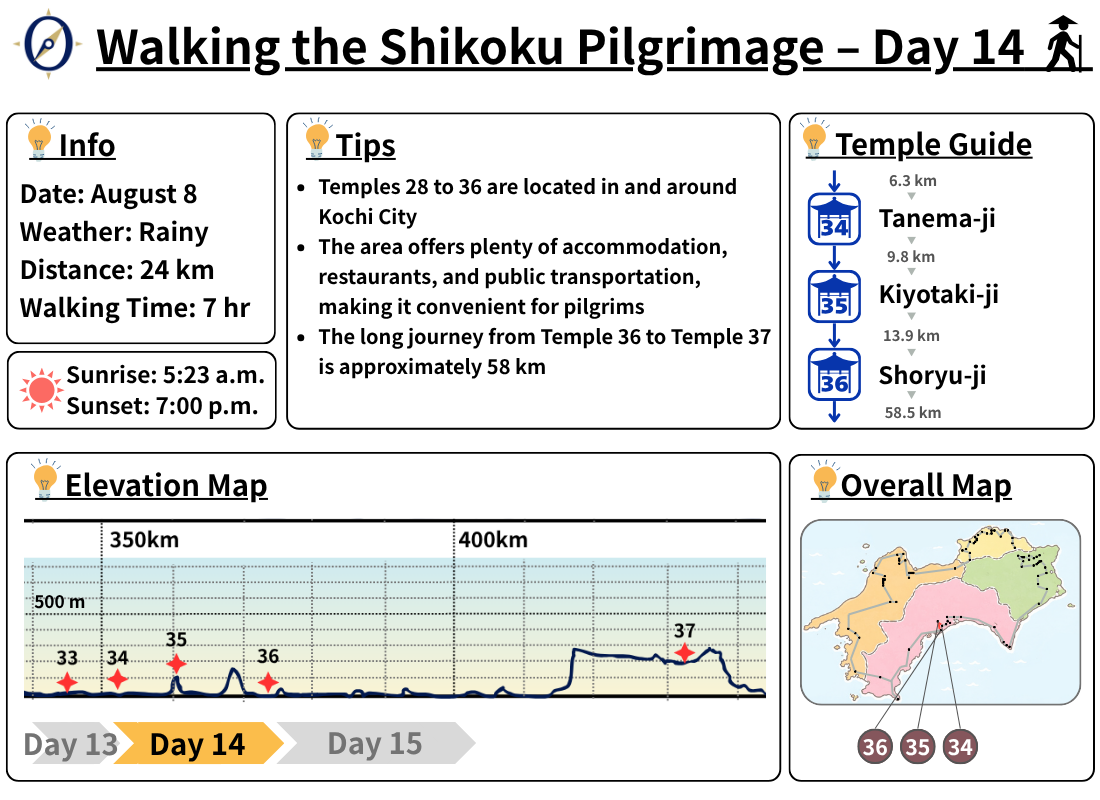
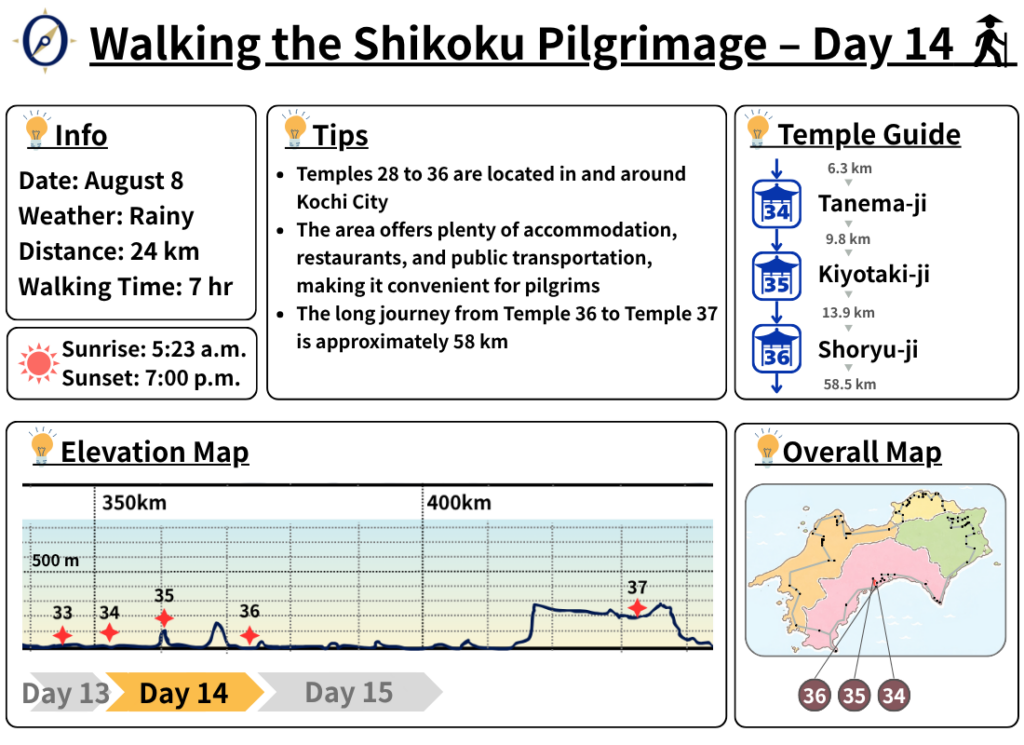
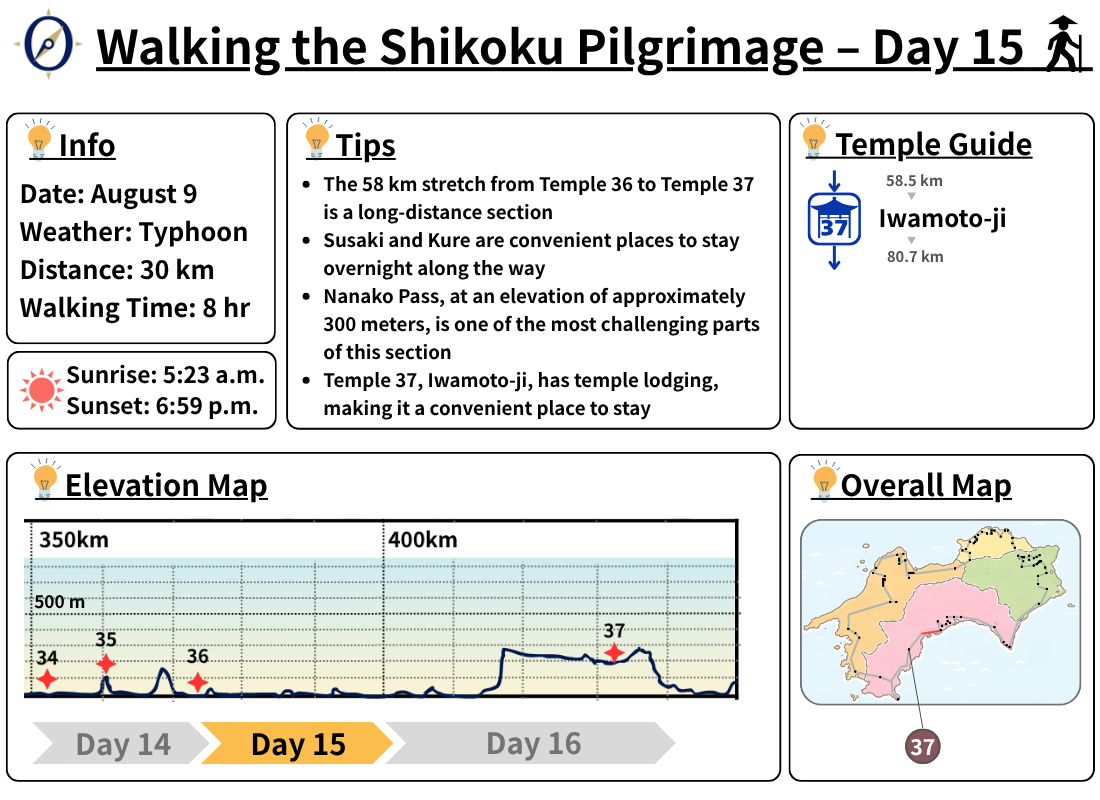
On August 8, I resumed my Shikoku pilgrimage on foot after a break of nearly two months. I walked approximately 24 km from Temple 34, Tanema-ji, to Temple 35, Kiyotaki-ji, crossed the Tsukaji Pass, and continued to Temple 36, Shoryu-ji. With a typhoon approaching, it was a challenging journey in the pouring rain, but I successfully visited all three temples as planned. That night, I stayed at Kokumin Shukusha Tosa, where I enjoyed sharing fascinating and unusual experiences with fellow pilgrims.
Itinerary
- 7:30Temple No. 34, Tanema-ji
- 11:15Temple No. 35, Kiyotaki-ji
- Tsukaji Pass
- Usa Ohashi Bridge
- 16:30Temple No. 36, Shoryu-ji
- 17:30Kokumin Shukusha Tosa
Overnight stay
The Start of My Third Sectional Pilgrimage
August 8 marked the beginning of my third sectional pilgrimage.
My previous journey had ended on June 2, after visiting Temple 34, Tanema-ji. It had been nearly two months since I last walked the pilgrimage route. I arrived in Kochi early in the morning by overnight bus and took a taxi from there to Tanema-ji.
I arrived at 7:30 a.m. The taxi driver kindly rounded down the fare as a gesture of osettai (a traditional act of generosity toward pilgrims). I was grateful for this thoughtful gesture at the very beginning of my journey.
According to the weather forecast, a large typhoon had formed over the Pacific Ocean and was expected to make landfall in Kochi Prefecture the following evening. I considered changing my plans, but decided to proceed as scheduled, taking my overall itinerary into account.
The sky was covered with thick, dark gray clouds, and it looked as though rain could begin at any moment. At the Daishi Hall of Tanema-ji, I offered prayers for a safe return to the pilgrimage trail and a trouble-free journey ahead.
This third sectional pilgrimage was planned to last nine days, from August 8 to August 16. If everything went according to plan, I hoped to walk beyond Temple 40, Kanjizai-ji, and reach Uwajima in Ehime Prefecture.
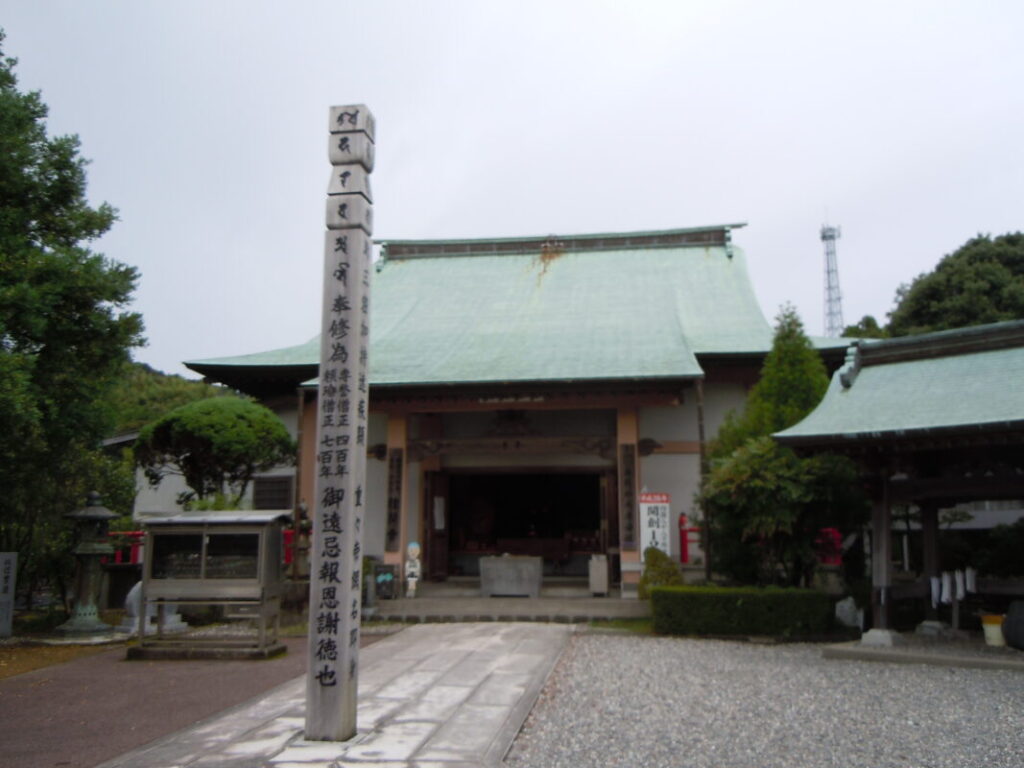
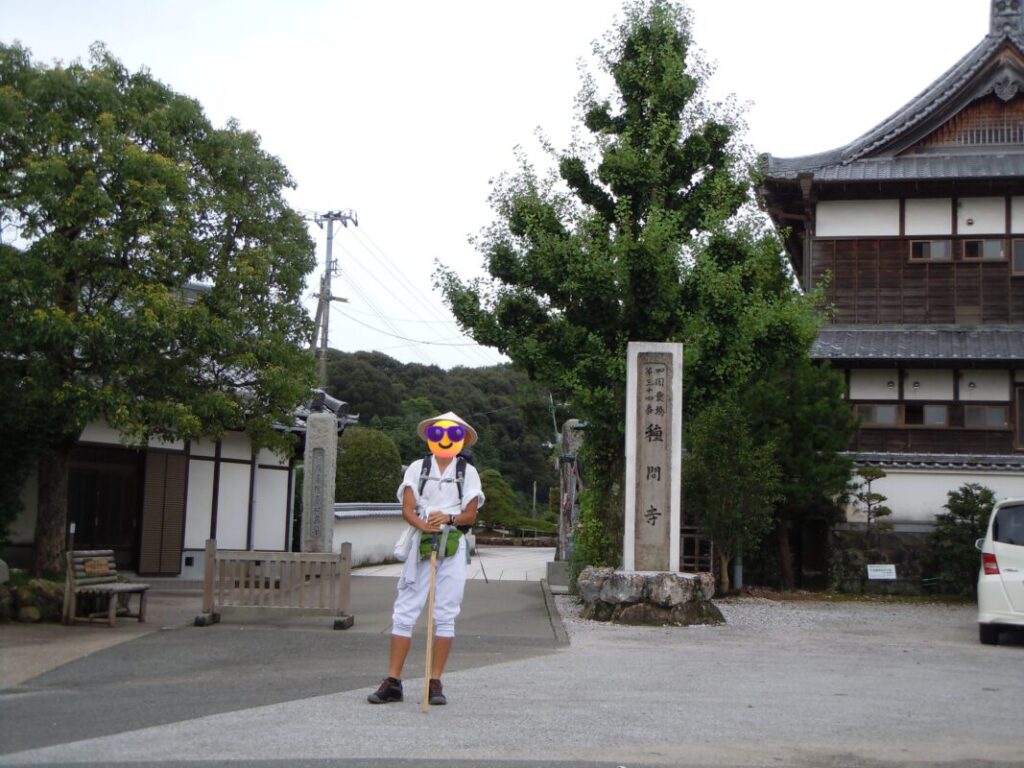
From Temple 34, Tanema-ji, to Temple 35, Kiyotaki-ji
The journey from Temple 34, Tanema-ji, to Temple 35, Kiyotaki-ji, is approximately 10 km.
After walking about 4 km west, I reached the Niyodo River, which flows along the boundary between Kochi City and Tosa City. By the time I crossed the river and reached National Route 56, the rain had become heavy.
I could no longer endure the downpour, so I took a poncho-style raincoat out of my backpack and covered my luggage with a waterproof cover as well.
About an hour after crossing the Niyodo River, I spotted the Kochi Expressway. After passing beneath the elevated road on its northern side, I began climbing a narrow path alongside an irrigation canal.
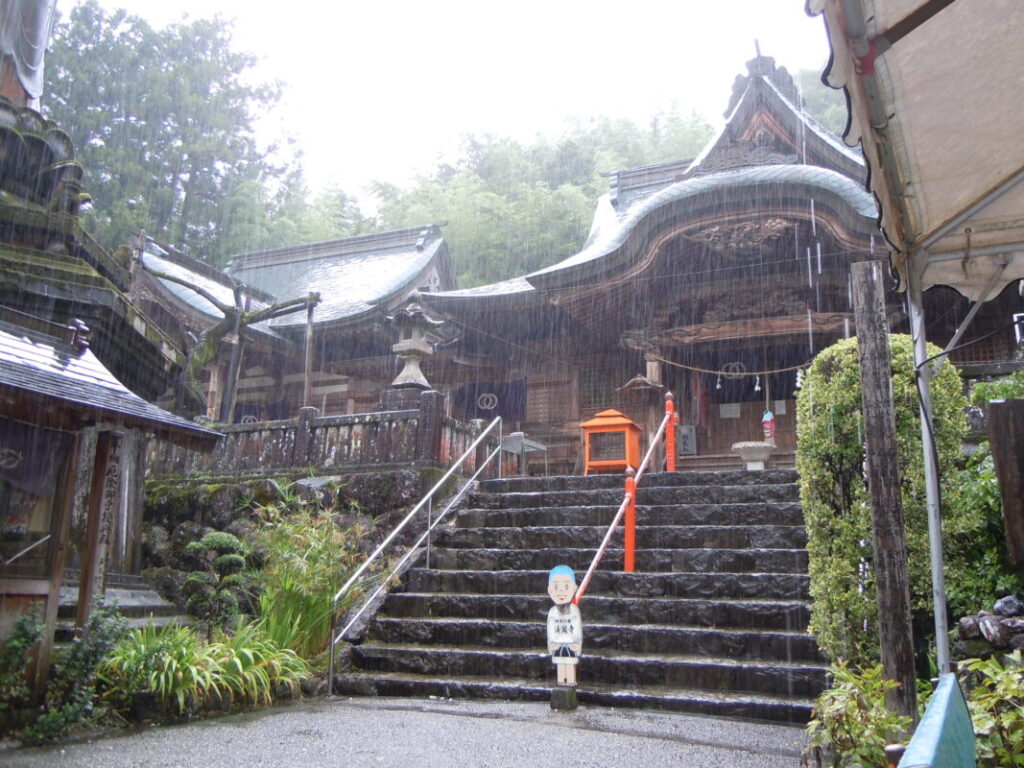
Temple 35, Kiyotaki-ji, is located in the mountains at an elevation of approximately 140 meters. Although the distance is relatively short, the final stretch involves a steep, continuous climb, making it quite strenuous.
The rain kept alternating between showers and brief breaks, sometimes falling so heavily that the large raindrops pounded against everything around me. With a typhoon approaching, the weather was particularly challenging for walking pilgrims.
Visiting Temple 35, Kiyotaki-ji
Just after 11:00 a.m., I finally arrived at Kiyotaki-ji.
There was a covered rest area within the temple grounds, so I took a short break there to shelter from the rain. However, the downpour grew even heavier, with water cascading from the roof like a waterfall.
I wiped my wet hands and feet with a towel, got myself ready, and then completed my temple visit.
From Temple 35, Kiyotaki-ji, to Temple 36, Shoryu-ji via Tsukaji Pass
My next destination was Temple 36, Shoryu-ji, approximately 14 km south of Kiyotaki-ji.
I retraced my steps down the mountain and walked about 4 km south through the town of Takaoka before reaching Prefectural Route 39. From here, there are two possible routes.
One is the traditional pilgrimage trail over Tsukaji Pass, while the other follows the prefectural road through a tunnel. The road route avoids the mountain pass, making it a good alternative for pilgrims who are concerned about their physical condition.
I decided to take the traditional pilgrimage trail over Tsukaji Pass.
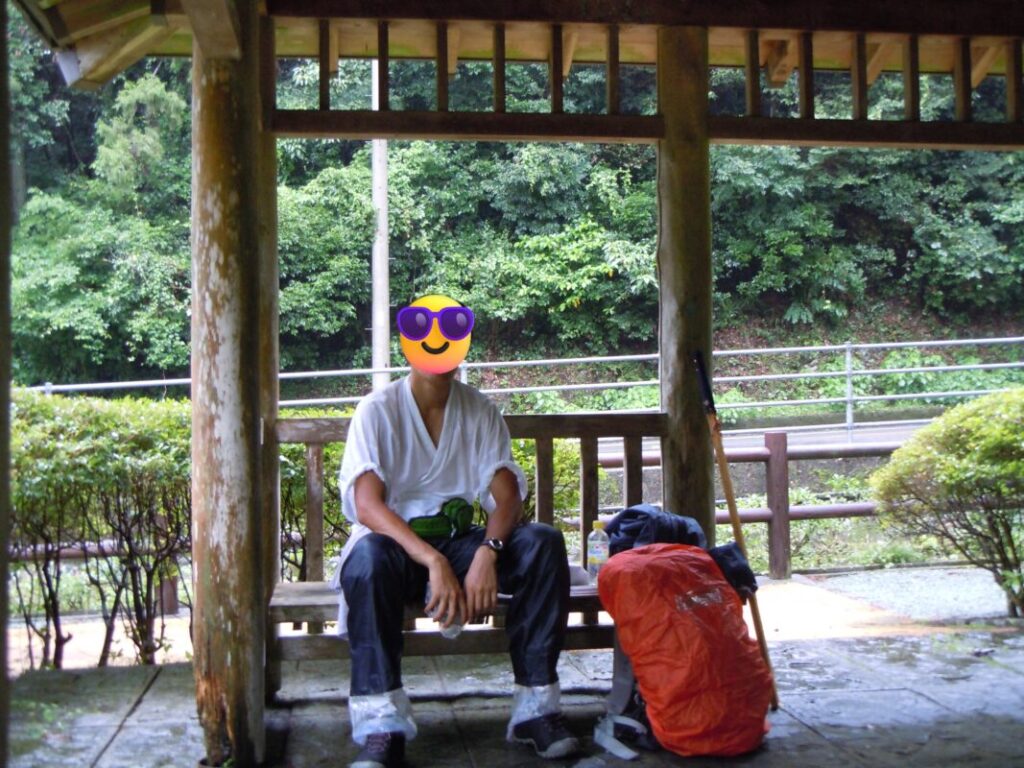
Tsukaji Pass Rest Area
There is a small rest area at the entrance to the mountain trail, making it an easy landmark to spot. A toilet is also available nearby, which is convenient.
I took off my backpack, rested for a while, and had a light snack to prepare for the climb.
Having already spent nearly half a day walking in the rain, even the white pilgrim’s robe I was wearing underneath my raincoat was completely soaked.
Tsukaji Pass is a traditional pilgrimage trail that climbs to an elevation of approximately 200 meters. Along the way, there are Buddhist statues carved into the rocks, offering a glimpse into the long history of this ancient pilgrimage route.
From the pass, I could enjoy a panoramic view of Usa Bay. The trail was well maintained, and despite the slippery conditions caused by the rain, I had no particular difficulty walking along it.
After crossing the pass, I emerged in Usa Town, facing Usa Bay.
There are fewer convenience stores and restaurants beyond Shoryu-ji, so it is a good idea to stock up on food and other necessities around this area.
I crossed Usa Ohashi Bridge, which spans Usa Bay. It is a large bridge with a wide pedestrian walkway, but the railings seemed relatively low. To be on the safe side, I made sure to walk along the center of the walkway.
After crossing the bridge, I walked for another 30 minutes or so and finally arrived at Temple 36, Shoryu-ji, at 4:30 p.m.
The Long Stone Steps and Namikiri Fudo Myoo at Temple 36, Shoryu-ji
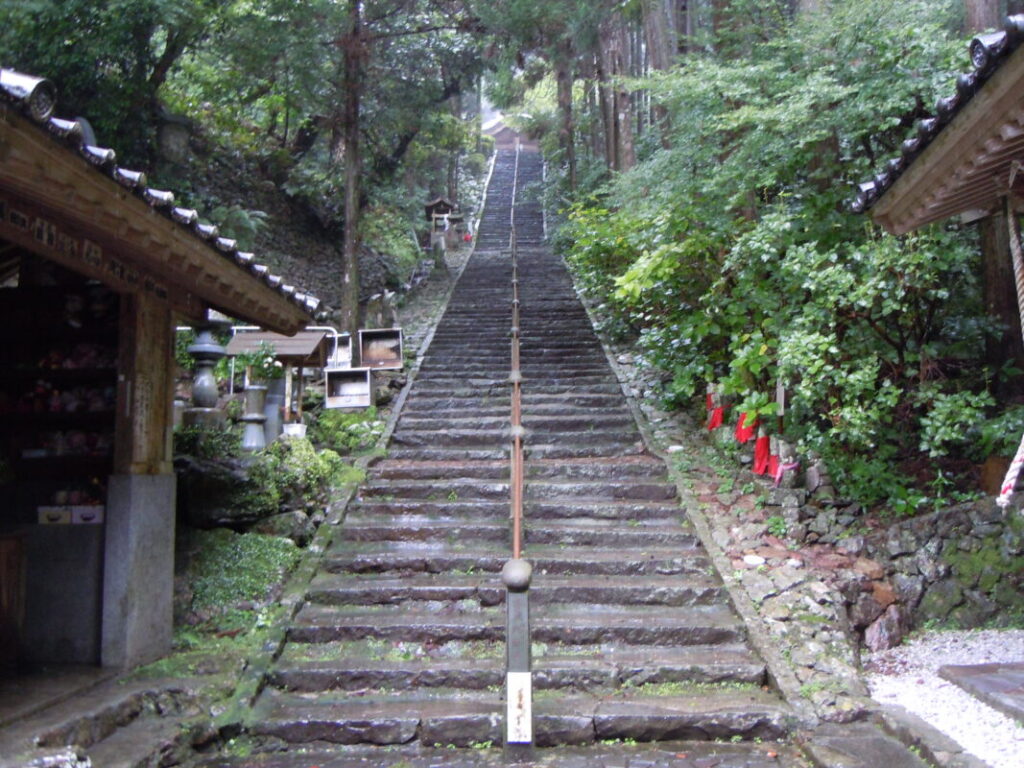
One of the first things that catches the eye at Shoryu-ji is the long flight of stone steps leading up to the temple grounds. The approximately 170 steps are also known as the place where Asashoryu, the 68th yokozuna in professional sumo, trained his legs and lower body during his high school years. His ring name, “Asashoryu,” is said to have been inspired by this temple.
The moss-covered stone steps have a historic and atmospheric feel, and their appearance after being soaked by the rain was particularly striking.
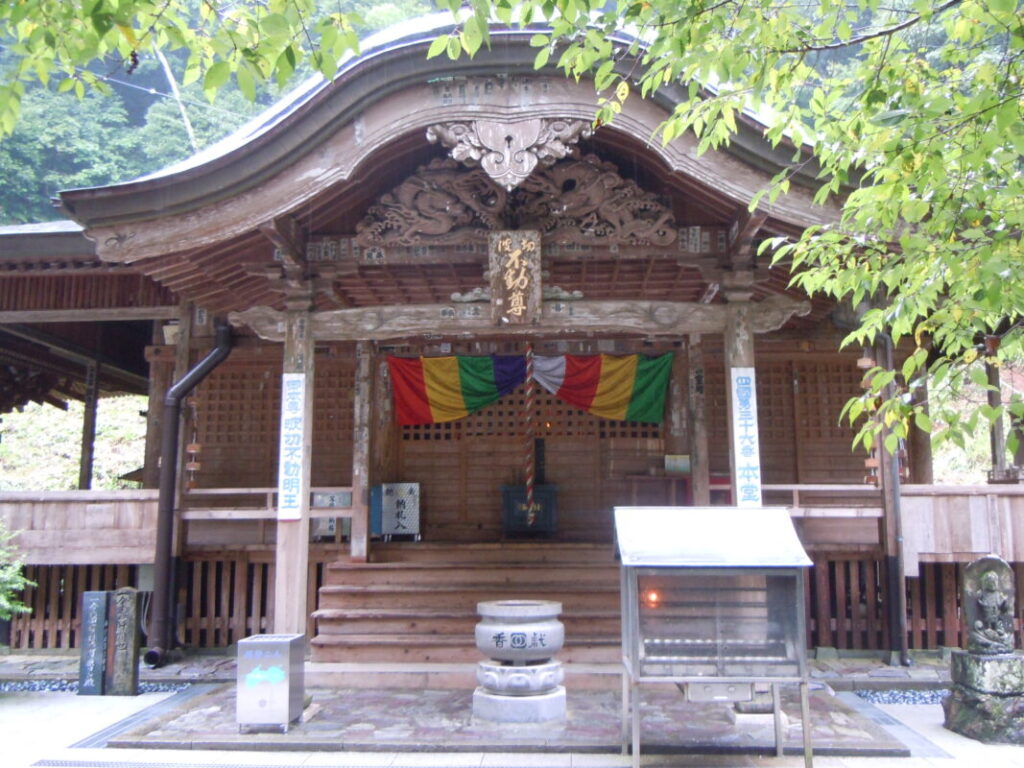
The principal image of Shoryu-ji is Namikiri Fudo Myoo, the Wave-Cutting Acala.
According to legend, while Kobo Daishi was returning to Japan from Tang China, he encountered a violent storm at sea. Fudo Myoo appeared and calmed the raging waves. Because of this story, the deity has been worshipped as Namikiri Fudo Myoo.
Given the temple’s proximity to the sea, local people have long revered this deity as a protector of maritime safety and a bountiful catch. It was a temple with a deep connection to the sea.
Despite the rain, I was grateful to complete my visit safely.
Staying at Kokumin Shukusha Tosa
After completing my temple visit, it was time to find somewhere to stay for the night.
With a typhoon approaching, I decided to avoid sleeping outdoors and stay at a hotel instead. Since I had managed to reach Shoryu-ji as planned, I searched for nearby accommodation on a map. I called Kokumin Shukusha Tosa and was fortunate enough to secure a reservation.
I arrived at Kokumin Shukusha Tosa shortly after 5:00 p.m. Fortunately, it was just a short distance from Shoryu-ji.
Note: Kokumin Shukusha Tosa is now closed, and a hotel is currently operated by a different business. If you are considering staying in this area, be sure to check the latest accommodation information.
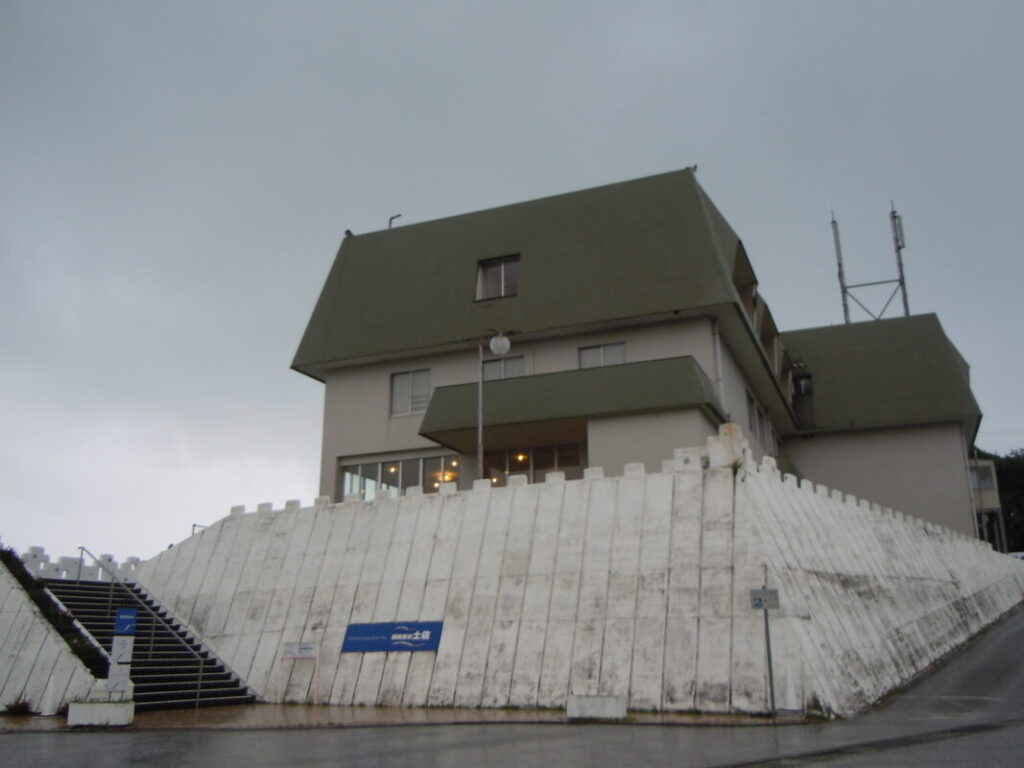
After putting away my rain gear and leaving my backpack in the room, I headed straight for the large communal bath.
Although it was summer, I had spent the entire day walking in the rain, and even my white pilgrim’s robe was completely soaked. My body had become thoroughly chilled. As I slowly soaked in the hot water, I could finally feel myself warming up again.
Sharing Unusual Experiences with Fellow Pilgrims
Afterward, while relaxing in the lobby, I was approached by a group of about three men.
“You’re walking the pilgrimage, aren’t you?”
Apparently, they had spotted me wearing my white pilgrim’s robes at the entrance. As we got talking, I learned that they were also pilgrims staying at the hotel.
We quickly hit it off and began exchanging stories about our pilgrimage experiences.
What particularly caught my attention were their accounts of unusual events they had encountered along the way.
During my own pilgrimage, I had experienced several things that seemed too remarkable to dismiss as mere coincidences. They were moments when I truly felt the presence of Dogo Ninin (Two Traveling Together), the belief that Kobo Daishi accompanies every pilgrim. It seemed that other pilgrims had experienced similar things.
This was a subject I had not given much thought to during my earlier walks through Tokushima Prefecture, known as the Dojo of Spiritual Awakening. Being able to naturally share these kinds of stories made me realize that I was gradually becoming more deeply immersed in the world of the Shikoku pilgrimage.
Before I knew it, we had been talking for quite some time, and it was completely dark outside.
I happened to glance out the window and saw the trees swaying violently as large raindrops pounded against the glass. It was clear that the typhoon was drawing closer.
“What are you going to do tomorrow?”
When I asked, they told me they had decided to stay for another night.
“I’m going to keep walking,” I replied.
The effects of the typhoon were expected to become even stronger the following day. Would I really be able to continue walking as planned?
My third sectional pilgrimage had gotten off to a turbulent start on its very first day.
Temple Information
- No. 34
- No. 35
- No. 36
- No. 37
Comments