
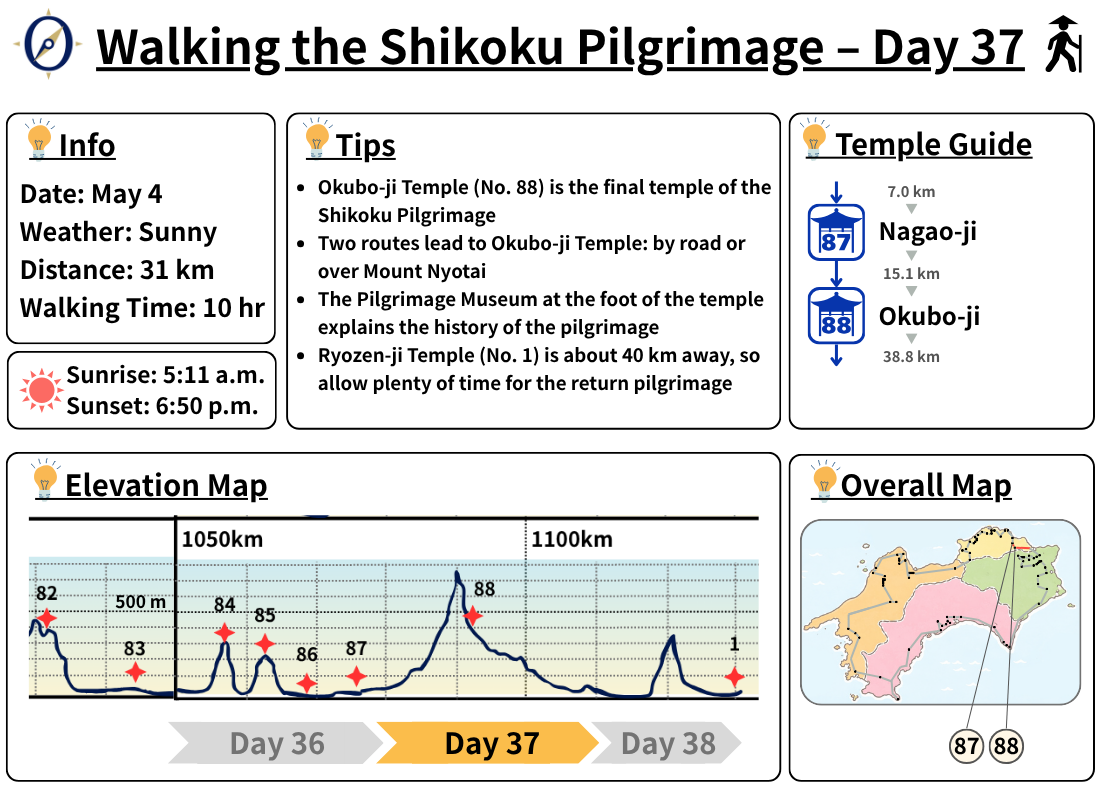
Day 37 of the Shikoku Pilgrimage on Foot. The day has finally arrived to complete the pilgrimage at Okubo-ji, Temple No. 88. After crossing the steep mountain trail over Mount Nyotai, I finally finished walking all 88 temples of Shikoku. Filled with a sense of achievement, I knew the journey was not over yet. I set off once more, heading for Ryozen-ji, Temple No. 1, to give thanks and complete the return pilgrimage.
Itinerary
- 6:00Departure
- Kikaku Park
- 7:00Temple No. 87, Nagao-ji
- Roadside Station Nagao
- Pilgrimage Museum
- Tawa Shrine
- Okubo-ji Hiking Trail
- Taizomine-ji
- 13:00Temple No. 88, Okubo-ji
- Sakaime
- Higashikagawa City
- Ouchi Dam Park
- 18:00Toramaru Park
Overnight stay
Morning Preparations
May 4, sunny. Day 37 of the Shikoku Pilgrimage on Foot.
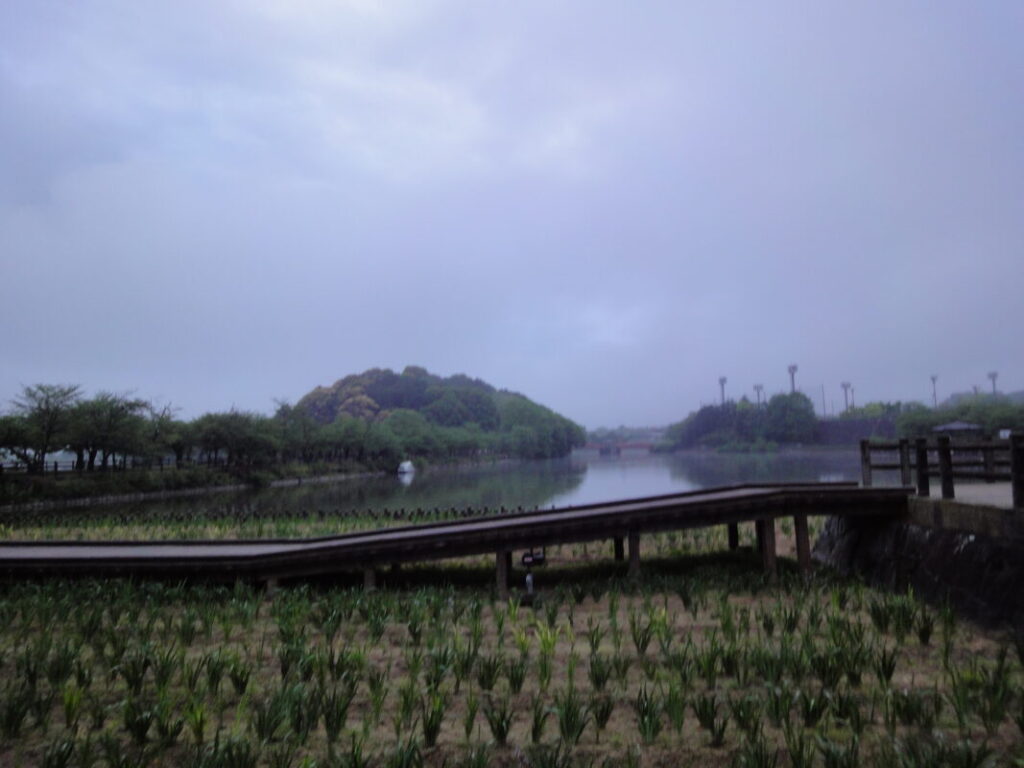
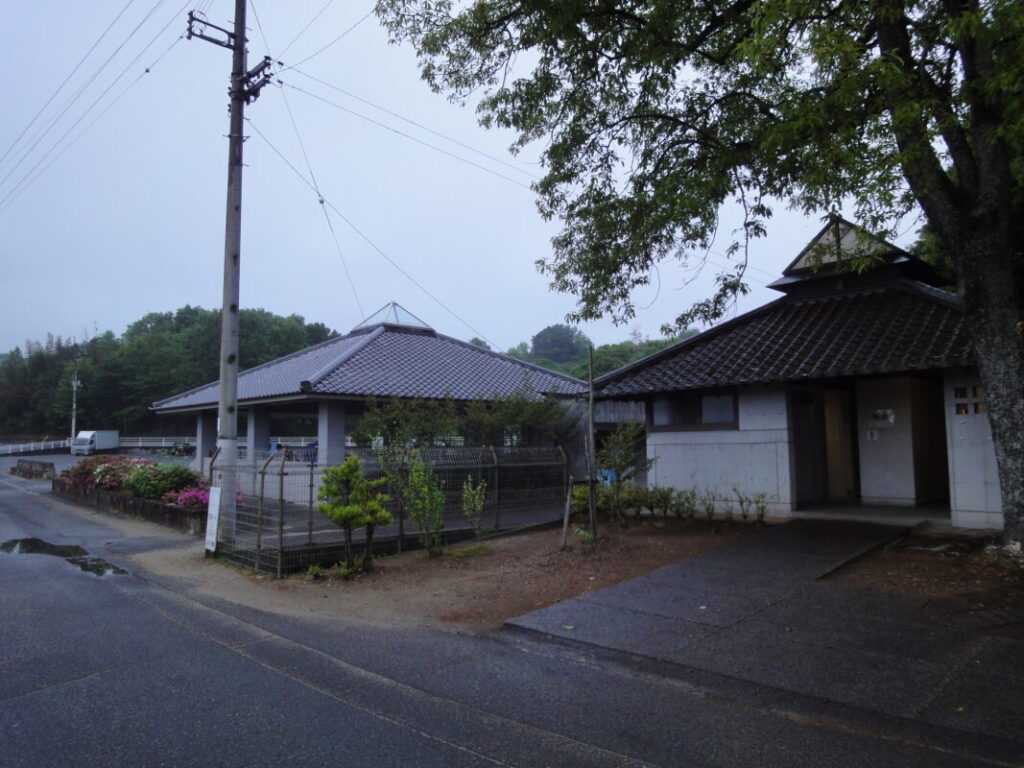
Yesterday, I visited Yashima-ji, Yaguri-ji, and Shido-ji, then camped overnight at Kikaku Park near the foot of Okubo-ji.
Today, I would finally visit Okubo-ji, Temple No. 88. My journey around the 88 temples of Shikoku was about to reach its conclusion.
I felt a mix of excitement and nervousness, and I was already a little worked up that morning.
Two Routes to Okubo-ji
There are two main routes to Okubo-ji.
One crosses Mount Nyotai along a mountain trail, while the other takes a detour along paved roads.
| Route | Features |
|---|---|
| Mountain trail | Shorter, but steep and rugged, with sections equipped with chains |
| Road route | About 3 km longer, but easier to walk |
The best route depends on your fitness, the weather, and the conditions on the day.
I planned to take the mountain trail, following the traditional pilgrimage path.
Heading for Nagao-ji
My first destination was Nagao-ji, Temple No. 87. I had arrived too late to receive my temple stamp the previous day, so I decided to visit first thing in the morning.
After getting ready, I left Kikaku Park at 6:00 a.m. The man I had met at the rest area the previous day was still asleep, so I quietly left the park without waking him.
The road was wet, but the rain had stopped. Thick clouds still covered the sky. I was concerned about the mountain trail to Okubo-ji and hoped the weather would clear by noon.
Visiting Nagao-ji, Temple No. 87
I arrived at Nagao-ji at 7:00 a.m.
Nagao-ji is the last temple before Okubo-ji, the temple where the pilgrimage reaches its conclusion. For pilgrims walking the route, it marks an important milestone just before completing the journey.
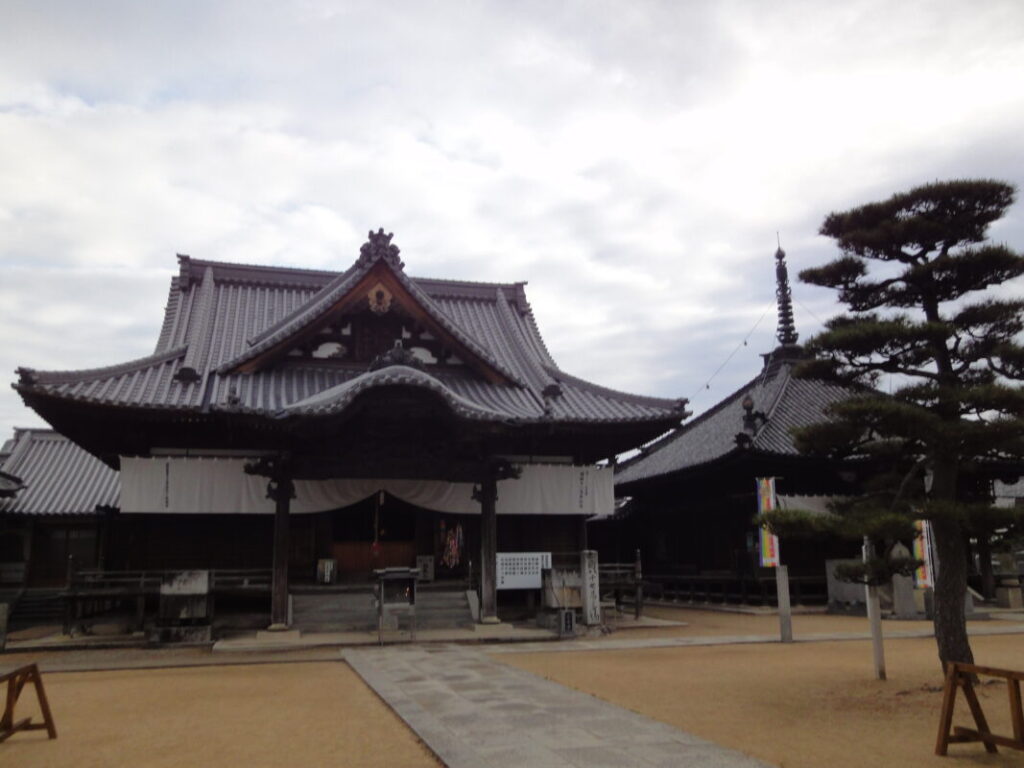
An Ancient Temple Linked to Gyoki and Kobo Daishi
Nagao-ji is said to have been founded in 739 by the Buddhist priest Gyoki.
According to tradition, Gyoki discovered a sacred tree in this area and carved an image of Sho Kannon, the Goddess of Mercy, from its wood.
Later, Kobo Daishi also visited the temple and performed goma fire rituals for seven nights, praying for national peace and abundant harvests.
A Temple Associated with Shizuka Gozen
Nagao-ji is also known as the temple where Shizuka Gozen became a Buddhist nun.
According to local legend, she entered religious life here after parting from Minamoto no Yoshitsune. The temple has long been affectionately known by locals as “Nagao’s Kannon.”
A Temple with Deep Community Roots
Nagao-ji lost many of its buildings in a fire during the Tensho era. It was later rebuilt by Matsudaira Yorishige, lord of the Takamatsu domain, during the Edo period.
After the Meiji Restoration, the temple’s main residence was used for various purposes, including a school, a police station, and a district office. Throughout its long history, the temple has remained closely connected to the lives of the local community.
After finishing my visit, I set off for Okubo-ji, the final temple of the pilgrimage.
The Pilgrimage Trail to Okubo-ji
Okubo-ji lies about 15 km south of Nagao-ji. Known as the temple where pilgrims complete the Shikoku 88 Temple Pilgrimage, it is nestled in the mountains at an elevation of approximately 450 meters.
The walk takes around four to five hours, so it is best to prepare food and drinks in advance.
After completing the pilgrimage at Okubo-ji, I also planned to walk back to Ryozen-ji, Temple No. 1, to give thanks. Knowing I still had a long way to go, I bought enough food for about three meals.
Roadside Station Nagao
I first headed south along Prefectural Route 3 toward Roadside Station Nagao.
After walking about 5 km along a gentle uphill road, I arrived at the station. It offers snacks and other supplies, making it a convenient place to stock up before heading to Okubo-ji.
Maeyama Dam stretches out in front of the station, and there are also pilgrimage huts nearby. Some pilgrims walking to Okubo-ji apparently stay in this area the night before.
Pilgrimage Museum
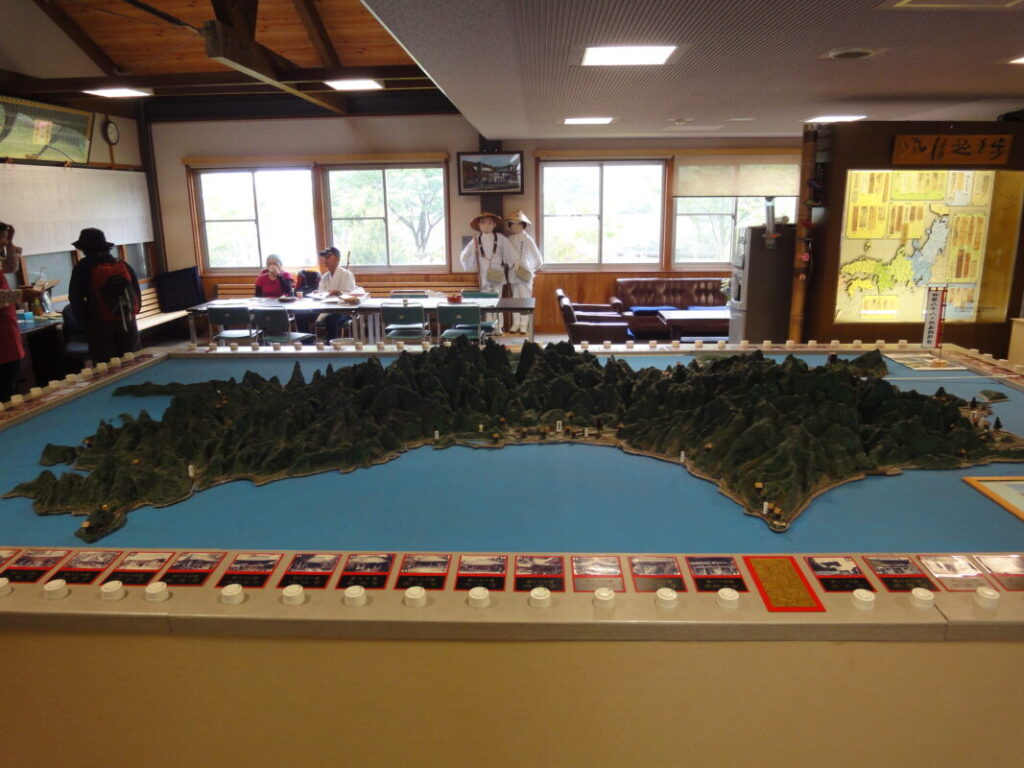
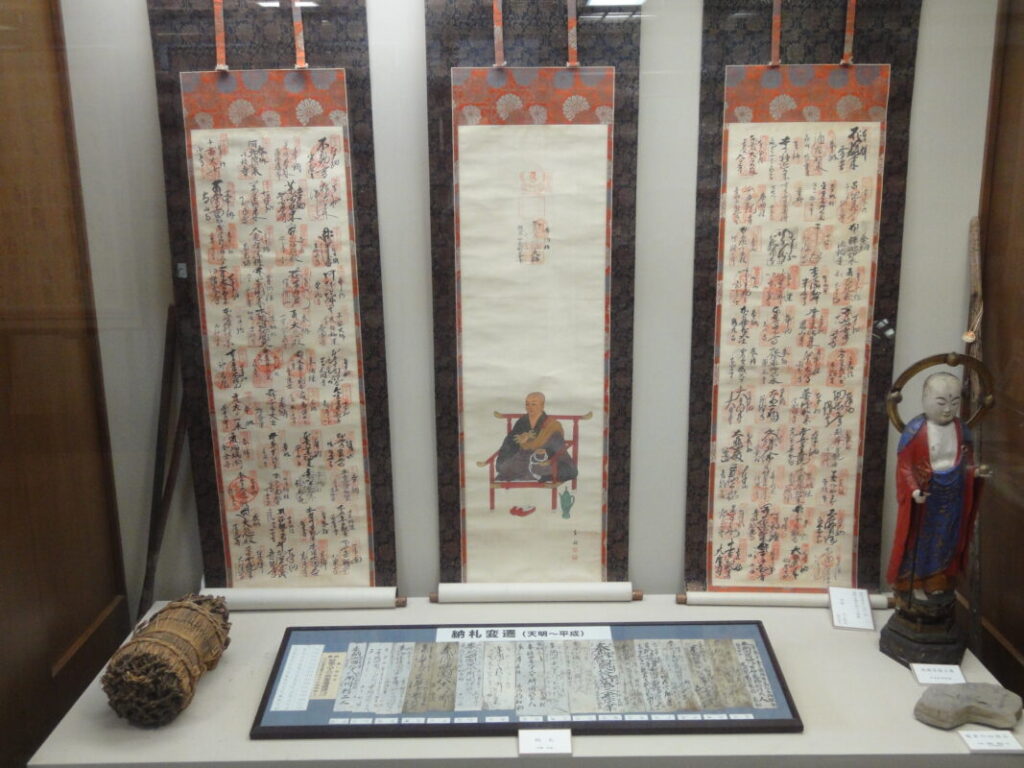
At 9:00 a.m., I arrived at the Pilgrimage Museum.
Located near the roadside station, the museum displays materials about the history and culture of the Shikoku Pilgrimage. It also features a large diorama recreating all 88 temples, allowing visitors to look back on the temples and routes they have traveled.
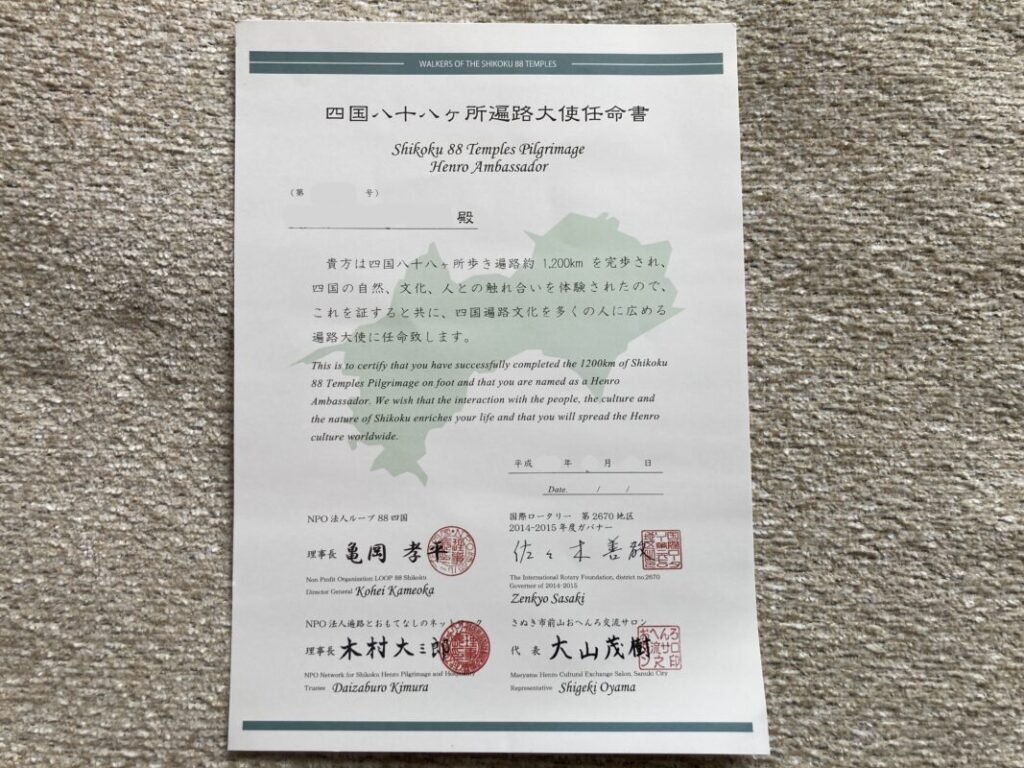
Another feature is the certificate issued to pilgrims who complete the walk.
I took some time to explore the exhibits. Looking at the diorama of the entire pilgrimage route, I recalled the roads and paths I had walked along the way.
It was a good opportunity to reflect on the long journey behind me.
The Mountain Trail over Mount Nyotai
After leaving the roadside station and walking for a while, I came across a sign pointing to the mountain trail leading to Okubo-ji.
There are signs for other trails in this area, so it is important to make sure you are on the correct path. Following the signs toward Tawa Shrine makes it easier to find the way.
Near the entrance to the mountain trail stood a memorial tower dedicated to people who had lost their lives during the pilgrimage.
Walking the Shikoku Pilgrimage is still challenging today, but in the past, people must have faced even harsher conditions on these paths. It made me reflect on the determination of those who undertook the pilgrimage and the faith that sustained them along the way.
Throughout my journey, I had often felt the presence of those who had walked these paths before me. Here, too, I stopped to pray and reflect on how fortunate I was to have made it this far safely.
Crossing Mount Nyotai
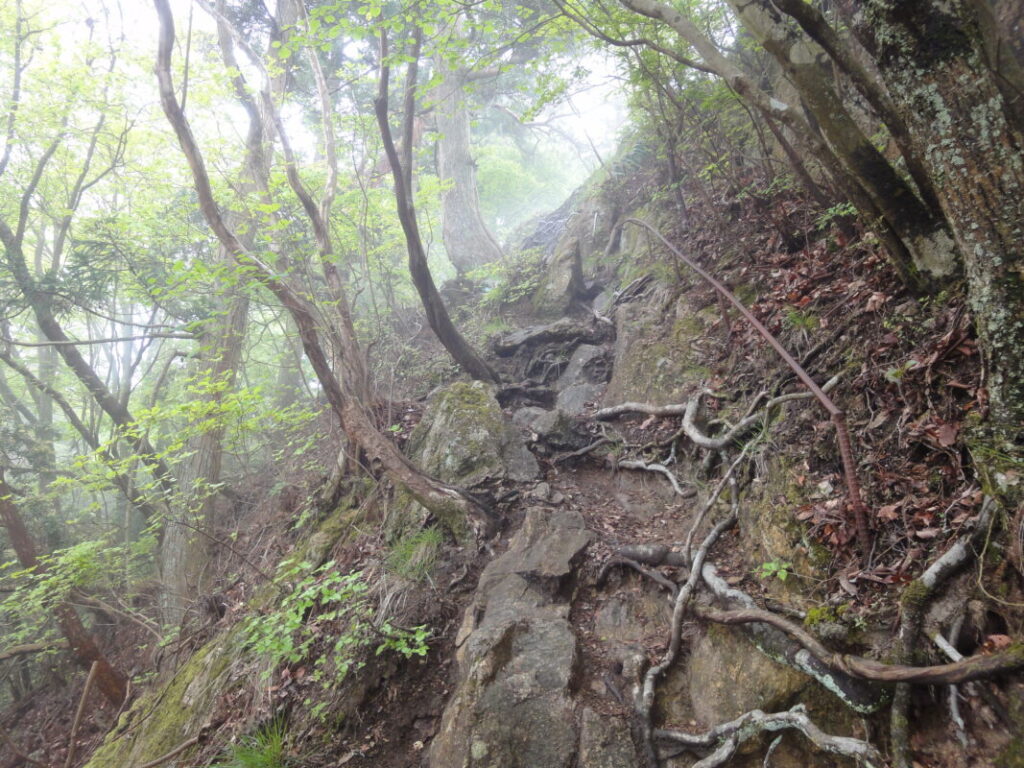
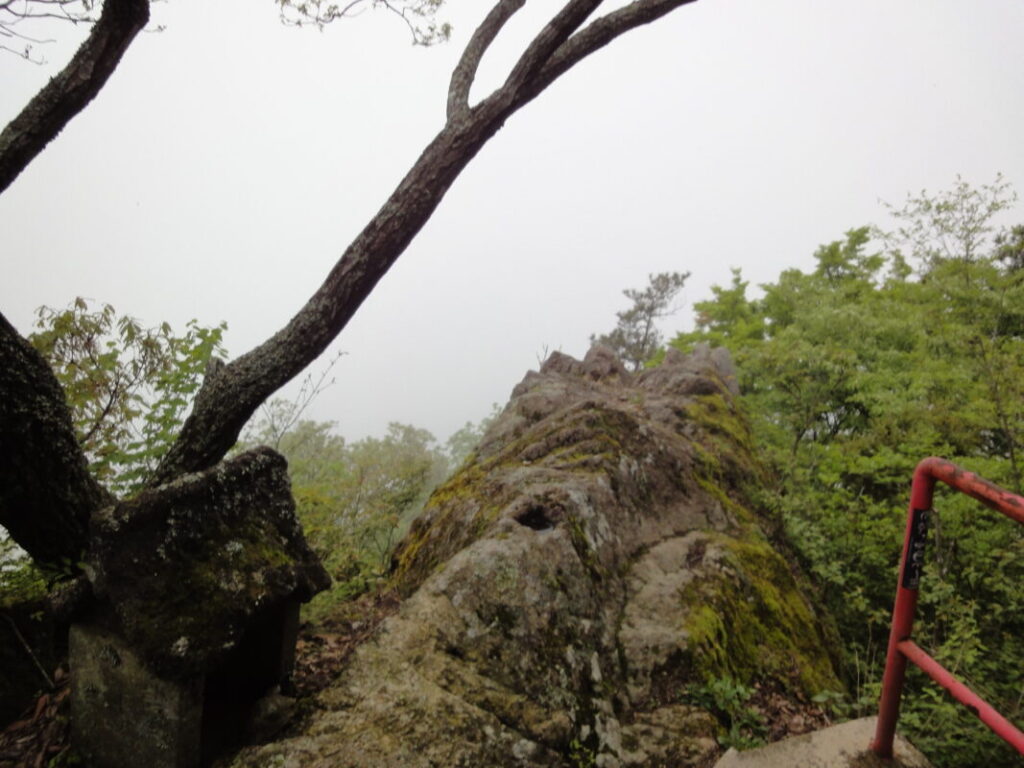
The pilgrimage trail crosses Mount Nyotai, which stands at approximately 770 meters. It is a steep and challenging route, with sections equipped with chains to help climbers.
It was certainly no easy path.
Still, I had already visited 87 temples. Looking back on everything I had overcome so far, I felt I could make it through this final mountain crossing.
As I climbed, memories of the pilgrimage trails and the people I had met along the way came flooding back.
Before long, mist began to roll in, obscuring the surrounding views. On a clear day, the scenery would likely be spectacular, but the mountain trail enveloped in fog had a mysterious beauty of its own. It was an experience that stayed with me.
Taizomine-ji Temple
After crossing the mountain pass, the trail descended steeply.
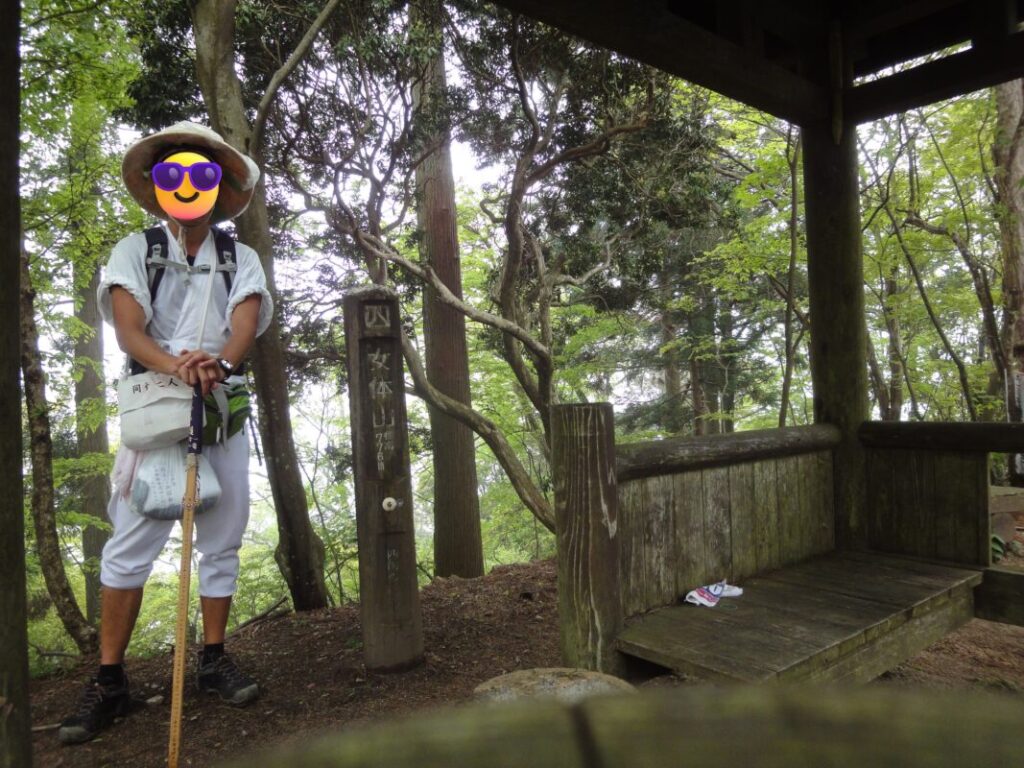
Along the way, I came to Taizomine-ji Temple, the inner sanctuary of Okubo-ji. A small hall stood quietly among the mountains.
It was a place I could only have reached by walking this rugged trail.
Now that I had come this far, Okubo-ji was just a little farther ahead. The moment of completing the pilgrimage was finally beginning to feel real.
Visiting Okubo-ji, Temple No. 88
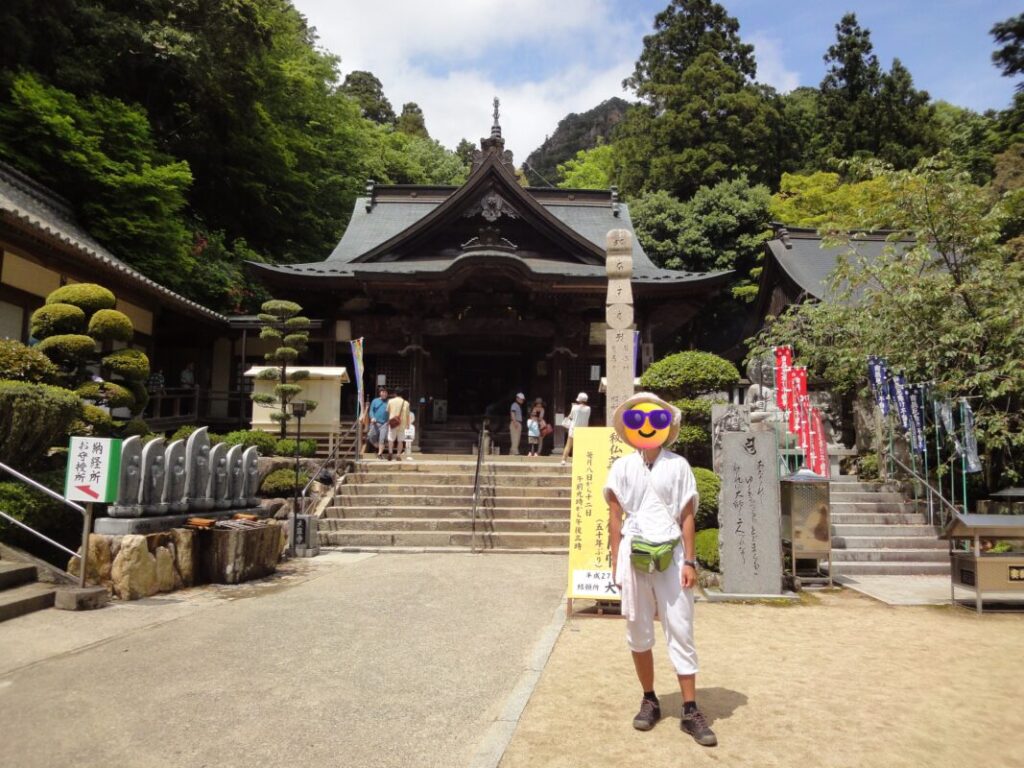
I arrived at Okubo-ji at 1:00 p.m. The walk from the roadside station had taken about four hours.
The sky, which had been covered in clouds on the mountain trail, cleared by the time I reached the temple, and the sun came out. I was happy to have good weather on the day I completed the pilgrimage.
The Special Atmosphere of the Final Temple
Okubo-ji is the final temple for pilgrims completing the Shikoku 88 Temple Pilgrimage.
As I visited during the 1,200th anniversary of the pilgrimage’s founding, the temple grounds were bustling with pilgrims.
Those who had finished their visits wore bright smiles, perhaps feeling the joy of completing such a long journey. Many were taking commemorative photos around the grounds.
The temple had a special atmosphere that felt different from the other temples along the route.
The pilgrim I had spent the previous night with at Kikaku Park arrived about 30 minutes after me. We were happy to see each other again and congratulated one another on completing the pilgrimage.
The Hozhodo Hall and the Pilgrim’s Staff
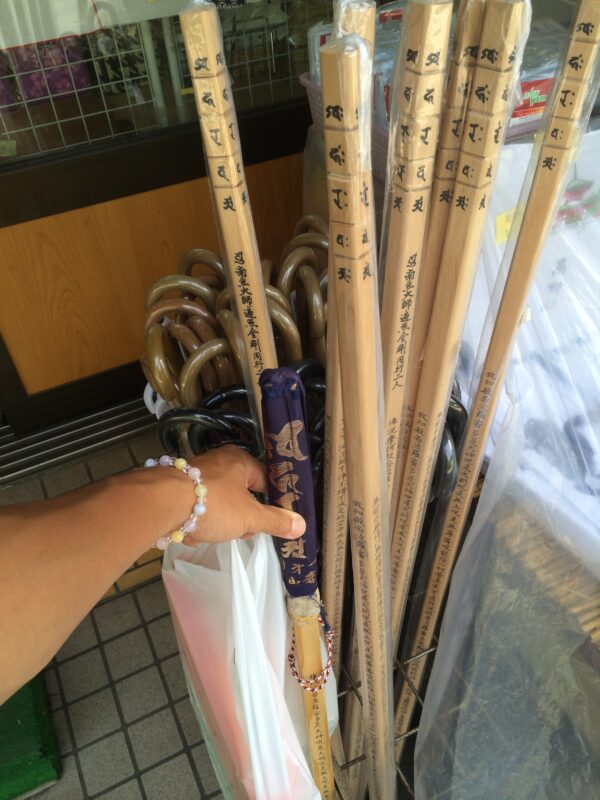
Within the temple grounds stands Hozhodo Hall, where pilgrims can leave their kongozue, or pilgrim’s staff, after completing the pilgrimage.
Many staffs were stored inside, each bringing to mind the long journey its owner had walked.
Pilgrims can also choose to take their staffs home as keepsakes. I decided to keep mine.
When I first began walking the Shikoku 88 Temple Pilgrimage, my staff was about 130 cm long. By the end of the journey, it had shortened to around 110 cm.
My staff had become about 20 cm shorter. It was a precious reminder of the distance I had walked and the time I had spent on the journey—a lasting symbol of completing the pilgrimage.
Certificate of Completion
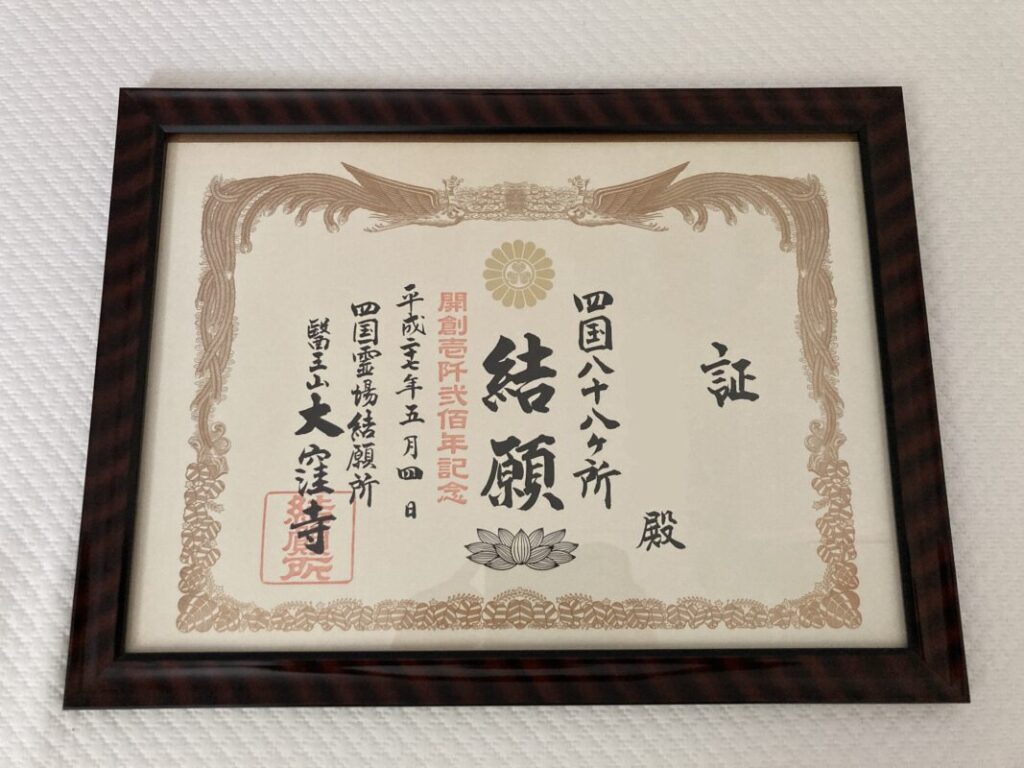
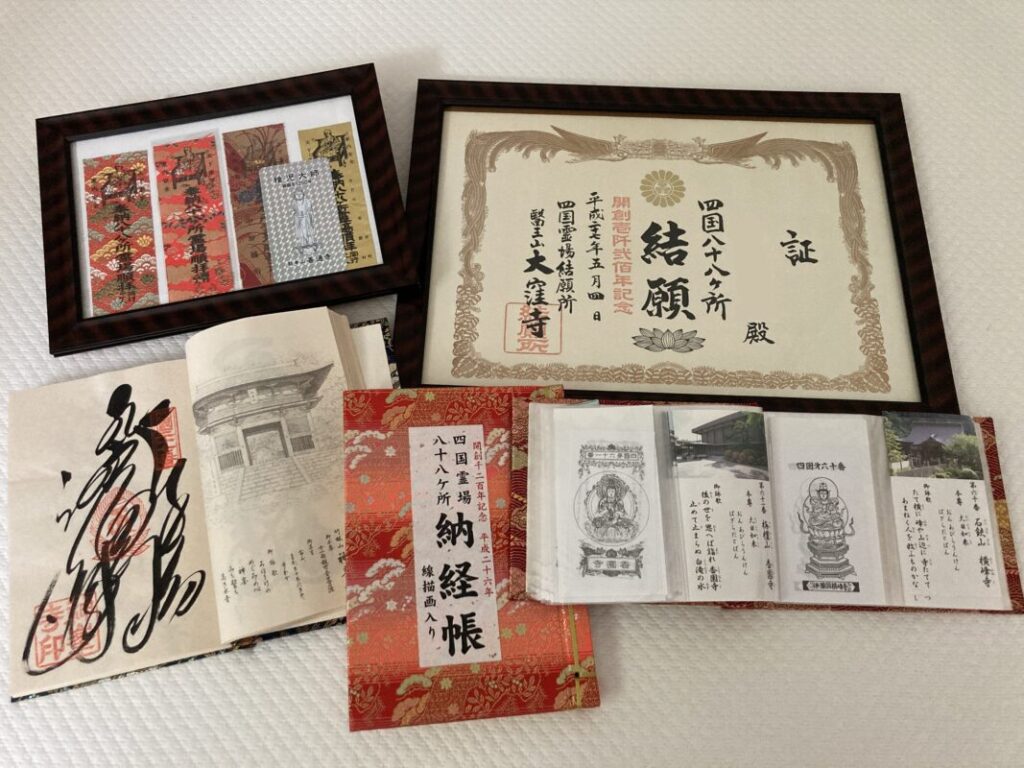
At Okubo-ji, pilgrims can also receive a certificate confirming that they have completed the pilgrimage.
Their name and the date can be written in ink, making it a wonderful keepsake from the journey.
I saw many pilgrims taking commemorative photos while holding their certificates.
These scenes were another part of what made the final temple so special.
Udon at Yasoba-an After Completing the Pilgrimage
Near the temple gate is Yasoba-an, a restaurant famous for its udon noodles.
Eating udon after completing the pilgrimage is a popular tradition. When I visited, however, there was a queue of around 20 people, so I reluctantly decided to give it a miss.
If you have enough time, it is worth stopping by for a meal after your visit.
The Pilgrimage Was Complete, but the Journey Was Not Over Yet
I spent longer than usual in the temple grounds, savoring the feeling of having completed the pilgrimage.
I had finally walked all the way to Okubo-ji, Temple No. 88. However, my pilgrimage was not over just yet.
I still planned to return to Ryozen-ji, Temple No. 1, to give thanks. By returning to the first temple, I would bring my journey around Shikoku full circle.
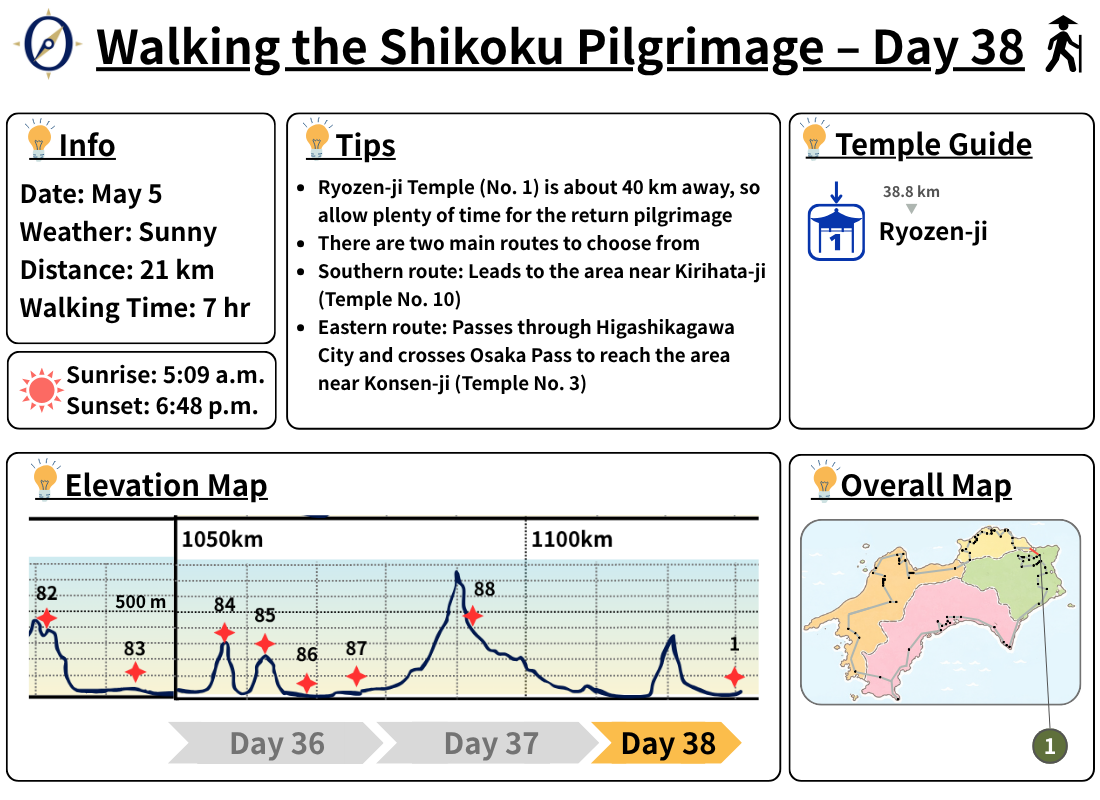
The distance from Okubo-ji to Ryozen-ji is about 40 km, or roughly two days on foot. I decided to get as close to Ryozen-ji as possible that day and camp outdoors along the way.
From Okubo-ji to Ryozen-ji
There are several routes from Okubo-ji to Ryozen-ji.
After leaving Okubo-ji and heading east along the national highway, the road branches at a district called Sakaime, about 5 km away.
One route heads south via Prefectural Route 2, reaching the area near Kirihata-ji, Temple No. 10. This route reconnects with the pilgrimage trail I had walked earlier, making it easier to follow.
The other route continues east toward Higashikagawa City, crosses Osaka Pass, and leads to the area near Konsen-ji, Temple No. 3. This is an old pilgrimage route that has been used for centuries.
I chose the latter route.
For a while, I walked along a road surrounded by forest. There were few people around, and the route was quiet.
Having completed the pilgrimage, I felt a sense of relief. I had been walking for 37 days, but now everything felt noticeably different.
Ryozen-ji was still some distance away, but I felt I could reach it in time for tomorrow’s visit. I also had enough food left for dinner.
Without setting a specific destination, I continued walking at a relaxed pace, looking for a suitable place to camp for the night.
Ouchi Dam Park
Along the way, I stopped at Ouchi Dam Park.
Located in Higashikagawa City, Kagawa Prefecture, this park is surrounded by nature. The area around the reservoir has grassy spaces, playground equipment, and gazebos. There are also toilets, making it a convenient place for pilgrims to take a break.
I still had enough energy to walk a little farther, so I decided to continue.
Camping at Toramaru Park
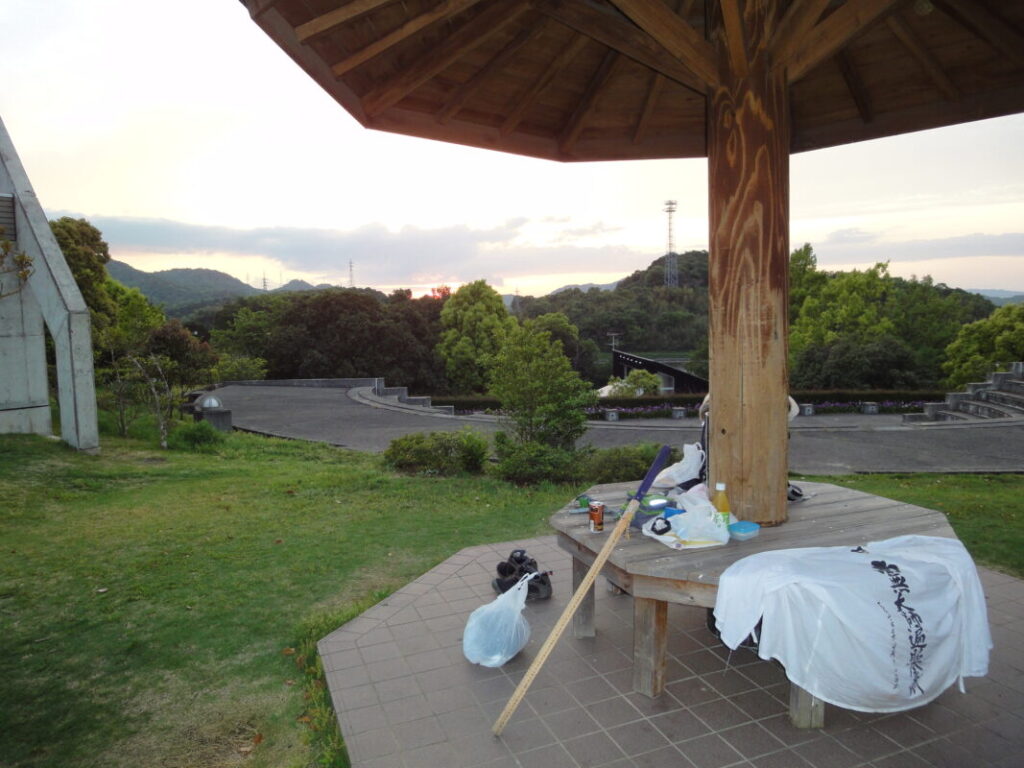
After walking farther, I arrived at Toramaru Park at 6:00 p.m.
The timing was just right, so I decided to camp there for the night.
Toramaru Park is a large public park in Higashikagawa City, with large playground structures and open grassy areas. When I arrived, it was bustling with children and families.
As the sun began to set and the crowds gradually thinned, I waited for the right moment to prepare my campsite.
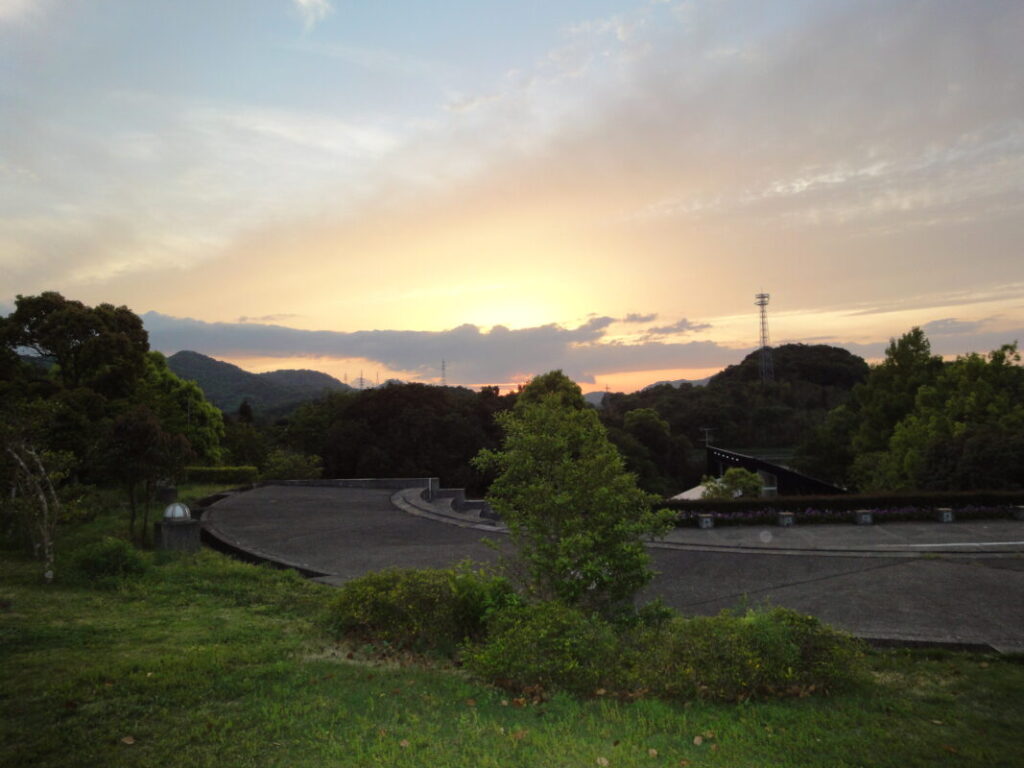
I gazed quietly at the setting sun. Realizing that this would be the last sunset I watched during my pilgrimage made me feel a little sad.
And so, Day 37 of my pilgrimage on foot came to an end.
Reflecting on Day 37 of the Shikoku Pilgrimage
Today, I visited Nagao-ji, Temple No. 87, crossed the mountain trail over Mount Nyotai, and finally completed the pilgrimage at Okubo-ji, Temple No. 88.
For 37 days, I had continued walking the roads of Shikoku. Along the way, I faced steep mountain trails and long stretches of paved road, and met people when I least expected it.
When I arrived at Okubo-ji, I felt a strange mixture of achievement and relief. Even looking at my shortened pilgrim’s staff reminded me of how much time and effort I had put into this journey.
Still, the journey was not quite over.
Tomorrow, I would head to Ryozen-ji, Temple No. 1, to give thanks. Would the same scenery look different now from how it had when I first began the pilgrimage? I found myself wondering about that as I prepared to continue walking, determined to stay focused until the very end and bring my journey around Shikoku to a close.
Temple Information
- No. 87
- No. 88
- No. 1



Comments