
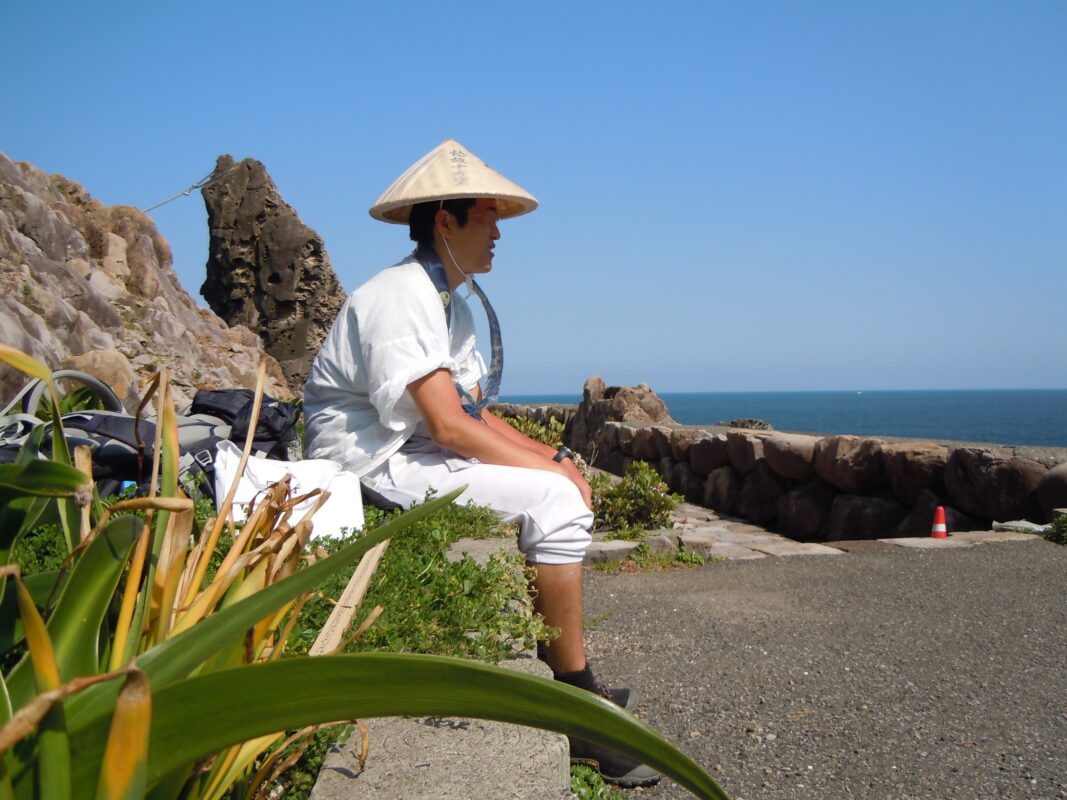
I completed the entire Shikoku 88 Temple Pilgrimage on foot.
During my pilgrimage, I used a traditional sugegasa (woven sedge hat) the whole way. It proved to be far more useful than I had expected—not only protecting me from the sun and rain, but also shielding my face from spider webs and overgrown vegetation on mountain trails. On the other hand, some pilgrims find that it doesn’t suit them and stop using it partway through the journey.
In this article, I’ll share the advantages and disadvantages of wearing a sugegasa, along with tips on choosing one, based on my firsthand experience walking the pilgrimage.
- What Is a Sugegasa? Its Meaning and History in the Shikoku Pilgrimage
- The Role of the Sugegasa for Modern Walking Pilgrims
- Types of Sugegasa Hats, Prices, and Where to Buy
- Drawbacks and Things to Consider
- Improving Wind Stability: My Chin Strap Modification
- Sugegasa or a Regular Hat: Which Is Better?
- Conclusion
What Is a Sugegasa? Its Meaning and History in the Shikoku Pilgrimage
The sugegasa (traditional woven sedge hat) is one of the most iconic symbols of the Shikoku 88 Temple Pilgrimage, alongside the white pilgrimage robe (byakue) and the walking staff (kongōzue).
Today, it is mainly worn to protect pilgrims from the sun and rain. However, the sugegasa also carries a deep spiritual meaning that has been passed down through generations of pilgrims.
The Role of the Sugegasa
In the past, the Shikoku Pilgrimage was far more challenging than it is today. Roads were undeveloped, accommodations were scarce, and pilgrims often had to sleep outdoors. The journey was so demanding that some never returned home.
Because of this, the sugegasa was more than just protection from the weather. It symbolized a pilgrim’s commitment to complete the journey, regardless of the hardships they might face.
A Symbol of Life, Death, and the Pilgrimage
Traditionally, the Shikoku Pilgrimage was regarded as a spiritual journey undertaken with the acceptance of one’s own mortality. Many pilgrimage items therefore came to symbolize both death and spiritual rebirth.
Although few modern pilgrims think about these meanings while walking, wearing a sugegasa is still a way of honoring the traditions and history of the pilgrimage.
The Meaning of the Words Written on the Hat
Many sugegasa hats are inscribed with the phrase Dōgyō Ninin (同行二人), which means “Two traveling together.”
This expresses the belief that a pilgrim never walks alone, but is always accompanied by Kōbō Daishi (Kūkai), the founder of Shingon Buddhism.
During the long journey, there are moments of physical exhaustion, uncertainty, and loneliness. The words Dōgyō Ninin remind pilgrims that Kōbō Daishi is spiritually walking beside them throughout the pilgrimage.
Some hats also feature Buddhist verses such as Mayou ga Yue ni Sangai no Shiro (迷故三界城). These inscriptions reflect Buddhist teachings about overcoming attachment, ignorance, and suffering in the pursuit of enlightenment.
The Relationship with the Walking Staff and White Robe
Like the sugegasa, other traditional pilgrimage items also carry symbolic meaning.
The kongōzue (walking staff) is regarded as the embodiment of Kōbō Daishi and is treated with great respect by pilgrims. Historically, it also served as a grave marker if a pilgrim died during the journey.
The byakue (white pilgrimage robe), now recognized as the standard attire of pilgrims, originally symbolized a burial garment and reflected the pilgrim’s willingness to face death during the spiritual journey.
Together, the sugegasa, kongōzue, and byakue are much more than traditional clothing and equipment. They embody the spirit of the Shikoku Pilgrimage—a journey of self-reflection, spiritual growth, and walking through life with humility and determination.
The Role of the Sugegasa for Modern Walking Pilgrims
While the sugegasa once held profound symbolic meaning, today it is used primarily as a practical piece of equipment that makes the pilgrimage more comfortable.
The Shikoku Pilgrimage covers approximately 1,200 km (750 miles). For those walking the route, spending long hours outdoors means that protection from the sun and rain is essential.
I completed the entire pilgrimage on foot, and throughout the journey I found that the sugegasa was much more than a traditional accessory. It proved useful in many practical situations along the trail.
Sun Protection
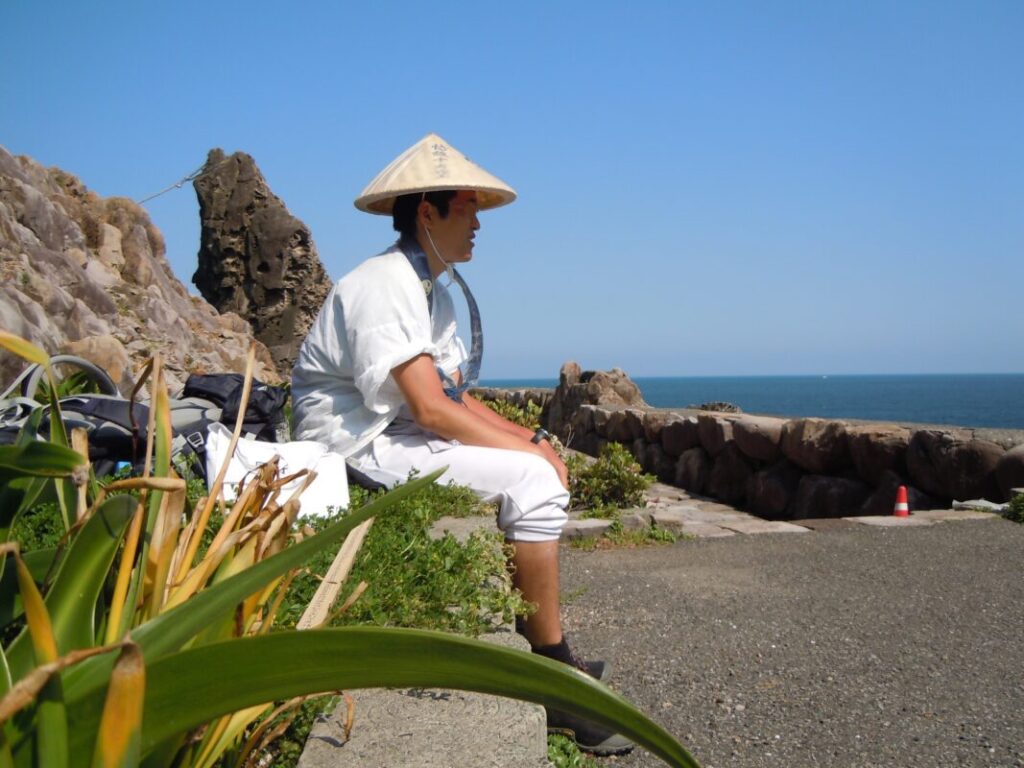
The sugegasa’s greatest advantage is its ability to block the sun.
Although a regular hat protects the top of your head, the sugegasa’s wide brim creates shade over your face, neck, and shoulders.
From my experience, it offered noticeably better coverage than a standard cap. Because it shaded almost my entire face, it made walking during the hot summer months much more comfortable.
Rain Protection
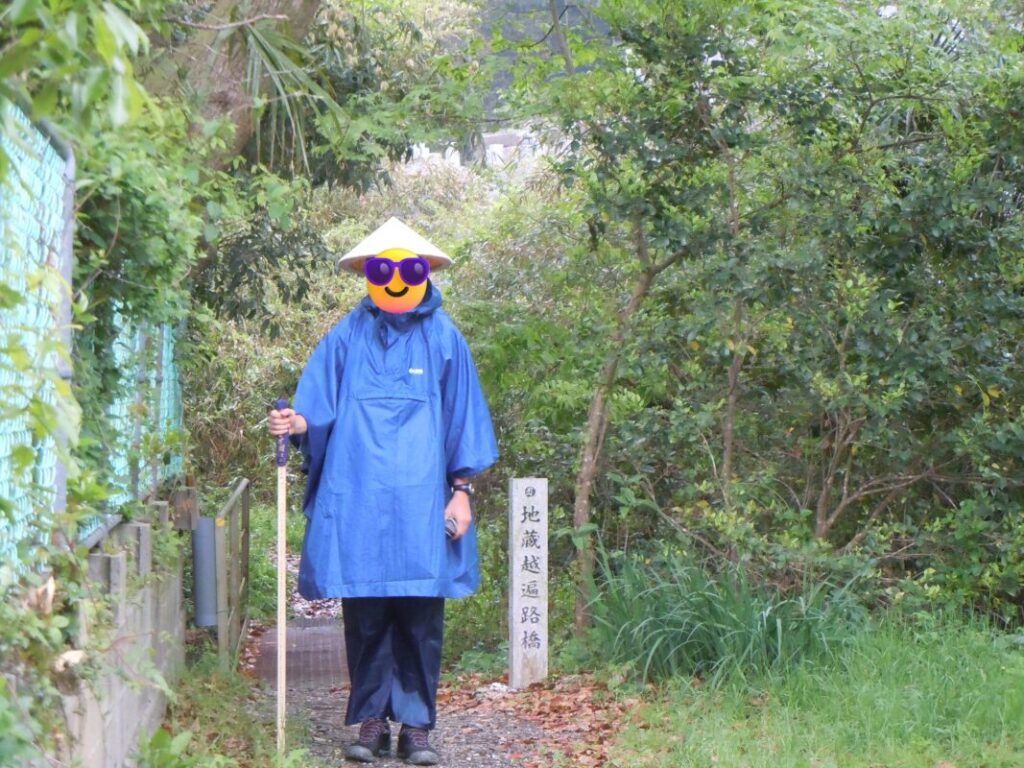
The sugegasa is also surprisingly effective in the rain.
At first glance, it doesn’t look particularly waterproof. However, during long walks in steady rain, I found that it kept my head remarkably dry by directing water away from my face and head.
When worn together with rain gear, it helped me stay reasonably comfortable and continue walking the distance I had planned, even in wet weather.
Protecting Your Face on the Trail
Walking the pilgrimage isn’t limited to paved roads. Many sections pass through mountain trails and narrow paths overgrown with vegetation.
On these trails, it’s common to encounter spider webs stretched across the path or tall grass brushing against your face.
In these situations, the wide brim of the sugegasa acted like a shield. By simply lowering my head or tilting it slightly, I could avoid walking directly into spider webs or having branches and grass hit my face.
This is one of the practical advantages that sets the sugegasa apart from an ordinary hat, and it was a benefit I appreciated far more than I had expected before starting the pilgrimage.
Types of Sugegasa Hats, Prices, and Where to Buy
You can buy a sugegasa at pilgrimage supply stores throughout Shikoku, shops at many temples, or from online retailers. A standard sugegasa typically costs around ¥3,000.
If you’re buying one for the first time, it’s worth purchasing it in Shikoku so you can try on different sizes and find one that fits comfortably.
Sugegasa hats come in several variations, differing in size, materials, and whether they include a rain cover.
Large vs. Medium Sugegasa
The two most common sizes are large and medium.
A large sugegasa provides excellent sun protection thanks to its wider brim, creating more shade over your face and neck. Many pilgrims appreciate this extra coverage during the hotter months.
However, there is a trade-off for walking pilgrims.
Because of its larger size, the brim can easily bump into or catch on your backpack, making it less convenient while walking.
I chose a medium-sized sugegasa, and found it to be a good balance. It wasn’t too large or too small, provided plenty of shade, and was much easier to wear comfortably over long distances.
For most people walking the pilgrimage, I think the medium size offers the best balance between protection and practicality.
Sugegasa with a Rain Cover
Some sugegasa hats are sold with a transparent plastic rain cover designed to improve water resistance.
In practice, however, there are a few drawbacks.
The plastic cover tends to trap heat inside the hat, making it hot and humid—especially during the summer months.
I used a model with a rain cover, but eventually removed it because it became too uncomfortable in warm weather.
Even without the cover, the sugegasa provided reasonable protection from the rain, and I noticed that many other walking pilgrims also chose to wear theirs without the plastic cover.
For that reason, I don’t think a rain cover is an essential feature for most walking pilgrims.
Ajirogasa
The ajirogasa is a premium version of the sugegasa, traditionally woven from fine strips of bamboo or similar materials.
Compared with a standard sugegasa, it is more durable and has a refined, elegant appearance. The downside is that it is considerably more expensive.
Which Sugegasa Do I Recommend?
Based on my experience of completing the entire Shikoku 88 Temple Pilgrimage on foot, I recommend that first-time walking pilgrims choose an inexpensive, medium-sized sugegasa.
It’s easy to carry, doesn’t interfere much with a backpack, and provides plenty of protection from both the sun and the rain. For most walkers, it offers the best combination of comfort, practicality, and value.
Drawbacks and Things to Consider
Although the sugegasa is a very useful piece of equipment for walking pilgrims, I also discovered a few drawbacks after using one throughout the entire Shikoku Pilgrimage.
Based on my experience, the main disadvantages are that it catches the wind easily, can become uncomfortable on your head during long days of walking, and isn’t the easiest item to carry when you’re not wearing it.
Be Careful on Windy Days
The wide brim that provides excellent sun protection also makes the sugegasa more vulnerable to strong winds.
Along coastal roads, on mountain ridges, or anywhere exposed to the wind, strong gusts can lift the hat or even blow it off your head.
When walking in these conditions, I found it helpful to lower my chin slightly and hold the hat in place until the wind eased.
It Can Become Uncomfortable on Your Head
Because the sugegasa rests directly on the top of your head, the contact point can become uncomfortable after many hours of walking.
If this becomes an issue, placing a small towel or sweatband between your head and the hat provides extra cushioning and makes it much more comfortable to wear for long periods.
Not the Most Convenient Item to Carry
Unlike a baseball cap or many hiking hats, a sugegasa cannot be folded down into a compact size.
This makes it a little inconvenient when staying at accommodations or using buses, trains, or other public transportation, as it takes up more space than an ordinary hat.
Since walking pilgrims carry all of their belongings every day, it’s worth considering whether a sugegasa fits well with your overall packing style and travel preferences.
Improving Wind Stability: My Chin Strap Modification
One of the biggest challenges of wearing a sugegasa while walking the Shikoku Pilgrimage is how easily it catches the wind.
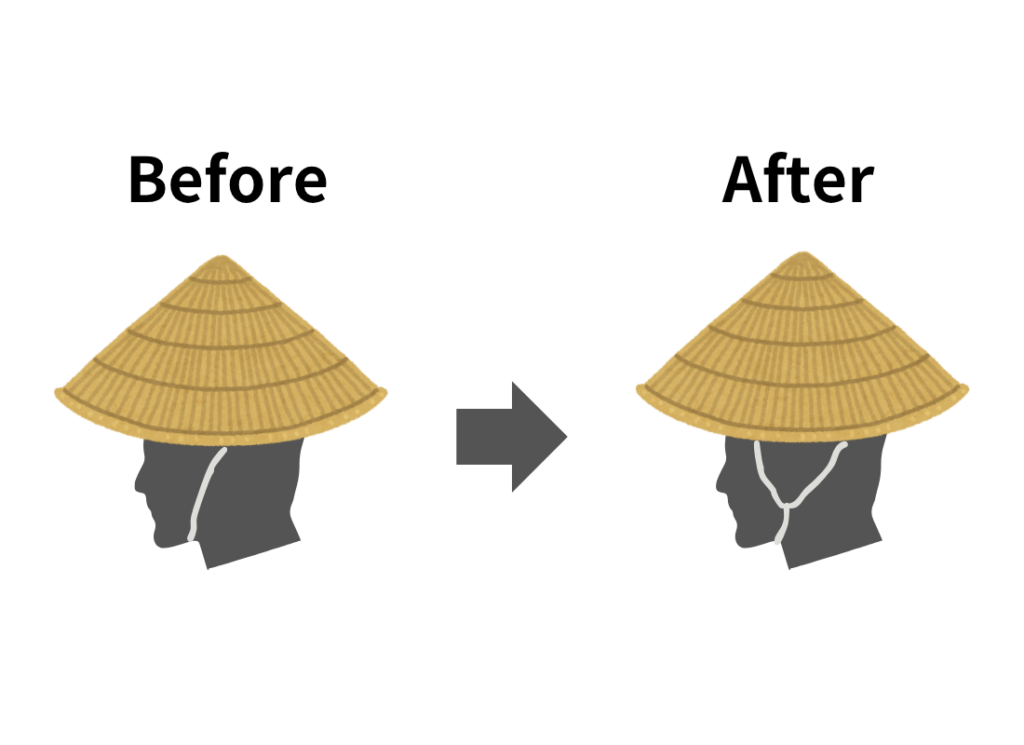
Most sugegasa hats come with a single chin strap that ties beneath your chin. After wearing one for many days on the trail, I found that this standard design didn’t keep the hat as secure as I would have liked.
To solve this, I made a simple modification to the chin strap.
Switching to a Four-Point Attachment
Most commercially available sugegasa hats use a single strap that is tied under the chin.
I bought some cord from a local hardware store and changed the attachment so that the hat was supported at four points instead.
The setup consisted of:
- Two attachment points in front of the ears (left and right)
- Two attachment points behind the ears (left and right)
The cords on each side meet near the ears before being adjusted and secured, allowing the hat to sit much more firmly on my head.
The Difference It Made
After making this modification, the sugegasa stayed much more stable on windy days.
With the original single chin strap, the hat tended to shift whenever it caught a strong gust of wind. The four-point setup distributed the load more evenly and made the hat feel much more secure.
I noticed the biggest improvement on exposed coastal roads and other particularly windy sections of the pilgrimage route, where the modified strap made the sugegasa noticeably easier to wear.
Tip: This is a personal modification based on my own experience, not a standard feature of commercially available sugegasa hats. If you expect to encounter windy conditions, it’s a simple and inexpensive upgrade that’s worth considering.
Sugegasa or a Regular Hat: Which Is Better?
Many first-time pilgrims wonder whether they should wear a traditional sugegasa or simply use a regular hiking hat or cap.
My recommendation is to try on a sugegasa in Shikoku before deciding.
Although I personally recommend wearing one, it isn’t the best choice for everyone.
During my pilgrimage, I met several walkers who bought a sugegasa but eventually stopped using it because they found it awkward to handle or inconvenient to carry.
The table below summarizes the main differences.
| Feature | Sugegasa | Regular Hat |
|---|---|---|
| Sun protection | Excellent – Shades the face and neck with its wide brim | Good – Protects the head and part of the face |
| Rain protection | Good – Provides adequate protection in light rain | Fair – Face and neck are more exposed |
| Mountain trails & spider webs | Excellent – Wide brim helps shield your face | Fair – Less protection from branches and spider webs |
| Wind resistance | Fair – Can catch strong winds | Excellent – More secure in windy conditions |
| Portability | Fair – Bulky and cannot be folded | Excellent – Lightweight and easy to pack |
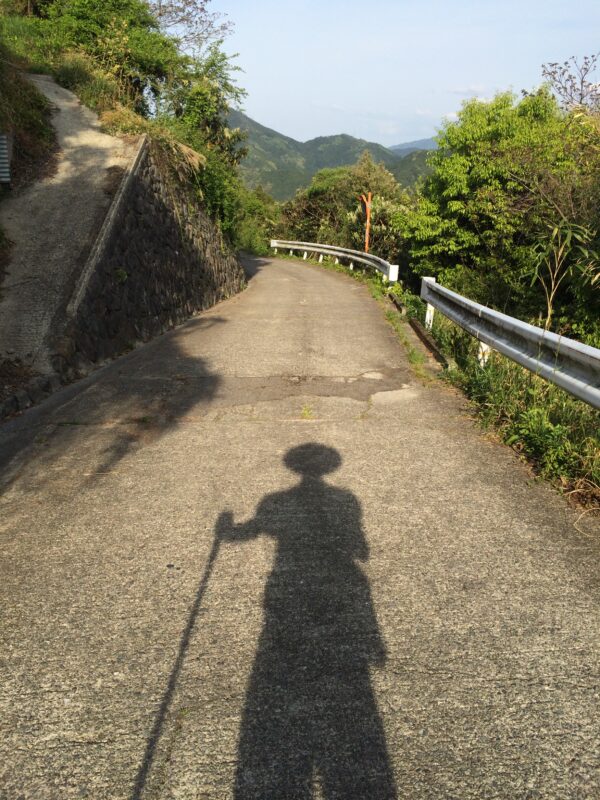
I wore a sugegasa for the entire Shikoku 88 Temple Pilgrimage and found it to be an extremely useful piece of equipment. The shade it provided, along with the protection from rain, branches, and spider webs, made long days of walking noticeably more comfortable.
That said, the best gear is the gear that works for you. If possible, visit a pilgrimage supply store after arriving in Shikoku, try on a few different sugegasa hats, and choose one that feels comfortable before setting out on your journey.
Conclusion
The sugegasa is more than just a symbol of the Shikoku Pilgrimage. While it represents a tradition that has been passed down for centuries, it also remains a highly practical piece of equipment for modern walking pilgrims, providing protection from the sun, rain, and overgrown mountain trails.
I wore a sugegasa from the beginning of my journey until I completed all 88 temples on foot, and I found that it made the pilgrimage noticeably more comfortable.
That said, a sugegasa isn’t the perfect choice for everyone. Before buying one, I recommend visiting a pilgrimage supply store in Shikoku and trying on a few different sizes. Choosing a sugegasa that fits you well will help ensure you’re comfortable throughout your pilgrimage.