
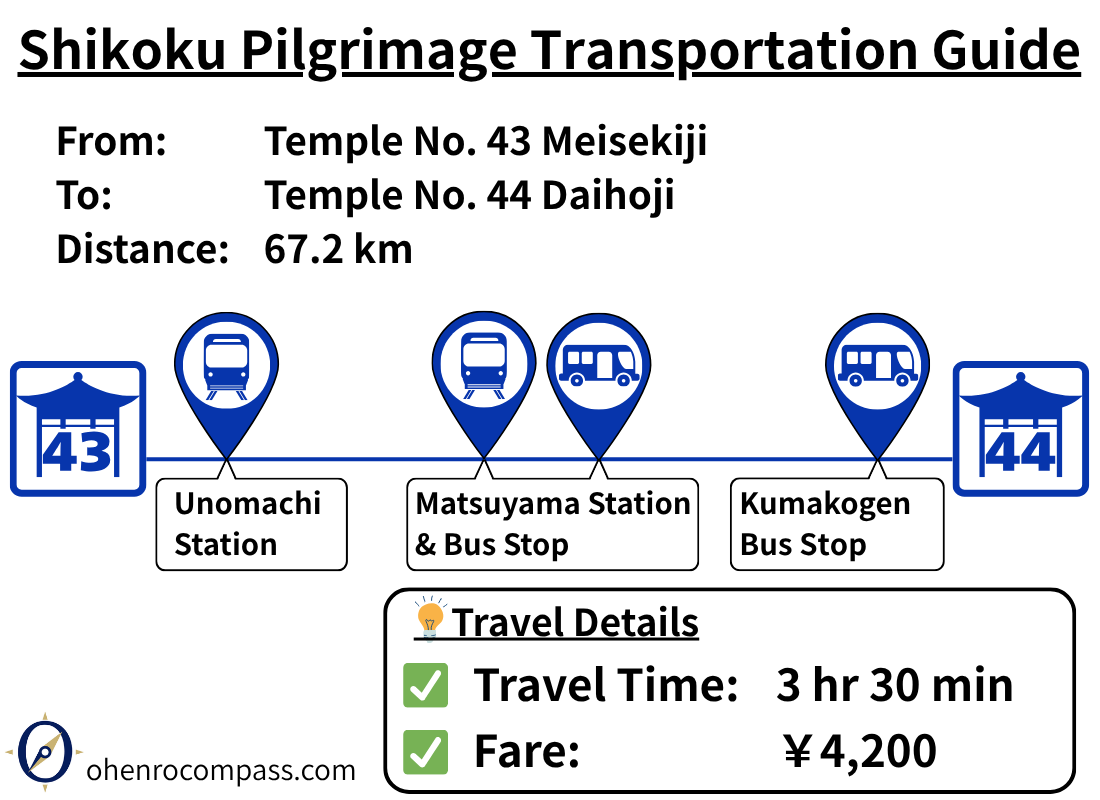
Train and Bus Route from Meisekiji Temple to Daihoji Temple
The distance between Temple No. 43 Meisekiji and Temple No. 44 Daihoji is approximately 67 km (42 miles), making it one of the more challenging sections of the Shikoku Pilgrimage. Walking the entire route typically takes about three days.
By using JR trains and the JR Shikoku Bus Kumakogen Line, you can travel between the two temples in approximately 3 hours and 30 minutes, with a total fare of around ¥4,200.
In this article, I will explain how to travel from Meisekiji to Daihoji using the JR Yosan Line and the JR Shikoku Bus Kumakogen Line.
Who This Article Is For
- Pilgrims who want to travel efficiently from Temple No. 43 Meisekiji to Temple No. 44 Daihoji
- Walking pilgrims who would like to conserve energy by avoiding a long-distance mountain section
- Travelers looking for a pilgrimage route that utilizes JR trains and local bus services
- Pilgrims seeking accommodation, shopping, and resupply information around Matsuyama Station and Kumakogen before continuing their journey
Google Maps
You can display public transit routes by opening the menu in the top-left corner of Google Maps.
Fare & Route Schedule
| No. | Location | Distance | Travel Time | Fare |
|---|---|---|---|---|
| 1 | Temple 43: Meisekiji | Walk (2 km) | 30 min | – |
| 2 | Unomachi Station | Train (76.7 km) | Lcl: 3 hr Exp: 1 hr 6 min | Lcl: ¥1,640 Exp: ¥2,840 |
| 3 | Matsuyama Station & Bus Stop | Bus (32 km) | 1 hr 20 min | ¥1,360 |
| 4 | Kumakoge Bus Stop | Walk (1.6 km) | 20 min | – |
| 5 | Temple 44: Daihoji | |||
| Total | – | 112.3 km | Lcl: 5 hr 10 min *1 Exp: 3 hr 16 min *1 | Lcl: ¥3,000 Exp: ¥4,200 |
Limited express trains are shown in red.
*1 Transfer waiting times are not included.
Temple Information
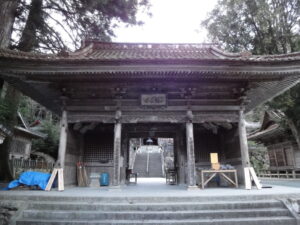
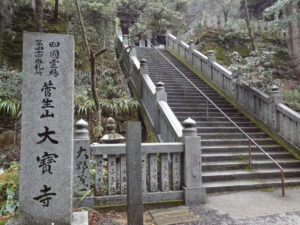
Timetable
JR Shikoku Yosan Line
*Limited express trains are shown in red.
- Forward Route
- Reverse Route
- Weekdays
- Holidays
- Weekdays
- Holidays
JR Shikoku Bus Kumakogen Line
- Forward Route
- Reverse Route
- Weekdays
- Holidays
- Weekdays
- Holidays
Matsuyama Station & Kumakogen Area Information
The area around Matsuyama Station, one of Ehime Prefecture’s main transportation hubs, offers excellent access and a wide range of facilities. Hotels, convenience stores, and restaurants are all readily available, making it a very convenient base for rest or overnight stays during the pilgrimage.
The Kumakogen area also has roadside stations (michi-no-eki), convenience stores, and scattered food options, so pilgrims generally do not face major difficulties in obtaining meals or supplies. However, accommodation options in Kumakogen are limited, so if you plan to stay overnight in the area, it is strongly recommended to make reservations in advance.
Model Route: Meisekiji to Daihoji
If you take the train departing Unomachi Station at 10:09, the connections between each mode of transport are well coordinated, allowing you to arrive at Temple No. 44 Daihoji by approximately 13:40.
- 10:09 DepartsUnomachi Station
JR Shikoku Yosan Line (76.7 km, ¥2,840)
- 11:19 Arrives
12:00 DepartsMatsuyama Station & Bus StopTransfer: JR Shikoku Bus Kumakogen Line (32 km, ¥1,360)
- 13:20 ArrivesKumakogen Bus Stop
Walk (1.6 km)
- 13:40 ArrivesTemple 44: Daihoji
Frequently Asked Questions (FAQ)
- QCan I travel from Temple No. 43 Meisekiji to Temple No. 44 Daihoji entirely on foot?
- A
Yes, it is possible. However, the distance is approximately 67 km (42 miles), and most pilgrims require about three days to complete the journey on foot. The route includes mountain roads and sections with significant traffic, so pilgrims who are concerned about their stamina may prefer to use trains and buses for part or all of the trip.
- QCan I travel from Meisekiji to Daihoji using public transportation?
- A
Yes. You can travel between the two temples using the JR Yosan Line and the JR Shikoku Bus Kumakogen Line. Using limited express trains, the journey takes approximately 3 hours and 30 minutes. If you use only local trains, the total travel time is typically around 5 hours.
- QHow long does it take to walk from Meisekiji to Unomachi Station?
- A
The distance between Temple No. 43 Meisekiji and Unomachi Station is approximately 2 km (1.2 miles), which takes about 30 minutes on foot. The walk is relatively easy, but during the summer months, be sure to take precautions against heat-related illnesses and stay well hydrated.
- QAre there accommodations near Matsuyama Station?
- A
Yes. The area around Matsuyama Station offers a wide range of hotels, restaurants, convenience stores, and other services. It is a convenient place to stay overnight or take a break before continuing toward Temple No. 44 Daihoji the following day.
- QAre there convenience stores and places to eat in the Kumakogen area?
- A
Yes. The Kumakogen area has convenience stores, restaurants, and roadside facilities, including a roadside station (Michi-no-Eki). However, there are fewer services than in a major city, so it is a good idea to purchase any essential supplies in Matsuyama before continuing your journey.
- QDo I need to reserve accommodations in the Kumakogen area?
- A
Advance reservations are recommended. Accommodation options in Kumakogen are limited, and rooms can fill up quickly during pilgrimage seasons and holiday periods. This is especially true during spring and autumn, when many walking pilgrims travel the route.
- QShould I take a limited express train or a local train?
- A
If saving time is your priority, a limited express train is the better choice. It can reduce travel time by approximately two hours compared with local trains.
If you are looking to minimize transportation costs, local trains are also a viable option, although the journey will take longer.
- QAre there places to eat near Daihoji Temple?
- A
Dining options near Temple No. 44 Daihoji are limited. It is advisable to have a meal in Matsuyama or Kumakogen before heading to the temple. In particular, after late afternoon, the number of restaurants that remain open may be quite limited.
Related Articles
Click here for accommodation information near Temple 44: Daihoji.
Recommended Accommodation: Temples 44–45 in Ehime
Click here for accommodation information near Matsuyama Station and Dogo Onsen.
Recommended Accommodation: Temples 46–52 in Ehime & Dogo Onsen
Click here for accommodation information near Ozu and Uchiko Station.
Recommended Accommodation: Temples 43–44 in Ehime
Back to route search.
Train & Bus Route Guide
Comments