
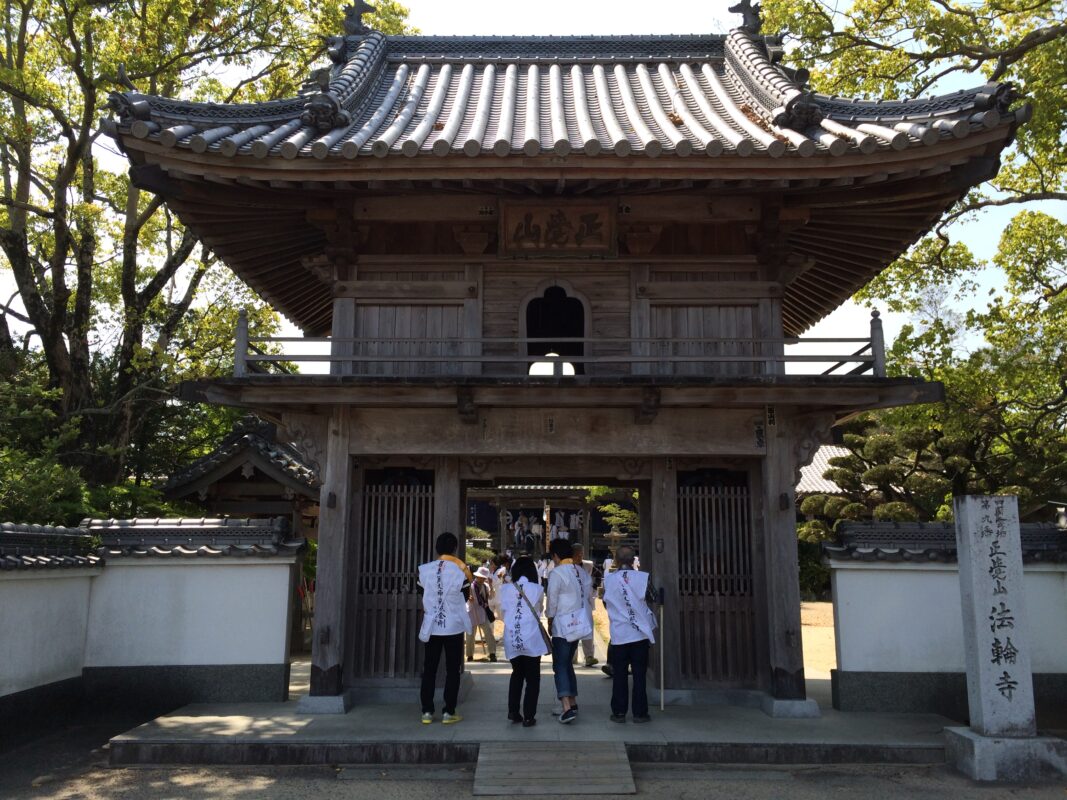
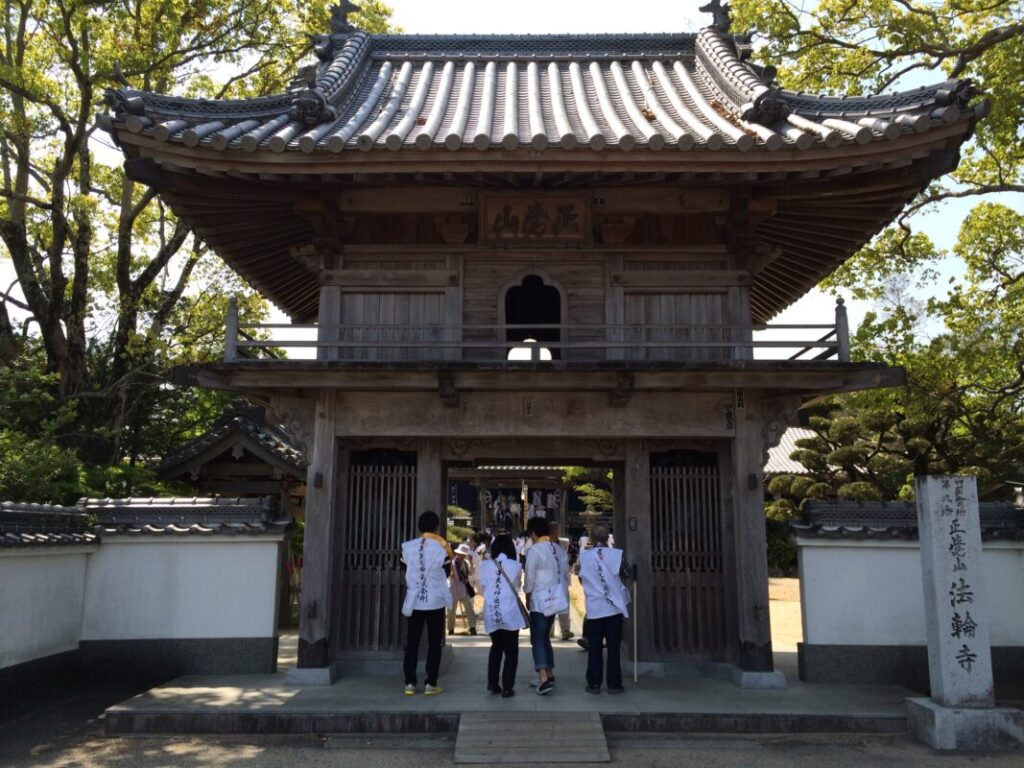
Horinji Temple Information
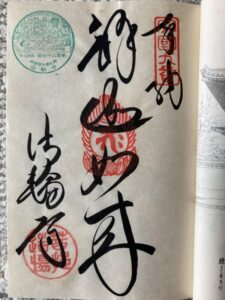
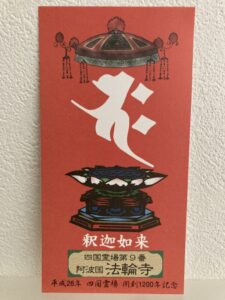
Goshuin
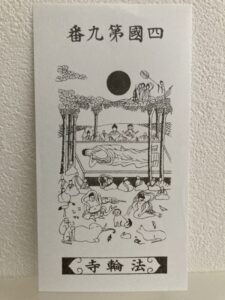
- Omie
- 1,200th Anniversary Edition
Basic Information
| Principal Deity | Shaka Nyorai |
| Elevation | 30 m |
| Google Maps | MAP |
Accommodation
| Shukubo (Temple Lodging) | Not Available |
| Tsuyado (Free Pilgrim Shelter) | Not Available |
History & Highlights
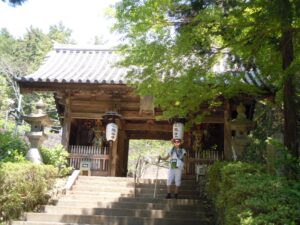
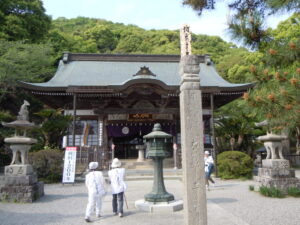
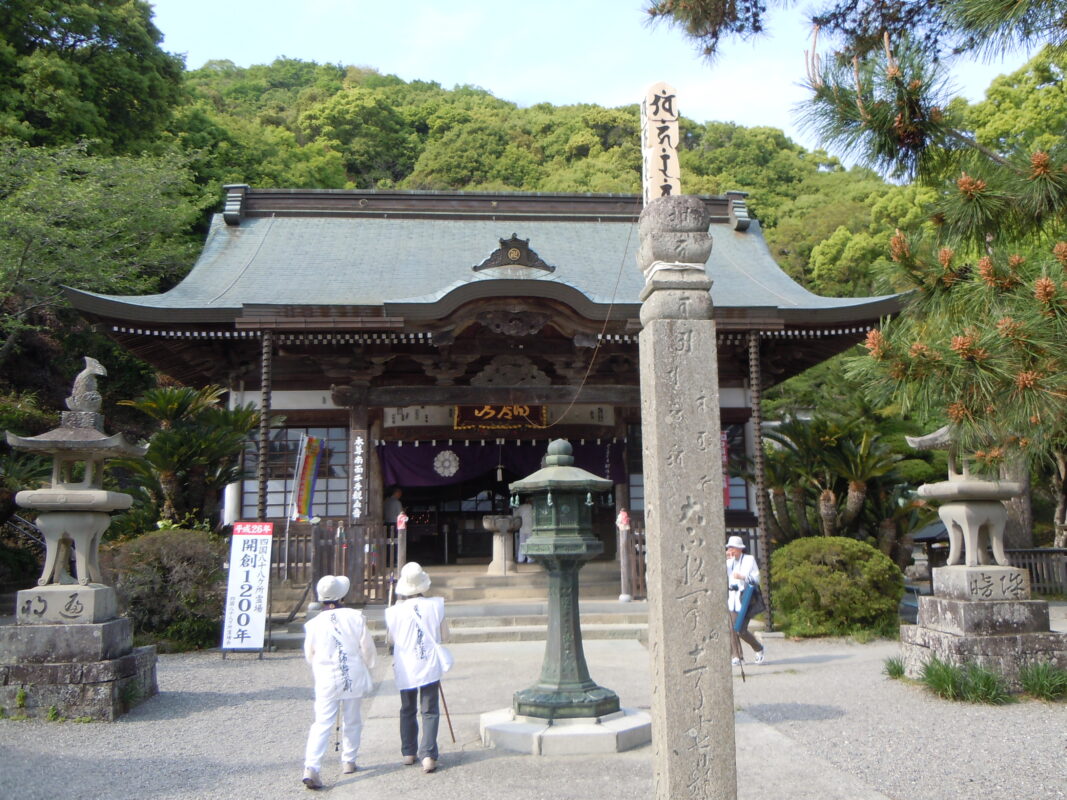
Horinji is an ancient temple said to have been founded by Kōbō Daishi, who regarded a white snake as a messenger of the Buddha and carved a statue of Nehan Shaka Nyorai (the Reclining Buddha representing the Buddha’s Nirvana). After being destroyed by war and fire, the temple was rebuilt at its present location during the Edo period. The Main Hall is known for its waraji (traditional straw sandals) offered as prayers for strong legs and safe journeys, and the temple also preserves a robe believed to have belonged to Kōbō Daishi as one of its treasured artifacts.
Route Map, Distance & Travel Time
You can switch between the tabs to view the routes to the previous and next temples.
Select “Driving Route” from the map’s upper-left menu to display the driving route.
Click the Full Screen icon in the upper-right corner of the map to open it in Google Maps for a larger, easier-to-view map.
- From Previous Temple
- To Next Temple
Previous Temple: Kumataniji
| Distance | 2.4 km |
| Walking | 40 min |
| Driving | 10 min |
Next Temple: Kirihataji
| Distance | 3.8 km |
| Walking | 1 hr 10 min |
| Driving | 15 min |
My Walking Experience
The route to Horinji is straightforward—simply head south from Kumataniji, with little chance of losing your way. As you walk through the peaceful countryside, you will eventually arrive at the temple.
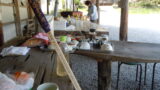
There is a small rest area in front of the temple gate where light snacks and coffee are usually available. On the day of my visit, the roasted sweet potatoes I had been looking forward to were not being sold. Instead, I was kindly offered a cup of coffee as osettai, the traditional hospitality extended to pilgrims. It was a thoughtful gesture that reflected the warm spirit of the Shikoku Pilgrimage and provided a welcome moment of rest after the walk.
Related Articles
Nearby Accommodation
If you plan to stay near Horinji or between the surrounding pilgrimage temples, see the article below.
Related Articles
Shikoku 88 Temple Pilgrimage Route: Full List, Distance & Walking Time Guide.
Temple List and Full Route
Comments