
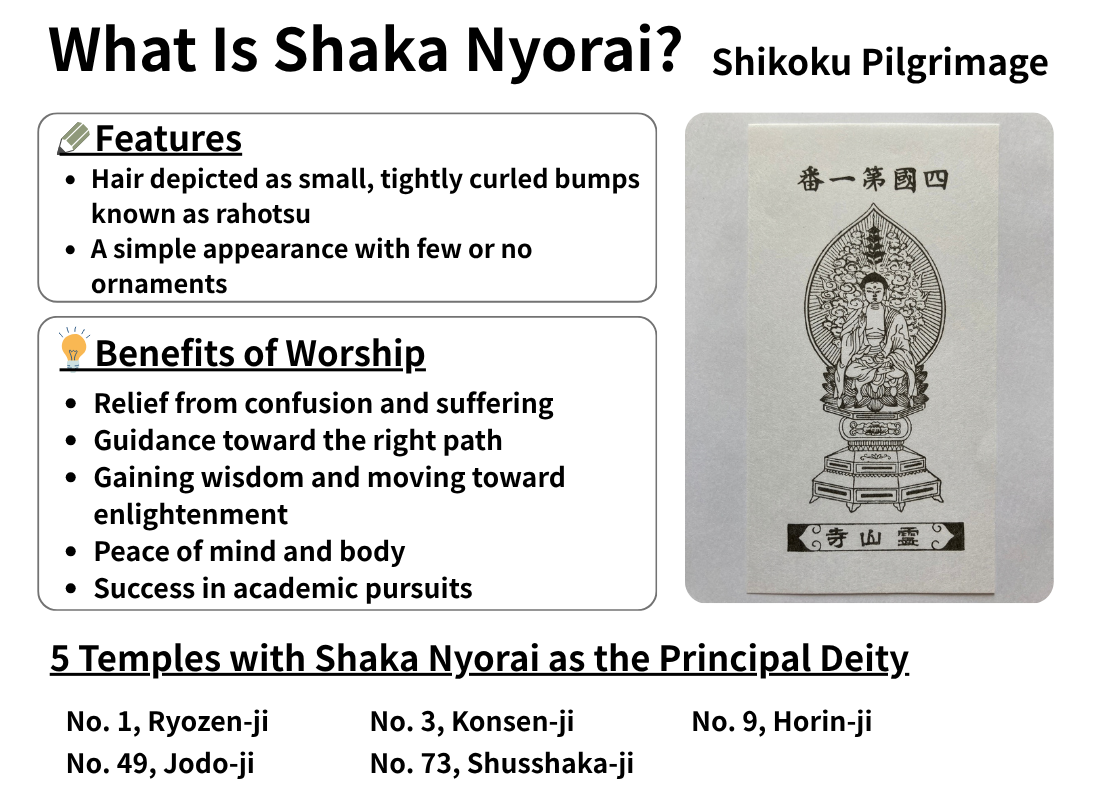
The 88 temples on the Shikoku 88 Temple Pilgrimage enshrine various Buddhist deities as their principal deities. Among them, Shaka Nyorai (Shakyamuni Buddha) is one of the most important figures in Buddhism, representing the historical Buddha who founded Buddhism.
Shaka Nyorai is worshipped as the Buddha who taught about the suffering and uncertainty of life and showed people the path toward enlightenment. Rather than simply being a Buddhist figure who grants wishes, Shaka Nyorai also encourages people to reflect on their own minds and way of life through the teachings of Buddhism.
On the Shikoku 88 Temple Pilgrimage, there are five temples where Shaka Nyorai is enshrined as the principal deity: Temple No. 1, Ryozen-ji; No. 3, Konsen-ji; No. 9, Horin-ji; No. 49, Jodo-ji; and No. 73, Shusshaka-ji. Each temple has its own distinctive features. For example, at No. 9, Horin-ji, the principal deity is Nehan Shaka Nyorai, a representation of Shaka Nyorai in his final moments before entering nirvana.
In this article, we will explain in an easy-to-understand way who Shaka Nyorai is, what he looks like, his relationship with Buddhist teachings, what he is worshipped for, his mantra, and the five temples on the Shikoku 88 Temple Pilgrimage where Shaka Nyorai is enshrined as the principal deity.
What Is Shaka Nyorai?
Shaka Nyorai (Shakyamuni Buddha) represents Shakyamuni, the historical Buddha who founded Buddhism, as a Buddhist figure.
Born into a royal family in ancient India, Shakyamuni reflected deeply on the suffering and uncertainty of life. He eventually left his privileged life, became a monk, and devoted himself to spiritual practice. After attaining enlightenment, he is said to have taught his teachings to many people.
In Japanese Buddhism, Shaka Nyorai has long been widely worshipped as the Buddha who taught the fundamental teachings of Buddhism.
What Does Shaka Nyorai Look Like?
Shaka Nyorai is generally depicted in the appearance of a Buddhist monk.
His hair is represented by small, tightly curled shapes known as rahotsu, and he wears simple Buddhist robes with few or no ornaments, reflecting his life as a monk.
Buddhist statues of Shaka Nyorai take various forms, including seated figures preaching the Dharma and figures representing the moment when he attained enlightenment.
There are also various representations associated with different stages of Shakyamuni’s life, including his birth, spiritual practice, enlightenment, teaching, and entry into nirvana.
On the Shikoku 88 Temple Pilgrimage, Nehan Shaka Nyorai is enshrined at Temple No. 9, Horin-ji.
Nehan Shaka Nyorai represents Shakyamuni in his final moments before entering nirvana and is characterized by a reclining posture. At Horin-ji, the statue is enshrined in the traditional “head to the north, face to the west” position, known as tohoku mensai.
Omie


Nomaku Sanmanda Bodanan Baku
- Relief from confusion and suffering
- Guidance toward the right path
- Gaining wisdom and moving toward enlightenment
- Peace of mind and body
- Success in academic pursuits
Shaka Nyorai and Buddhism
Shaka Nyorai is an important Buddhist figure as the Buddha who taught the fundamental teachings of Buddhism.
Shakyamuni taught about the suffering and uncertainty that people experience throughout their lives. He taught that by understanding the causes of suffering and following the right path, people can free themselves from suffering.
For this reason, Shaka Nyorai is worshipped not simply as a Buddha who grants wishes, but as a Buddha who shows people the path toward a proper way of living and enlightenment.
On the Shikoku Pilgrimage, visiting temples where Shaka Nyorai is enshrined can also be seen as an opportunity to encounter the teachings of Buddhism and reflect on your own life.
Benefits of Worshipping Shaka Nyorai
As the Buddha who taught the fundamental teachings of Buddhism, Shaka Nyorai is associated with various benefits of worship.
Some of the most commonly associated benefits include:
- Relief from confusion and suffering
- Guidance toward the right path
- Gaining wisdom and moving toward enlightenment
- Peace of mind and body
- Success in academic pursuits
In the worship of Shaka Nyorai, the emphasis is not simply on receiving good fortune from outside oneself. Instead, learning the Buddha’s teachings and reflecting on one’s own mind and way of life are considered important aspects of the practice.
Temples Where Shaka Nyorai Is the Principal Deity on the Shikoku 88 Temple Pilgrimage
Among the 88 temples on the Shikoku 88 Temple Pilgrimage, there are five temples where Shaka Nyorai is enshrined as the principal deity.
Temple No. 1 Ryozen-ji
Ryozen-ji, regarded as the temple where pilgrims make their initial prayer and begin their pilgrimage, is the first temple on the Shikoku 88 Temple Pilgrimage.
According to temple tradition, when Kobo Daishi performed Buddhist rituals at this site, he had a spiritual vision reminiscent of Shakyamuni preaching at Vulture Peak in India. It is said that this experience led to the temple being named Chikuwazan Ryozen-ji.
In front of the principal deity, a small bronze statue of Shaka Nyorai as a newborn Buddha, believed to date from the Hakuhō period, is said to be enshrined.
Temple No. 3 Konsen-ji
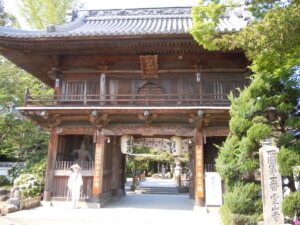
According to temple tradition, the history of Konsen-ji began when Gyoki Bosatsu established a temple complex at the imperial request of Emperor Shomu. It is said that a statue of Shaka Nyorai was enshrined as the principal deity at the time, together with Amida Nyorai and Yakushi Nyorai as attendant figures, forming a Buddhist triad.
The current principal deity is Shaka Nyorai, traditionally attributed to Gyoki Bosatsu.
The temple is also known for the “Golden Well,” which is said to have been dug by Kobo Daishi and is believed to be the origin of the temple’s name, Konsen-ji, meaning “Temple of the Golden Spring.”
Temple No. 9 Horin-ji
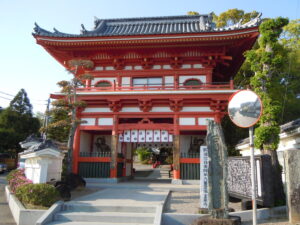
Temple No. 9, Horin-ji, enshrines Nehan Shaka Nyorai as its principal deity.
Nehan Shaka Nyorai represents Shakyamuni in his final moments before entering nirvana.
The principal deity at Horin-ji is depicted in a reclining posture, lying on his right side with his head facing north and his face toward the west, representing the traditional Nehan posture.
According to temple tradition, Kobo Daishi encountered a white snake at this site and, inspired by the experience, carved a statue of Shakyamuni in his final moments before entering nirvana and enshrined it as the principal deity.
The principal deity is said to be shown to the public once a year, during the Nehan-e ceremony on February 15.
Temple No. 49 Jodo-ji
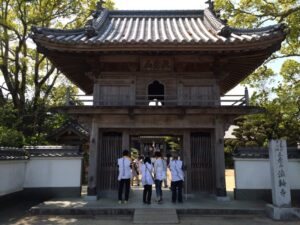
According to temple tradition, Jodo-ji was founded as a temple established by imperial prayer during the reign of Empress Koken. Its history is said to have begun when a statue of Shaka Nyorai carved by Gyoki Bosatsu was enshrined as the principal deity.
Later, Kobo Daishi is said to have visited Jodo-ji and restored the temple buildings, which had fallen into disrepair.
Jodo-ji is also known for its statue of Kuya Shonin. Kuya Shonin is said to have stayed at Jodo-ji during the middle of the Heian period, where he taught the Buddhist teachings to local people.
The temple’s main hall and the Buddhist altar enclosure in the inner sanctuary are also designated as Important Cultural Properties of Japan.
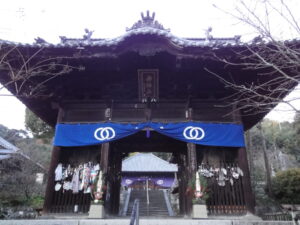
Temple No. 73 Shusshaka-ji
Shusshaka-ji has a deep connection with the legend of Shashin-ga-take, which is associated with the childhood of Kobo Daishi.
According to temple tradition, when Kobo Daishi was seven years old, he threw himself from a cliff on Mount Gahaishi. It is said that Shaka Nyorai and heavenly maidens appeared and saved him.
Later, as a young man, Kobo Daishi is said to have carved a statue of Shaka Nyorai at the summit of Mount Gahaishi and built a temple hall there. This is regarded as the origin of Shusshaka-ji.
Further up the mountain from the temple grounds is Shashin-ga-take Zenjo, the site where Kobo Daishi is traditionally believed to have thrown himself from the cliff.
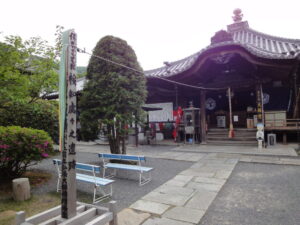
Five Temples Where Shaka Nyorai Is the Principal Deity
There are five temples on the Shikoku 88 Temple Pilgrimage where Shaka Nyorai is enshrined as the principal deity.
They are Temple No. 1, Ryozen-ji; No. 3, Konsen-ji; No. 9, Horin-ji; No. 49, Jodo-ji; and No. 73, Shusshaka-ji.
Although all five temples enshrine Shaka Nyorai, each has its own unique history and traditions. These include the Shaka Nyorai as a newborn Buddha at Ryozen-ji, Nehan Shaka Nyorai at Horin-ji, and the legend of Shashin-ga-take at Shusshaka-ji.
When visiting these temples on the Shikoku Pilgrimage, paying attention not only to the principal deity but also to the history and legends associated with Shaka Nyorai at each temple can make your pilgrimage experience even more meaningful.
Comments