Hello, I’m “Taka,” the author of this blog.
I have walked the Shikoku 88 Temple Pilgrimage twice, completing both the standard (forward) route and the reverse route.
There are two routes from Temple 38, Kongofuku-ji, to Temple 39, Enko-ji: the “Mihara Village Route” and the “coastal route (the Tsukiyama Route).”
In this article, I introduce accommodations along the “Tsukiyama Route,” which runs along the coastline from Cape Ashizuri toward Sukumo, for both walking pilgrims and those traveling by car.
- “Are there places to stay along the way?”
- “Can I camp?”
- “Is it possible to walk all the way to Sukumo in one go?”
For those wondering about these questions, I’ve compiled a list of convenient places to stay based on my own experience walking the pilgrimage twice.
Highlights of this area
Compared to the route passing through Mihara Village, this path is about 20 km longer. However, it is a popular pilgrimage route that allows you to visit Tsukiyama Shrine, located about 25 km south of Sukumo. This route is commonly known as the “Tsukiyama Route.”
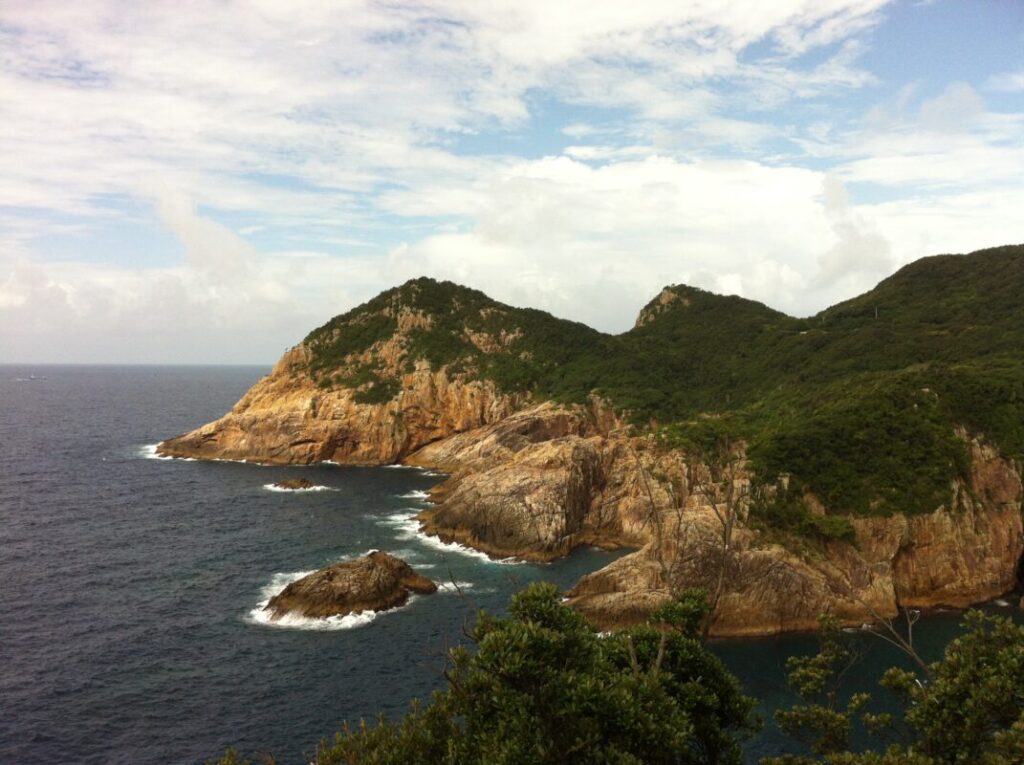
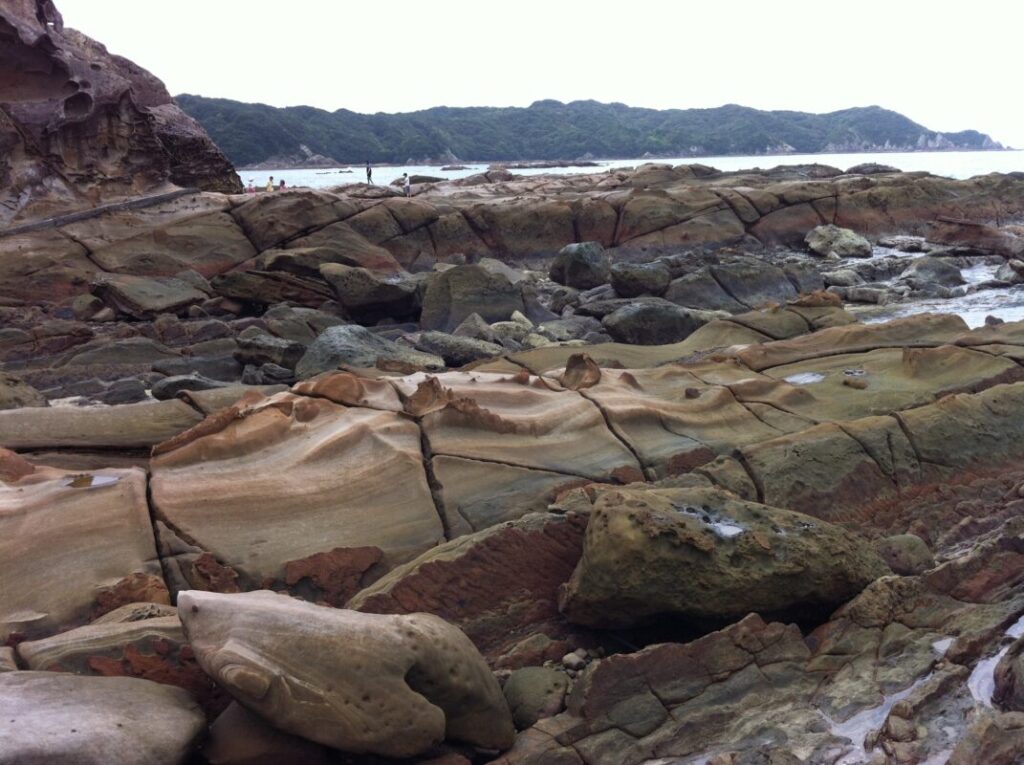
One of its main attractions is the spectacular coastal scenery—such as the sea erosion formations of Tatsukushi and the mystical “Daruma Sunset” sinking into the Pacific Ocean. It is an area where you can truly feel nature while walking.
Once you reach Sukumo, you will find plenty of accommodation and dining options. In addition, Otsuki Town offers camping facilities, making it a great route for those who want to enjoy outdoor-style pilgrimage travel.
The scenery of Ashizuri
Coastal erosion landforms of Tatsukushi
Recommended accommodation for car pilgrims
Ajisai no Yado Nangoku
A highly recommended place for those traveling the pilgrimage by car is Ajisai no Yado Nangoku. Located in Tatsukushi, Tosashimizu City, Kochi Prefecture, this homely inn is very convenient for car pilgrims thanks to its free parking facilities.
It is well known for its fresh seafood and locally sourced vegetables, with especially popular dishes such as sawachi cuisine and bonito (katsuo) meals. Situated near the ocean, it also offers beautiful scenery, making it an ideal place to relax and recover from the fatigue of your journey.
Find accommodation
Clicking the button will take you to the relevant section in the article.
Accommodations around Tatsukushi
Ajisai no Yado Nangoku





| Nearest Temple | No. 38 (24 km) |
| Nearest Bus Stop | Tatsukushi (0.1 km) |
| Google Maps | MAP |
| Rating | ★★★★☆ (4/5) |
Check Booking Sites
Orange

| Nearest Temple | No. 38 (24 km) |
| Nearest Bus Stop | Kaiteikan Mae (0.1 km) |
| Google Maps | MAP |
| Rating | ★★★★☆ (4/5) |
Check Booking Sites
Snow Peak Tosashimizu Campfield
| Nearest Temple | No. 38 (24 km) |
| Nearest Bus Stop | Kaiteikan Mae (0.1 km) |
| Google Maps | MAP |
| Rating | ★★★★☆ (4/5) |
Check Booking Sites
Accommodations around Otsuki and Sukumo
Umi to Nishi


| Nearest Temple | No. 39 (30 km) |
| Nearest Bus Stop | Himenoi Minami (3 km) |
| Google Maps | MAP |
| Rating | ★★★★★ (5/5) |
Check Booking Sites
Otsuki Outdoor Field KASHINISHI
| Nearest Temple | No. 39 (28 km) |
| Nearest Bus Stop | Himenoi Minami (3 km) |
| Google Maps | MAP |
| Rating | ★★★★☆ (4/5) |
Check Booking Sites
Otsuki Ecology Campground
| Nearest Temple | No. 39 (27 km) |
| Nearest Bus Stop | Futatsuishi (4 km) |
| Google Maps | MAP |
| Rating | ★★★★☆ (4/5) |
Check Booking Sites
Oshima
| Nearest Temple | No. 39 (16 km) |
| Nearest Station | Sukumo (7 km) |
| Google Maps | MAP |
| Rating | ★★★★☆ (4/5) |
Check Booking Sites
Tora no Ie
| Nearest Temple | No. 39 (15 km) |
| Nearest Station | Sukumo (6 km) |
| Google Maps | MAP |
| Rating | ★★★★☆ (4/5) |
Check Booking Sites
Top recommended inn: Guesthouse Toranoie
One of the best recommended accommodations is Guesthouse Toranoie, located in Sukumo City. It sits right along the pilgrimage route, making it especially convenient for walking pilgrims.
This guesthouse is a renovated traditional Japanese house, offering a calm and relaxed atmosphere. It is well equipped with shared facilities such as a communal kitchen and Wi-Fi, making for a comfortable stay.
The price is relatively affordable, and guests can enjoy a quiet environment ideal for resting after a long day’s walk. It is a great choice for anyone looking for good value accommodation around the Sukumo area.
Frequently Asked Questions (FAQ)
- QHow many days does it take to go from Temple 38 to Temple 39?
- A
If you take the coastal “Tsukiyama Route,” it generally takes about 2–3 days on foot for pilgrims. Because the distance from Cape Ashizuri toward Sukumo is quite long, most people stay overnight around Tatsukushi, Otsuki, and Sukumo along the way.
- QWhich is better, the Tsukiyama Route or the Mihara Village Route?
- A
If you want to enjoy the scenery, the Tsukiyama Route along the coast is recommended. You can experience beautiful views such as Tatsukushi Beach and the Pacific Ocean. However, it is about 20 km longer than the Mihara Village Route. If minimizing distance is your priority, the Mihara Village Route is more suitable.
- QIs wild camping possible in this section?
- A
It is possible in some areas, but the coastal section includes stretches with few accommodations and shops. Especially for beginner pilgrims, it is safer to book accommodations in advance. There are also camping facilities available around Otsuki Town.
- QAre there restaurants and supermarkets in the Sukumo area?
- A
Yes. Once you reach Sukumo city, you will find convenience stores, supermarkets, restaurants, and business hotels. It is a very convenient resupply point for long-distance walking pilgrims.
- QAre there accommodations that are easy to use for car pilgrims?
- A
Yes. Many inns around the Tatsukushi area offer free parking and are suitable for car pilgrims. In particular, Ajisai no Yado Nangoku is a well-regarded option with parking facilities and highly rated cuisine.
- QAre there recommended accommodations for walking pilgrims?
- A
For walking pilgrims, Guesthouse Toranoie is highly recommended. It is affordable, well-equipped, and located along the pilgrimage route, offering a quiet and comfortable place to rest.
Summary
The coastal route (Tsukiyama Route) from Temple 38 to Temple 39 is a longer path, but it is a popular pilgrimage route that allows travelers to enjoy the spectacular scenery of Cape Ashizuri and the coastal rock formations of Tatsukushi.
Once you reach Sukumo, the number of accommodations and restaurants increases, and there are also camping sites scattered around the area, allowing you to choose a lodging style that suits your travel preferences.
For walking pilgrims in particular, some sections have limited accommodation options, so early reservations are strongly recommended.
In related articles, we also introduce accommodation information around the Mihara Village area and a broader lodging guide for the Shikoku pilgrimage, so please feel free to refer to those as well.
Related Articles
Shikoku Pilgrimage Accommodation Guide: Temple 40 to 41 Route.
Recommended Accommodation: Temples 40–41 in Ehime
Shikoku Henro Accommodation Guide | Mihara Village Route to Temple 39.
Recommended Accommodation: Temples 38–39 Route 1
Where to Stay Near Cape Ashizuri | Temple 38 Shikoku Pilgrimage Accommodation Guide.
Recommended Accommodation: Temple 38 – Cape Ashizuri Part 3
A detailed guide to accommodation options on the Shikoku Pilgrimage, including costs and how to choose the right place to stay.
Shikoku Pilgrimage Accommodation Guide