
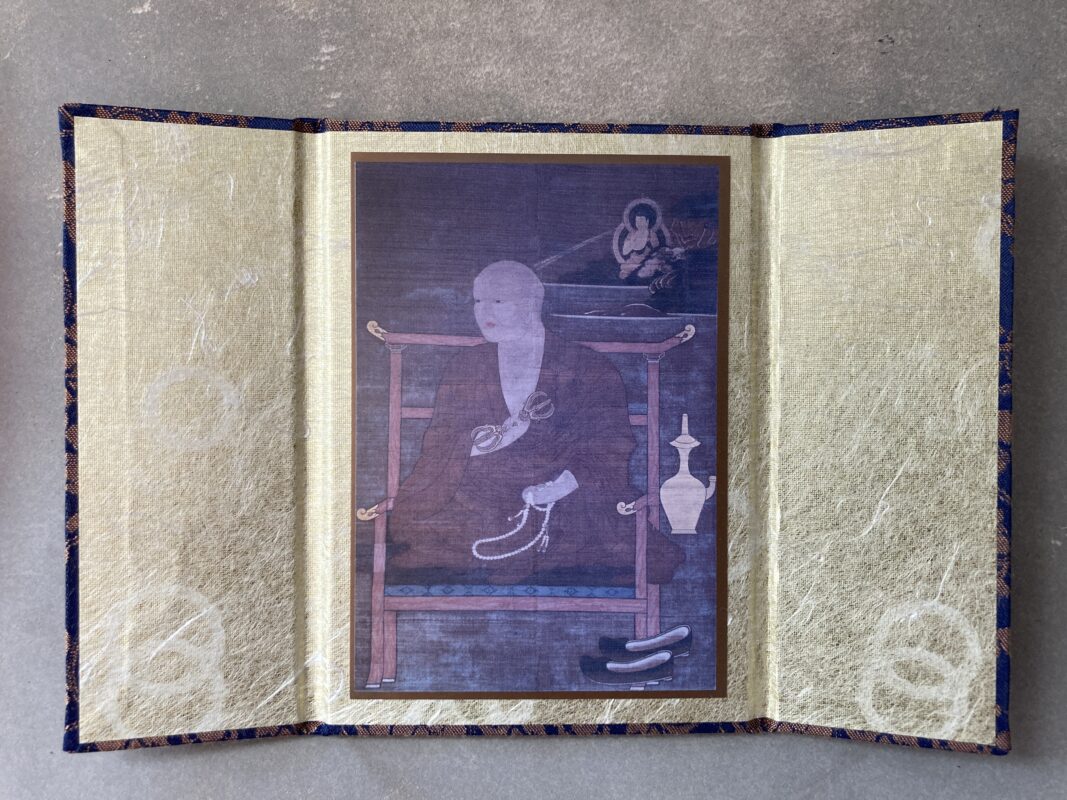
“What kind of person was Kūkai?”
“Why is he called Kōbō Daishi?”
“What is his connection to the Shikoku pilgrimage?”
When you become interested in the Shikoku 88 Temple Pilgrimage, one name you are certain to hear is Kūkai.
Kūkai was a Buddhist monk who lived during the Heian period and is widely known as the person who introduced Shingon Esoteric Buddhism to Japan. He is also believed to have been involved in establishing the Shikoku 88 Temple Pilgrimage, and even today pilgrims affectionately refer to him as “Odaishi-sama” (the Great Master).
In this article, we will explain Kūkai’s life, achievements, teachings, and his relationship with the pilgrimage in an easy-to-understand way.
Who Was Kūkai (Kōbō Daishi)?
Kūkai (774–835) was a Buddhist monk who was active during the early Heian period.
After his death, he was posthumously given the title “Kōbō Daishi” by the Imperial Court. Because of this, he is more widely known to the general public as Kōbō Daishi.
Kūkai was a highly influential figure in Japanese Buddhism and continues to be revered by many people today as the founder of the Shingon school of Buddhism.
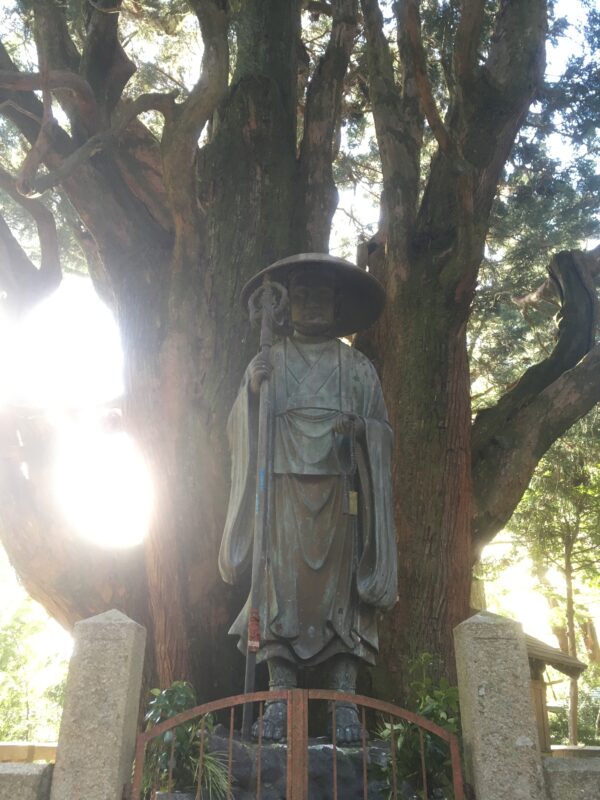
Kūkai’s Life: From His Birth to His Study in Tang China
Born in Shikoku
Kūkai is believed to have been born in the area around present-day Zentsūji City.
His childhood name is said to have been “Mao.”
As a young man, he devoted himself to academic studies and had the opportunity to pursue a career as a government official in the capital. However, he gradually became deeply attracted to Buddhist teachings and eventually chose the path of becoming a monk.
Traveling to Tang China
In 804, Kūkai traveled to Tang China as a member of a Japanese diplomatic mission.
At that time, China was considered one of the world’s leading centers of culture and religion.
In Chang’an, Kūkai studied Esoteric Buddhism under a high-ranking Buddhist master and, in only about two years, was recognized as the legitimate successor of the tradition.
He then returned to Japan in 806.
Founding the Shingon School
After returning to Japan, Kūkai began spreading the teachings of Esoteric Buddhism.
He eventually gained the trust of the Imperial Court and developed Mount Kōya in Wakayama Prefecture as a place for Buddhist training and practice.
Even today, Mount Kōya remains a sacred center of Shingon Buddhism and attracts many visitors and pilgrims.
What Were Kūkai’s Teachings?
Kūkai emphasized:
- Compassion and consideration for others
- A heart of gratitude
- A commitment to lifelong learning
- The importance of putting teachings into practice
These teachings continue to resonate and remain relevant in modern society today.
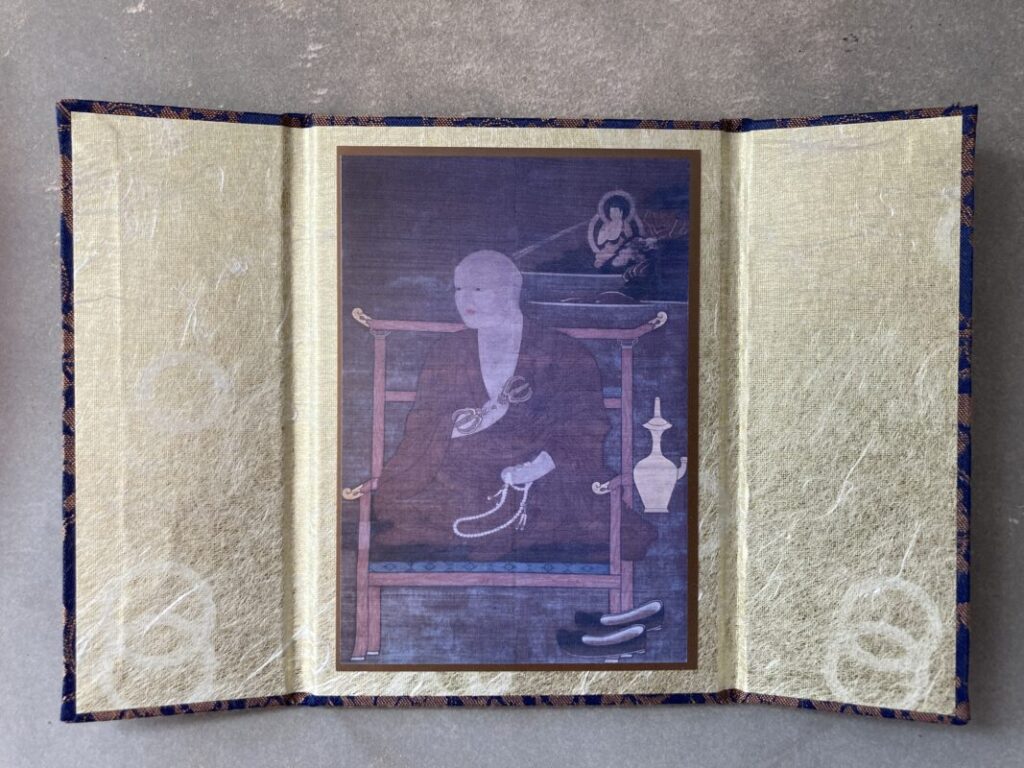
What Is Sokushin Jōbutsu?
The Shingon Esoteric Buddhism taught by Kūkai places great importance on the idea that a person can “become a Buddha in this very body.”
This concept is called Sokushin Jōbutsu.
In many forms of Buddhism, enlightenment is seen as something achieved through long years of practice. In contrast, Shingon Esoteric Buddhism teaches that through daily practice and prayer, people can move closer to the state of Buddhahood while living in this world.
The Concept of the Jūjūshinron (Ten Stages of Spiritual Development)
Kūkai also presented a systematic theory known as the Jūjūshinron (The Ten Stages of the Development of Mind).
This framework explains human spiritual growth through ten stages of mental and spiritual development.
In simple terms, it describes a journey that begins with acting according to instincts and desires, and gradually progresses through learning and faith until one ultimately approaches the wisdom of Buddhahood.
The Ten Stages of the Jūjūshinron
1. Stage of instinct
The stage of acting according to instinct and desire.
2. Stage of moral awareness
The stage of learning right and wrong and trying to follow rules.
3. Stage of faith
The stage of seeking comfort and security through faith in heaven, deities, or Buddha.
4. Stage of self-understanding
The stage of understanding that the self is not a fixed or permanent entity.
5. Stage of overcoming attachment
The stage of trying to eliminate the causes of attachment and delusion.
6. Stage of compassion
The stage of wishing to save and help others, not only oneself.
7. Stage of deeper realization
The stage of realizing that all things are fundamentally beyond birth and destruction.
8. Stage of universal truth
The stage of understanding that all teachings ultimately lead to one truth.
9. Stage of ultimate wisdom
The stage of deeply realizing that nothing possesses a permanent and independent essence.
10. Stage of Buddhahood
The highest stage in Shingon Esoteric Buddhism, in which one realizes unity with the universe.
Kūkai believed that people differ in their ways of thinking and levels of understanding, and he recognized that each person has a learning path and form of practice suited to them.
For this reason, he taught that people should not be judged as superior or inferior, but instead that each person should follow the path of learning and practice that best suits them.
Kūkai and the Shikoku 88 Temple Pilgrimage
It is impossible to talk about the Shikoku pilgrimage without mentioning Kūkai.
The Shikoku 88 Temple Pilgrimage is believed to follow a route that connects sacred sites and places associated with Kūkai’s spiritual training during his younger years.
Many of the pilgrimage temples preserve legends and stories related to Kūkai, making him a central figure in the culture of the pilgrimage.
Major Pilgrimage Temples Associated with Kūkai
Tairyū-ji (Temple No. 21)
This sacred mountain is said to be where Kūkai practiced the Kokūzō Bosatsu Gumonjihō (a Buddhist training method dedicated to Ākāśagarbha Bodhisattva) for 100 days.
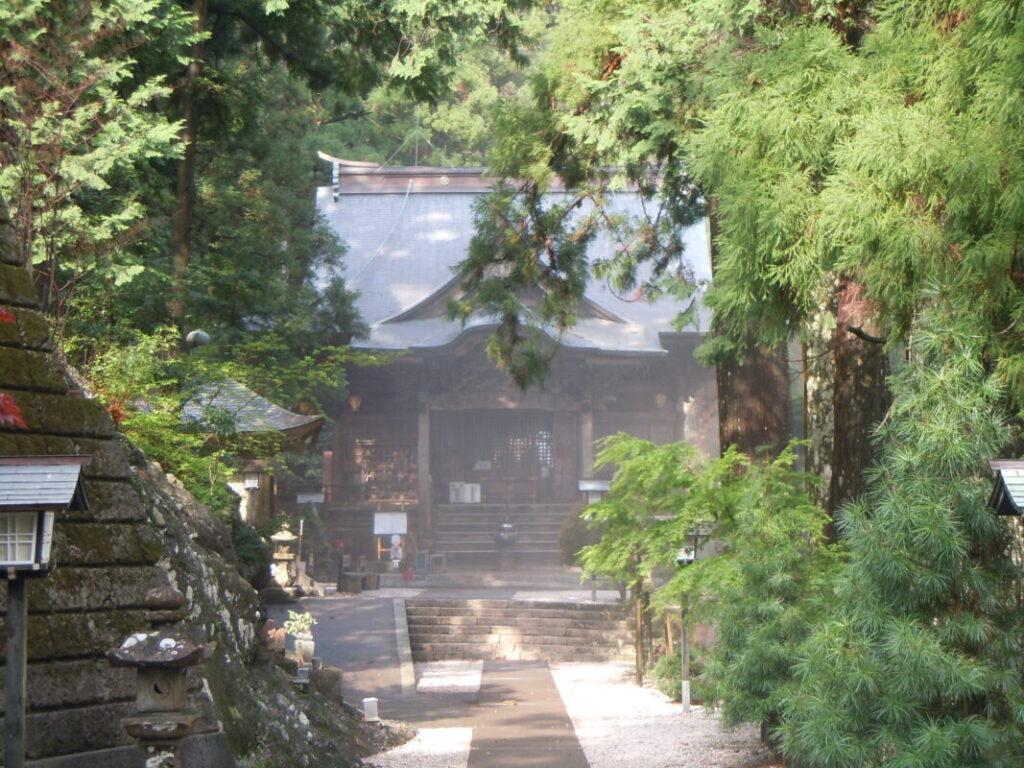
Hotsumisaki-ji (Temple No. 24)
Located at Cape Muroto, this temple is closely connected with Mikurodo Cave nearby, where Kūkai is believed to have trained and attained spiritual enlightenment.

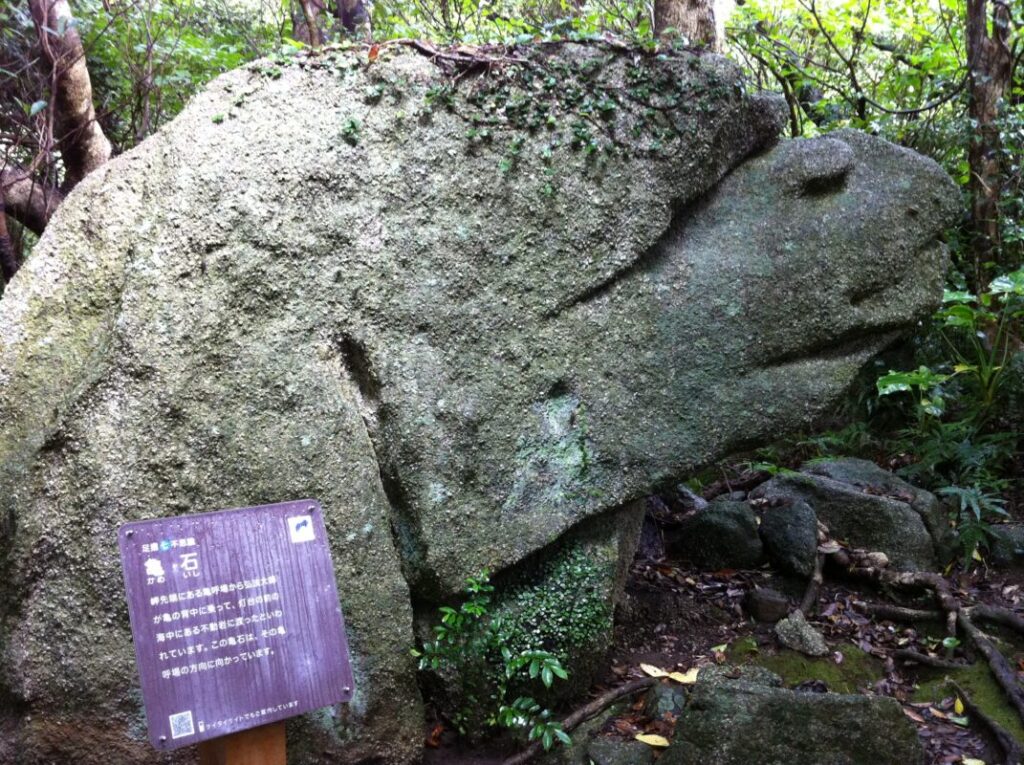
Kongōfuku-ji (Temple No. 38)
Located at Cape Ashizuri, this temple is associated with a legend that Kūkai crossed the sea while riding on a turtle.
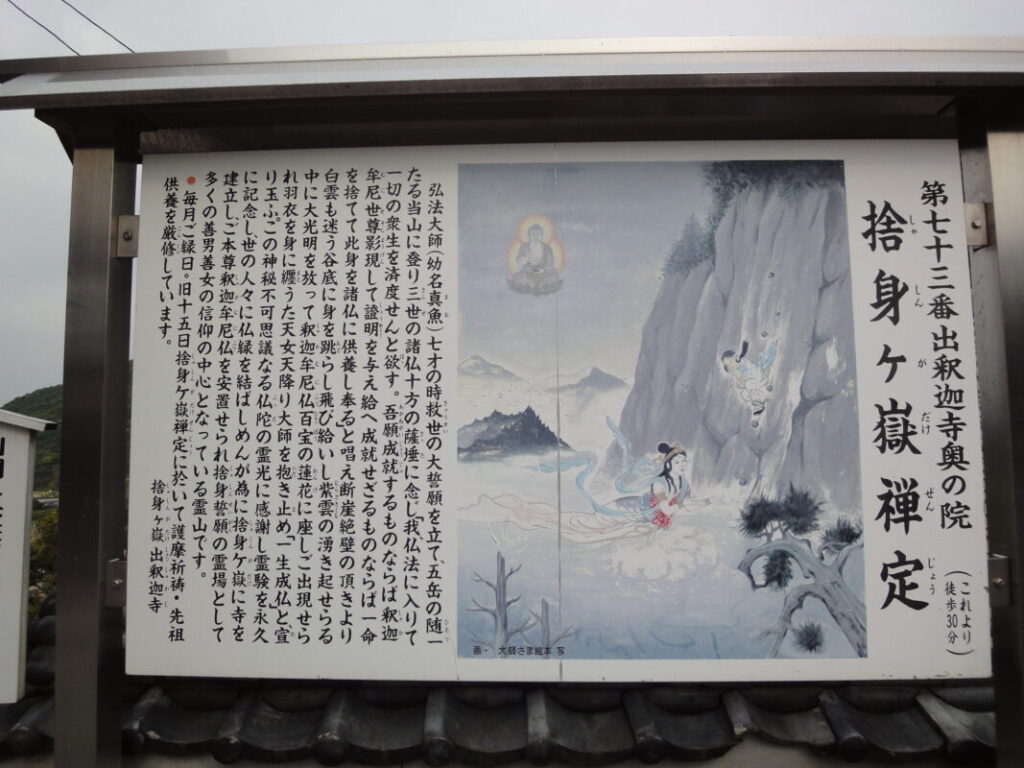
Shusshaka-ji (Temple No. 73)
At the temple’s inner sanctuary, Okunoin Shashin-ga-dake, a legend tells that the young Kūkai jumped from a cliff while praying, “If the Buddha’s power is real, please save me,” and was rescued by heavenly maidens.
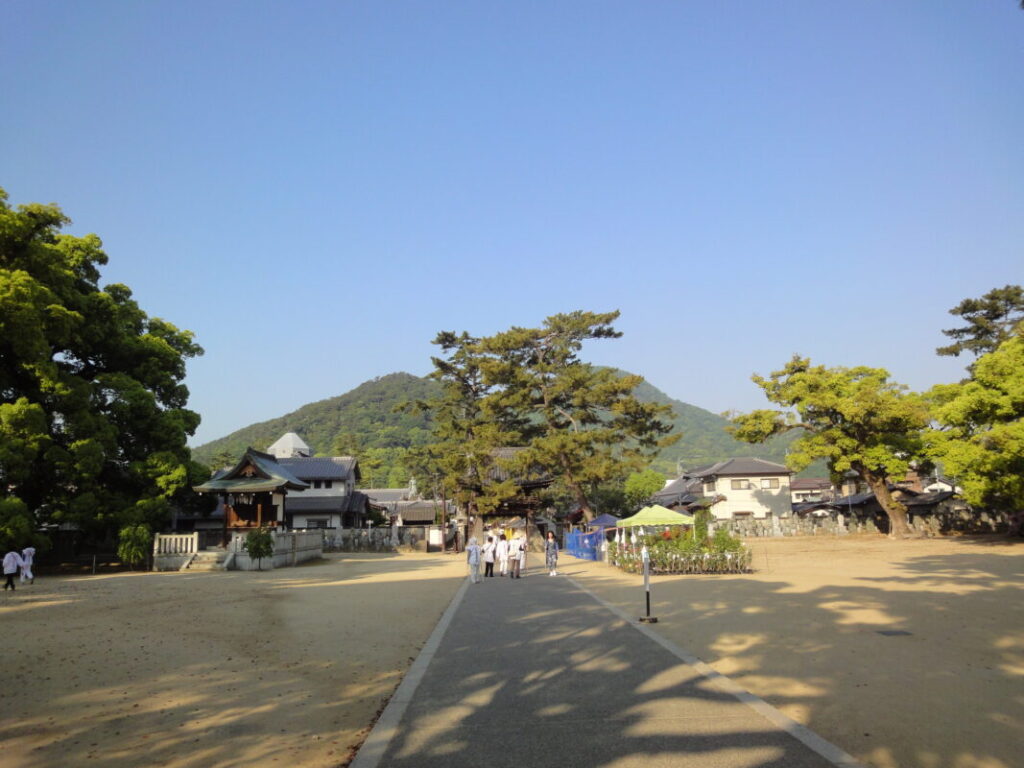
Zentsū-ji (Temple No. 75)
This temple is widely known as the birthplace of Kōbō Daishi Kūkai. The temple grounds still preserve places associated with his childhood, including the Ubuyu-i (the well said to have provided his first bath water).
Kūkai’s Major Achievements
Kūkai made remarkable contributions not only as a religious leader but also in many other fields.
Contribution to Education
Kūkai established Shugei Shuchi-in, which is considered Japan’s first school for ordinary people.
For its time, it was highly unusual because it was said to provide education regardless of social status.
Contribution to Civil Engineering
Kūkai is also believed to have been involved in the restoration and improvement of Manno Reservoir in Kagawa Prefecture.
Even today, Manno Reservoir is known as one of Japan’s largest irrigation reservoirs and continues to serve as an important water source supporting the lives of many people.
In addition, Kanno-ji Temple, located near Manno Reservoir, is Temple No. 17 of the Shikoku Betsukaku Twenty Sacred Temples. It is known as a place connected to Kūkai where visitors can experience the history and legacy of Kūkai and Manno Reservoir.
Master of Calligraphy
Kūkai was also a master calligrapher and is celebrated as one of the Sanpitsu (“Three Great Calligraphers”) together with Emperor Saga and Tachibana no Hayanari.
Because Kūkai (Kōbō Daishi) was so widely known for his calligraphy skills, his name also lives on in Japanese proverbs such as:
- “Even Kōbō makes mistakes.”
- “Kōbō does not choose his brush.”
These expressions are still used today and convey the ideas that “even experts can make mistakes” and “a true master is not dependent on their tools.”
Kūkai Is Believed to Still Live at Mount Kōya
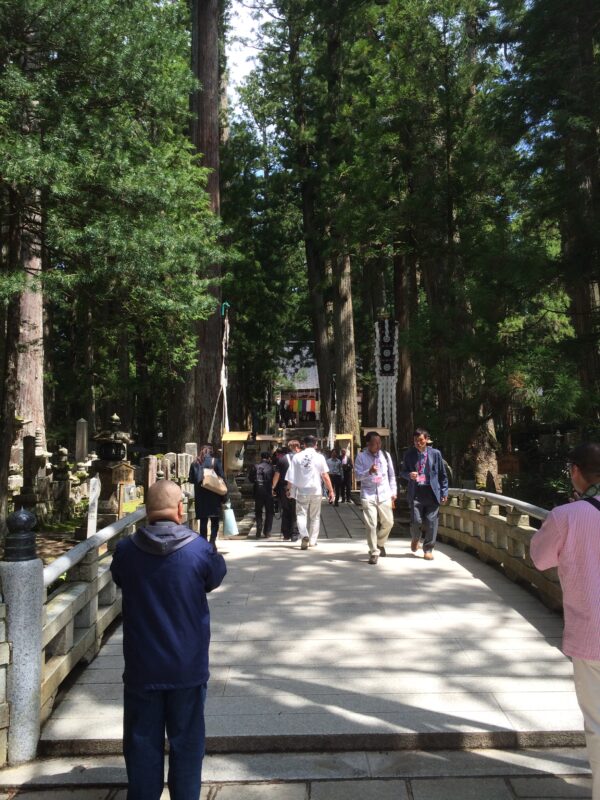
In Shingon Buddhism, it is believed that Kūkai did not die in 835 but instead entered a state known as Nyūjō (eternal meditation) and continues to meditate at Mount Kōya even today.
For this reason, meals are still offered daily at Okunoin on Mount Kōya.
This can be seen as evidence that faith in Kūkai has been passed down and continues to live on in modern times.
Frequently Asked Questions
- QAre Kūkai and Kōbō Daishi the same person?
- A
Yes, they are the same person.
“Kūkai” is his name, while “Kōbō Daishi” is the posthumous title given to him by the Imperial Court after his death. For this reason, he is also commonly referred to as “Kōbō Daishi” or affectionately as “Odaishi-sama” (the Great Master).
- QWhy is Kūkai called “Odaishi-sama” during the pilgrimage?
- A
In the Shikoku pilgrimage tradition, Kūkai is believed to be a spiritual presence who guides and watches over pilgrims.
For this reason, he is affectionately called “Odaishi-sama.”
- QWhat does Dōgyō Ninin mean?
- A
Dōgyō Ninin means “two traveling together,” reflecting the belief that pilgrims journey alongside Kūkai.
The phrase is often written on pilgrims’ white robes and sedge hats and represents an important spirit of the pilgrimage: that the journey is never undertaken alone.
- QWhy does Kūkai have such a strong connection with Mount Kōya?
- A
Kūkai established Mount Kōya as a place for the practice and training of Shingon Esoteric Buddhism.
Even today, Mount Kōya is considered the sacred center of Shingon Buddhism and attracts many visitors and worshippers.
- QDid Kūkai die?
- A
In Shingon Buddhism, it is believed that Kūkai did not die but instead entered a state known as Nyūjō (eternal meditation), and continues meditating at Mount Kōya even today.
For this reason, meals are still offered daily at Okunoin on Mount Kōya.
Conclusion
Kūkai was a Buddhist monk who introduced Shingon Esoteric Buddhism to Japan during the Heian period and continues to be widely revered today as Kōbō Daishi.
He is also regarded as the spiritual foundation of the Shikoku 88 Temple Pilgrimage and remains a close and meaningful presence for pilgrims through the teaching of Dōgyō Ninin (“two traveling together”).
By learning about Kūkai’s life and teachings, the Shikoku pilgrimage becomes more than simply visiting sacred temples—it becomes a journey of deeper spiritual meaning and personal reflection.