
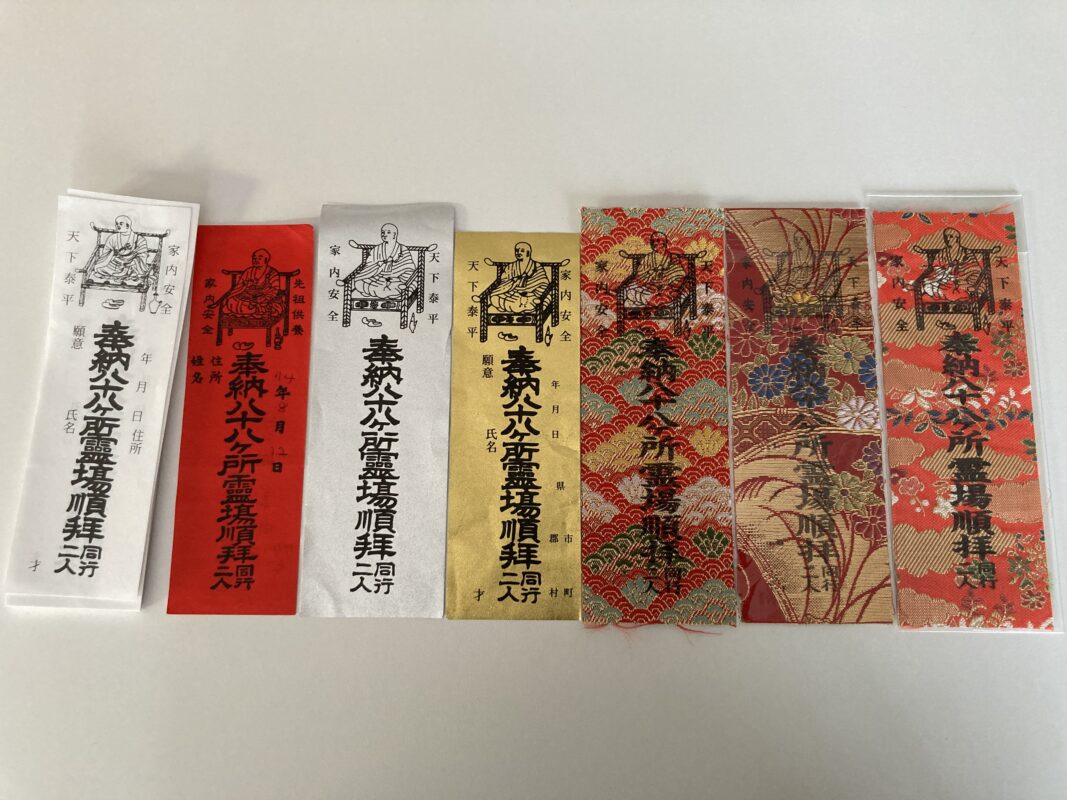
Many people may wonder, “What is an Osamefuda, and how do you use it?”
An Osamefuda is an important slip offered as proof that you have visited and prayed at a temple during a pilgrimage.
In this article, we’ll explain the meaning of Osamefuda, how to use it, the differences between the colors, how many you need, and proper etiquette in a simple, beginner-friendly way.
What Is an Osamefuda?
Osamefuda is a slip that pilgrims offer as proof of their visit and prayer at a temple. In the Shikoku Pilgrimage, it is considered especially important and is sometimes called a “pilgrim’s business card.”
Pilgrims write their name, address, and personal wish or prayer on the Osamefuda, then place it into the Osamefuda box located at the Main Hall and Daishi Hall. By doing so, it serves as a record of their visit while also symbolizing a spiritual connection with the Buddha.
History of Osamefuda
Originally, Osamefuda began as wooden slips that pilgrims nailed to temple buildings as proof of their faith and devotion. This custom is the reason why visiting and worshiping at a temple is still sometimes expressed as “to strike” or “to stamp” a temple in pilgrimage culture today.
However, attaching or nailing slips to temple structures is now prohibited. The proper etiquette is to place your Osamefuda into the designated Osamefuda box.
Osamefuda is more than just a formality. It represents a pilgrim’s wish for a safe journey and gratitude for being able to visit and worship at the temple. Offer it with sincerity and respect.
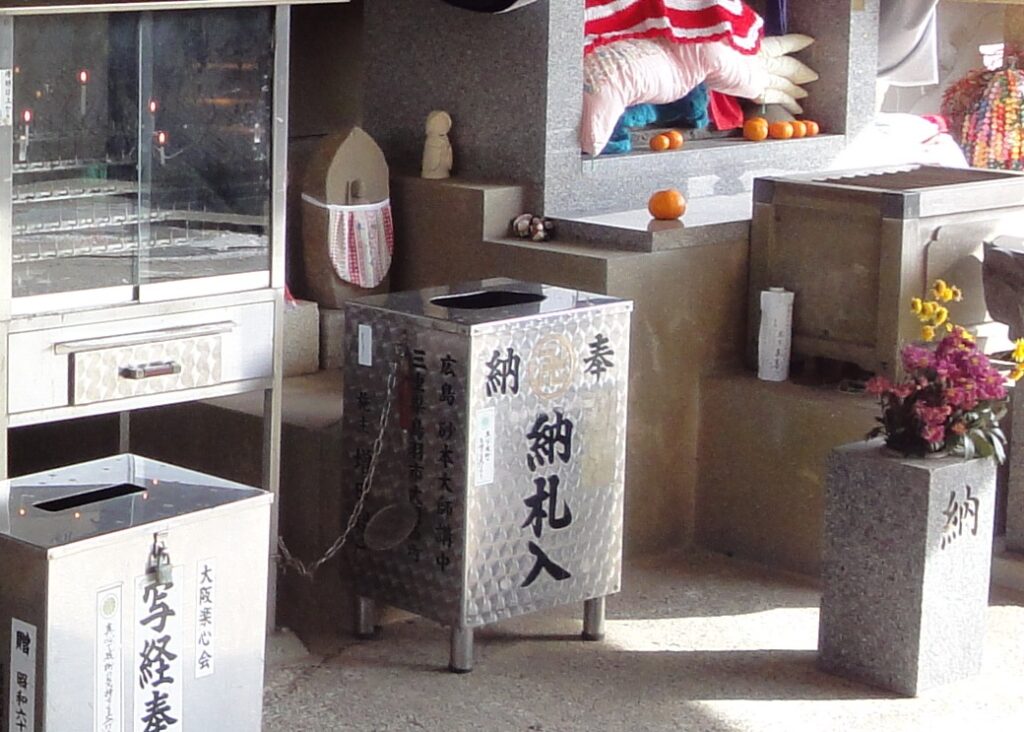
Osamefuda are placed in the Osamefuda box.
How to Get Osamefuda
Osamefuda can be purchased at shops that sell pilgrimage supplies or at temple stores. During the Shikoku Pilgrimage, they are commonly sold at shops near pilgrimage temples and around Nokyo offices, so most pilgrims buy them locally.
There are several types of Osamefuda, including white, green, red, silver, and gold slips. Traditionally, the color used depends on the number of pilgrimages a person has completed. For first-time pilgrims, preparing white Osamefuda is perfectly fine.
Types and Prices of Osamefuda
There are several types of Osamefuda, and one of their unique features is that the color changes according to the number of pilgrimages completed. These colors are traditionally used as a sign of a pilgrim’s experience.
Types of Osamefuda (Color and Number of Pilgrimages)
| Color | Number of Pilgrimages |
|---|---|
| White | 1–4 times |
| Green (Blue-Green) | 5–7 times |
| Red | 8–24 times |
| Silver | 25–49 times |
| Gold | 50–99 times |
| Brocade (Nishiki) | 100 or more |
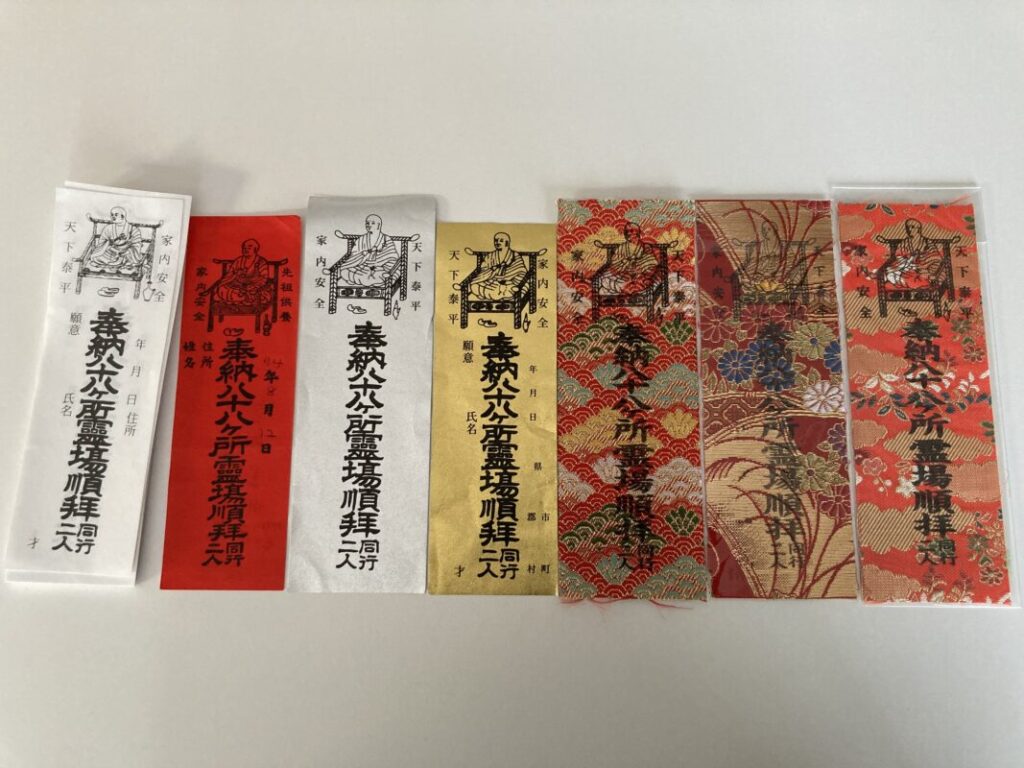
As the number of completed pilgrimages increases, the color of the Osamefuda changes accordingly.
Brocade Osamefuda (Nishiki-fuda) are extremely rare and not something you encounter often. Because of this, there is a traditional belief that receiving one brings blessings equivalent to completing the same number of pilgrimages as the person who offered it. Some people also believe that keeping one in a wallet can attract financial luck and help increase savings.
Price Guide for Osamefuda
Osamefuda are generally inexpensive, and the typical price range is as follows:
- 100 slips: approximately ¥100–¥300
- 200 slips: approximately ¥150–¥500
Silver and gold Osamefuda tend to be slightly more expensive than standard white slips.
How Many Osamefuda Do You Need?
From my own experience, Osamefuda tend to be used more often than you might expect.
On the Shikoku Pilgrimage, you offer one Osamefuda at the Main Hall and one at the Daishi Hall of each temple. This means you need at least 176 slips in total.
However, in practice, Osamefuda are not only used at temples. They are also offered as a gesture of gratitude when receiving o-settai (kind offerings from locals) or when staying at free lodgings or rest areas as a way to express thanks.
In my case, during a walking pilgrimage, I ended up using more than 200 slips.
That said, for walking pilgrims, keeping your luggage as light as possible is important. Carrying too many at once is not ideal, and a 200-piece set can feel bulky. Personally, I found it more practical to start with a 100-piece set and restock as needed.
How to Use Osamefuda
Osamefuda are not only placed at temples but are used in various situations throughout the pilgrimage.
At temple visits
You place your Osamefuda into the designated Osamefuda box at the Main Hall and Daishi Hall as proof of your visit and to form a spiritual connection.
As a return gift for o-settai
When you receive o-settai (kind offerings such as food or drinks from local people), it is customary to offer an Osamefuda in return as a gesture of gratitude.
Exchanging with other pilgrims
Pilgrims sometimes exchange Osamefuda with each other as a souvenir and a symbol of connection during their journey.
Using rest areas
When you use rest spaces provided through local goodwill, you may leave an Osamefuda as a way of expressing thanks.
In this way, Osamefuda are not just proof of worship—they also play an important role in expressing gratitude and building connections with others along the journey. It is best to use them with sincerity depending on the situation.
Important Notes When Using Osamefuda
When using Osamefuda, there are several important points to keep in mind.
First, it is generally expected that you write your name on the slip before using it. Some people also include their address or personal wishes, although there are no strict rules about this. However, it is considered more respectful to fill it out properly rather than leaving it blank.
Osamefuda should always be placed in the designated Osamefuda box. In the past, pilgrims used to nail wooden slips onto temple buildings, but this practice is now prohibited. Attaching or sticking Osamefuda anywhere is not allowed today.
It is also important not to take other people’s Osamefuda from the box. Osamefuda represent a record of worship and a connection between people, so they should be treated with respect and used with gratitude while observing proper etiquette.
Frequently Asked Questions (FAQ)
- QWhat should I write on an Osamefuda?
- A
In general, people write their name, address, and personal wishes. However, there are no strict rules, and some pilgrims only write their name. The most important thing is to fill it out neatly and offer it with sincerity.
- QHow many Osamefuda do I need?
- A
On the Shikoku Pilgrimage, you need at least 176 slips, as you offer one at the Main Hall and one at the Daishi Hall at each temple. Since Osamefuda are also used for expressing gratitude during o-settai and at rest areas, having around 200 slips is considered safe for walking pilgrims.
- QCan I still visit a temple if I forget Osamefuda?
- A
Yes. You can still visit and pray even without Osamefuda. While they serve as a symbol of your visit and connection, they are not mandatory. What matters most is offering your prayers sincerely.
- QCan I take other people’s Osamefuda from the box?
- A
No. Taking Osamefuda from the box is not allowed. They represent each pilgrim’s personal record of worship and spiritual connection, so they must be respected.
- QWhat color Osamefuda should beginners use?
- A
Beginners typically use white Osamefuda. Although colors change based on the number of completed pilgrimages, white is standard for first-time pilgrims.
- QHow do you obtain Nishiki (brocade) Osamefuda?
- A
Nishiki Osamefuda are used by those who have completed 100 or more pilgrimages. In most cases, they are received through personal connections with other pilgrims.
From what I have seen and heard, common situations include:
- Receiving one directly from an experienced pilgrim
- Finding them placed near Osamefuda boxes with a “free to take” note
However, items left in temples are not always intended to be taken freely, so it is important to respect each temple’s rules and not take anything without confirmation.
- QDo I have to give an Osamefuda when receiving o-settai?
- A
No, it is not required. Offering an Osamefuda is simply one way to express gratitude. The most important thing is to sincerely thank the person who offered kindness.
Conclusion
Osamefuda is an important slip offered as proof of worship during the Shikoku Pilgrimage. It is not only placed at temples, but also used to express gratitude for o-settai and to connect with other pilgrims along the journey.
For beginners, white Osamefuda is sufficient. Rather than treating it as a formality, it is important to offer it with sincerity, valuing gratitude and the connections formed through the pilgrimage.