
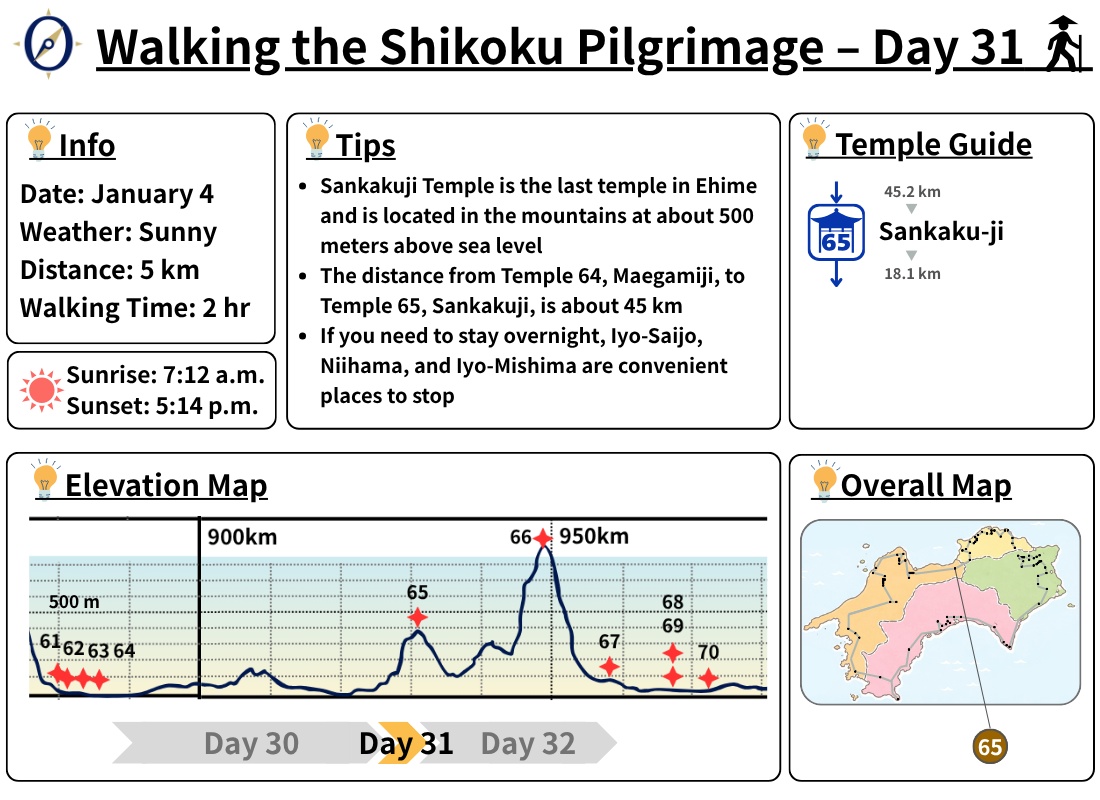
Day 31 of the Shikoku Pilgrimage. I visited Sankaku-ji, completing my fourth section hike. This time, I spent 10 days walking from Uwajima to Temple 65, Sankaku-ji, visiting the temples in Ehime. The winter pilgrimage brought cold weather and early sunsets, but it also taught me the importance of human connections and support from others.
Itinerary
- 7:30Departure
- Togawa Park
- Sankaku-ji Hiking Trail
- 8:15Temple No. 65, Sankaku-ji
- End of This Pilgrimage Section
Morning Walk to Sankaku-ji
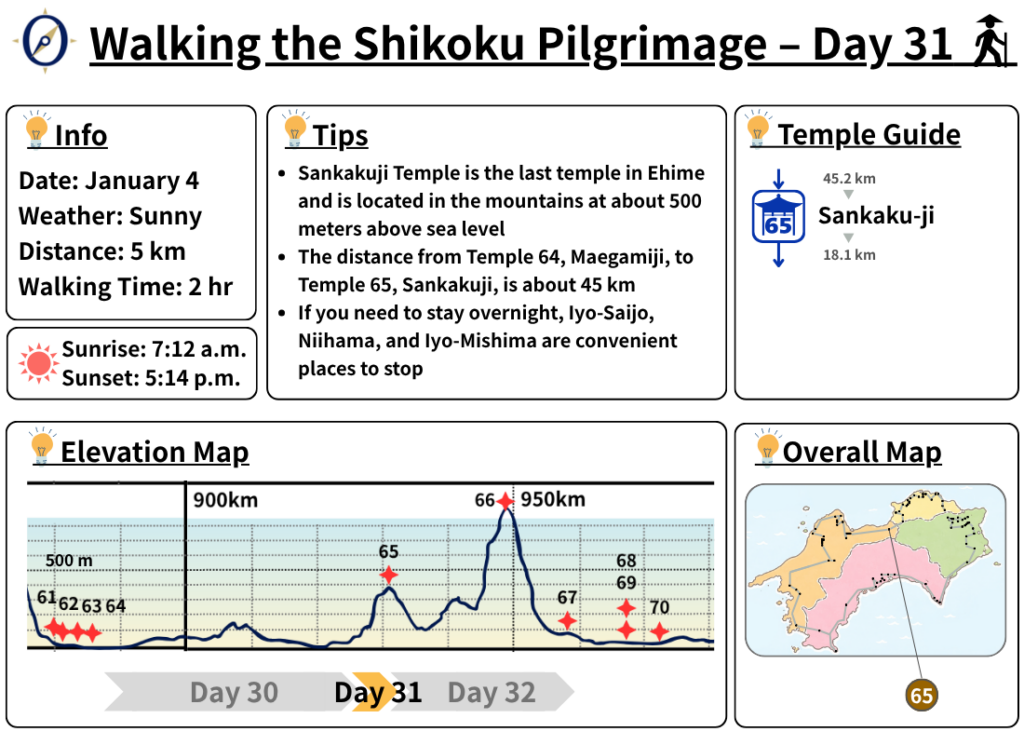
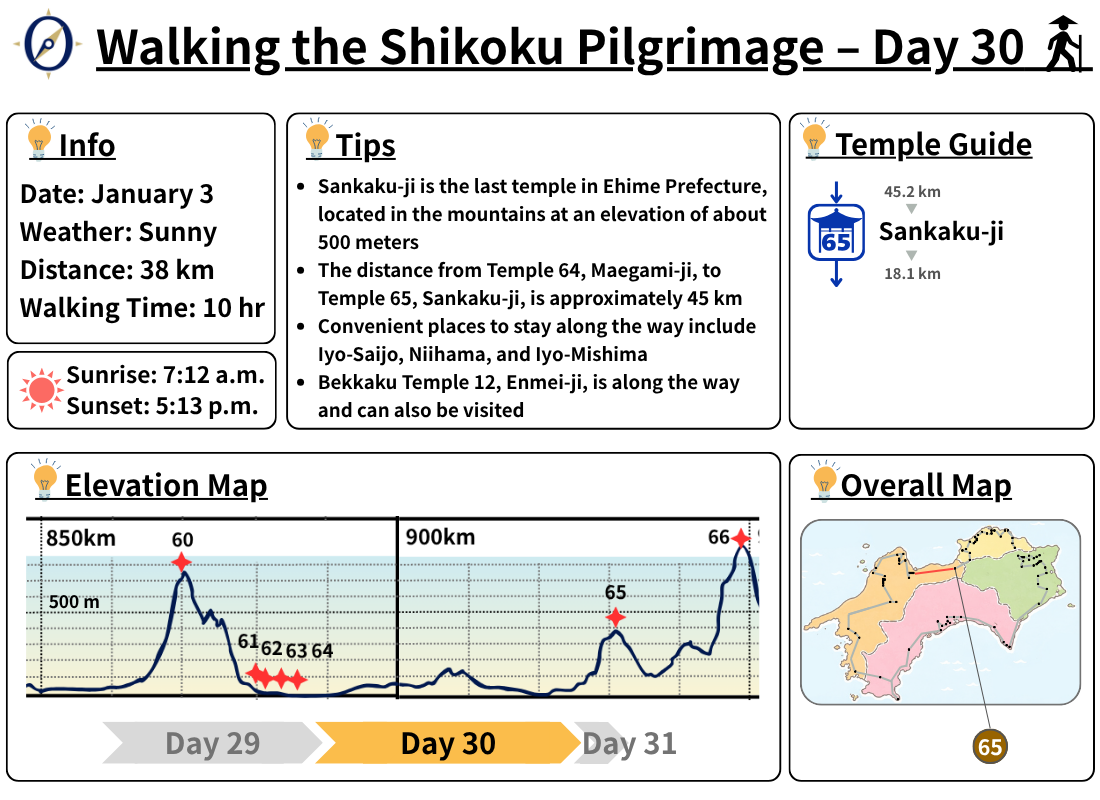
January 4, sunny. Day 31 of the Shikoku Pilgrimage.
Yesterday, I walked about 40 km east from Saijo City along the main road and camped at Togawa Park, at the foot of Sankaku-ji.
Today was the final day of my fourth section hike. I planned to visit Temple 65, Sankaku-ji, then descend to the foot of the mountain and take the train home.
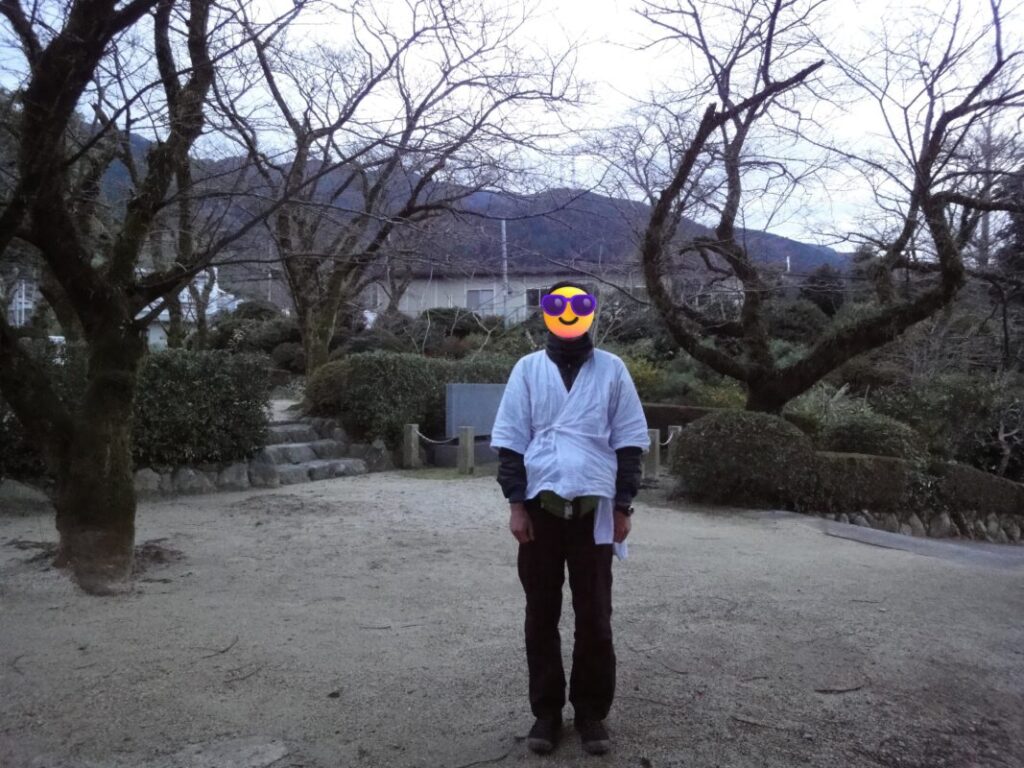
At 6:30 a.m., as the sky began to brighten, I started getting ready. I wondered if the trees in the park were cherry trees. They had lost their leaves for the winter, but I imagined how beautiful the park would look in spring.
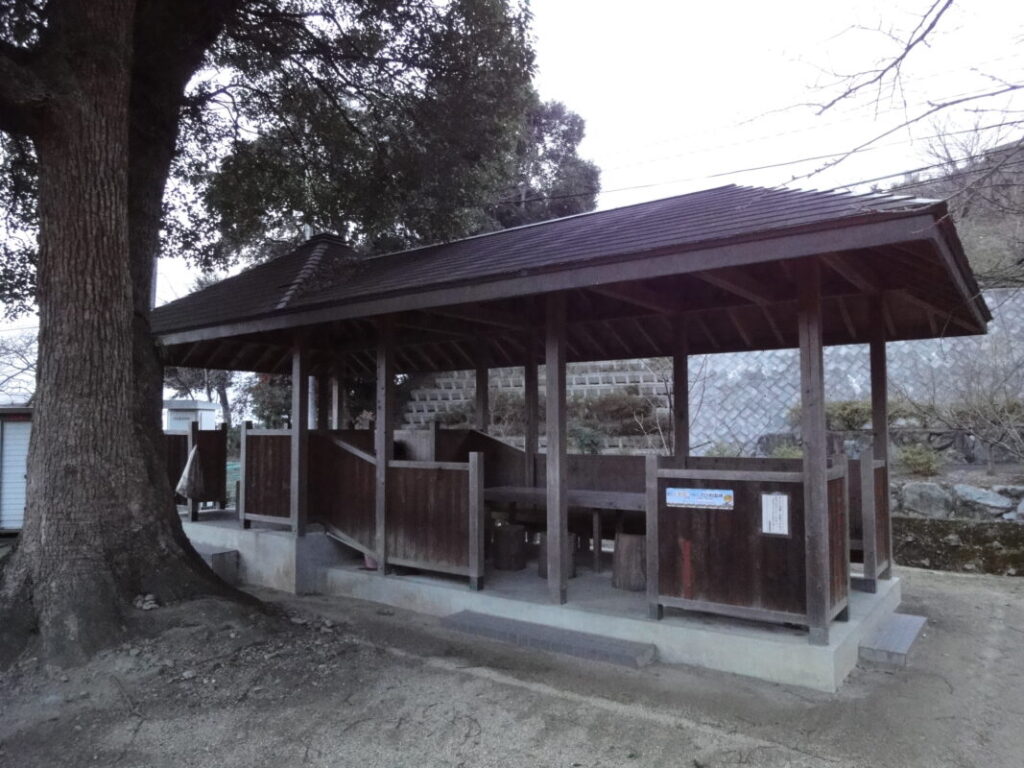
Togawa Park had a large gazebo, toilets, and a water supply. With proper protection against the cold, it was possible to camp there even in midwinter.
After getting everything ready, I set off at 7:30 a.m.
The Pilgrimage Route to Sankaku-ji
Sankaku-ji is a mountain temple located about 500 meters above sea level. It is only about 4 km from the foot of the mountain in Shikokuchuo City, so the walk is manageable if you bring enough food and drinks.
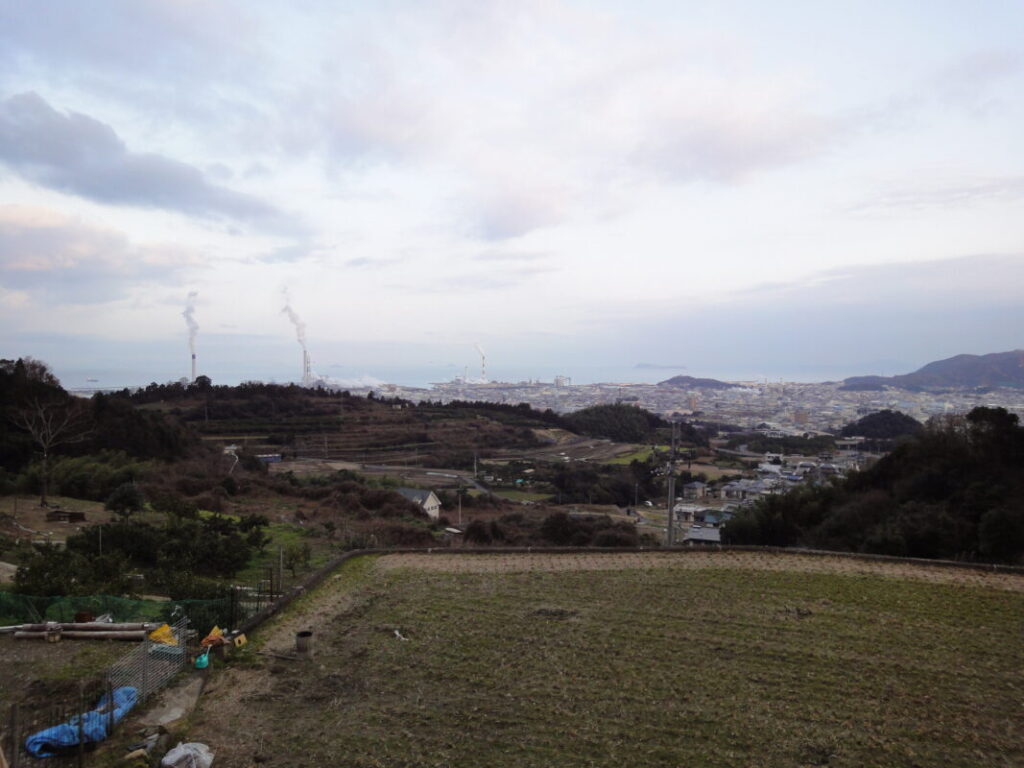
From Togawa Park, the route gradually climbs through a mix of paved roads and mountain trails. Along the way, terraced fields spread across the hillsides, and there are places where you can see the Seto Inland Sea in the distance.
I enjoyed the changing scenery as I made my way toward Sankaku-ji.
Visiting Temple 65: Sankaku-ji
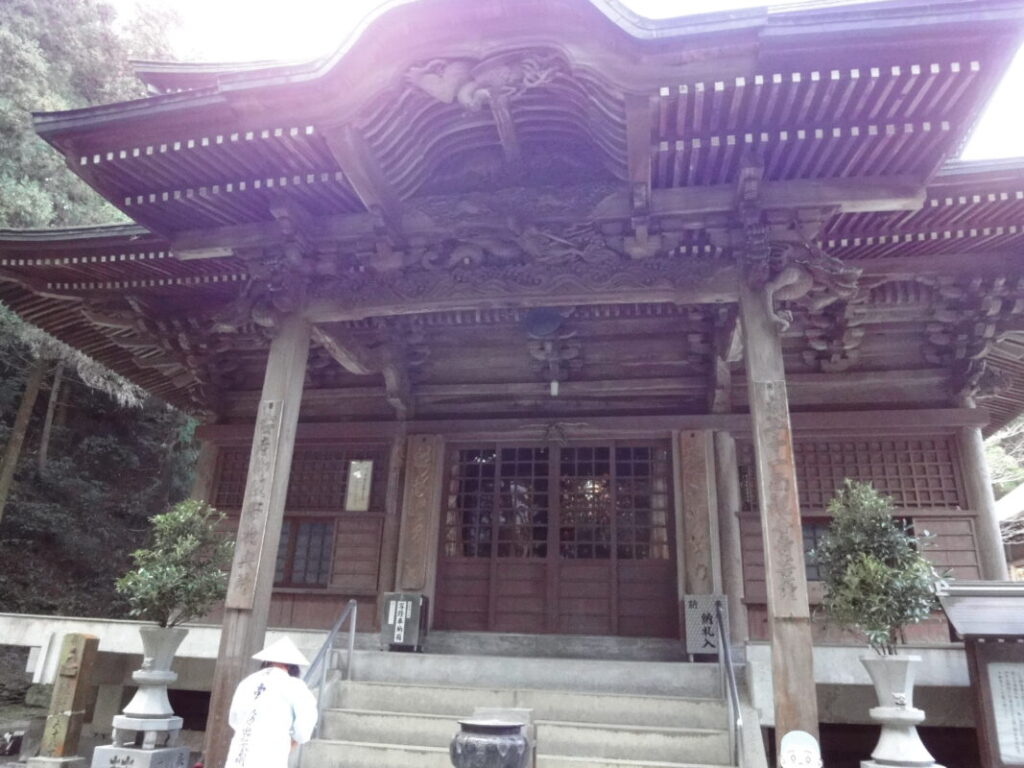
I arrived at Sankaku-ji at 8:15 a.m.
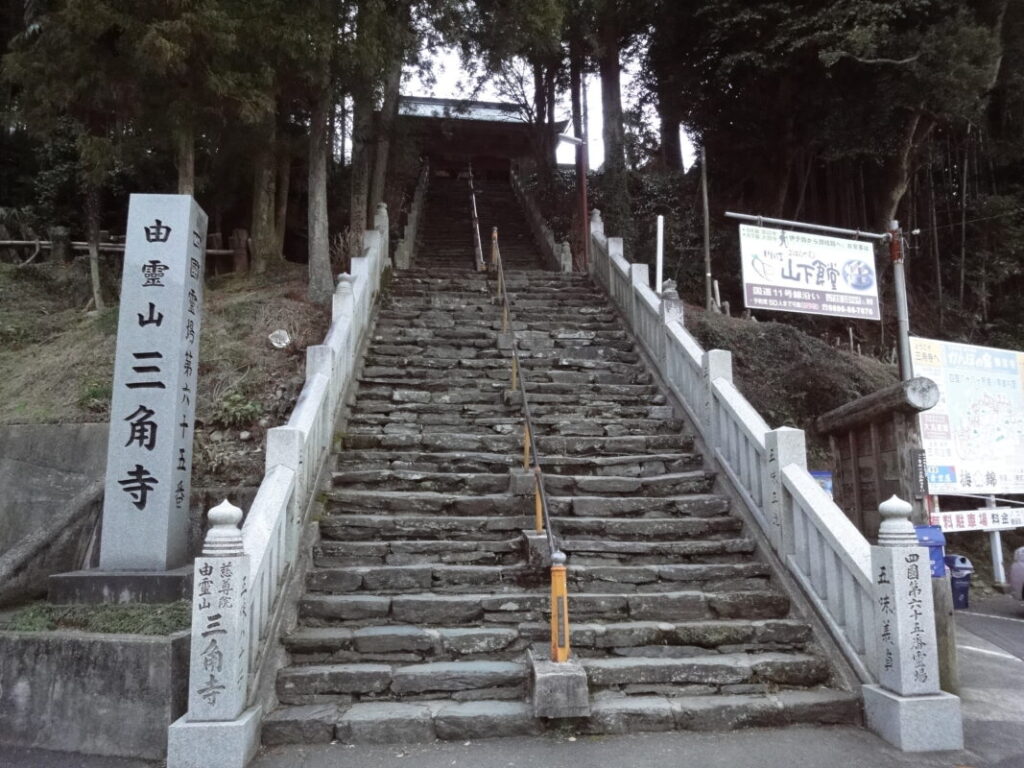
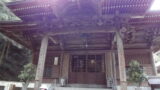
To reach the temple grounds, I climbed 73 stone steps. Looking up at the temple gate from the bottom of the stairs, it seemed to draw me into the mountains. The impressive view gave the temple a solemn atmosphere unique to mountain temples.
Inside the grounds, there is a triangular pond that gave the temple its name. In the center stands a platform said to mark the spot where Kobo Daishi performed a goma fire ritual.
As I paid my respects, I looked back on the journey I had walked so far. With this visit, I completed my fourth section hike.
Looking Back on My Fourth Section Hike
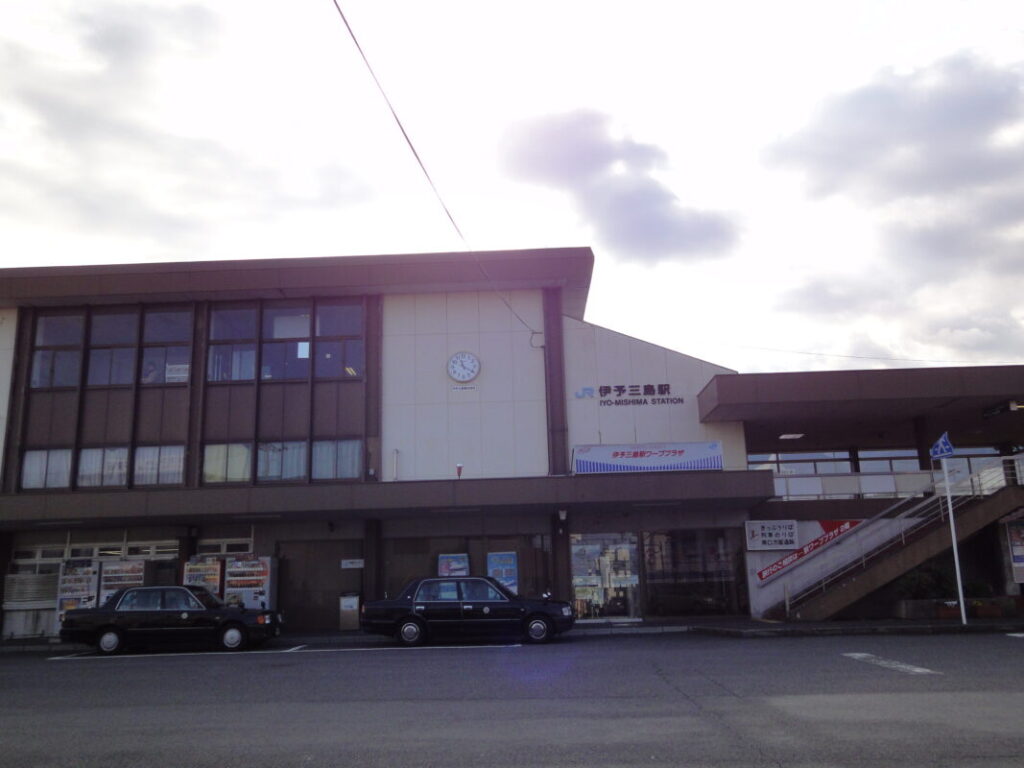
After visiting the temple, I slowly walked back down the way I had come and arrived at Iyo-Mishima Station at noon.
As the train carried me along, I spread out my map and looked back on the pilgrimage.
The 10-day journey had begun on December 26. Starting in Uwajima, I visited the temples in Ehime, from Temple 41, Ryuko-ji, to Temple 65, Sankaku-ji.
The winter pilgrimage had its challenges, but it also brought special scenery and experiences that I could only have enjoyed during this season.
What I Learned from Walking the Pilgrimage in Winter
A winter pilgrimage is very different from walking in spring or summer. Here are some things I learned from my experience.
The Challenges of Winter and Unique Seasonal Experiences
- Staying warm
I wore a lightweight down jacket as a base layer, along with a neck warmer and work gloves. Even in snowy mountain areas, my body warmed up after about 15 minutes of walking. However, strong winds made the cold much more severe. - Early sunsets
Winter days are short, and in the mountains it gets dark around 5:00 p.m., when temple offices close. For safety, it’s best to decide where to stay overnight well in advance. - Camping in winter
In the lowlands, I managed with similar gear to what I used in spring, along with extra layers. However, camping in the mountains was much more challenging and required proper winter equipment. I felt that staying at an inn was the safer choice. - New Year scenery and traditions
I had the rare opportunity to ring a temple bell on New Year’s Eve. At the temples, New Year decorations were on display, and I saw visitors wearing traditional formal clothing. These scenes were unique to the holiday season and different from an ordinary pilgrimage.
Reflections on Walking Through Ehime
The pilgrimage routes in Ehime vary greatly. Some sections between temples are long, while others are relatively short. I walked through deep mountain forests, followed coastal roads, and even visited tourist attractions such as Dogo Onsen in Matsuyama.
The distances and difficulty levels varied, but the diversity of the routes made Ehime a wonderful place to walk the pilgrimage.
Ehime is known as the “Place of Enlightenment” (Bodai no Dojo). But what does enlightenment really mean? It’s difficult to explain in words. Even after walking through the region, I still wasn’t sure whether I understood it or not.
When I walked through Tokushima, known as the “Place of Awakening” (Hosshin no Dojo), I believed I had to overcome every challenge on my own. But I’ve come to realize that I wouldn’t have made it this far without the support of the people I’ve met through the connections brought by Kobo Daishi.
Perhaps my way of thinking has gradually changed as I’ve continued this pilgrimage.
Next Time: The Final Stage
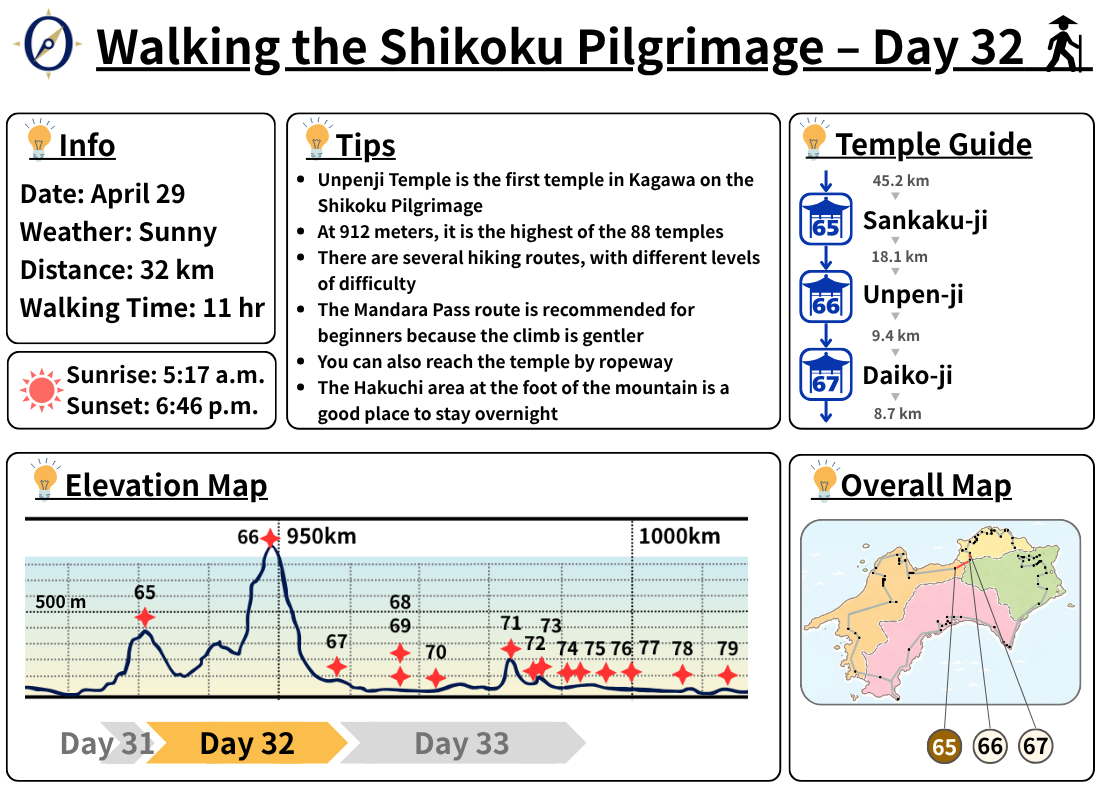
Next time, I plan to spend about a week walking through Kagawa, starting at the end of April, with the goal of completing all 88 temples of the Shikoku Pilgrimage.
As I visit the remaining temples, I want to reflect on the journey so far and finish the pilgrimage on my own two feet.


Comments