
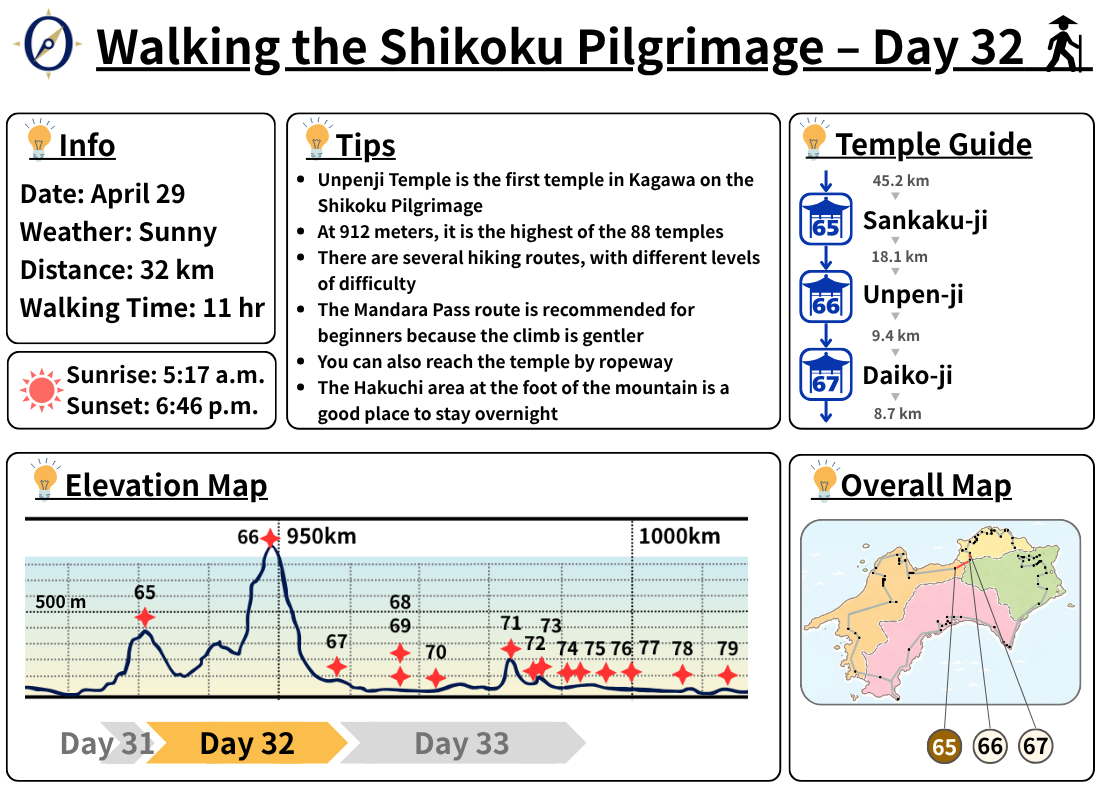
Day 32 of the Shikoku Pilgrimage. On April 29, my fifth section hike began. I started at Sankaku-ji and climbed the Manda Pass route to Unpen-ji, the highest of the 88 temples. After visiting the temple, I walked down a long trail to Daiko-ji. I was tired from the overnight bus, but the weather was good, and I visited all three planned temples. My seven-day pilgrimage had begun, with the goal of completing the pilgrimage on May 5.
Itinerary
- 5:30Mishima-Kawanoe IC
- 7:00Temple No. 65, Sankaku-ji
- Tsubakido Jofuku-ji
- Pilgrim Hut “Shinkin-an”
- Manda Pass
- 13:30Temple No. 66, Unpen-ji
- 16:40Temple No. 67, Daiko-ji
Overnight stay
The Fifth Section of the Pilgrimage Begins
April 29, sunny. Today marks the start of my fifth section hike and Day 32 of my Shikoku Pilgrimage.
My previous section hike took place around the New Year and ended at Temple 65, Sankaku-ji. This time, I would resume from Sankaku-ji and aim to reach Temple 88, Okubo-ji, over the next seven days, until May 5. After completing the pilgrimage, I also planned to visit Temple 1, Ryozen-ji, to give thanks.
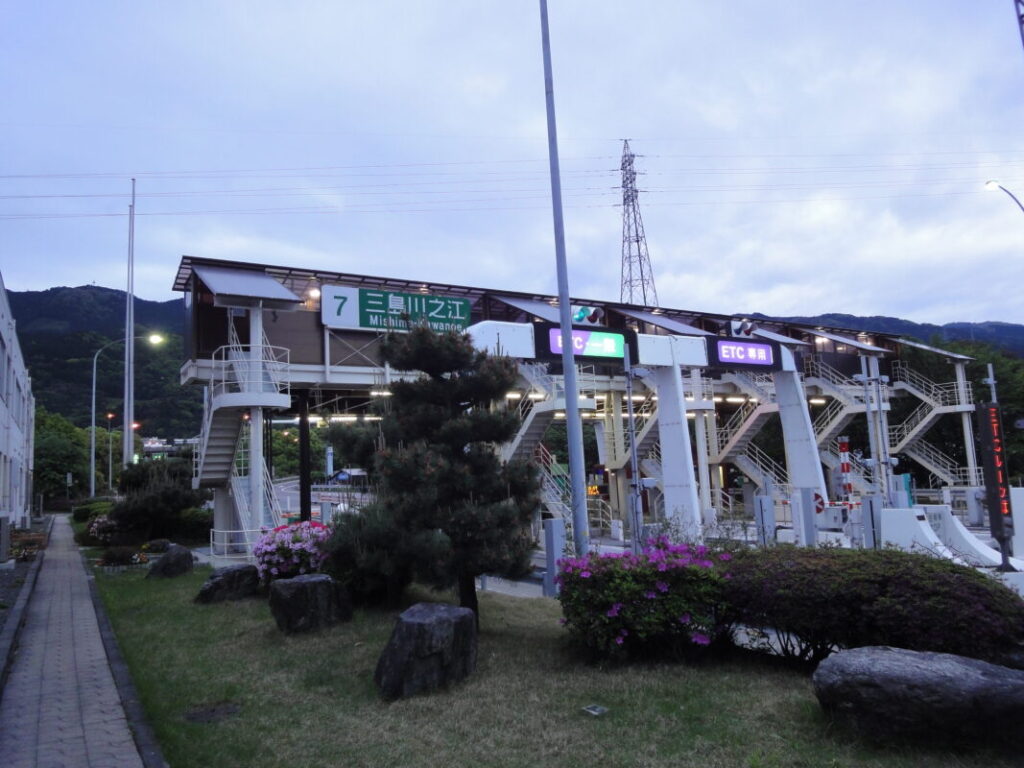
I left the night before on an overnight bus and got off at Mishima-Kawanoe IC at 5:30 a.m. The interchange is located at the foot of the mountain near Sankaku-ji, making it a convenient starting point.
As I followed the same road I had walked about four months earlier, the mountains looked greener than they had in winter. The fresh greenery made them seem bigger than before.
Resuming the Pilgrimage at Sankaku-ji
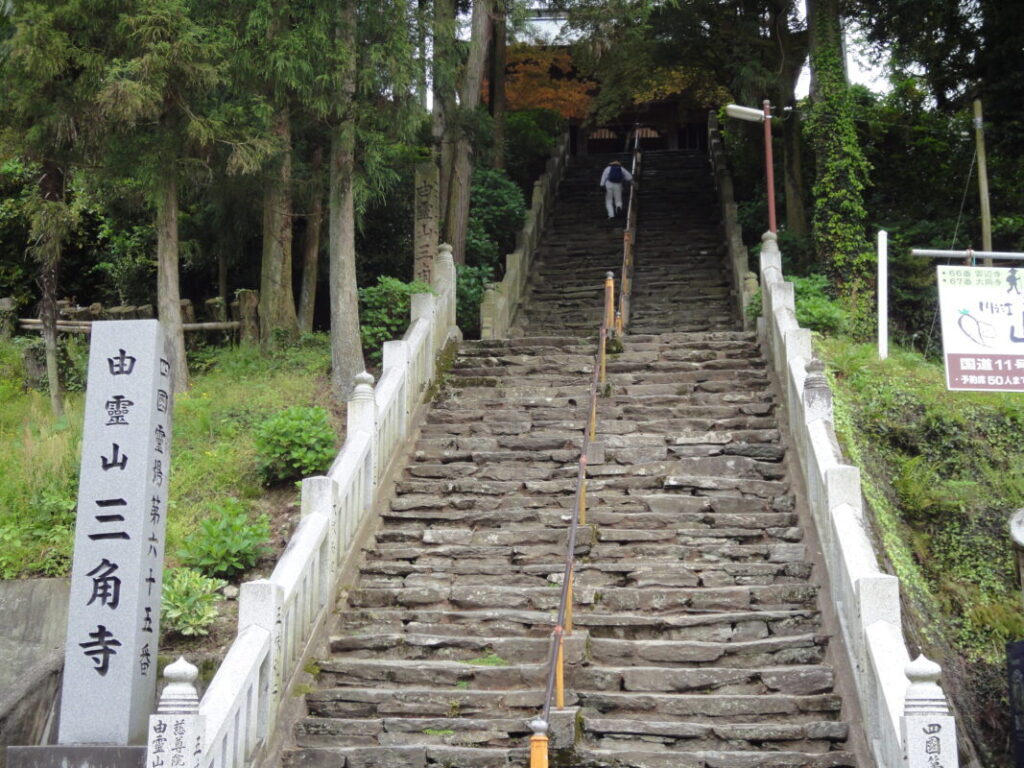
I arrived at Sankaku-ji at 7:00 a.m. At the Daishi Hall, I prayed for a safe journey as I began my pilgrimage again.
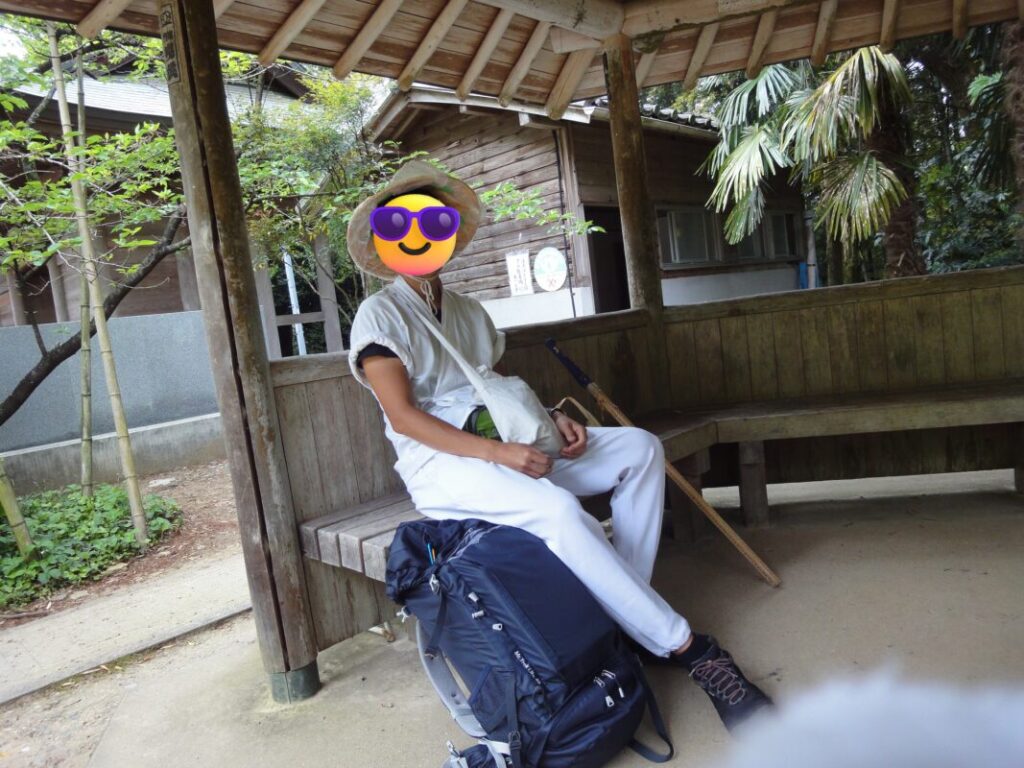
My first goal today was Temple 66, Unpen-ji. It is known as the highest of the 88 temples of the Shikoku Pilgrimage. Climbing there on foot requires some preparation, so I wanted to bring enough food and drinks and check the route in advance.
Since this was the first day of the section hike, I still had plenty of energy. I decided to continue to Temple 67, Daiko-ji, after visiting Unpen-ji. I also bought enough food for about three meals.
From Sankaku-ji to Tsubakido Jofuku-ji
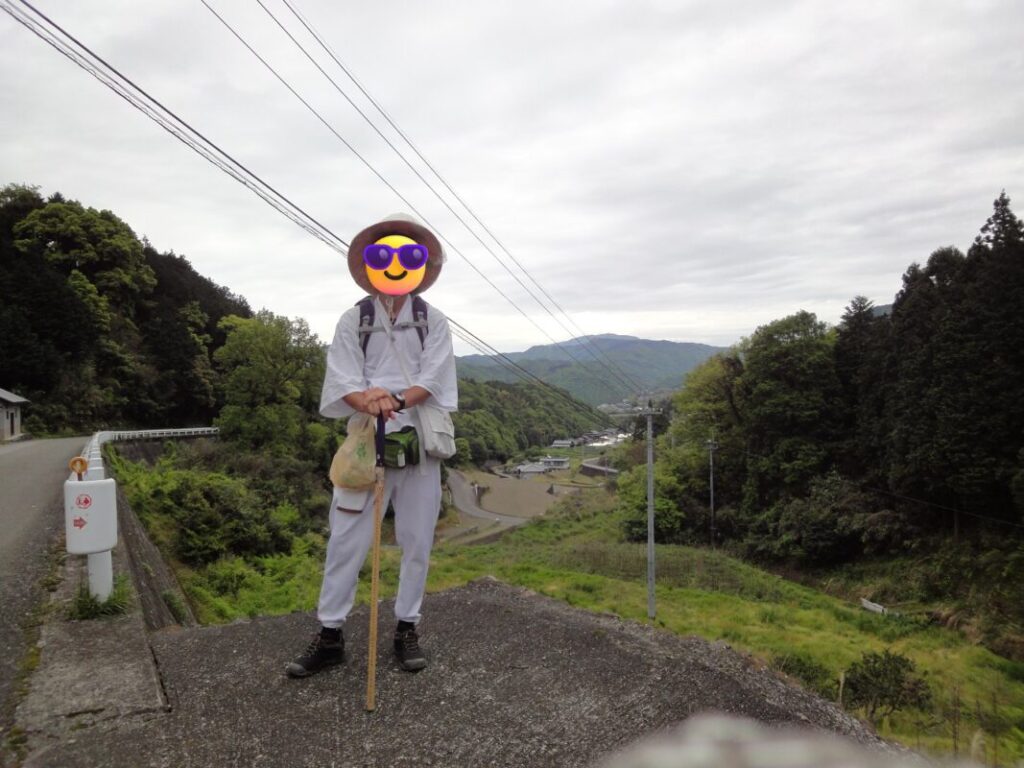
After leaving Sankaku-ji, which sits at about 500 meters above sea level, I followed a downhill road for a while. The winding mountain road continued east for about 5 km before passing under the Kochi Expressway.
Bekkaku Temple 14: Tsubakido Jofuku-ji
At 9:00 a.m., I arrived at Tsubakido Jofuku-ji, Bekkaku Temple 14, about 6 km from Sankaku-ji.
According to local legend, Kōbō Daishi once planted his camellia walking stick in the ground, bringing an end to a disease that was spreading through the area.
The temple is right along the pilgrimage route, making it a convenient place to stop for a break. I rested for a while before continuing.
A Break at the Pilgrim Hut “Shinkin-an”
After leaving Tsubakido, the road climbed gently through a valley along the Kinsei River.
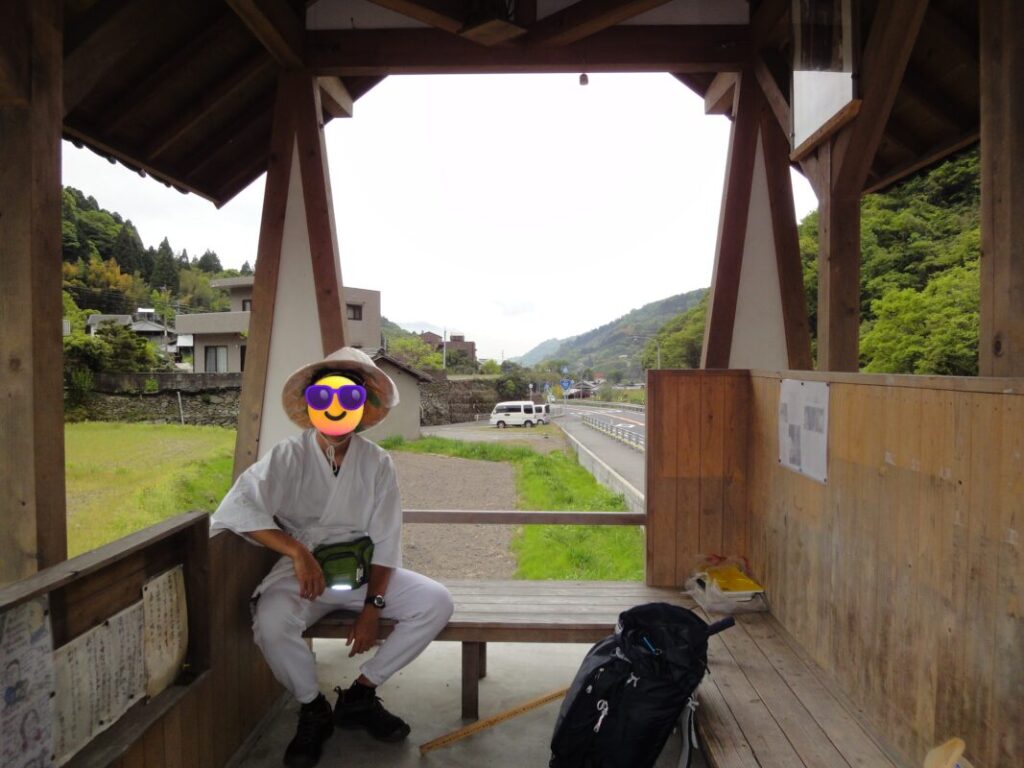
I came across a pilgrim hut and decided to take a short break. Called “Shinkin-an,” the wooden hut stands on a solid foundation and has an interior space of about four tatami mats.
I spread out my map and checked the route to Unpen-ji once again.
Choosing a Route to Unpen-ji
There are several routes to Unpen-ji, each with different distances, slopes, and levels of difficulty.
The best route depends on your fitness, the weather, and your schedule.
| Route | Features |
|---|---|
| Manda Pass | An old pilgrimage trail with moderate difficulty. The path can become overgrown with grass at certain times of the year. |
| Sakaime Pass | A longer route with gentler slopes. The trailhead can be difficult to find. |
| Sano Route | The shortest route, but it has steep climbs and requires good fitness. |
This time, I chose the Manda Pass route. The climb is long, but the slopes are relatively gentle. I think it is a good choice for first-time walkers heading to Unpen-ji.
From the Manda Pass Trail Junction to Sakaime
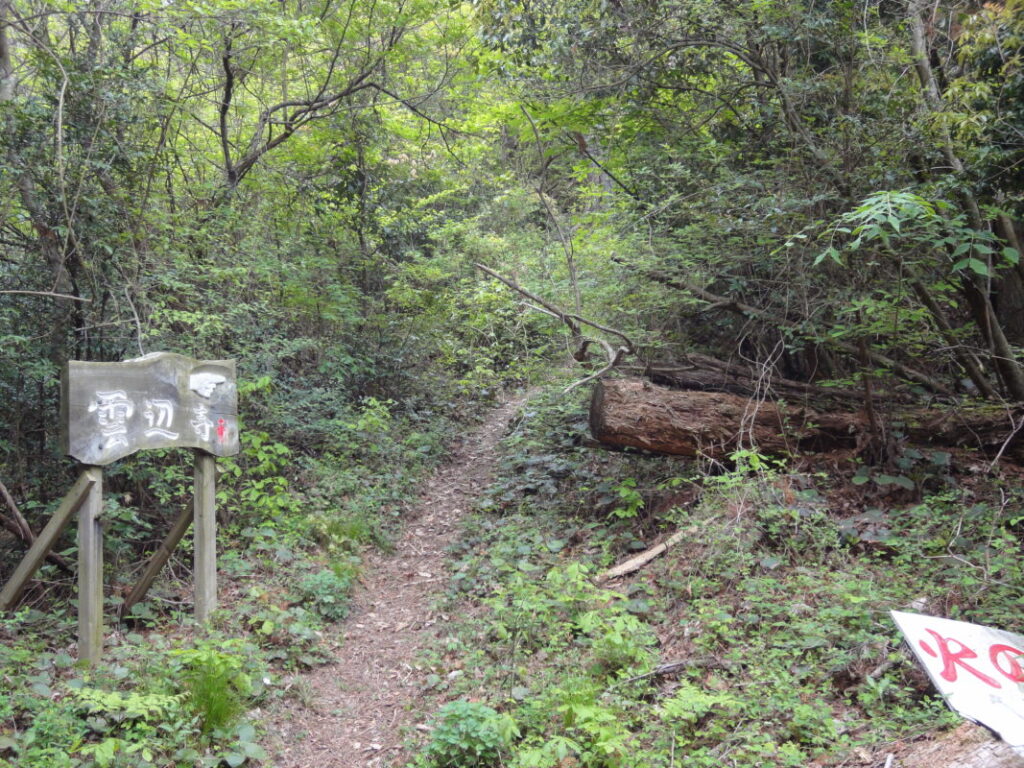
After walking about 10 km from Sankaku-ji, I reached the entrance to the Manda Pass trail.
Along the way, there were signs pointing to hiking trails separate from the pilgrimage route. I checked the signs carefully to make sure I didn’t miss the correct turn.
Sakaime
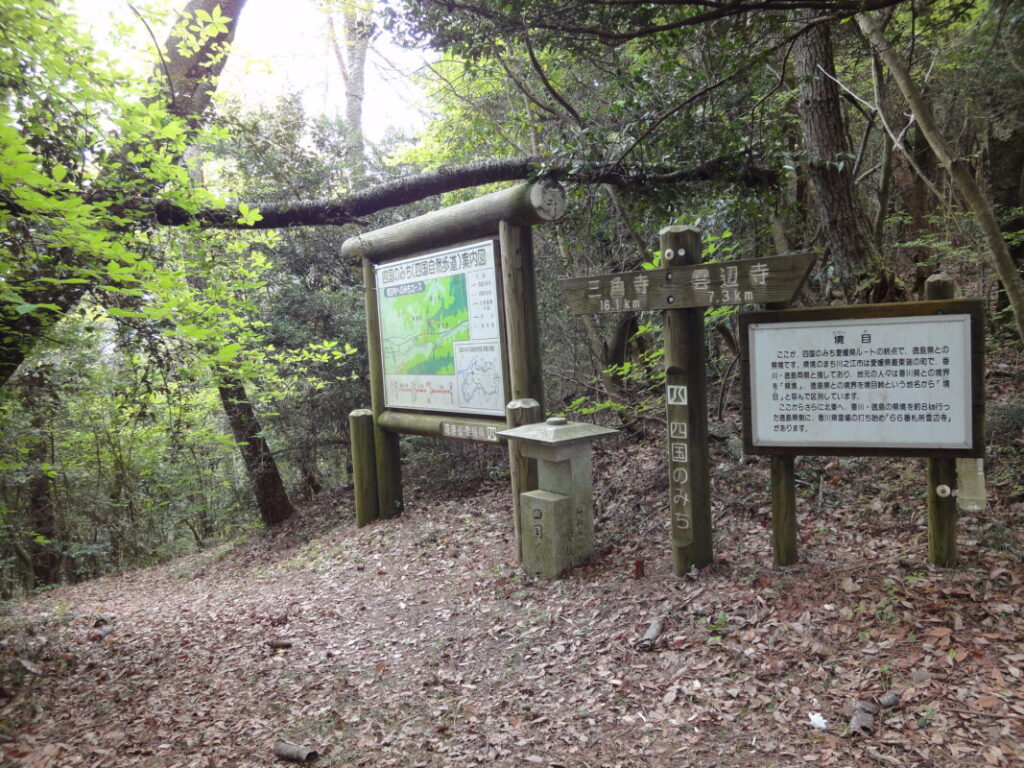
At 11:30 a.m., I arrived at Sakaime.
According to an information board, this area lies near the borders of Ehime, Kagawa, and Tokushima prefectures. Locally, the border between Ehime and Kagawa is called Kenzakai, while the border between Ehime and Tokushima is known as Sakaime.
It’s interesting that different names are used for different sections of the prefectural borders.
Manda Pass at 600 Meters
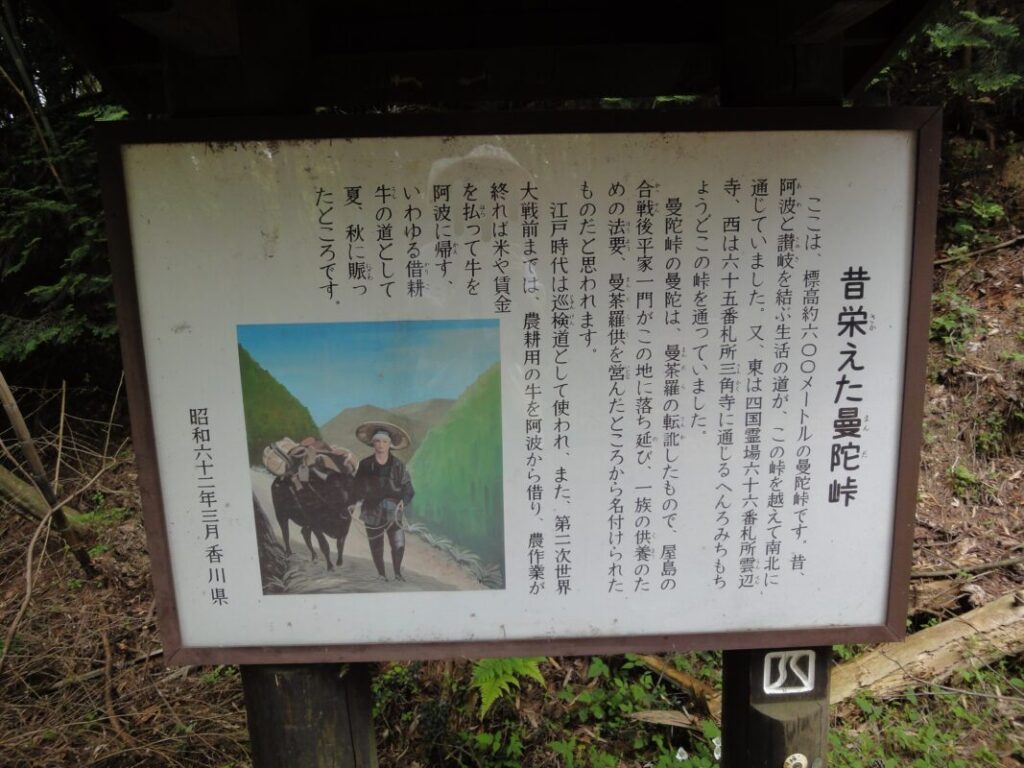
At noon, I reached Manda Pass and took a short break.
An information board showed an elevation of 600 meters. It also explained that until about 100 years ago, the pass was an important route supporting local industries.
Today, it is a quiet mountain trail. Thinking about how many people once traveled this path and relied on it in their daily lives was moving. It would be a shame if the history of trails like this were eventually forgotten.
I still had to climb another 300 meters or so to reach Unpen-ji.
Even in spring, the long climb made me sweat. I continued along the mountain trail at my own pace, taking my time and avoiding rushing.
Visiting Temple 66: Unpen-ji
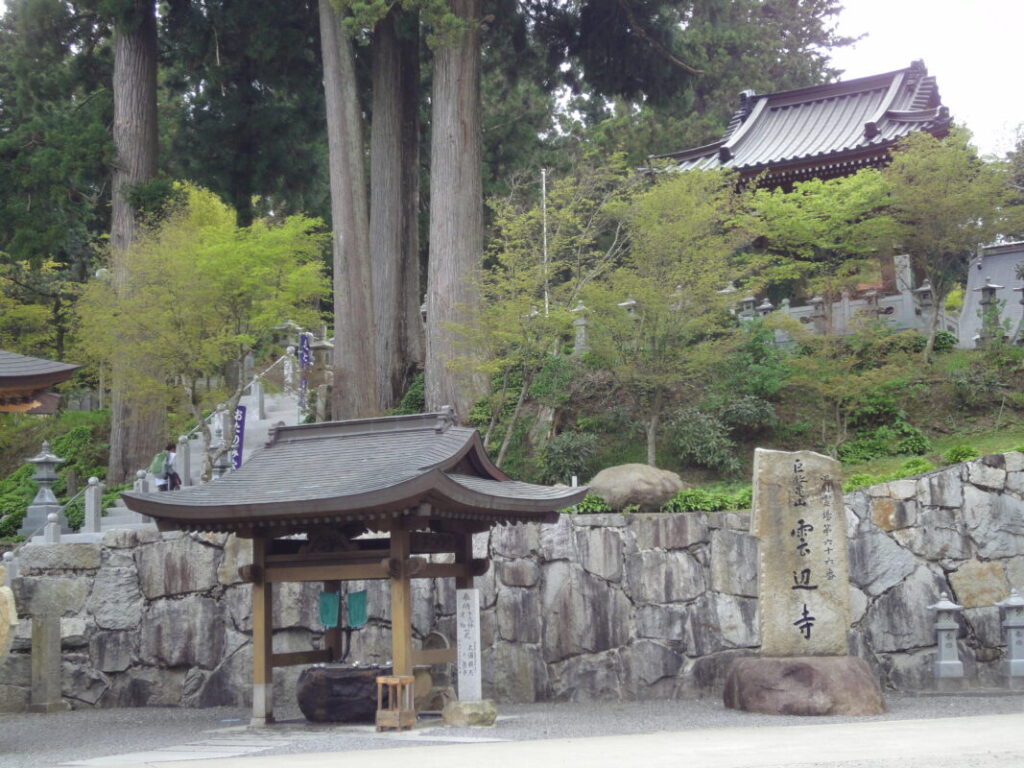
I arrived at Unpen-ji at 1:30 p.m.
As the highest temple on the Shikoku Pilgrimage, I expected a very tough climb. However, the Manda Pass route I took had relatively gentle slopes, even though the climb was long. It was not as difficult as I had imagined.
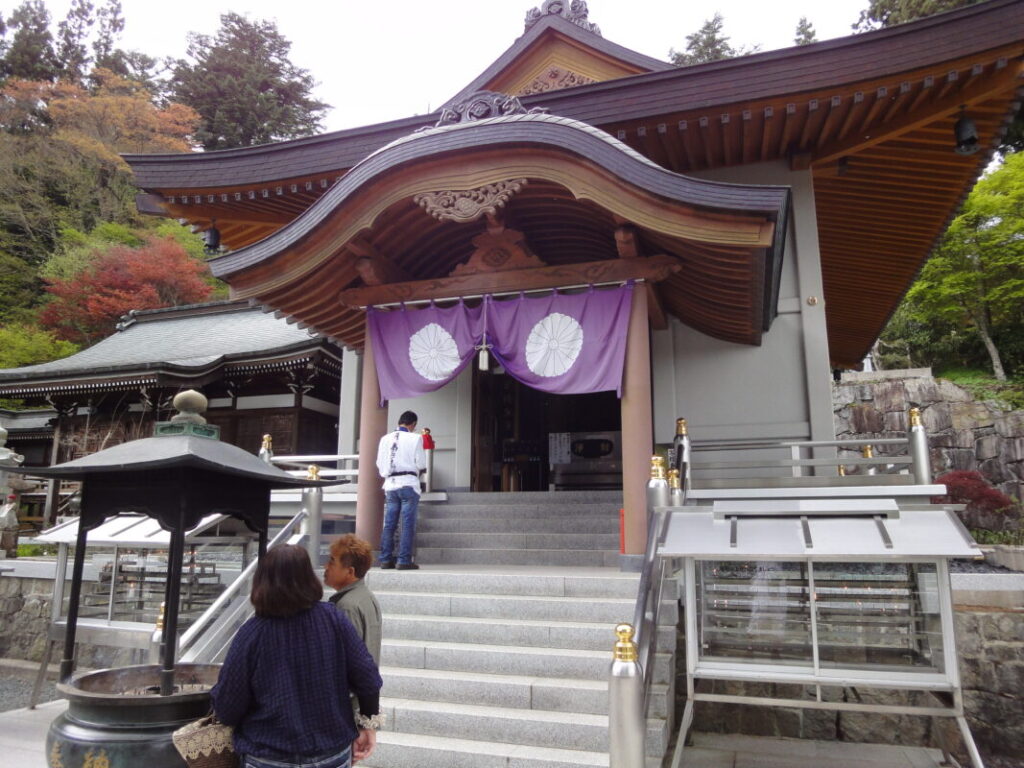
Exploring the Temple Grounds
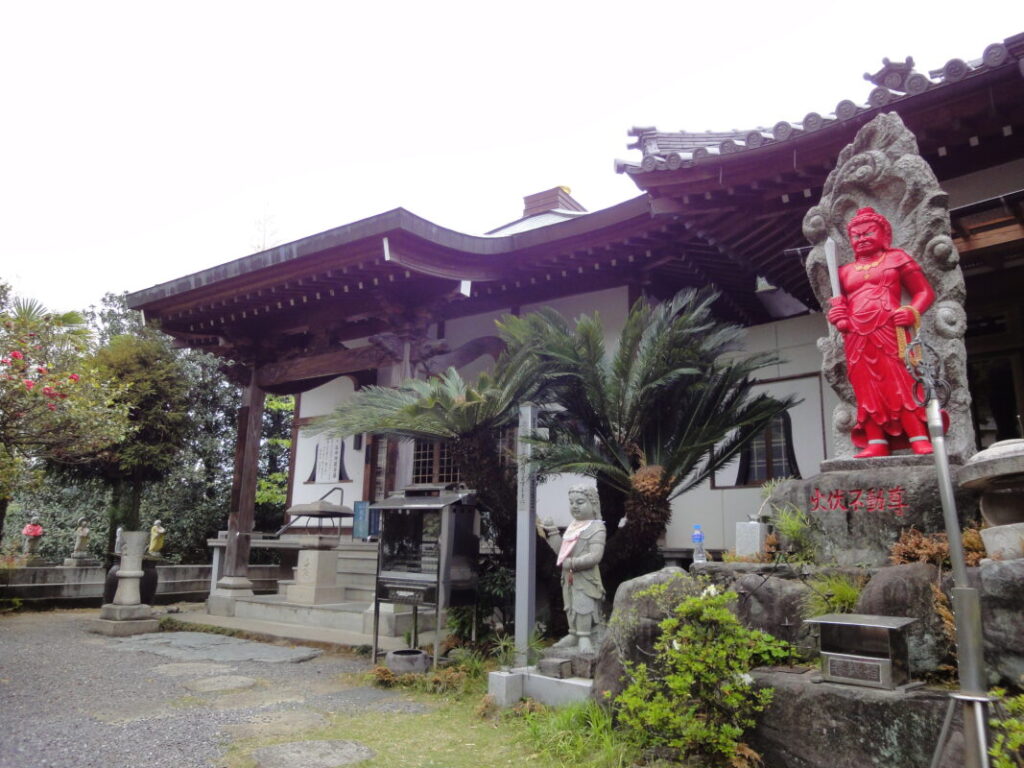
As I entered the grounds, the first thing I noticed was the Niō Gate. The building looked relatively new and appeared to have been rebuilt. The light color of the wood added to its fresh appearance.
Tall cedar and ginkgo trees stood throughout the grounds, giving the temple a sense of history. Surrounded by nature, the temple must look different in each season.
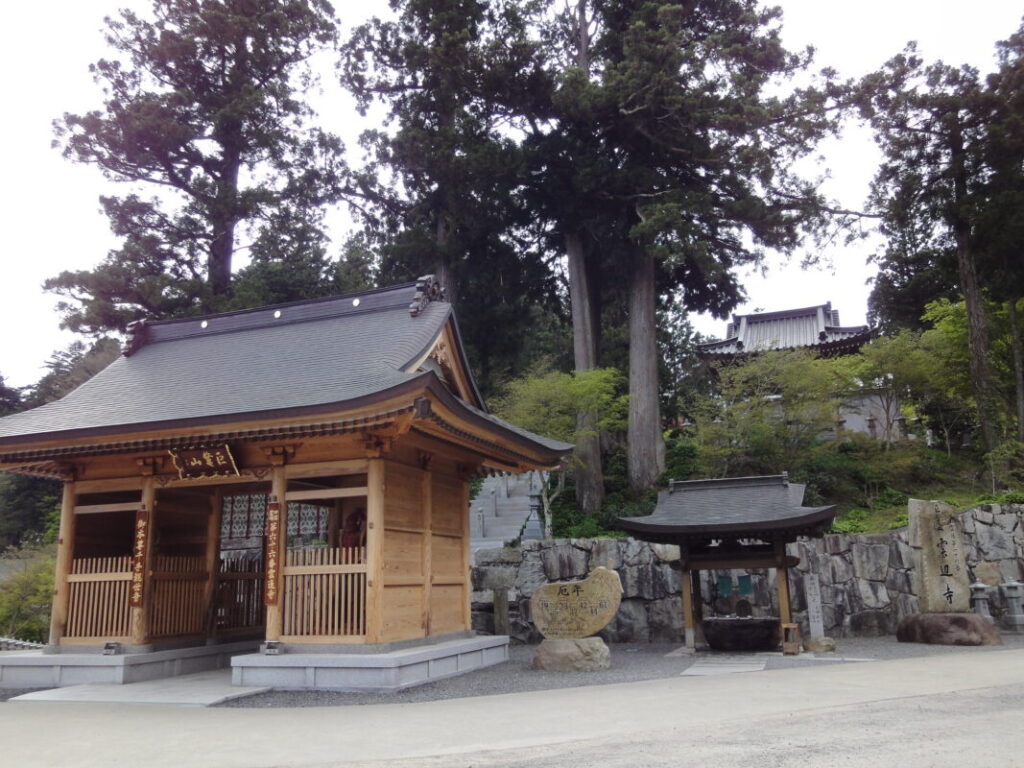
Eggplant Stamps
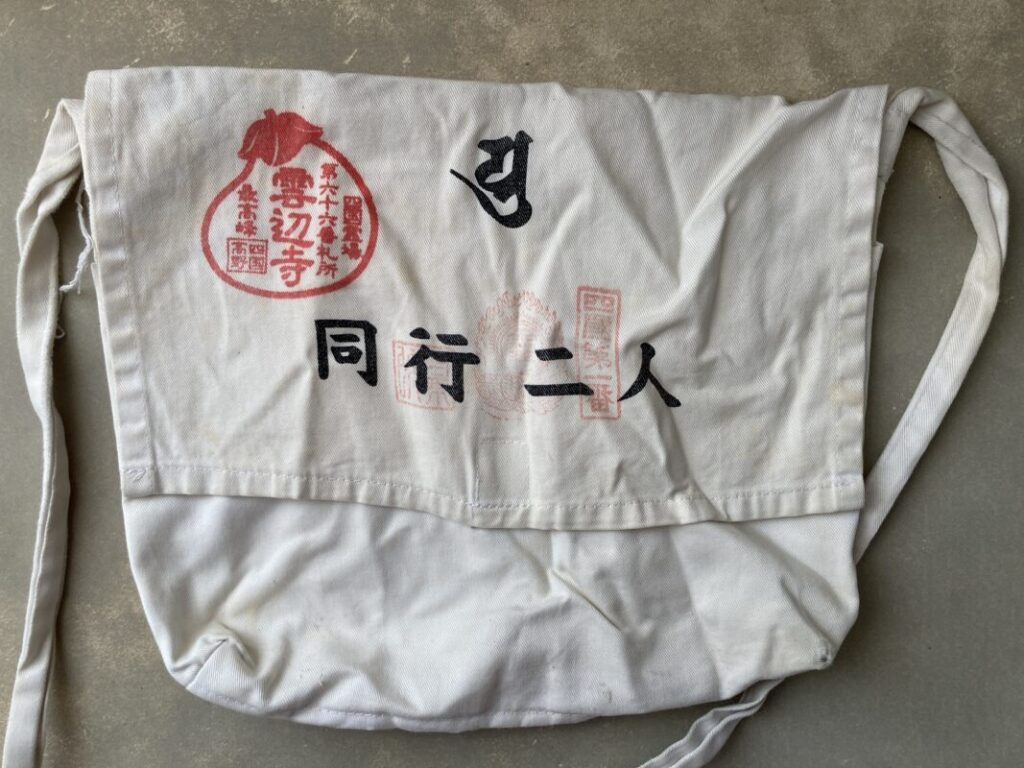
One of Unpen-ji’s unique features is a stone monument shaped like an eggplant. The shape represents the wish for one’s hopes to come true, as nasu (eggplant) sounds like nasu, meaning “to achieve” or “to accomplish” in Japanese. Similar lucky symbols can be found throughout the temple grounds.
At the temple office, visitors can also get a stamp featuring an eggplant. When I received my temple stamp, I had one pressed onto my sanya-bukuro (pilgrim’s bag).
The Five Hundred Arhat Statues
The temple grounds are also home to five hundred statues representing the disciples of Buddha. Scattered along the paths, each statue has a different expression and pose.
Taking a slow walk around the grounds and looking at these unique figures is one of the pleasures of visiting Unpen-ji.
Descending Toward Daiko-ji
It was past 2:00 p.m. by the time I finished my visit.
My next destination was Temple 67, Daiko-ji, about 10 km away. Most of the route was downhill, so I thought I could reach the temple before the 5:00 p.m. closing time if everything went smoothly.
Still, anything can happen on a mountain trail. I needed to be careful not to slip or lose my way.
To reach Daiko-ji, I first followed the path on the north side of Unpen-ji, where rows of Five Hundred Arhat statues stood. After walking along a paved road for a while, I saw a sign for the descent on my left.
Be Careful When Choosing the Descent Route
After walking about 500 meters along the mountain trail, I came to a junction for the ropeway station and Daiko-ji.
To reach Daiko-ji, I needed to take the path marked for the temple. I checked the signs carefully to make sure I chose the right way.
From here, a long descent lay ahead. The trail dropped about 600 meters in elevation. Although I wasn’t as out of breath as I had been on the climb, the steep descent put a strain on my legs and knees.
By the time I reached the bottom, my knees were starting to feel shaky.
From the Mountain Trail to the Countryside
After leaving the mountain trail, I reached a prefectural road.
A gentle downhill stretch followed, with terraced fields and the flowing Awaigawa River creating a peaceful rural scene. After spending so much time in the mountains, it was a relief to enjoy these views.
By the time I passed the large Iwanabe Pond, the mountain section was over, and the landscape gradually opened into flatter land.
After walking another 2 km through the fields, I finally arrived at Daiko-ji.
Visiting Temple 67: Daiko-ji
I arrived at Daiko-ji at 4:40 p.m.
The temple office closed at 5:00 p.m. It was close, but I made it just in time.
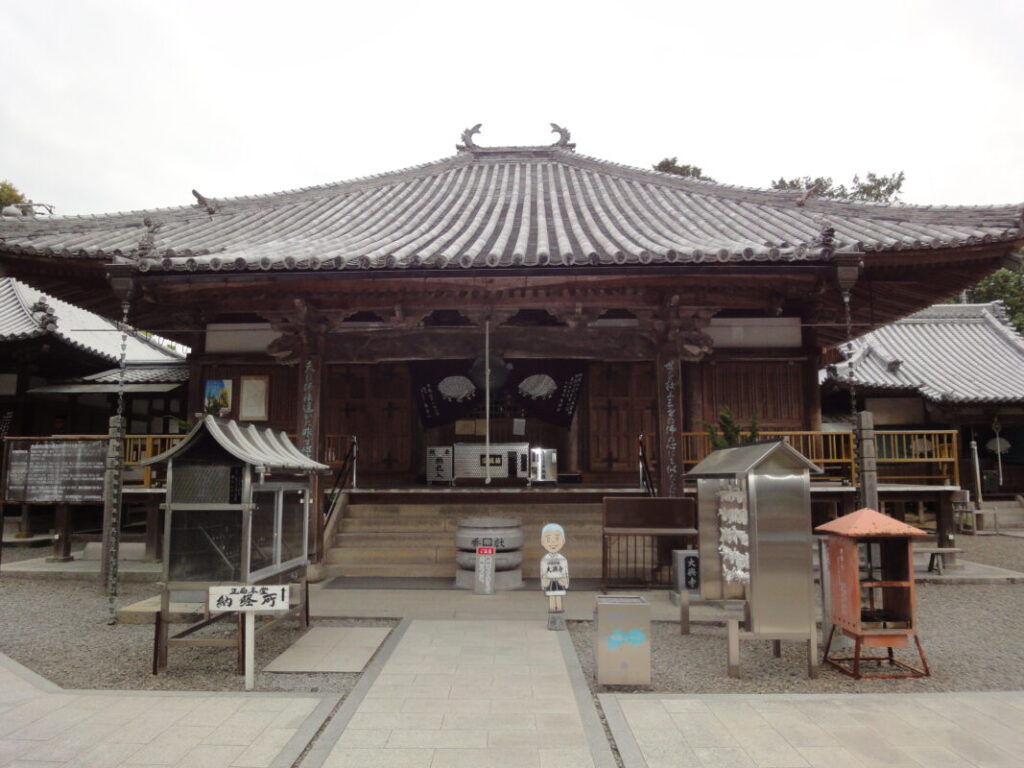
Daiko-ji and Its History of Shingon and Tendai Buddhism
Daiko-ji is also known as Komatsu-o-ji, after its mountain name. The temple is said to have been founded in 742, during the Nara period.
One of its unique features is its history as a temple where monks from both the Shingon and Tendai schools of Buddhism studied on the same grounds. Today, the temple has a Daishi Hall dedicated to Kobo Daishi, as well as a Tendai Daishi Hall dedicated to the founder of the Tendai school.
The Nio Gate is another highlight. It houses imposing Kongorikishi guardian statues, said to be among the largest of their kind at the 88 temples.
With this visit, I had completed all three temples planned for the day: Sankaku-ji, Unpen-ji, and Daiko-ji.
Camping at Daiko-ji’s Main Gate
After reaching Daiko-ji, my goal for the day, I finally relaxed, and the fatigue hit me all at once.
I had learned beforehand that it might be possible to camp near the temple gate with permission. I asked the temple staff, and they kindly allowed me to stay.
With a place to sleep secured, I decided to spend the night there.
Even in spring, temperatures can drop at night. When camping outdoors, a tent, an insulated sleeping mat, and a sleeping bag are essential.
Reflecting on Day 32 of the Pilgrimage
Today, I arrived in Shikoku by overnight bus, climbed from Sankaku-ji to Unpen-ji, and then descended the mountain before continuing to Daiko-ji.
I hadn’t slept well on the bus, so I was quite tired. Still, I was fortunate to have good weather and visit all three temples as planned.
I had expected a difficult climb to Unpen-ji because of its high elevation. However, choosing the Manda Pass route made the ascent easier than I had imagined. On the way down, though, the long descent put a strain on my knees and reminded me how challenging downhill trails can be.
Today was only the first day of my seven-day pilgrimage. I would continue toward Temple 88, Okubo-ji, to complete the pilgrimage, then visit Temple 1, Ryozen-ji, to give thanks.
To avoid carrying too much fatigue into the next day, I went to bed at 8:00 p.m.
Temple Information
- No. 65
- No. 66
- No. 67


Comments