
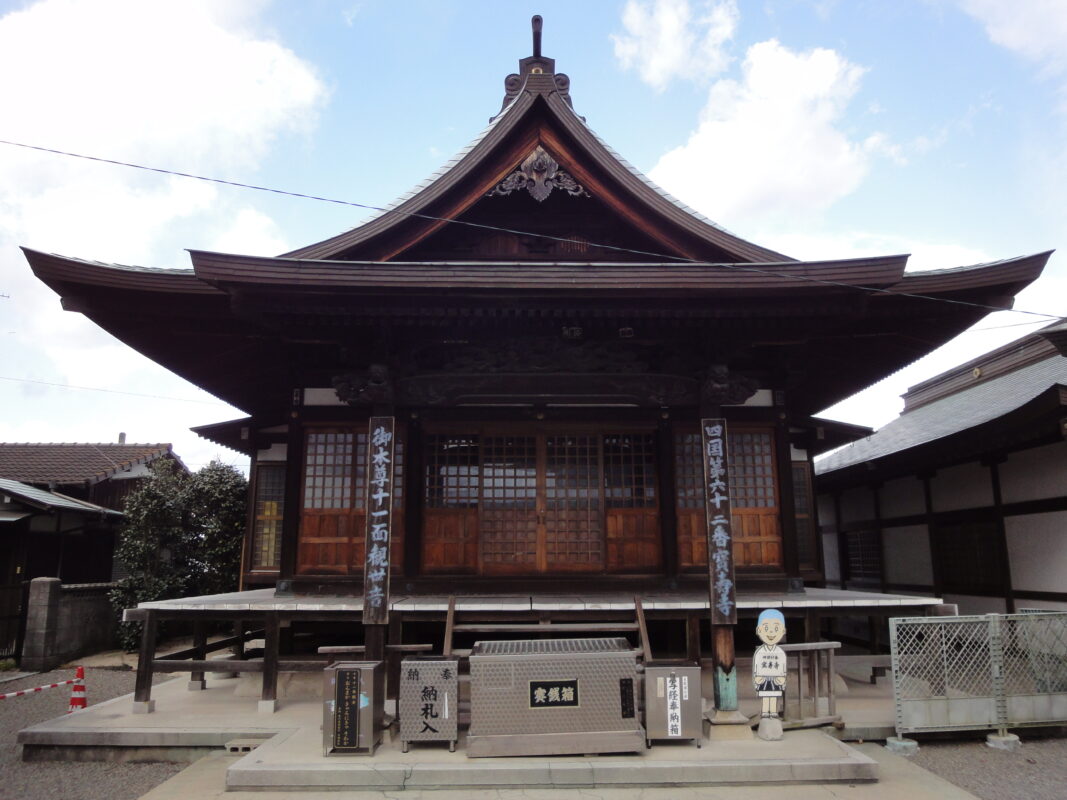
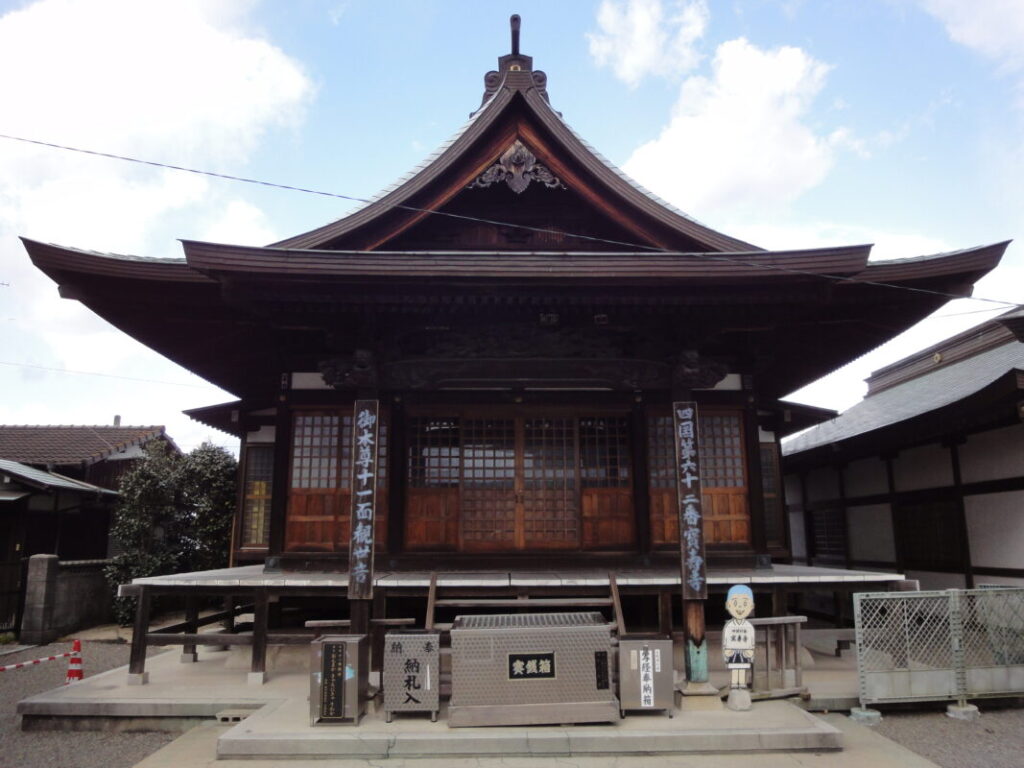
Hojuji Temple Information
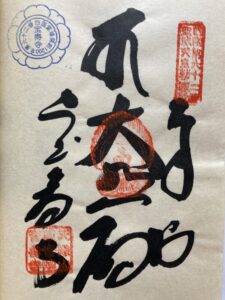
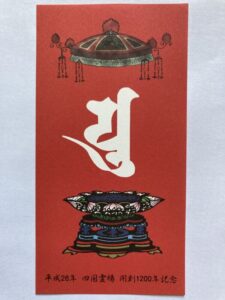
Goshuin
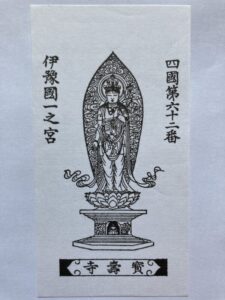
- Omie
- 1,200th Anniversary Edition
Basic Information
| Principal Deity | Eleven-Headed Kannon |
| Elevation | 10 m |
| Google Maps | MAP |
Accommodation
| Shukubo (Temple Lodging) | Not Available |
| Tsuyado (Free Pilgrim Shelter) | Not Available |
History & Highlights
Hojuji is a historic temple that was originally established as the bettōji (administrative temple) of Ichinomiya Shrine. According to tradition, Kōbō Daishi carved the temple’s principal image, the Eleven-Headed Kannon, and designated the site as a sacred place of worship. The temple has long been revered for prayers related to safe childbirth and motherhood. Despite being relocated and rebuilt several times throughout its history, Hojuji has continued to preserve its spiritual heritage to the present day.
Route Map, Distance & Travel Time
You can switch between the tabs to view the routes to the previous and next temples.
Select “Driving Route” from the map’s upper-left menu to display the driving route.
Click the Full Screen icon in the upper-right corner of the map to open it in Google Maps for a larger, easier-to-view map.
- From Previous Temple
- To Next Temple
Previous Temple: Koonji
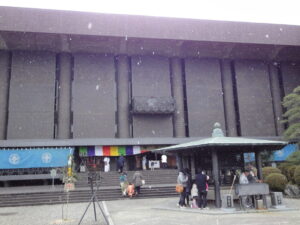
| Distance | 1.3 km |
| Walking | 20 min |
| Driving | 5 min |
Next Temple: Kichijoji
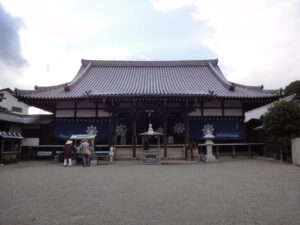
| Distance | 1.4 km |
| Walking | 20 min |
| Driving | 5 min |
My Walking Experience
Hojuji is located about 1 km (0.6 miles) east of Kōonji and is easily accessible from nearby Iyo-Komatsu Station on the JR Yosan Line.
The section from Temple 61 (Koonji) to Temple 64 (Maegamiji) covers only about 5 km (3.1 miles) in total. Since all four temples are located close to the JR Yosan Line, this is one of the most convenient areas of the pilgrimage for visiting multiple temples in a single day.
Along the way, I met several pilgrims who had left their luggage at accommodation near Maegamiji, taken the train back to an earlier station, and then walked the route carrying only a day pack. It seemed like a practical way to enjoy the pilgrimage while avoiding the burden of a heavy backpack.
Hojuji and the Shikoku Pilgrimage Association
Hojuji is also known for its involvement in a dispute with the Shikoku 88 Temple Pilgrimage Association regarding the management of the pilgrimage temple network.
Following a legal dispute, the temple temporarily withdrew from the association for several years.
Between approximately 2017 and 2019, a temporary “Temple 62 Worship Site” was established within the parking area of nearby Koonji Temple, allowing pilgrims to continue following the traditional numbering sequence during the dispute.
Hojuji later rejoined the association and is now once again recognized as Temple 62 of the Shikoku Pilgrimage. Pilgrims can receive temple stamps and worship there as usual.
I visited Hojuji both before and during the period of its withdrawal from the association and even had the opportunity to speak with the temple’s chief priest. The events surrounding that period are quite interesting, and I hope to write about them in more detail in a separate article.
Today, however, Hojuji operates normally as an official pilgrimage temple, and pilgrims can visit with confidence.
Nearby Accommodation
If you plan to stay near Hojuji or between the surrounding pilgrimage temples, see the article below.
Related Articles
Shikoku 88 Temple Pilgrimage Route: Full List, Distance & Walking Time Guide.
Temple List and Full Route
Comments