
Koonji Temple Information
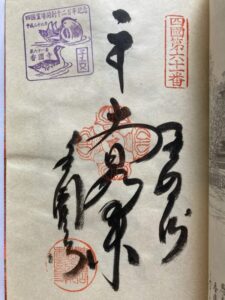
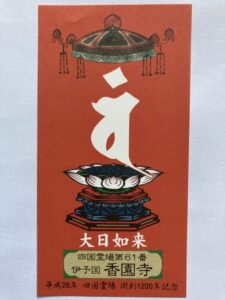
Goshuin
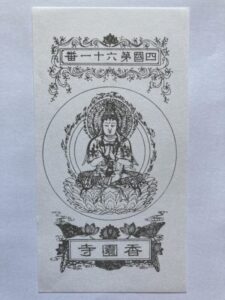
- Omie
- 1,200th Anniversary Edition
Basic Information
| Principal Deity | Dainichi Nyorai |
| Elevation | 20 m |
| Google Maps | MAP |
Accommodation
| Shukubo (Temple Lodging) | Not Available |
| Tsuyado (Free Pilgrim Shelter) | Not Available |
History & Highlights
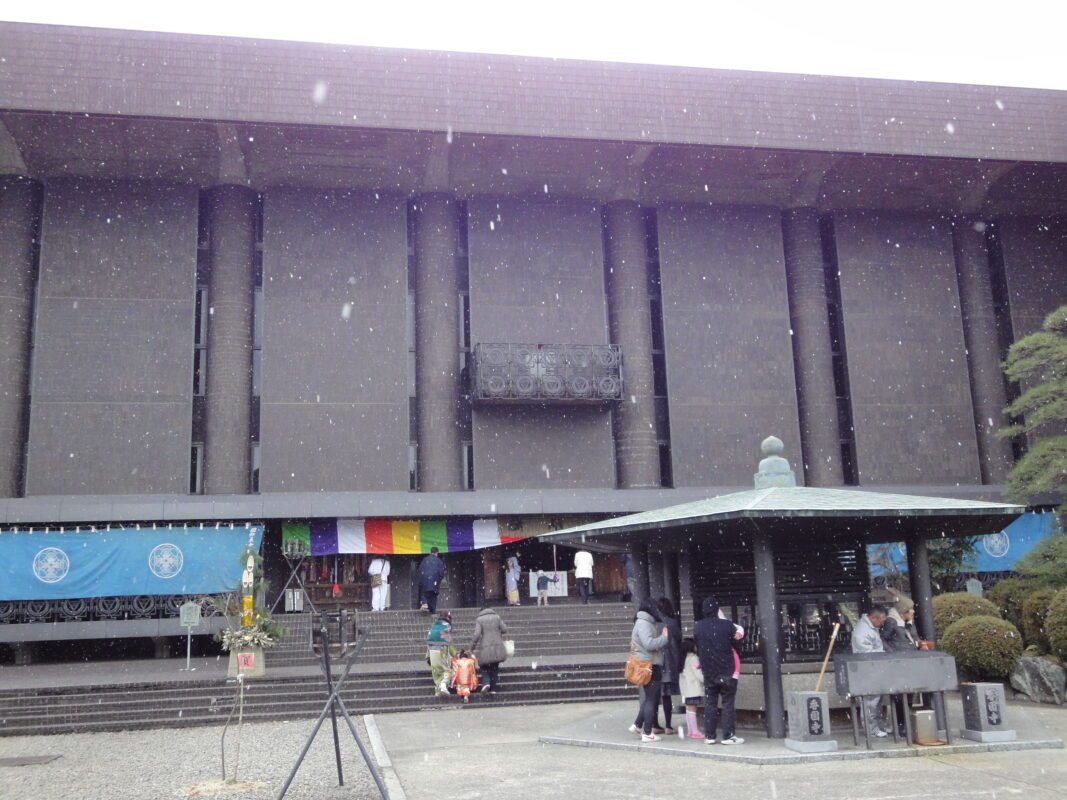
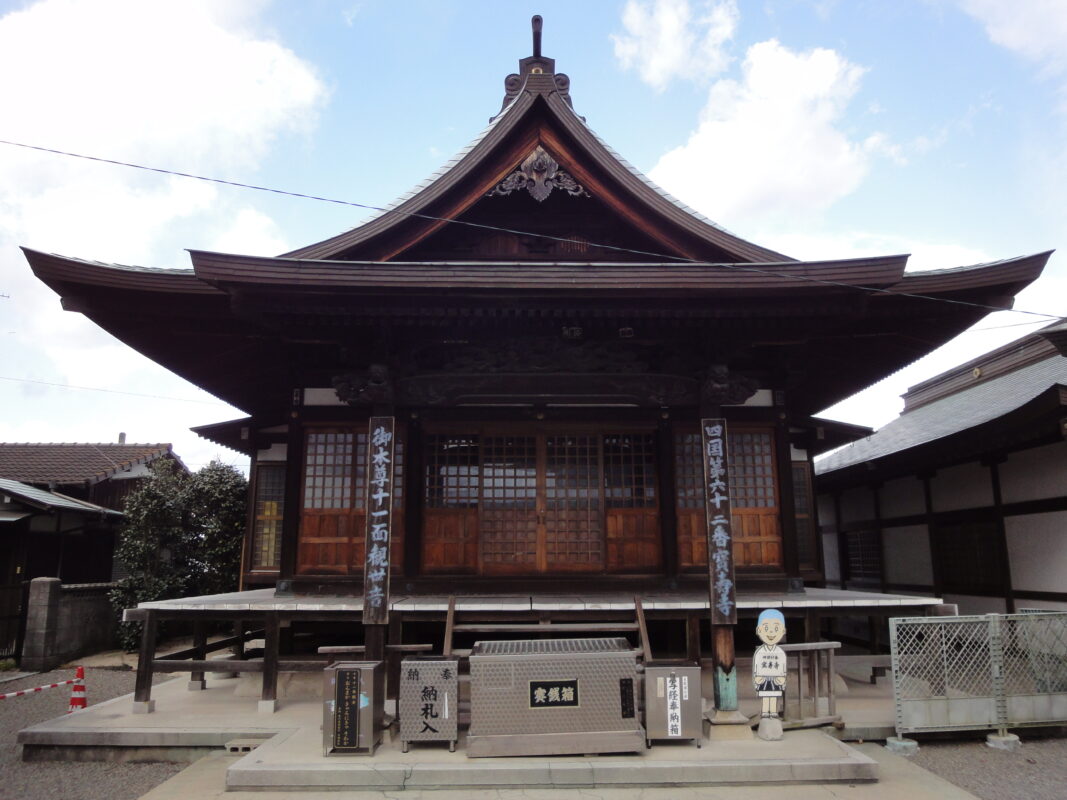
Koonji is a historic temple said to have been founded by Prince Shōtoku. It later became known as a temple associated with safe childbirth after Kōbō Daishi is said to have prayed for a woman experiencing a difficult delivery. Since then, it has been widely revered as a place for prayers related to childbirth and raising children. Today, the temple is distinguished by its large modern hall and continues to attract many pilgrims and visitors.
Route Map, Distance & Travel Time
You can switch between the tabs to view the routes to the previous and next temples.
Select “Driving Route” from the map’s upper-left menu to display the driving route.
Click the Full Screen icon in the upper-right corner of the map to open it in Google Maps for a larger, easier-to-view map.
- From Previous Temple
- To Next Temple
Previous Temple: Yokomineji
| Distance | 9.6 km |
| Walking | 3 hr |
| Driving | 35 min |
Next Temple: Hojuji
| Distance | 1.3 km |
| Walking | 20 min |
| Driving | 5 min |
Transportation Guide
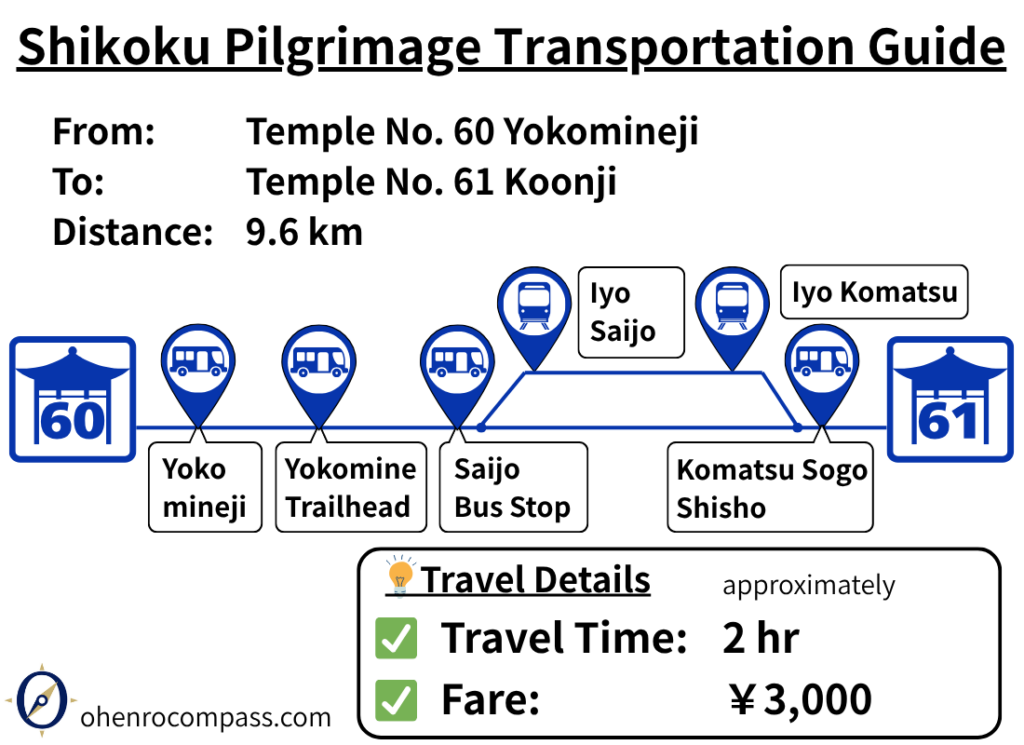
Travel from Yokomineji (60th Temple) to Koonji (61st Temple) by bus and train in about 2 hours. Includes the Yokomineji pilgrimage bus, transfers, fares, timetables, and a comparison with walking.
My Walking Experience
Koonji is located about 10 km (6.2 miles) south of Yokomineji. This section is almost entirely downhill, descending from Yokomineji’s elevation of approximately 750 m (2,460 ft).
Unlike the strenuous climb to Yokomineji, the descent feels refreshing and fast. However, the long downhill stretches can put considerable strain on the knees, so it is important to watch your footing and avoid overloading your legs.
The Descent from Yokomineji
The route down from Yokomineji begins near the forest road and parking area. Be careful not to return toward the temple gate and the trail you used to climb up.
After following the forest road for about 1 km, you will reach the entrance to a mountain trail. Walking pilgrims can use this trail as a shortcut toward Koonji.
Some sections of the trail are quite steep. I once climbed this route while walking the pilgrimage in reverse order, and it was an extremely demanding ascent. Even when descending, care is needed to avoid knee injuries on the steep slopes.
Shirataki Okunoin
After leaving the mountain trail, the route joins a paved road.
About 8 km (5 miles) from Yokomineji lies Shirataki Okunoin, the inner sanctuary of Koonji.
When I visited, there was no one else around, and the area was enveloped in complete silence. I offered incense and candles and spent some time quietly paying my respects.
A Rest Stop at Ōtani Pond
Continuing along the road, the elevated structure of the Matsuyama Expressway comes into view, followed by Ōtani Pond.
Beside the pond are public restrooms and a covered rest shelter, making it a convenient place to take a break after the long descent from Yokomineji.
From Ōtani Pond, it is only about a 10-minute walk to Koonji.
A Modern Temple Hall
Koonji is said to have been founded around 600 CE, making it one of the oldest temples on the Shikoku Pilgrimage.
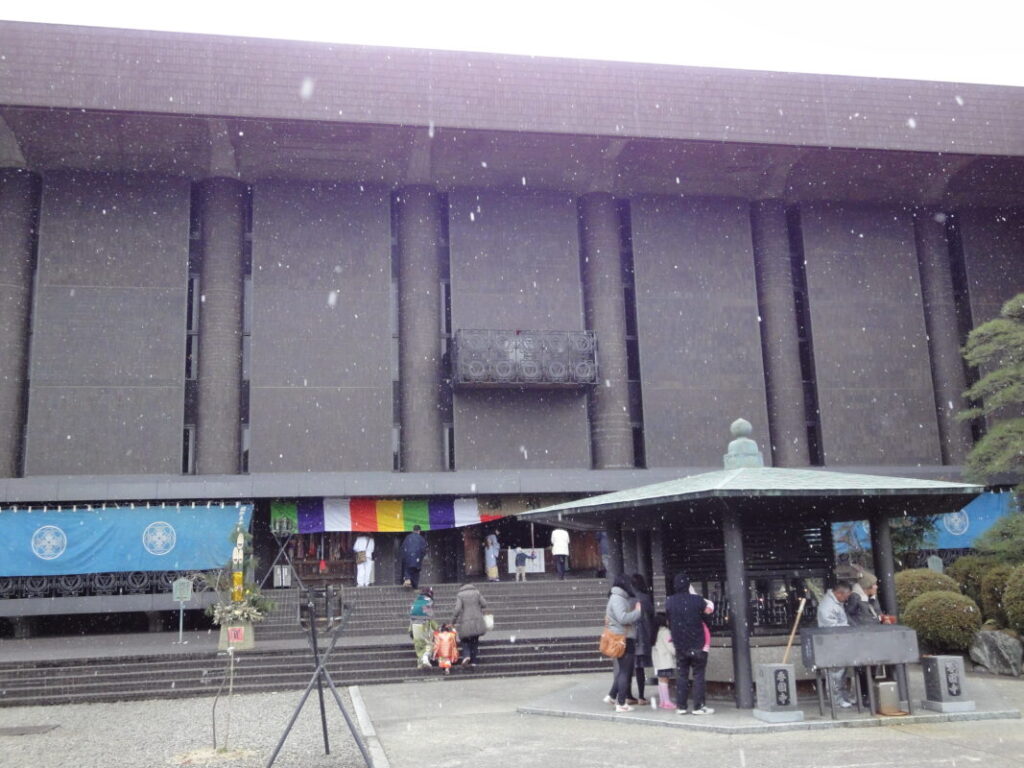
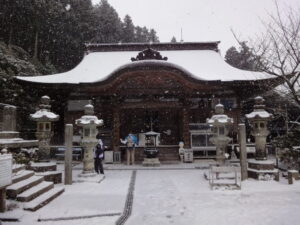
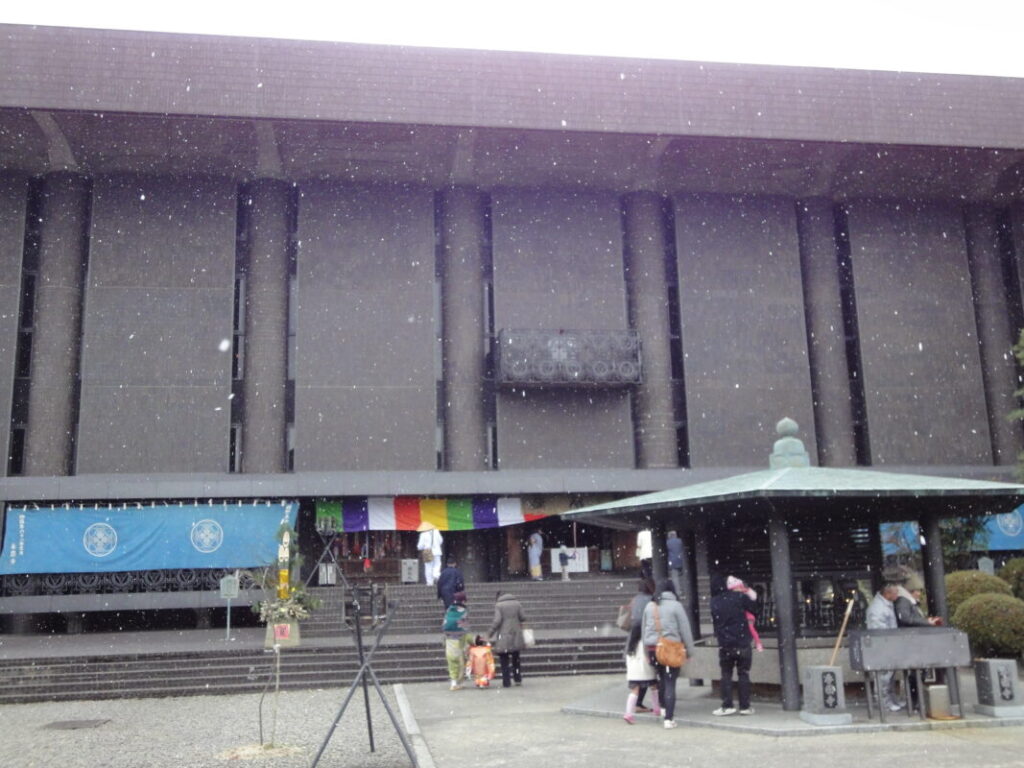
Yet the first thing that catches the eye is not an ancient wooden structure, but a large reinforced-concrete hall that serves as both the Main Hall and Daishi Hall.
The entrance is located on the second floor, reached by a flight of stairs. Visitors remove their shoes before entering.
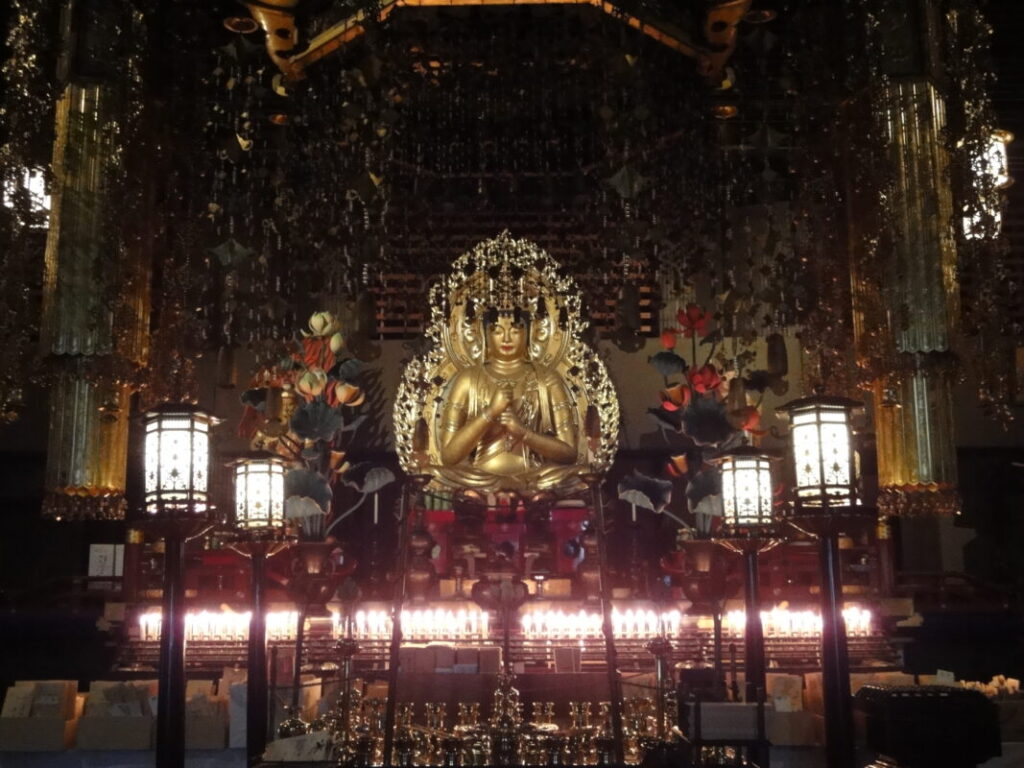
Inside, the building resembles a spacious auditorium. At the front stands a solemn statue of Dainichi Nyorai (Mahāvairocana Buddha), creating an atmosphere quite different from that of most pilgrimage temples.
I visited during the New Year holiday season, and the temple grounds were lively with worshippers wearing traditional festive clothing and families visiting with young children. The cheerful atmosphere contrasted sharply with the solitude of the mountain trails I had walked earlier that day.
Koyasu Daishi
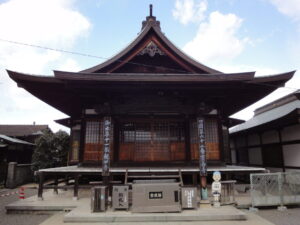
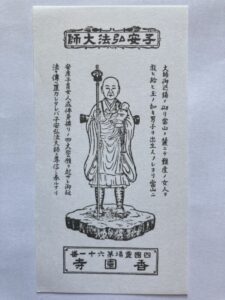
Another memorable feature of Koonji is the Koyasu Daishi statue located beside the Main Hall.
According to temple tradition, Kōbō Daishi once prayed for a woman who was suffering during a difficult childbirth. Following his prayers, she safely gave birth to a healthy baby boy. Since then, the temple has been revered as a place for prayers related to safe childbirth, child-rearing, and women’s spiritual well-being.
The statue of Kōbō Daishi holding an infant in his arms is quite unusual and immediately stands out. It reflects the temple’s long-standing reputation as a place where people come to pray for healthy pregnancies, safe deliveries, and the well-being of children.
Nearby Accommodation
If you plan to stay near Koonji or between the surrounding pilgrimage temples, see the article below.

Related Articles
Shikoku 88 Temple Pilgrimage Route: Full List, Distance & Walking Time Guide.
Temple List and Full Route
Comments