
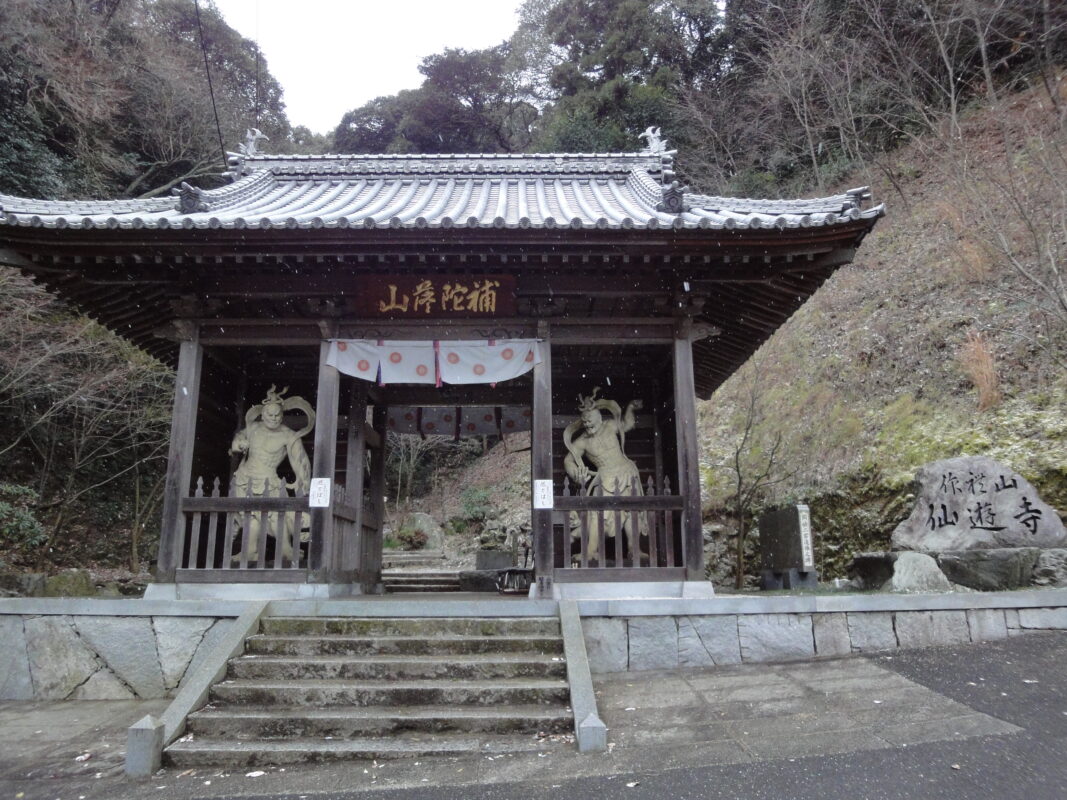
Visit Temple 58 Senyuji on the Shikoku Pilgrimage. Discover its mountain trail, panoramic views of the Seto Inland Sea, hot spring pilgrim lodging, historic legends, and a walker’s personal experience.
Senyuji Temple Information
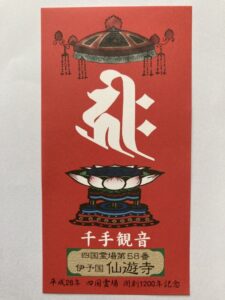
Goshuin
- Omie
- 1,200th Anniversary Edition
Basic Information
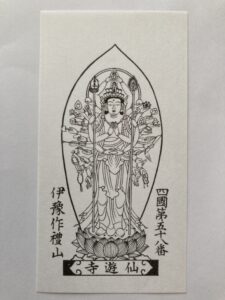
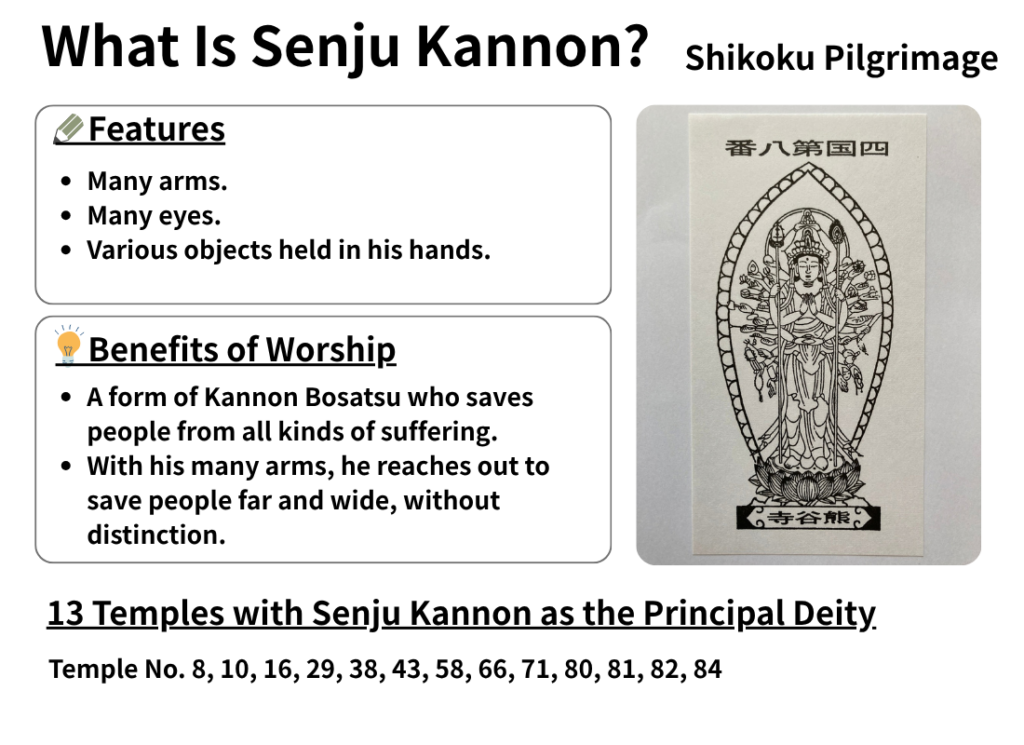
| Principal Deity Thousand-Armed Kannon | Elevation 255 m |
| Location Ehime Pref. Imabari City | Google Maps MAP |
Accommodation
| Shukubo (Temple Lodging) | Available |
| Tsuyado (Free Pilgrim Shelter) | Available |
History & Highlights
Senyuji is said to have been founded at the request of Emperor Tenji and later restored by Kūkai (Kōbō Daishi). The temple is known for the legend of Abō Sennin and the “Okaji no Ido” sacred well, which is believed to have been created through Kūkai’s prayers. Located on a hill overlooking the Seto Inland Sea, Senyuji is also admired for its beautiful panoramic views.
Notes
Parking fee: ¥400 (road maintenance fee)
Route Map, Distance & Travel Time
You can switch between the tabs to view the routes to the previous and next temples.
Select “Driving Route” from the map’s upper-left menu to display the driving route.
Click the Full Screen icon in the upper-right corner of the map to open it in Google Maps for a larger, easier-to-view map.
My Walking Experience
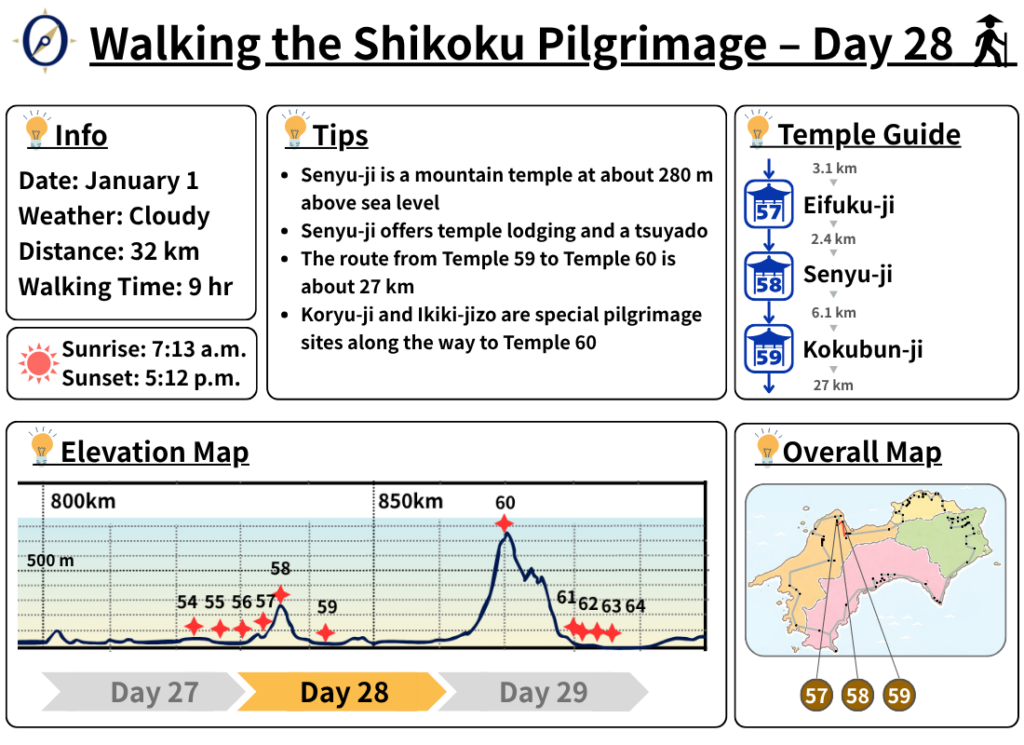
Senyuji is a mountain temple located near the summit of Mount Saku Rei, at an elevation of approximately 280 m (918 ft).
From Mount Saku Rei, which gives the temple its mountain name, visitors can look down over Imabari City. Beyond the city, the islands of the Seto Inland Sea and even the Shimanami Kaidō can be seen in the distance, making this one of the most scenic temples along the pilgrimage route.
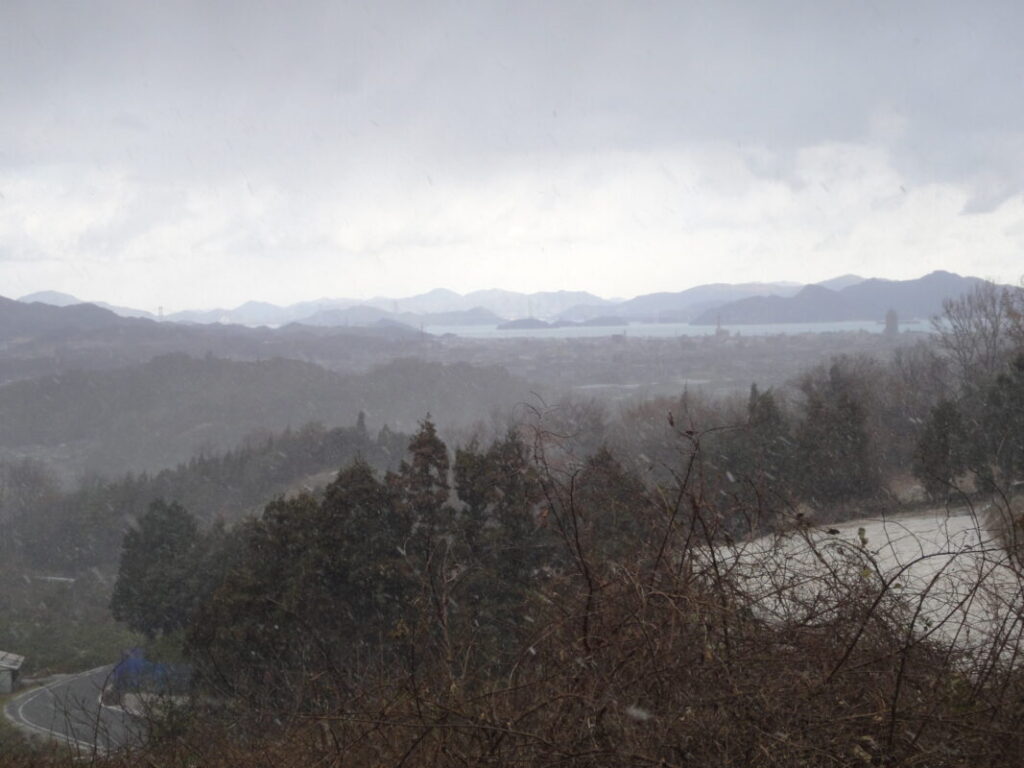
The Climb from Inuzuka Pond to Senyuji
The pilgrimage trail from Eifukuji to Senyuji follows the shore of Inuzuka Pond.
There was a period when this route was closed, but construction has now been completed and pilgrims can use the trail again.
After passing Inuzuka Pond, the route becomes a true mountain trail. A henro hut is available near the trail, and a statue of Kūkai (Kōbō Daishi) nearby makes it easy to identify.
The final approach to the temple gate follows a winding mountain road. Along the way, occasional views of the town below appear between the curves, allowing you to feel the gradual increase in elevation.
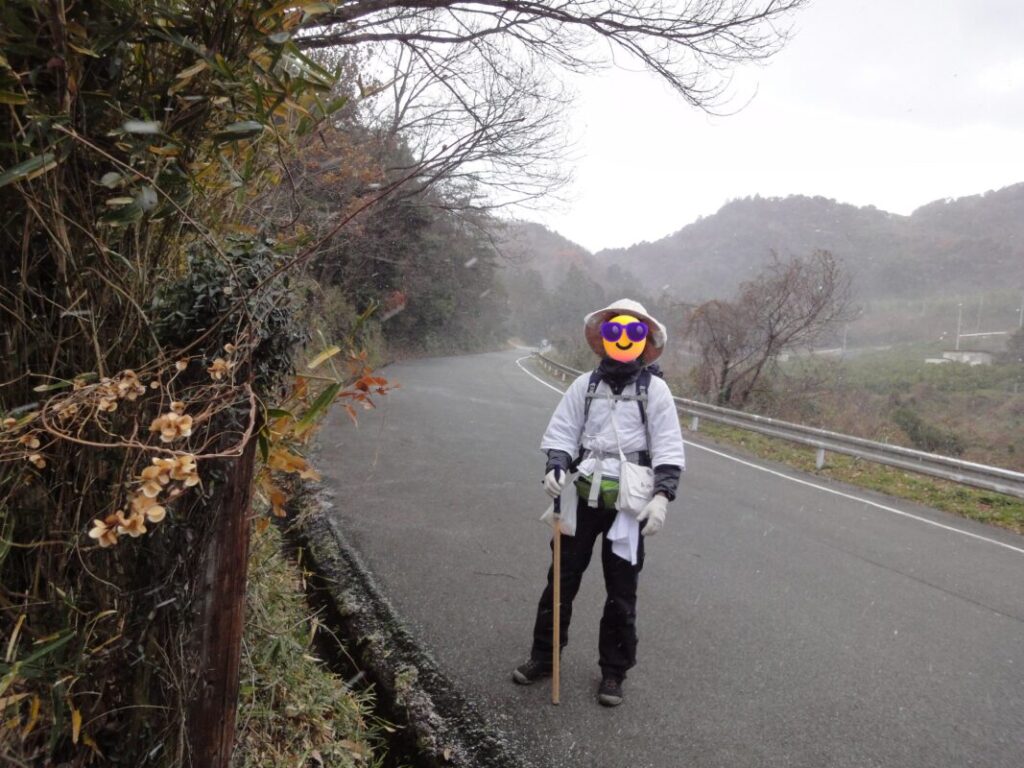
When I walked this route, hail suddenly began to fall along the way. As the elevation increased, the temperature dropped noticeably, and the climb became a reminder of the harsh and unpredictable conditions of mountain weather.
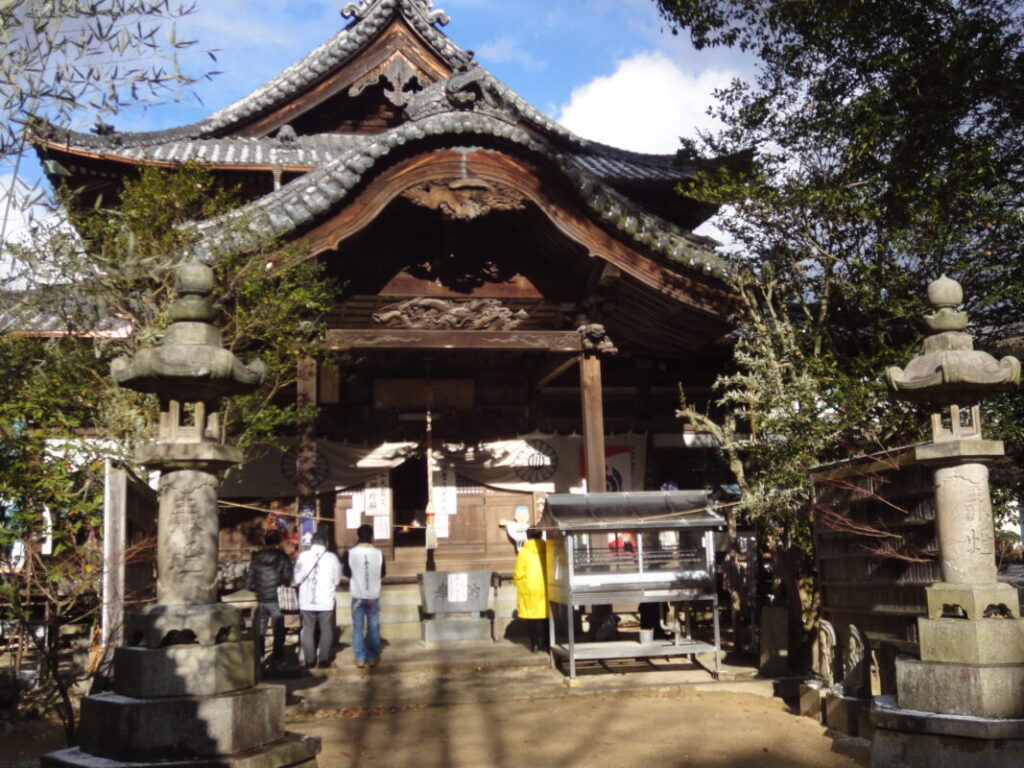
Stone Steps from the Main Gate to the Temple Grounds
The climb to Senyuji does not end at the main gate.
From the gate to the temple grounds, there is another 60 m (197 ft) of elevation gain, requiring a climb up a flight of stone steps. There is a rest area near the gate, and I took a short break there before making the final ascent.
A Mountain Temple and Pilgrim Lodging
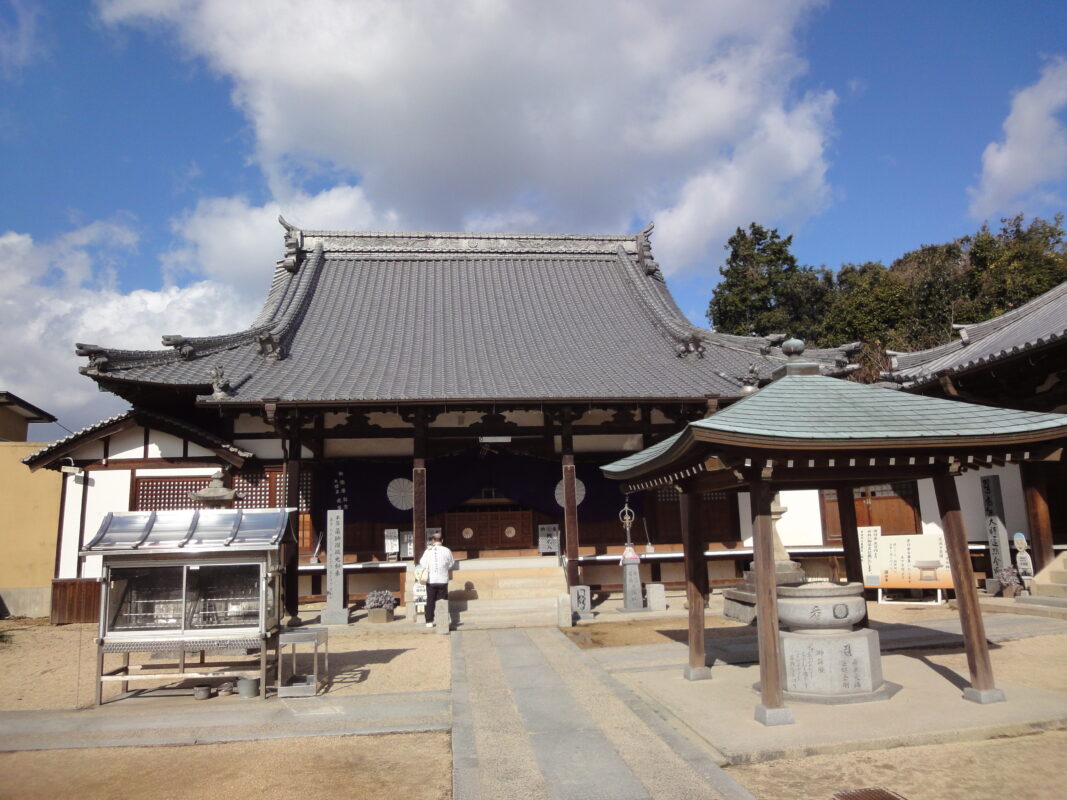
Although the temple grounds are located deep in the mountains, the site has been carefully arranged by making use of the limited flat land available. The quiet and peaceful atmosphere truly reflects the character of a mountain temple.
A legend remains that Kūkai (Kōbō Daishi) dug a well here to help people suffering from illness. This story adds to the sense of deep faith that surrounds the temple.
Senyuji also offers pilgrim lodging with a natural hot spring, making it a valuable place for walking pilgrims to rest and recover after a demanding mountain journey.
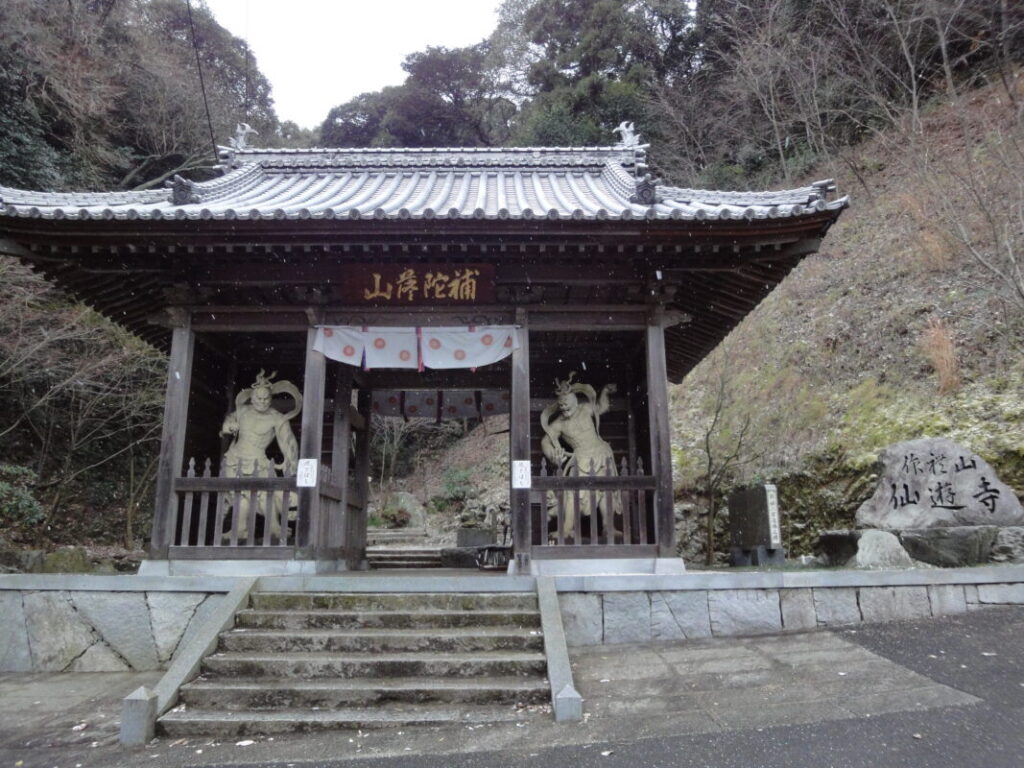
Senyuji’s Goshuin
It is common for a temple’s goshuin (pilgrimage stamp and calligraphy) to vary depending on the person who writes it.
At Senyuji, the common feature is the powerful and large calligraphy that fills the entire sheet of paper.
The goshuin I received at Senyuji, however, was different from this style. It featured thin, delicate brush strokes with generous empty space around the characters. At first glance, it appeared modest, but the confident brushwork revealed a quiet strength.
It made me realize what it means to truly make use of empty space in calligraphy.
I have received many goshuin during my pilgrimage, but the one I received at Senyuji remains one of my most memorable and special keepsakes.
Useful Facilities Between Pilgrimage Temples
Find useful facilities along the pilgrimage route, including toilets and rest areas.
Loading rest spots...
Looking for More Places to Take a Break?
Explore our guide to rest stops, hot springs, campsites, and other useful places for pilgrims walking the Shikoku Pilgrimage.
Nearby Accommodation
Here are some accommodation options near this temple that may be convenient for pilgrims. If you are planning to stay overnight, we hope you find this list helpful.
Looking for more accommodation options?
Visit our Pilgrim Accommodation Guide to explore more places to stay along the Shikoku Pilgrimage. You can search by location, accommodation type, price range, facilities, and more.

Additional Information
Related Articles
Shikoku 88 Temple Pilgrimage Route: Full List, Distance & Walking Time Guide.
Temple List and Full Route


Comments