
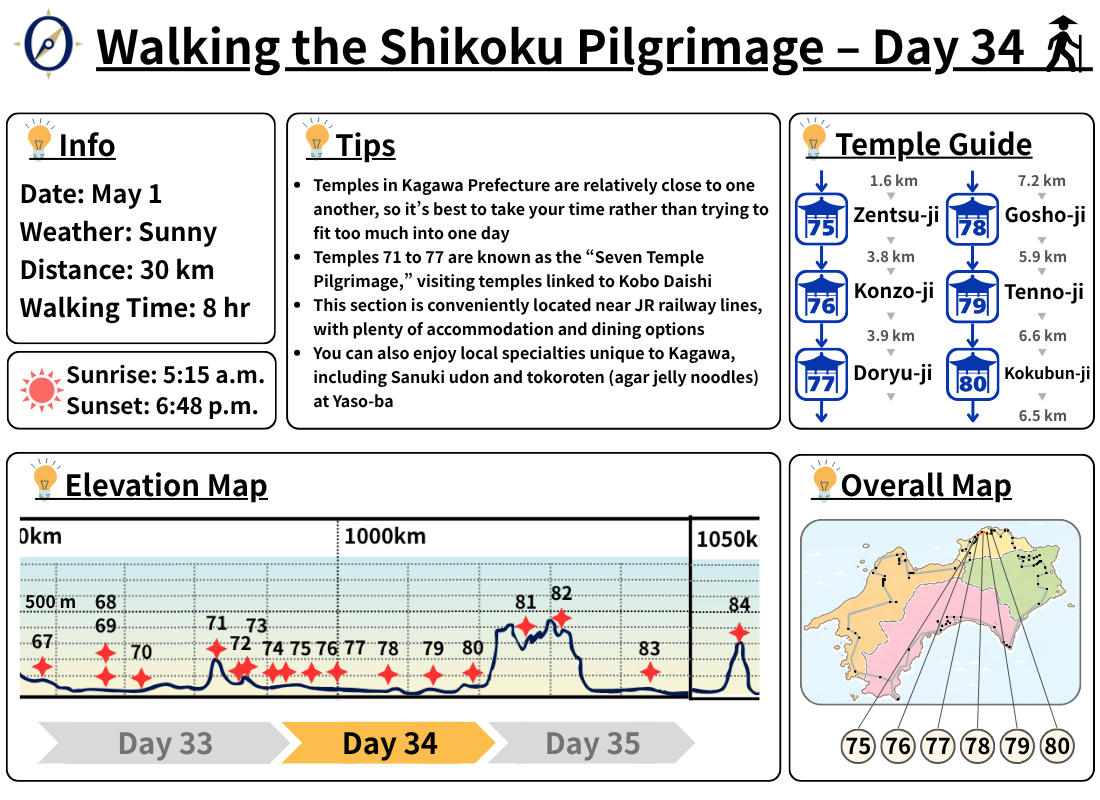
May 1, sunny. Day 34 of my walking pilgrimage.
I took part in the morning Buddhist service at the pilgrim lodging at Zentsu-ji, then paid my respects at the temple again after breakfast before setting off. That day, I visited five temples: Konzo-ji, Doryu-ji, Gosho-ji, Tenno-ji, and Kokubun-ji. Along the way, I received a handmade Jizo statue as osettai, a traditional act of generosity toward pilgrims, and also enjoyed Sanuki udon at Ubushina Shrine.
One of the defining features of Kagawa Prefecture is the short distance between temples, making it possible to visit them one after another. However, as I became increasingly conscious of the temple stamp offices’ closing times, I had to pick up the pace during the latter half of the day, and fatigue began to take its toll.
Finally, I climbed up to the Goshikidai plateau, arriving at a rest area at 6:30 p.m. With another mountain crossing ahead the following day, I decided to camp here for the night.
- Itinerary
- Getting Ready in the Morning
- Morning Buddhist Service at Zentsu-ji
- Breakfast at Zentsu-ji
- Visiting Temple 75: Zentsu-ji
- Temple 76: Konzo-ji
- On to Temple 77: Doryu-ji
- On to Temple 78: Gosho-ji
- Visiting Temple 78: Gosho-ji
- On to Temple 79: Tenno-ji
- On to Temple 80: Kokubun-ji
- Visiting Temple No. 80, Kokubun-ji
- Heading to Goshikidai
- Temple Information
Itinerary
- 7:40Departure
- Zentsu-ji
- 8:40Temple No. 76, Konzo-ji
- 10:00Temple No. 77, Doryu-ji
- Marugame Castle
- Ubushina Shrine
- 13:00Temple No. 78, Gosho-ji
- Yaso-ba
- 14:50Temple No. 79, Tenno-ji
- 16:30Temple No. 80, Kokubun-ji
- 18:30Goshikidai Rest Area
Overnight stay
Getting Ready in the Morning
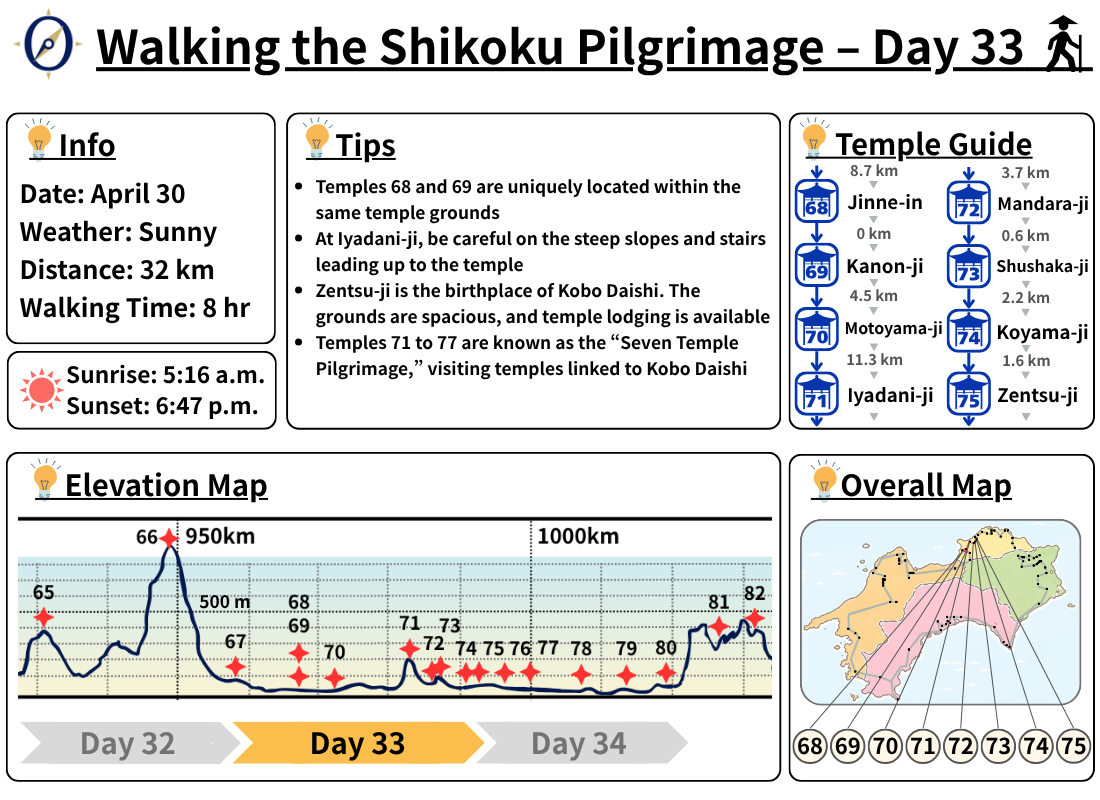
Yesterday, I visited Temples 68 through 74, from Jinne-in to Koyama-ji, and stayed overnight at the pilgrim lodging at Temple 75, Zentsu-ji. I had visited seven temples in a single day and walked about 30 km at a brisk pace, so I was quite exhausted. However, thanks to the hot spring bath and comfortable surroundings at the lodging, I had fully recovered.
I got up early this morning to take part in the morning Buddhist service, one of the main reasons I had wanted to stay at Zentsu-ji’s pilgrim lodging.
Morning Buddhist Service at Zentsu-ji
More than a dozen other pilgrims joined the morning service alongside me. Dressed in white pilgrimage attire, we sat in rows behind the head priest, who was seated in front of the Buddhist altar.
The magnificent, ornate Buddhist statues and the sight of the priest sitting upright before them left a strong impression on me. The chanting of sutras echoed through the quiet hall as a solemn atmosphere filled the space.
I also had the opportunity to experience the Kaidan Meguri, a ritual passage through an underground tunnel approximately 100 meters long. It was a rare experience unique to Zentsu-ji, and it made me feel even more glad that I had stayed at the temple lodging.
Breakfast at Zentsu-ji
Breakfast is also served at the pilgrim lodging at Zentsu-ji.
In the large dining hall, I spotted some of the same pilgrims who had attended the morning service. Although the meal was not strictly vegetarian Buddhist cuisine, it was a healthy selection of dishes featuring vegetables, beans, and koya-dofu (freeze-dried tofu).
For those walking the Shikoku Pilgrimage, breakfast provides essential energy for the day ahead. I was especially grateful that rice was available for unlimited refills.
After enjoying a hearty breakfast, I checked out and prepared to set off.
Visiting Temple 75: Zentsu-ji
Yesterday, I arrived at Zentsu-ji in the late afternoon, leaving me with little time to explore the temple grounds at leisure. After breakfast, I decided to return and take a closer look around.
Zentsu-ji is counted among the Three Great Sacred Sites of Kobo Daishi, alongside To-ji in Kyoto and Mount Koya. It is best known as the birthplace of Kobo Daishi Kukai and holds a special place among the 88 temples of the Shikoku Pilgrimage.
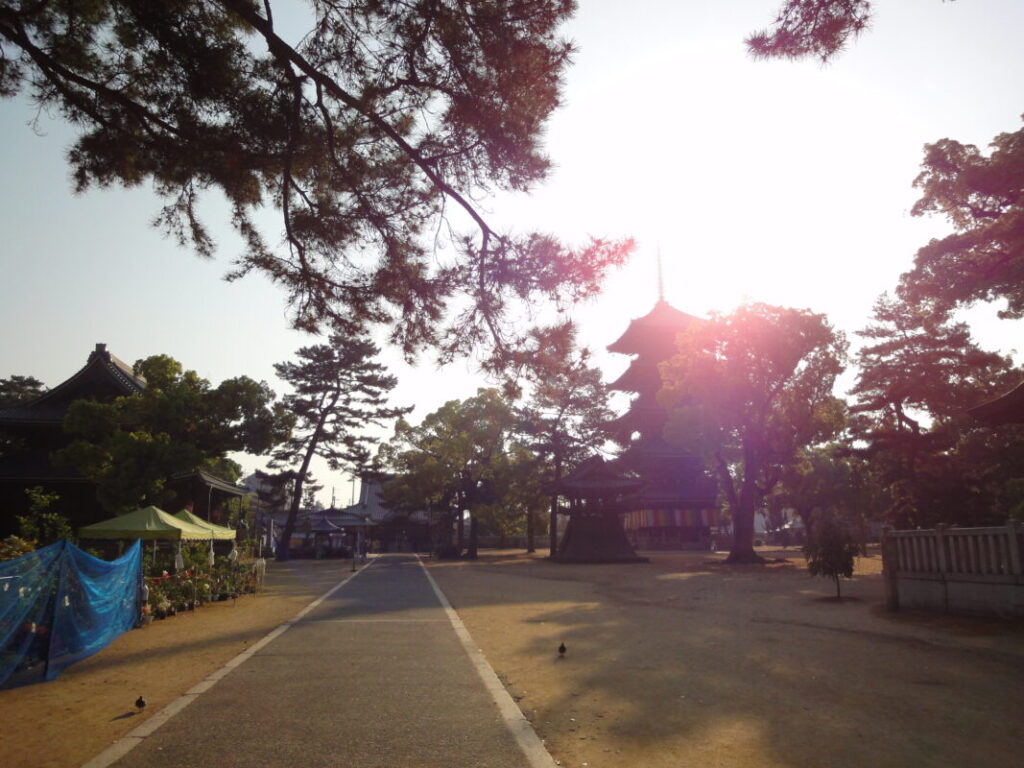
The vast temple grounds, covering approximately 45,000 square meters, are divided into two areas: the eastern precinct, known as the Garan, and the western precinct, called the Tanjoin.
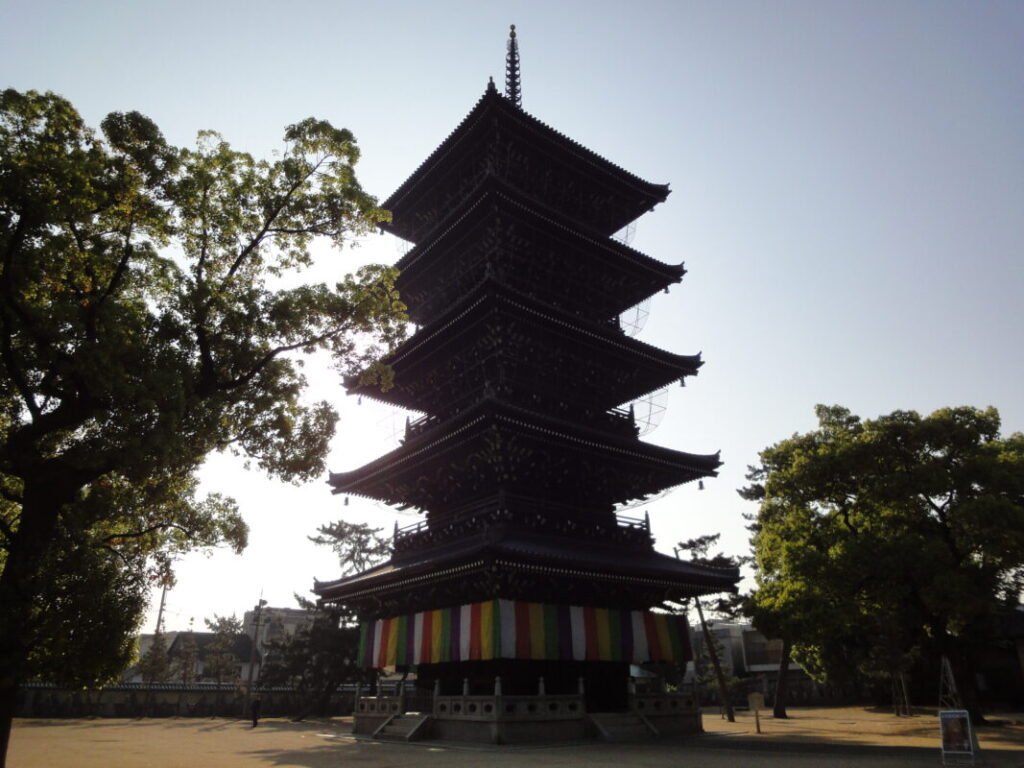
The eastern precinct features the main hall and a five-story pagoda, while the western precinct is believed to occupy the site of the Saeki family residence where Kobo Daishi was born. Mount Koshiki rises to the west of the temple grounds, creating a beautiful landscape characteristic of Zentsu-ji.
One of the most striking structures is the five-story pagoda, which stands approximately 43 meters tall. It is one of Japan’s largest wooden pagodas and a defining symbol of Zentsu-ji.
The temple grounds are extensive, with plenty to see. I came away feeling that this is a temple well worth visiting with plenty of time to spare.
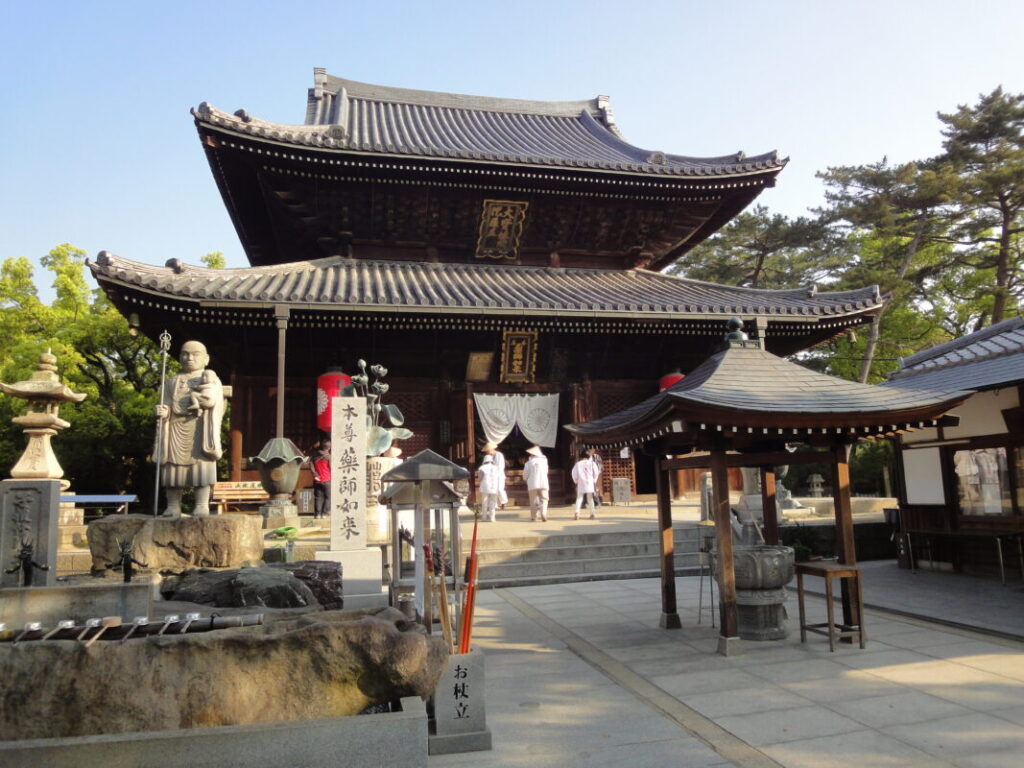
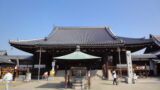
Main Hall
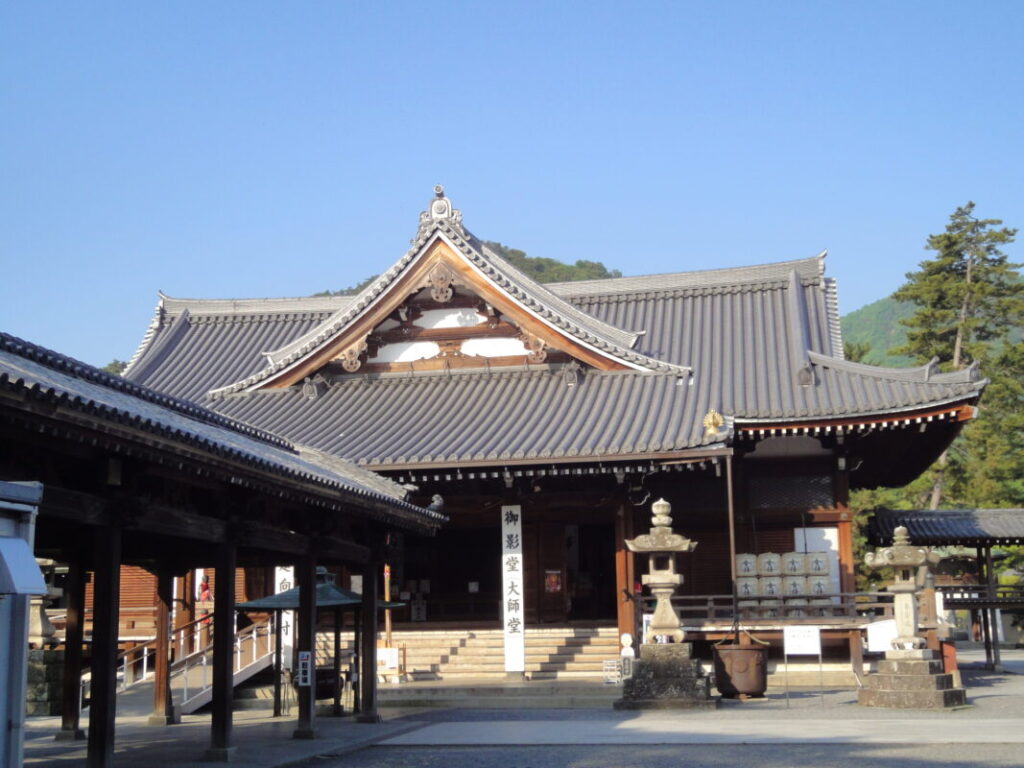
Daishi Hall
Zentsu-ji’s Famous Katapan Biscuits
If you visit Zentsu-ji, one place worth stopping by is Kumaoka Kashiten, a traditional confectionery shop just outside the temple gates.
Established more than 120 years ago, this long-standing shop has a wooden storefront that reflects its rich history. Its specialty is katapan, biscuits famous for being exceptionally hard, just as their name suggests. They are a popular local souvenir from Zentsu-ji.
If you visit the temple, I highly recommend stopping by the shop as well.
Temple 76: Konzo-ji
After finishing my visit to Zentsu-ji, I set off for the next temple at 7:40 a.m.
Konzo-ji lies about 4 km north of Zentsu-ji.
Leaving Zentsu-ji, I headed toward JR Zentsuji Station, crossed the railway tracks, and followed Prefectural Route 25 north. After passing beneath the Takamatsu Expressway, I came across a sign pointing toward Konzo-ji.
Visiting Konzo-ji
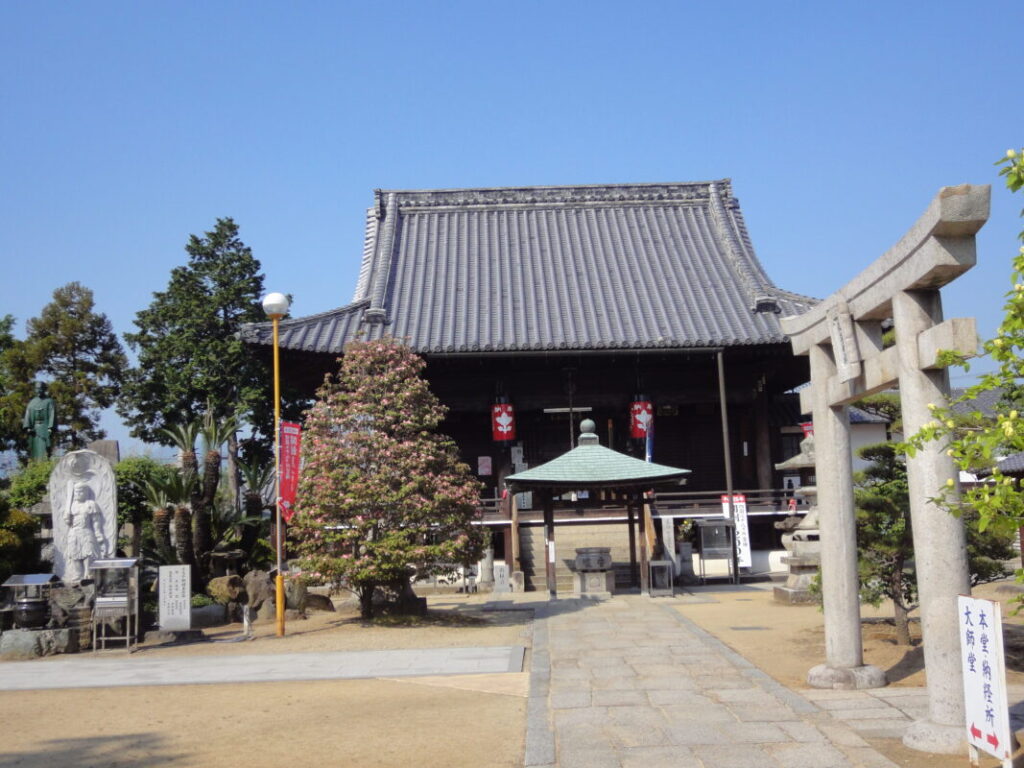
I arrived at Konzo-ji at 8:40 a.m.
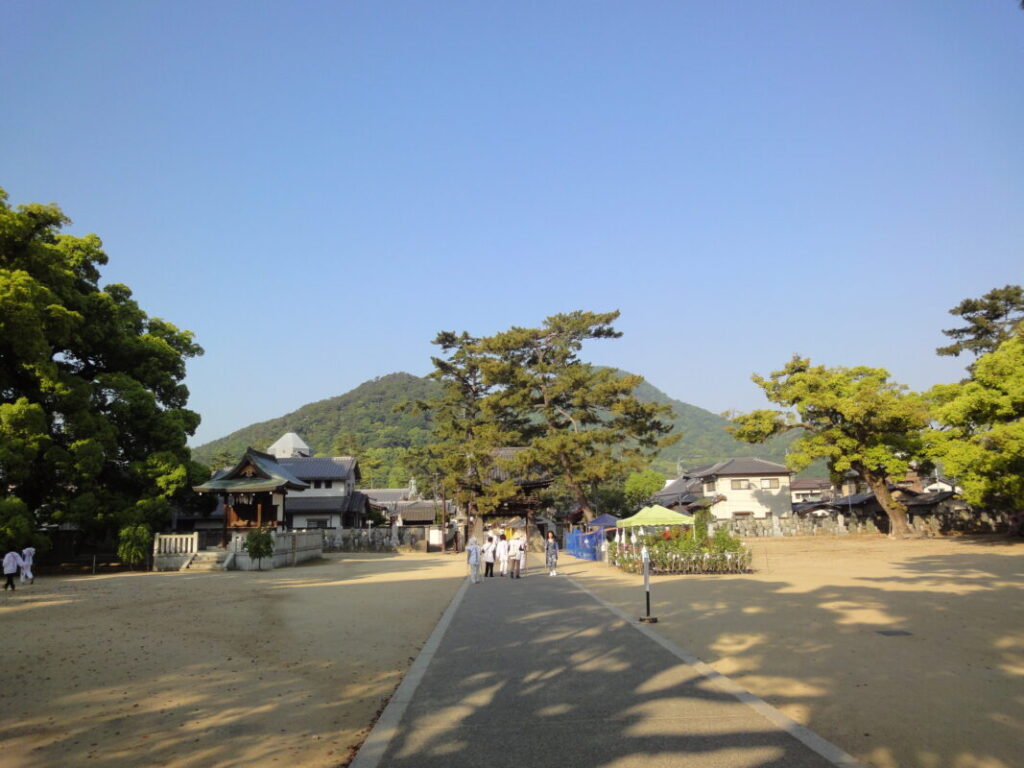
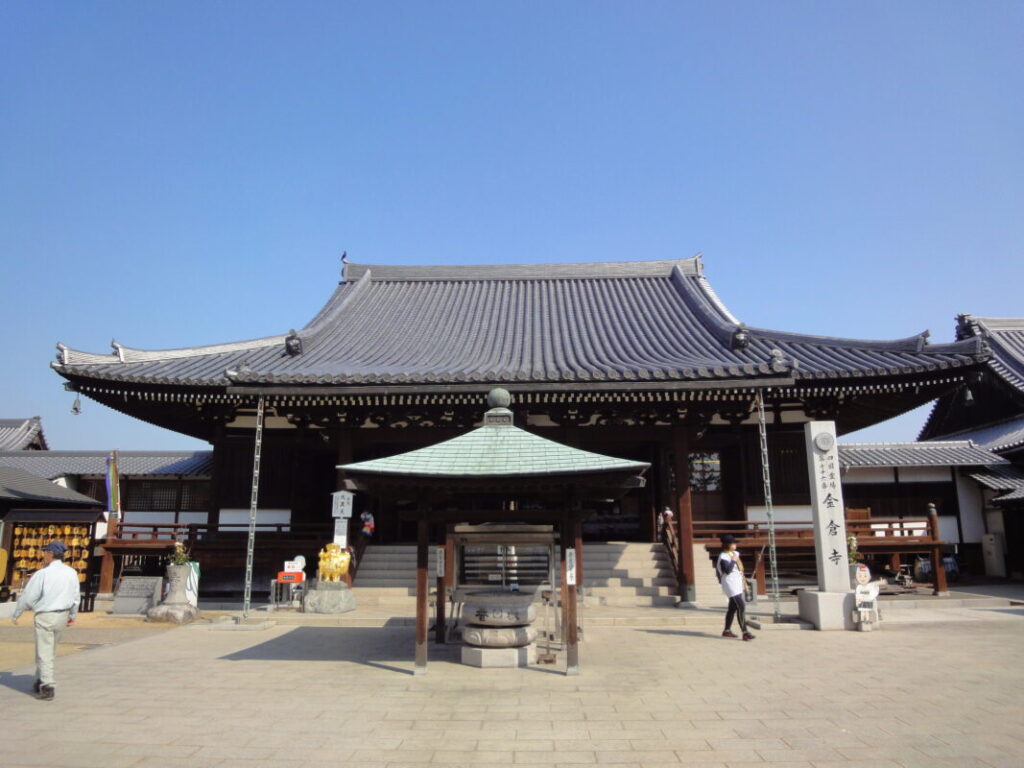
Having just visited the vast grounds of Zentsu-ji, I found Konzo-ji’s atmosphere calm and welcoming by comparison.
The grounds are mostly flat, with few steps or changes in elevation, making the temple easy to visit on foot. A torii gate within the grounds leads toward an adjacent Shinto shrine, creating a distinctive setting where the atmosphere of a Buddhist temple blends with that of a Shinto shrine.
The Birthplace of Chisho Daishi
Konzo-ji is famous as the birthplace of Chisho Daishi Enchin, a nephew of Kobo Daishi Kukai who is revered as the founder of the Tendaijimon school of Buddhism.
According to tradition, the temple received its present name, Konzo-ji, in 928 by imperial order of Emperor Daigo. The name was derived from the local area known as Konzo-go.
The Shikoku Pilgrimage is closely associated with Kobo Daishi, but discovering temples connected to his relatives and other prominent Buddhist figures is another fascinating aspect of the journey.
On to Temple 77: Doryu-ji
Doryu-ji lies about 3 km north of Konzo-ji.
Leaving Konzo-ji, I headed north and passed beneath the elevated section of National Route 11. Beyond that, the pilgrimage path took me through fields and, in a somewhat unusual turn, directly through the grounds of a Shinto shrine.
As I continued toward JR Tadotsu Station, someone suddenly called out to me in a residential neighborhood just before Doryu-ji.
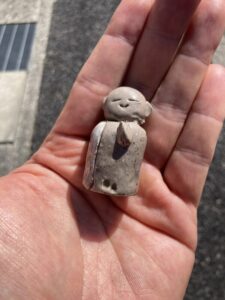
The gift I received as osettai, a traditional act of generosity toward pilgrims, was a small ceramic Jizo statue. Perhaps it had been handmade. I gratefully accepted it and pressed my hands together in thanks.
255 Kannon Statues Lining the Temple Grounds
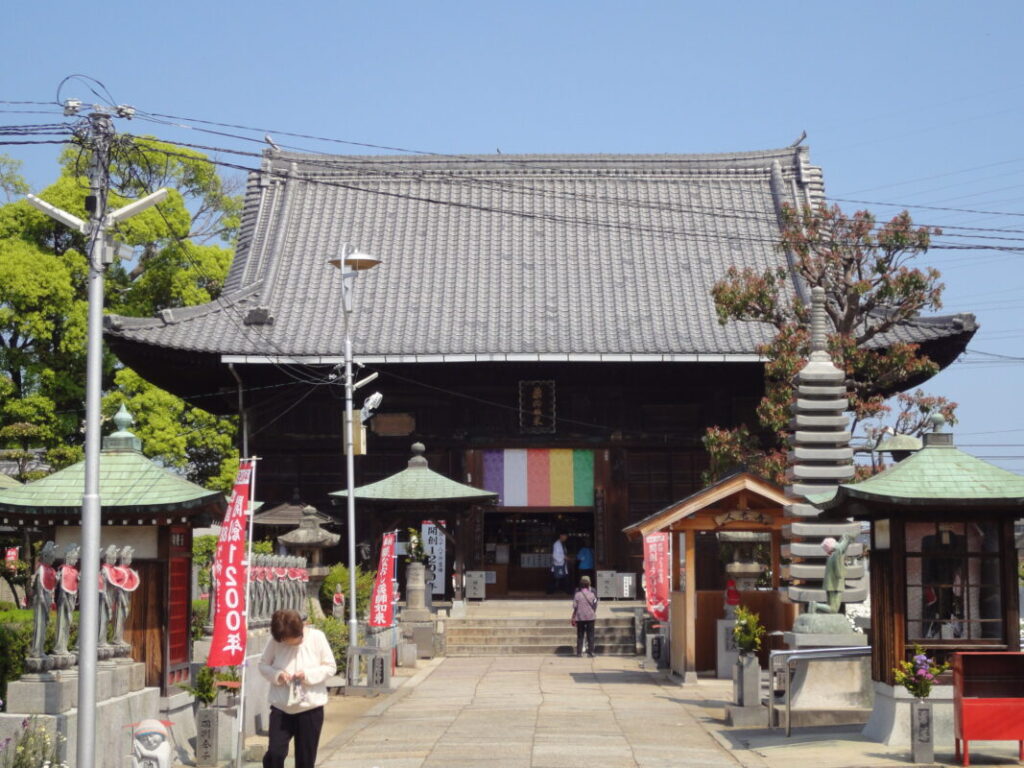
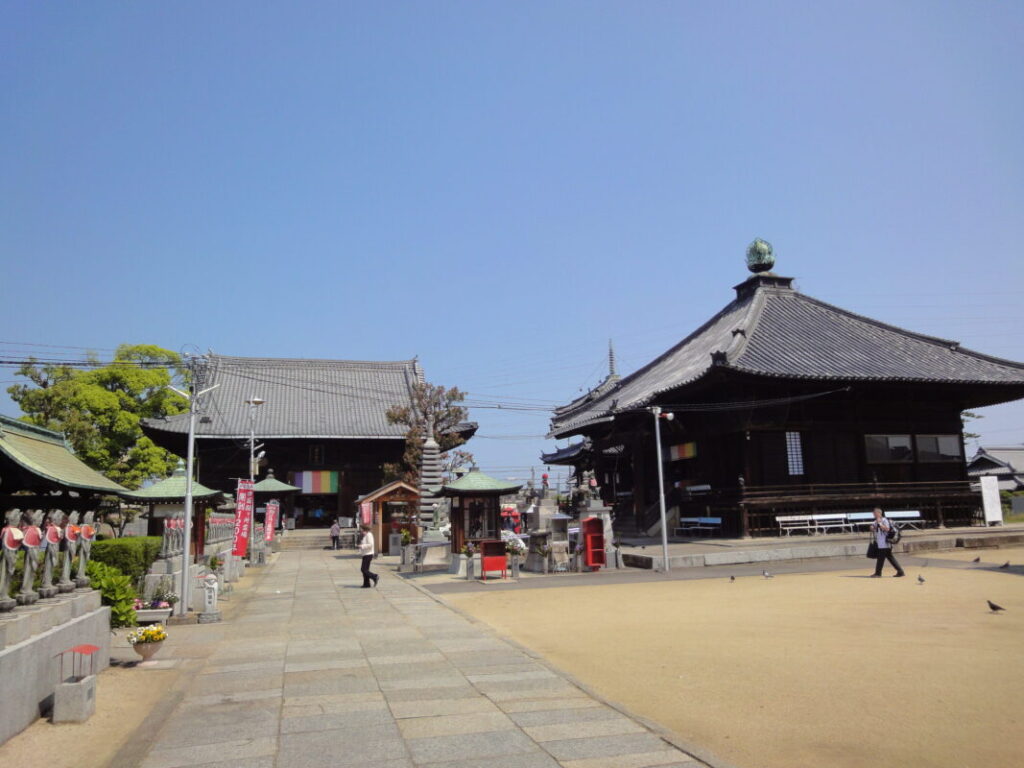
I arrived at Doryu-ji at 10:00 a.m.
The temple grounds are mostly flat, with few steps, making them easy to explore on foot.
The most striking feature is the row of 255 Kannon statues standing throughout the grounds. These slender statues, each just under a meter tall, are dressed in a variety of ways. Some wear red padded vests, while others have prayer beads draped around them.
Each statue has its own distinctive character, making them fascinating to look at one by one.
Doryu-ji is also known as the temple of Yakushi Nyorai, the Buddha of Healing, who is believed to help restore eyesight. Many visitors come here to pray for relief from eye ailments. Faith in the principal image of Yakushi Nyorai has been passed down through the generations.
The Final Temple on the Seven-Temple Pilgrimage
Doryu-ji is also the final temple on the Nanakasho-mairi, the Seven-Temple Pilgrimage that begins at Iyadani-ji.
This pilgrimage visits temples closely connected to Kobo Daishi’s childhood and family. By completing the route at Doryu-ji, pilgrims can gain a deeper appreciation of the history surrounding his birth and early life.
Following my visit to Konzo-ji, I once again had the opportunity to discover the rich history associated with Kobo Daishi.
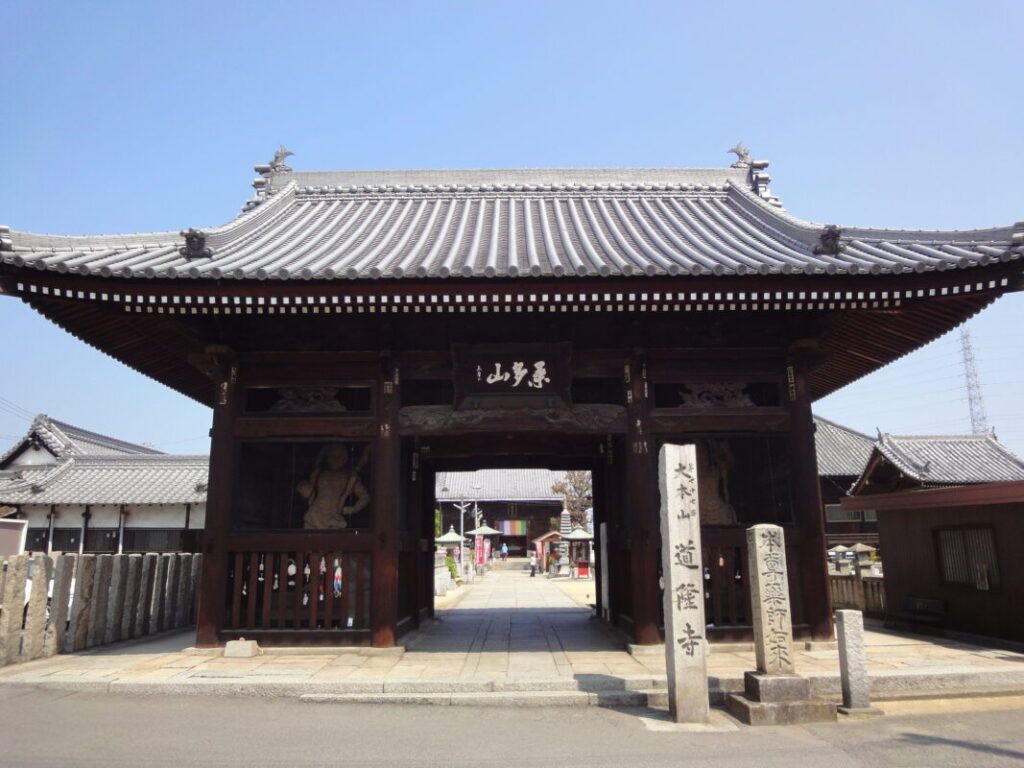
On to Temple 78: Gosho-ji
Gosho-ji lies about 7 km northeast of Doryu-ji.
The route along Prefectural Routes 21 and 33 is relatively easy to follow, taking me through the urban area around JR Marugame Station.
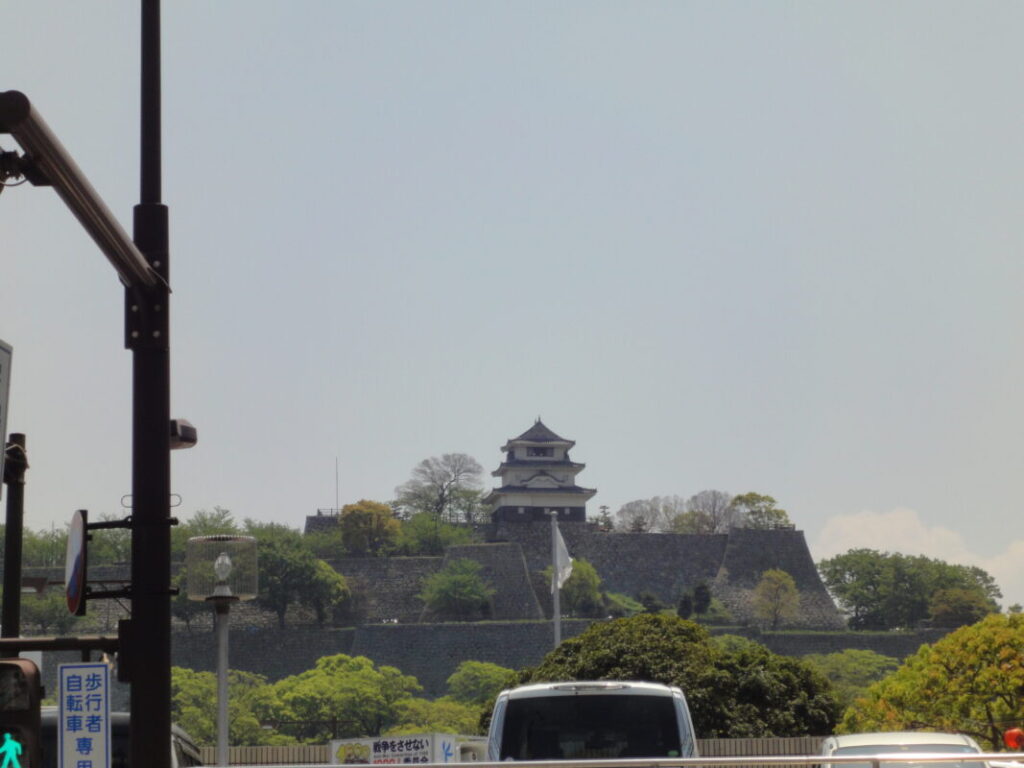
There are plenty of restaurants and accommodation options along the way, making this a convenient area for walking pilgrims. At certain points, I can also catch glimpses of Marugame Castle, enjoying the scenery of this historic castle town as I walk.
Sanuki Udon at Ubushina Shrine
I decided to stop for lunch at Ubushina Shrine, located near Gosho-ji.
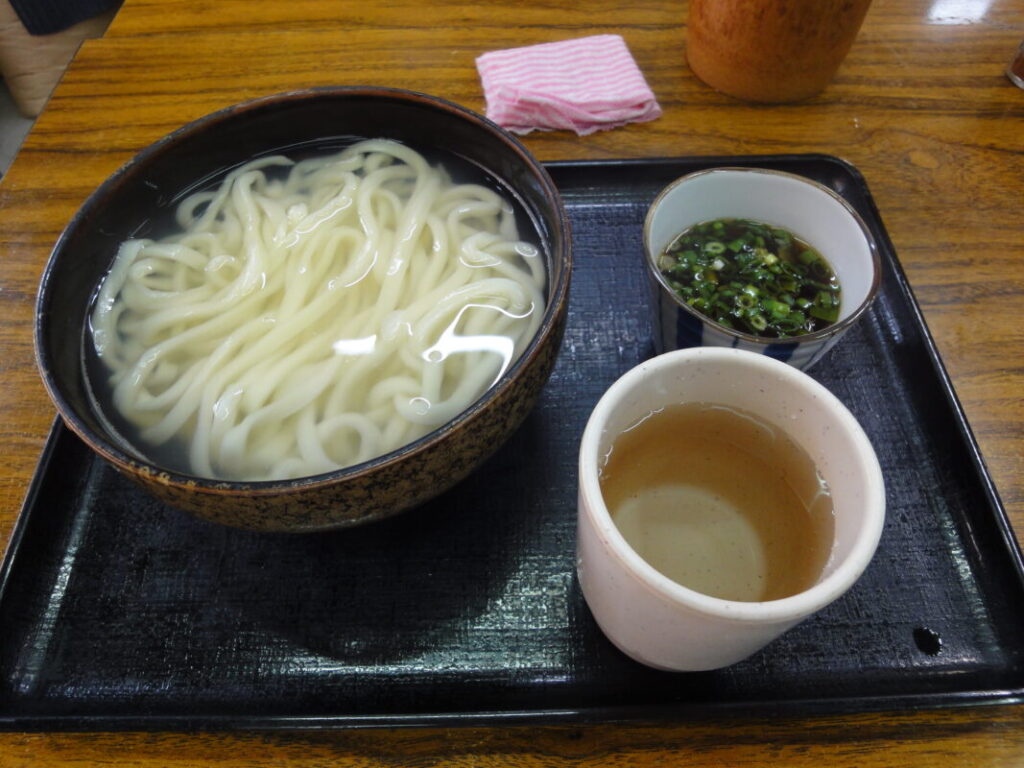
Unusually, there is a udon restaurant within the shrine grounds. I heard that the chief priest himself makes the noodles.
Entering through a distinctive gateway surrounded by stone monuments, I found myself in a calm, historic-looking space.
The Sanuki udon I was served had a satisfyingly firm texture, with smooth noodles that slipped easily down my throat.
One of the great pleasures of walking the Shikoku Pilgrimage is being able to enjoy local food and experience the unique character of each region along the way.
Visiting Temple 78: Gosho-ji
Views of the Seto Inland Sea from the Hilltop
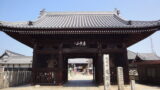
As I walked through a residential neighborhood, the main gate of Gosho-ji suddenly came into view.
I arrived at Gosho-ji at 1:00 p.m.
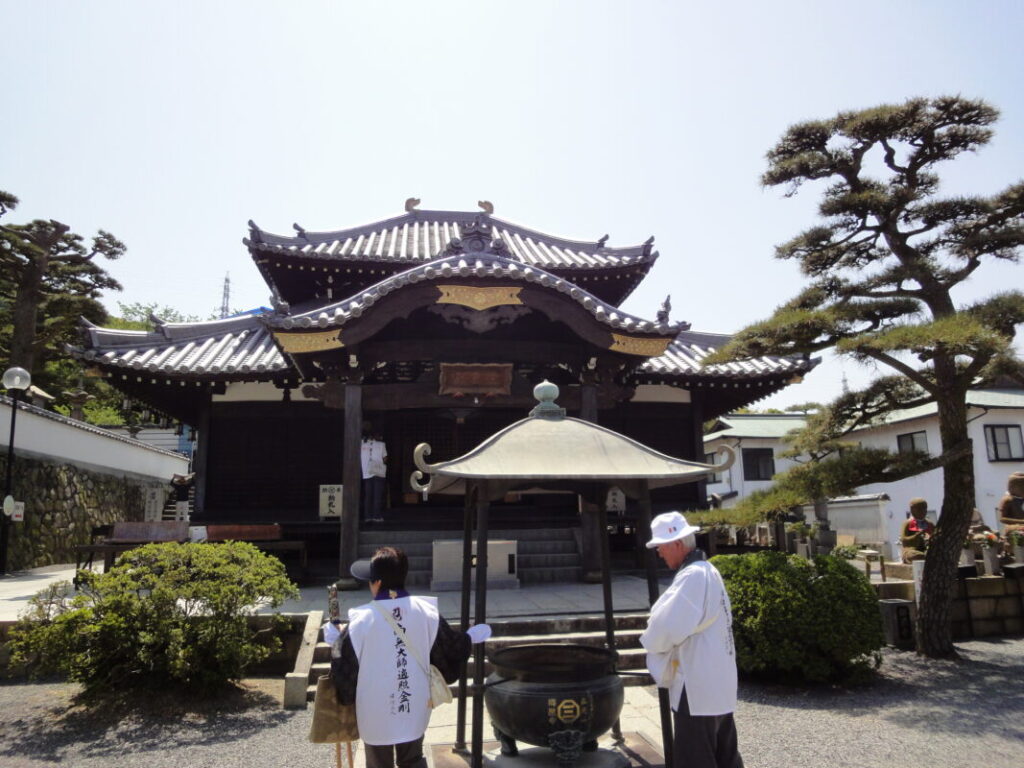
Following a narrow approach that climbs gently uphill, I found myself in temple grounds far more spacious than I could have imagined from the outside. Behind the temple, the green slopes of Mount Aonoyama spread out, while the elevated grounds offer views of the Seto Ohashi Bridge and the Seto Inland Sea.
The area around the main hall was beautifully landscaped with pine trees and azaleas. The grounds were meticulously maintained, making my visit a pleasant and peaceful experience.
The Daishi Hall and the Mantai Kannon Cave
To reach the Daishi Hall, I climbed the steps behind the main hall.
The covered corridor leading to the Daishi Hall features beautiful paintings on the ceiling, making it well worth a closer look.
What left an even stronger impression on me was the Mantai Kannon Cave, which descends underground beside the Daishi Hall.
At the bottom of the stairs, I found myself in a mysterious space lined with countless statues of Kannon, the bodhisattva of compassion. The air was cool, and a profound stillness filled the underground chamber, creating an atmosphere completely different from the world above.
The Mantai Kannon Cave is one of the highlights that I would highly recommend visiting at Gosho-ji.
On to Temple 79: Tenno-ji
Tenno-ji lies about 6 km east of Gosho-ji.
After leaving Gosho-ji, I walked about 1 km east until I came to an elevated section of National Route 30. Turning right at the three-way intersection led me onto an old highway. There were signposts along the way, making the route relatively easy to follow.
There are plenty of restaurants along this old road, so finding somewhere to eat is not a problem.
Along the way, I passed through an arcade shopping street stretching for about 500 meters. When I visited, many of the shops were closed, giving the area a somewhat deserted feel.
Continuing onward, I spotted a mountain on my right. The route then wound along the foot of the mountain, eventually leading me to Tenno-ji.
I arrived at 2:50 p.m.
The Triple Torii Gate and Shiramine-gu Shrine
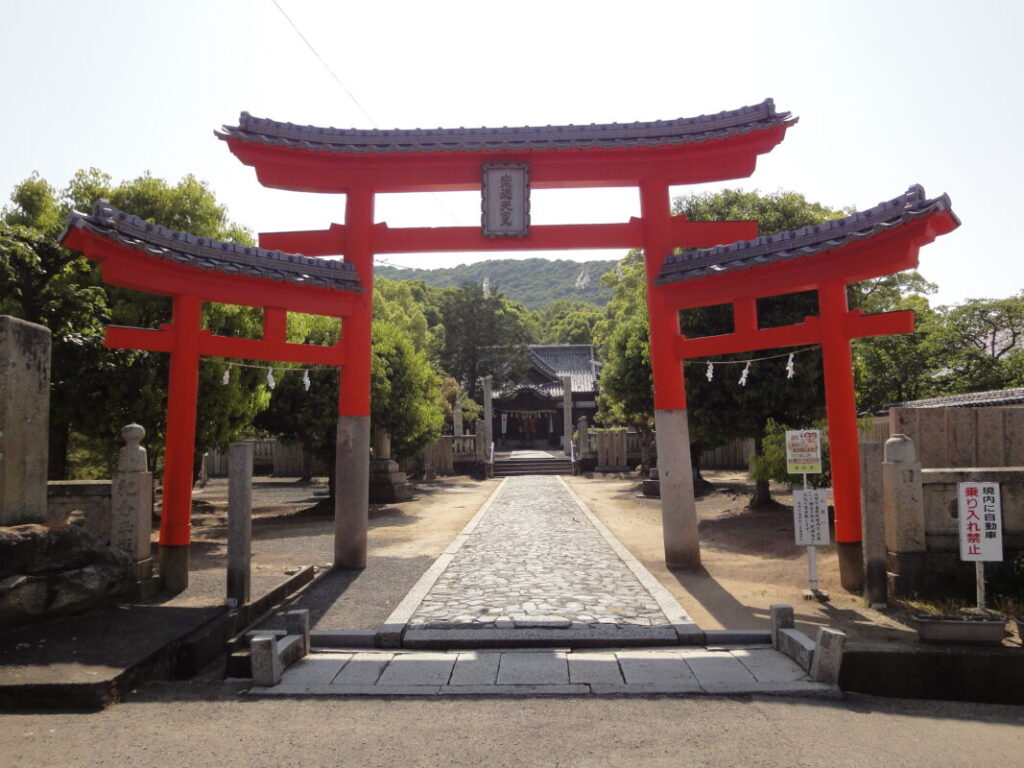
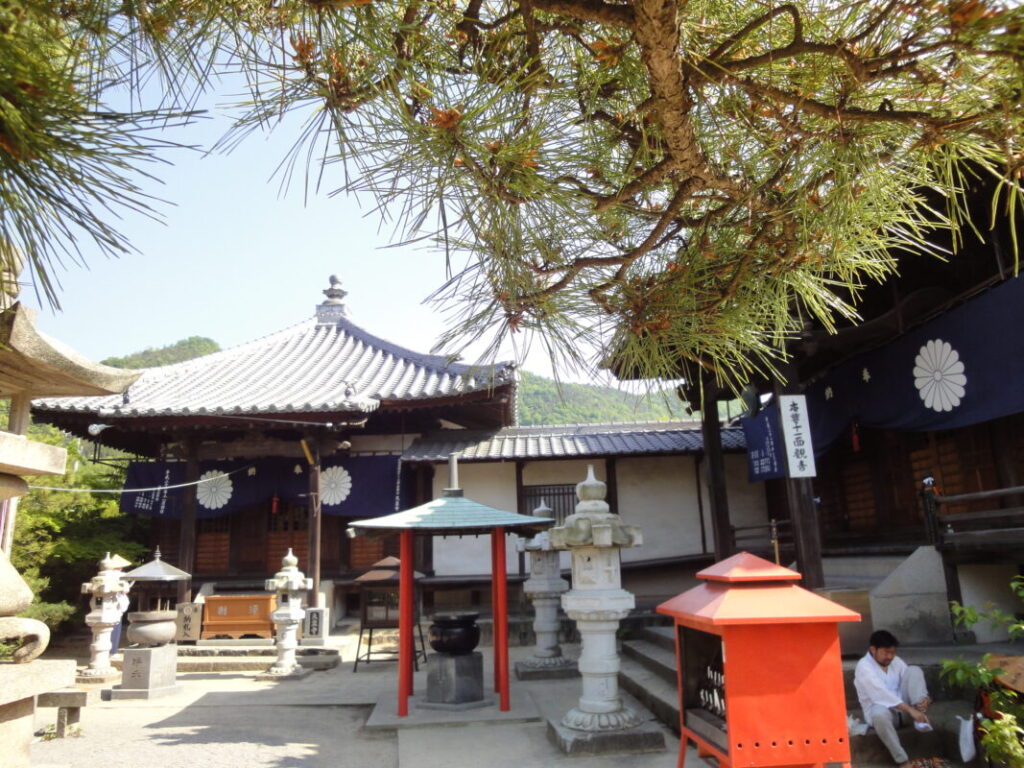
The most striking feature within the grounds of Tenno-ji is the vermilion miwa torii, a distinctive triple torii gate.
This gate belongs to Shiramine-gu Shrine, which stands within the temple grounds. It has the same unusual design as the torii at Omiwa Shrine in Nara Prefecture and is considered evidence of the influence of Miwa Shinto traditions.
The unique setting, where a Buddhist temple and a Shinto shrine stand side by side, is one of the distinctive features of Tenno-ji.
Yaso-ba Spring and the Origins of Tenno-ji
Yaso-ba, the area where Tenno-ji is located, has long been known as a place of sacred spring water.
According to legend, 80 warriors set out to defeat a monstrous fish that was terrorizing the waters of the Nankai region. When they suffered from its poison, they drank water from this spring and recovered immediately.
The spring is said to have acquired the name Yaso-ba no Shimizu, meaning the sacred spring of Yaso-ba, from this story.
A Local Tradition of Tokoroten Along the Approach
Shimizu-ya, located near Tenno-ji, is famous for its tokoroten, a traditional jelly-like dish made from agar, prepared using water from the Yaso-ba spring.
It remains popular with pilgrims and other visitors as a local specialty to enjoy along the pilgrimage route.
I was in a hurry to continue my journey this time and didn’t have the chance to stop and enjoy it at leisure. If time allows, sampling local specialties like this along the way would be a wonderful part of the pilgrimage experience.
On to Temple 80: Kokubun-ji
After finishing my visit to Tenno-ji, it was already past 3 p.m.
Kokubun-ji, the next temple, was about 6 km to the east. It was going to be a close call whether I could arrive before the temple office closed for the day.
I couldn’t afford to lose time by taking a wrong turn here. Checking the route as I went, I picked up my pace and set off.
After leaving Tenno-ji, I headed east along the JR Yosan Line. About 2 km ahead, near Kamogawa Station, I crossed the railway tracks at a level crossing.
National Route 11 offers a shortcut to Kokubun-ji, but caution is needed because this stretch is a bypass. A prefectural road leading toward Kokubun-ji branches off from the sidewalk on the left side of the road, so I made sure to check for traffic before proceeding.
Once on the prefectural road, I could see JR Kokubu Station on my right and a sign pointing toward Kokubun-ji on my left.
Preparing for the Goshikidai Mountains
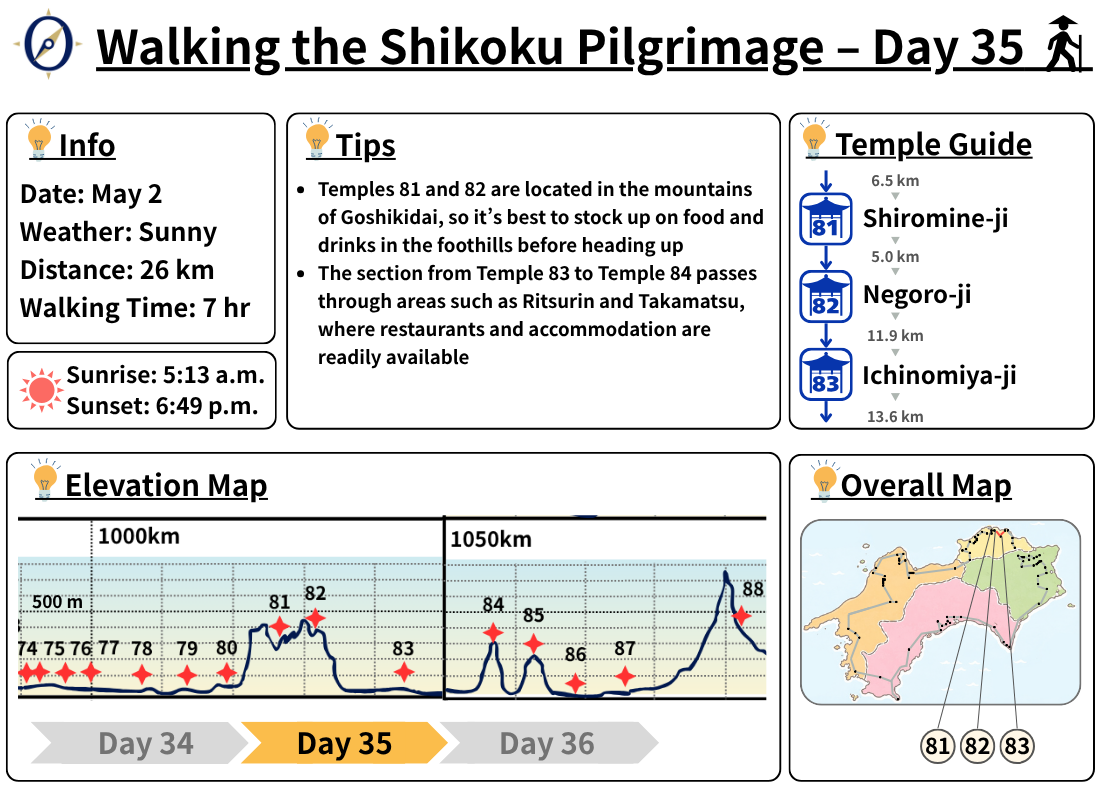
Ahead lay the mountainous section of the pilgrimage route across Goshikidai, where I would visit Temple 81, Shiramine-ji, and Temple 82, Negoro-ji.
The route climbs to an elevation of around 400 meters, making this one of the major challenges of the pilgrimage in Kagawa Prefecture.
It is reassuring to have drinks and snacks ready before entering the mountain trails. I wanted to check that I had everything I needed while making my way to Kokubun-ji.
Visiting Temple No. 80, Kokubun-ji
At 4:30 p.m., I finally managed to reach Kokubun-ji Temple.
Beautifully Landscaped Grounds with Japanese Black Pines
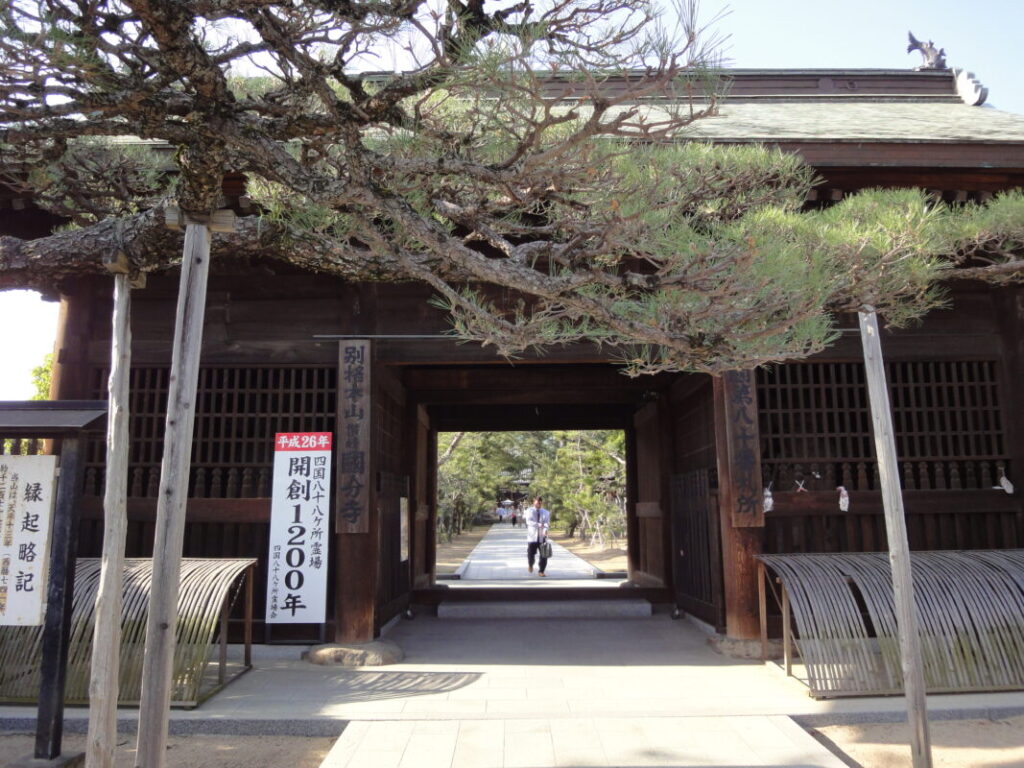
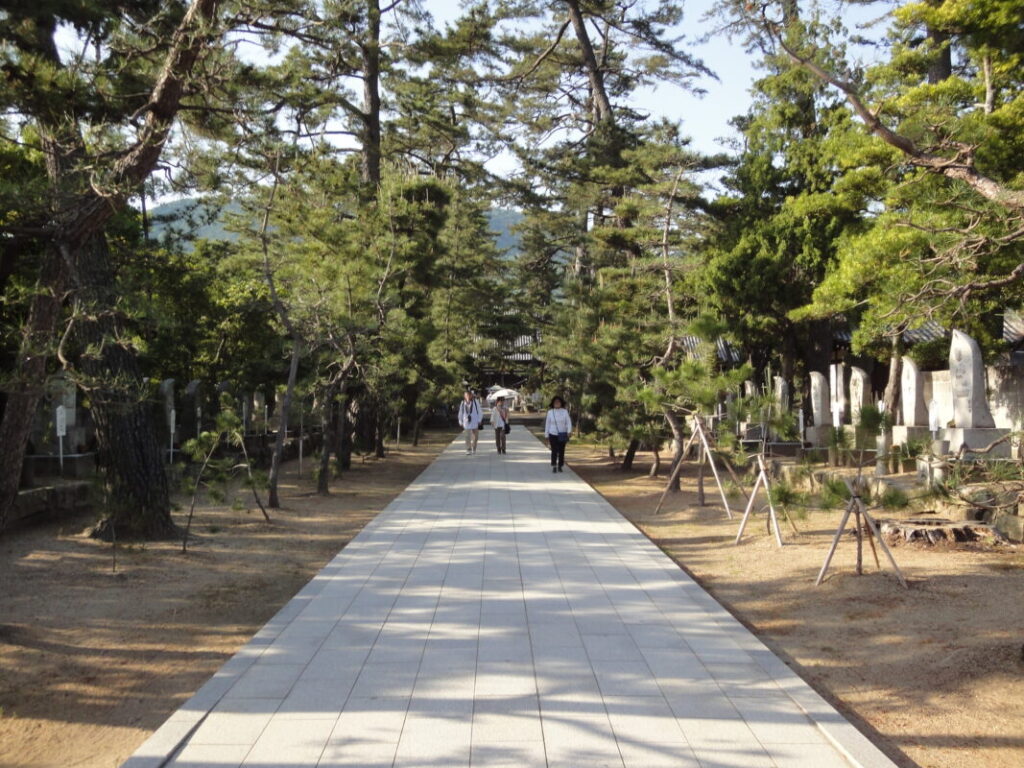
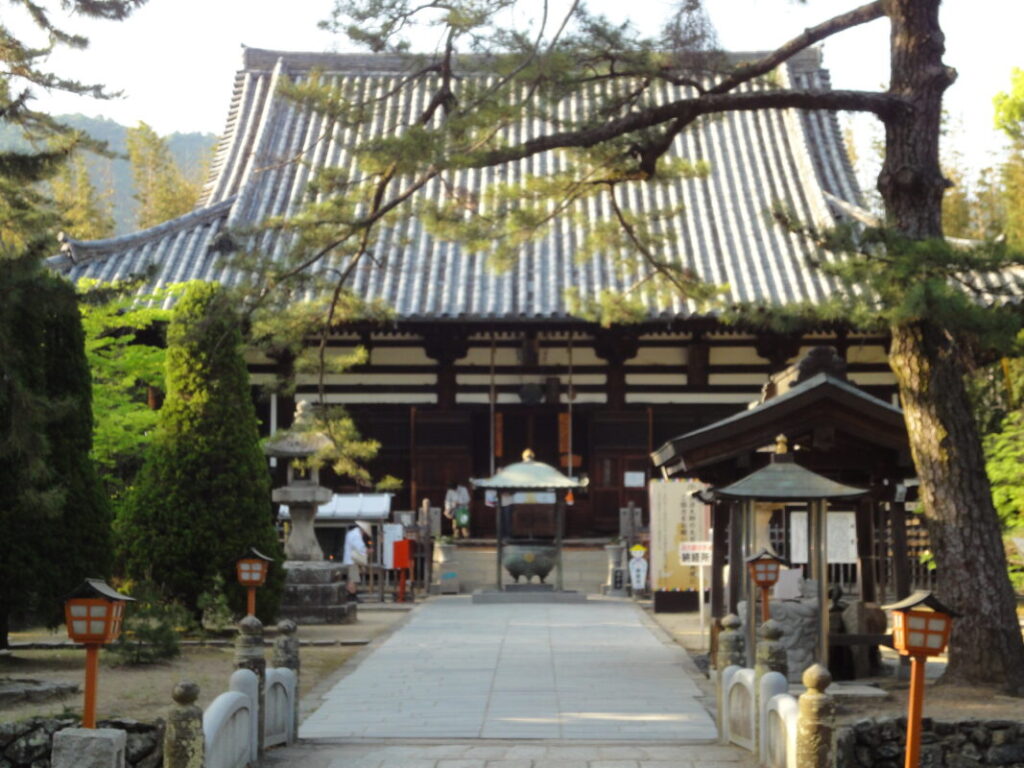
The first thing that caught my attention at Kokubun-ji was the magnificent Japanese black pine trees planted throughout the temple grounds.
From the temple entrance along the approach to the main hall, carefully maintained pine trees lined the grounds, creating a calm atmosphere befitting a temple with such a long history.
In addition to the large, mature pines, there were also young saplings planted around the grounds.
It gave me the impression that a landscape nurtured over many centuries was being carefully preserved and passed on to future generations.
The Main Hall Rebuilt During the Kamakura Period
The current main hall was rebuilt in the mid-Kamakura period (around the 13th century) and is an important historical structure.
It features sangaramato lattice doors at both the front and rear, preserving architectural elements from an earlier era.
Standing before a building with such a long history, I could truly appreciate how this place had been protected as a site of worship for hundreds of years.
One of the Oldest Bells in the Shikoku Pilgrimage
Kokubun-ji is home to a historic bell considered to be among the oldest in the Shikoku 88 Temple Pilgrimage.
If you wish to ring the bell, a voluntary contribution of 100 yen is required. Being able to sound a bell with such a long history with my own hands is a rare and memorable experience.
Be Sure to Check the Visiting Hours
Kokubun-ji allows visitors to enter the temple grounds until 4:30 p.m., and admission costs 200 yen.
Visiting hours and admission rules vary from one temple to another. If you plan to arrive late in the afternoon, it is especially important to check the details in advance.
Heading to Goshikidai
By the time I finished visiting Kokubun-ji, I was already feeling quite exhausted.
During the second half of the day, I had picked up the pace to make sure I reached each temple before the reception hours ended. The extra effort had taken its toll on my body. Still, knowing that another temple was relatively close by made me want to keep going.
Perhaps this is one of the unique features of Kagawa Prefecture, where the distances between pilgrimage temples are relatively short.
I had not decided where to spend the night, but considering the following day’s itinerary, I wanted to cover as much distance as possible. I therefore decided to camp out at the Goshikidai Rest Area, which lies along the route to Shiromine-ji.
Summoning the last of my strength, I set off again, hoping to arrive before sunset.
The Climb to Goshikidai
Goshikidai is a mountainous section where the elevation rises by as much as approximately 400 meters from the area around Kokubun-ji. It is one of the more challenging climbs in Kagawa Prefecture.
Leaving Kokubun-ji, I headed north and gradually climbed higher. It was by no means an easy route for my already tired body.
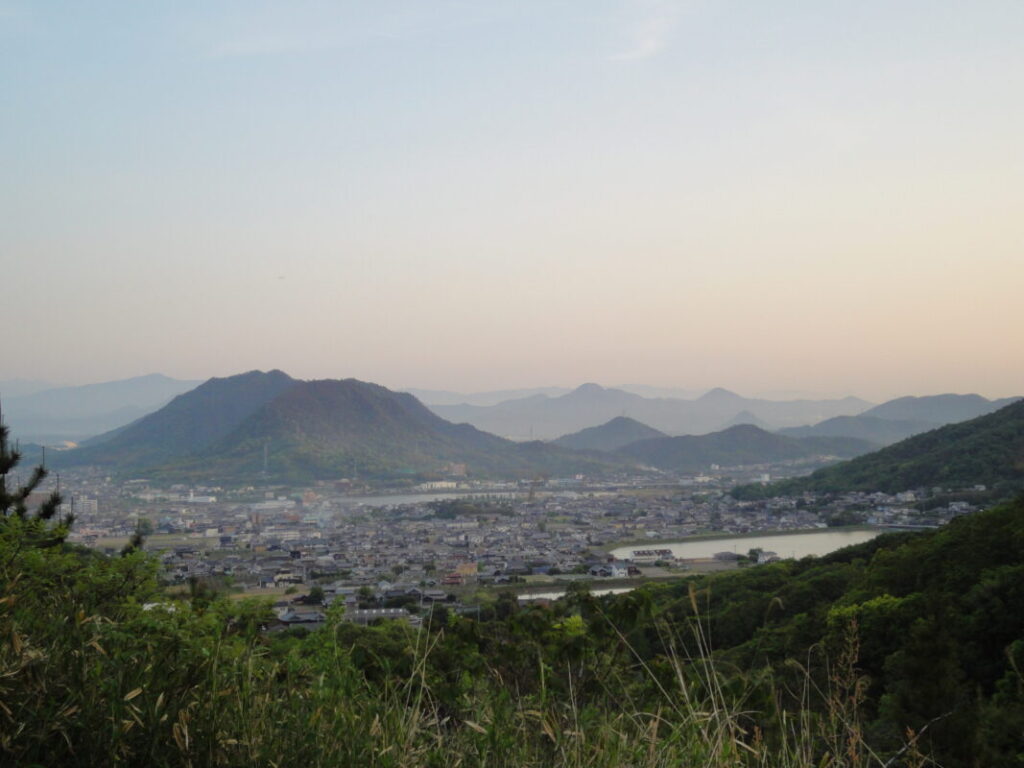
However, when I looked back along the way, I was rewarded with views of terraced fields, Sanuki Fuji, and the Sanuki Plain stretching out below.
Looking down at the towns I had walked through from higher ground gave me a real sense of how far I had climbed. Despite my fatigue, views like these gave me the motivation to keep going a little farther.
Beyond a cemetery, I reached a fork in the road and turned left, where the proper mountain trail began.
With sunset approaching, I hurried onward while watching my footing carefully.
Spending the Night at Goshikidai Rest Area
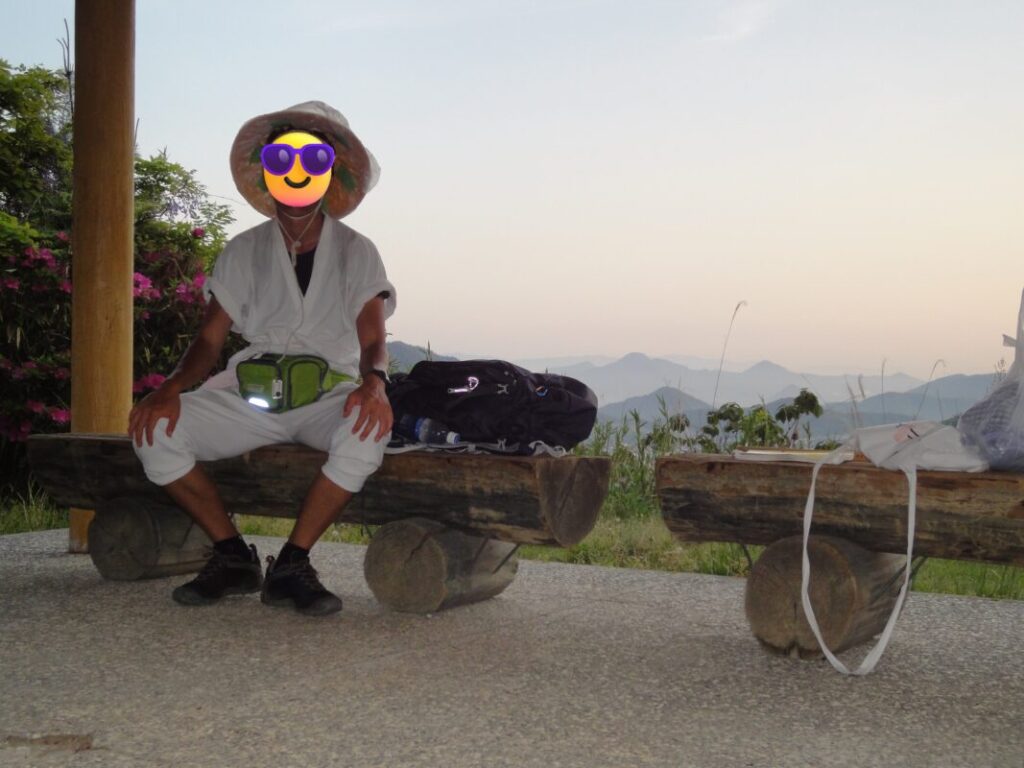
At 6:30 p.m., I finally reached the Goshikidai Rest Area, just before the sun had completely set.
From the covered rest area, I could enjoy sweeping views of the towns and countryside of Sanuki.
The landscape bathed in the evening light was beautiful, and this spot also offers impressive views around sunrise. With few artificial lights nearby, the area can also provide a magnificent star-filled sky on a clear night.
Looking back on the day, it had been a rewarding one, beginning with the morning Buddhist service at Zentsu-ji and continuing through Konzo-ji, Doryu-ji, Gosho-ji, Tenno-ji, and Kokubun-ji. I had visited six temples in total.
Along the way, I had also experienced the kindness of o-settai when someone gave me a handmade Jizo statue. I enjoyed Sanuki udon and encountered the history and culture of each temple.
On the other hand, I had rushed through the latter half of the day to beat the temple reception deadlines, leaving me considerably exhausted. Even when the temples are close together, pushing too hard to get farther ahead is something to think twice about.
Tomorrow, I would cross Goshikidai and make my way toward Shiromine-ji, Temple No. 81, and Negoro-ji, Temple No. 82.
Temple Information
- No. 75
- No. 76
- No. 77
- No. 78
- No. 79
- No. 80
- No. 81


Comments