
Are you planning to walk the Shikoku Pilgrimage between summer and early autumn? Typhoon season can dramatically change trail conditions, turning ordinary routes into potentially dangerous environments. This guide explains real risks, actual experiences, and practical safety strategies for pilgrims.
- Typhoon Risks for the Shikoku Pilgrimage: A 10-Year Analysis
- Real Experience: The Reality of Encountering a Typhoon During the Shikoku Pilgrimage
- Gear and Waterproofing Measures for the Shikoku Pilgrimage in Typhoon Conditions
- Dangerous Situations and Mistakes That Can Occur During a Typhoon on the Shikoku Pilgrimage
- Still Dangerous After the Typhoon Passes: Hidden Risks on the Pilgrimage Route
- Important Information-Gathering Methods During the Shikoku Pilgrimage in Typhoon Season
- Pausing the Pilgrimage or Staying Multiple Nights Is a Strategy
- Typhoon Risks by Terrain Type (Coastal Areas and Mountain Areas)
- Conclusion: The Most Important Mindset for the Shikoku Pilgrimage During Typhoon Season
- Related Article
Typhoon Risks for the Shikoku Pilgrimage: A 10-Year Analysis
Looking at pilgrimage risks based on typhoon data from the past 10 years, Japan is affected by typhoons almost every year, with a clear tendency for typhoons to form, approach, and make landfall especially between July and October.
According to statistics from the Japan Meteorological Agency (1991–2020 climatological normals), an average of about 25 typhoons form annually, of which around 11–12 approach Japan and about 3 make landfall.
This indicates that Japan is a region highly exposed to typhoons, and it is necessary to carefully consider its compatibility with the Shikoku Pilgrimage, which involves long-distance travel.
Monthly Trends in Typhoon Formation, Approach, and Landfall in Japan
According to past statistics, the following trends can be observed regarding typhoon activity affecting Japan:
- Typhoon formation: approx. 25 per year
- Typhoon approaches to Japan: approx. 11–12 per year
- Typhoon landfalls in Japan: approx. 3 per year
| Month | Formation | Approach | Landfall |
|---|---|---|---|
| Jan | 0.3 | 0.0 | 0.0 |
| Feb | 0.3 | 0.0 | 0.0 |
| Mar | 0.3 | 0.0 | 0.0 |
| Apr | 0.6 | 0.2 | 0.0 |
| May | 1.0 | 0.7 | 0.0 |
| Jun | 1.7 | 0.8 | 0.2 |
| Jul | 3.7 | 2.1 | 0.6 |
| Aug | 5.7 | 3.3 | 0.9 |
| Sep | 5.0 | 3.3 | 1.0 |
| Oct | 3.4 | 1.7 | 0.3 |
| Nov | 2.2 | 0.5 | 0.0 |
| Dec | 1.0 | 0.1 | 0.0 |
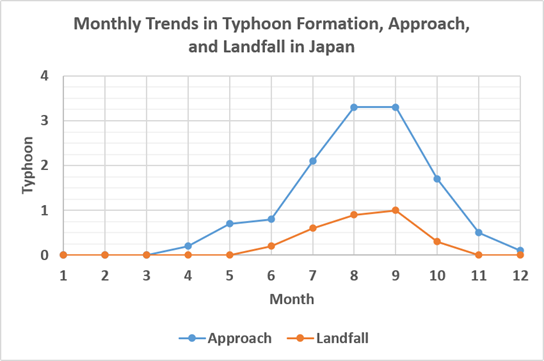
(Average values per year)
Source: Japan Meteorological Agency (1991–2020 climatological normals)
Estimated Typhoon Encounters During the Pilgrimage
Because raw data on typhoon formation and approach alone can be difficult to interpret in practical terms, this section estimates the likelihood of experiencing typhoon impacts during the pilgrimage based on the duration of the journey, expressed as an “expected value.”
| Start Month | Walking Pilgrimage (50 days) | Car Pilgrimage (12 days) |
|---|---|---|
| June | approx. 0.5 times | approx. 0.1 times |
| July | approx. 1.0 time | approx. 0.3 times |
| August | approx. 1.5 times | approx. 0.5 times |
| September | approx. 1.3 times | approx. 0.5 times |
| October | approx. 0.6 times | approx. 0.2 times |
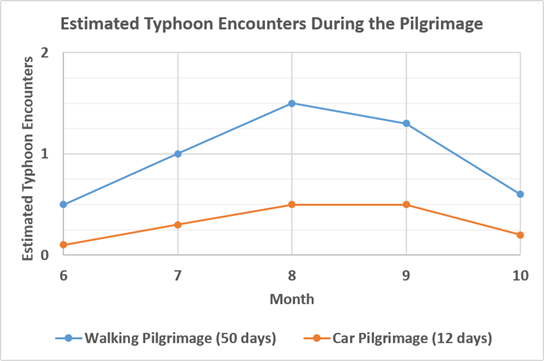
As shown in the table, starting a walking pilgrimage between July and September indicates a relatively high probability of encountering at least one typhoon-related disruption during the journey. Even for car-based pilgrimages, the expected exposure remains significant.
Note: Methodology for calculating expected typhoon exposure is provided here.
Conclusion from the Data
Therefore, when planning a Shikoku Pilgrimage between July and September, it is necessary to assume that encountering typhoons is likely and to develop an action plan accordingly.
Rather than simply considering whether typhoons can be avoided, it is more important to prepare in advance for how to respond safely in the event of encountering one.
Real Experience: The Reality of Encountering a Typhoon During the Shikoku Pilgrimage
When you actually encounter a typhoon while on the Shikoku Pilgrimage, the situation can be completely different from what you might expect in advance. Even if the weather forecast indicates “heavy rain and strong winds,” conditions on the ground can reach a level where movement itself becomes extremely difficult.
Below is a description of what it is like to experience a typhoon during the pilgrimage.
Strong Winds and Torrential Rain That Make Walking Impossible
In mountainous and coastal areas during an approaching typhoon, the combination of strong winds and heavy rain can make normal walking extremely difficult.
In particular, strong crosswinds can feel as if your body is being pushed backward, making it hard to move forward at all. In addition, extremely heavy rainfall severely reduces visibility, which also interferes with navigating the route.
In such conditions, prioritizing safety over covering distance becomes the norm.
The Impact of Wind on a 10kg Backpack
It is common for pilgrims to carry around 10kg of gear, but during a typhoon this backpack becomes a major burden.
Because backpacks present a large surface area to the wind, they can easily be caught by gusts, destabilizing the body and making it easy to lose balance.
Unlike ordinary strong winds, typhoons bring intermittent gusts, making it extremely difficult to maintain a steady walking rhythm.
The Reality of Rain That Even Rainwear Cannot Fully Prevent
During a typhoon, even high-performance rainwear may not fully protect you from the rain.
With prolonged heavy rainfall, the fabric can become saturated beyond its breathable limits, allowing moisture to gradually seep inside. In addition, wind pressure can turn rain into fine mist that enters through small gaps.
As a result, even with waterproof gear, it is difficult to remain completely dry, and it becomes essential to prioritize decision-making over relying solely on equipment.
Gear and Waterproofing Measures for the Shikoku Pilgrimage in Typhoon Conditions
During the Shikoku Pilgrimage in a typhoon, “waterproofing your equipment” is just as important as deciding whether to continue traveling. In prolonged wind and rain, if clothing or electronic devices get wet, it can become difficult to continue the journey, so proper preparation greatly affects overall safety.
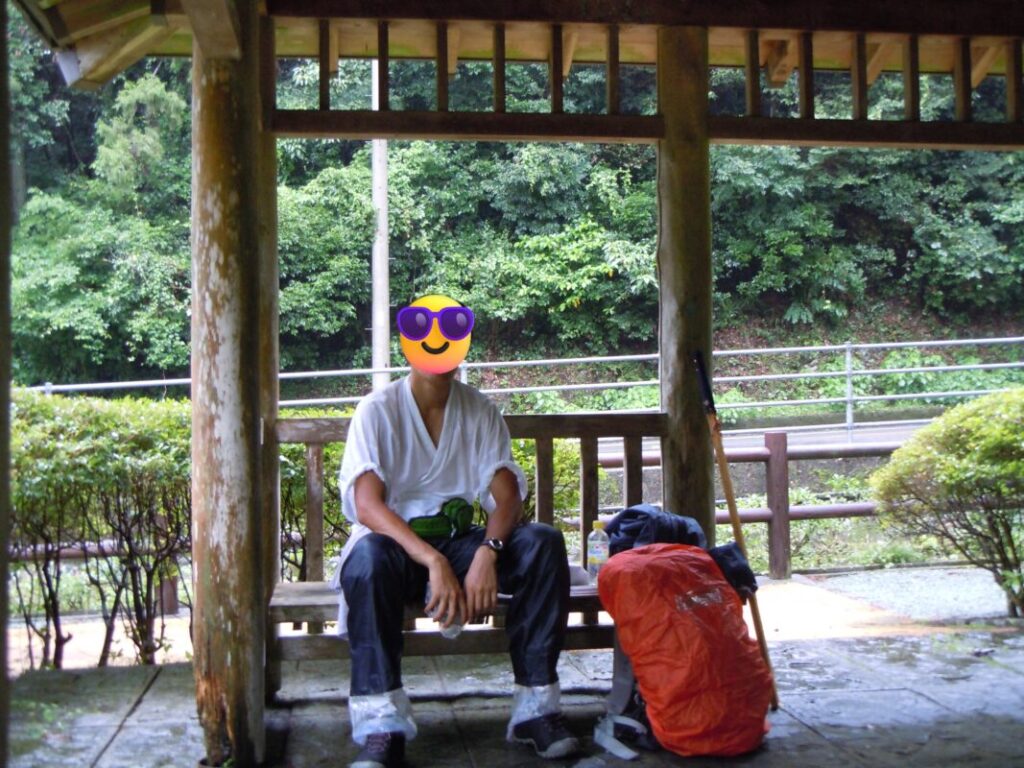
In actual typhoon encounters, appropriate waterproof measures made it possible to prevent water damage to luggage.
Using a Poncho to Cover Both You and Your Backpack
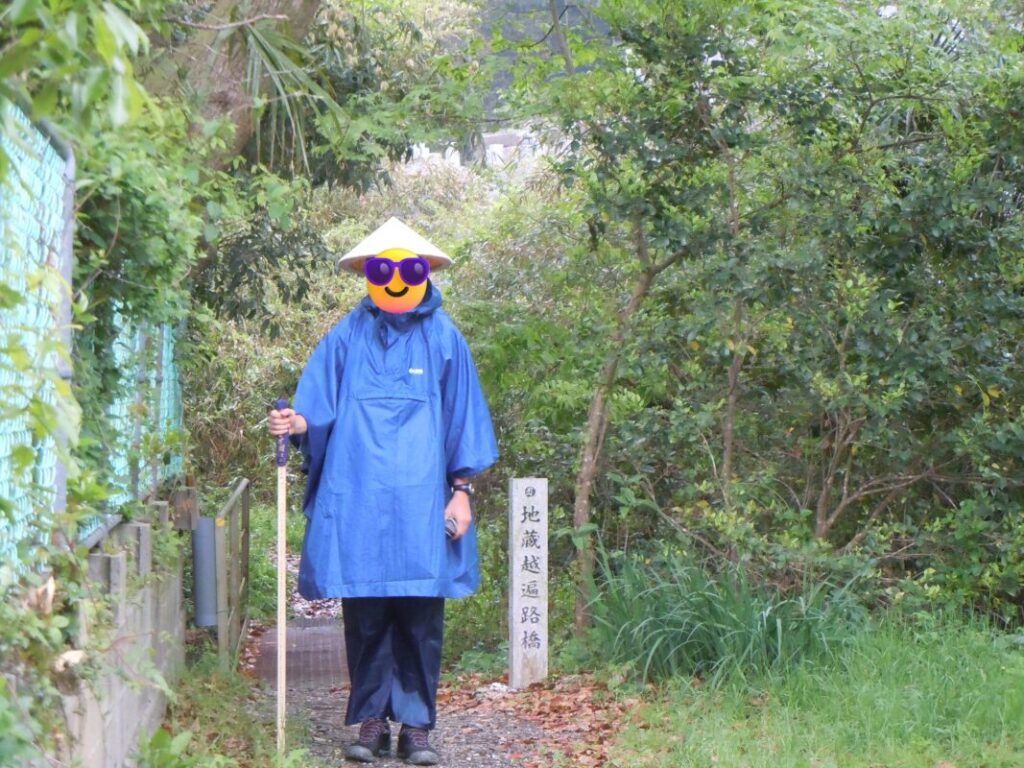
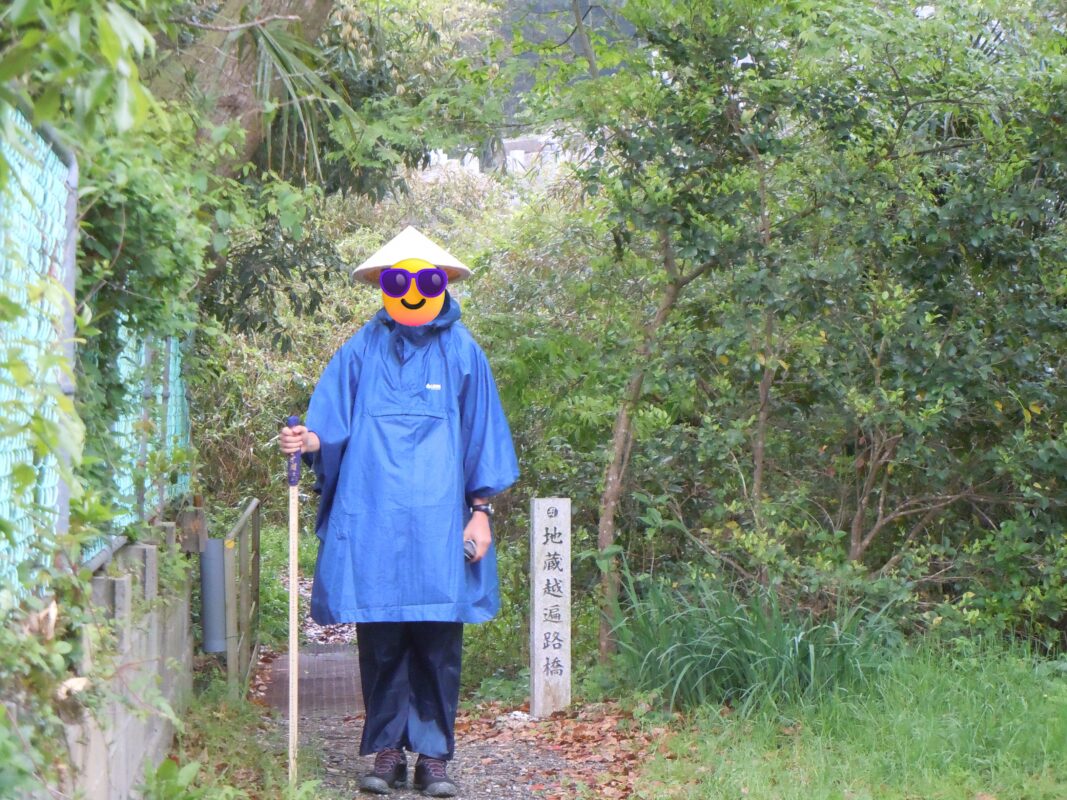
In typhoon conditions, it is more effective to use a poncho instead of a standard rain jacket, covering both your body and your backpack together.
This helps reduce not only rainfall from above but also wind-driven rain from the sides, significantly minimizing water exposure to the backpack.
For walking pilgrims in particular, who travel for long periods, it is important to choose a poncho that balances breathability and waterproof performance.
Backpack Waterproofing (Rain Cover Required)
It is essential to always use a rain cover for your backpack.
Because a poncho alone cannot fully prevent rainwater or wind-driven intrusion, combining it with a rain cover provides a more effective double-layer waterproof system.
It is also advisable to choose a cover that can be securely fastened so it does not come off in strong winds.
Internal Waterproofing (Zip Bags and Plastic Separation)
Waterproofing the inside of the backpack is just as important as protecting the outside.
Clothing, towels, and other items should be stored in separate plastic bags to minimize damage even if water enters the backpack.
By individually packing items that must stay dry, you can continue traveling safely even in prolonged bad weather.
Protecting Electronics and the Pilgrimage Stamp Book (Nōkyōchō)
Important items such as smartphones, mobile batteries, and the pilgrimage stamp book (nōkyōchō) should always be stored in waterproof bags such as zip-lock bags.
Since these items are difficult to replace once damaged, they should be given top priority in waterproofing measures.
In particular, electronic devices are highly vulnerable to water damage, so it is recommended to use double-bag protection for extra safety.
Dangerous Situations and Mistakes That Can Occur During a Typhoon on the Shikoku Pilgrimage
During a pilgrimage while a typhoon is approaching, thoughts such as “I can still walk” or “I only need to go a little farther to reach my accommodation” can ultimately lead to dangerous situations. When weather conditions are changing rapidly, continuing to travel with a normal mindset becomes extremely risky.
Below is an account of situations that arose from attempting to continue moving despite worsening conditions.
How I Became Unable to Continue While Trying to Reach My Destination
At first, I thought, “I can still keep walking,” and “The next accommodation isn’t that far away,” so I continued toward my destination. However, as the typhoon intensified, the wind and rain suddenly became much stronger, and eventually walking itself became extremely difficult.
The biggest problem was the decision to “keep moving while it’s still possible.” As a result, I ended up in an awkward situation where moving forward became difficult, but turning back was no longer a realistic option either, creating a highly dangerous situation.
From this experience, I strongly realized that when weather conditions are deteriorating, the question should not be “Can I still keep going?” but rather “Can I reach the destination safely?”
Why I Ended Up Spending the Night Without Proper Shelter
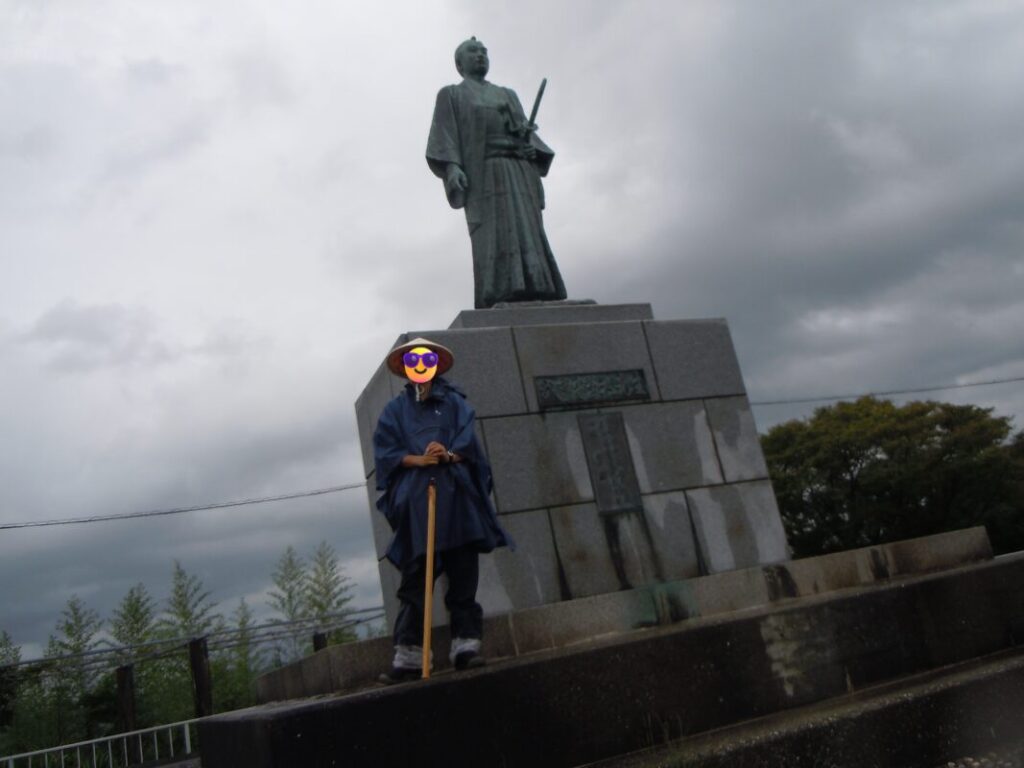
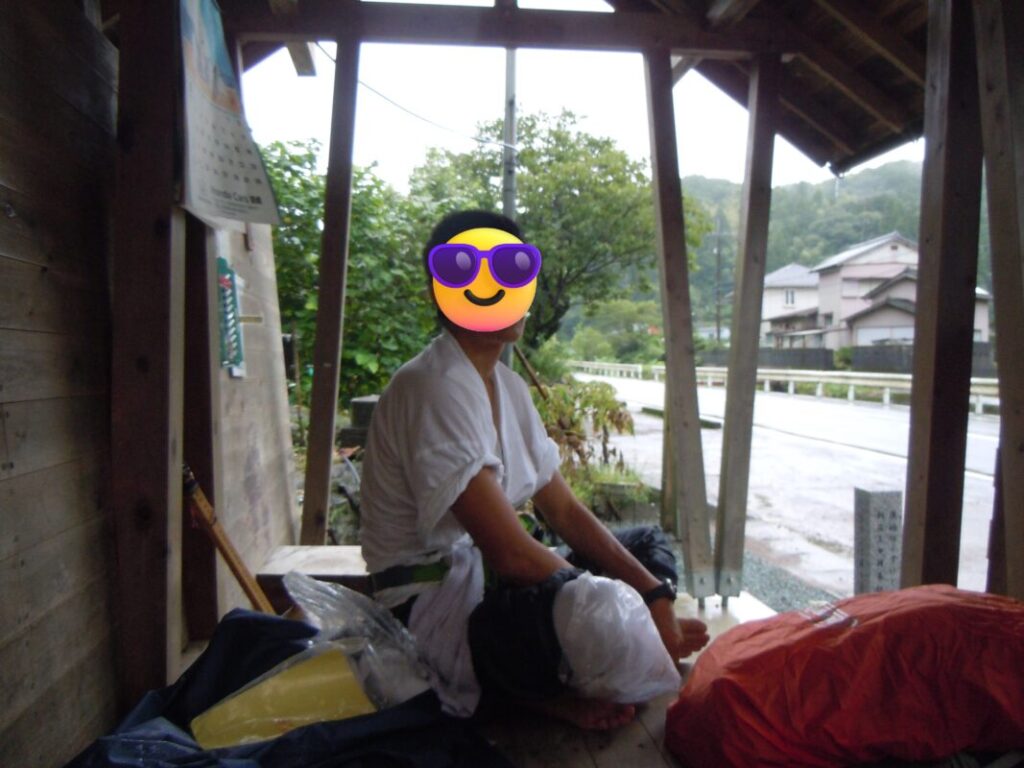
Once movement became difficult, I found myself in a situation where there were no nearby buildings or accommodations that could provide safe shelter.
In mountainous areas and rural roads, places to take shelter during a typhoon can be very limited. As a result, I had no choice but to spend the night temporarily in the minimum level of cover available from the wind and rain.
What I learned at that moment was that the mindset of “I’ll somehow manage once I reach the next town” does not work when severe weather conditions develop.
This experience strongly emphasized the importance of identifying potential evacuation or shelter locations in advance.
The Reality of Being Unable to Move During Sirens and Emergency Warnings
As the typhoon intensified, emergency warning sirens repeatedly echoed through the area.
However, despite those warnings, the combination of strong winds and torrential rain made movement nearly impossible, leaving me unable to leave my location. Patrol vehicles could be seen moving through the area, but conditions were not safe enough for independent travel.
This experience made me realize that during disaster-level weather conditions, even the decision to move at all can become dangerous.
Rather than pushing forward, making the decision to stay in a safe place at an early stage is often the better choice.
Still Dangerous After the Typhoon Passes: Hidden Risks on the Pilgrimage Route
Many people assume that once a typhoon has passed, the danger is over. However, during the Shikoku Pilgrimage, caution is still necessary even after the storm has gone.
In reality, various hazards can remain on the pilgrimage route long after the typhoon itself has passed.
This is especially true in mountainous areas or sections of the route that receive limited maintenance, where conditions may remain hazardous even after the weather improves.
Risks of Fallen Trees and Landslides
On pilgrimage routes after a typhoon, strong winds and heavy rainfall can leave behind fallen trees and landslides.
Mountain paths in particular may appear normal at first glance, but the ground can remain unstable or softened beneath your feet, while slopes above the trail may also be at risk of collapse. For this reason, extra caution is necessary when using routes shortly after access has been reopened.
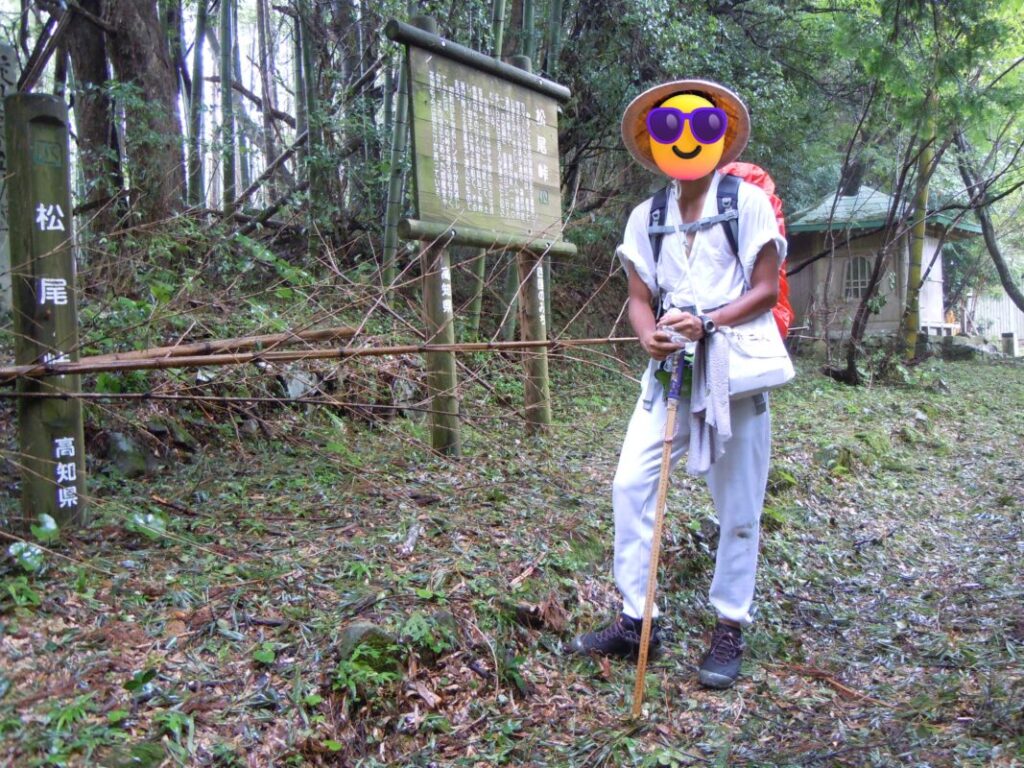
Another issue is that information about these hazards is not always shared in real time, and in some cases pilgrims only discover that a route is impassable after arriving on site.
Delays in Pilgrimage Route Information
Compared with major roads, updates regarding closures and restoration work on pilgrimage routes can often be delayed.
As a result, map applications and information gathered in advance may not always reflect current conditions, and it is not uncommon for pilgrims to discover route closures only after reaching the location.
This is especially challenging on mountain routes, where different sections are often managed by different local authorities, making centralized information difficult to maintain.
Why Paved Roads Should Be Prioritized
After a typhoon passes, prioritizing paved roads whenever possible is important for safety.
Paved roads are generally inspected and restored more quickly, making them more likely to be safe for travel. In contrast, mountain trails and older pilgrimage paths often remain vulnerable to hidden dangers such as fallen trees or unstable ground conditions that may not be obvious at first glance.
For this reason, it is important not to insist on following the traditional pilgrimage route at all costs, but instead to prioritize the safest route available.
Important Information-Gathering Methods During the Shikoku Pilgrimage in Typhoon Season
When undertaking the Shikoku Pilgrimage during typhoon season, not only advance planning but also gathering information on-site becomes extremely important. Weather conditions can change rapidly, and being able to understand the latest situation can have a major impact on overall safety.
Below are some of the most effective ways to collect information during the journey.
The Importance of Exchanging Information with Other Pilgrims
Sharing information with other people who are actively undertaking the pilgrimage can be extremely valuable.
In some situations, local pilgrims may provide information about actual road conditions and weather impacts faster than map applications or official sources. For example, practical information such as “there are fallen trees ahead” or “the winds are very strong on the mountain pass” tends to be highly reliable because it comes from direct experience.
Especially among pilgrims traveling along the same route, even brief conversations while passing each other can become important factors in decision-making.
Valuable Real-Time Information from Reverse-Route Pilgrims
Information from pilgrims traveling in reverse order can also be extremely useful.
Because they have already passed through sections that you are about to enter, they can provide firsthand information about current conditions.
Particularly on mountain routes or areas affected by a recent typhoon, they can often provide practical details such as whether a route is passable or whether dangerous sections exist, helping improve the accuracy of your decisions.
Pausing the Pilgrimage or Staying Multiple Nights Is a Strategy
During typhoon season, traveling safely is far more important than strictly following the original plan. For this reason, choosing to pause the pilgrimage or stay in one place for additional nights can be considered a legitimate strategy.
Continuing to move forward at all costs does not necessarily lead to better results. In many cases, making the right decision to stop can improve both safety and the likelihood of successfully continuing the pilgrimage later.
Criteria for Deciding Whether to Continue or Stop
The decision to continue traveling should not be based solely on distance or schedule. Weather conditions and terrain should always take priority.
In particular, stopping rather than continuing is strongly recommended in situations such as:
- When strong winds or heavy rain make walking difficult
- When visibility in mountainous areas becomes severely limited
- When the safety of the planned route cannot be confirmed
Under these circumstances, the key question should not be “Can I still go a little farther?” but rather “Can I move safely under these conditions?”
Staying Multiple Nights Is an Effective Risk-Avoidance Strategy
When weather conditions become unstable, remaining in the same place instead of forcing continued travel can be an effective way to reduce risk.
During an approaching typhoon in particular, travel itself can become dangerous, and waiting for conditions to improve often leads to safer outcomes.
In addition, staying multiple nights in one location provides opportunities to recover physically and review equipment, helping to make the remainder of the journey more stable.
Why Safety Should Be Prioritized Over Completing the Pilgrimage
Although the Shikoku Pilgrimage is ultimately a journey toward completing all pilgrimage sites, the highest priority throughout the process should always be safety.
During typhoon season, protecting your life and health should take precedence over maintaining the planned schedule.
Pushing forward despite dangerous conditions can significantly increase the risk of injury or becoming stranded. For this reason, maintaining a mindset of “Safety over completion” is extremely important.
As a result, even if temporary interruptions or changes to the itinerary become necessary, these should not be considered failures. Rather, they represent rational and responsible decisions.
Typhoon Risks by Terrain Type (Coastal Areas and Mountain Areas)
During the Shikoku Pilgrimage in typhoon season, the issue is not simply that “typhoons are dangerous.” The level and type of risk can vary greatly depending on the terrain of the route. Since the pilgrimage passes through a wide range of environments, from coastal plains to mountainous regions, understanding area-specific risks is important.
Below, we break down typhoon-related considerations for coastal and mountain areas, including examples of specific temples.
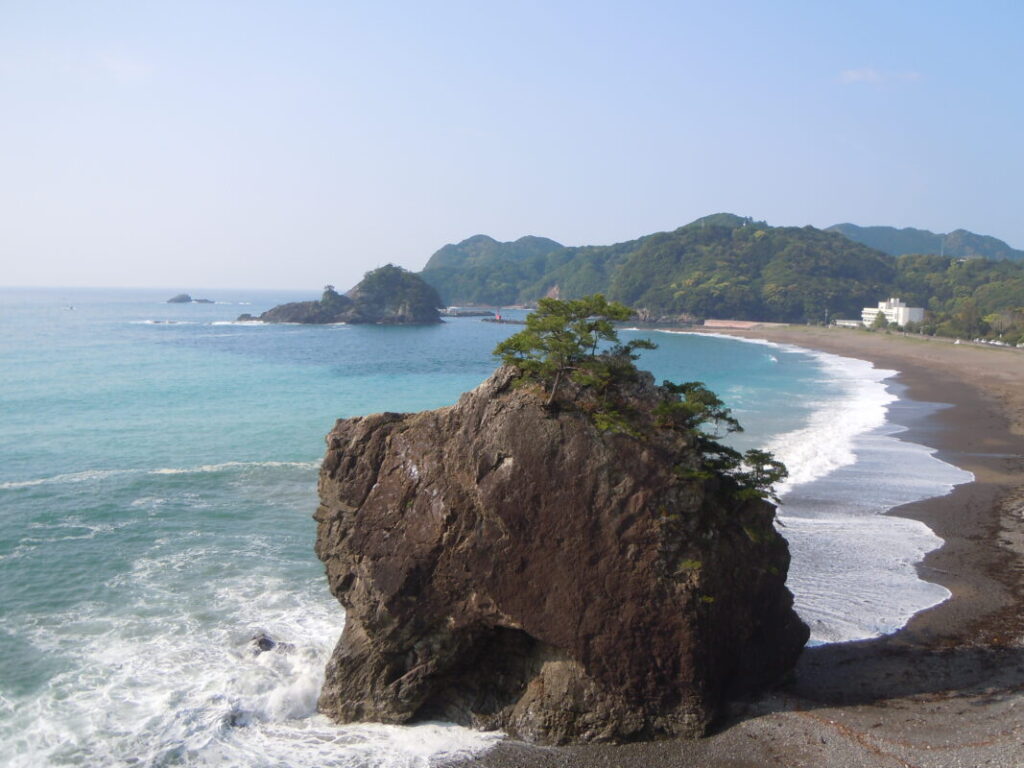
Typhoon Risks in Coastal Areas: The Kochi Region (Around Temple 23 to Temple 24)
Coastal areas tend to be directly exposed to the effects of typhoons, and the Pacific side of Kochi Prefecture in particular requires extra caution.
The route between Yakuōji Temple and Hotsumisakiji Temple includes many sections close to the coastline, and some areas are near sea level. Because there are few natural barriers to block the wind, these areas are highly exposed to direct impacts from strong winds and heavy rain during a typhoon.
In addition, storm surges, rising river levels caused by heavy rain, and flooded roads may occur, potentially restricting the route itself. During an approaching typhoon, deciding whether travel is safe becomes especially important in this area.
Typhoon Risks on Inland and Mountain Routes
Mountain and inland pilgrimage routes are affected by typhoons in different ways compared with coastal areas. On mountain routes in particular, the terrain itself becomes a risk factor, and changes in weather directly affect walking safety.
Representative mountain temples include:
- Shōsanji Temple (No. 12)
- Kakurinji Temple and Tairyūji Temple (No. 20, 21)
- Daihōji Temple and Iwayaji Temple (No. 44, 45)
- Unpenji Temple (No. 66)
In these sections, typhoons and post-storm rainfall can easily create hazards such as fallen trees, landslides, muddy paths, and poor visibility, significantly increasing walking risks compared with normal conditions. Stronger winds at higher elevations can also place greater physical demands on pilgrims.
Alternative Strategies Using Ropeways and Paved Roads
In some mountain sections, choosing alternatives to walking can help reduce risk. For example, Tairyūji Temple and Unpenji Temple are accessible by ropeway, which can improve safety depending on weather conditions and physical condition.
In addition, even when heading to the same temple, selecting paved roads instead of traditional mountain paths may help avoid terrain-specific risks.
During typhoon season, the priority should not be “completing every section of the pilgrimage trail” but rather “choosing the safest route to reach your destination.” Flexible decision-making according to conditions is essential.
Conclusion: The Most Important Mindset for the Shikoku Pilgrimage During Typhoon Season
The Shikoku Pilgrimage during typhoon season is not a journey based on the question “Can I keep going?” Rather, it becomes a journey of continuously assessing whether conditions are safe enough to travel.
As shown by both the data and real experiences discussed in this article, the period from July to October frequently overlaps with typhoon activity. For long-distance walking pilgrims in particular, it is important to assume from the beginning that weather disruptions are likely to occur during the journey. Car-based pilgrimages are not exempt either, as even shorter trips may coincide with typhoon conditions.
In reality, weather conditions do not always develop as forecasted, and risks unique to mountainous and coastal areas can create situations where simply following the original schedule becomes difficult.
For this reason, the most important factor is not creating a perfect plan in advance, but preparing to make flexible decisions based on changing conditions. Temporary pauses, extended stays, or changes to the itinerary should all be considered valid options, and avoiding unnecessary risks will ultimately lead to safer travel.
The most important principle during the Shikoku Pilgrimage in typhoon season is not rushing to complete the pilgrimage, but maintaining the ability to continue safely throughout the journey.
Related Article
Best Time to Walk the Shikoku Pilgrimage: Seasons Explained for Beginners.
Best Seasons for the Shikoku Pilgrimage
Walking the Shikoku Pilgrimage in Summer: 280km Real Experience Guide
Summer Shikoku Pilgrimage
Shikoku Ohenro in the Rain: How Often It Rains, What to Expect, and What Gear You Need.
Rain gear and tips for the Shikoku Pilgrimage
This article provides a complete overview of the Shikoku 88 Temple pilgrimage routes, including distances, travel times, and temple lodging (shukubō).
Temple List and Full Route
How the Expected Typhoon Exposure Was Calculated
The “expected typhoon exposure during the pilgrimage period” presented in this article was estimated using monthly typhoon approach data published by the Japan Meteorological Agency and applying it to the typical duration of a pilgrimage journey (approximately 50 days for a walking pilgrimage and approximately 12 days for a car pilgrimage).
However, because typhoons can affect an area for several days, the calculation does not simply rely on the number of typhoons occurring. Instead, it places greater emphasis on the likelihood of being affected by typhoon conditions during the travel period.
Therefore, these figures should not be interpreted as precise statistical values, but rather as a general indicator of potential risk when planning a pilgrimage.
Comments