
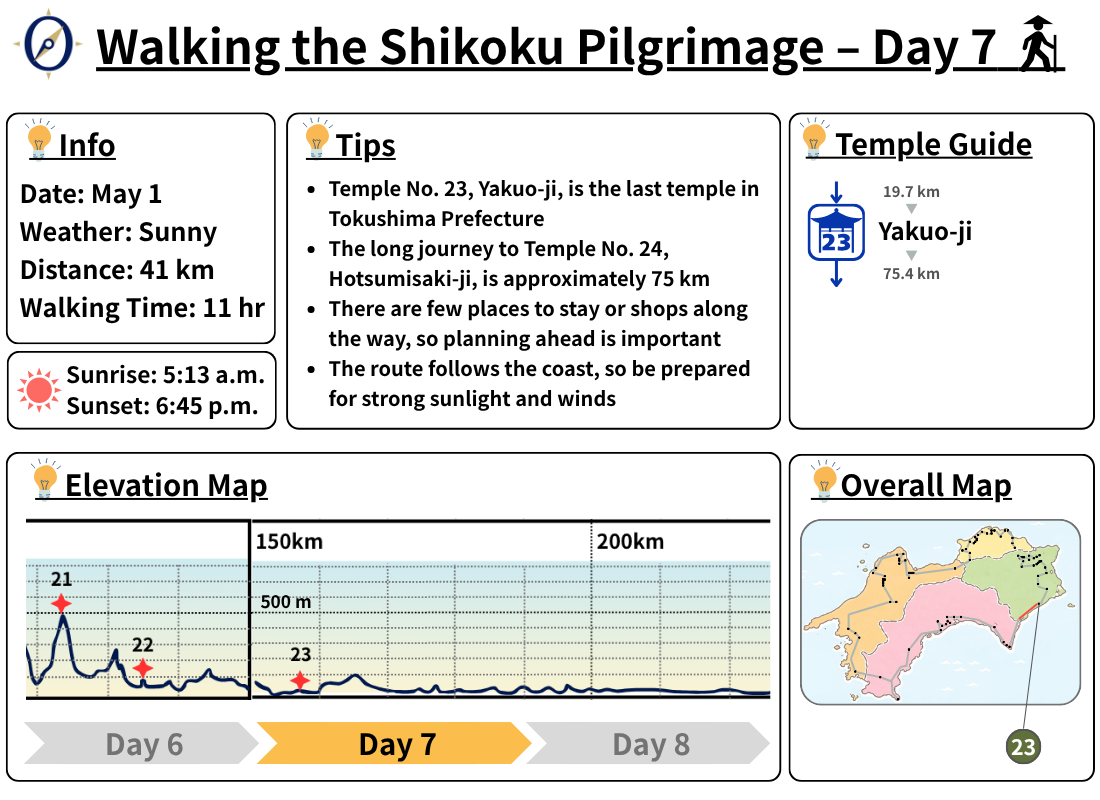
On Day 7 of my walking pilgrimage, I left Shirahama Rest Area and visited Temple No. 23, Yakuo-ji, the last temple in Tokushima Prefecture. From there, I walked through Mugi, Shikoku Bekkaku Temple No. 4, Saba Daishi, and Kaiyo Town before reaching Shishikui, covering about 35 km in total.
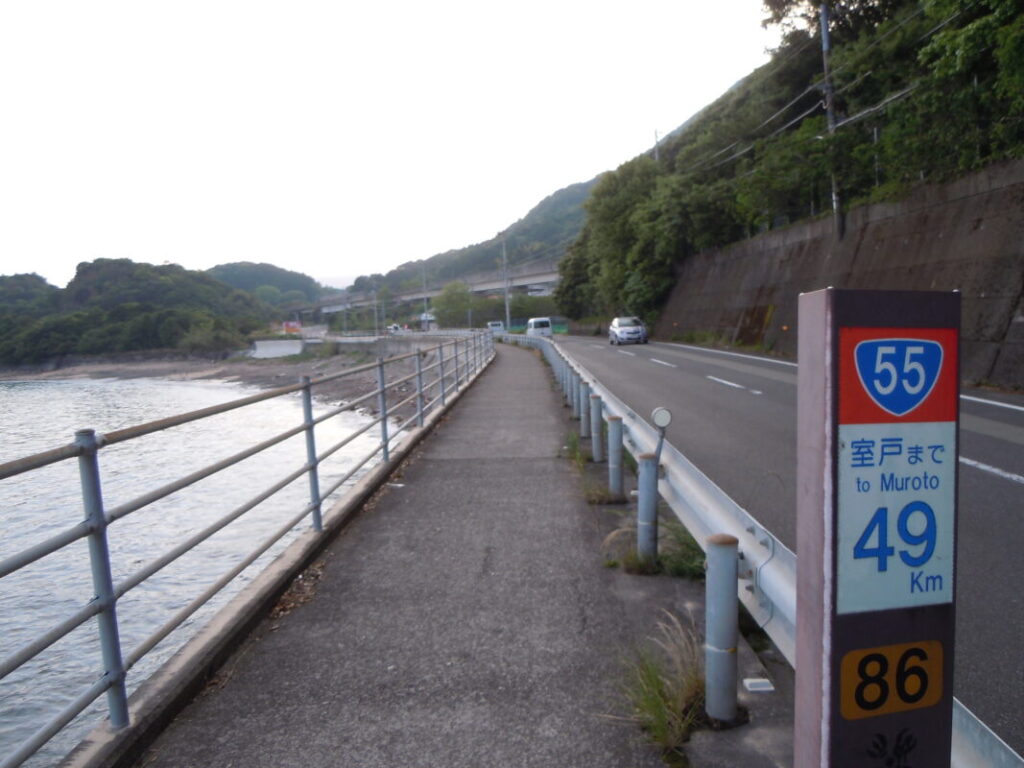
Despite struggling with foot pain, seeing the distance to Muroto shrink from 96 km to 49 km gave me a growing sense that I was making real progress.
- Itinerary
- Setting Out from Shirahama Rest Area by the Sea
- About 75 km from Yakuo-ji to Cape Muroto
- Following the Coastal Route to Yakuo-ji
- 8:00 a.m. — Arriving at Temple No. 23, Yakuo-ji, the Last Temple in Tokushima
- About 15 km from Hiwasa to Mugi
- The Spaceship-Like Pilgrim Shelter, “NASA Henro Hut”
- Arriving in Shishikui at 6 p.m.
- Resting at Shishikui Onsen and Sleeping Outdoors
- Temple Information
Itinerary
- 6:00Departure
- Shirahama Rest Area
- 8:00Temple No. 23, Yakuo-ji
- Hiwasa Roadside Station
- Mugi
- Saba Daishi
- Kaiyo Town
- 18:00Shishikui
Overnight stay
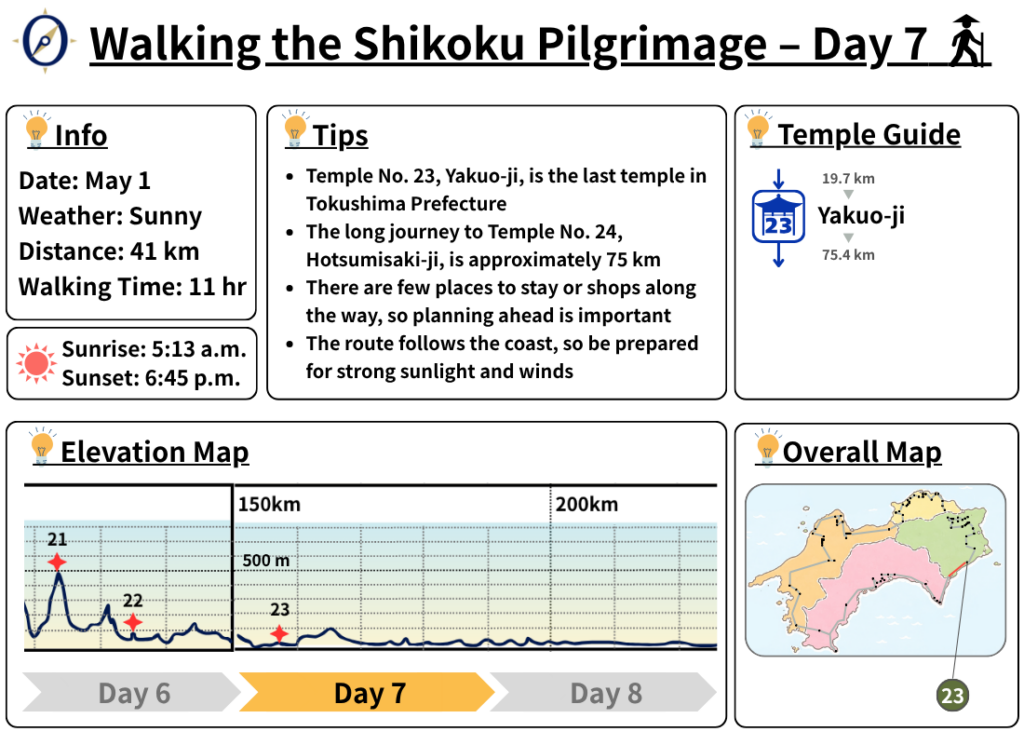
Setting Out from Shirahama Rest Area by the Sea
May 1. I woke up at 5 a.m. after spending the night at Shirahama Rest Area by the sea.
Although it was spring, the temperature dropped during the night. Thanks to my insulating mat and sleeping bag, I was able to sleep comfortably. My tent, which had gotten wet in the rain two days earlier, also seemed to have dried completely.
After getting ready, I left the rest area at 6 a.m.
Just then, the sun began to rise over the sea. Bathed in the morning light, the sea and sky gradually turned golden. I suppose being able to enjoy beautiful views like this is one of the special pleasures of sleeping outdoors.
Taking in the beauty of this peaceful morning, I set off alone.
About 75 km from Yakuo-ji to Cape Muroto
The first destination of the day was Temple No. 23, Yakuo-ji.
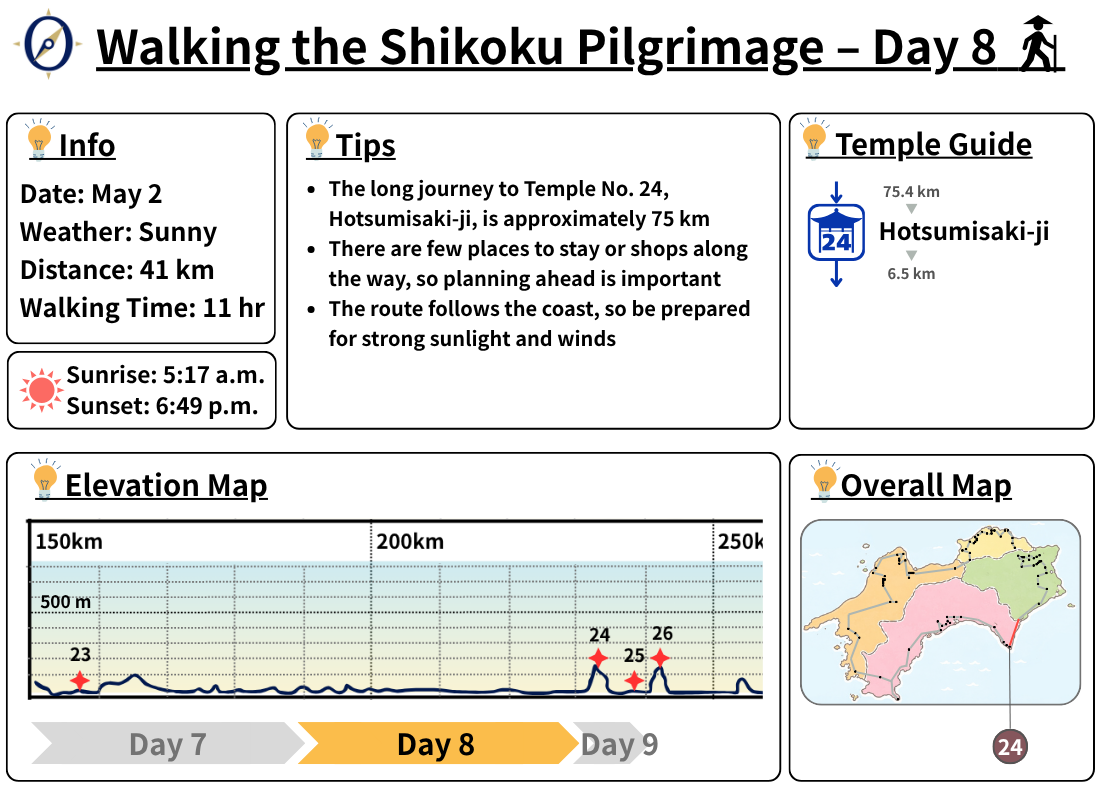
The challenge was the distance to the next temple, Temple No. 24, Hotsumisaki-ji. Located at the tip of Cape Muroto, Hotsumisaki-ji is about 75 kilometers from Yakuo-ji.
The route also includes a long stretch of coastline where the scenery changes very little. It looked like it would be a demanding section, not only physically but mentally as well.
I had never walked toward a destination 75 kilometers away in my life. This was truly uncharted territory for me.
Even so, having made it through challenging sections such as Shosan-ji and Kakurin-ji had gradually given me confidence. For now, I decided to focus on the road immediately ahead and make my way to Yakuo-ji.
Following the Coastal Route to Yakuo-ji
There are two main routes to Yakuo-ji: one follows National Route 55 to the north, while the other runs along the coast.
I chose the coastal route. The views were beautiful, but the trail had repeated short climbs and descents, which used up more of my energy than I had expected.
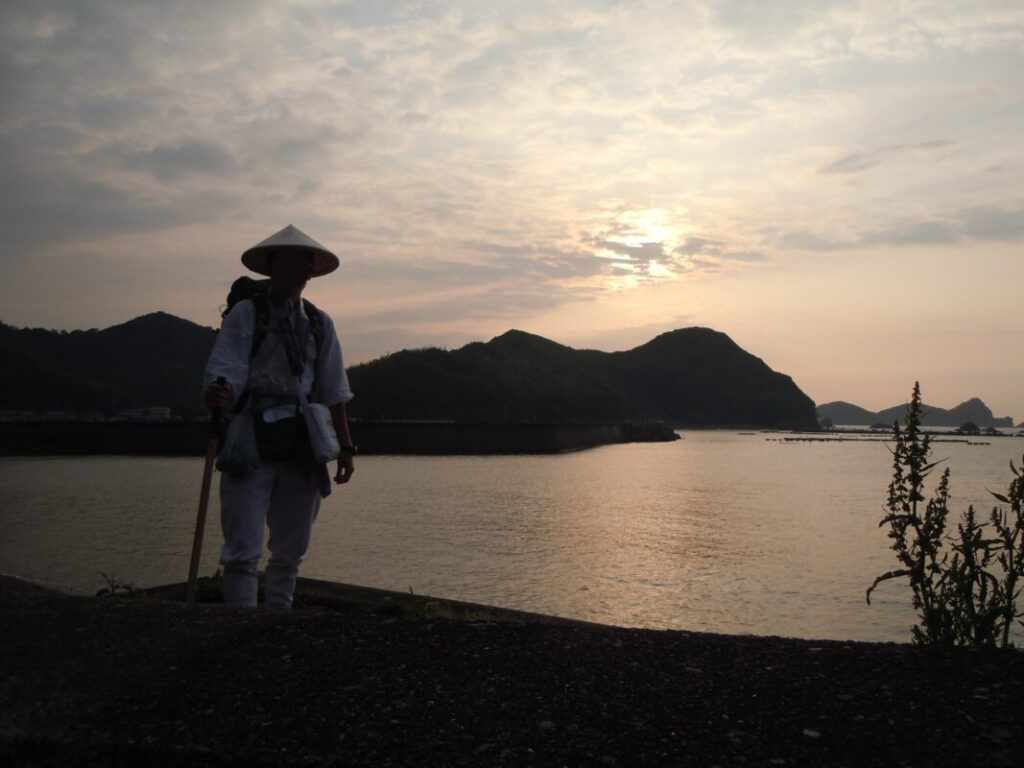
After about an hour of walking, I came to a wide beach where white waves were breaking along the shore. Hiwasa, where Yakuo-ji is located, was not far away.
Hiwasa is also known as a nesting site for loggerhead sea turtles. I wondered if this beach stretching out before me was one of their nesting grounds, too.
8:00 a.m. — Arriving at Temple No. 23, Yakuo-ji, the Last Temple in Tokushima
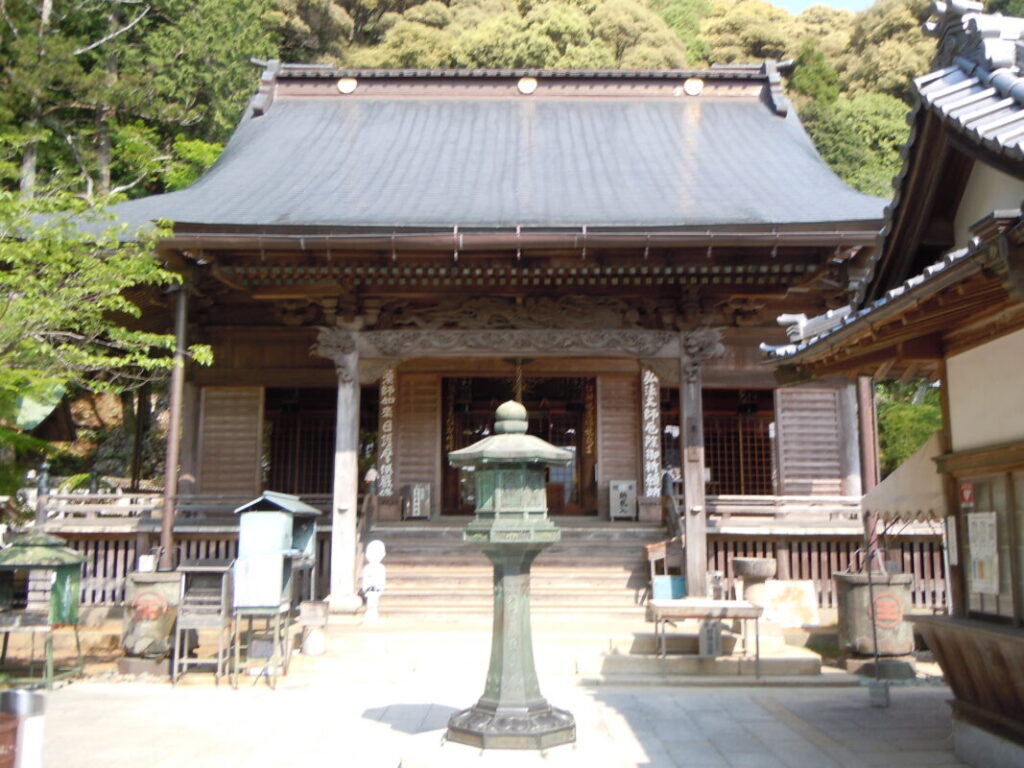
I arrived at Temple No. 23, Yakuo-ji, at 8 a.m.
Yakuo-ji is known as a temple for protection from misfortune. According to tradition, Kobo Daishi carved a statue of Yakushi Nyorai to ward off misfortune.
Inside the temple grounds, there is a flight of stairs known as the Yakuzaka, or “Steps of Misfortune.” I climbed them one step at a time. From the top, I could look out over the town of Hiwasa. It was a temple that left a lasting impression on me.
Before the principal deity, Yakushi Nyorai, in the main hall, I prayed that my feet would carry me safely all the way to the next temple, Hotsumisaki-ji.
A Sense of Growth in Chanting the Yakushi Nyorai Mantra
As I chanted the mantra of Yakushi Nyorai, I suddenly realized something.
“Wait, haven’t I chanted this before?”
“On korokoro sendari matougi sowaka” is a mantra that is easy to remember. In fact, Yakushi Nyorai is enshrined as the principal deity at 24 temples on the Shikoku 88 Temple Pilgrimage—the most of any Buddhist deity. Tokushima Prefecture alone has seven such temples, more than any other prefecture.
At the beginning of my pilgrimage, I struggled to chant the sutras smoothly, without really understanding their meaning. But little by little, I had become more comfortable reciting them. It was a moment when I could feel how much I had grown.
Taking a Short Break in Hiwasa
Hiwasa, where Yakuo-ji is located, has a roadside station and convenience stores, making it an important place for pilgrims to rest and replenish their supplies. I also stopped at a convenience store and bought some trail food.
About 15 km from Hiwasa to Mugi
It is about 15 kilometers from Hiwasa to the next town, Mugi. Since the route follows National Route 55, there is little worry about getting lost.
This section leaves the coast behind and passes through the mountains. Along the way, Hiwasa Tunnel stretches for about 1 kilometer, making it a particularly long tunnel.
Inside the tunnel, passing cars created strong gusts of wind. My sugegasa (pilgrim hat) nearly blew off, so I kept my chin down and managed to make my way through.
I arrived in Mugi around noon. The town has accommodations and convenience stores, making it a convenient place for pilgrims to rest or spend the night.
About 4 kilometers farther along the route is Saba Daishi, the 4th temple of the Shikoku Bekkaku 20 Sacred Sites. When I visited, it had temple lodging, which was a valuable place to stay along this stretch. However, it seems that the lodging is no longer operating, so if you are considering staying there, be sure to check in advance.
The Spaceship-Like Pilgrim Shelter, “NASA Henro Hut”
After walking for about another two hours from Mugi, the pain in my feet began to get worse.
Even so, I wanted to make as much progress as possible while it was still light. With that in mind, I kept walking.
A little after 2 p.m., I passed through Kaiyo Town. One thing that caught my attention there was an unusual-looking pilgrim shelter.
It had a long, rounded roof and looked almost like a spaceship. Its name was the “NASA Henro Hut.”
The bench inside was long and narrow, with enough room for three or four people to rest comfortably. I heard that many pilgrims also spend the night here.
Arriving in Shishikui at 6 p.m.
The next destination, Shishikui, was about 6 kilometers away. There was still time before sunset, but what concerned me most was the pain in my feet.
Shishikui has a roadside station, a day-use hot spring facility, and a pilgrim shelter, making it a convenient place for pilgrims traveling on foot. I thought a soak in the hot spring might help my tired body recover a little.
Since I had come this far, I decided to push on a little farther and make it to Shishikui.
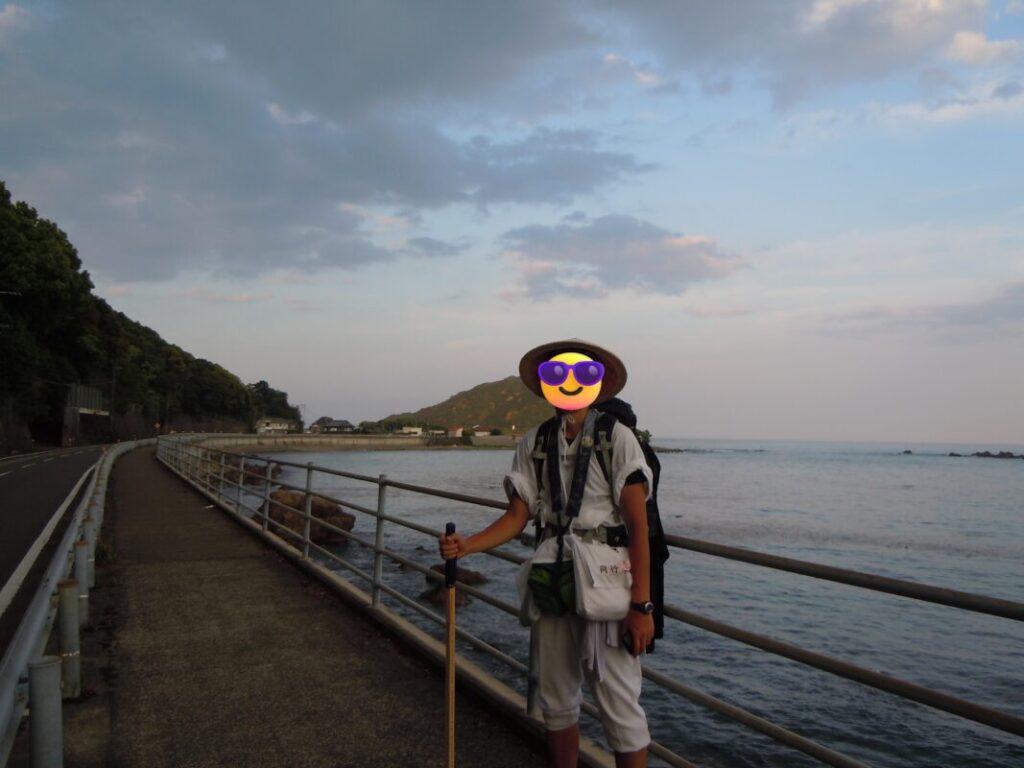
I had already walked about 35 kilometers since setting out from near Yakuo-ji. It was past 5 p.m., and the surroundings were gradually growing dark. Both the pain in my feet and my fatigue were nearing their limits.
As I walked, I kept experimenting with ways to reduce the impact on my feet. I switched my Kongozue walking staff from one hand to the other and tried landing on my heels first.
Along the way, I saw a sign saying “49 km to Muroto.” Thinking back to the 96-kilometer sign I had seen the day before, I realized just how far I had come.
I finally reached Shishikui around 6 p.m. I was relieved to have made it before nightfall.
Resting at Shishikui Onsen and Sleeping Outdoors
Shishikui Onsen is housed in an impressive building that looks almost like a palace. I decided to take a bath at the day-use hot spring facility and give my tired body a chance to rest.
The soles of my feet were bright red and felt hot. They hurt even when touched, so I filled a basin with water and cooled my feet for a few minutes.
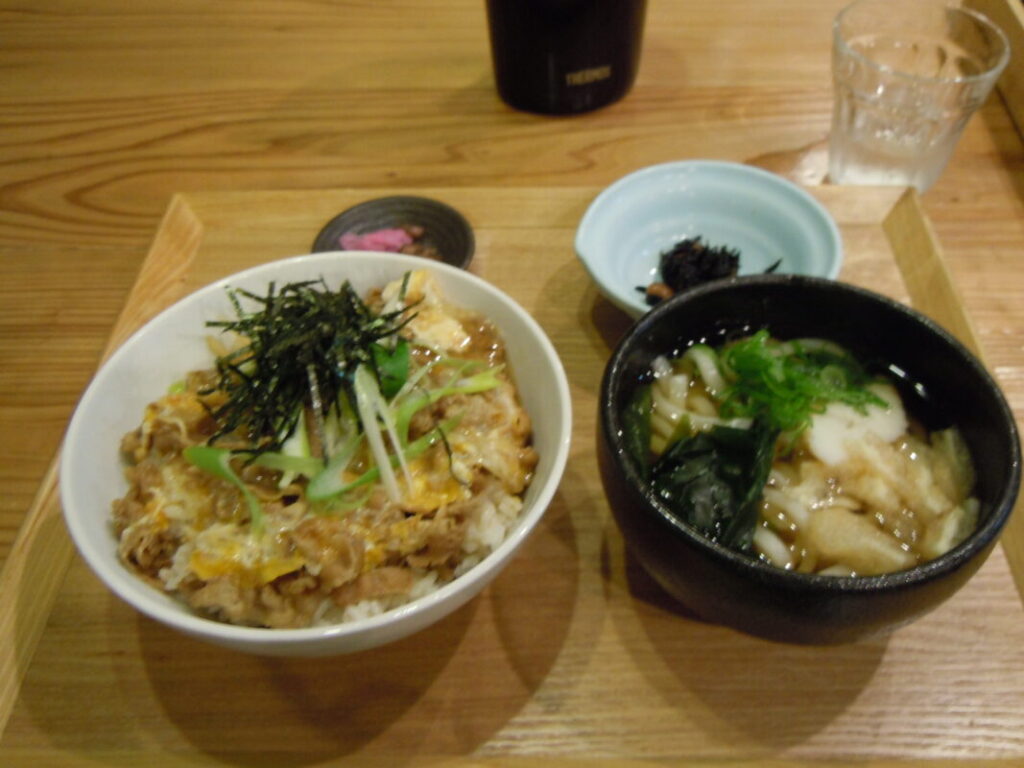
For dinner, I ordered a katsudon at a nearby restaurant. After walking all day, I wanted to replenish my energy with a few more calories than usual.
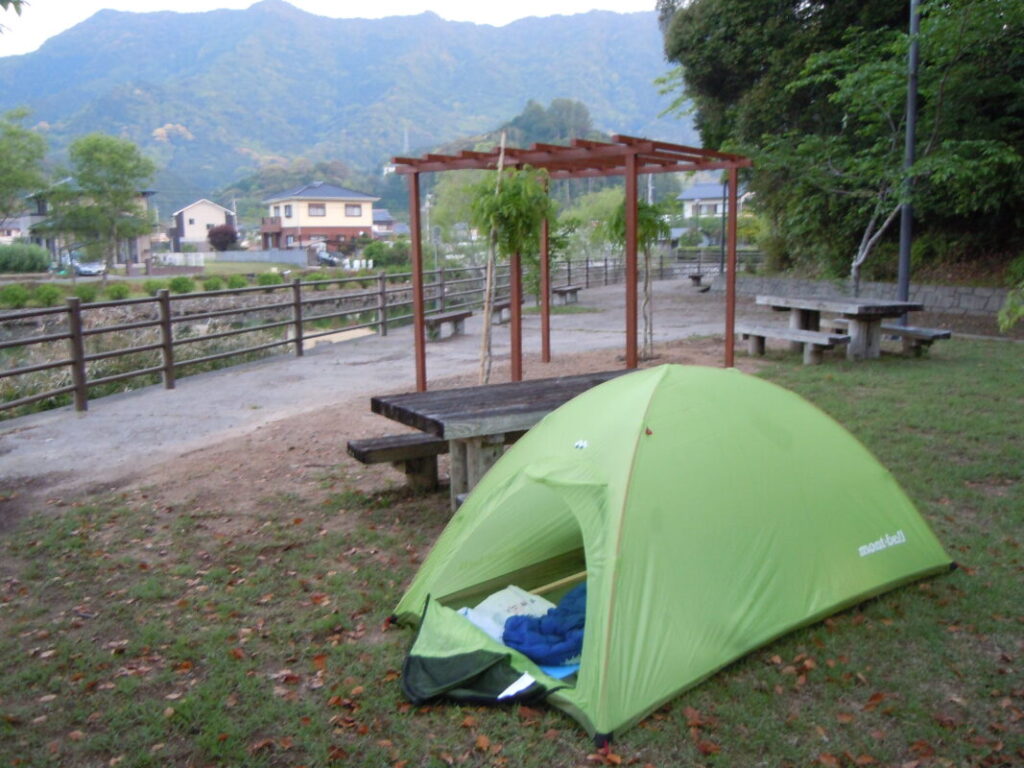
My sleeping spot for the night was a park behind the roadside station. I set up my tent there and decided to spend the night outdoors.
It had been a long day: I visited Yakuo-ji, the last temple in Tokushima Prefecture, then walked through Mugi, Saba Daishi, and Kaiyo Town before reaching Shishikui. The roughly 35-kilometer journey had also been a battle against the pain in my feet.
The next day, I would finally enter Kochi Prefecture. The long road toward Cape Muroto still lay ahead.
Temple Information
- No. 23
- No. 24
Comments