
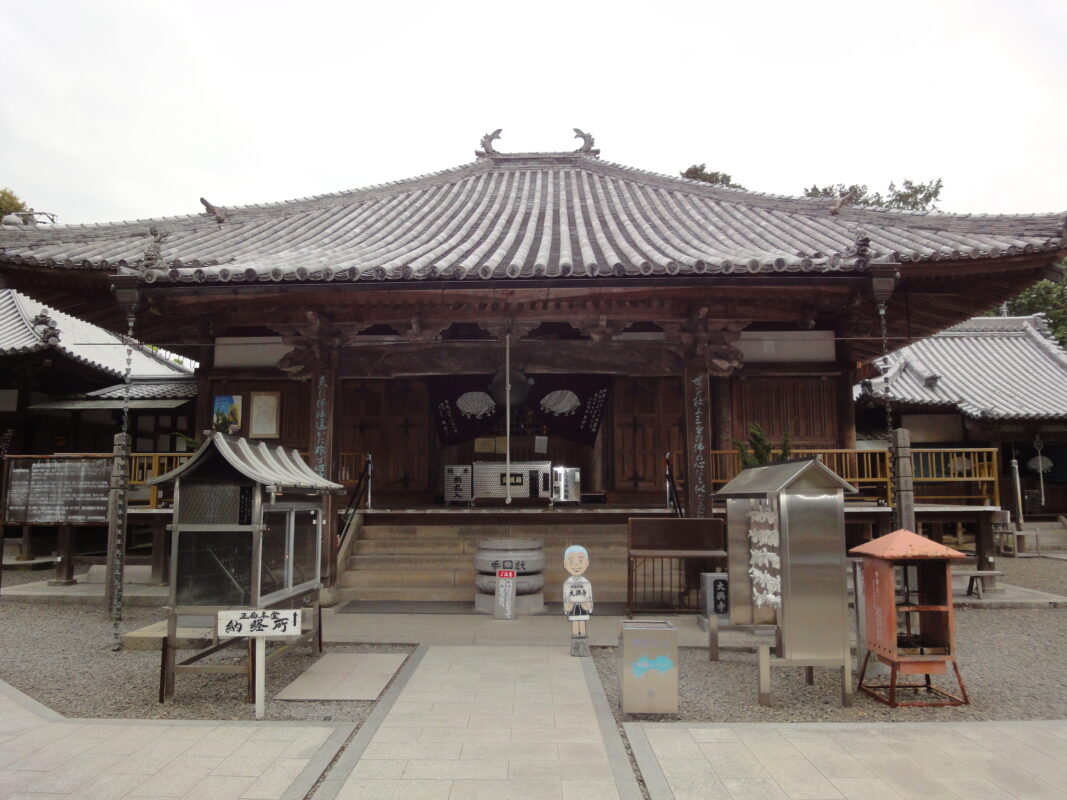
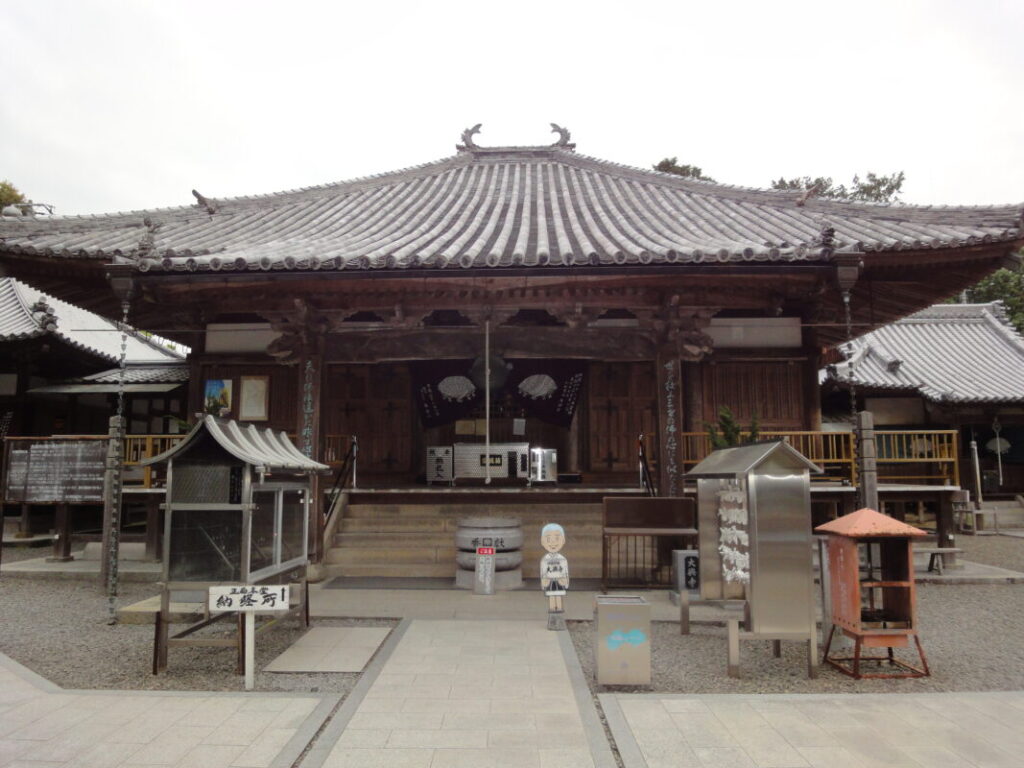
Daikoji Temple Information
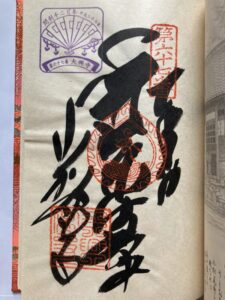
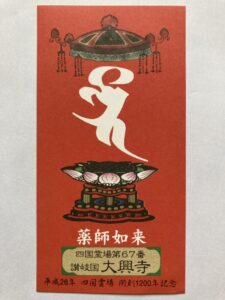
Goshuin
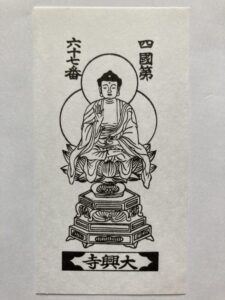
- Omie
- 1,200th Anniversary Edition
Basic Information
| Principal Deity | Yakushi Nyorai |
| Elevation | 75 m |
| Google Maps | MAP |
Accommodation
| Shukubo (Temple Lodging) | Not Available |
| Tsuyado (Free Pilgrim Shelter) | Not Available |
History & Highlights
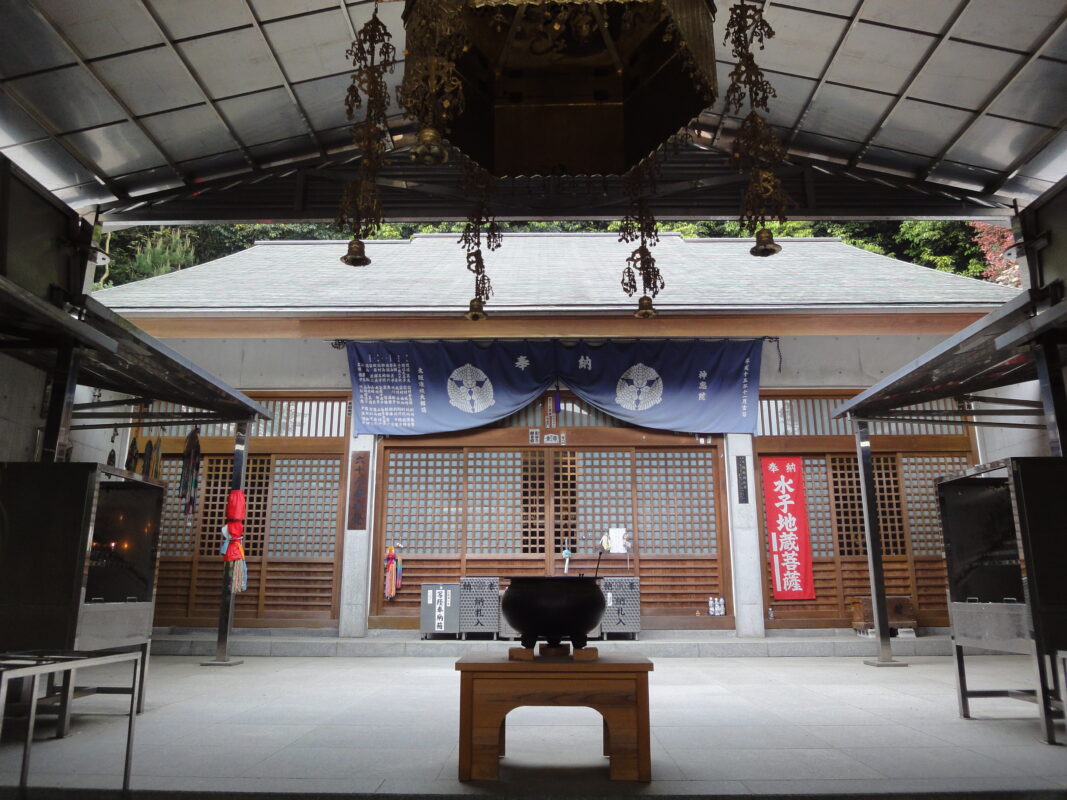
Daikoji Temple is an ancient temple believed to have been founded in 742 during the Tenpyo era and was later restored by order of Emperor Saga.
The temple has a unique history as a place where both Shingon and Tendai Buddhism were studied together. It preserves many valuable cultural treasures, including the seated statue of Yakushi Nyorai, the principal image of the temple, and one of the oldest seated statues of Kobo Daishi in Shikoku.
Route Map, Distance & Travel Time
You can switch between the tabs to view the routes to the previous and next temples.
Select “Driving Route” from the map’s upper-left menu to display the driving route.
Click the Full Screen icon in the upper-right corner of the map to open it in Google Maps for a larger, easier-to-view map.
- From Previous Temple
- To Next Temple
Previous Temple: Unpenji
| Distance | 9.4 km |
| Walking | 3 hr |
| Driving | 50 min |
Next Temple: Jinnein
| Distance | 8.7 km |
| Walking | 2 hr 30 min |
| Driving | 20 min |
Transportation Guide
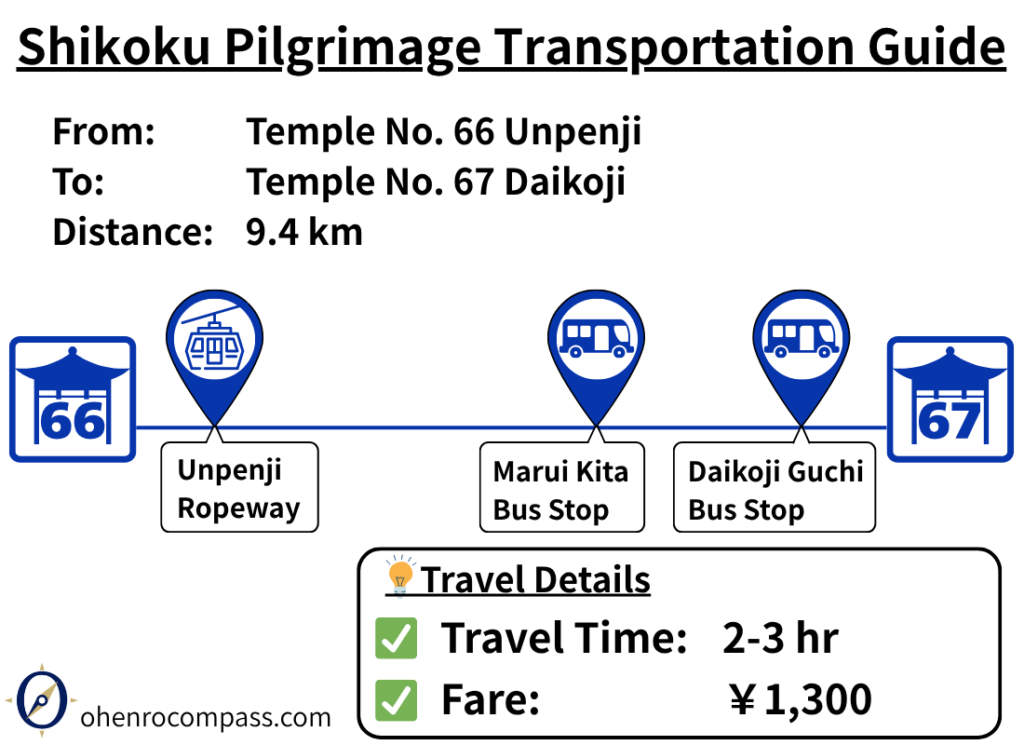
Travel from Unpenji (66th Temple) to Daikoji (67th Temple) by ropeway and bus in about 2–3 hours for ¥1,300. Includes route details, timetables, and a comparison with walking.
My Walking Experience
Daikoji Temple is located approximately 10 km north of Unpenji Temple.
Since Unpenji stands on a mountain at an elevation of 911 meters, there are two main ways to descend: taking the ropeway or walking down the pilgrimage trail. I have walked the mountain route on both of my previous walking pilgrimages.
The ropeway allows you to travel a difference in elevation of about 650 meters and a distance of approximately 2.5 km in around 7 minutes.
For the mountain trail route, first follow the approach path on the north side of Unpenji, where the Five Hundred Rakan statues are lined up. After walking along the paved road for a while, you will see a sign indicating the descent trail on your left.
Two Descent Routes from Unpenji
After walking about 500 meters along the mountain path, you will reach a junction with routes leading toward the ropeway station and Daikoji Temple.
I have walked both routes, but if your destination is Daikoji Temple, continue straight toward the Daikoji route.
The route toward the ropeway station is a unique pilgrimage trail that passes right beside the ropeway towers. It is also a convenient option for pilgrims planning to visit Hagiwaraji Temple, the 16th temple of the Bangai (extra) pilgrimage route.
From this point, a long descent begins. The trail drops approximately 600 meters in elevation, so although it requires less stamina than climbing, care should be taken to avoid putting excessive strain on your knees.
From the Mountain Trail to the Prefectural Road
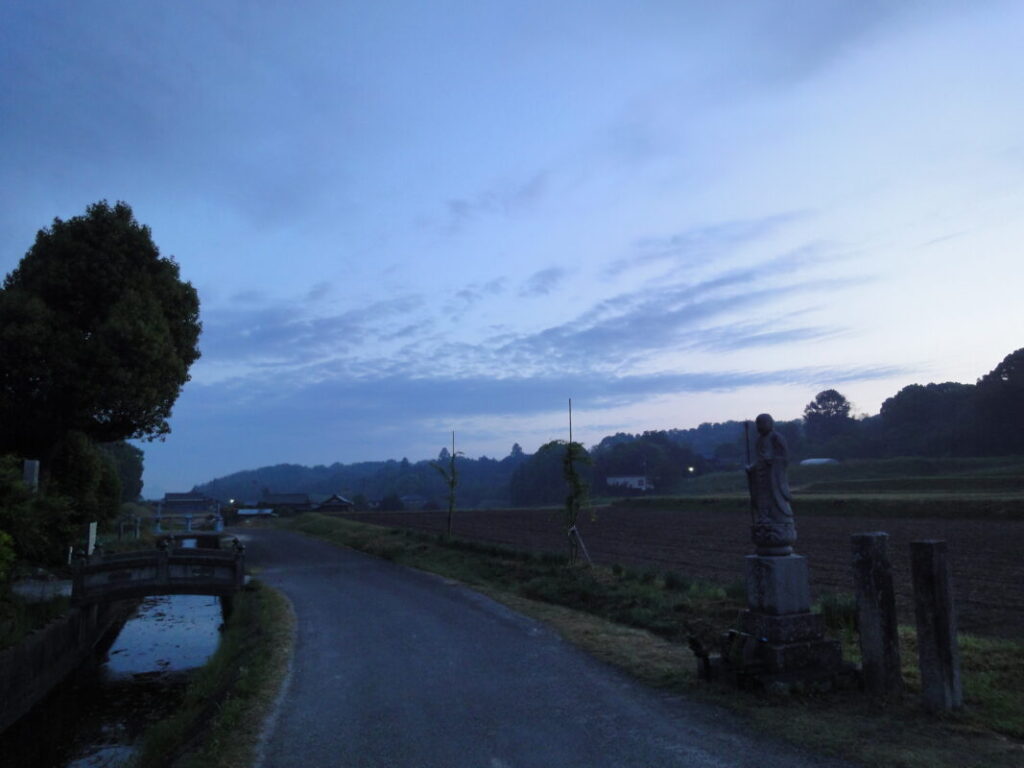
After leaving the mountain trail, you will reach a prefectural road. The road continues with a gentle descent, offering peaceful rural scenery such as terraced fields and the flowing waters of the Awai River.
By the time you pass the large Iwanabe Pond, the mountain section comes to an end and the landscape gradually changes to flat farmland. From there, continue through the countryside for about 2 km to reach Daikoji Temple.
History and Highlights of Daikoji Temple
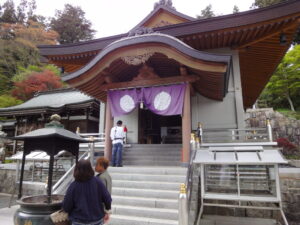
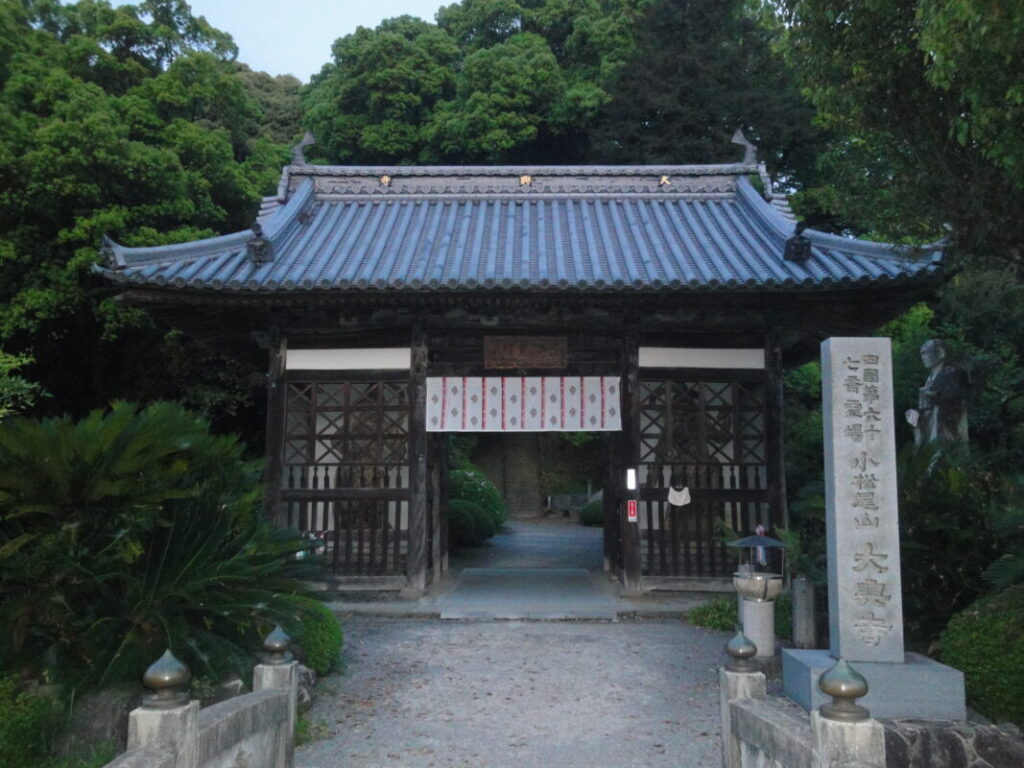
Daikoji Temple is locally known as Komatsuoji, after its mountain name. It is an ancient temple believed to have been founded in 742.
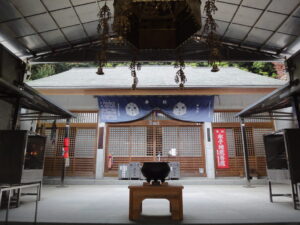
One of the temple’s most distinctive features is that it was once a “dual-sect temple,” where both Shingon Buddhism and Tendai Buddhism were studied within the same grounds. This history remains visible today, with not only a Daishi Hall dedicated to Kobo Daishi but also a Tendai Daishi Hall enshrining the founder of the Tendai school.
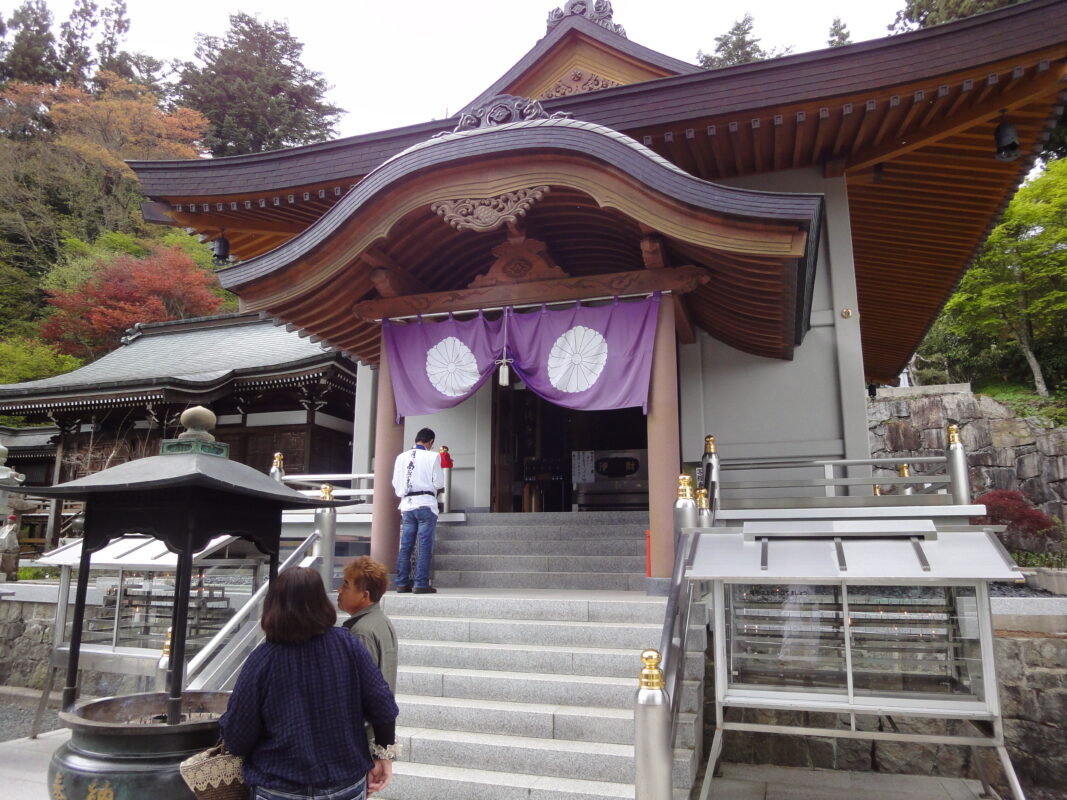
The principal image of the Main Hall, a seated statue of Yakushi Nyorai, is believed to date from the late Heian period and is designated as a cultural property of Kagawa Prefecture.
The Niomon Gate is also famous for its massive guardian statues. The Nio statues are among the largest in size among the 88 temples of the Shikoku Pilgrimage and welcome visitors with their powerful and imposing presence.
Nearby Accommodation
If you plan to stay near Daikoji or between the surrounding pilgrimage temples, see the article below.
Related Articles
Shikoku 88 Temple Pilgrimage Route: Full List, Distance & Walking Time Guide.
Temple List and Full Route
Comments