
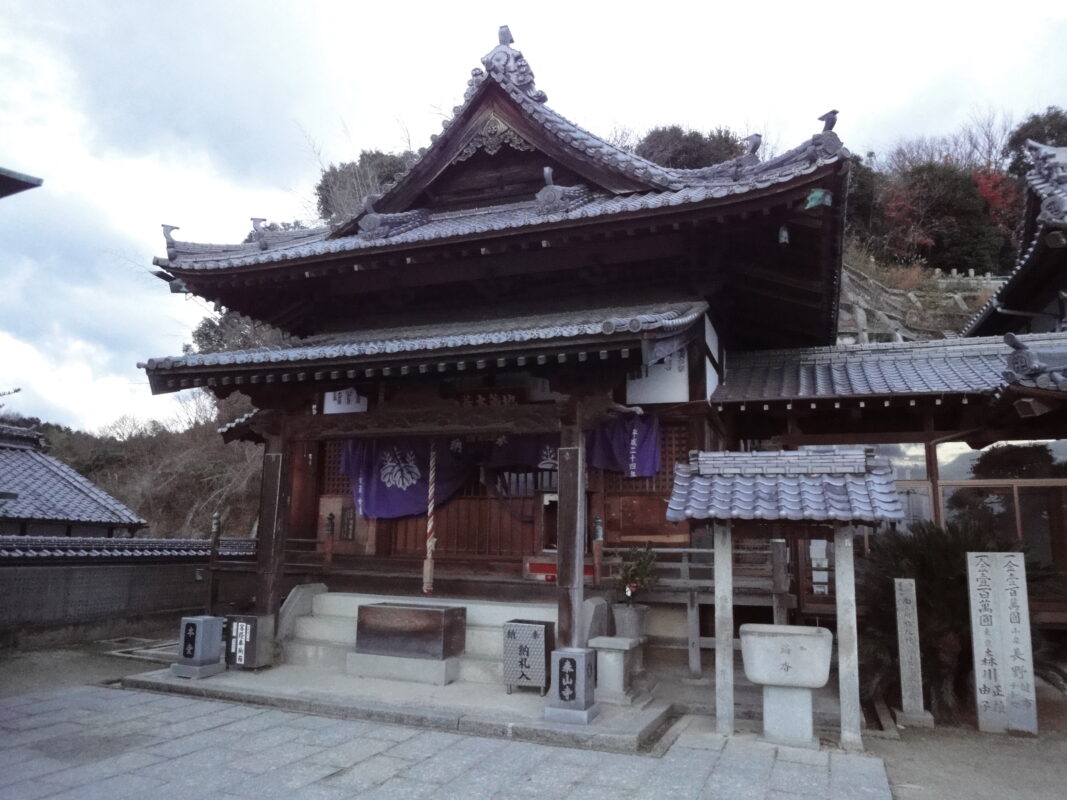
Taizanji Temple Information
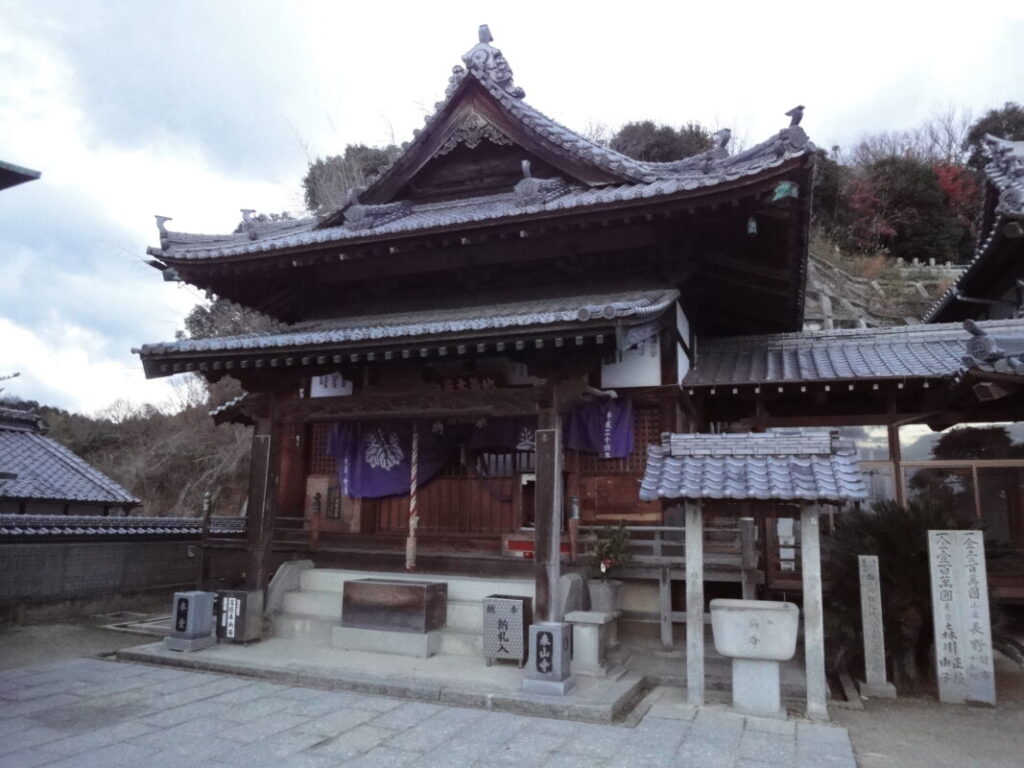
Goshuin

- Omie
- 1,200th Anniversary Edition

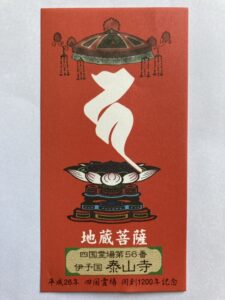
Basic Information
| Principal Deity | Jizo Bosatsu |
| Elevation | 20 m |
| Google Maps | MAP |
Accommodation
| Shukubo (Temple Lodging) | Not Available |
| Tsuyado (Free Pilgrim Shelter) | Available |
History & Highlights
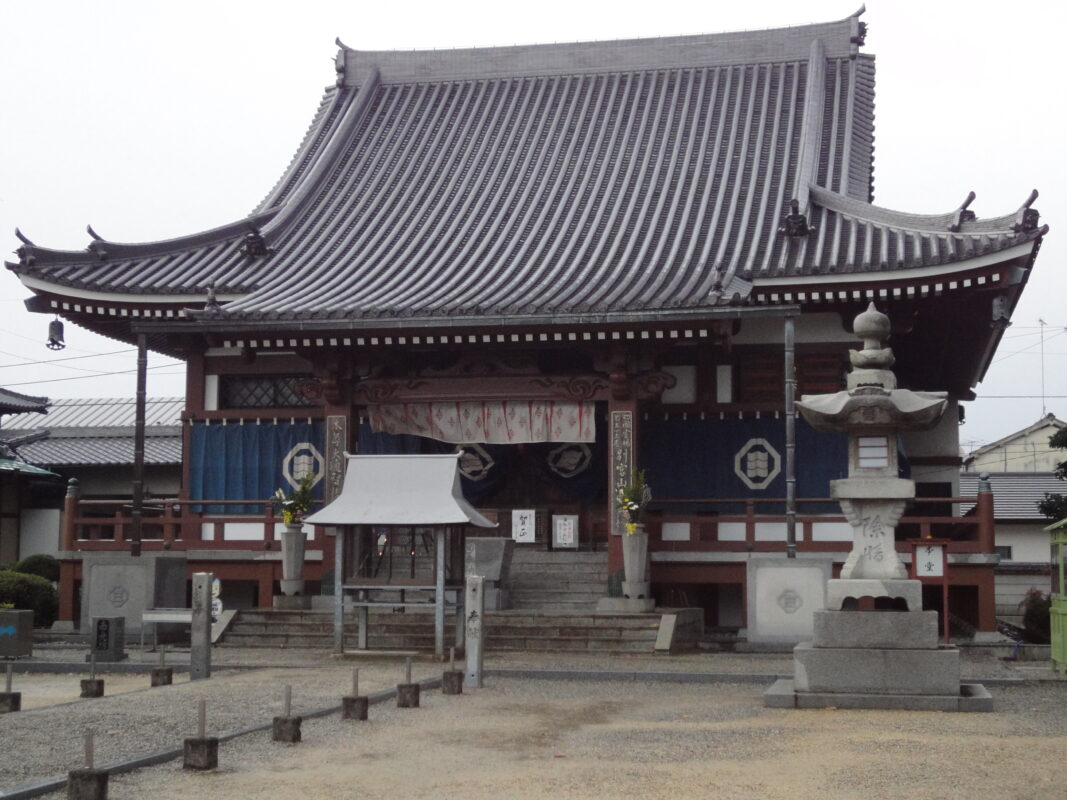
Taizanji is said to have been founded by Kūkai (Kōbō Daishi), who prayed for flood control to save local people suffering from repeated floods. The temple’s principal image, Jōmyō Jizō Bosatsu, has been worshipped ever since as a guardian deity for protection from misfortune and safe childbirth, attracting the faith of many people throughout its history.
Notes
Parking fee: ¥200
Route Map, Distance & Travel Time
You can switch between the tabs to view the routes to the previous and next temples.
Select “Driving Route” from the map’s upper-left menu to display the driving route.
Click the Full Screen icon in the upper-right corner of the map to open it in Google Maps for a larger, easier-to-view map.
- From Previous Temple
- To Next Temple
Previous Temple: Nankobo
| Distance | 3 km |
| Walking | 50 min |
| Driving | 15 min |
Next Temple: Eifukuji
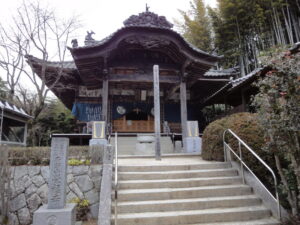
| Distance | 3.1 km |
| Walking | 50 min |
| Driving | 10 min |
Transportation Guide
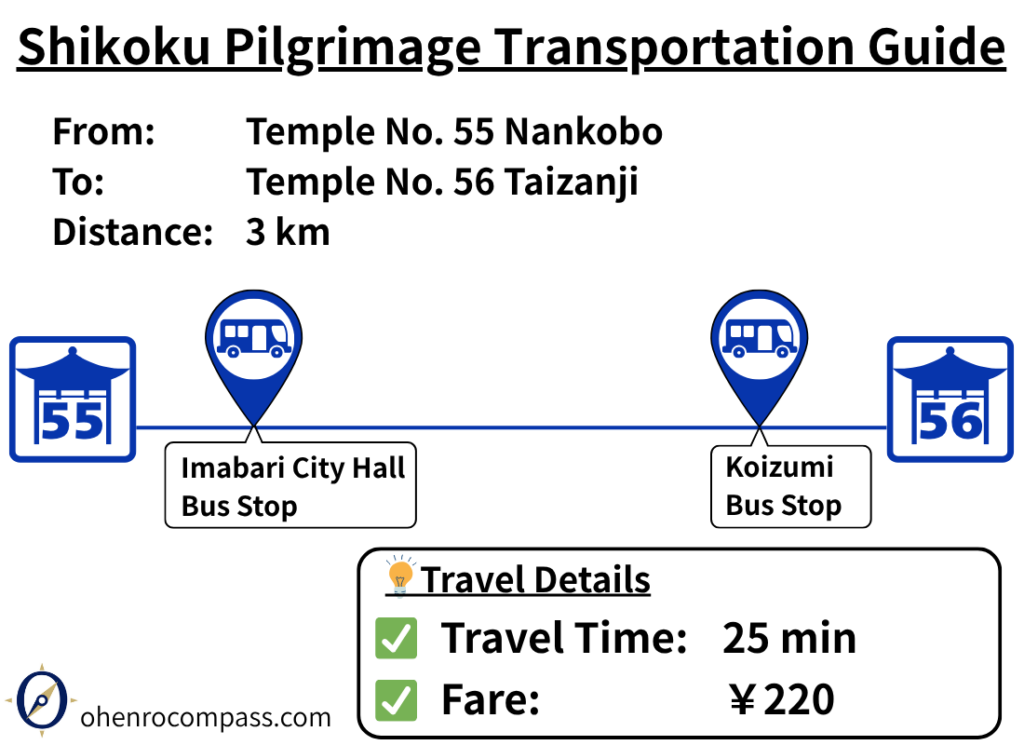
Guide to the bus route from Temple 55 Nankobo to Temple 56 Taizanji on the Shikoku Pilgrimage. The trip takes about 25 minutes and costs ¥220. Includes bus stops, timetables, and a comparison with walking.
My Walking Experience
Taizanji is located about 3 km (1.9 miles) southwest of Nankobo. The route is mostly straightforward, so you should have little difficulty finding your way.
After leaving Nankobo, head southwest and pass beneath the elevated tracks of the JR Yosan Line. Once you reach the rotary area in front of Imabari Station, simply continue southwest, making this an easy route to follow.
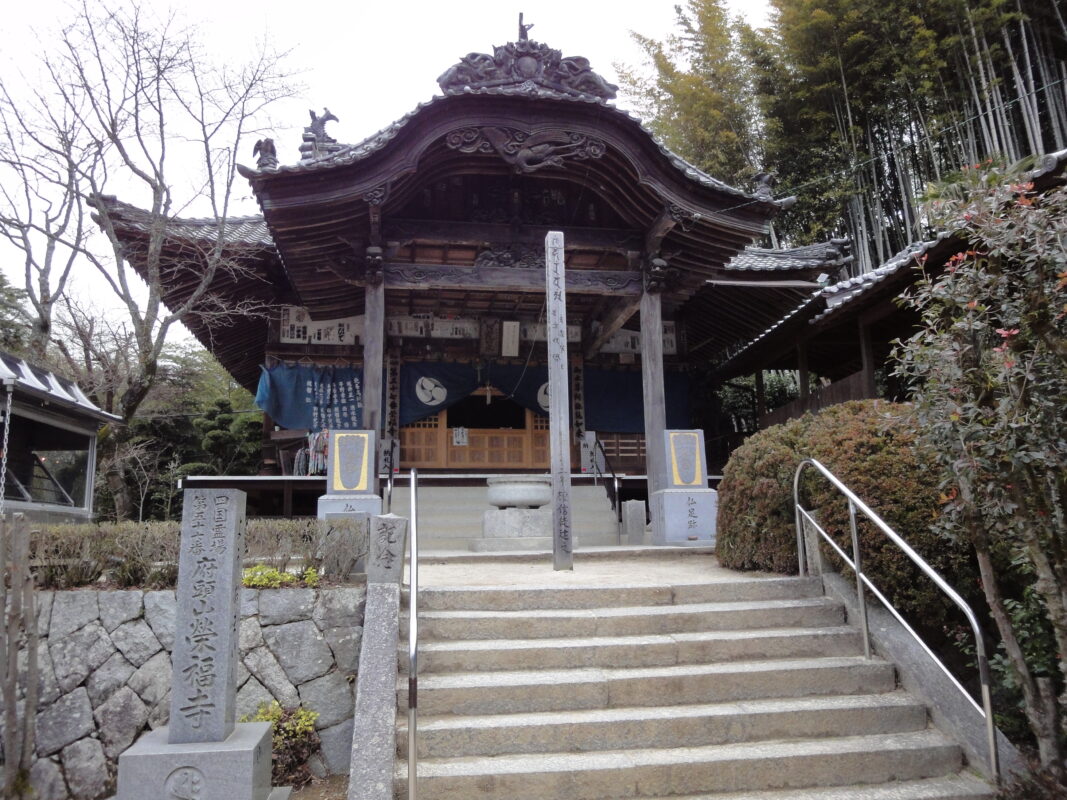
Although Taizanji is located close to central Imabari City, a forest spreads behind the temple grounds, creating a peaceful atmosphere where visitors can forget the noise of the city.
Temples located in urban areas can sometimes feel more like tourist destinations, but Taizanji had a warm and local character that made me feel it was deeply connected with the surrounding community.
My Experience Staying at the Tsuyadō (Pilgrim Rest Hall)
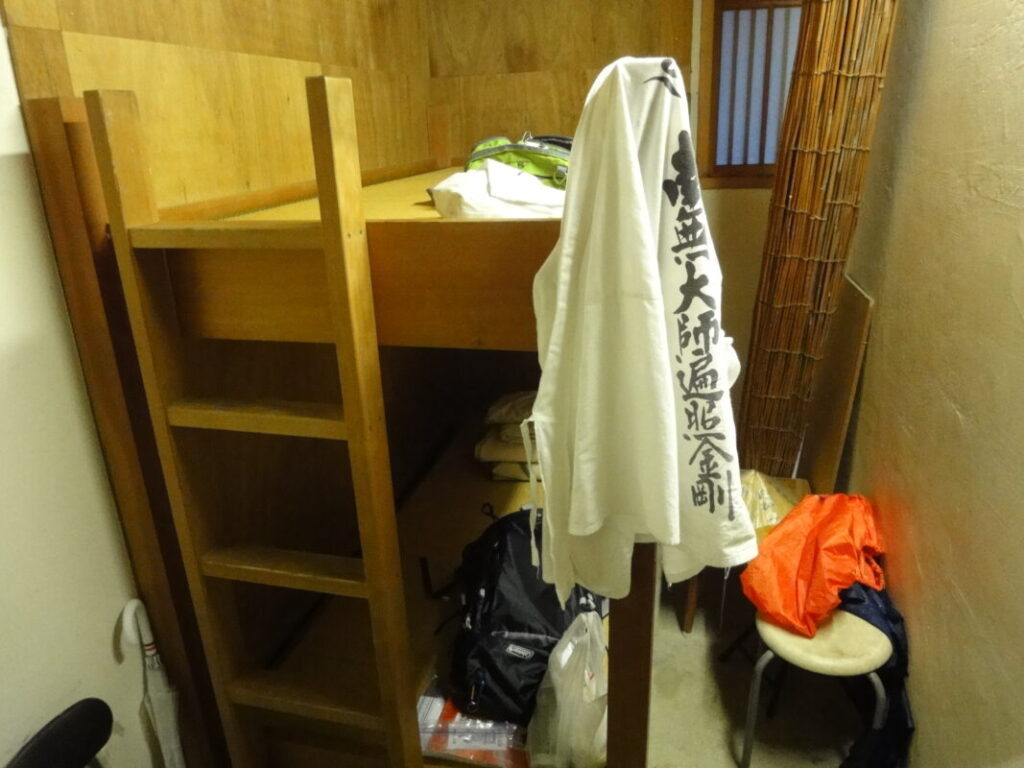
Taizanji has a Tsuyadō, a night lodging hall that can be used by walking pilgrims.
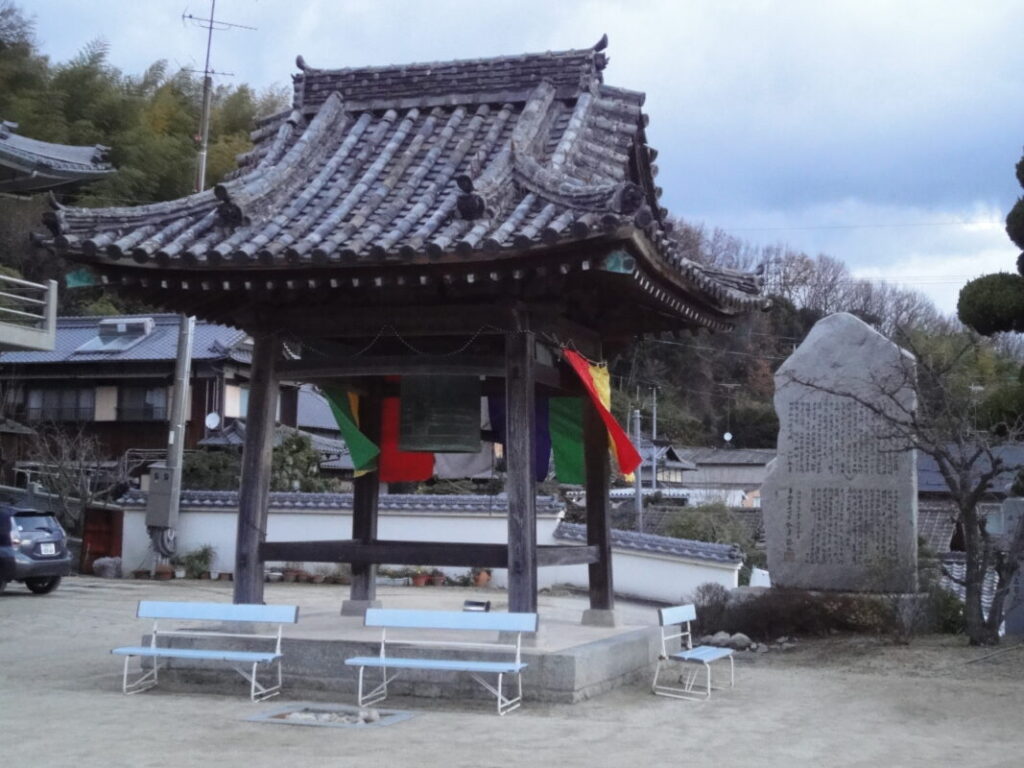
I stayed there on New Year’s Eve. Spending the night inside the temple grounds was a memorable experience, and thanks to the kindness of the head priest, I was even given the rare opportunity to ring the temple bell during the Joya no Kane ceremony to welcome the New Year.
Celebrating the New Year in the middle of my walking pilgrimage is something I still remember vividly.
The Tsuyadō has a dormitory-style layout with bunk beds inside and can accommodate around two people. Although it was a cold night at the end of December, I was very grateful simply to have a sheltered place protected from the wind.
If you plan to stay there, it is recommended to purchase food and other supplies at nearby convenience stores before arriving.
Nearby Accommodation
If you plan to stay near Taizanji or between the surrounding pilgrimage temples, see the article below.

Related Articles
Shikoku 88 Temple Pilgrimage Route: Full List, Distance & Walking Time Guide.
Temple List and Full Route
Comments