
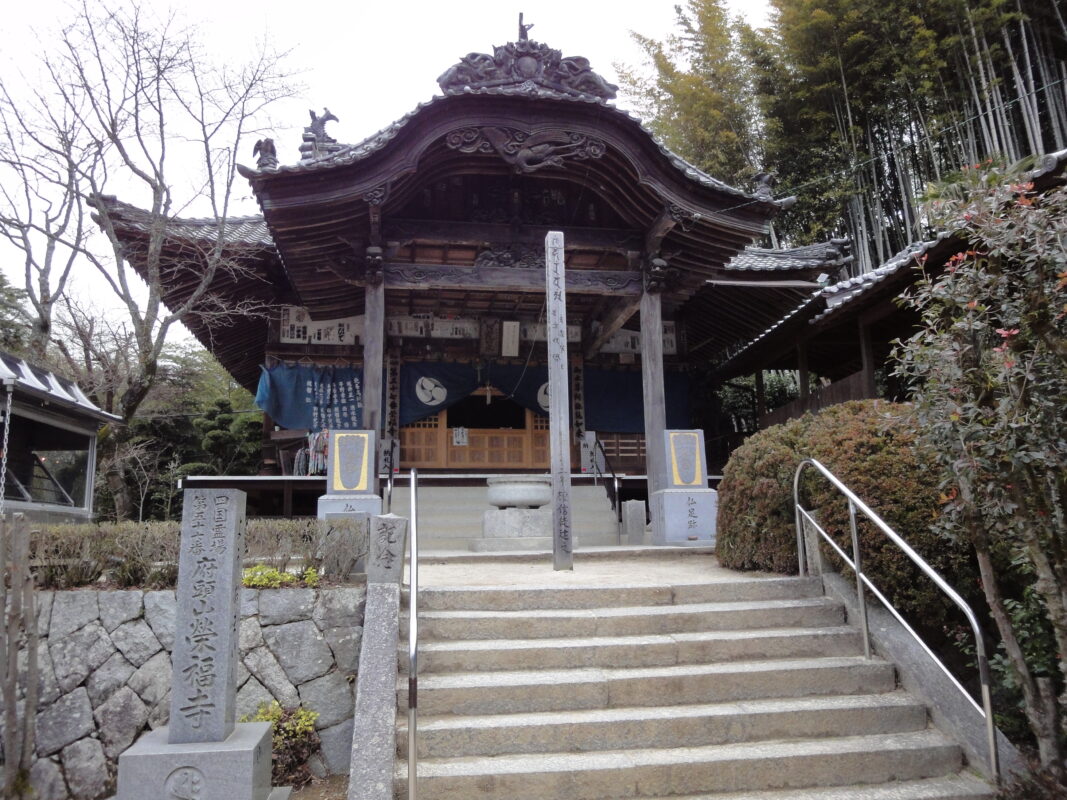
Eifukuji Temple Information
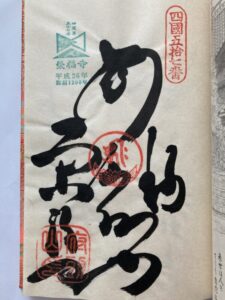
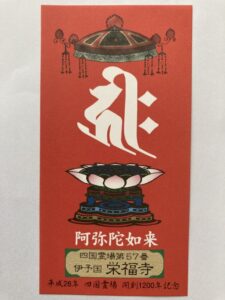
Goshuin
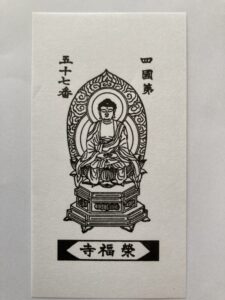
- Omie
- 1,200th Anniversary Edition
Basic Information
| Principal Deity | Amida Nyorai |
| Elevation | 50 m |
| Google Maps | MAP |
Accommodation
| Shukubo (Temple Lodging) | Not Available |
| Tsuyado (Free Pilgrim Shelter) | Not Available |
History & Highlights
Eifukuji is said to have been founded by Kūkai (Kōbō Daishi), who prayed for the safety of those traveling by sea. The temple enshrines Amida Nyorai as its principal image and has long been worshipped by people praying for safe voyages and protection of their families. It is also a valuable temple that preserves the history of Shinbutsu-shūgō, the traditional blending of Buddhism and Shinto beliefs.
Notes
Parking fee: Donation-based
Route Map, Distance & Travel Time
You can switch between the tabs to view the routes to the previous and next temples.
Select “Driving Route” from the map’s upper-left menu to display the driving route.
Click the Full Screen icon in the upper-right corner of the map to open it in Google Maps for a larger, easier-to-view map.
- From Previous Temple
- To Next Temple
Previous Temple: Taizanji
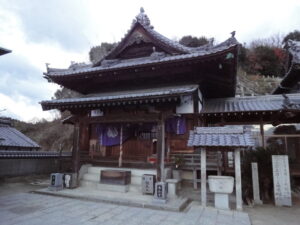
| Distance | 3.1 km |
| Walking | 50 min |
| Driving | 10 min |
Next Temple: Senyuji
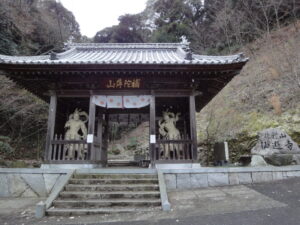
| Distance | 2.4 km |
| Walking | 40 min |
| Driving | 20 min |
Transportation Guide
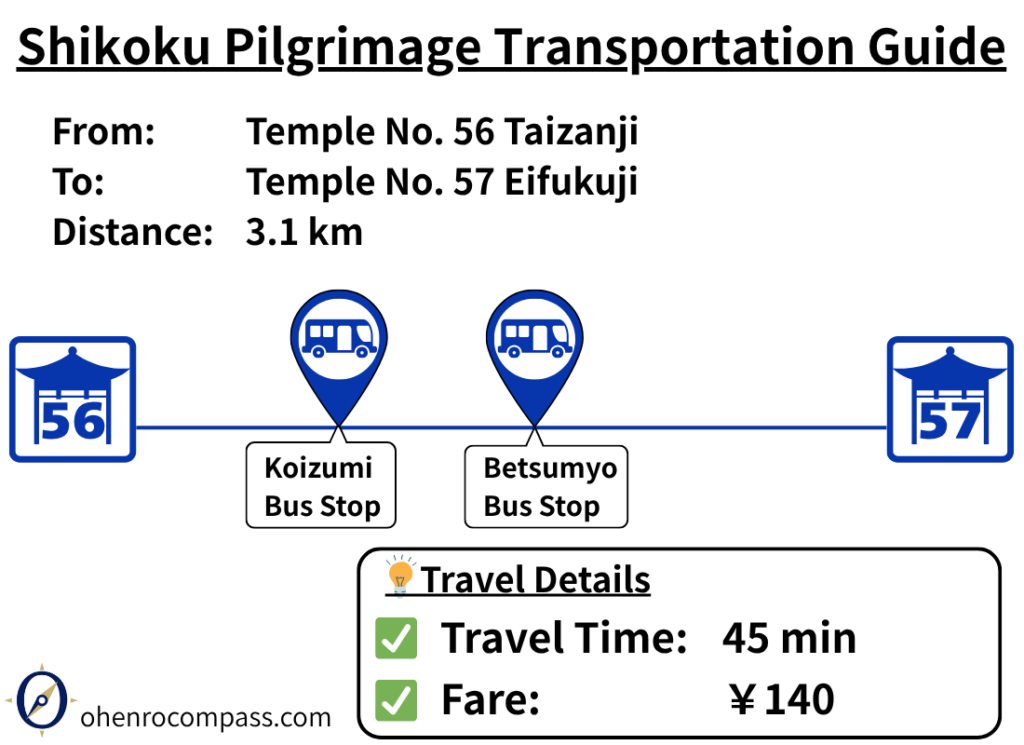
Travel from Taizanji (56th Temple) to Eifukuji (57th Temple) by bus in about 45 minutes for ¥140. Includes bus stops, timetable and a comparison with the walking route.
My Walking Experience
Eifukuji is located about 3 km (1.9 miles) south of Taizanji.
Along the Sōjagawa River between the two temples, peaceful farmland spreads across the landscape, creating a quiet and relaxing section of the pilgrimage trail.
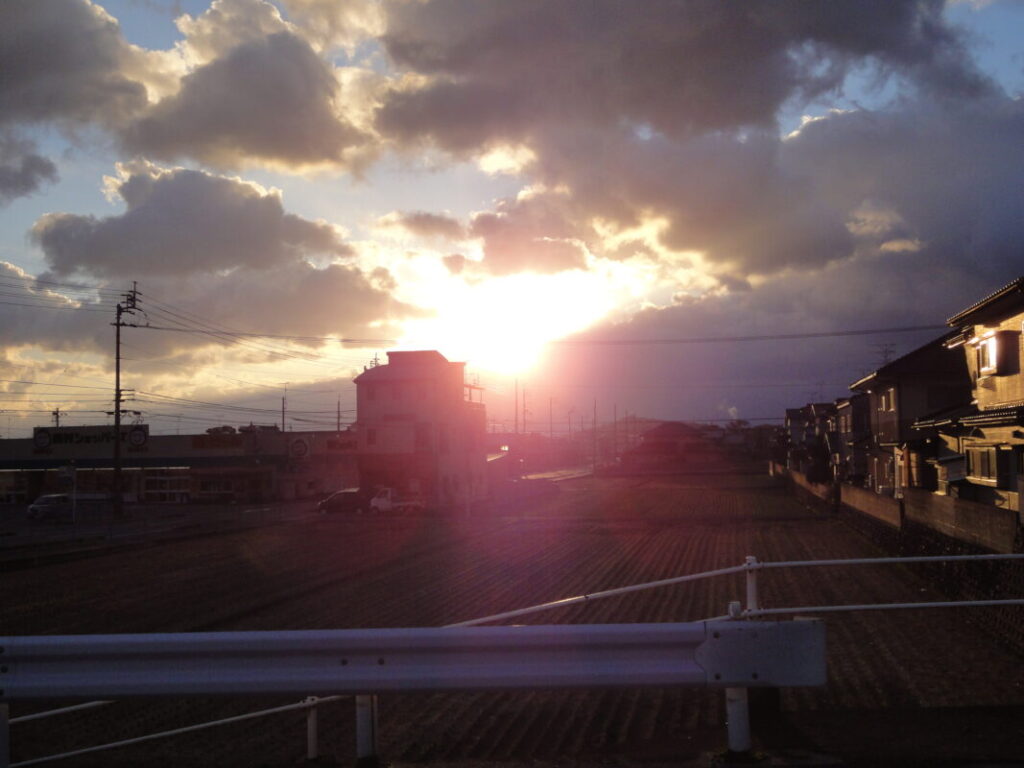
I stayed at the Tsuyadō at Taizanji on New Year’s Eve and visited Eifukuji on the morning of New Year’s Day. While walking the pilgrimage route early in the morning, I was able to see the first sunrise of the year rising beyond the residential area. I still remember walking with a special feeling, welcoming the beginning of a new year.
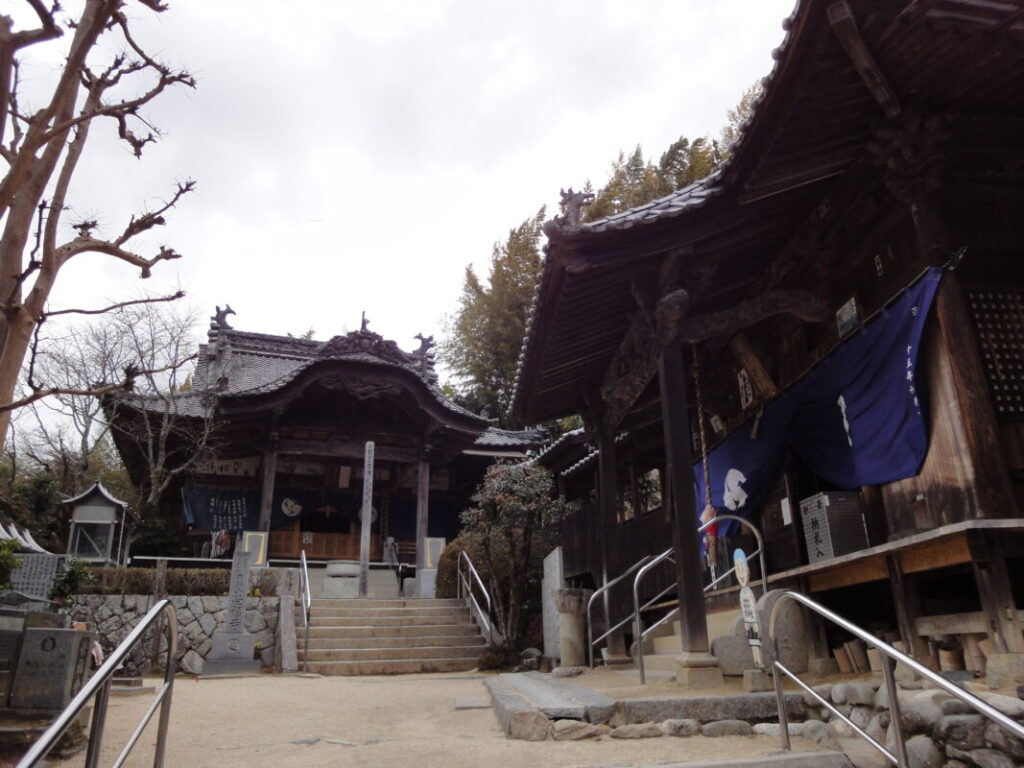
Highlights of Eifukuji
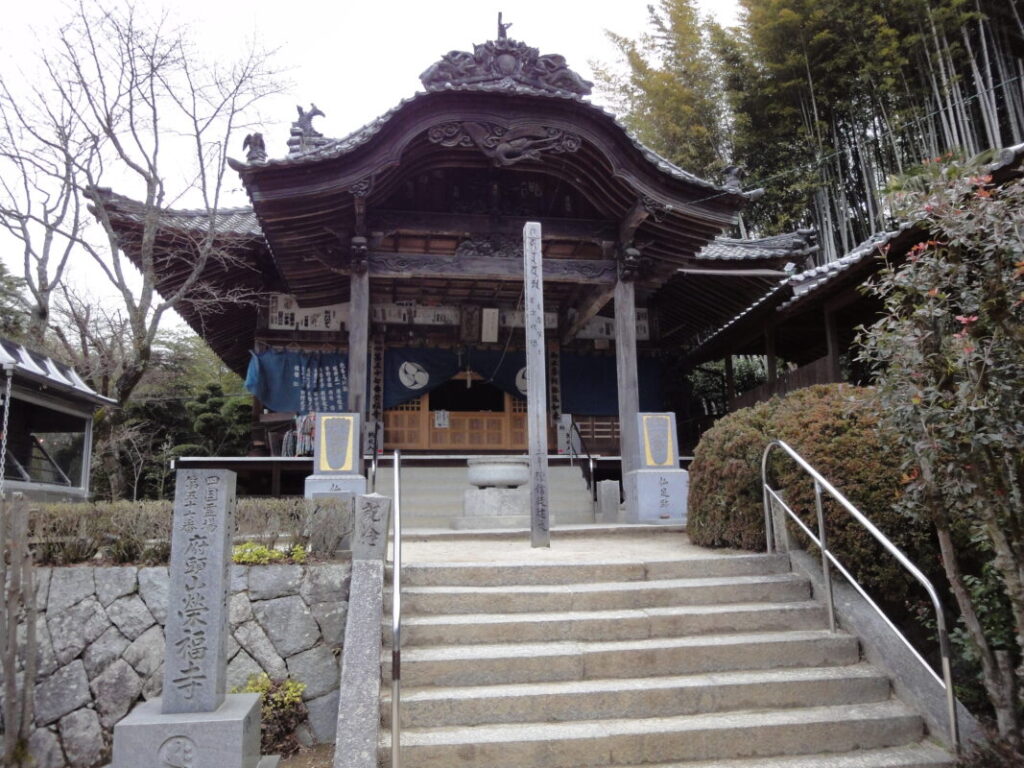
After climbing the stone steps into the temple grounds, you will find the Main Hall straight ahead and the Daishi Hall on the right. The compact layout, making use of the natural slope of the mountain, gives the temple a distinctive atmosphere.
In front of the Main Hall stands a Buddha footprint stone (busseki) decorated with a golden border. Its striking appearance makes it noticeable even from a distance.
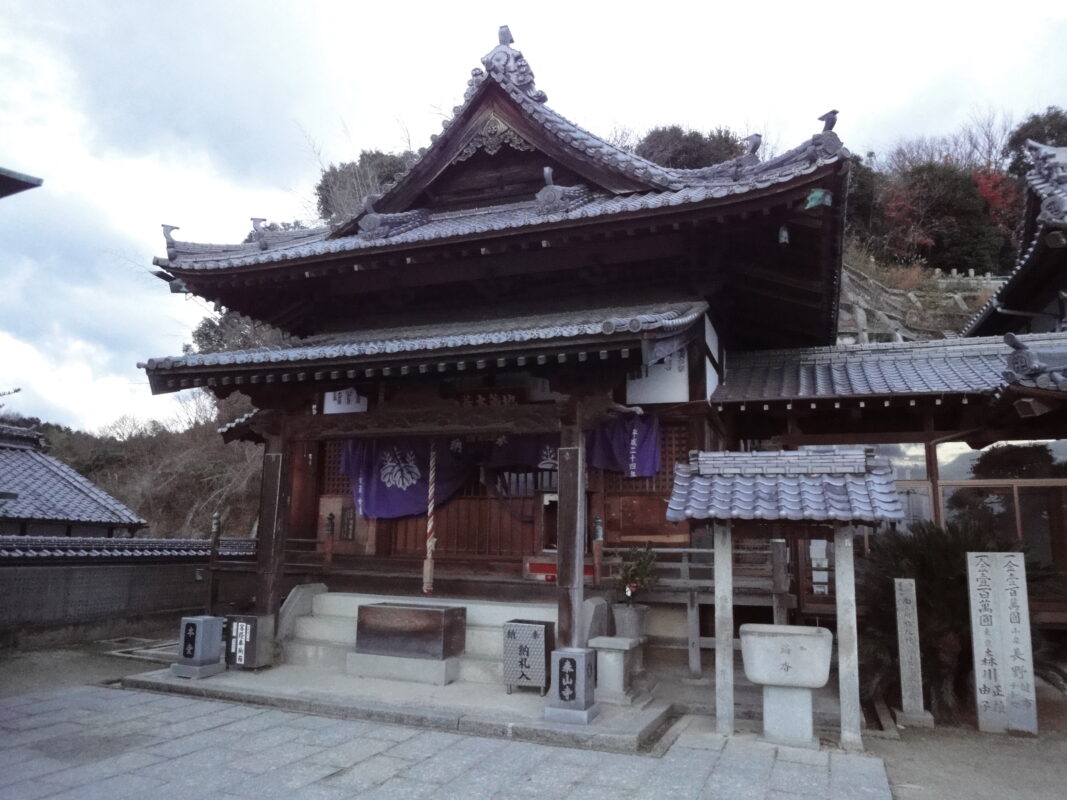
A Temple Relocated After the Separation of Buddhism and Shinto
Eifukuji originally flourished as the associated temple (bettōji) of Katsuoka Hachimangū Shrine during the period when Buddhism and Shinto were practiced together.
Even today, the temple maintains a close connection with the neighboring Iwashimizu Hachimangū Shrine, reflecting the history of a time when temples and shrines were part of the same religious complex.
However, following the Meiji government’s order to separate Buddhism and Shinto in the late 19th century, the temple and shrine were separated, and Eifukuji was relocated from its original site to its current position on the mountainside.
The present Daishi Hall was moved from a building that once stood at the summit of the mountain, preserving the history of the temple’s former location.
Nearby Accommodation
If you plan to stay near Eifukuji or between the surrounding pilgrimage temples, see the article below.

Related Articles
Shikoku 88 Temple Pilgrimage Route: Full List, Distance & Walking Time Guide.
Temple List and Full Route
Comments