
Maegamiji Temple Information
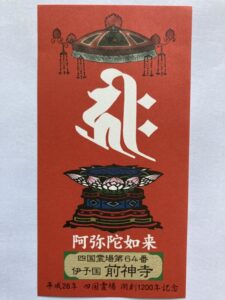
Goshuin

- Omie
- 1,200th Anniversary Edition

Basic Information
| Principal Deity | Amida Nyorai |
| Elevation | 30 m |
| Google Maps | MAP |
Accommodation
| Shukubo (Temple Lodging) | Not Available |
| Tsuyado (Free Pilgrim Shelter) | Not Available |
History & Highlights
Maegamiji is a historic temple that grew out of the mountain worship traditions of Mount Ishizuchi. According to tradition, it was founded by En no Gyōja, the legendary founder of Shugendō mountain asceticism, and later became a place where Kōbō Daishi also practiced. Throughout its history, the temple received the patronage of emperors and local lords, and it continues to be revered today as one of the central temples associated with the faith and traditions of Mount Ishizuchi.
Route Map, Distance & Travel Time
You can switch between the tabs to view the routes to the previous and next temples.
Select “Driving Route” from the map’s upper-left menu to display the driving route.
Click the Full Screen icon in the upper-right corner of the map to open it in Google Maps for a larger, easier-to-view map.
- From Previous Temple
- To Next Temple
Previous Temple: Kichijoji
| Distance | 3.2 km |
| Walking | 50 min |
| Driving | 10 min |
Next Temple: Sankakuji
| Distance | 45.2 km |
| Walking | 13 hr |
| Driving | 1 hr |
Transportation Guide
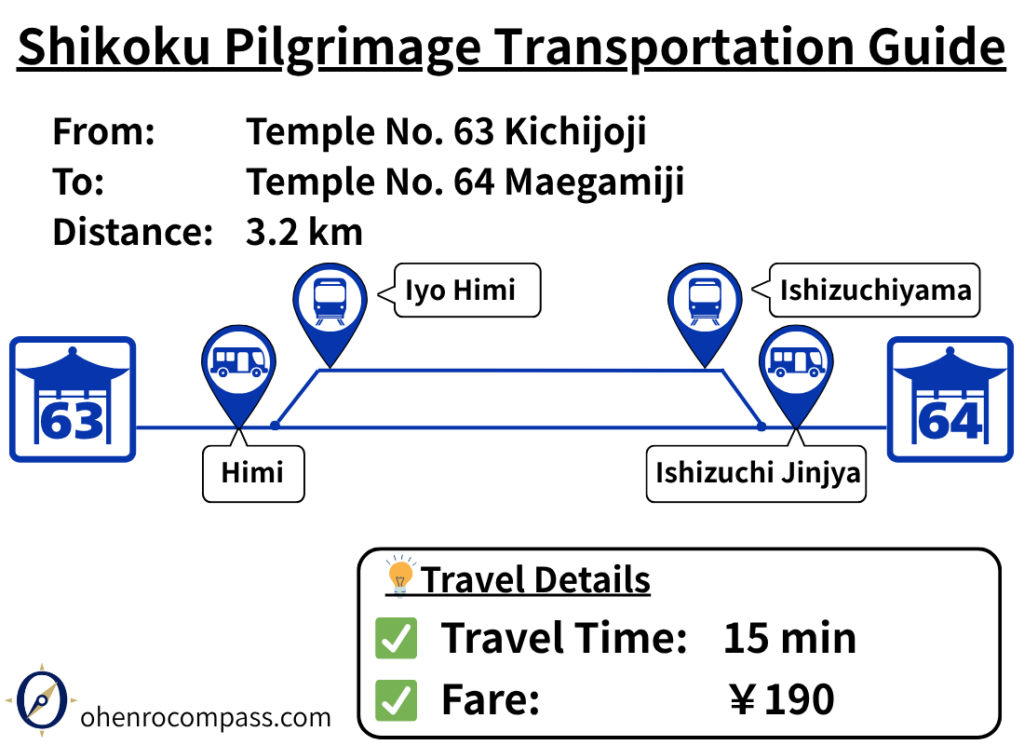
Travel from Kichijoji (63rd Temple) to Maegamiji (64th Temple) by train or bus in about 15 minutes for ¥190. Includes route details, timetables and a comparison with walking.
My Walking Experience
Maegamiji is located about 3 km (1.9 miles) east of Kichijōji.
Along the way, the mountains of the Ishizuchi Range, where Yokomineji is located, rise to the south. As I walked, I found myself thinking, “I was walking in those mountains only yesterday.”
The route map in this guide follows the old pilgrimage road, but National Route 11 is also straightforward and easy to follow. Either route works well for pilgrims.
The entrance to Maegamiji is marked by a signboard just before a small bridge crossing an irrigation canal. Turn right where the sign indicates, and the temple is only a short distance ahead.
Beautiful Covered Walkways
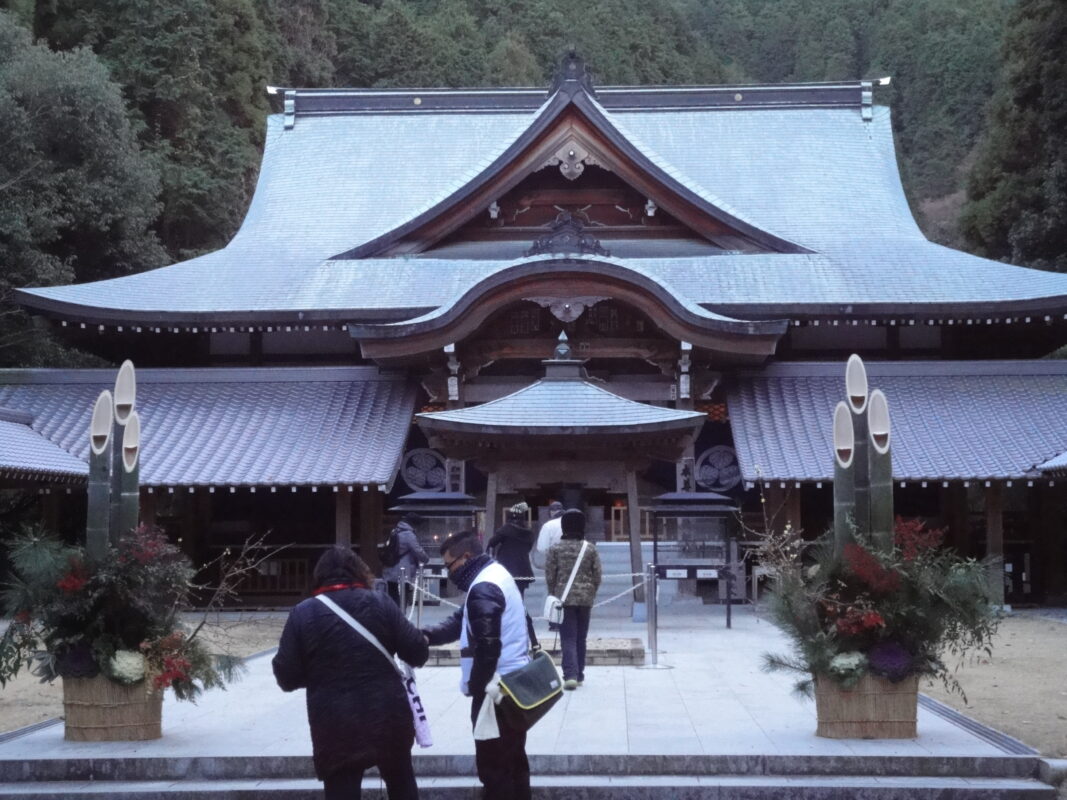
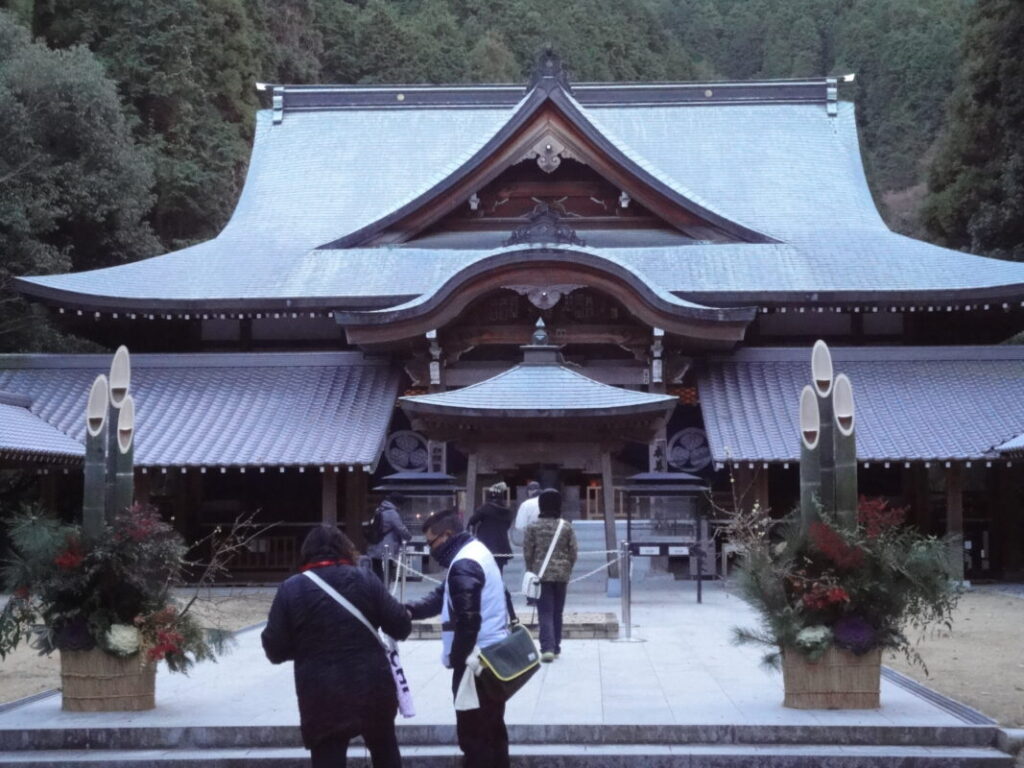
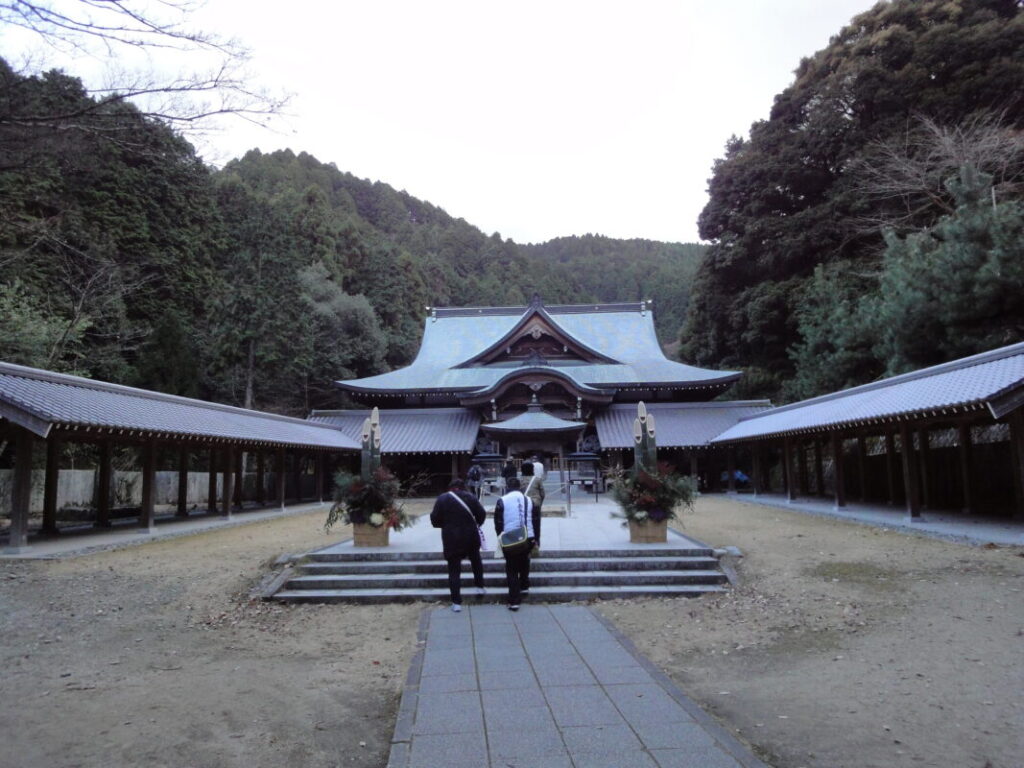
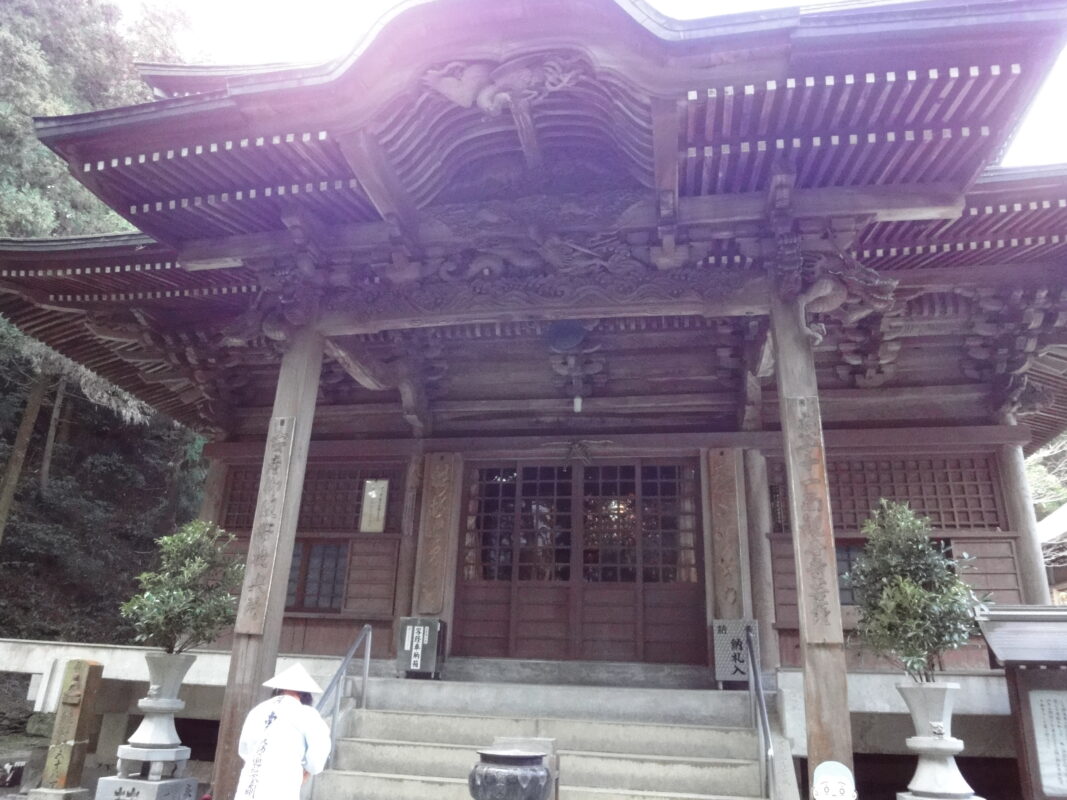
One of the first things that caught my attention at Maegamiji was the series of covered walkways extending from both sides of the Main Hall.
Their distinctive green-patina roofs blend beautifully with the surrounding forest, creating a calm and harmonious atmosphere.
The symmetrical arrangement of the buildings gives the temple grounds a particularly elegant appearance and makes it a place where many visitors stop to take photographs.
I visited during the New Year holiday season, and festive decorations could still be seen throughout the grounds, adding a celebratory atmosphere to the temple.
A Temple of Mount Ishizuchi Worship
Maegamiji is known as the former bettōji (administrative temple) of Mount Ishizuchi, one of Japan’s most revered sacred mountains.
Because of this connection, the temple attracts not only Shikoku pilgrims but also hikers, climbers, and visitors who come to worship at Mount Ishizuchi.
Behind the Daishi Hall, traces remain of a site where mountain ascetics once performed waterfall purification practices before undertaking their spiritual training.
These remnants serve as a reminder of the temple’s deep connection to the traditions of Mount Ishizuchi worship and Shugendō mountain asceticism.
Nearby Accommodation
If you plan to stay near Maegamiji or between the surrounding pilgrimage temples, see the article below.

Related Articles
Shikoku 88 Temple Pilgrimage Route: Full List, Distance & Walking Time Guide.
Temple List and Full Route
Comments