
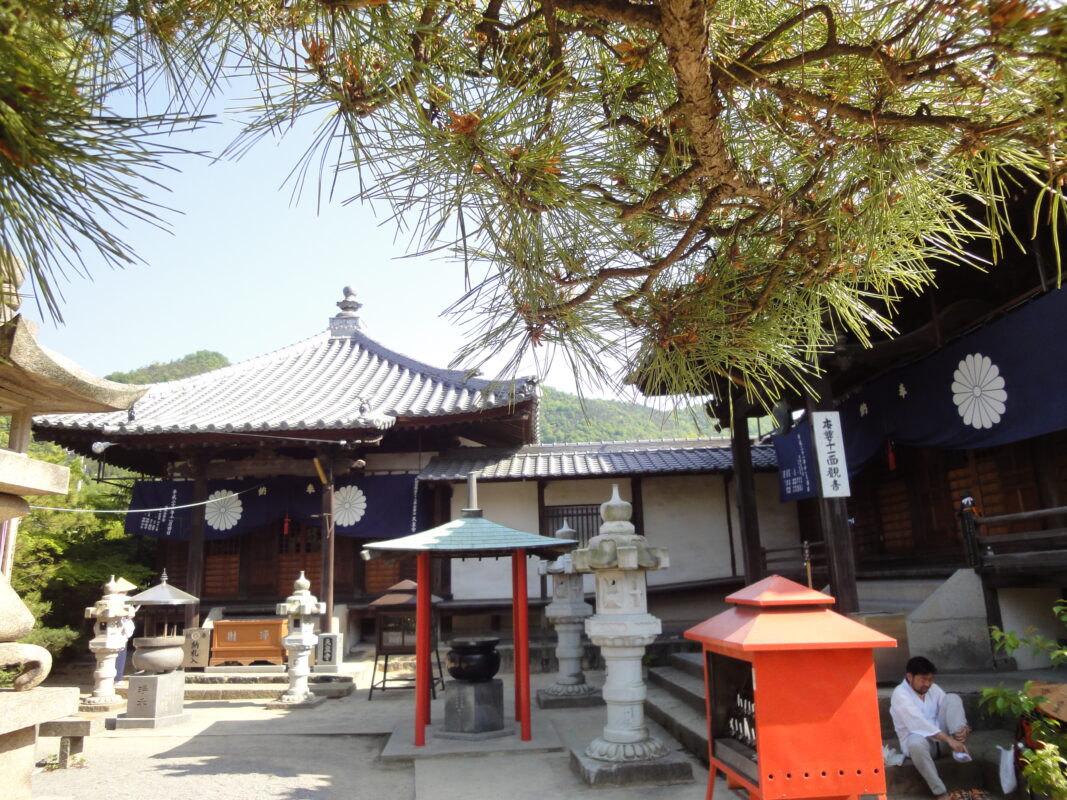
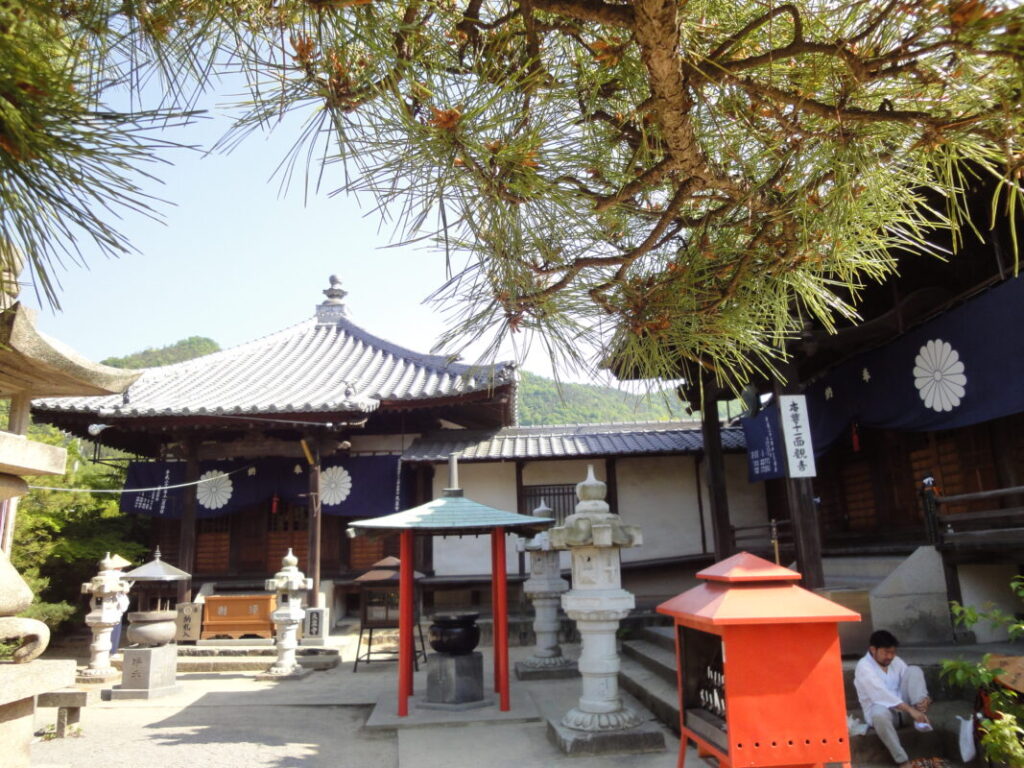
Tennoji Temple Information
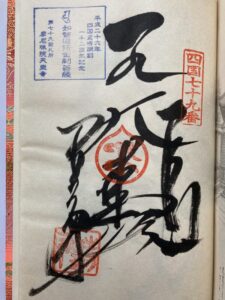
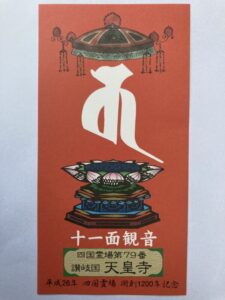
Goshuin
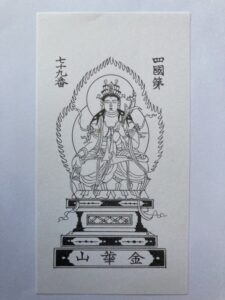
- Omie
- 1,200th Anniversary Edition
Basic Information
| Principal Deity | Eleven-Headed Kannon |
| Elevation | 20 m |
| Google Maps | MAP |
Accommodation
| Shukubo (Temple Lodging) | Not Available |
| Tsuyado (Free Pilgrim Shelter) | Not Available |
History & Highlights
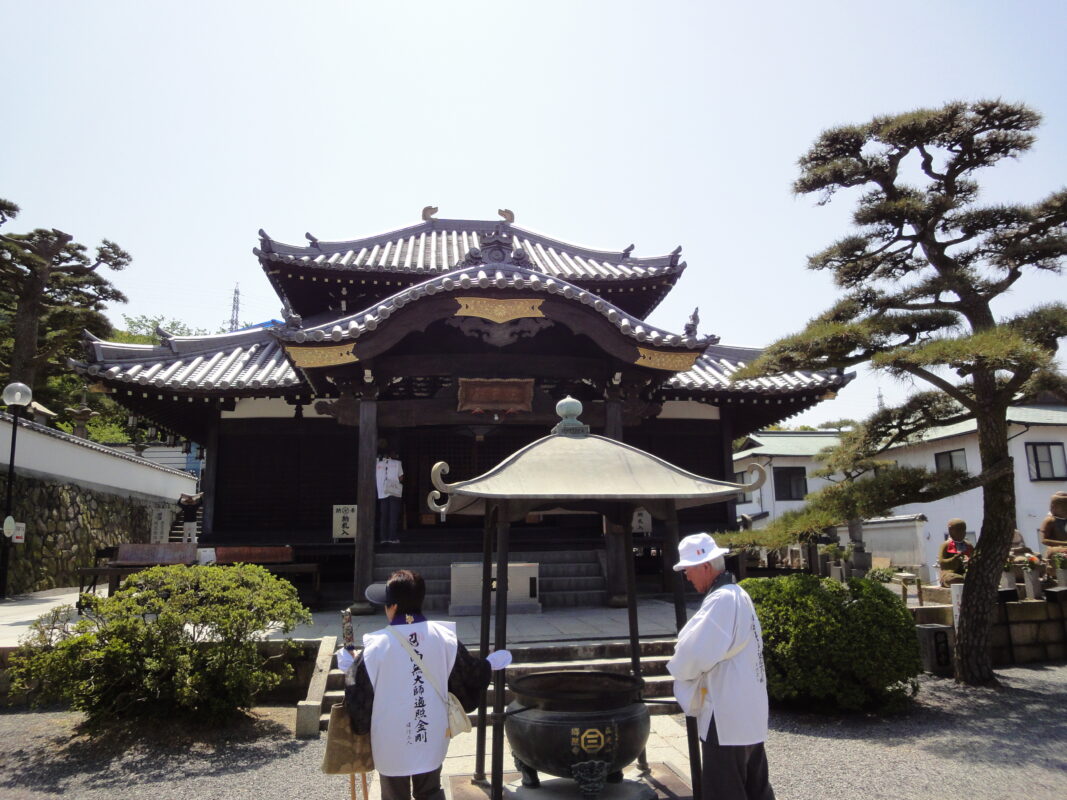
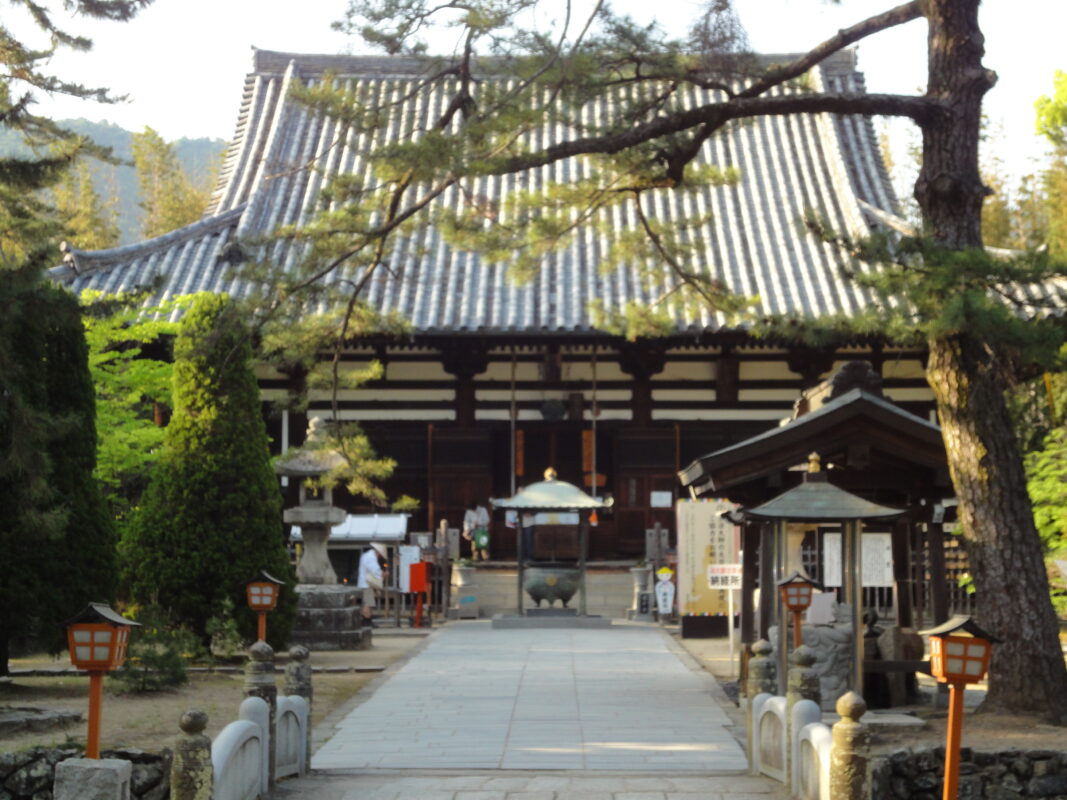
Tennoji Temple is said to have originated from Kinyama Manishu-in, a temple founded by Gyoki and later restored by Kobo Daishi.
It is known as a temple associated with Emperor Sutoku, who was exiled to Sanuki after the Hogen Rebellion. After his death, the temple became a place of worship dedicated to his spirit and has been revered under the name “Tennoji Temple” ever since.
Route Map, Distance & Travel Time
You can switch between the tabs to view the routes to the previous and next temples.
Select “Driving Route” from the map’s upper-left menu to display the driving route.
Click the Full Screen icon in the upper-right corner of the map to open it in Google Maps for a larger, easier-to-view map.
- From Previous Temple
- To Next Temple
Previous Temple: Goshoji
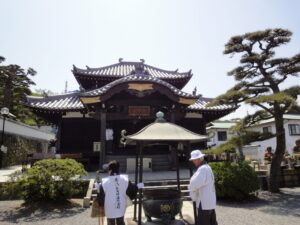
| Distance | 5.9 km |
| Walking | 1 hr 40 min |
| Driving | 15 min |
Next Temple: Kokubunji
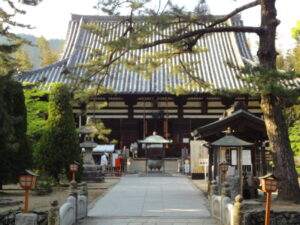
| Distance | 6.6 km |
| Walking | 2 hr |
| Driving | 15 min |
Transportation Guide
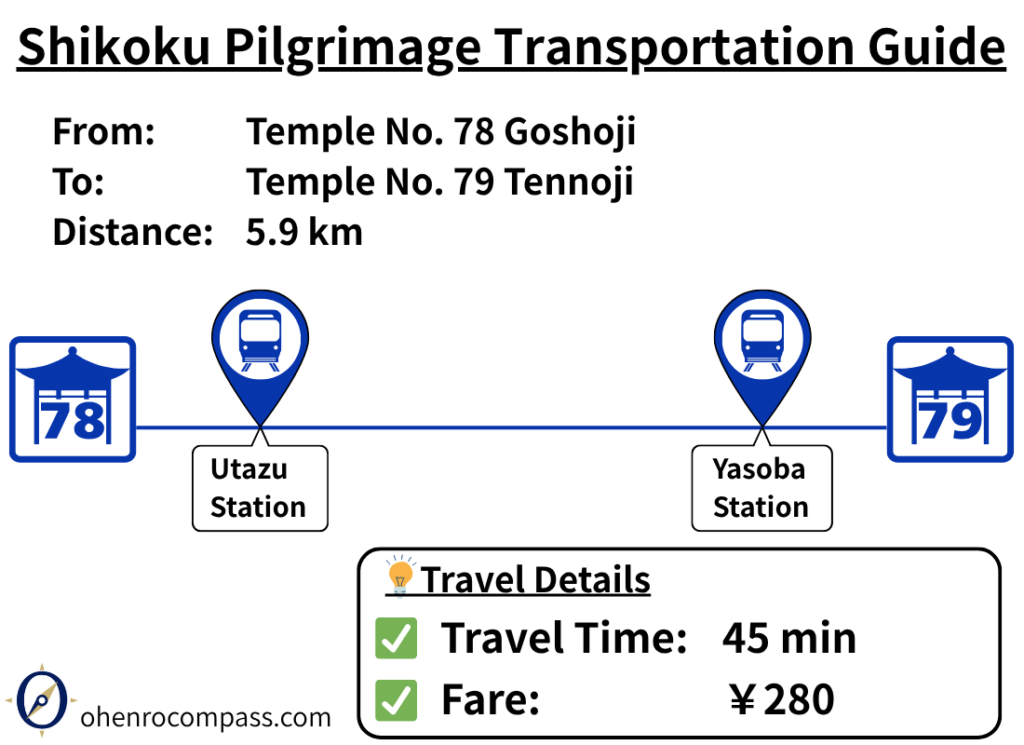
Find the train route from Temple 78 Goshoji to Temple 79 Tennoji. The route takes about 45 minutes including walking and costs ¥280. See the route via Utazu and Yasoiba Stations, plus a comparison with walking.
My Walking Experience
Tennoji Temple is located approximately 6 km east of Goshoji Temple.
After leaving Goshoji, continue east for about 1 km until you reach the elevated section of National Route 30. Turning right at the three-way intersection leads to an old historic route, and with signs along the way, it is easy to follow without getting lost.
There are many restaurants along this historic road, making it a convenient section for finding a place to eat. After walking about 3 km, the route passes through an arcade shopping street for approximately 500 meters. When I visited, many shops were closed, giving the area a slightly quiet and nostalgic atmosphere.
After about 5 km, a mountain appears on the right side. Following the path around the foot of Mount Kinyama, you will eventually arrive at Tennoji Temple.
History and Highlights of Tennoji Temple
The Sacred Spring of Yaso-ba and the Origins of Tennoji
The area of Yaso-ba, where Tennoji Temple is located, has long been known as a place of sacred water.
According to legend, 80 warriors who went to defeat a giant fish causing trouble in the South Sea were poisoned during their battle. After drinking the water from this spring, they were instantly revived, and the spring came to be called “Yaso-so-ba no Shimizu” (“the spring where eighty people were restored to life”).
During his pilgrimage through Shikoku, Kobo Daishi also visited this place. It is said that he carved statues of the Eleven-Headed Kannon, Amida Nyorai, and Aizen Myoo, and built a Buddhist hall here, marking the beginning of Tennoji Temple.
The Traditional Tokoroten Culture Along the Approach
Near Tennoji Temple, Shimizuya is famous for its tokoroten (gelidium jelly noodles) made using water from the Yaso-ba spring.
This local specialty continues to be enjoyed by many pilgrims and visitors as a unique treat along the pilgrimage route.
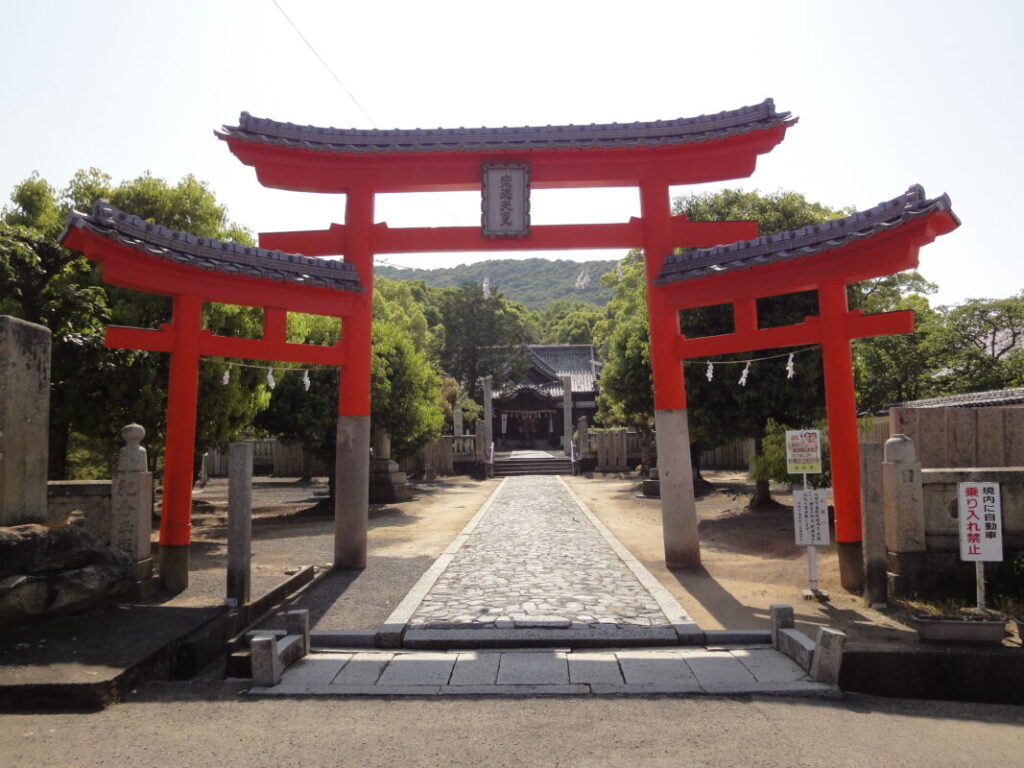
The Miwa-style Torii Gate and Shiramine Shrine
One of the most striking sights within the grounds is the vermilion Miwa-style torii gate. This gate belongs to Shiramine Shrine, which stands within the temple grounds.
It has a rare design similar to that of Omiwa Shrine in Nara Prefecture and is said to reflect the influence of Miwa Shinto traditions.
Its unusual shape, unlike ordinary torii gates, is one of the distinctive features that makes Tennoji Temple unique.
Nearby Accommodation
If you plan to stay near Tennoji or between the surrounding pilgrimage temples, see the article below.
Related Articles
Shikoku 88 Temple Pilgrimage Route: Full List, Distance & Walking Time Guide.
Temple List and Full Route
Comments