
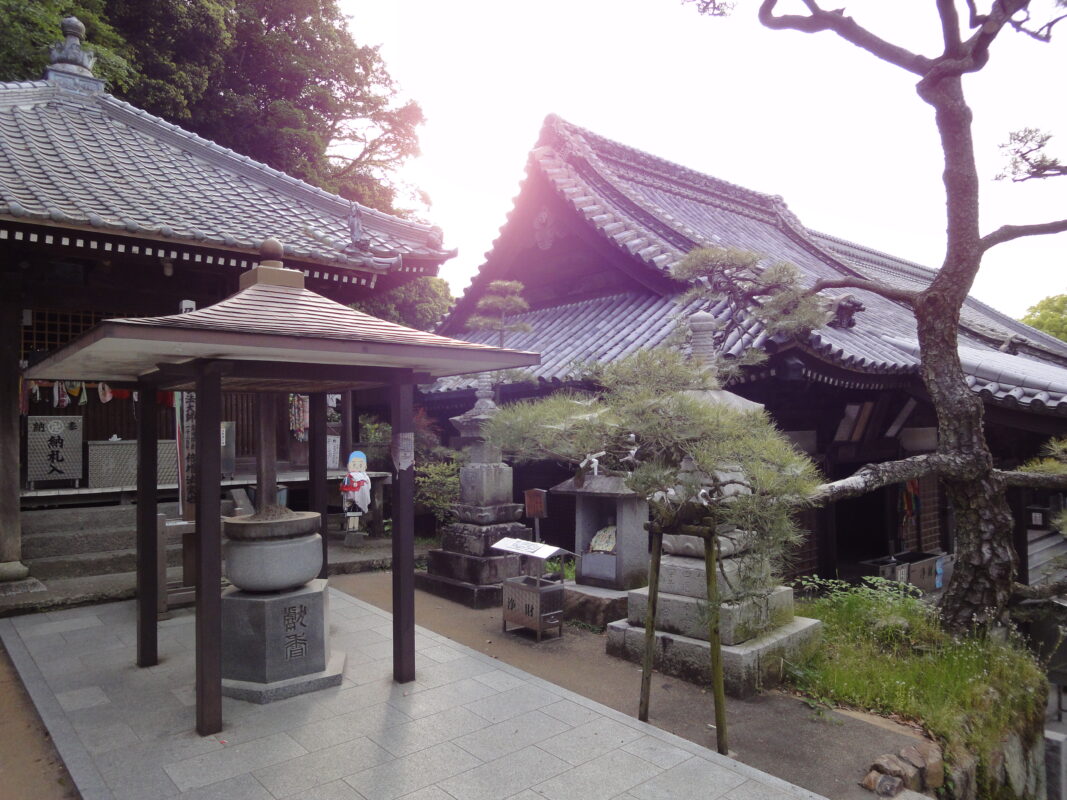
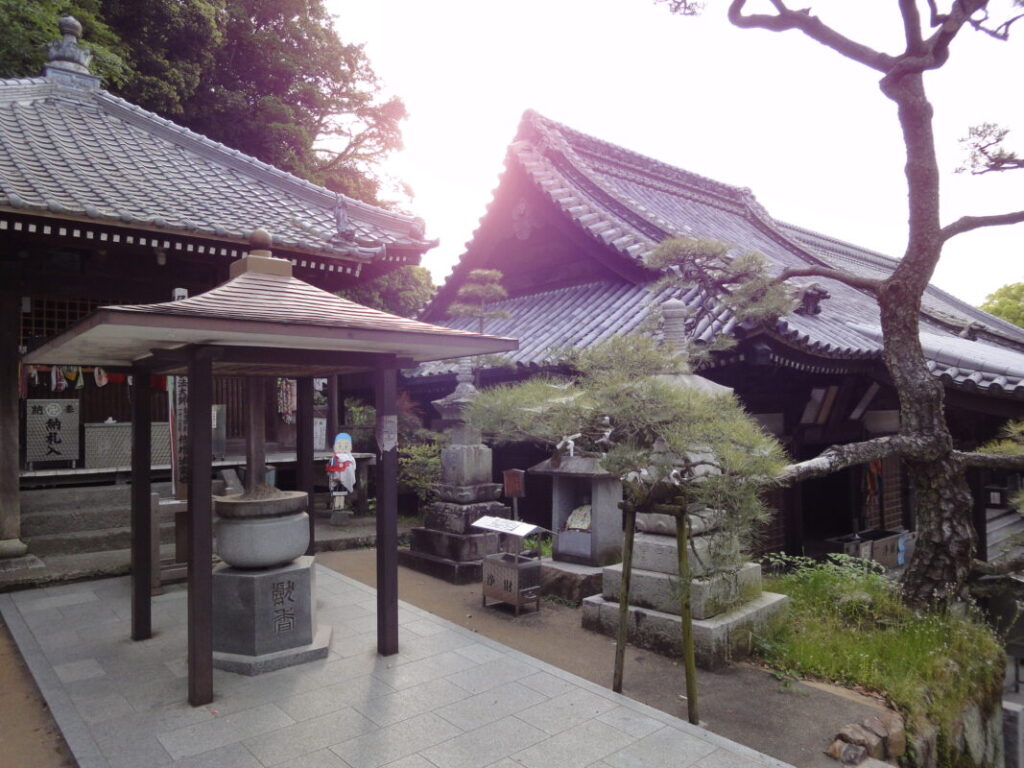
Koyamaji Temple Information
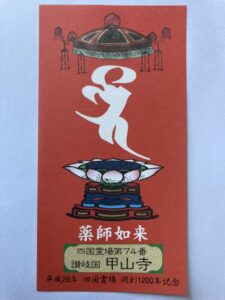
Goshuin
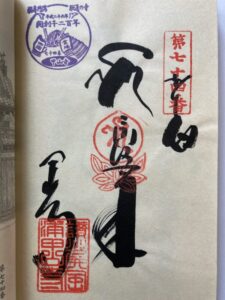
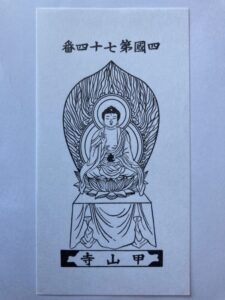
- Omie
- 1,200th Anniversary Edition
Basic Information
| Principal Deity | Yakushi Nyorai |
| Elevation | 20 m |
| Google Maps | MAP |
Accommodation
| Shukubo (Temple Lodging) | Not Available |
| Tsuyado (Free Pilgrim Shelter) | Not Available |
History & Highlights
Koyamaji Temple is a sacred site said to have been founded at a place associated with Kobo Daishi. According to tradition, the temple was established after Kobo Daishi prayed for the successful reconstruction of Manno Pond.
A statue of Bishamonten is enshrined in the cave where he is believed to have practiced, and later an image of Yakushi Nyorai was installed as the principal object of worship. The temple has long been revered as a place where people pray for good health and protection from illness.
Route Map, Distance & Travel Time
You can switch between the tabs to view the routes to the previous and next temples.
Select “Driving Route” from the map’s upper-left menu to display the driving route.
Click the Full Screen icon in the upper-right corner of the map to open it in Google Maps for a larger, easier-to-view map.
- From Previous Temple
- To Next Temple
Previous Temple: Shusyakaji
| Distance | 2.2 km |
| Walking | 40 min |
| Driving | 5 min |
Next Temple: Zentsuji
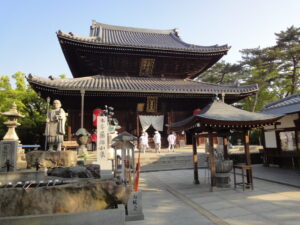
| Distance | 1.6 km |
| Walking | 30 min |
| Driving | 5 min |
My Walking Experience
Koyamaji Temple is located approximately 2 km northeast of Shusyakaji Temple. Along the way, an open rural landscape continues, and in the distance you can see Mount Kabuto, which gave the temple its name.
I visited in the evening, and the sight of the setting sun illuminating Mount Kabuto was especially memorable. It felt as if the mountain itself was guiding me toward the temple.
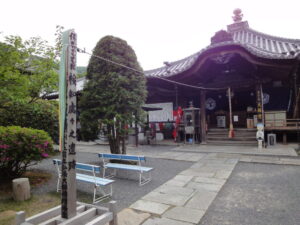
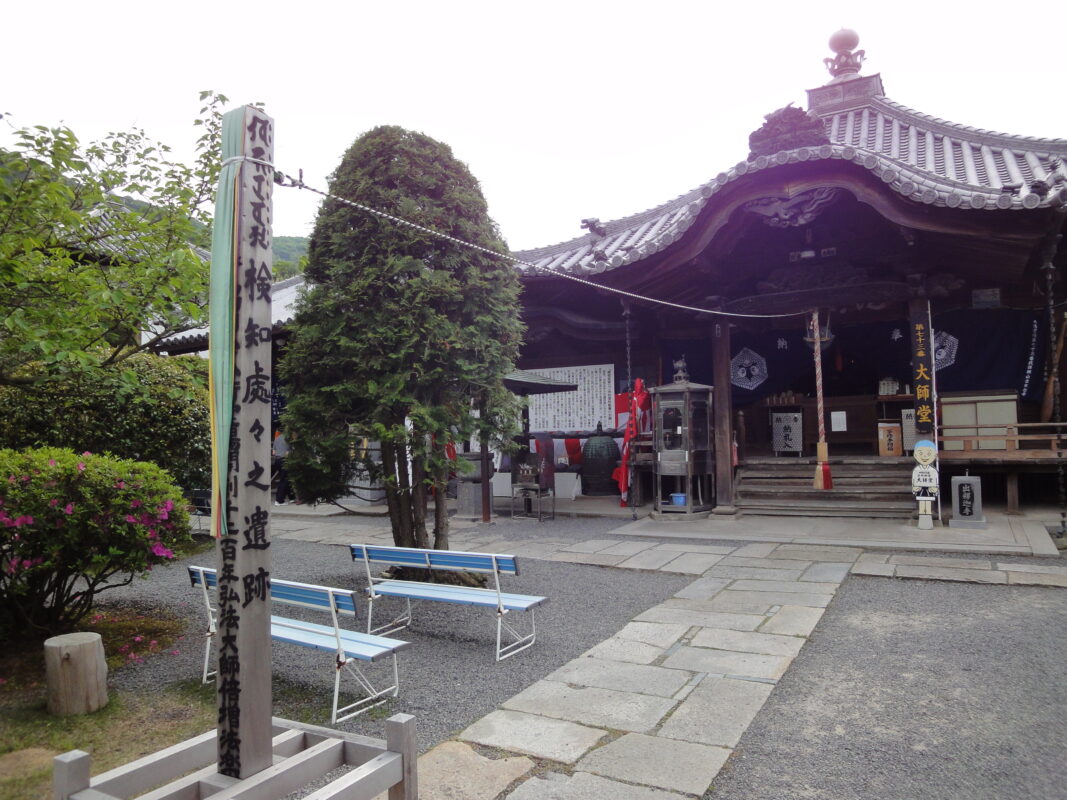
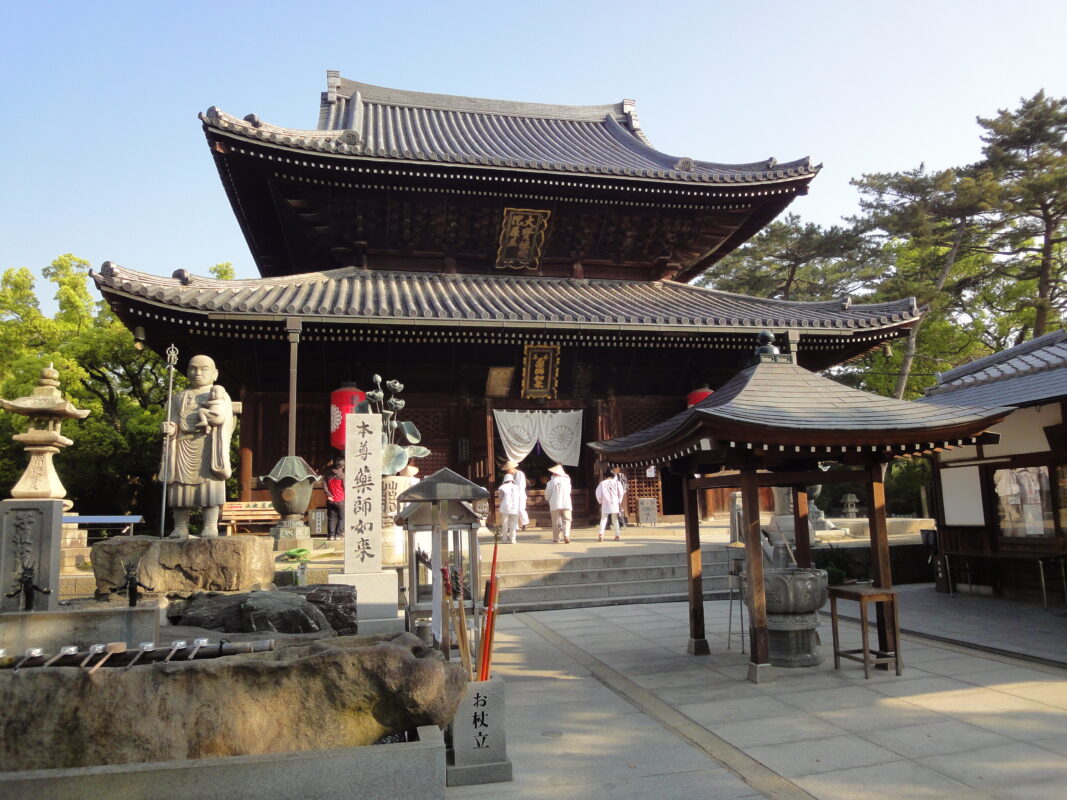
The temple grounds have a peaceful atmosphere, with a cave associated with Kobo Daishi located near the Daishi Hall. Although it is not a temple with grand structures or flashy attractions, I felt it was a quiet pilgrimage site that preserves the history and traditions connected to Kobo Daishi.
History and Highlights of Koyamaji Temple
Kobo Daishi and the Reconstruction of Manno Pond
The name Koyamaji is said to come from Mount Kabuto behind the temple, whose shape resembles the helmet worn by Bishamonten (Vaishravana).
Koyamaji is closely associated with Kobo Daishi and the reconstruction project of Manno Pond, one of the largest irrigation reservoirs in Japan.
In 821, Kobo Daishi was appointed by the imperial court to oversee the repair of Manno Pond. According to tradition, he secluded himself in a cave on Mount Kabuto, carved an image of Yakushi Nyorai, and performed Buddhist rituals praying for the successful completion of the project.
It is said that, through the efforts of many local people, Manno Pond was rebuilt in only a few months. In recognition of his achievement, Kobo Daishi used part of the reward granted by the imperial court to establish this temple and enshrined the Yakushi Nyorai statue he had carved as the principal image.
The Cave Associated with Kobo Daishi
To the left of the Daishi Hall is a cave extending approximately 12 meters deep.
This cave is believed to be the place where Kobo Daishi prayed for the successful reconstruction of Manno Pond. Inside, an image of Bishamonten said to have been carved by Kobo Daishi himself is enshrined.
It is one of the highlights of Koyamaji and is well worth visiting during your pilgrimage.
A Visit Combined with Manno Pond
Manno Pond is located approximately 10 km southeast of Koyamaji Temple.
It remains an important source of water for Kagawa Prefecture today, and seeing its enormous scale in person gives visitors a sense of the magnitude of the project undertaken by Kobo Daishi.
Near the shore of the pond is Jinnoji Temple, one of the 20 Bangai Sacred Sites of Shikoku, making it possible to visit both sites together.
Nearby Accommodation
If you plan to stay near Koyamaji or between the surrounding pilgrimage temples, see the article below.
Related Articles
Shikoku 88 Temple Pilgrimage Route: Full List, Distance & Walking Time Guide.
Temple List and Full Route
For a complete list of the Seven-Temple Pilgrimage, please see the article here.
What is the Shichikasho Pilgrimage? A Seven Temple Pilgrimage Route in Kagawa
Comments