
Across the 88 temples on the Shikoku 88 Temple Pilgrimage, various Buddhist deities are enshrined as the principal deity, including not only Buddhas and bodhisattvas but also other Buddhist figures. Among them, Bishamonten (Vaisravana) is one of the Four Heavenly Kings, who protect the Buddhist teachings. He has long been widely worshipped for benefits associated with wealth and prosperity, victory, and protection from misfortune.
As one of the Four Heavenly Kings, Bishamonten is also known as Tamonten. The name means “One Who Hears Much,” and he is worshipped not only as a guardian of the Buddhist teachings, but also as a figure who hears and responds to people’s prayers. He is often depicted like a warrior wearing armor, giving him a powerful and imposing appearance.
On the Shikoku 88 Temple Pilgrimage, only Temple No. 63, Kichijo-ji, enshrines Bishamonten as its principal deity.
In this article, we will explain in an easy-to-understand way who Bishamonten is, his relationship with the Four Heavenly Kings and Tamonten, what he looks like, and the benefits associated with worshipping him.
What Is Bishamonten?
Bishamonten (Vaisravana) is a deva, or heavenly Buddhist figure, who protects the Buddhist teachings.
In India, he was worshipped as a deity known as Vaisravana and was introduced to China and Japan along with Buddhism. In Japan, he is known as one of the Four Heavenly Kings, who protect the Buddhist teachings.
When enshrined as one of the Four Heavenly Kings, Bishamonten is known as Tamonten, the guardian of the north.
The name “Tamonten” means “One Who Hears Much,” referring to one who listens to many Buddhist teachings. He has long been worshipped as a Buddhist figure who listens carefully to the Dharma and protects it.
In Japan, Bishamonten is often depicted in a powerful warrior-like form, wearing armor and carrying weapons. He is worshipped as a strong protector who drives away evil and protects both the Buddhist teachings and the people who follow them.
What Does Bishamonten Look Like?
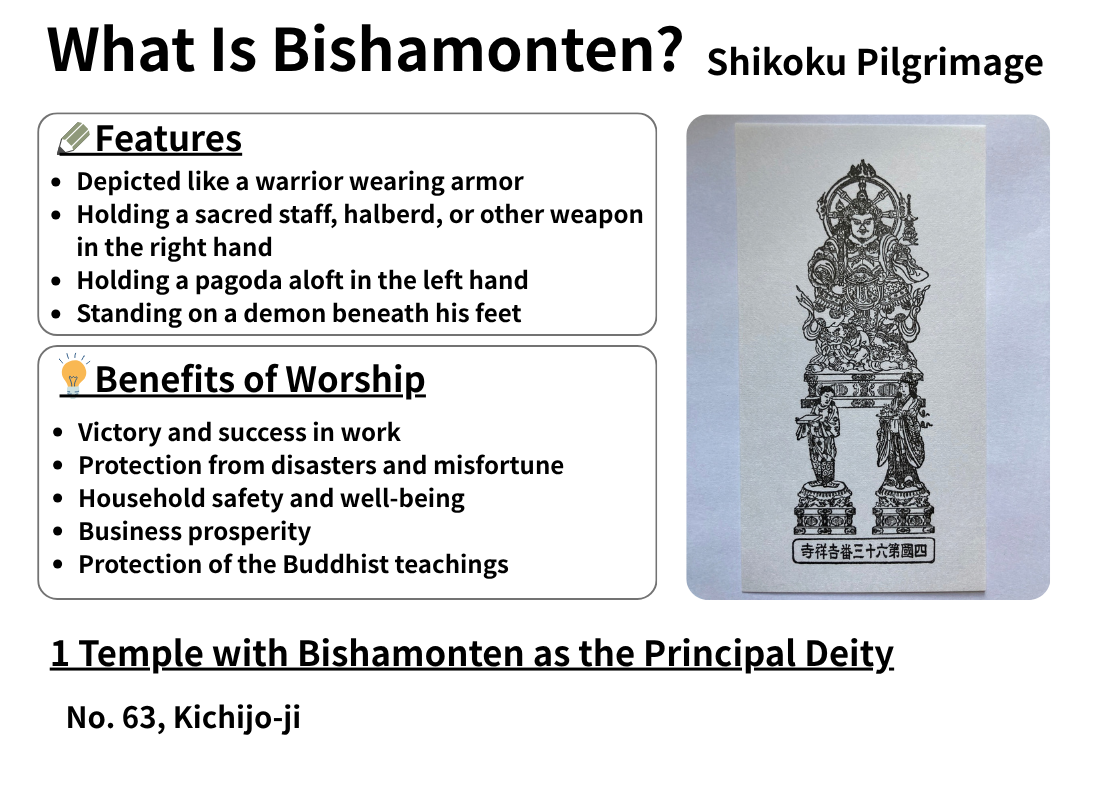
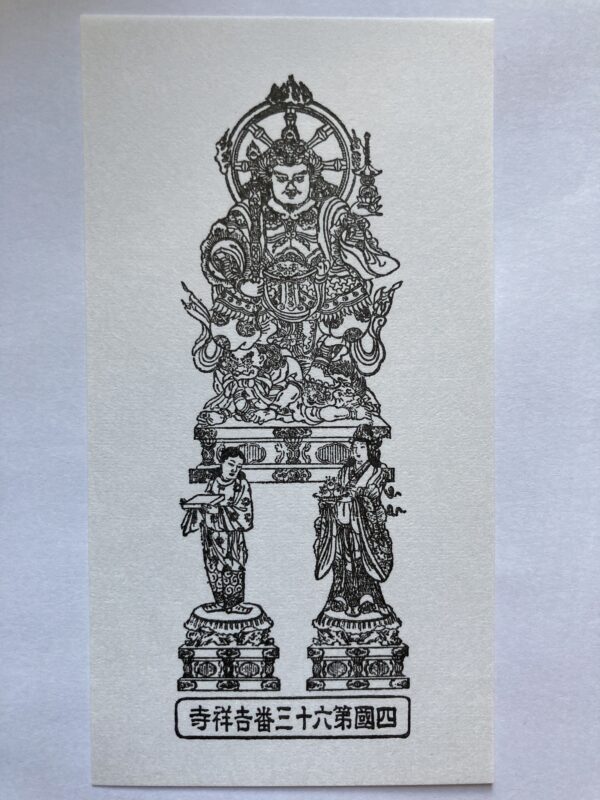
Bishamonten is generally depicted in the appearance of a warrior wearing armor.
He is often shown holding a Buddhist ritual weapon such as a sacred staff or halberd in his right hand and raising a pagoda in his left hand. He is also sometimes depicted standing on a demon beneath his feet.
His armored appearance reflects his role as a warrior deity who protects the Buddhist teachings.
The pagoda held in his left hand is traditionally regarded as a symbol of the Buddhist teachings and the Dharma.
In this way, the appearance of Bishamonten represents his role as a powerful protector who drives away evil, protects the Buddhist teachings, and guards people from harm and misfortune.
Omie
On Beishiramandaya Sowaka
- Victory and success in work
- Protection from disasters and misfortune
- Household safety and well-being
- Business prosperity
- Protection of the Buddhist teachings
Bishamonten and the Four Heavenly Kings
An important part of understanding Bishamonten is his relationship with the Four Heavenly Kings.
The Four Heavenly Kings are four heavenly Buddhist figures who are believed to protect the Buddhist teachings.
- East: Jikokuten
- South: Zochoten
- West: Komokuten
- North: Tamonten (Bishamonten)
Bishamonten is the guardian of the north.
For this reason, Bishamonten is not simply worshipped as a deity associated with good fortune. He also has an important role as a protector who guards the Buddhist teachings and protects people from evil and harm.
Benefits of Worshipping Bishamonten
Bishamonten has long been worshipped in connection with a variety of worldly benefits.
In particular, because of his role as a warrior deity and protector, he is known for benefits associated with victory, protection from misfortune, and protection from disasters.
Bishamonten is also worshipped as a deity associated with wealth and treasure. For this reason, people may visit temples to pray for financial prosperity, success in business, and the prosperity of their household.
Some of the main benefits traditionally associated with worshipping Bishamonten include:
- Victory and success in work
- Protection from disasters and misfortune
- Household safety and well-being
- Business prosperity
- Protection of the Buddhist teachings
However, Bishamonten is not simply a Buddhist figure who grants financial prosperity.
As a protector of the Buddhist teachings, he can also be understood as a figure to whom people pray for the strength to face difficulties and the protection needed to follow the right path.
Bishamonten and Wealth and Prosperity
In Japan, Bishamonten has also long been widely worshipped as a Buddhist figure associated with wealth and prosperity.
In Indian mythology, Bishamonten is believed to have a connection with Kubera, a deity associated with treasures and wealth. In Japan, this gradually led to the development of a tradition of worshipping Bishamonten as a Buddhist figure who bestows fortune, prosperity, and treasure.
For this reason, Bishamonten has long been worshipped by people engaged in business and agriculture, among others.
The Bishamonten at Temple No. 63, Kichijo-ji, is also said to have been known since ancient times as “Komochi Daigongen”, meaning “the Great Avatar Who Brings Rice,” and to have received particularly strong devotion from farmers.
The Shikoku 88 Temple Pilgrimage Temple Where Bishamonten Is the Principal Deity
On the Shikoku 88 Temple Pilgrimage, only Temple No. 63, Kichijo-ji, enshrines Bishamonten as its principal deity.
Temple No. 63, Kichijo-ji
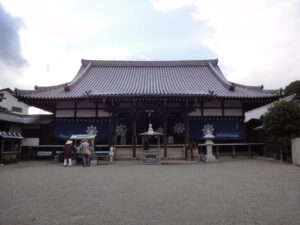
Temple No. 63, Kichijo-ji, is a temple of the Toji-ha branch of Shingon Buddhism located in Saijo City, Ehime Prefecture.
Kichijo-ji is the only temple on the Shikoku 88 Temple Pilgrimage where Bishamonten is enshrined as the principal deity. The words “Shikoku Yuiitsu-tai Bishamonten-o Chinza” are also displayed on the gate pillars of the temple grounds, highlighting this distinctive feature of Kichijo-ji.
According to the temple’s origin story, when Kobo Daishi was traveling through this area teaching Buddhism, he discovered a Japanese cypress tree that was shining brightly.
Kobo Daishi is said to have carved statues of Bishamonten, Kichijoten, and Zenishi Doji from the sacred tree and built a temple hall with the wish of relieving people from poverty and suffering. This is traditionally regarded as the beginning of Kichijo-ji.
Conclusion
Bishamonten is one of the Four Heavenly Kings who protect the Buddhist teachings and is also known as Tamonten, the guardian of the north.
He is often depicted in the form of a warrior wearing armor and is widely worshipped for benefits associated with protection from misfortune and disasters, victory and success, wealth, and prosperity.
On the Shikoku 88 Temple Pilgrimage, only Temple No. 63, Kichijo-ji, enshrines Bishamonten as its principal deity.
When visiting Temple No. 63, Kichijo-ji, you may wish to pay attention not only to Bishamonten’s powerful appearance, but also to his role as Tamonten, the protector of the Buddhist teachings, as well as his relationship with Kichijoten and Zenishi Doji.
Comments