
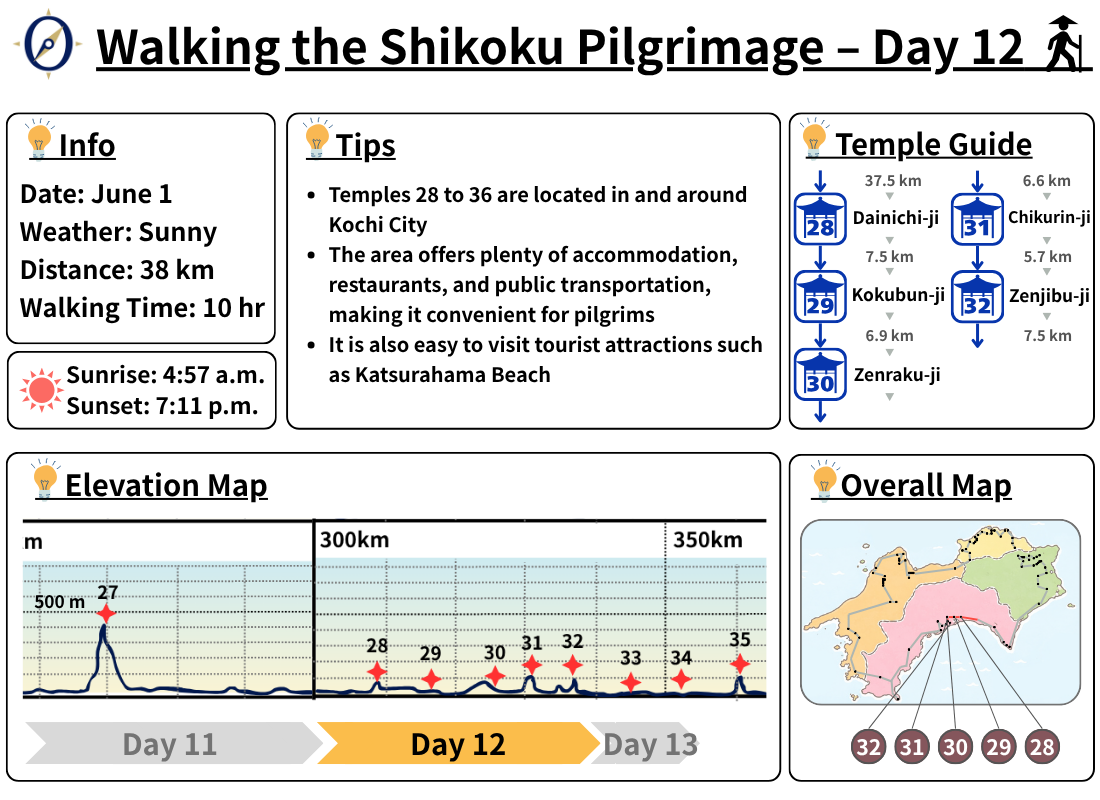
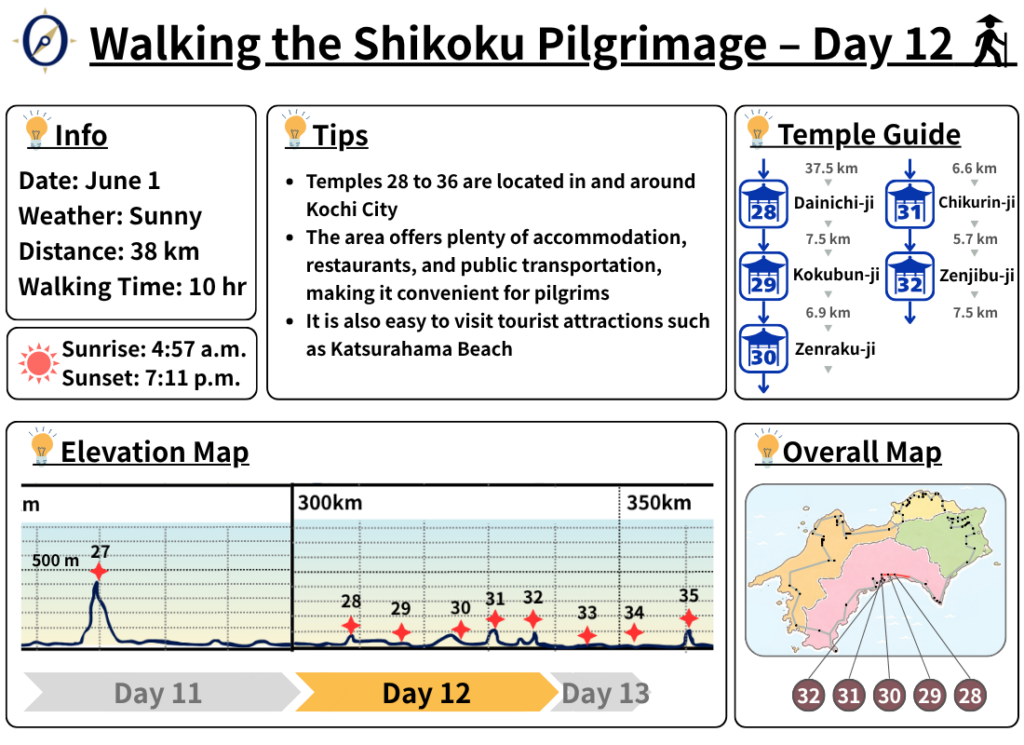
On Day 12 of my Shikoku pilgrimage, I departed from Roadside Station Yasu and visited five temples in Kochi Prefecture, from Temple 28, Dainichi-ji, to Temple 32, Zenjibu-ji. Along the way, I encountered fellow pilgrims at Matsumoto Daishido, admired the beautiful moss-covered grounds of Kokubun-ji, visited Zenraku-ji, which has a deep connection with Tosa Shrine, and explored Chikurin-ji, known for its impressive five-story pagoda. From Zenjibu-ji, the final temple of the day, I enjoyed a panoramic view of Tosa Bay. After a full day of walking, I spent the night camping outdoors in a park in Niida. This article explores the changing scenery along the pilgrimage route as it approaches central Kochi City, along with the highlights of visiting these temples.
- Itinerary
- Departing from Roadside Station Yasu: Day 12 of the Shikoku Pilgrimage as I Approach Central Kochi City
- Temple 28 Dainichi-ji | A Quiet Temple Nestled in the Mountains
- Meeting a Pilgrim from Hokkaido at Matsumoto Daishido
- Temple 29 Kokubun-ji | Beautiful Temple Grounds Known as the Moss Temple of Tosa
- Temple 30 Zenraku-ji | The History of Shinto-Buddhist Syncretism Alongside Tosa Shrine
- Temple 31 Chikurin-ji | A Five-Story Pagoda Overlooking Kochi City Amid the Fresh Greenery of Early Summer
- Temple 32 Zenjibu-ji | The “Ship’s Guardian Kannon” Overlooking Tosa Bay
- Camping Outdoors in Niida | Reflecting on Day 12 of the Shikoku Pilgrimage
- Temple Information
Itinerary
- 5:30Departure
- Roadside Station Yasu
- 8:00Temple No. 28, Dainichi-ji
- Matsumoto Daishido
- 10:45Temple No. 29, Kokubun-ji
- Kanbara Rest Area
- 13:00Temple No. 30, Zenraku-ji
- 15:00Temple No. 31, Chikurin-ji
- 16:30Temple No. 32, Zenjibu-ji
- 18:00Niida
Overnight stay
Departing from Roadside Station Yasu: Day 12 of the Shikoku Pilgrimage as I Approach Central Kochi City
June 1, Sunny
I woke up before 5 a.m. Today marks the 12th day of my Shikoku pilgrimage on foot.
Yesterday, I walked approximately 40 km from Nahari and spent the night camping outdoors on the coast in Yasu. My first destination today was Dainichi-ji, Temple 28, about 10 km away. Beyond that, the temples are spaced relatively close together, with distances of around 7 km between them.
As the morning sky began to glow with the sunrise, I got ready for another day of walking.
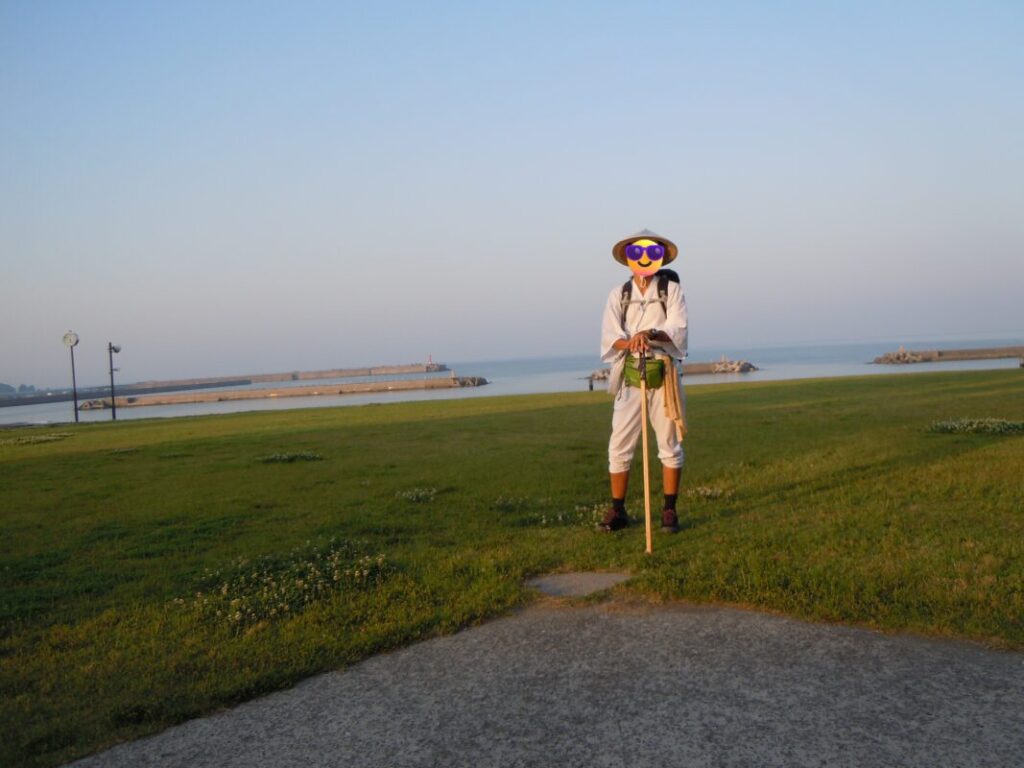
Departing from Roadside Station Yasu at 5:30 a.m.
How far would I be able to walk today? I decided to check how my feet were feeling and keep a comfortable pace without pushing myself too hard.
I headed northwest along National Route 55. After walking for about an hour, I spotted an elevated expressway ahead. From there, I continued north and arrived at my first destination, Dainichi-ji (Temple 28), just before 8 a.m.
Temple 28 Dainichi-ji | A Quiet Temple Nestled in the Mountains
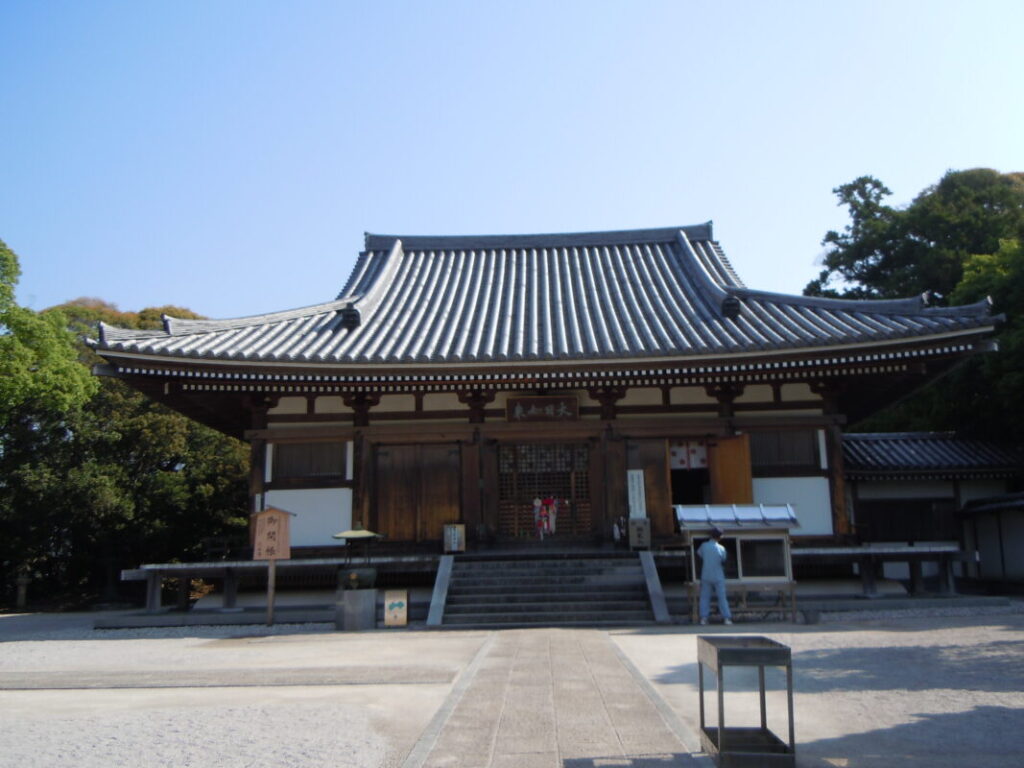
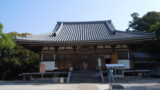
Dainichi-ji is located at the foot of the mountains in Noichi Town. The approach to the temple is surrounded by trees, with a path that climbs through the forest. Once I reached the temple grounds, the view opened up, and I was greeted by a peaceful atmosphere far removed from the noise of everyday life.
As planned, I completed my morning visit to the temple. There were still few visitors, allowing me to offer my prayers in a calm and quiet setting.
My next destination was Kokubun-ji, Temple 29. From here, I headed west.
Meeting a Pilgrim from Hokkaido at Matsumoto Daishido
Kokubun-ji is about 8 km from Dainichi-ji. I crossed the Monobe River, which runs along the border between Konan and Nankoku cities, and continued west through the rural landscape beyond.
Since entering Kochi Prefecture from Tokushima, I had spent several days walking along the coast. It was refreshing to see peaceful countryside again after such a long time, and I enjoyed the pleasant walk through the fields.
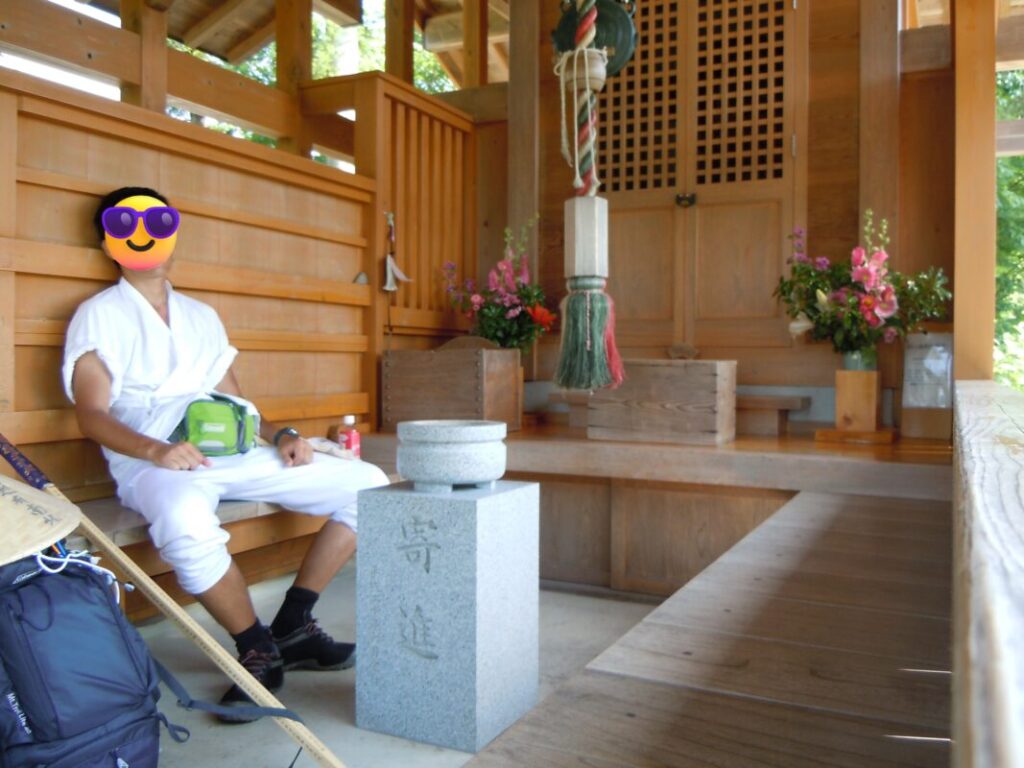
Along the way, I came across Matsumoto Daishido and decided to take a break.
The rest area had a covered space for visitors, as well as a well-maintained restroom. The facilities were clean and well cared for, giving me a sense of how warmly the local community welcomes pilgrims.
While I was resting, I noticed another pilgrim who had arrived before me. After chatting for a while, I learned that they had come all the way from Hokkaido.
We shared stories about our journeys and encouraged each other. These casual encounters are one of the special pleasures of walking the Shikoku pilgrimage.
After finishing my break, I set off again.
Temple 29 Kokubun-ji | Beautiful Temple Grounds Known as the Moss Temple of Tosa
After leaving Matsumoto Daishido, I followed the signposts west. There were many bends along this section, and some places made it difficult to tell which direction to go. It was a stretch where I needed to pay close attention to the pilgrimage route signs to avoid missing a turn.
After passing through the rural area, I crossed a bridge over the Kokubu River heading north. Just after crossing, I turned left and spotted a small wooded area standing alone in the open landscape.
“Could that be Kokubun-ji?”
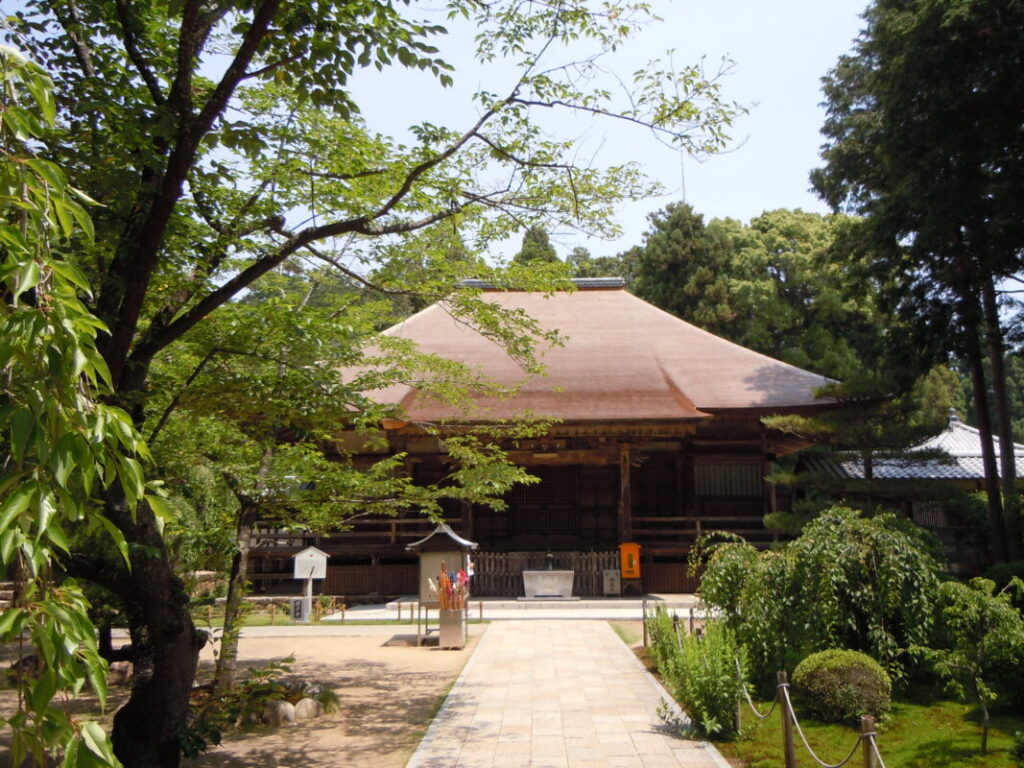
Just as I had expected, Temple 29 Kokubun-ji was waiting beyond it. I arrived shortly before 11 a.m.
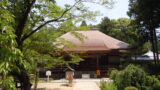
The approach from the main gate into the temple grounds was particularly beautiful. Tall trees lined both sides of the path, providing pleasant shade. Moss covered the ground, its vivid green catching my eye.
Kokubun-ji is also known as the “Moss Temple of Tosa.”
After enjoying the atmosphere of its beautiful gardens and completing my prayers, I headed for the next temple.
Temple 30 Zenraku-ji | The History of Shinto-Buddhist Syncretism Alongside Tosa Shrine
My next destination was Zenraku-ji, Temple 30, about 7 km west of Kokubun-ji.
After leaving Kokubun-ji, I continued west until I reached the busy National Route 32. One unusual feature here was an underground pedestrian passage beneath the road. It allowed me to cross safely without having to take a long detour to the nearest crosswalk.
Beyond that, the pilgrimage route followed the Tosa Kita Kaido. I walked through the countryside along an irrigation canal. Along the way, stone markers indicating the old pilgrimage route still remained, giving the path a sense of history.
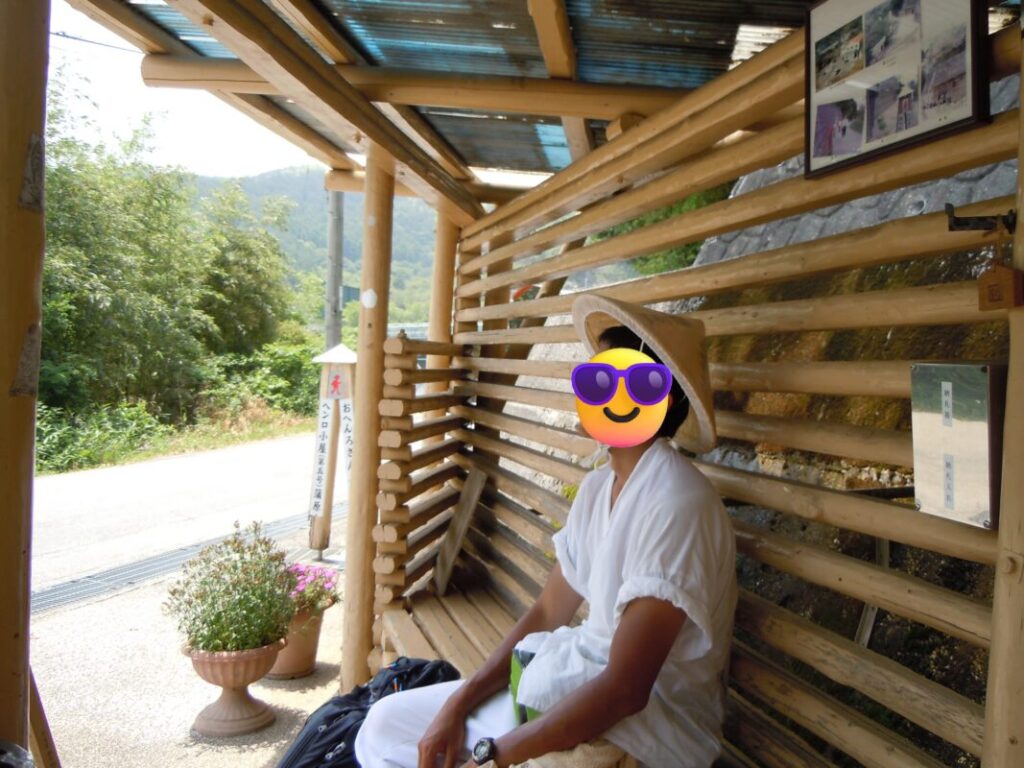
After walking for a while, I came across Kanbara Rest Area. I decided to take a break and set down my backpack.
Kanbara Rest Area
Kanbara Rest Area has a distinctive, stylish appearance, with its wooden structure. It was already past noon, and the sunlight had grown quite intense.
Even simply taking off my backpack made a big difference, allowing the heat trapped against my back to escape. When walking long distances, even a short break like this is greatly appreciated.
Visiting Temple 30 Zenraku-ji
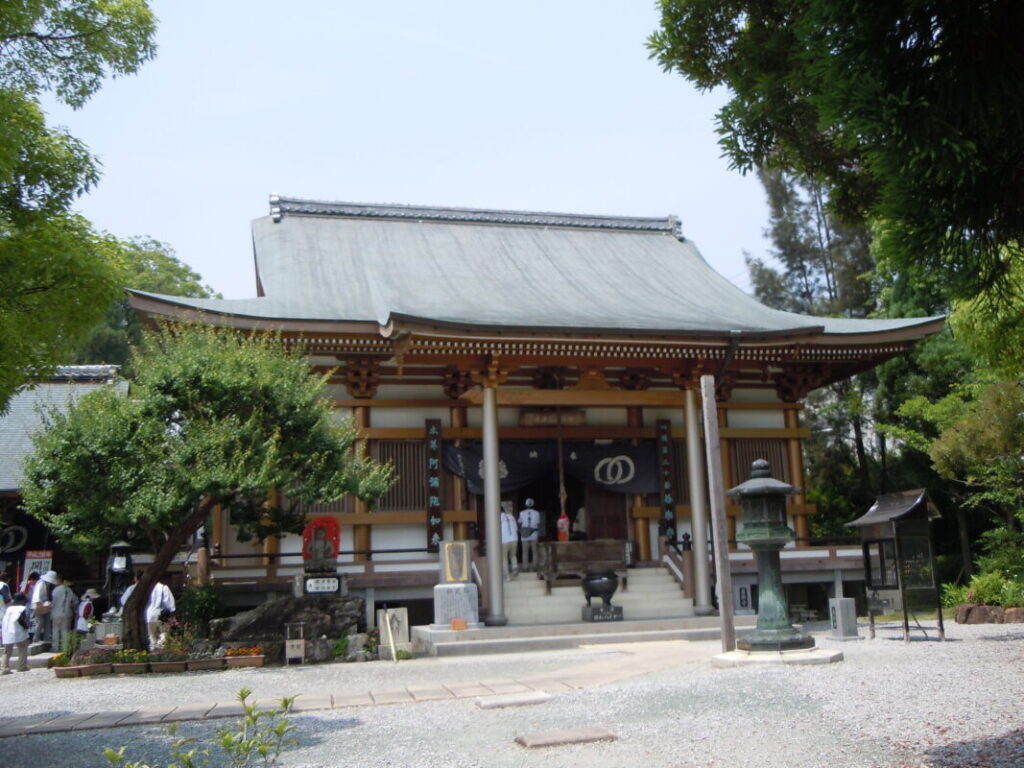
After leaving the rest area, I walked west for another 30 minutes or so and arrived at Zenraku-ji.
Zenraku-ji has a close historical connection with the neighboring Tosa Shrine. During the period when Shinto and Buddhism were practiced together, the temple served as the shrine’s betto-ji, overseeing its religious ceremonies and administration. It was temporarily abolished following the separation of Shinto and Buddhism during the Meiji era, but was later revived. Today, it continues to preserve the region’s religious traditions alongside Tosa Shrine.
Zenraku-ji is one of the temples on the Shikoku pilgrimage where visitors can experience the history of Shinto-Buddhist syncretism.
Temple 31 Chikurin-ji | A Five-Story Pagoda Overlooking Kochi City Amid the Fresh Greenery of Early Summer
I left Zenraku-ji around 1 p.m. and headed for Chikurin-ji, Temple 31, about 6 km away. At my current pace, I thought I could make it all the way to the next temple, Zenjibu-ji (Temple 32), as well. With a clearer picture of the day’s itinerary, I began to feel a little more relaxed.
By this point, I had entered an area close to central Kochi City. There were plenty of restaurants and convenience stores, so finding food was easy. I bought some rice balls and sandwiches along the way and ate little by little as I walked, making good progress.
One unusual section of the pilgrimage route to Chikurin-ji passes through the grounds of the adjacent Makino Botanical Garden. Admission to the botanical garden normally requires a fee, but pilgrims walking along the route to Chikurin-ji could pass through free of charge.
Visiting Temple 31 Chikurin-ji
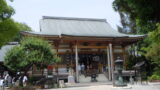
I arrived at Chikurin-ji at 3 p.m. The temple grounds sit on a hill about 120 meters above sea level. After catching my breath from the final uphill climb, I began my visit.
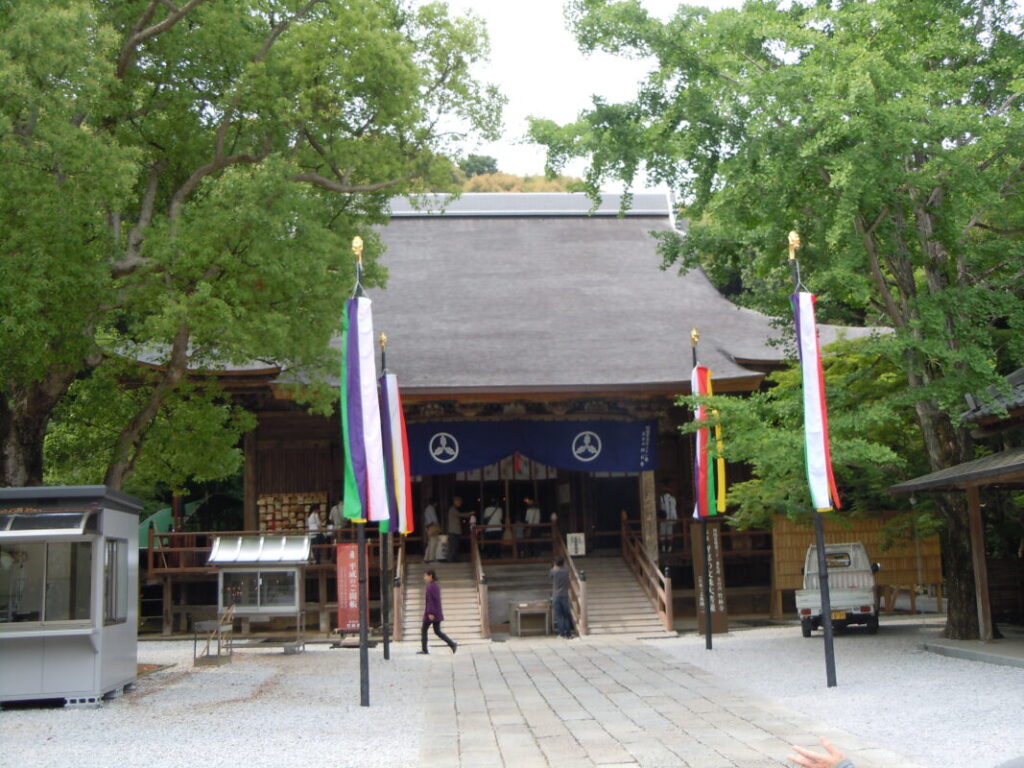
Perhaps because of its proximity to central Kochi City, the temple was bustling with not only pilgrims but also many tourists.
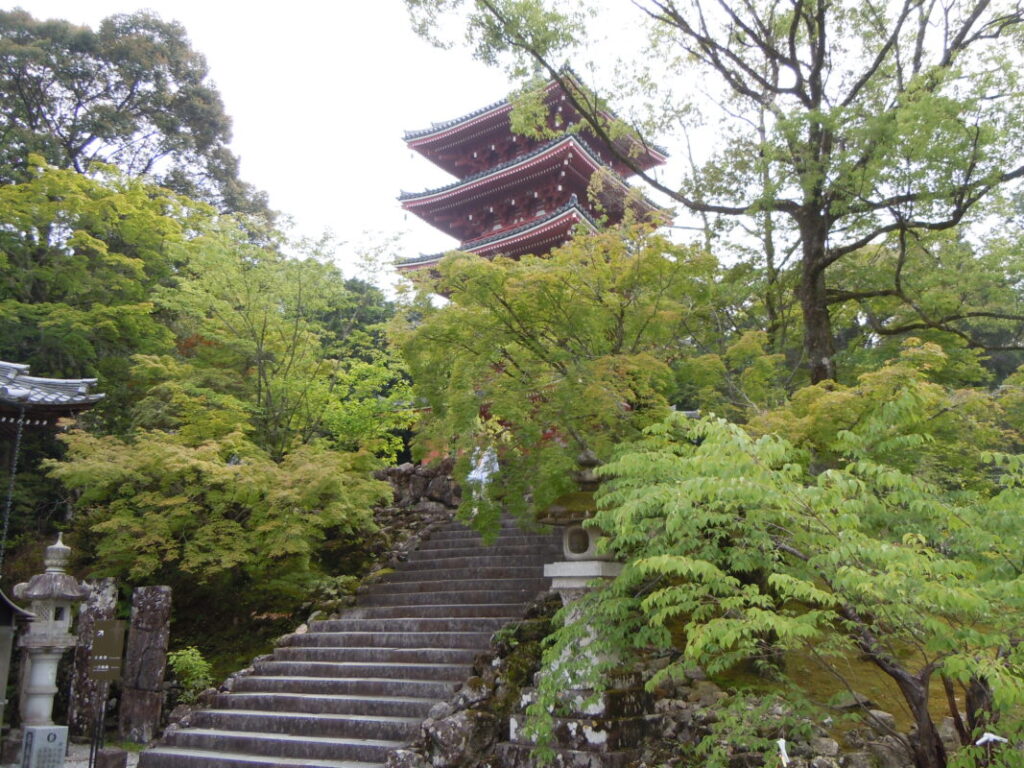
The grounds are filled with broadleaf trees, and the fresh green foliage of early summer was beautiful. As I walked around, I imagined how spectacular the autumn foliage must be.
The most striking feature was the five-story pagoda standing on higher ground within the temple grounds. The staircase leading up to the pagoda, together with the surrounding trees, created a beautiful scene. Many visitors were taking photographs.
Chikurin-ji’s principal image is Monju Bosatsu (Manjushri), which is relatively rare among the 88 temples of the Shikoku pilgrimage. Monju Bosatsu is believed to bring blessings related to learning and academic success.
Temple 32 Zenjibu-ji | The “Ship’s Guardian Kannon” Overlooking Tosa Bay
My next destination was Zenjibu-ji, Temple 32, about 8 km from Chikurin-ji. It was going to be a close call whether I could make it in time. With the temple’s stamp office closing time on my mind, I decided to skip any further breaks and pick up my pace.
First, I made a steep descent south from the elevated grounds of Chikurin-ji. I then followed the Shimoda River east for about 1 km, where I spotted a pilgrimage route sign pointing south. After walking another kilometer or so, I passed alongside the large Ishido Pond.
If I had more time, I would have liked to relax on the pond’s embankment. However, I was concerned about making it to the next temple before the stamp office closed. I admired the scenery as I walked past without stopping.
After following the path around Ishido Pond, Zenjibu-ji finally came into view.
Visiting Temple 32 Zenjibu-ji
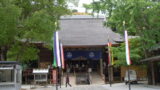
I arrived at 4:30 p.m., just in time to visit the final temple of the day.
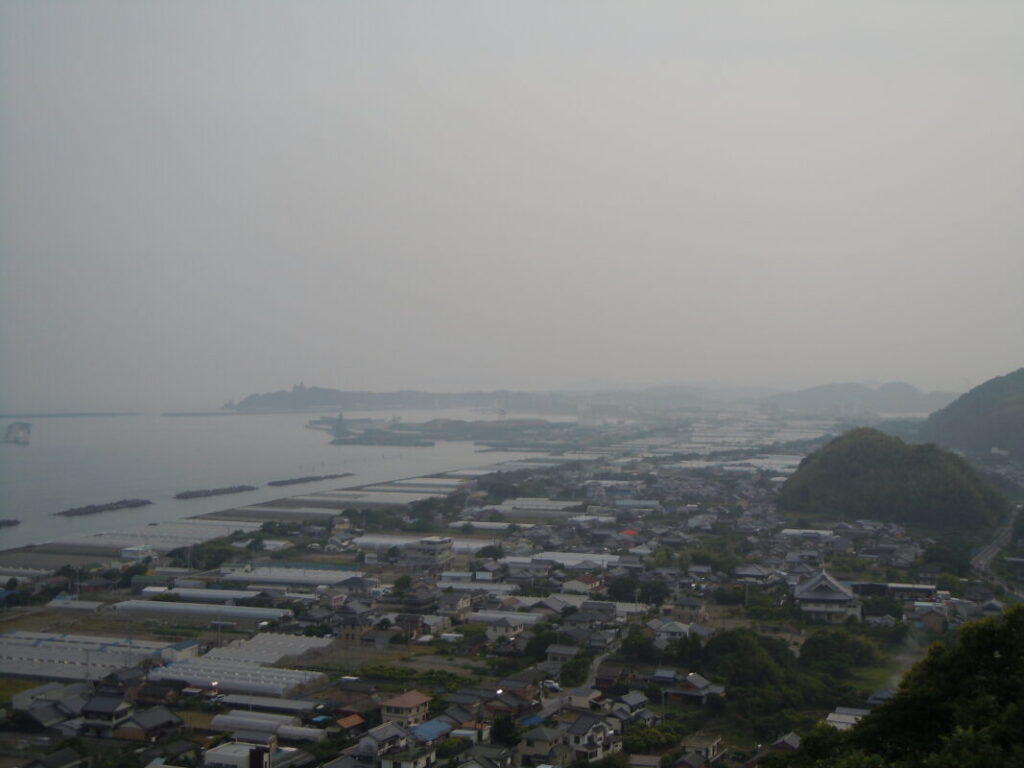
Zenjibu-ji sits on elevated ground, offering a panoramic view of Tosa Bay from its grounds. The expansive view of the ocean was refreshing, and it felt as though some of the fatigue from the long walk had begun to fade.
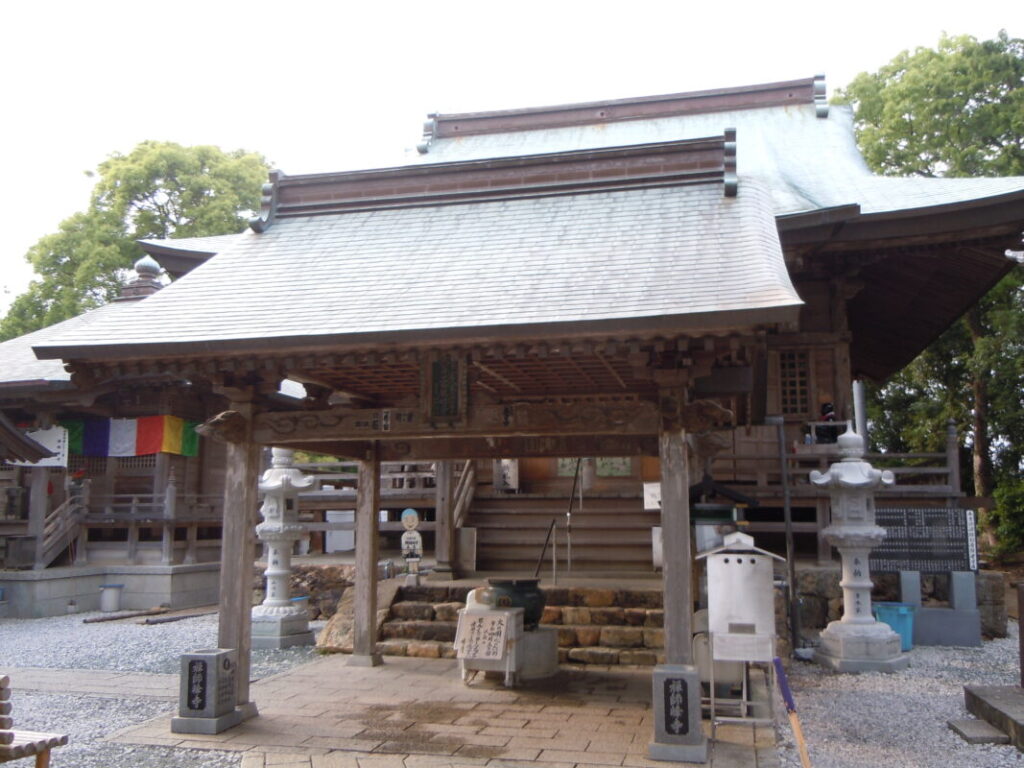
The temple has long been revered as the “Ship’s Guardian Kannon,” where people pray for safety at sea. It is said to have attracted the devotion of successive lords of the Tosa Domain as well as local fishermen.
The temple grounds are also dotted with unusual rocks of various shapes and sizes, offering plenty to explore. The combination of ocean views and distinctive rock formations made this a particularly memorable temple.
Camping Outdoors in Niida | Reflecting on Day 12 of the Shikoku Pilgrimage
Today’s temple visits were finally over. I no longer had to worry about the time or rush to reach another destination. At last, I felt a sense of relief.
All that remained was to find a place to sleep. I decided to walk a little farther and look for an open space where I could camp for the night. With that in mind, I left Zenjibu-ji behind.
However, perhaps because I had walked a little too quickly from Chikurin-ji, I was beginning to feel pain in the soles of my feet.
I continued west from Zenjibu-ji for about another hour. After walking for a while, I found a suitable park where I could spend the night.
It was 6 p.m. I decided to make this my campsite for the night.
As dusk began to fall, I pitched my tent in the park. I washed away some of the sweat using the park’s water supply, then sat down on a bench to take a breather.
Looking Back on the Day
Today, I set out from Roadside Station Yasu and visited five temples: Dainichi-ji (Temple 28), Kokubun-ji (Temple 29), Zenraku-ji (Temple 30), Chikurin-ji (Temple 31), and Zenjibu-ji (Temple 32).
It was a day filled with a variety of memorable experiences: the peaceful rural scenery I had not seen in a while, meeting another pilgrim at Matsumoto Daishido, the beautiful moss at Kokubun-ji, the history of Zenraku-ji, the impressive five-story pagoda at Chikurin-ji, and the panoramic view of Tosa Bay from Zenjibu-ji.
Each temple offered its own unique scenery, making it a memorable day on the pilgrimage.
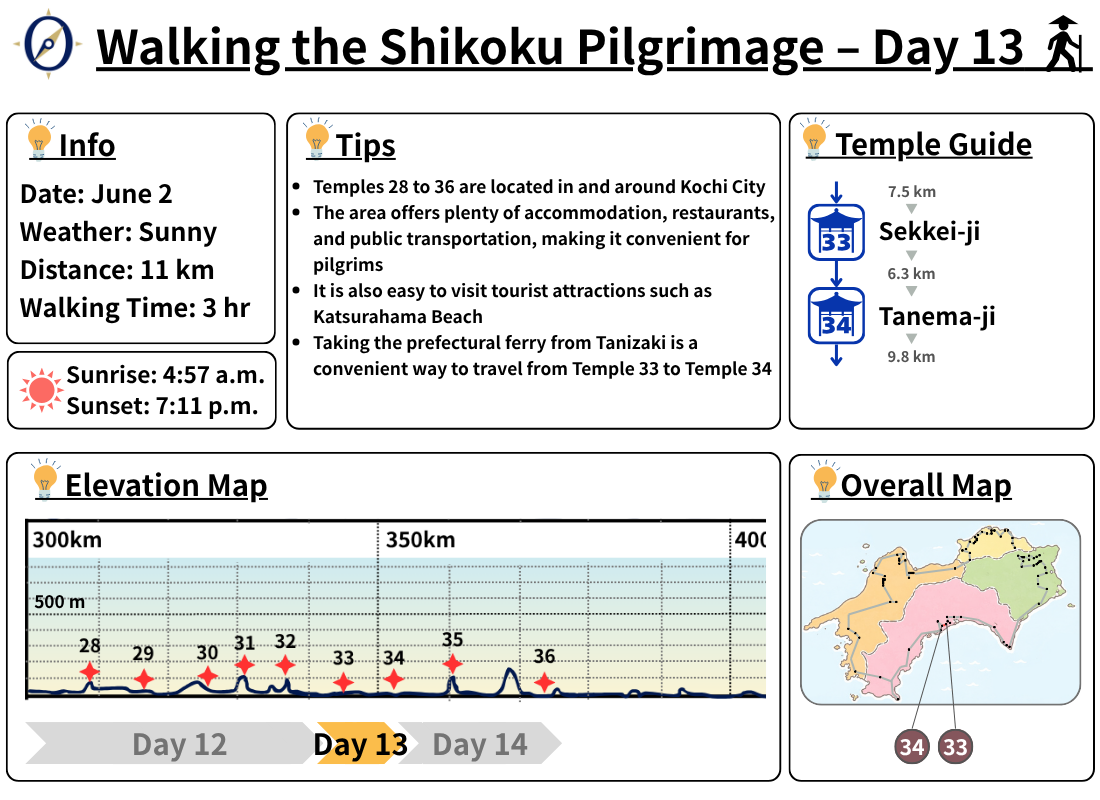
Temple Information
- No. 28
- No. 29
- No. 30
- No. 31
- No. 32
- No. 33
Comments