
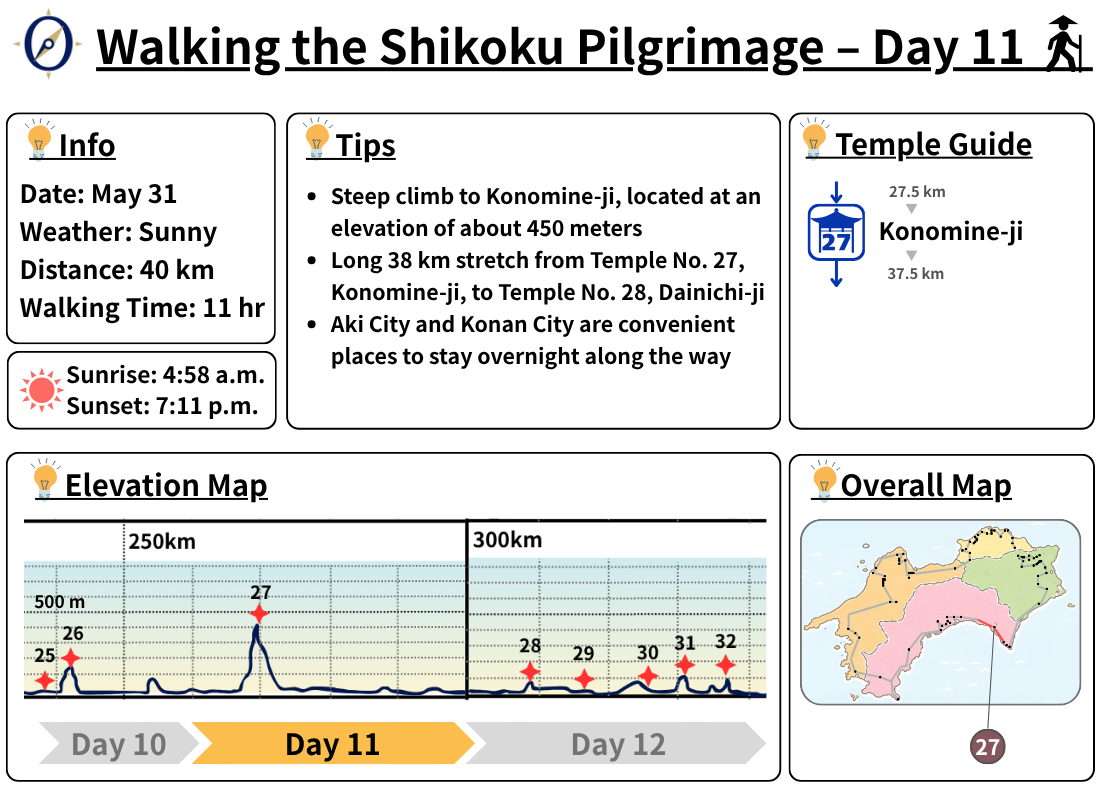
On Day 11 of my walking pilgrimage, I visited Temple No. 27, Konomine-ji, starting from Nahari, then walked through central Aki and Akano Rest Area to Roadside Station Yasu. It was a memorable day, with the steep climb to Konomine-ji, the temple grounds’ dramatic changes in elevation, and a chance encounter with Mr. Hagi.
- Itinerary
- Morning of Day 11 of My Walking Pilgrimage
- Leaving Nahari at 5:30 a.m.
- The Pilgrim Trail to Konomine-ji Is a Continuous Steep Climb
- Visiting Temple No. 27, Konomine-ji | A Mountain Temple and Its Sacred Spring
- From Konomine-ji to Central Aki
- The Coastal Heat and the Value of My Sugegasa
- Through Central Aki and Onto the Dedicated Cycling Path
- Ice Cream at Akano Rest Area
- Meeting Mr. Hagi
- Arriving at Roadside Station Yasu at 5 p.m.
- Temple Information
Itinerary
- 5:30Departure
- Nahari
- Konomine-ji Trail
- 8:30Temple No. 27, Konomine-ji
- Aki
- Akano Rest Area
- Zenkon-yado: Hagimori
- 17:00Roadside Station Yasu
Overnight stay
Morning of Day 11 of My Walking Pilgrimage
May 31. Sunny.
This was the second day of my second section of the pilgrimage, and Day 11 overall.
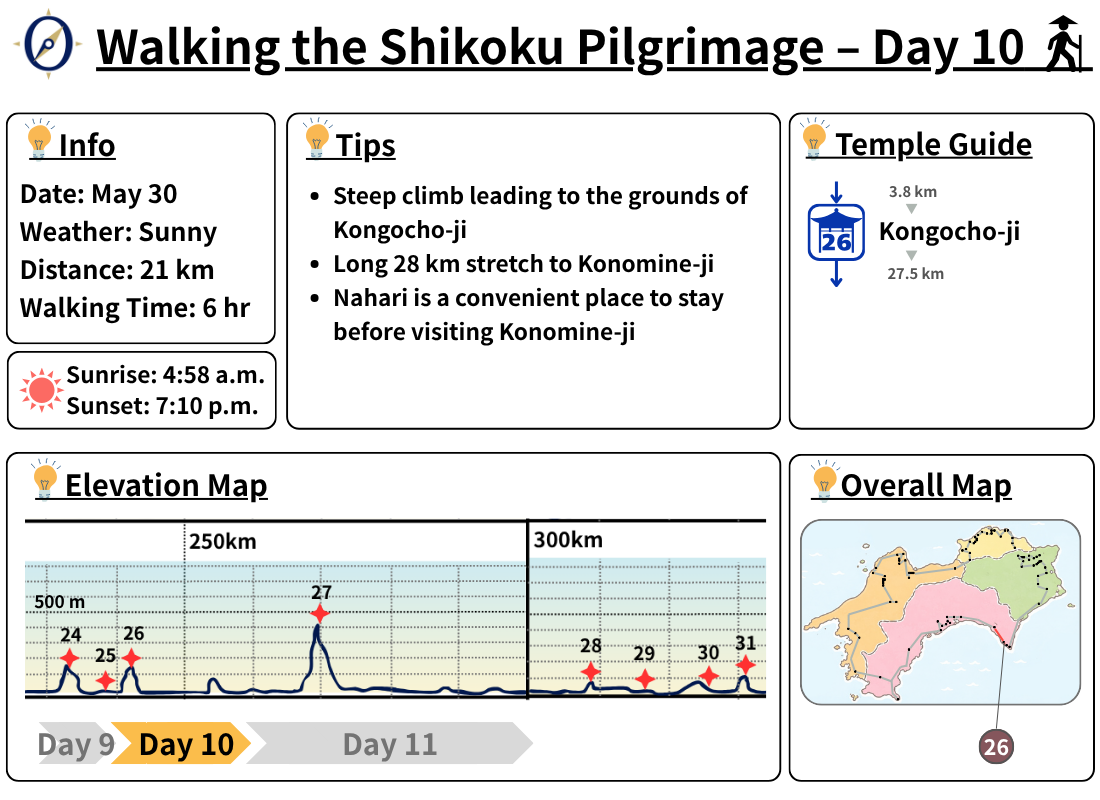
Today, I was heading for Temple No. 27, Konomine-ji, known as one of the challenging sections of the Tosa “Henro Korogashi” trail. Located in the mountains at an elevation of about 450 meters, the temple is known for the steep and demanding climb leading up to it.
The previous day, Day 10, I had walked from Muroto to Nahari and spent the night outdoors. Today, I planned to set out for Konomine-ji early in the morning, then cover as much distance as possible afterward, aiming to reach Roadside Station Yasu.
Leaving Nahari at 5:30 a.m.
I got up before 5 a.m. because I wanted to cover some distance during the cool, comfortable early morning hours.
It had been about a month since my previous pilgrimage, so my body had not yet gotten used to walking again. I already felt sluggish and tired when I woke up.
After doing some light stretches to loosen up, I got ready to set out.
5:30 a.m.
I left Nahari.
After walking north for about an hour, I saw an elevated railway ahead. Following a sign for Konomine-ji, I passed underneath the railway to the right, and the uphill road began there.
The scenery changed abruptly from the coast to the mountains.
A narrow road wound its way into the hills.
I was glad I had started early. Much of the narrow road was shaded, and the sunlight was still weak, so the walk was relatively cool and comfortable.
The Pilgrim Trail to Konomine-ji Is a Continuous Steep Climb
As I climbed the hill, I came across a Jizo statue and a sign pointing to the pilgrim trail.
It seemed to be a walking path that cut through the winding road, offering a shortcut.
Although the trail was shorter, the slope was steeper.
I slowly made my way up the steep steps, leaning on my walking staff for support.
After climbing for a while, I spotted a small gazebo and sat down for a short break.
The surrounding area had a well-maintained grassy space and restrooms. I thought that if I were walking later in the day, this might be a place where I could spend the night outdoors.
The Climb from Konomine-ji’s Parking Lot to the Temple Grounds
After climbing further, I finally reached the parking lot at Konomine-ji.
“Finally, I’m here!”
But that feeling didn’t last long.
The climb wasn’t over yet. The road from the parking lot to the temple grounds continued uphill.
I made it up the final slope and at last arrived at the temple grounds. It was around 8:30 a.m.
Restaurant at Konomine-ji’s Parking Lot
There was a restaurant at the parking lot where visitors could get a light meal. It was open from 8:30 a.m. to 5 p.m., making it a convenient place to eat or take a break before or after visiting the temple.
Visiting Temple No. 27, Konomine-ji | A Mountain Temple and Its Sacred Spring
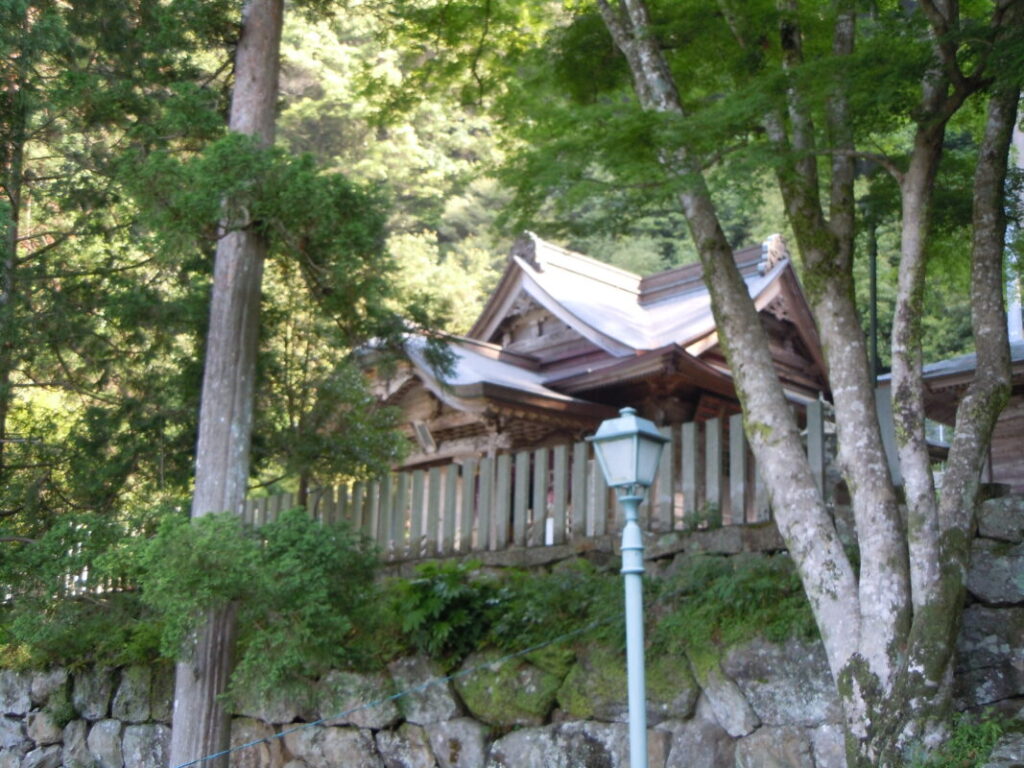
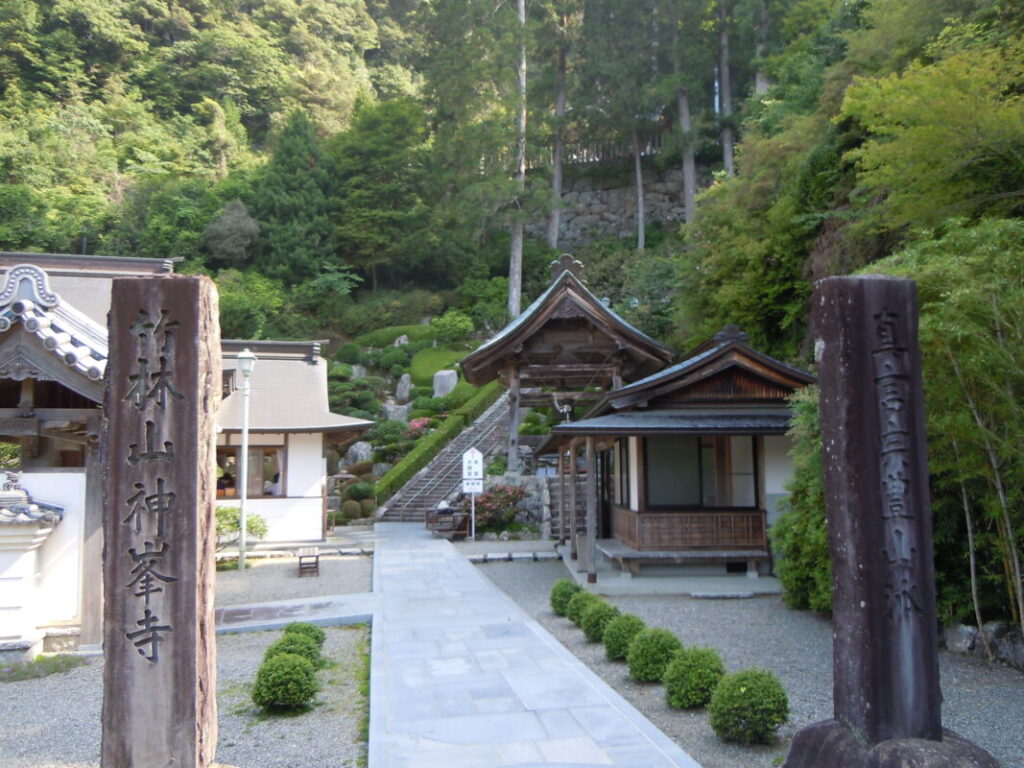
Konomine-ji stands deep in the mountains, with the quiet, secluded atmosphere of a true mountain temple.
More stairs lead from the temple grounds up to the main hall. The grounds themselves have steep changes in elevation, with the main hall, Daishi Hall, and other buildings set along a rugged mountainside. Walking through this remote temple complex offered a glimpse of what a mountain-based sacred site is like.
Sacred Water of Konomine
The temple grounds are also home to a spring known as “Konomine no Mizu.”
The water flowing between moss-covered rocks was crystal clear, and colorful koi swam in a small pond.
I tried washing my hands in the water. It was incredibly cold.
After the steep climb, my body had warmed up, so the cold water felt especially refreshing.
I felt some of the fatigue from the climb begin to ease.
Iwasaki Yataro’s Mother and Konomine-ji
According to a local resident, Konomine-ji is known as a temple that Iwasaki Yataro’s mother, whose son later became famous as the founder of the Mitsubishi business empire, visited many times.
Iwasaki Yataro’s birthplace is in Aki City, about 10 kilometers north of Konomine-ji.
Perhaps his mother’s faith was one of the influences behind Yataro’s success.
One of the pleasures of visiting the temples on the pilgrimage is hearing stories like these from local people, as well as learning about the temples themselves.
From Konomine-ji to Central Aki
After finishing my visit to Konomine-ji, I set out toward Temple No. 28, Dainichi-ji.
The distance to Dainichi-ji is about 38 kilometers, making it a long stretch between temples.
Of course, I wouldn’t be able to visit it today.
To cover as much distance as possible, I decided to aim for Roadside Station Yasu. It was a manageable distance from Dainichi-ji and seemed like a possible place to spend the night outdoors.
Yasu was about 30 kilometers away.
Even after completing the climb to Konomine-ji, I still had plenty of energy and stamina left.
The descent from Konomine-ji was naturally easier than the climb. However, walking downhill puts strain on your feet and knees.
I used my walking staff carefully and slowed my pace as I made my way down.
Once I reached the bottom of the mountain, the road along the coast of Tosa Bay began again.
The Coastal Heat and the Value of My Sugegasa
It was almost noon.
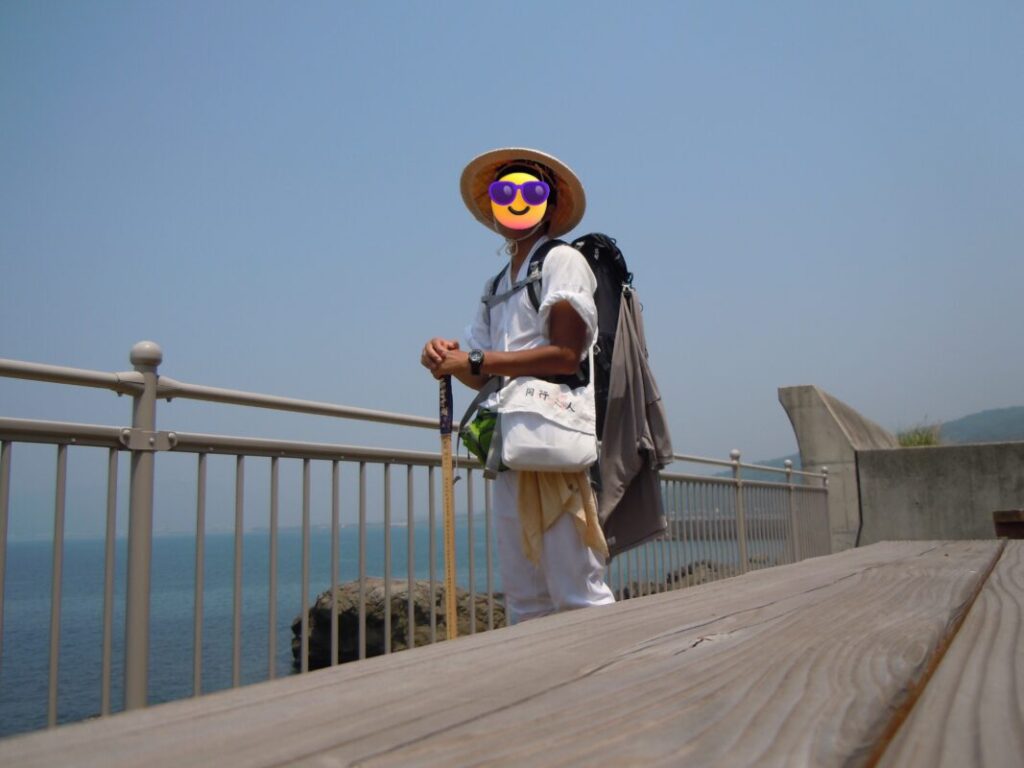
I spotted a bench along the coastal road and decided to take a break there.
I took out an onigiri I had bought along the way and began eating.
However, there was almost no shade along the coast to block the sun.
The temperature had been rising steadily since morning, and it was getting quite hot.
My sugegasa (pilgrim hat) came in especially handy at times like this.
Its wide brim provided plenty of shade, making it a great help when walking under the blazing sun.
It had been cool in the mountains, but as soon as I reached the coast, I felt the heat all at once.
Even within a single day, the conditions can change dramatically depending on where you walk.
Through Central Aki and Onto the Dedicated Cycling Path
In the early afternoon, I entered central Aki.
Aki is a town east of Kochi City, with supermarkets, restaurants, and places to stay. For pilgrims walking long distances, it is a convenient place to stock up on food and other supplies.
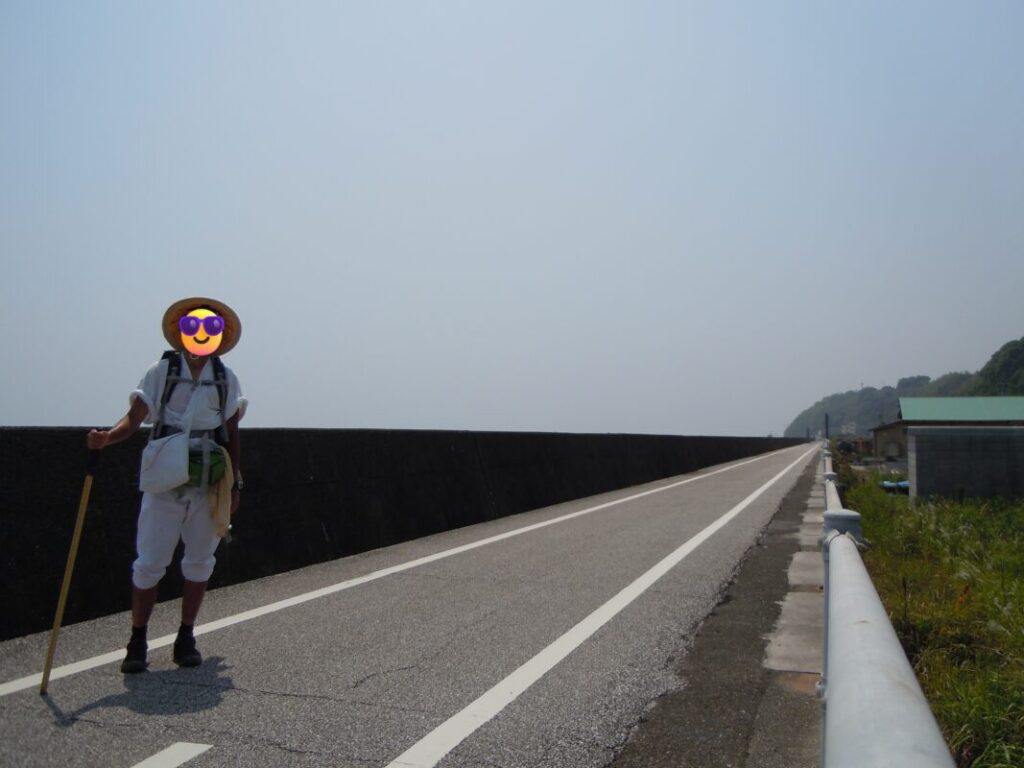
After passing through central Aki, I came across a dedicated cycling path near the coast.
For about one kilometer, the path ran straight ahead with nothing to obstruct the view. It left a strong impression on me.
It felt safer than walking along the narrow sidewalk of National Route 55, making it a welcome stretch for walking pilgrims as well.
Ice Cream at Akano Rest Area
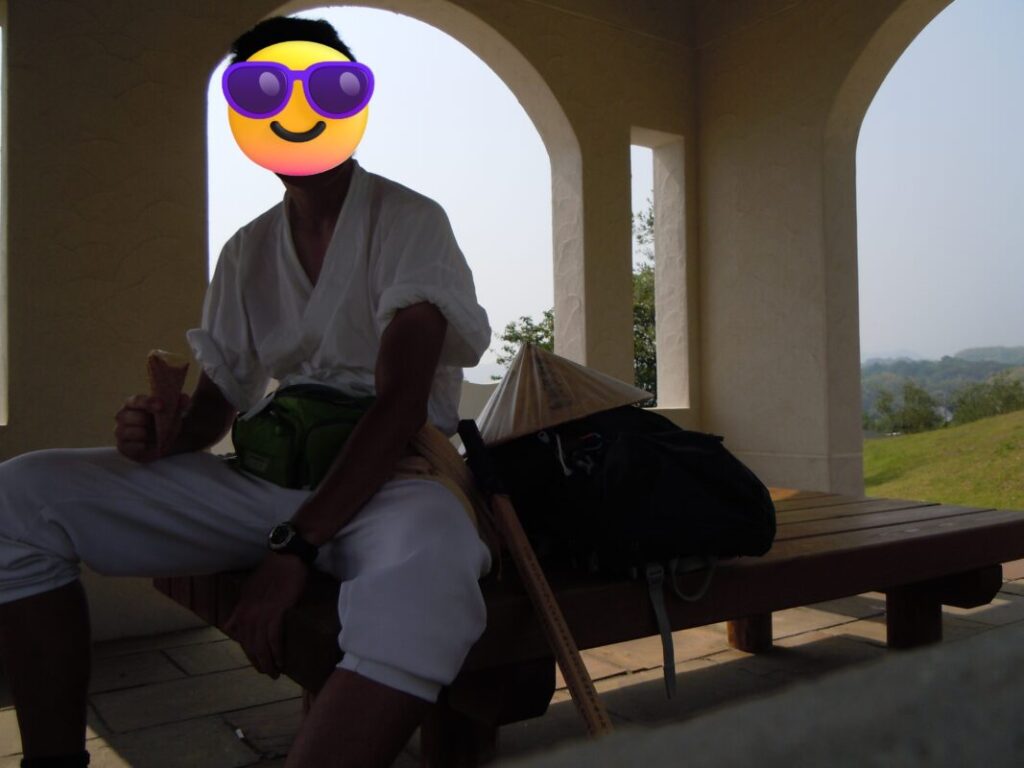
At around 2:30 p.m., I stopped for a break at Akano Rest Area.
The sun was especially strong at this time of day.
I found a shady spot, took off my backpack, and rested for a while.
Akano Rest Area has a distinctive Western-style building along National Route 55, and it offers a lovely view overlooking Tosa Bay.
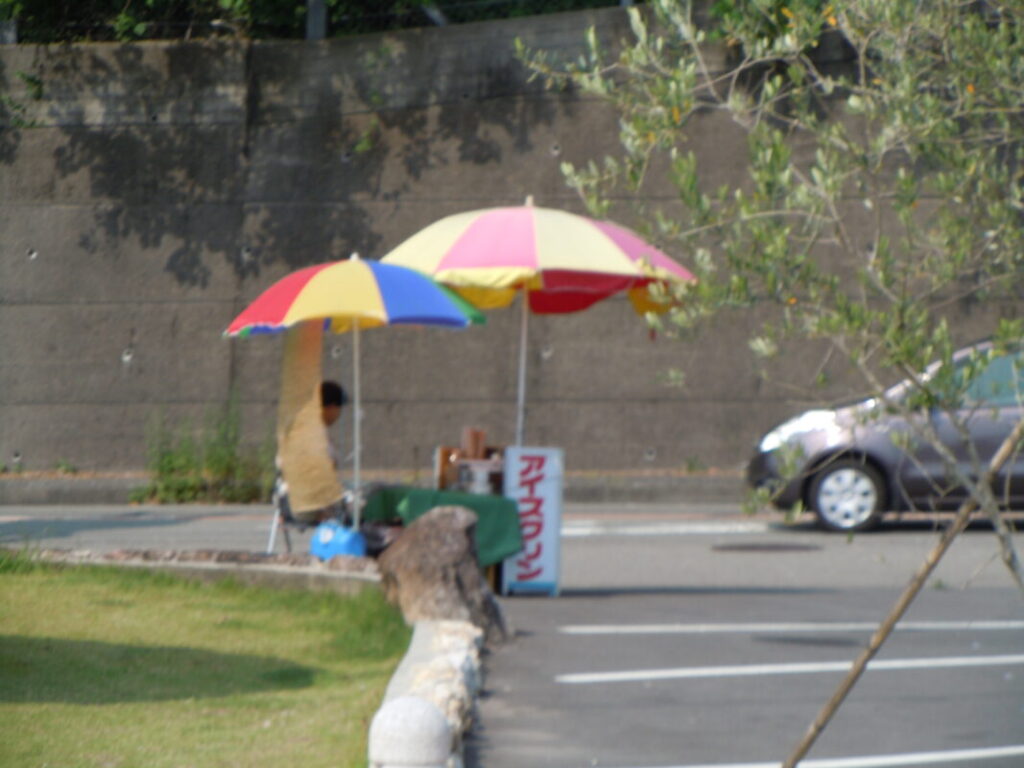
There was a mobile vendor in the parking lot selling ice cream, a local specialty of Kochi known as ice kurin, so I bought one.
It had a simple, old-fashioned flavor.
The coolness was especially refreshing after walking in the heat.
Eating ice cream during a walking pilgrimage feels a little different from enjoying it in everyday life.
It felt like a small reward for my tired body.
Meeting Mr. Hagi
After leaving Akano Rest Area, I decided to follow the coastal section of the pilgrim trail.
The path runs through a pine forest planted to protect the land from drifting sand, and it was easier to walk than the road along the highway.
The trees provided shade from the sun, making this a welcome route during the hottest part of the day.
Near Nishibun Station, an elderly man called out to me.
His name was Mr. Hagi.
A list of useful information for walking pilgrims, known as the “Hagi List,” is distributed at rest areas and other locations around Shikoku. I had also picked up a copy along the way.
Mr. Hagi used to run a zenkon-yado near Nishibun Station, offering free or low-cost lodging to pilgrims as an act of kindness.
It seems he no longer runs the lodging, so please keep that in mind.
He had the rugged air of a legendary old warrior and seemed rather rough at first glance. But after talking with him for a while, I could sense his kindness.
As we chatted, he said,
“Stay here for the night.”
It was a very kind offer, but my schedule for this section of the pilgrimage was tight.
I still had quite a distance to cover, so I politely declined.
He then gave me his contact information, saying, “If you run into trouble, give me a call.”
I thanked him sincerely, said goodbye, and continued on my way.
Having a local person strike up a conversation with you while traveling is one of the special pleasures of walking the Shikoku Pilgrimage.
Arriving at Roadside Station Yasu at 5 p.m.
I arrived at Roadside Station Yasu at around 5 p.m.
The sun was beginning to set, and it had become much more comfortable in the shade.
The roadside station sold light meals and boxed lunches, so I bought dinner for that evening and breakfast for the following morning.
Behind the facility was a beach, along with a well-maintained grassy area.
There were no swimmers when I visited, but a dozen or so people were enjoying themselves on the beach, and the area was lively.
The facility also had coin-operated showers. After using one, I felt refreshed and washed away the day’s sweat.
I had started the day by tackling the steep climb to Konomine-ji, then continued through central Aki, Akano Rest Area, and the coastal pilgrim trail.
I had walked quite a distance that day, but I felt that the measures I had taken to protect my feet—after injuring them on my previous pilgrimage—were working.
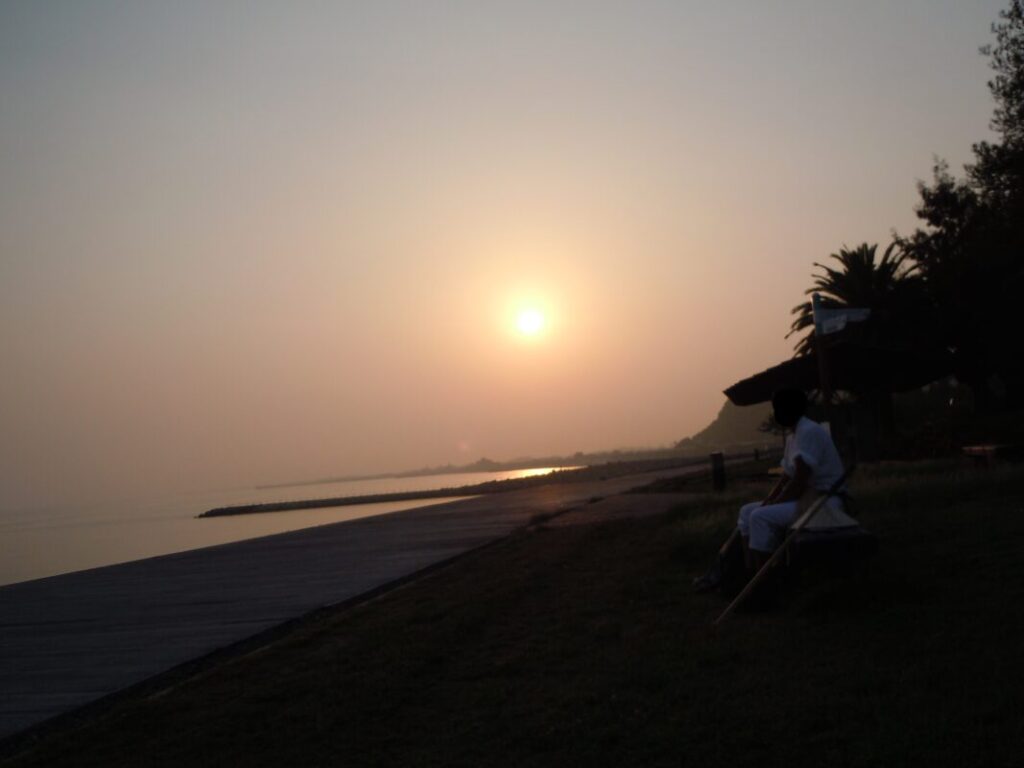
The End of the Day: Sunset over Tosa Bay
As I watched the sun sink into the sea, I thought back over the day’s walk.
The steep climb to Konomine-ji, the sacred water of Konomine, the town of Aki, the ice kurin I had enjoyed at Akano, and my encounter with Mr. Hagi.
It had been another memorable day.
Temple Information
- No. 27
- No. 28
Temple No. 27, Konomine-ji Guide
Temple No. 28, Dainichi-ji Guide
Comments