
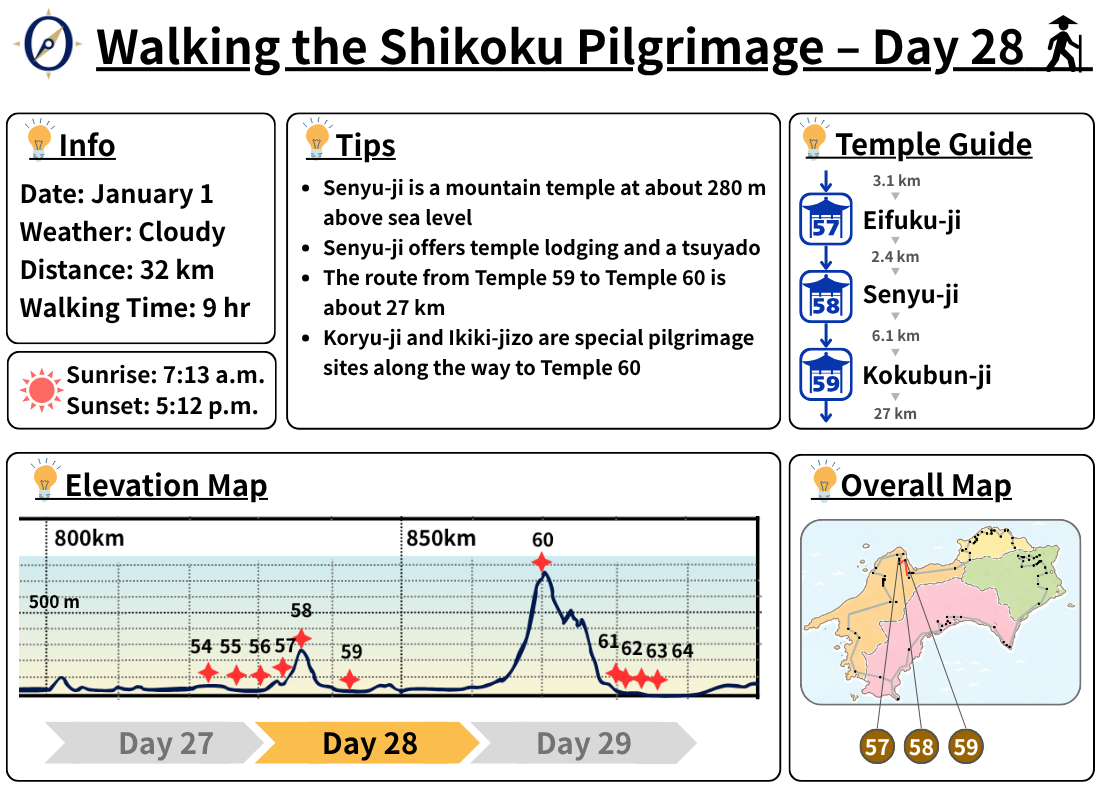
Day 28 of my walking pilgrimage. On New Year’s morning, I left the tsuyado at Taizan-ji and visited Temples 57, 58, and 59. Hail hit me on the mountain trail to Senyu-ji, and strong winter winds made the walk even harder. Still, I kept going toward the challenging climb to Yokomine-ji the next day. By evening, I reached my accommodation, Shikokuya, where I relaxed in the hot springs and prepared for the mountain crossing ahead.
- Itinerary
- Morning Preparations
- Walking to Temple 57: Eifuku-ji
- The Mountain Trail to Temple 58: Senyu-ji
- From Senyu-ji to Temple 59: Kokubun-ji
- From Kokubun-ji to Shikokuya Hotel
- Visiting the Special Pilgrimage Temples
- Crossing the Nakayama River and Reaching Shikokuya
- Relaxing in the Hot Springs and Preparing for Yokomine-ji
- Temple Information
Itinerary
- 7:00Departure
- Taizan-ji Tsuyado
- 8:00Temple No. 57, Eifuku-ji
- 10:00Temple No. 58, Senyu-ji
- 12:00Temple No. 59, Kokubun-ji
- Imabari Yunoura Onsen Roadside Station
- Komyo-ji
- Ikiki Jizo
- 18:00Shikokuya
Overnight stay
Morning Preparations
January 1. Cloudy. Day 28 of my walking pilgrimage.
Yesterday, I visited Temples 54 through 56, ending at Taizan-ji, where I stayed overnight in the tsuyado. On New Year’s Eve, I had the special opportunity to ring the temple bell alongside the resident priest and welcome the New Year in a truly memorable way.
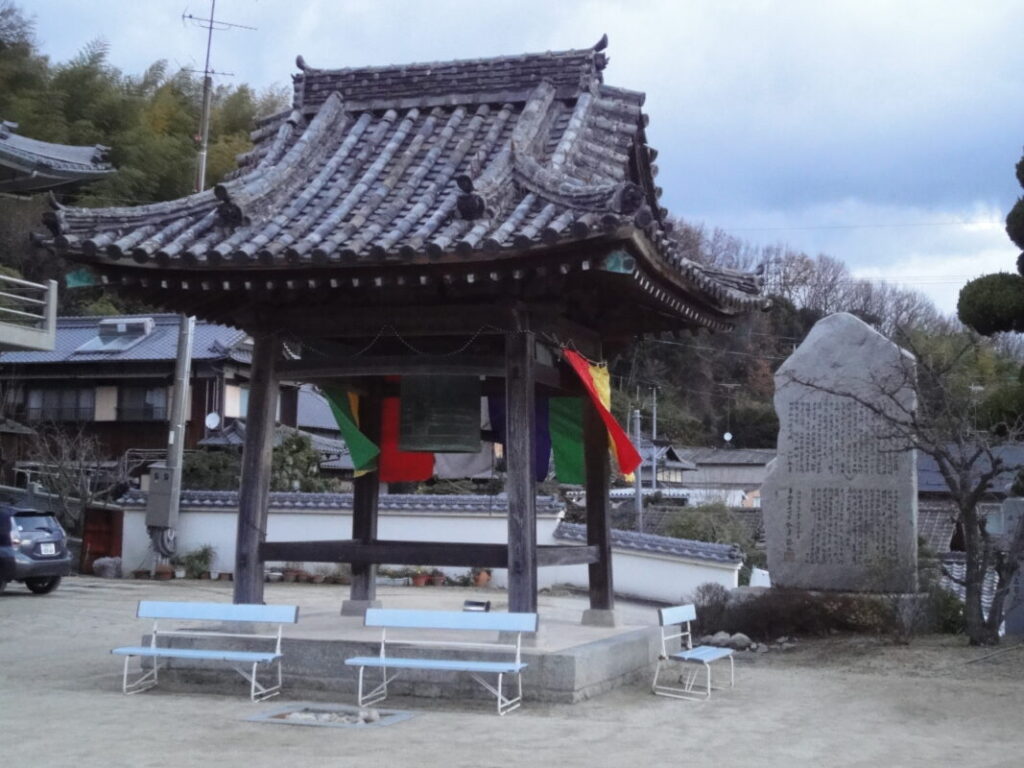
Today, on New Year’s Day, I planned to visit three temples: Temple 57, Eifuku-ji; Temple 58, Senyu-ji; and Temple 59, Kokubun-ji.
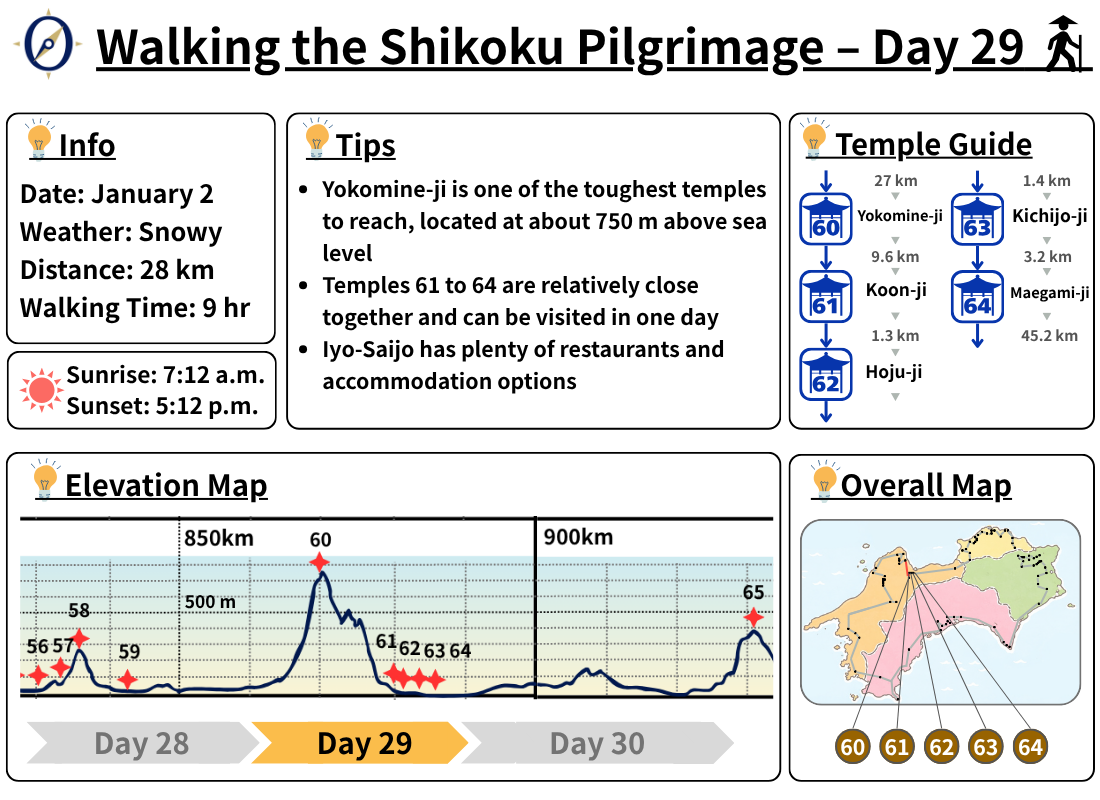
Beyond them lay Temple 60, Yokomine-ji, known as one of the most challenging stops on the Shikoku Pilgrimage. Located in the mountains at an elevation of approximately 750 meters, it is about 27 km from Kokubun-ji. Walking there could take more than eight hours, making it difficult to visit all three temples and Yokomine-ji in a single day.
Instead, I decided to stay at Shikokuya, a hotel at the foot of Mt. Yokomine, and prepare for the climb the following day.
At 7 a.m., I offered a prayer at the Daishi Hall of Taizan-ji and set off.
Walking to Temple 57: Eifuku-ji
Eifuku-ji is located about 3 km south of Taizan-ji.
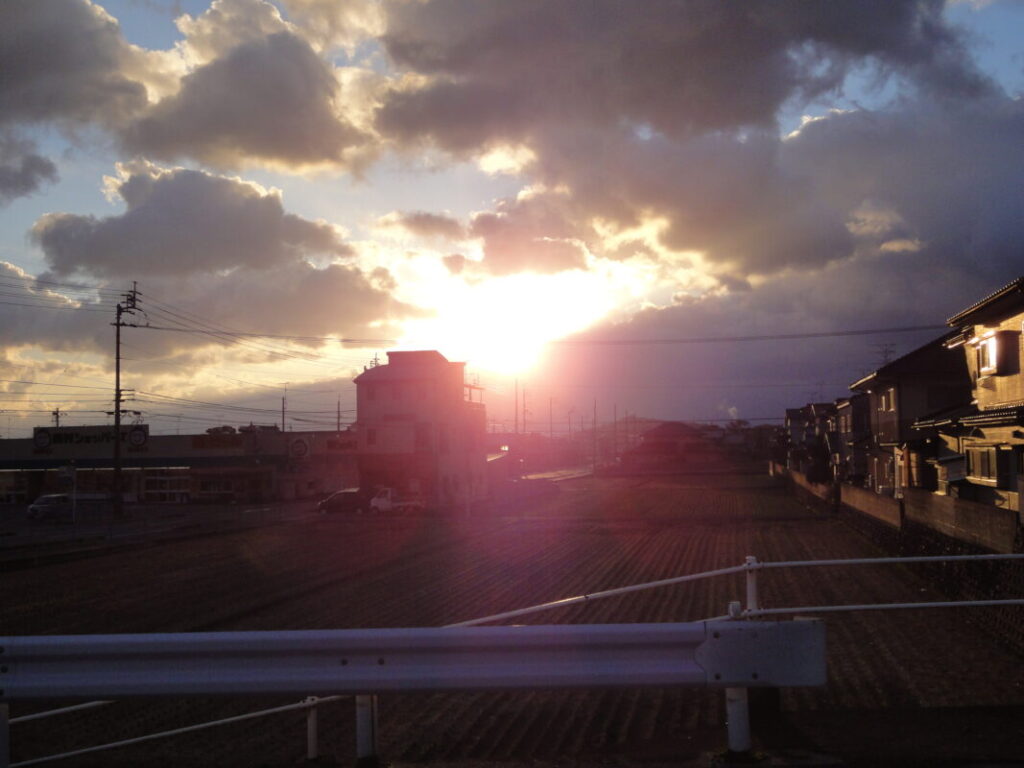
Along the Sosha River, which flows between the two temples, peaceful countryside stretches out on both sides, with a quiet pilgrimage trail winding through the fields. As I walked along the road in the early morning, I caught a glimpse of the first sunrise of the year rising beyond the residential area.
Welcoming the start of a new year while walking the pilgrimage trail in Shikoku felt like a true blessing.
Highlights of Eifuku-ji
I arrived at Eifuku-ji at 8 a.m.
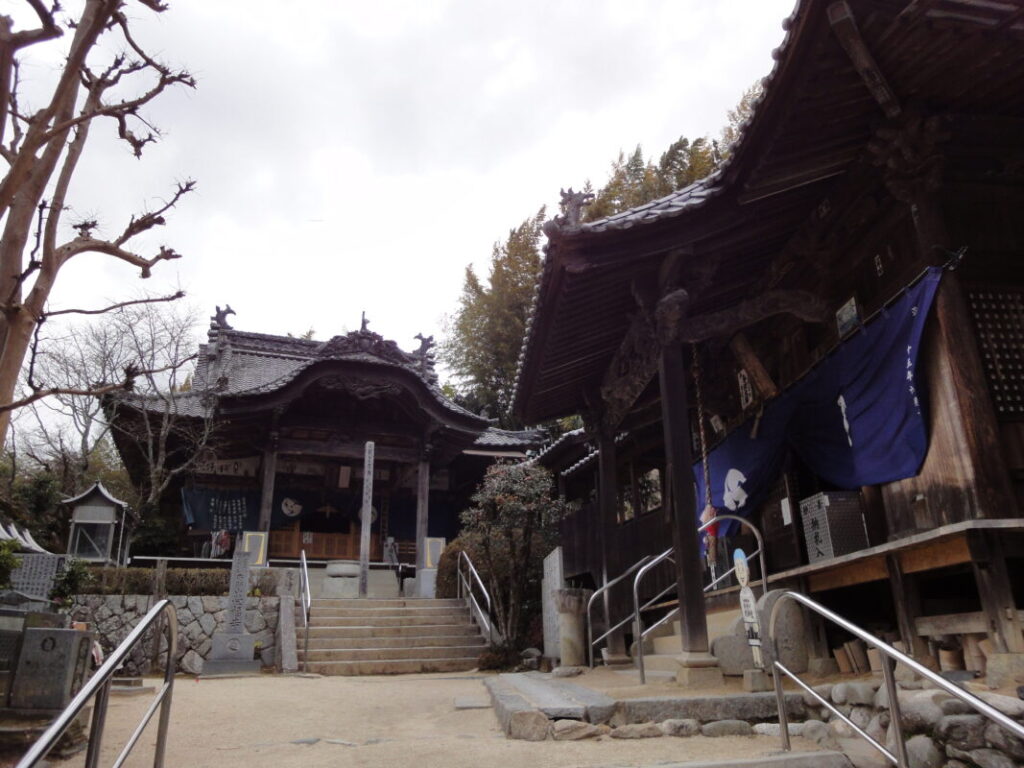
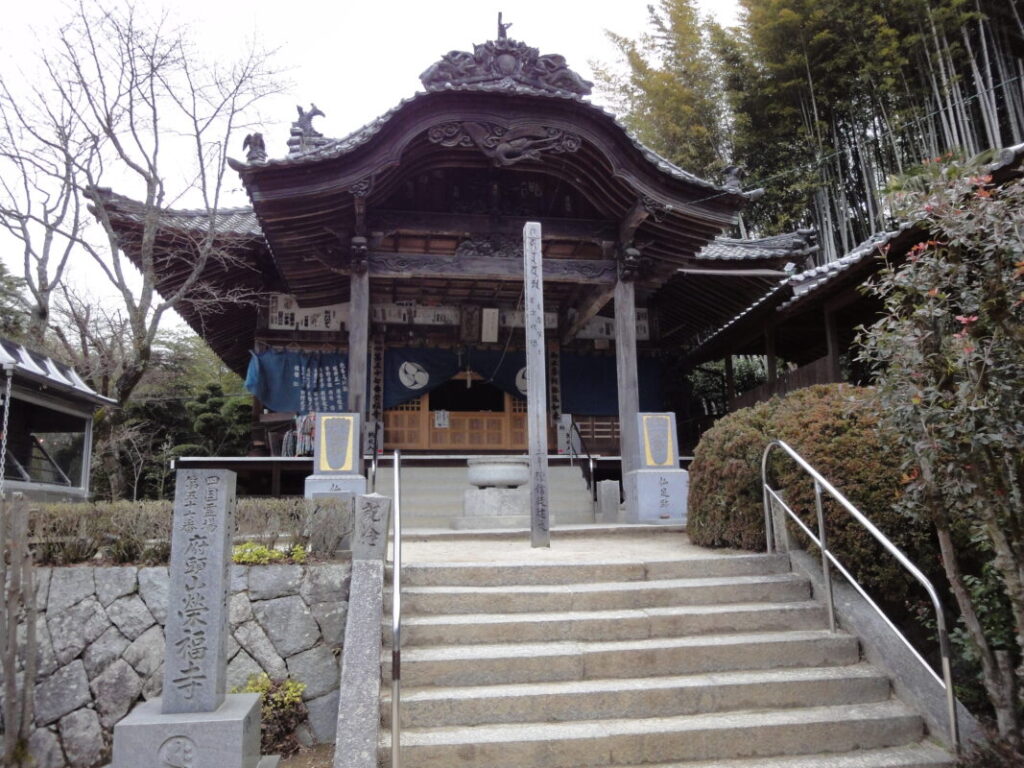
The temple grounds are compact and neatly arranged. After climbing the stone steps, I found the main hall straight ahead and the Daishi Hall on the right. The layout, which makes good use of the natural slope of the hillside, left a strong impression on me.
In front of the main hall stood a stone carving of the Buddha’s feet, decorated with gold trim. It stood out beautifully against the calm surroundings of the temple grounds.
The Mountain Trail to Temple 58: Senyu-ji
After completing my visit to Eifuku-ji, I set off for the next temple, Senyu-ji.
Senyu-ji is a mountain temple located near the summit of Mt. Sarei, at an elevation of approximately 280 meters.
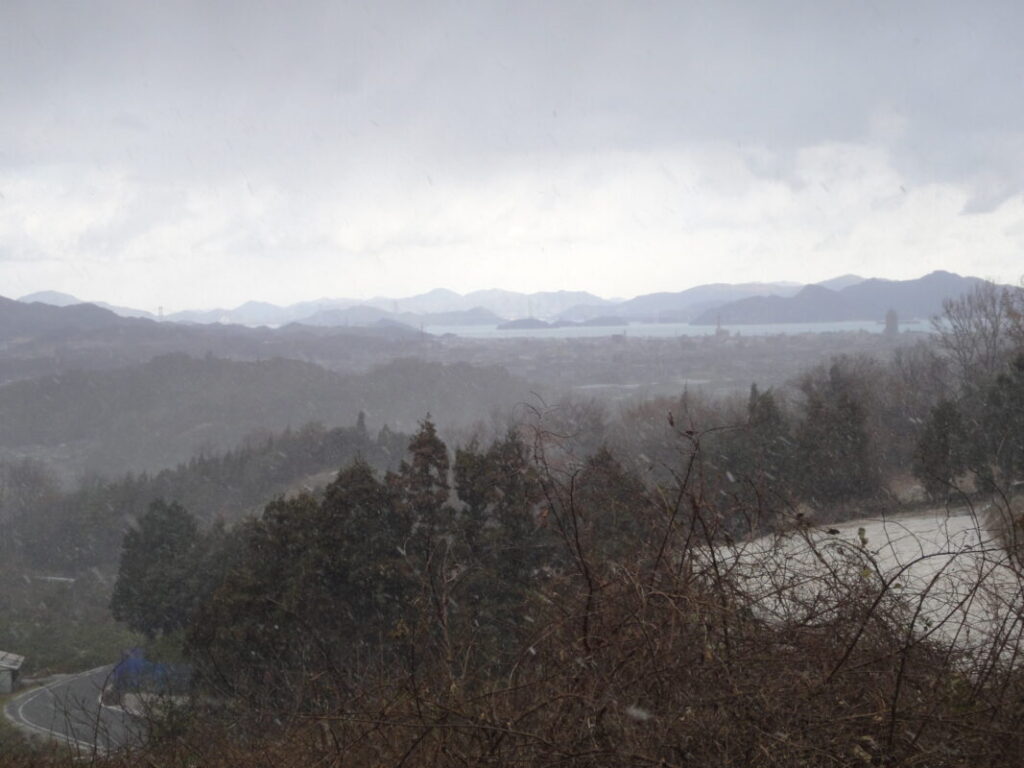
From the mountain, you can look down over Imabari City. On a clear day, the view extends to the islands of the Seto Inland Sea and even the Shimanami Kaido. The temple is known for its beautiful scenery.
However, reaching it requires a climb up the mountain trail.
From Inuzuka Pond to Senyu-ji
The pilgrimage trail from Eifuku-ji to Senyu-ji passes along the edge of Inuzuka Pond.
The trail was closed for a period in the past, but it was open when I walked it.
Beyond the pond, the serious climb begins. There is a small pilgrim shelter near the mountain trail, along with a statue of Kobo Daishi, making both useful landmarks.
From there, I followed the paved road up to the temple gate. As I climbed the winding road, glimpses of the town below appeared here and there, reminding me that I was steadily gaining elevation.
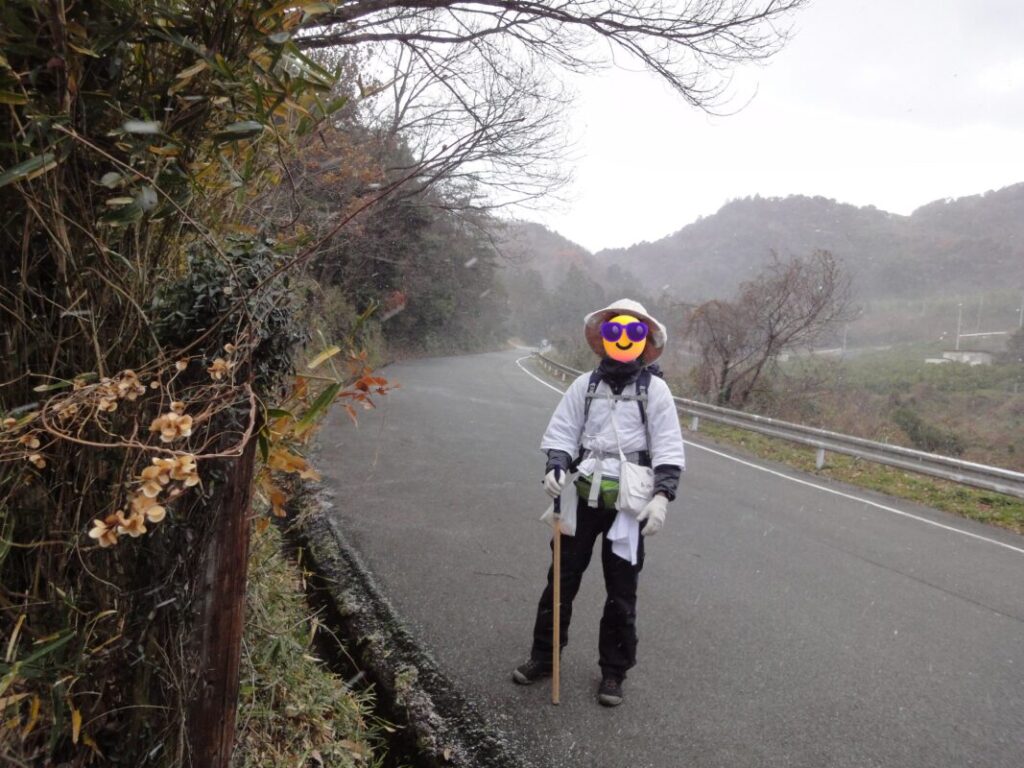
During my climb, hail suddenly began to fall. The temperature dropped as I gained altitude, making this a challenging ascent and a reminder of how harsh mountain weather can be.
Stone Steps from the Temple Gate to the Grounds
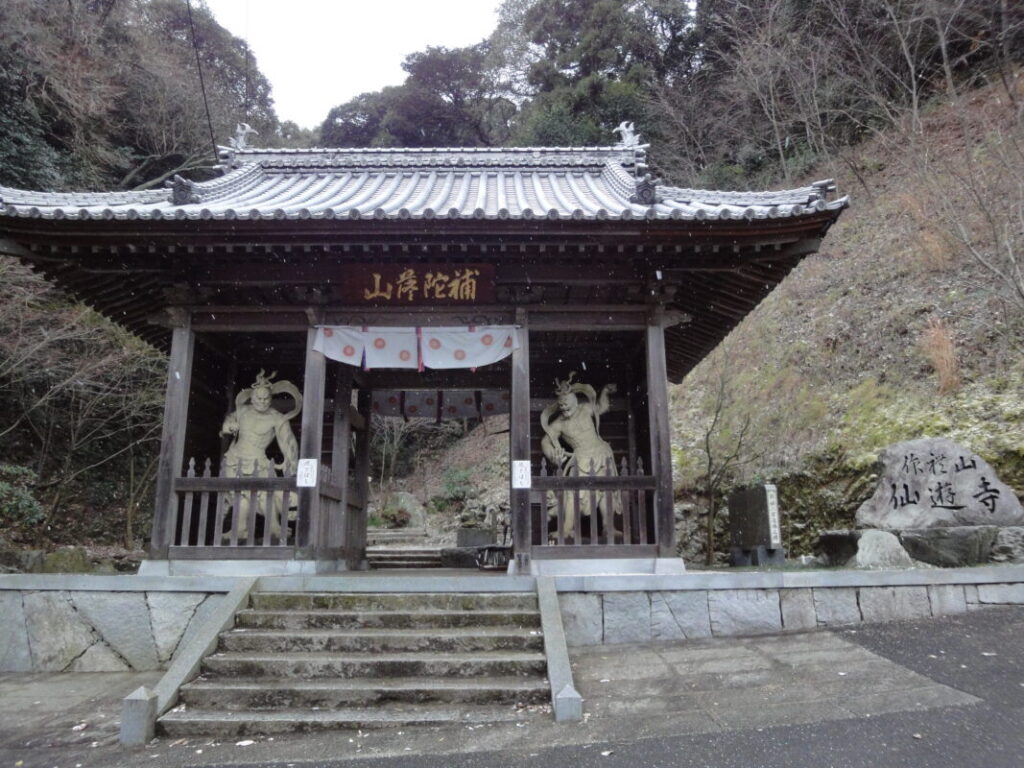
The climb to Senyu-ji does not end at the temple gate.
There is another elevation gain of approximately 60 meters between the gate and the main temple grounds, and the final stretch requires climbing a flight of stone steps.
There is a rest area just before the gate, so I stopped there for a short break before tackling the final ascent.
After climbing the mountain trail, the stone steps felt particularly demanding. Still, knowing that the temple grounds were just ahead kept me moving forward.
The Mountain Temple and Its Lodging
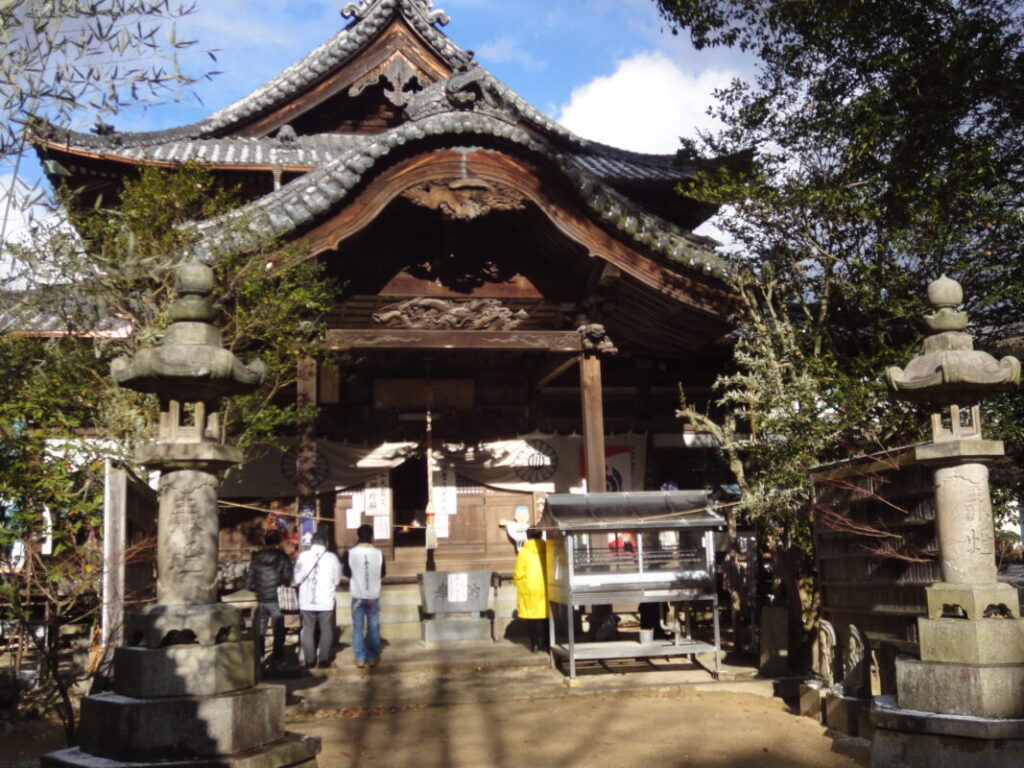
I arrived at Senyu-ji at 10 a.m.
Although the temple grounds are deep in the mountains, the limited flat land has been put to good use. The peaceful atmosphere and quiet surroundings gave the temple a distinctly mountainous character.
Senyu-ji also has a legend that Kobo Daishi dug a well to help people suffering from illness. It is a place where the weight of history and religious devotion can still be felt.
Temple Lodging at Senyu-ji
Senyu-ji also offers temple lodging with hot spring baths, making it a valuable accommodation option for walking pilgrims. After climbing the mountain trail, being able to spend the night relaxing in a hot spring is certainly one of its greatest attractions.
From Senyu-ji to Temple 59: Kokubun-ji
After completing my visit to Senyu-ji, I headed for the next temple, Kokubun-ji.
Kokubun-ji is located about 6 km northeast of Senyu-ji.
Near the temple gate of Senyu-ji, there is a mountain trail that shortens the distance compared with following the paved road. I recommend this route for walking pilgrims. Along the way, there are a few open viewpoints where you can look out over the town below and the distant islands of the Seto Inland Sea.
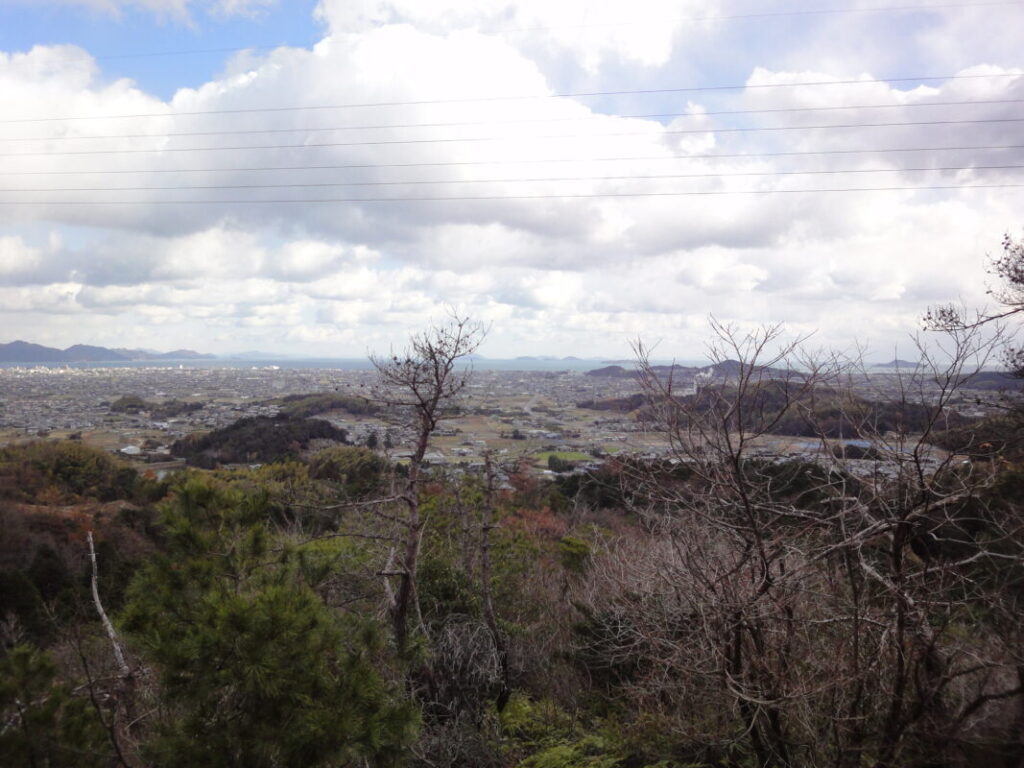
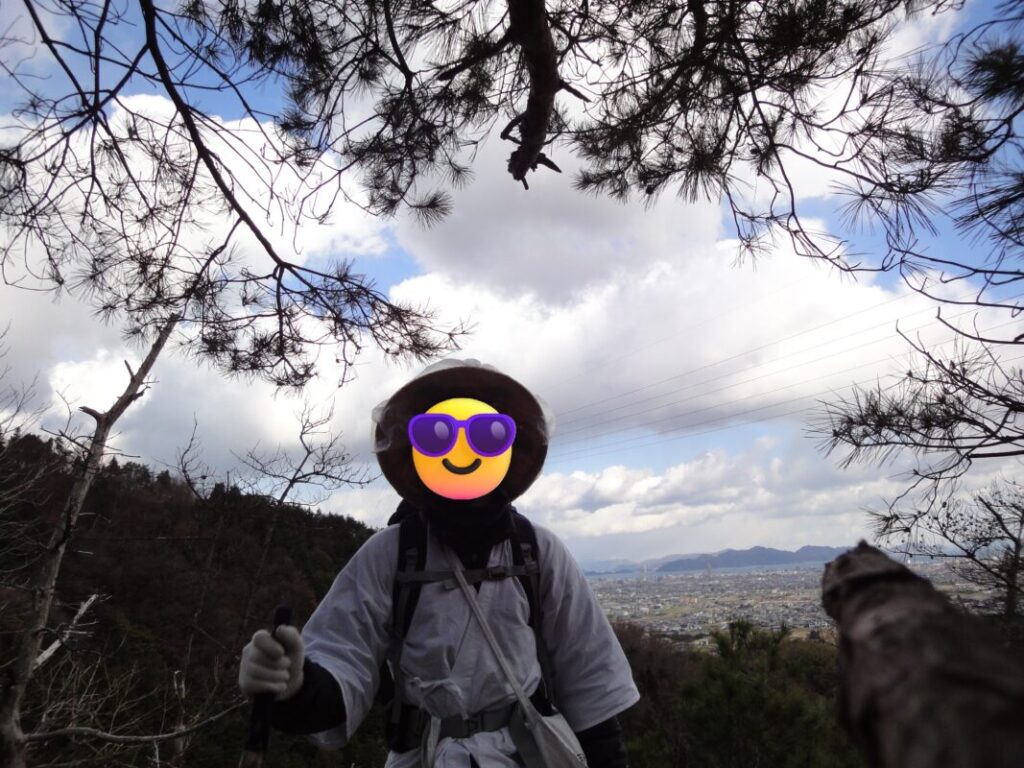
After descending from the remote mountain setting of Senyu-ji, the scenery changed completely to a pilgrimage trail surrounded by open countryside. The landscape varied so much over such a short distance that the walk never felt dull.
The hail that had fallen earlier gradually gave way to clearer skies, and the warmth began to return.
After leaving the mountain trail, I continued toward JR Iyotonda Station. I crossed the railway tracks at a level crossing near the station and headed south, where signs for Kokubun-ji soon came into view.
Highlights of Kokubun-ji
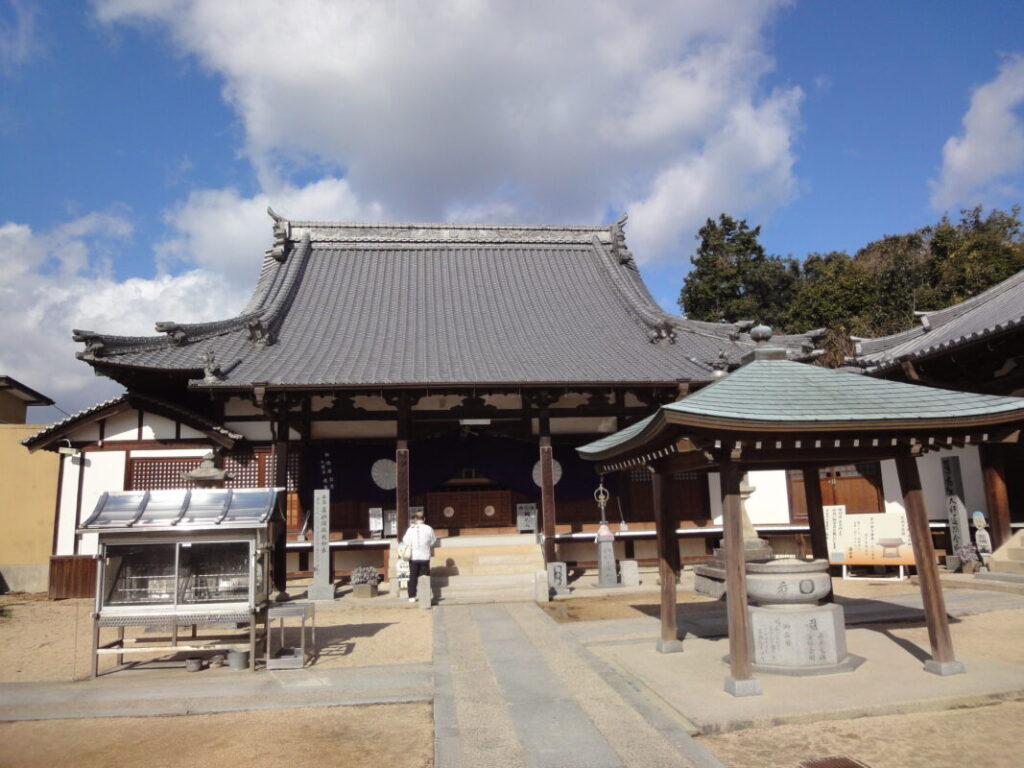
I arrived at Temple 59, Kokubun-ji, at noon.
One of the temple’s highlights is a statue of Kobo Daishi that visitors can shake hands with. It is not every day that you get the chance to shake hands with Kobo Daishi himself, so I made sure to do so.
The design of the purification fountain was also memorable. Water flows from a vessel modeled after the medicine jar held by Yakushi Nyorai, the Buddha of Healing, making it quite different from a typical purification fountain.
On the eastern side of the temple grounds lie the remains of the Iyo Kokubun-ji temple complex, dating back to the Nara period. The massive foundation stones offer a glimpse of the scale of the buildings that once stood here.
It was a temple that combined fascinating historical ruins with several unique features.
From Kokubun-ji to Shikokuya Hotel
Having visited all three temples as planned, I set off for Shikokuya, where I would be staying for the night. I had made a reservation by phone in advance.
Imabari Yunoura Onsen Roadside Station
The easiest route is to head first to Imabari Yunoura Onsen Roadside Station along National Route 196.
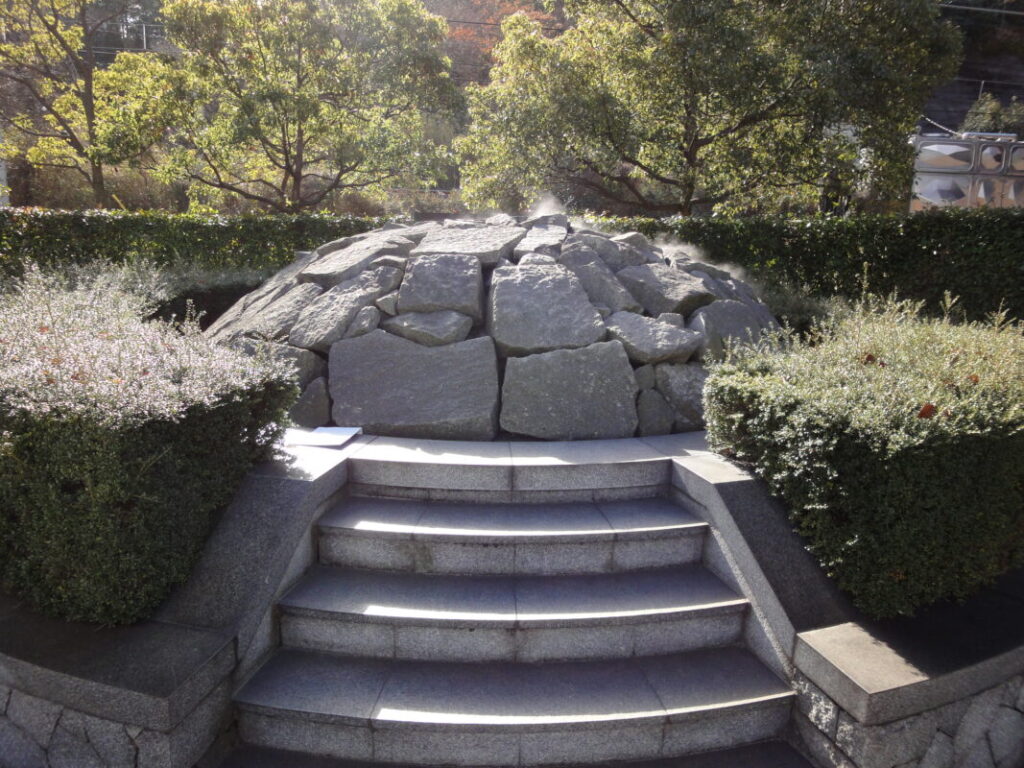
Roadside stations are convenient places to take a break and grab a meal. Since it was New Year’s Day, I ordered a special seasonal dish: ozoni, a traditional soup with rice cakes. The warm soup was deeply comforting after being out in the cold.
Steam was billowing from the hot spring-themed monument on the premises.
Komyo-ji Temple’s Zenkon Yado
After crossing a level crossing on the JR Yosan Line and continuing for about 10 km, I reached Komyo-ji, a temple known for its zenkon yado, a simple lodging facility offered to pilgrims.
The accommodation is dormitory-style, with bunk beds and access to electrical outlets. I had actually stayed here during my second walking pilgrimage.
The Pilgrimage Trail to the Nakayama River
Beyond Komyo-ji, the route heads south along Prefectural Roads 150 and 151.
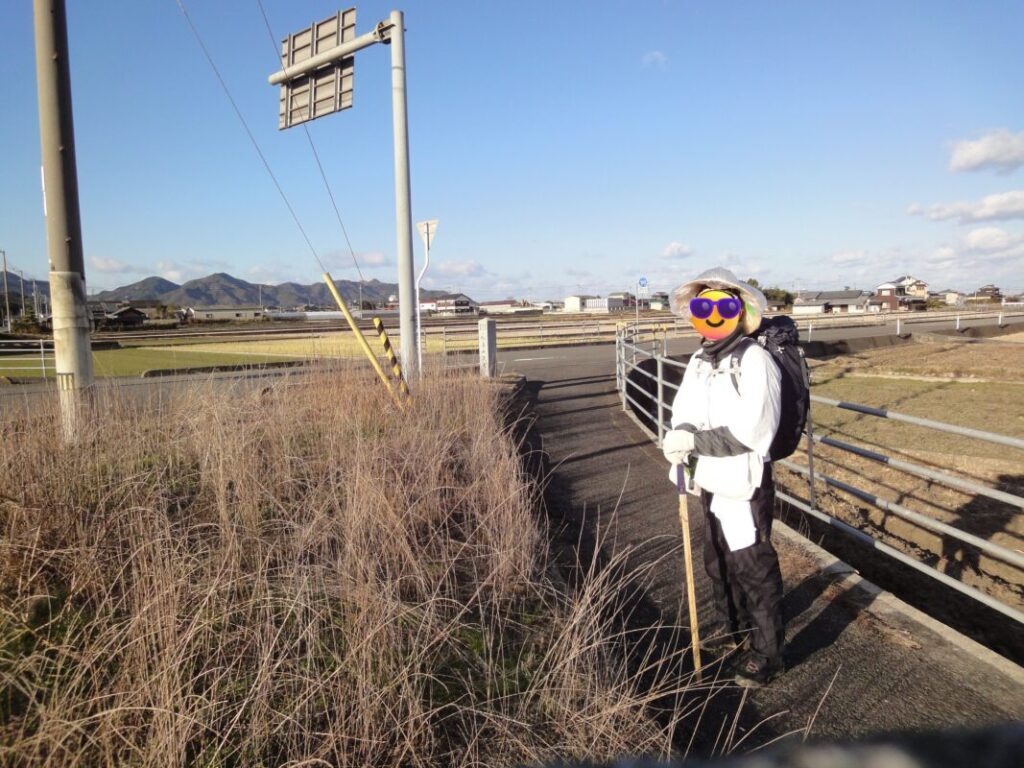
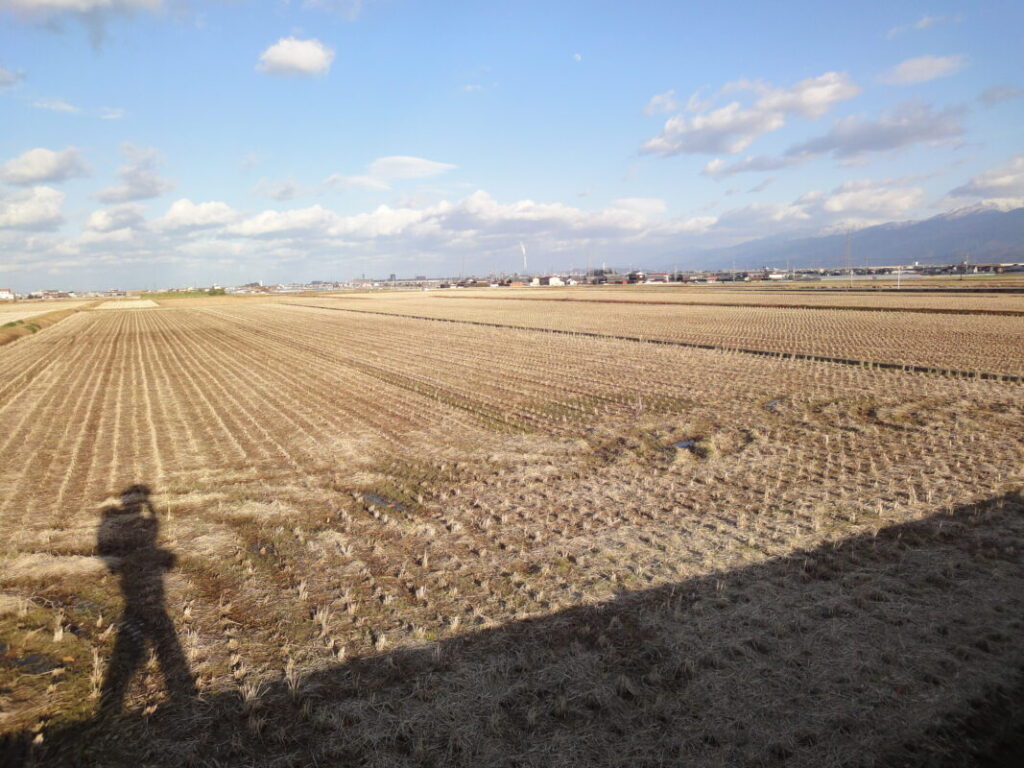
Residential areas and farmland stretched along the way, while the mountains of the Ishizuchi range rose ahead.
“Am I really going to climb those mountains tomorrow?”
I remember walking along with that thought on my mind.
The wind was exceptionally strong, as you might expect in the middle of winter. Perhaps a low-pressure system was approaching. Out in the open fields, there was nothing to block the wind, and the biting gusts seemed to drain the warmth from my body.
Just three days earlier, I had been walking through the snowy mountains of Kumakogen. In the snow, my body would warm up after about 15 minutes of walking. But the strong winds on this day were even more punishing. With no shelter from the wind, the perceived temperature dropped sharply.
Would I be able to manage the mountain trail to Yokomine-ji tomorrow?
Sniffling from the cold, I kept moving without stopping.
Depending on the weather, even peaceful rural scenery can turn into a harsh pilgrimage trail. I think experiencing the power of nature firsthand is one of the things that makes the Shikoku walking pilgrimage so rewarding.
Visiting the Special Pilgrimage Temples
Along this section of the route, you can also visit two temples on the Shikoku Beppyo Pilgrimage: Temple 10, Koryu-ji, and Temple 11, Ikiki Jizo.
I have visited both myself.
Koryu-ji is located partway up a mountain, and the long climb to reach it was quite challenging. If you plan to visit, allow plenty of extra time beyond what you would normally need for the pilgrimage trail.
Ikiki Jizo, on the other hand, is located on flat ground and not far off the main pilgrimage route, making it relatively easy to visit.
Whether to include these special pilgrimage sites is best decided according to your fitness level, available time, and preferred style of pilgrimage.
Crossing the Nakayama River and Reaching Shikokuya
It was past 5 p.m., and the surroundings were gradually growing dark.
“How much farther is the hotel?”
As darkness fell, my anxiety slowly grew. Still, I kept walking without stopping and finally crossed the Nakayama River.
One thing to keep in mind is that there are very few convenience stores or supermarkets beyond the Nakayama River.
The mountain trail to Yokomine-ji lies ahead, so I recommend stocking up on drinks and snacks before crossing the river to prepare for the climb.
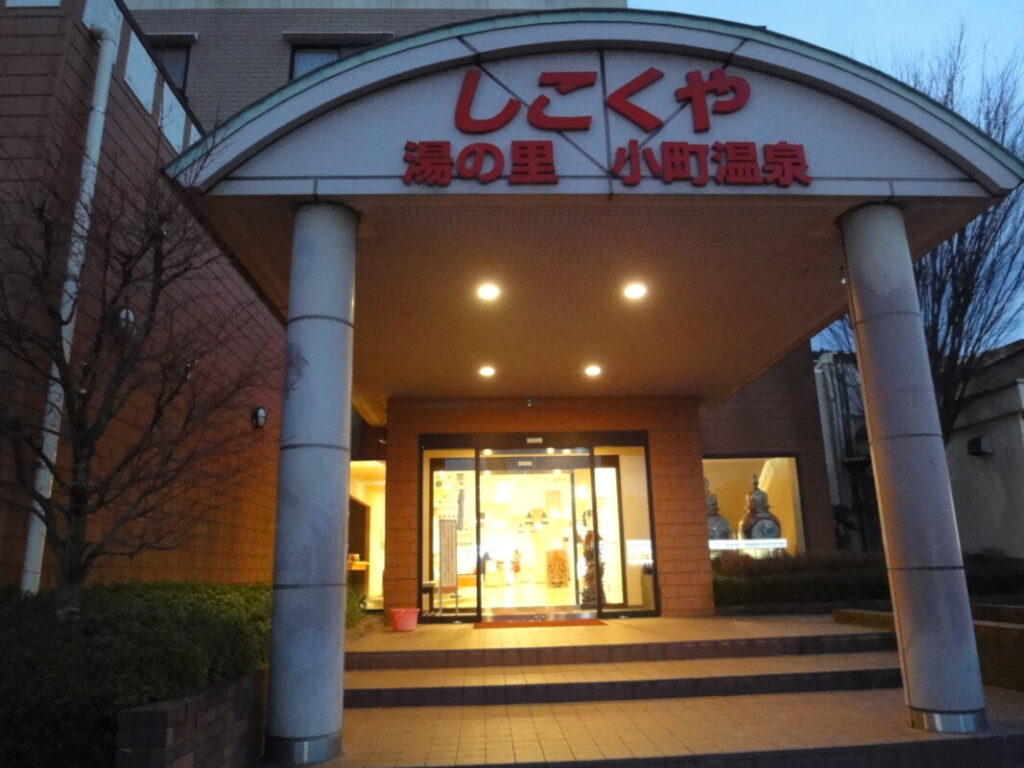
After crossing the river, I turned right at the intersection and spotted an impressive hotel up ahead.
It was 6 p.m. I had finally arrived at Shikokuya.
Relaxing in the Hot Springs and Preparing for Yokomine-ji
As I stepped inside the hotel, I felt an immediate sense of relief from the warmth. After walking for hours in the bitter winter wind, it was a welcome change.
The hotel had a large communal bath fed by natural hot springs, where I could soak and relax. It had been two days since my last bath. The heat warmed my thoroughly chilled body, and I could finally unwind.
Tomorrow, I would visit Temple 60, Yokomine-ji, one of the most challenging stops on the Shikoku Pilgrimage.
Thinking about the long journey to this mountain temple, located at an elevation of approximately 750 meters, I couldn’t help but wonder what the weather and trail conditions would be like. For now, I wanted to get a good night’s rest and prepare for the day ahead.
My New Year’s Day pilgrimage had begun with hail on the mountain trail and continued through open farmland battered by strong winds. Somehow, I had managed to reach my accommodation.
After warming up in the hot springs, I went to bed early.
I was ready for tomorrow’s visit to Yokomine-ji.
Temple Information
- No. 57
- No. 58
- No. 59
- No. 60


Comments