
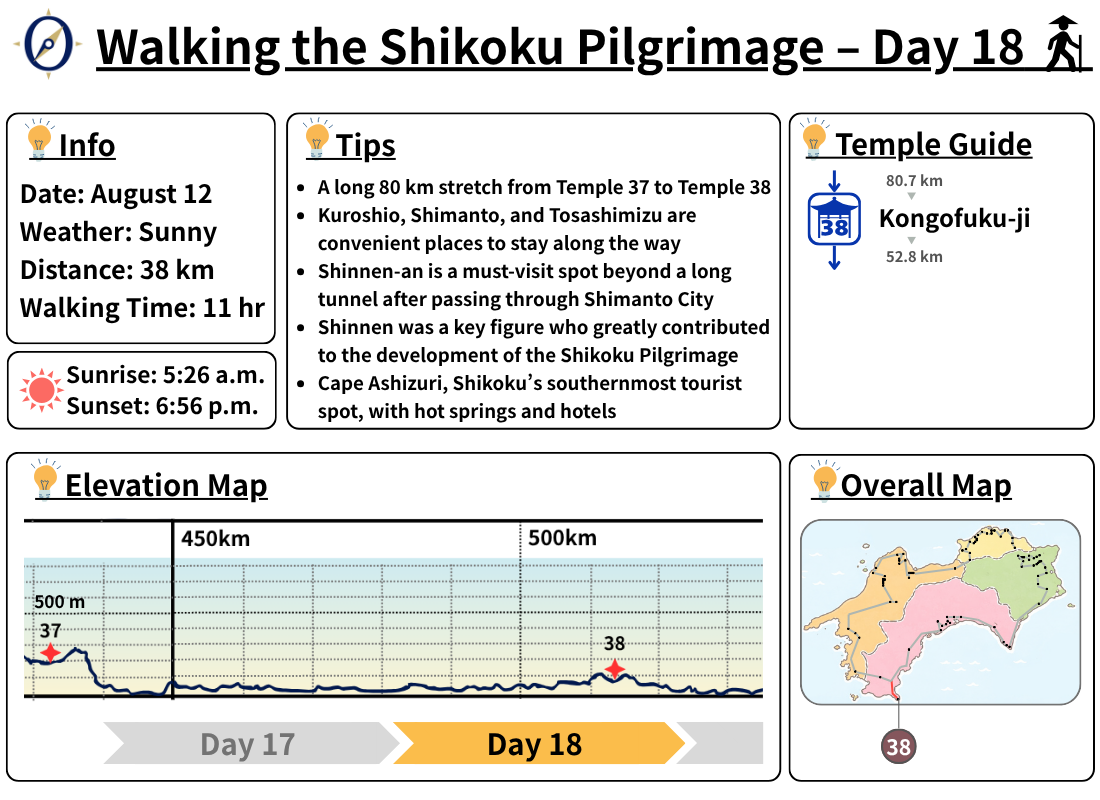
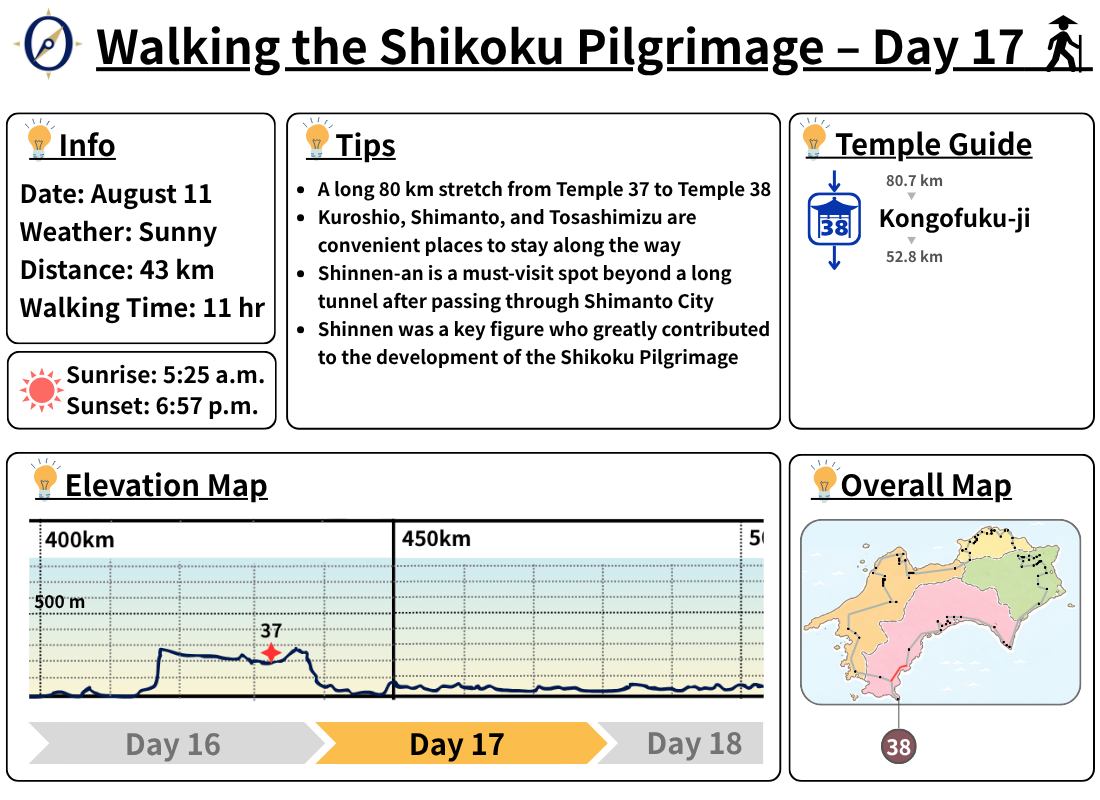
On Day 18 of my walking pilgrimage, I left Drive-in Suisha and headed for Temple 38, Kongofuku-ji, passing through Shinnen-an, Shimonokae, Ohki Beach, and Iburi along the way.
I followed the pilgrimage trail along the coast and reached Cape Ashizuri after walking about 30 km. After visiting Kongofuku-ji, I walked another 10 km back toward Iburi and spent the night outdoors at Jinbei Hiroba.
Itinerary
- 6:00Departure
- Drive-in Suisha
- Shinnen-an
- Shimonokae
- Ohki Beach
- Iburi
- Cape Ashizuri
- 13:30Temple No. 38, Kongofuku-ji
- 18:30Iburi
Overnight stay
Preparing to Leave in the Morning
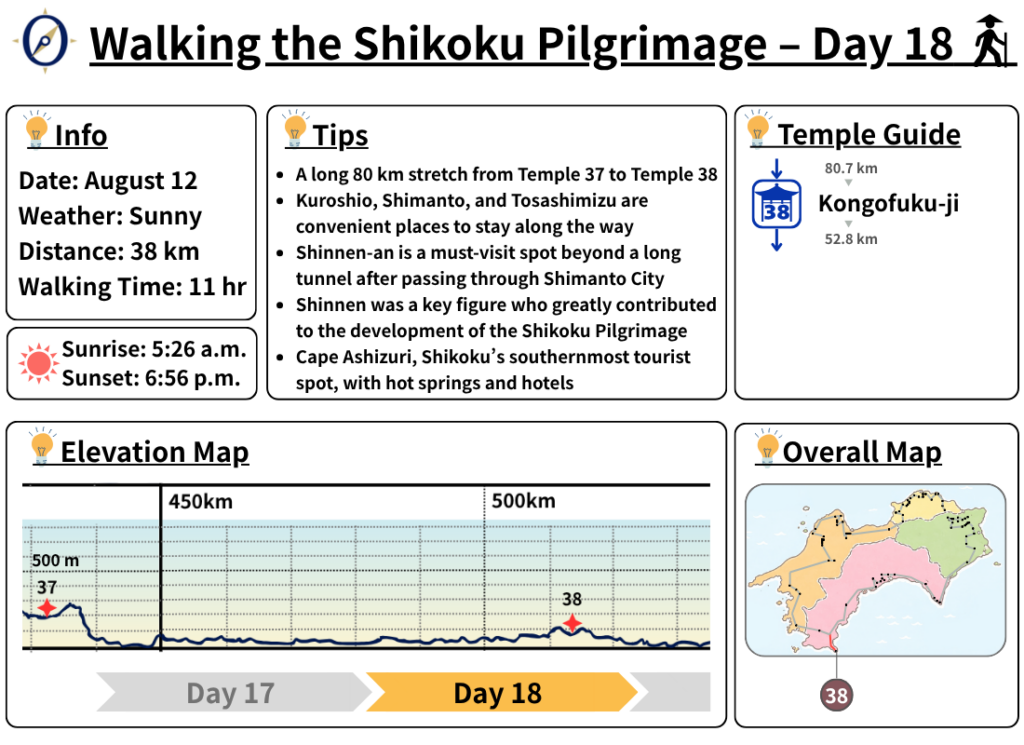
August 12, sunny. Day 18 of my walking pilgrimage.
The previous day, I had left Tosa Saga Onsen and walked as far as Drive-in Suisha, beyond Shimanto City. After walking more than 40 km, it would be a lie to say I wasn’t tired.
Surrounded by mountains, the area was filled with birdsong as dawn broke, making for a pleasant morning. After doing some light stretching, the stiffness in my back and legs gradually began to ease.
From here, Temple 38, Kongofuku-ji, was about 30 km away. It was finally within reach.
I gathered my tired body and set off shortly after 6 a.m.
Heading to Shinnen-an
I wanted to get moving, but there was an important place for pilgrims near Drive-in Suisha.
Shinnen-an.
Shinnen-an is a hermitage associated with Shinnen, located along the pilgrimage route from Shimanto City toward Tosashimizu. Shinnen was a monk in the Edo period who devoted himself to promoting the Shikoku Pilgrimage. He is best known for writing Shikoku Henro Michishirube, a guidebook that documented the pilgrimage routes and the 88 sacred sites.
The guidebook became a valuable source of guidance for pilgrims at the time and contributed greatly to the development of the Shikoku Pilgrimage as we know it today.
I stood before the quiet Shinnen-an, nestled in the woods, and offered a prayer. I gave thanks for having made it this far safely and prayed that I would continue the journey safely from here onward.
Heading to Shimonokae
After leaving Drive-in Suisha, the road continued gently downhill along the Shimonokae River.
After walking about 5 km, I reached the coastal town of Shimonokae.
There was a rare convenience store in this area, so I decided to stock up on breakfast and lunch. From here, it was a long way to Cape Ashizuri, so I wanted to make sure I had enough food for the journey ahead.
However, you need to be careful about the route in Shimonokae.
This is not only a route toward Temple 38, Kongofuku-ji, but also a route toward Temple 39, Enko-ji. It is part of the so-called “uchimodori” route, where pilgrims retrace their steps, and there are also signs along the way pointing toward Enko-ji.
Taking the wrong signpost could cause serious trouble, so I made sure to check my direction as I continued.
From Shimonokae to Ohki Beach
After leaving Shimonokae, the road continued along the coastline for some time.
I had also walked along the coast in Muroto, but this area had many more steep cliffs, giving it a different kind of rugged beauty. While enjoying views of the Pacific Ocean, the challenging terrain gradually began to take its toll on my legs.
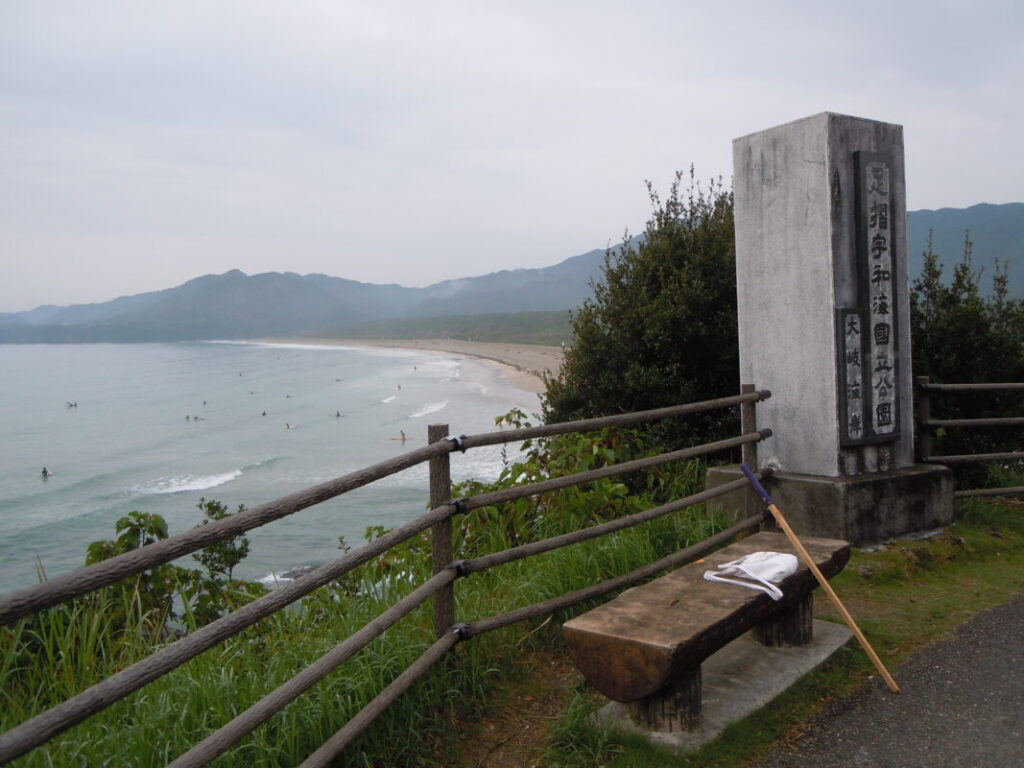
After walking another 5 km or so from Shimonokae, I arrived at Ohki Beach.
Ohki Beach is well known as a surfing destination, and from the rest area on the hill, I could see many surfers waiting for the right waves.
There are also several accommodations in the area catering to surfers. For pilgrims, it is a convenient area to find a place to stay as well.
From Ohki Beach to Cape Ashizuri
After passing Ohki Beach, the route toward Cape Ashizuri splits into two options.
One route continues along National Route 321 and leads into central Tosashimizu City. With plenty of accommodation and restaurants, this is a convenient option if it gets late and you need to find a place to stay.
The other is a prefectural road that follows the coastline.
If your priority is reaching Temple 38, Kongofuku-ji, by the shortest route, this is the more convenient option. I decided to prioritize distance and chose the coastal prefectural road.
By following the signs along the way, it is also possible to walk along parts of the old pilgrimage trail.
The coastal paths around Iburi Port and the bamboo-lined sections were easier on my feet than asphalt, making them a recommended route for walking pilgrims.
It is about 10 km from Iburi Port to Kongofuku-ji.
I thought, “Just a little farther,” but the remaining distance turned out to be longer than expected.
As I got closer to Cape Ashizuri, the cliffs became increasingly rugged, with a series of small ups and downs. None of the climbs were particularly steep, but the constant changes in elevation were surprisingly tiring on my already exhausted legs.
“Did Kobo Daishi really walk all the way through places like this?”
As I made my way along the rugged pilgrimage trail, I was once again reminded of the remarkable achievement of Kobo Daishi.
After about two hours of walking from Iburi Port, the vegetation around me gradually began to change.
Tropical-looking plants such as banyan trees and Chinese fan palms became increasingly common.
Cape Ashizuri was getting close.
Just thinking that made me feel a little more energized.
Arriving at Temple 38, Kongofuku-ji
It was just after 1 p.m.
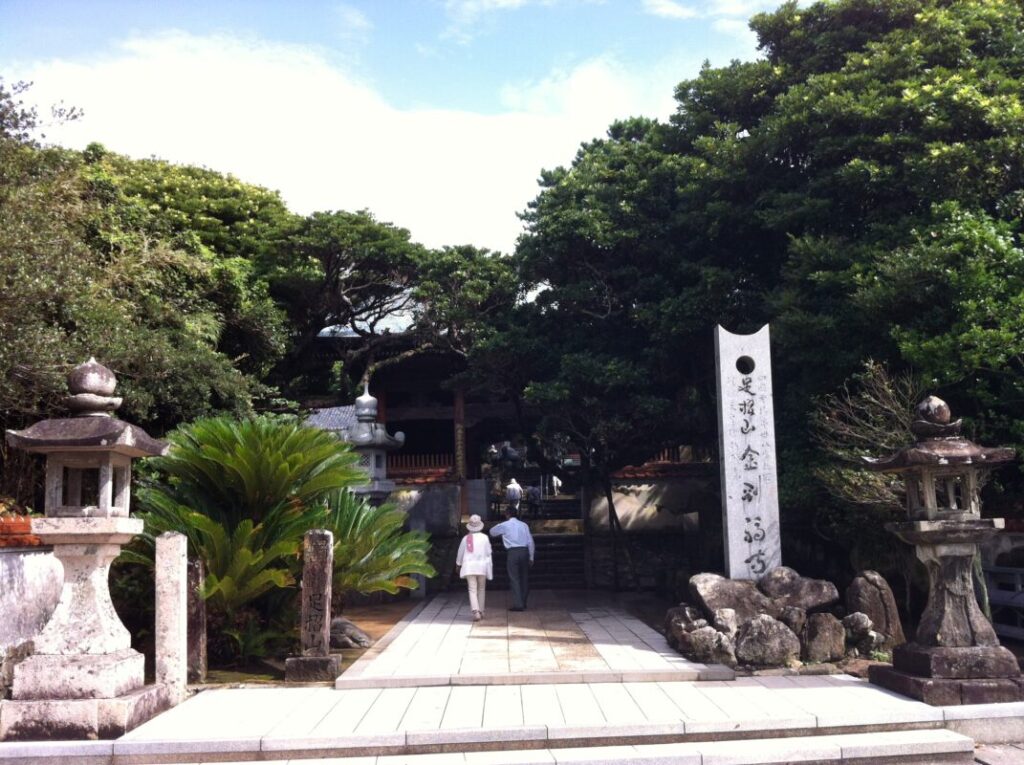
I had finally arrived at Temple 38, Kongofuku-ji.
As it was the Obon holiday season, the area around Cape Ashizuri was bustling with tourists. There were souvenir shops and places to grab a light meal, making it a good place to stop for a break.
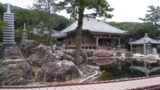
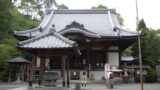
Kongofuku-ji is said to have been founded by Kobo Daishi, who regarded Cape Ashizuri as Fudaraku, the Pure Land of Kannon Bodhisattva.
The temple grounds featured ponds, massive rocks, and beautifully maintained gardens. Of all the temples I had visited so far, this was one of the most impressive.
I took off my backpack and slowly explored the temple grounds, taking the opportunity to rest my tired body.
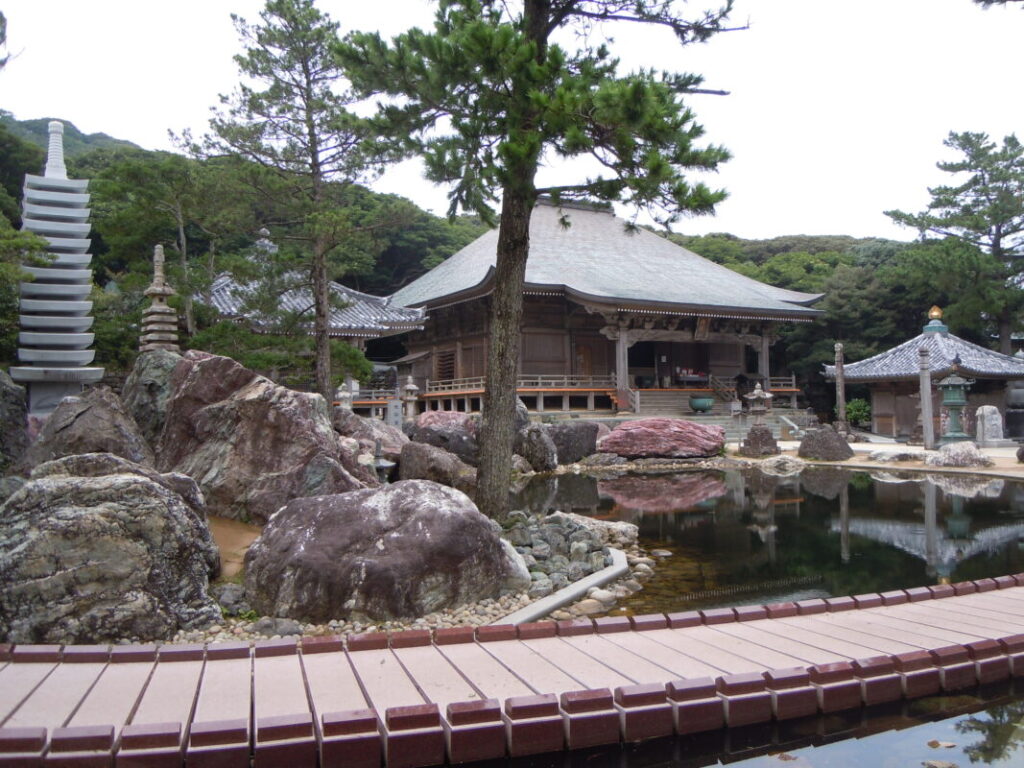
Highlights of Cape Ashizuri
After visiting Kongofuku-ji, it is well worth taking some time to explore the area around Cape Ashizuri.
There are several attractions within walking distance, making it easy to enjoy some sightseeing alongside the pilgrimage.
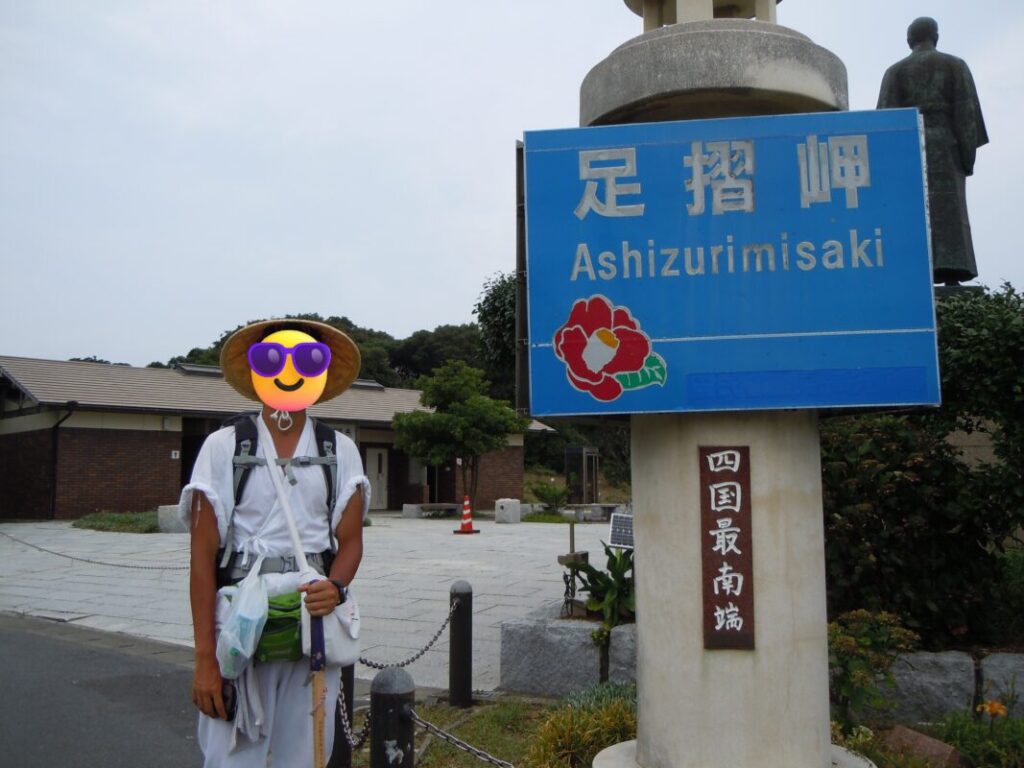
John Manjiro Statue
A bronze statue of John Manjiro, a historical figure closely associated with Tosashimizu City.
After being shipwrecked, he was taken to the United States. Following his return to Japan, he became known for his work as an interpreter and educator, and for the influence he had on Japan’s modernization.
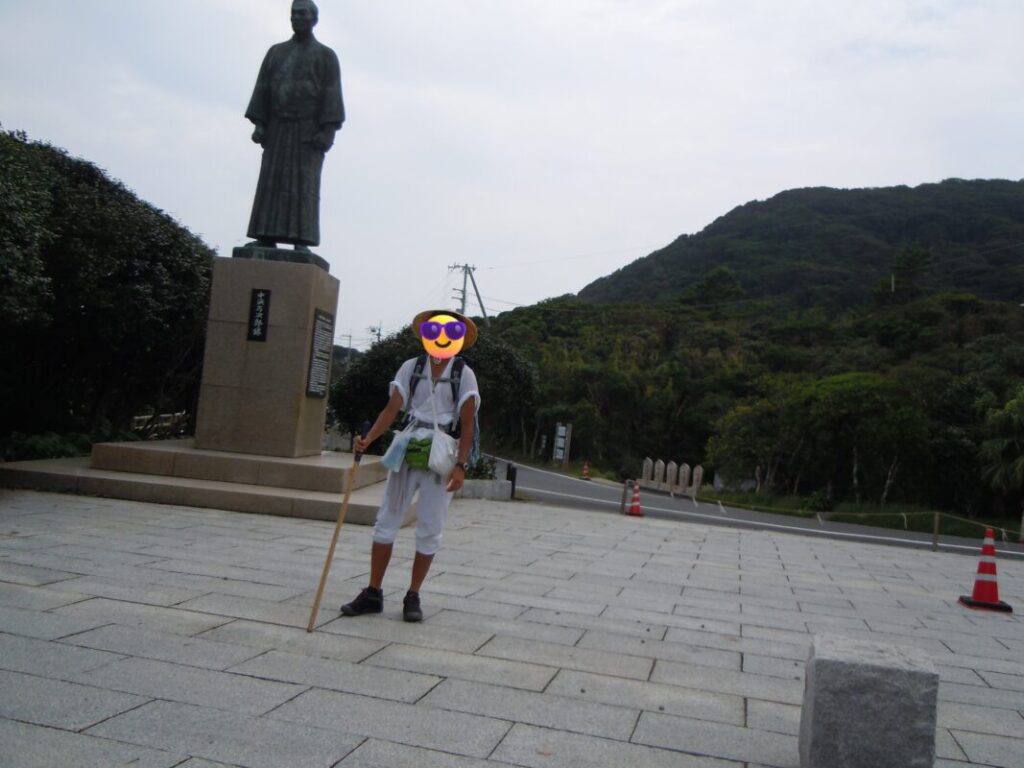
The Seven Mysteries of Ashizuri
Scattered around Cape Ashizuri are the “Seven Mysteries of Ashizuri,” a collection of sites associated with legends about Kobo Daishi.
Among them is Kameishi (Turtle Rock), along with several other sites connected to legends of Kobo Daishi. Exploring these places while enjoying the scenery offers a chance to experience not only the natural beauty of Cape Ashizuri but also the history and spiritual traditions of the pilgrimage.
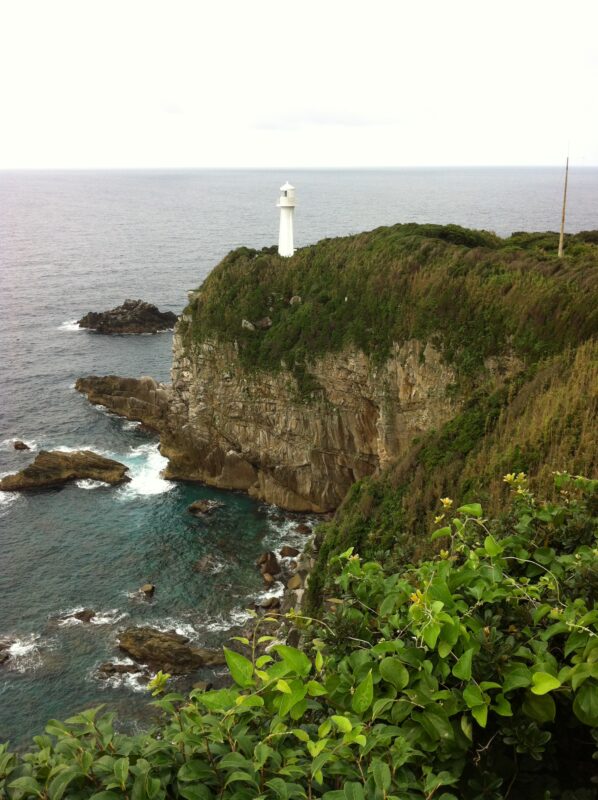
Cape Ashizuri Lighthouse
A brilliant white lighthouse standing at the tip of Cape Ashizuri.
From the observation area, you can enjoy a panoramic view of the Pacific Ocean and take in the spectacular scenery characteristic of the southernmost point of Shikoku.
Walking Back to Iburi
After visiting Kongofuku-ji and exploring the area around Cape Ashizuri, it was 2:30 p.m.
It was time to set off and decide where to spend the night.
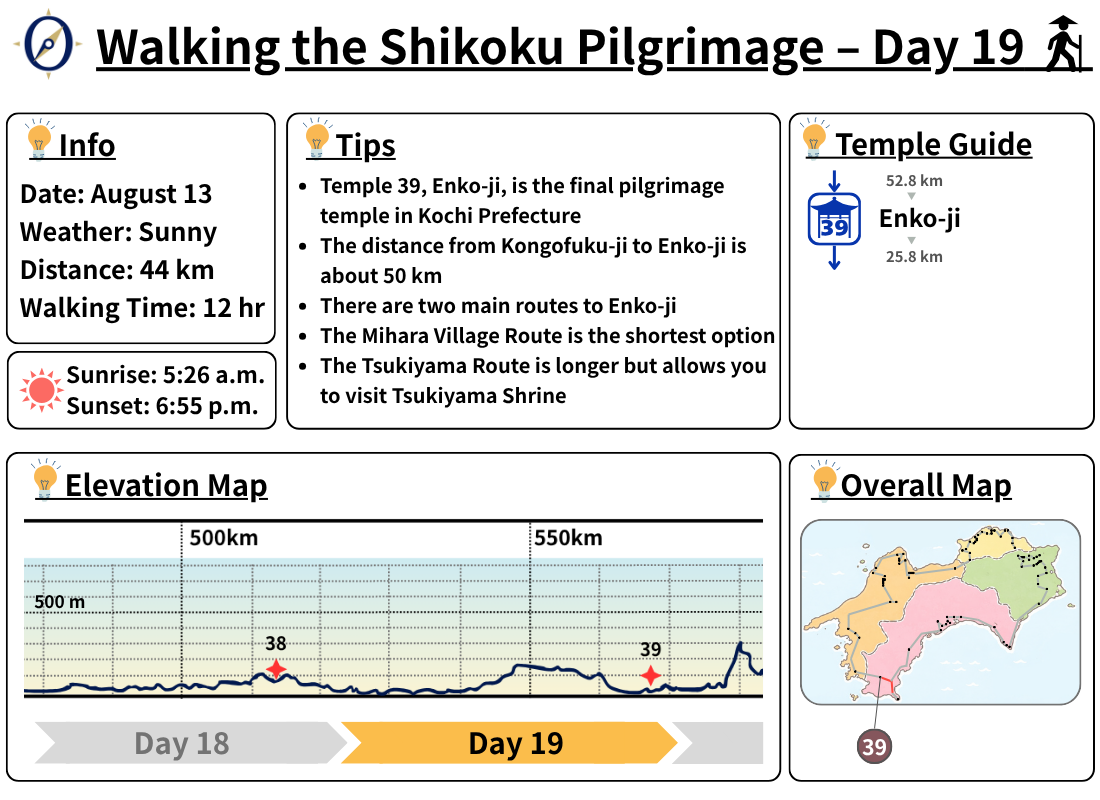
As I mentioned earlier, Temple 39, Enko-ji, was about 53 km away. The usual route from here involves retracing your steps about 25 km to Shimonokae.
I remembered that there was a park with a large gazebo near Iburi Port, which I had passed earlier in the day.
It was about 10 km from Cape Ashizuri. I still had some walking ahead of me, but I decided to make that my destination for the night.
The road felt shorter now that I had already walked it once.
Along the way, there were signposts pointing toward both Kongofuku-ji and Enko-ji. Since I was now walking in the opposite direction, I carefully checked each sign to make sure I did not take a wrong turn.
Spending the Night at Jinbei Hiroba — Reuniting with Fellow Pilgrims
At 6:30 p.m., just as it was beginning to get dark, I safely arrived at the park in Iburi.
The place was called Jinbei Hiroba, and the gazebo was impressively large. There was also a restroom, making it a convenient place for a walking pilgrim to spend the night outdoors.
There were already two other pilgrims staying in the gazebo.
I was surprised when I recognized one of them.
It was the young man I had met earlier at Tosa Saga Onsen.
“Here we meet again.”
I never expected to run into him in a place like this. These unexpected reunions along the pilgrimage trail made me feel that perhaps there really was a special connection guided by Kobo Daishi.
When he saw me arrive looking completely exhausted, he asked in surprise,
“Don’t tell me you actually made it to Kongofuku-ji?”
“Yes,” I replied.
The other pilgrim was walking the pilgrimage in the opposite direction, known as gyaku-uchi.
Pilgrims walking in the opposite direction are particularly valuable sources of information, as they know the latest conditions of the trail ahead.
Apparently, the mountain route toward the border between Kochi and Ehime had been badly affected by the recent typhoon. There were fallen trees along the way, but he said it was still passable on foot.
We exchanged information about the trails we had already walked and shared useful details about what lay ahead.
And, as always, one of the liveliest topics of conversation was meeting other pilgrims along the way.
When someone mentioned seeing a pair of young women walking the pilgrimage, the other man immediately joined in: “I saw them too.”
When it comes to what gets men excited, apparently some things never change.
After 8 p.m., it was completely dark.
It was time to go to sleep.
I had a feeling that today would probably be the last time I would see the young pilgrim.
I think we both felt the same way.
“Take care.”
We exchanged those words and traded osamefuda, the name slips carried by pilgrims.
Then we each returned to our own tents.
I was exhausted, but satisfied that I had safely made it through another long day. I settled into my tent and fell asleep.
Temple Information
- No. 38
- No. 39
Comments