
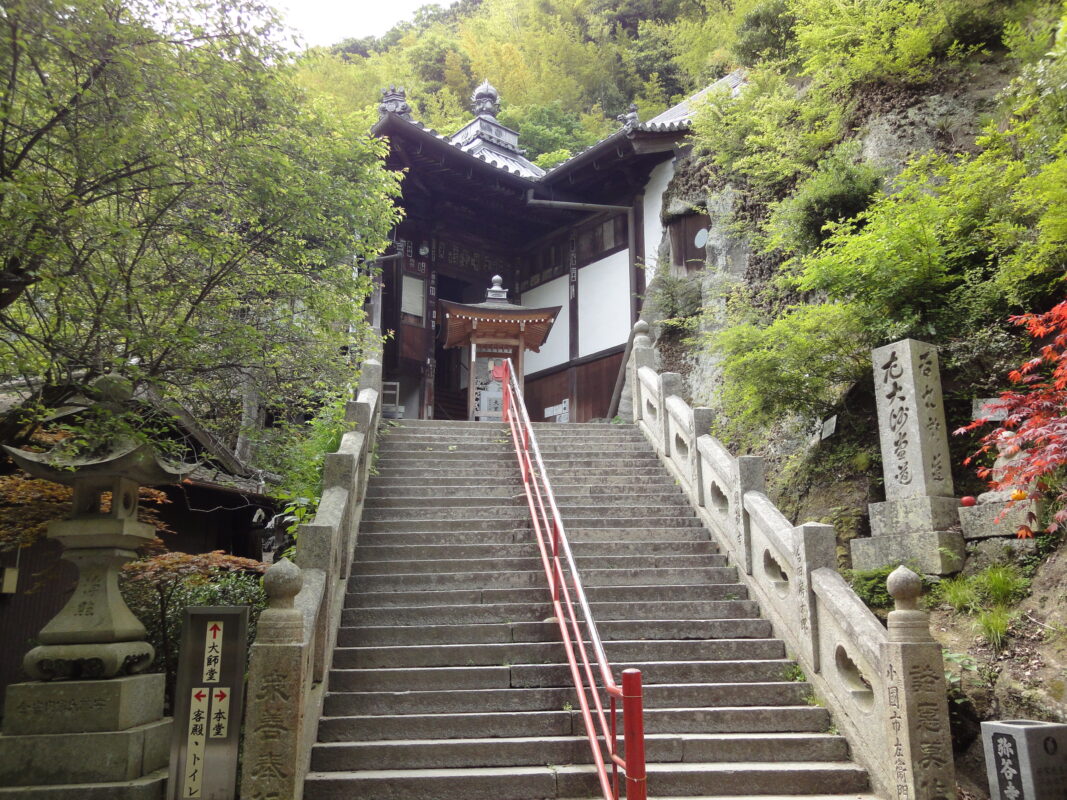
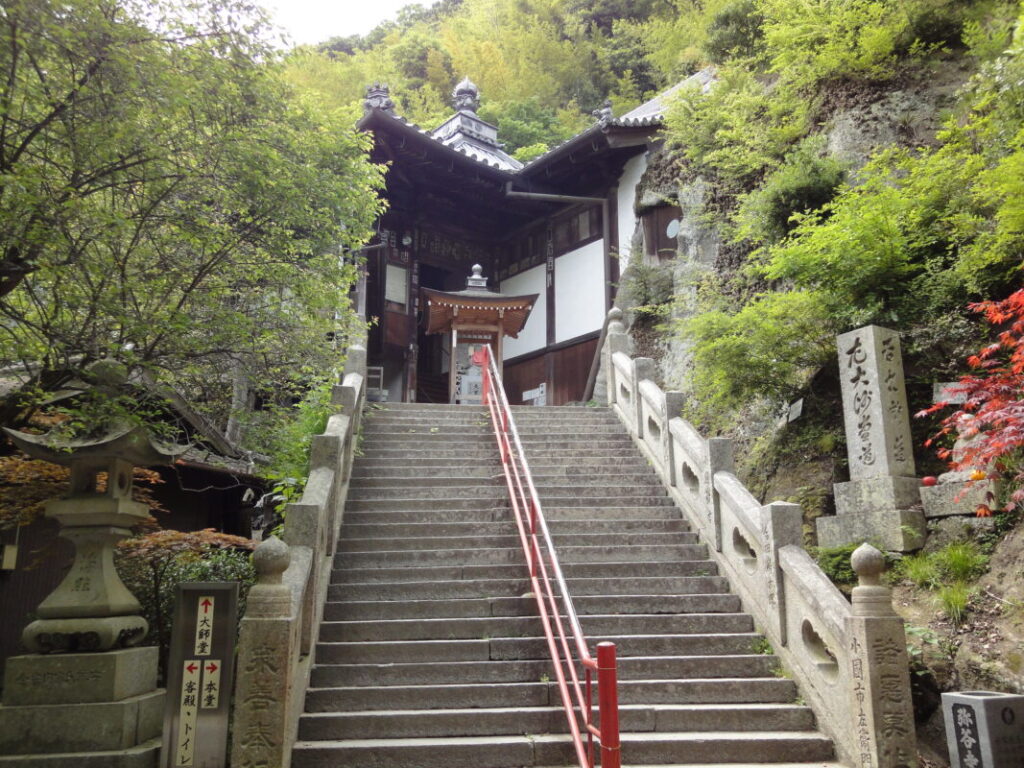
Visit Temple 71 Iyadaniji on the Shikoku Pilgrimage. Discover its 1,300-year history, Shishi no Iwaya (Lion Cave), rock-carved Buddhist images, sacred mountain worship, and the challenging 540 stone steps leading to the temple.
Iyadaniji Temple Information
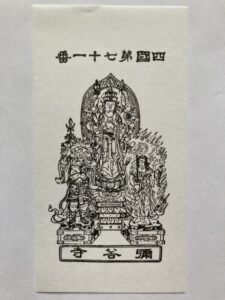
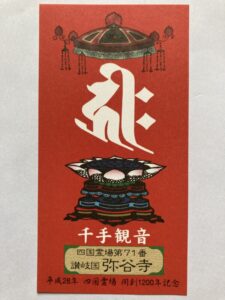
Goshuin

- Omie
- 1,200th Anniversary Edition
Basic Information
| Principal Deity Thousand-Armed Avalokitesvara Bodhisattva | Elevation 200 m |
| Location Kagawa Pref. Mitoyo City | Google Maps MAP |
Accommodation
| Shukubo (Temple Lodging) | Not Available |
| Tsuyado (Free Pilgrim Shelter) | Not Available |
History & Highlights
Iyadaniji Temple is an ancient temple said to have been founded by Gyoki at the request of Emperor Shomu. For centuries, it flourished as the center of sacred mountain worship on Mount Iyadani.
The temple is home to Shishi no Iwaya (Lion Cave), a site closely associated with Kobo Daishi, as well as numerous rock-carved Buddhist images. Together, these historic and spiritual landmarks create the mysterious atmosphere for which Iyadaniji is known today.
Notes
Free parking: From the lower parking area, visitors must climb approximately 540 stone steps to reach the temple grounds. Paid parking: A parking lot located halfway up the mountain is available for 500 yen, reducing the climb to about half the number of steps.
Route Map, Distance & Travel Time
You can switch between the tabs to view the routes to the previous and next temples.
Select “Driving Route” from the map’s upper-left menu to display the driving route.
Click the Full Screen icon in the upper-right corner of the map to open it in Google Maps for a larger, easier-to-view map.
Transportation Guide
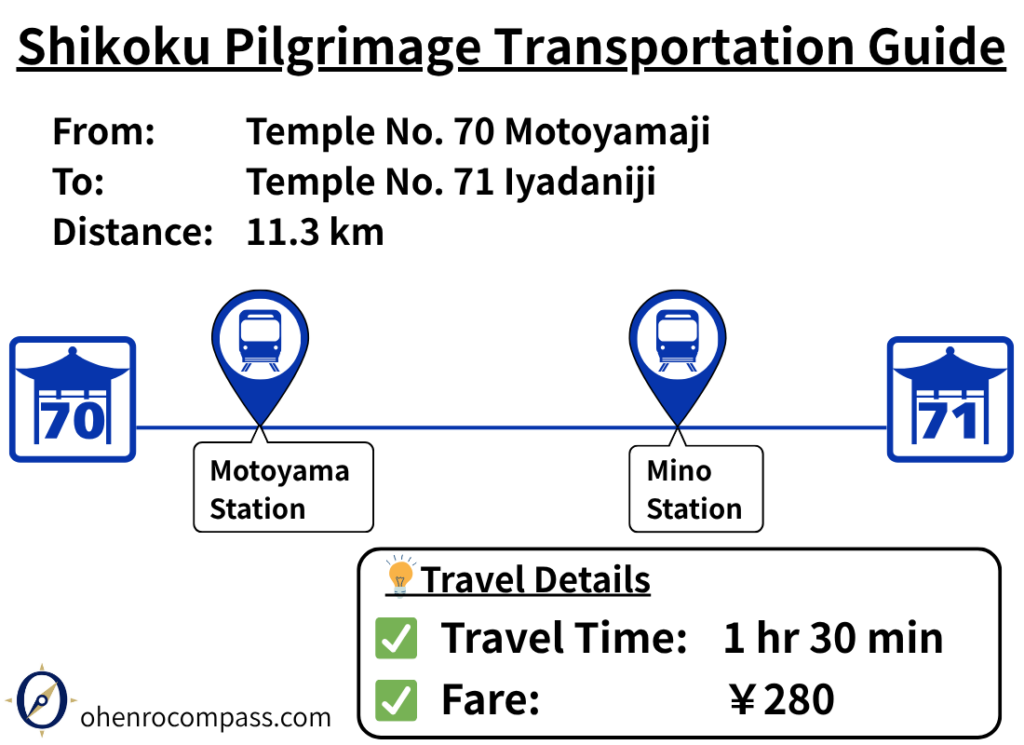
Travel from Motoyamaji (70th Temple) to Iyadaniji (71st Temple) by train in about 1.5 hours for ¥280. Includes route details, timetable, walking distance and a comparison with the walking route.
My Walking Experience
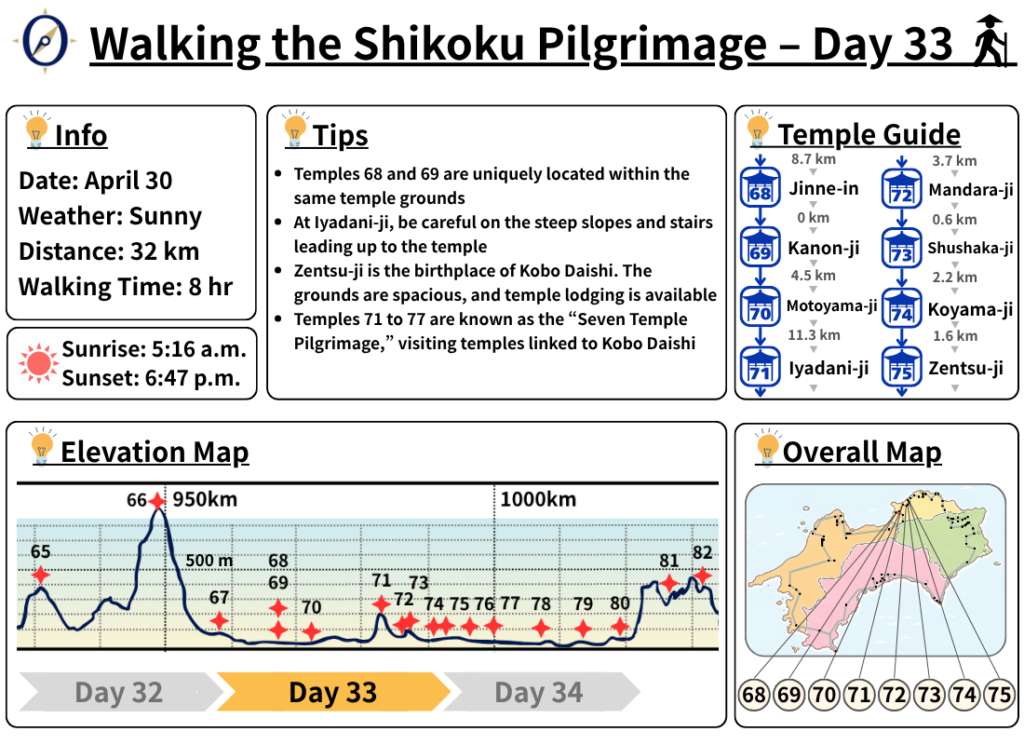
Iyadaniji Temple is located approximately 11 km north of Motoyamaji Temple.
Although National Route 11 is the easiest route to follow, continuing along it all the way results in a detour. The shortest route is to turn left at the large pond and stone pillar about 4 km from Motoyamaji and follow the prefectural road. This road passes through quiet residential areas and farmland, offering a peaceful walking experience.
Once you leave the national highway, convenience stores and restaurants become much less frequent, so it is a good idea to purchase food and supplies before turning onto the prefectural road.
Iyadaniji Temple is situated on the slopes of Mount Iyadani, which rises to about 380 meters above sea level. The temple grounds themselves are located at an elevation of around 200 meters. Because the route gains elevation rapidly over a short distance, the climb is surprisingly steep, and about 540 stone steps must be ascended to reach the Main Hall.
After visiting several temples located on relatively flat terrain, I found this climb more demanding than expected. Since the temple is close to the city, it is easy to underestimate the effort required, but many pilgrims may find it feels like an unexpected henro korogashi—one of the challenging ascents of the pilgrimage.
History and Highlights of Iyadaniji Temple
An Ancient Temple with More Than 1,300 Years of History
Temple treasures include Buddhist scriptures dating back to the Tenpyo period (around 724), indicating that the site existed even before the birth of Kobo Daishi.
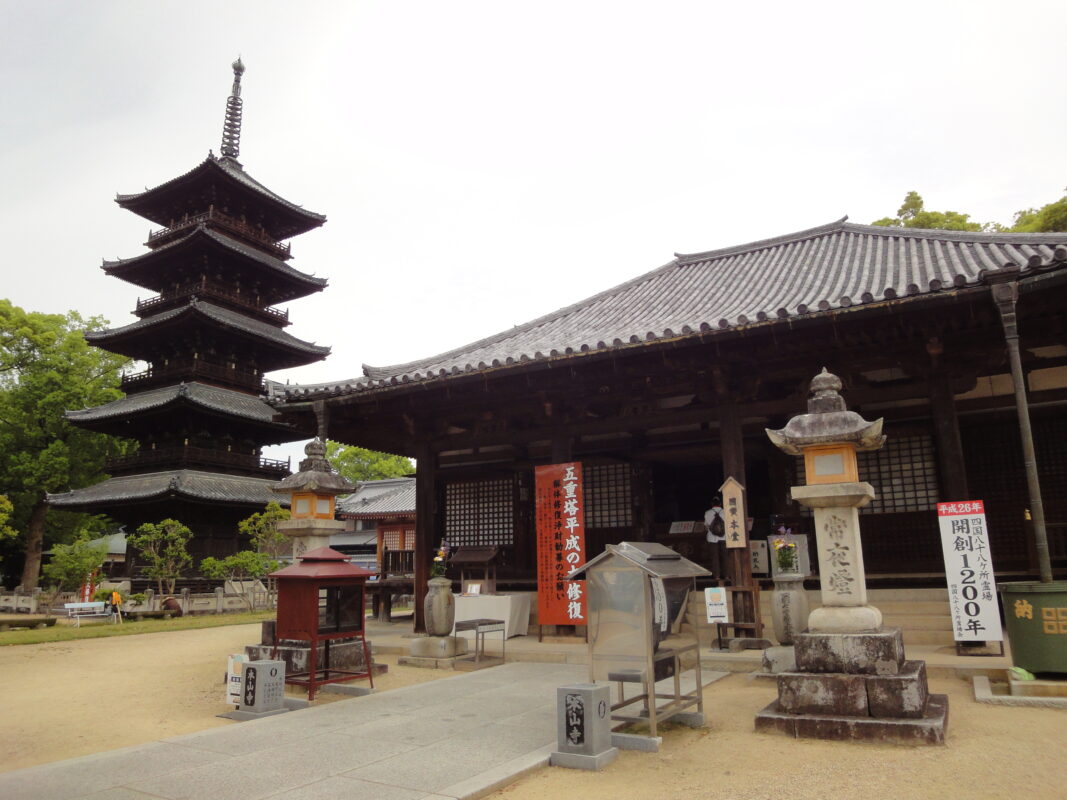
The Main Hall, backed by a towering rock cliff, possesses a striking presence, appearing almost as if it were part of the mountain itself.
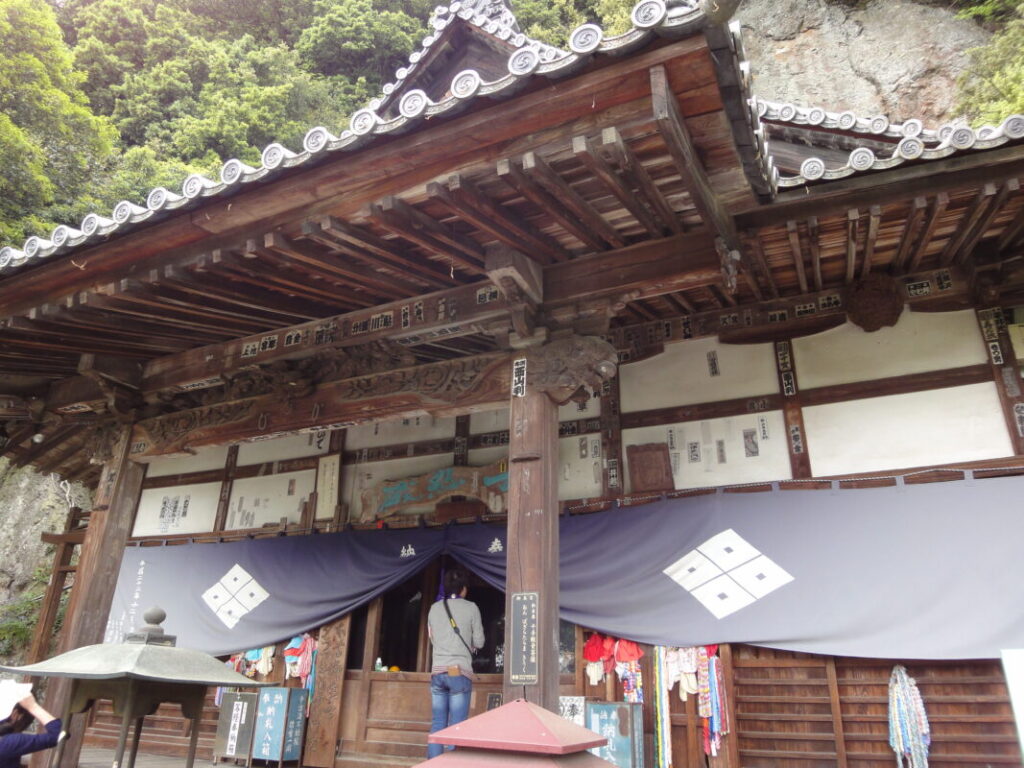
Rock-Carved Buddhas and Cave Worship
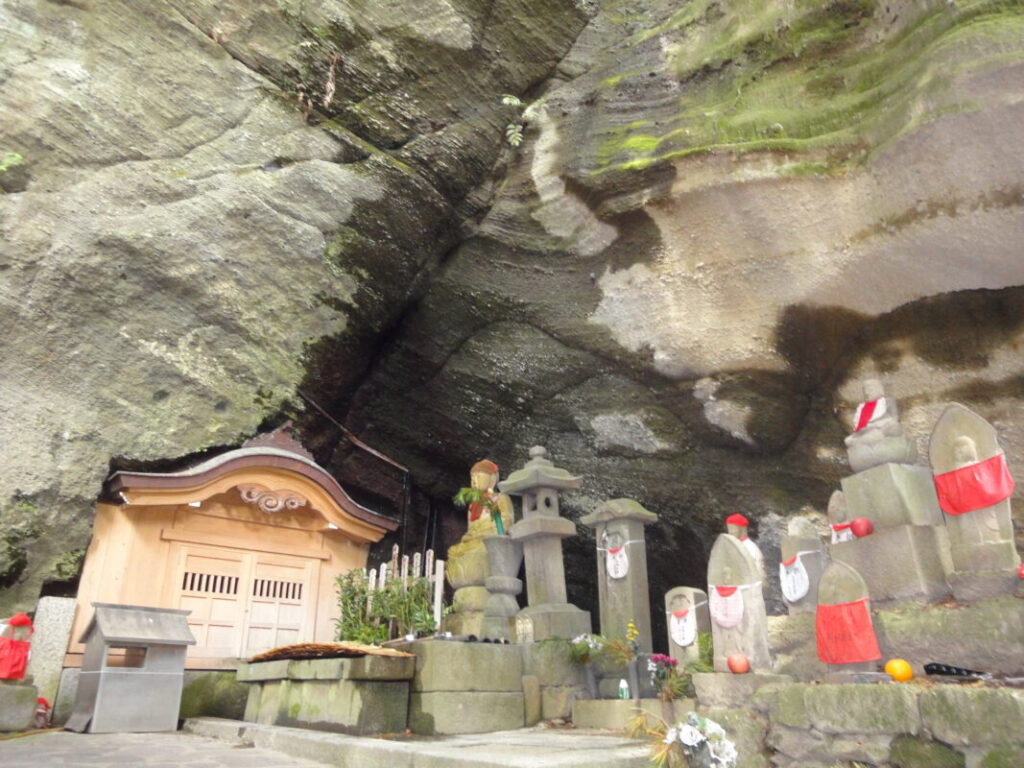
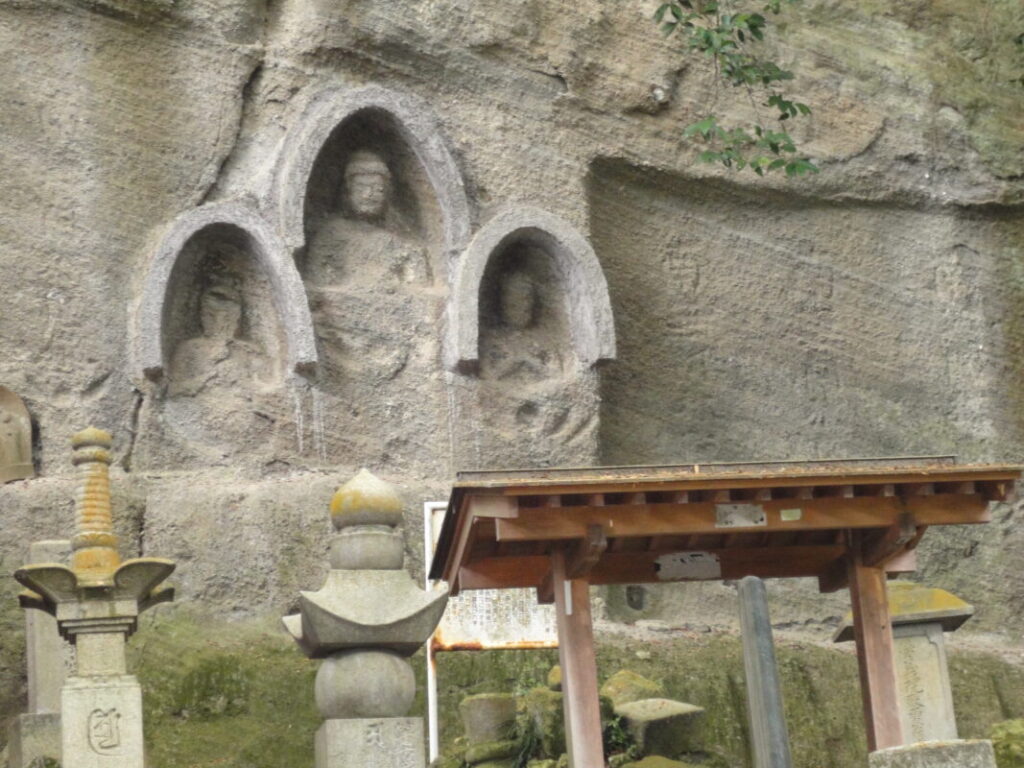
The greatest highlight of Iyadaniji Temple is the collection of rock-carved Buddhas and sacred caves found along the approach to the temple.
Water flowing from cracks in the cliffs is believed never to run dry and has long been revered as a sacred connection to the spiritual realm.
This faith continues today through the Omizu Matsuri tradition. Worshippers write mantras on wooden prayer tablets known as suikyo-gi and purify them with the sacred spring water flowing down from the mountain.
The approach and surrounding rock faces are also engraved with Buddhist images and sutras, preserving evidence of the ascetic practitioners who once trained here. These features offer visitors a glimpse into the long spiritual history that has flourished on sacred Mount Iyadani for centuries.
Mount Iyadani, a Sacred Mountain of Worship
Mount Iyadani, where Iyadaniji Temple is located, has long been revered as a sacred mountain.
In ancient times, people believed that mountains were dwelling places of gods and Buddhas, and this mountain worship is thought to have influenced the pilgrimage culture that later developed in Shikoku.
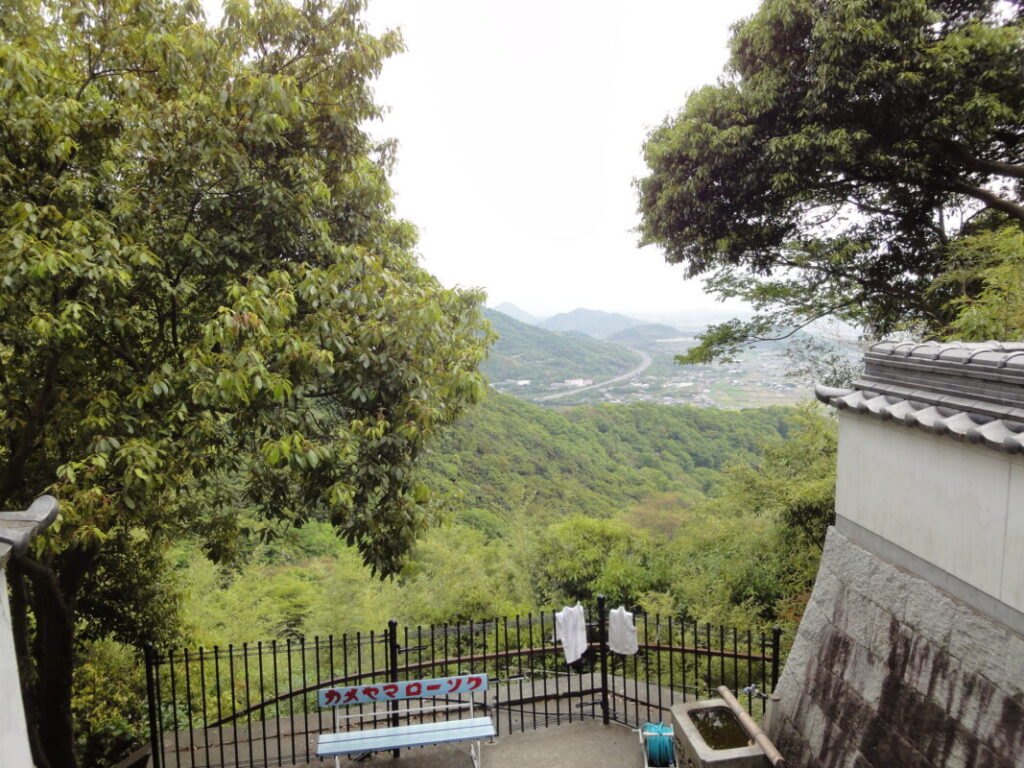
The climb of 540 stone steps is far from easy, but visitors are rewarded with scenery unlike that of any other pilgrimage temple. Halls built against sheer rock faces and numerous rock-carved Buddhist images scattered throughout the mountain create a unique spiritual landscape.
As I climbed the stone steps, I felt that this was truly a temple of ascetic practice. Reaching the top brought a strong sense of accomplishment, which remains one of the most memorable aspects of visiting Iyadaniji.
The First Temple of the Seven-Temple Pilgrimage
Iyadaniji is also well known as the first temple of Kagawa’s Seven-Temple Pilgrimage (Shichikasho Mairi).
This pilgrimage route links seven temples from Temple 71, Iyadaniji, to Temple 77, Doryuji. Because all seven temples can be visited in a single day, it remains a popular pilgrimage course unique to Kagawa Prefecture.
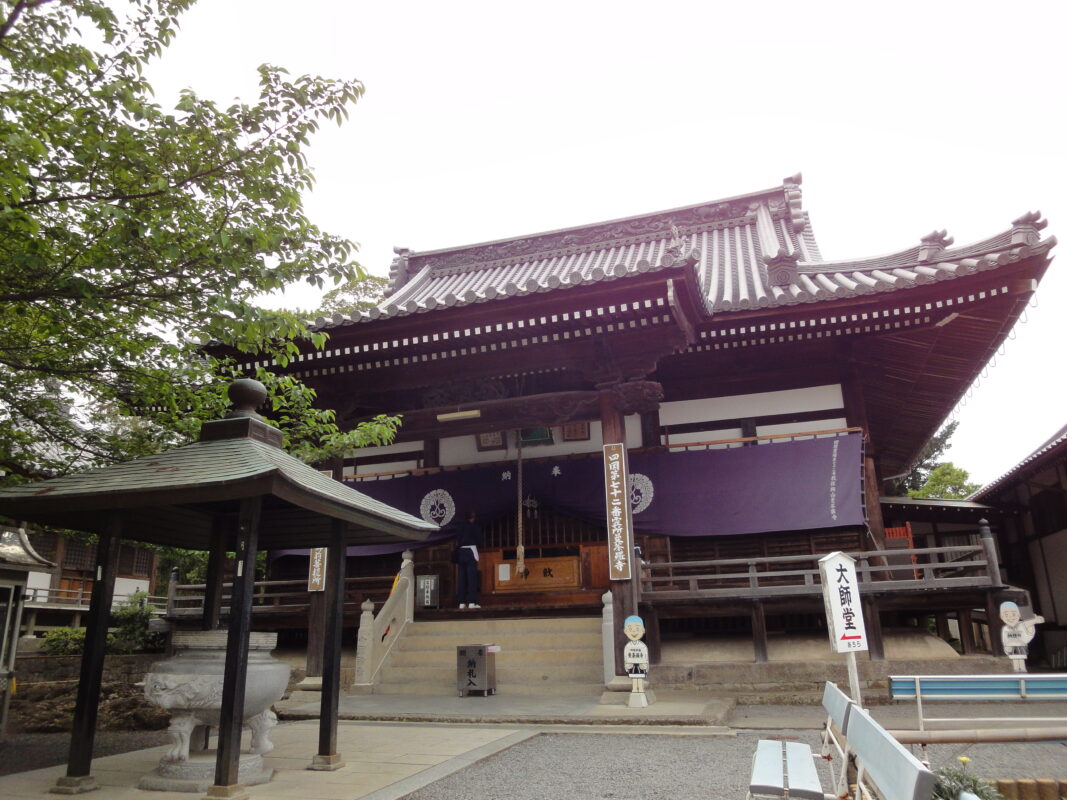
Behind the Daishi Hall is Shishi no Iwaya (Lion Cave), which is said to be the place where the young Kobo Daishi devoted himself to study and spiritual training. The cave is an important historic site that allows visitors to connect with the early life and formative years of the great Buddhist master.
Useful Facilities Between Pilgrimage Temples
Find useful facilities along the pilgrimage route, including toilets and rest areas.
Loading rest spots...
Looking for More Places to Take a Break?
Explore our guide to rest stops, hot springs, campsites, and other useful places for pilgrims walking the Shikoku Pilgrimage.

Nearby Accommodation
Here are some accommodation options near this temple that may be convenient for pilgrims. If you are planning to stay overnight, we hope you find this list helpful.
Looking for more accommodation options?
Visit our Pilgrim Accommodation Guide to explore more places to stay along the Shikoku Pilgrimage. You can search by location, accommodation type, price range, facilities, and more.

Additional Information

Related Articles
Shikoku 88 Temple Pilgrimage Route: Full List, Distance & Walking Time Guide.
Temple List and Full Route
For a complete list of the Seven-Temple Pilgrimage, please see the article here.
What is the Shichikasho Pilgrimage? A Seven Temple Pilgrimage Route in Kagawa


Comments