
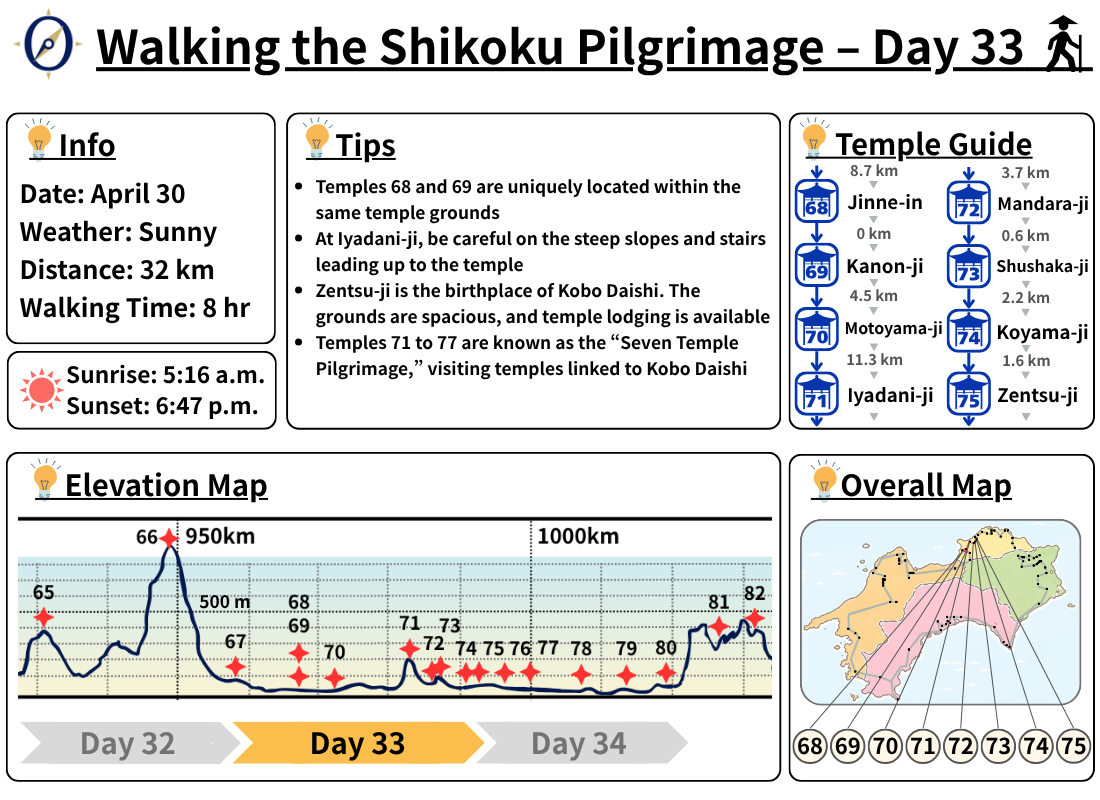
April 30, sunny. Day 33 of the Shikoku Pilgrimage.
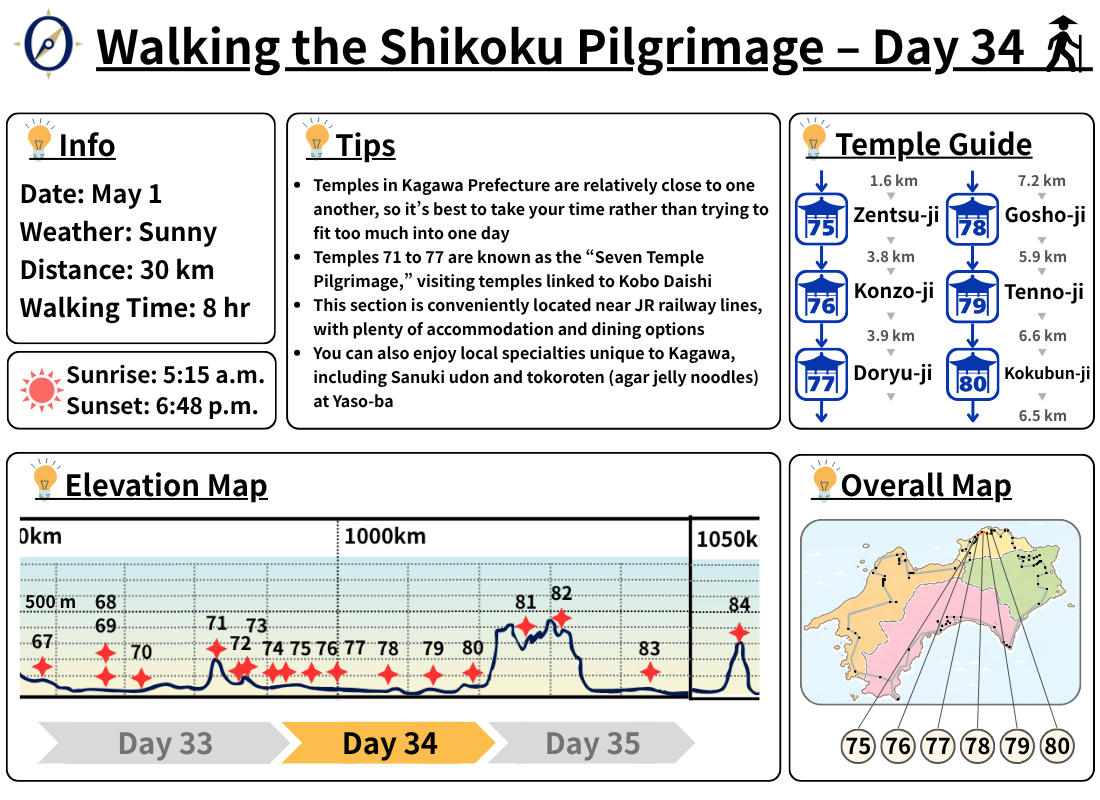
I left Daiko-ji at 5:00 a.m. and visited seven temples: Jinne-in, Kanon-ji, Motoyama-ji, Iyadani-ji, Mandara-ji, Shushaka-ji, and Koyama-ji. By evening, I arrived at Zentsu-ji.
My goal for the day was to stay at the temple lodging at Temple 75, Zentsu-ji. It was a busy day visiting seven temples, but I managed to complete my plan.
I enjoyed the history and scenery of Kagawa’s pilgrimage routes, including the steep stone steps at Iyadani-ji and the temples connected to Kobo Daishi.
That night, I stayed at Iroha Kaikan, the temple lodging at Zentsu-ji. I rested my tired body and looked forward to joining the morning prayer service the next day.
- Itinerary
- Getting Ready in the Morning
- From Daiko-ji to Jinne-in
- Visiting Temples 68 and 69: Jinne-in and Kanon-ji
- Kotohiki Park and the Kan’ei Tsuho Sand Art
- Walking Along the Zaita River to Motoyama-ji
- Visiting Temple 70, Motoyama-ji
- On to the Next Temple: Iyadani-ji
- Visiting Temple 71: Iyadani-ji
- On to the Next Temple: Mandara-ji
- Visiting Temple 72: Mandara-ji
- On to the Next Temple: Shushaka-ji
- Visiting Temple 73: Shushaka-ji
- Would I Be Able to Stay at Zentsu-ji’s Pilgrim Lodging?
- Visiting Temple 74: Koyama-ji
- The Final Destination: Zentsu-ji
- Arriving at Temple 75: Zentsu-ji
- Staying at Iroha Kaikan, Zentsu-ji’s Pilgrim Lodging
- Temple Information
Itinerary
- 5:00Departure
- Daiko-ji
- Kanonji City
- Kotohiki Park
- 8:00Temple No. 68, Jinne-in
- 8:00Temple No. 69, Kanon-ji
- 9:50Temple No. 70, Motoyama-ji
- 13:30Temple No. 71, Iyadani-ji
- 15:00Temple No. 72, Mandara-ji
- 15:40Temple No. 73, Shushaka-ji
- 16:40Temple No. 74, Koyama-ji
- 17:40Temple No. 75, Zentsu-ji
Shuku-bo
Getting Ready in the Morning
Yesterday, I visited three temples: Sankaku-ji, Unpen-ji, and Daiko-ji. Climbing up and down Unpen-ji, the highest of the 88 temples, left my legs and knees tired.
Last night, with permission from Daiko-ji, I camped near the temple gate.
Today, I had one important goal: to stay at the temple lodging at Temple 75, Zentsu-ji.
Zentsu-ji is a special temple on the Shikoku Pilgrimage, known as the birthplace of Kobo Daishi Kukai. The temple grounds are very large, and there is a temple lodging where visitors can stay. Guests can also experience special activities, such as the morning prayer service.
The distance from Daiko-ji to Zentsu-ji is about 30 km. There are seven temples along the way, so visiting them all would make for a busy day.
Even so, I wanted to reach Zentsu-ji by the end of the day.
I decided to keep my breaks short and use the time spent visiting each temple as a chance to rest.
I got up at 4:30 a.m., got ready, and left Daiko-ji at 5:00 a.m.
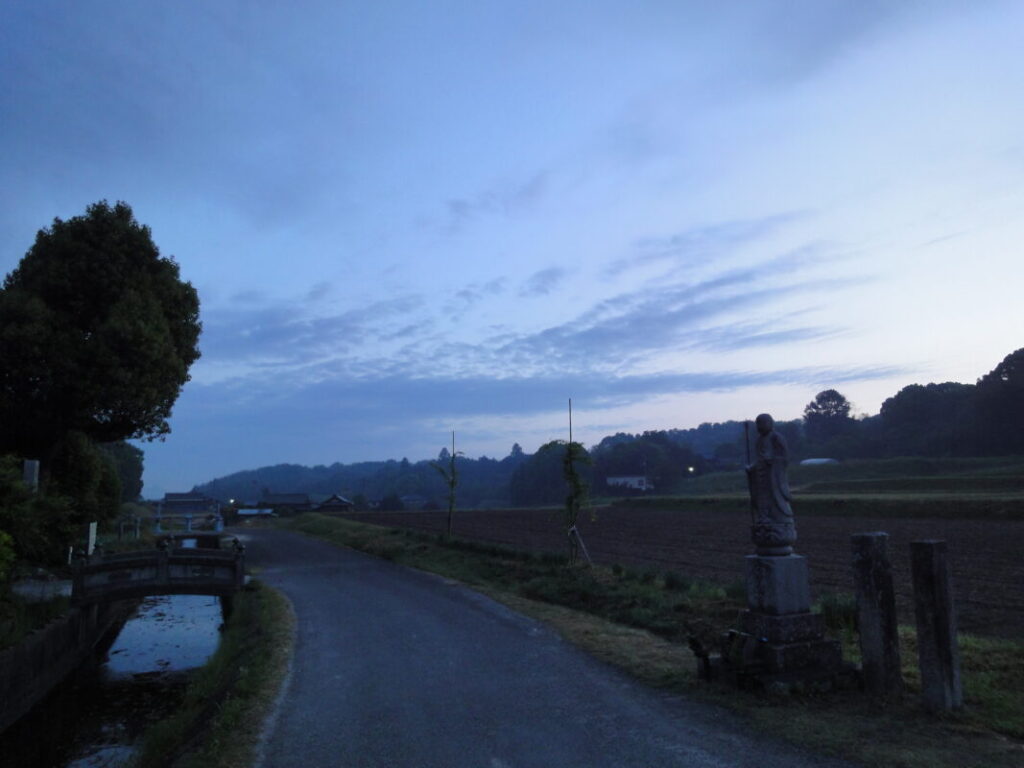
Although it was spring, the air was still cold before sunrise. I pulled down my sleeves to keep warm and began walking along the dark pilgrimage trail.
From Daiko-ji to Jinne-in
My first destination was Temple 68, Jinne-in, about 9 km northwest of Daiko-ji.
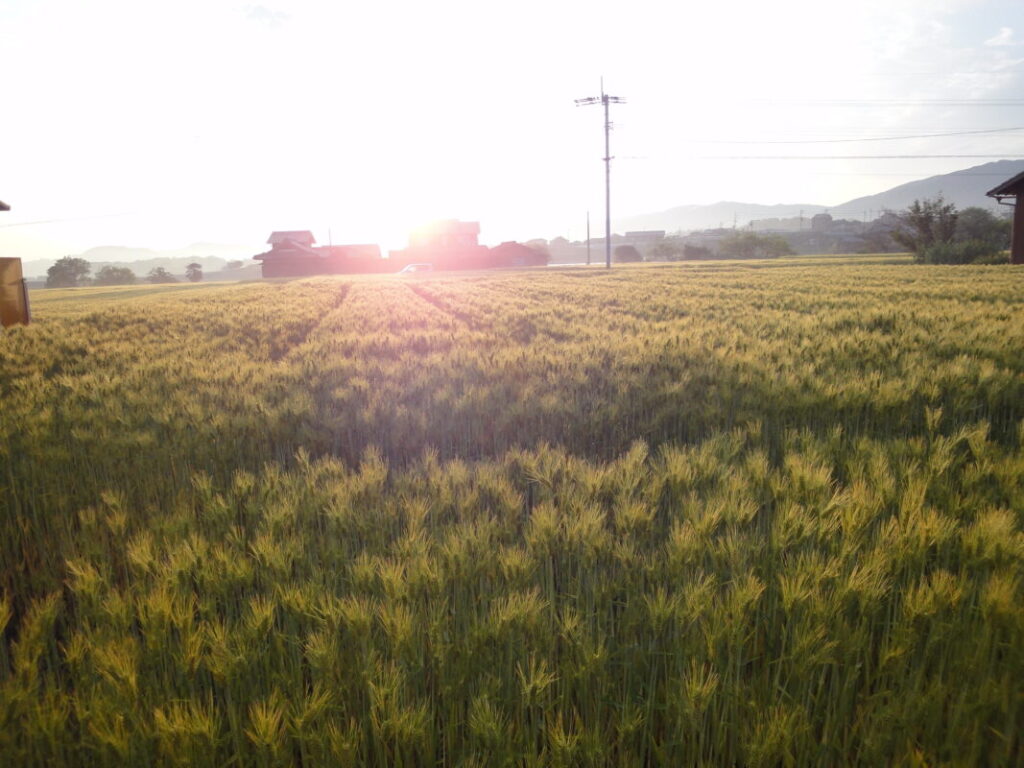
The first part of the route passed through peaceful countryside. The wheat fields glowed golden in the morning sun, making a lasting impression on me.
As I approached the city of Kanonji, more and more buildings appeared. I enjoyed the changing scenery as I walked from the countryside into town.
There are many places to stay and eat around Kanonji Station. For pilgrims who have walked from Sankaku-ji and crossed Unpen-ji, having more options for food and accommodation is a welcome change.
Visiting Temples 68 and 69: Jinne-in and Kanon-ji
I arrived at Jinne-in at 8:00 a.m.
What first caught my attention was that Jinne-in shares the same grounds as Temple 69, Kanon-ji. I had been curious about this place ever since I saw it on the map.
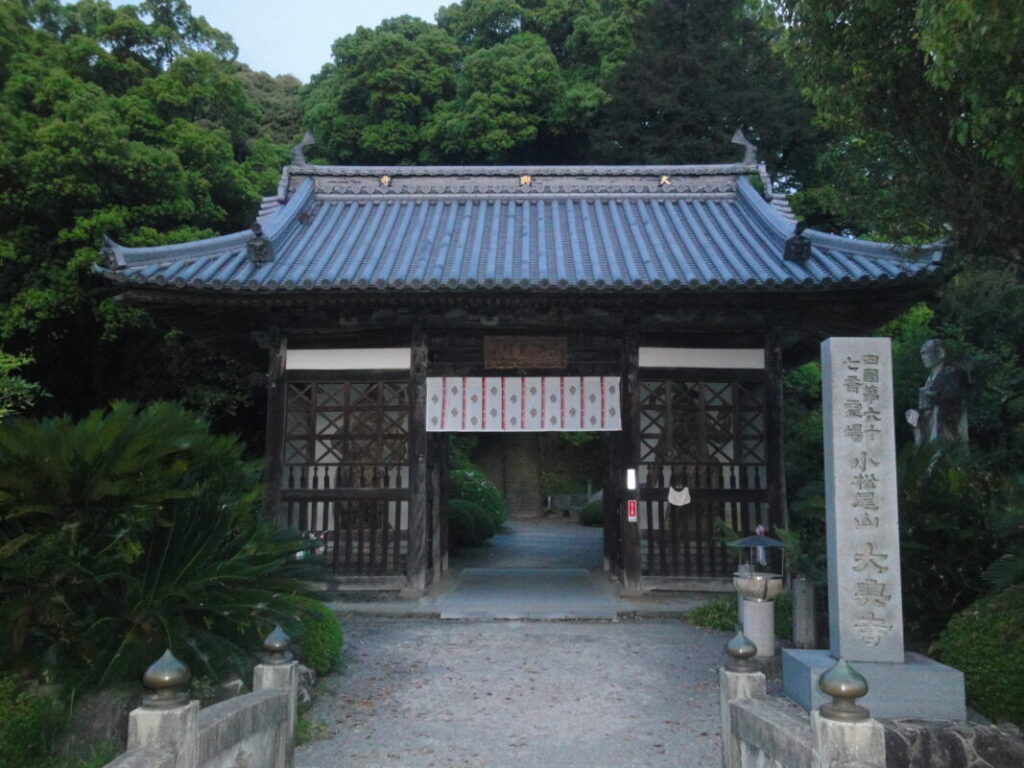
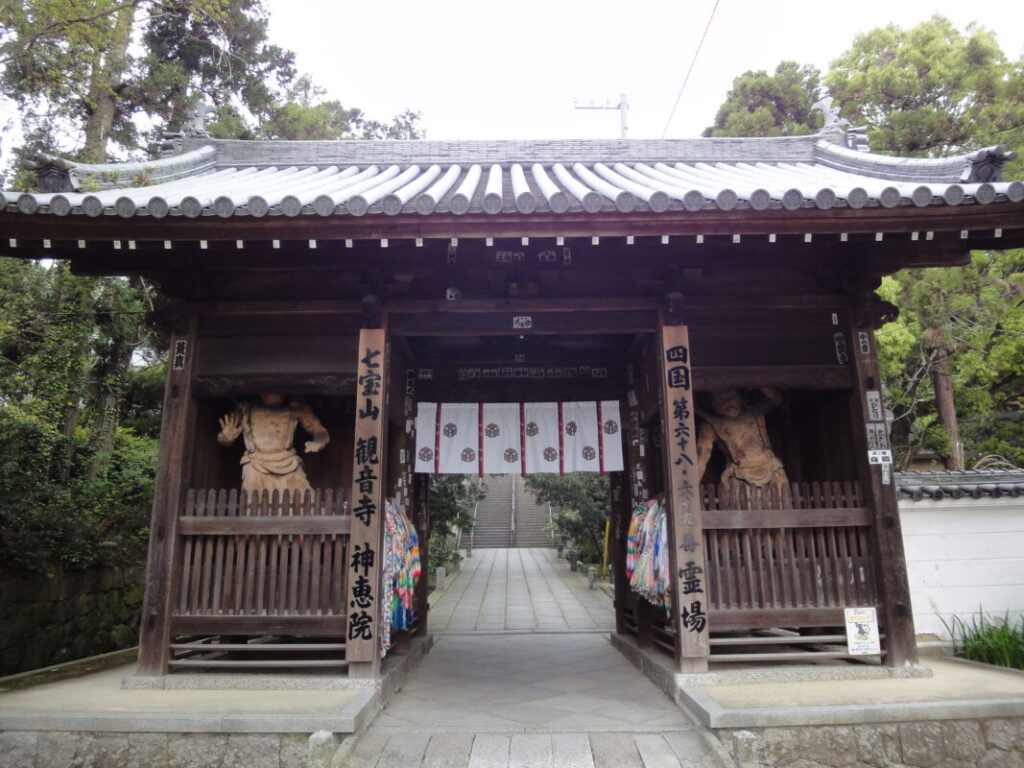
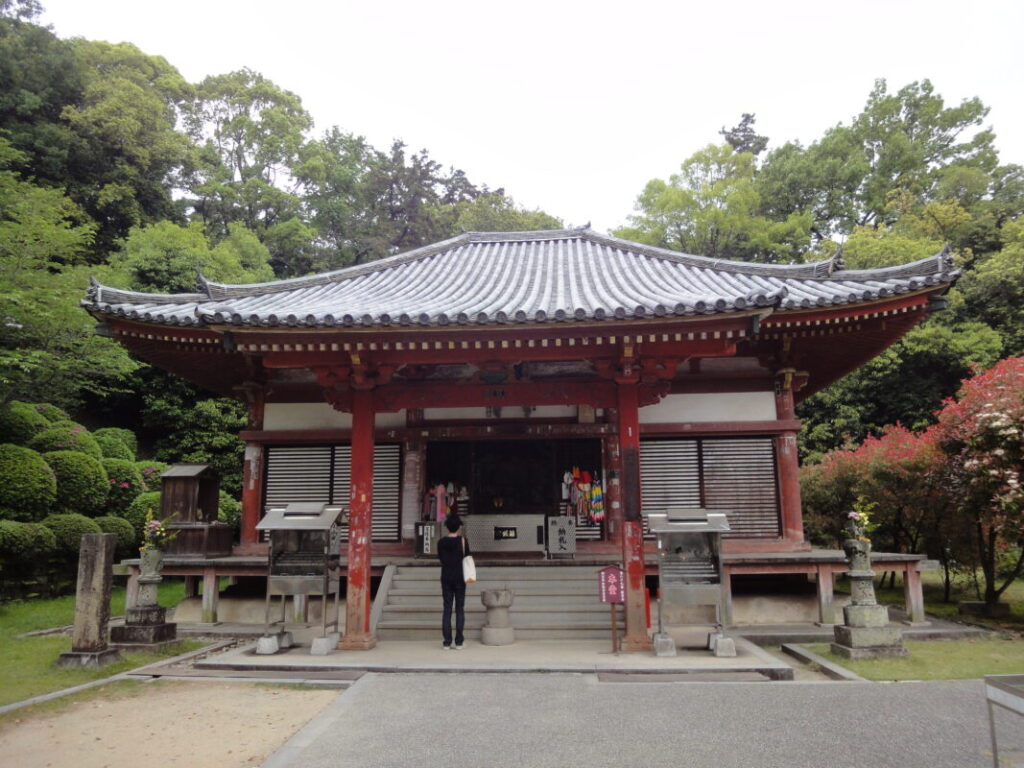
At the temple gate, the names of both temples were displayed side by side: “Temple 68, Jinne-in” and “Temple 69, Kanon-ji.” It was a unique sight to see two pilgrimage temples within the same grounds.
Jinne-in: A Unique Concrete Main Hall
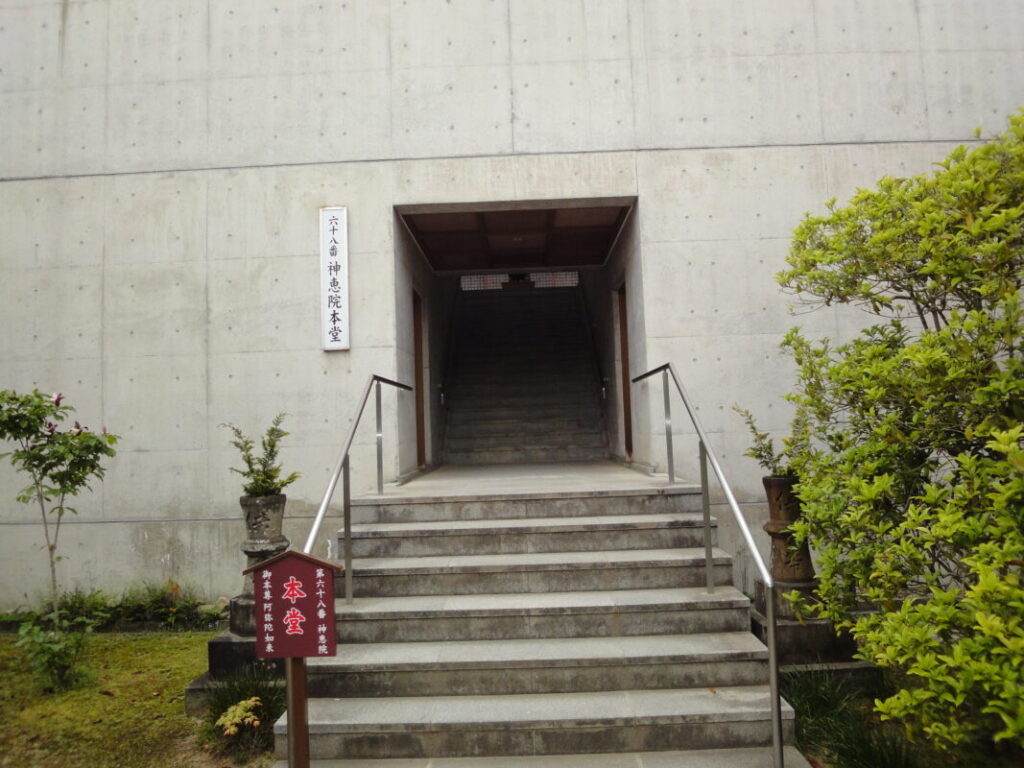
The main hall of Jinne-in is one of the most unusual buildings among the 88 temples.
Its square, concrete exterior looks quite different from a typical Buddhist temple. However, when you pass through the entrance, the main hall appears further inside.
The building has an unusual design, and you cannot see the whole main hall from the outside.
Kanon-ji: A Historic Main Hall
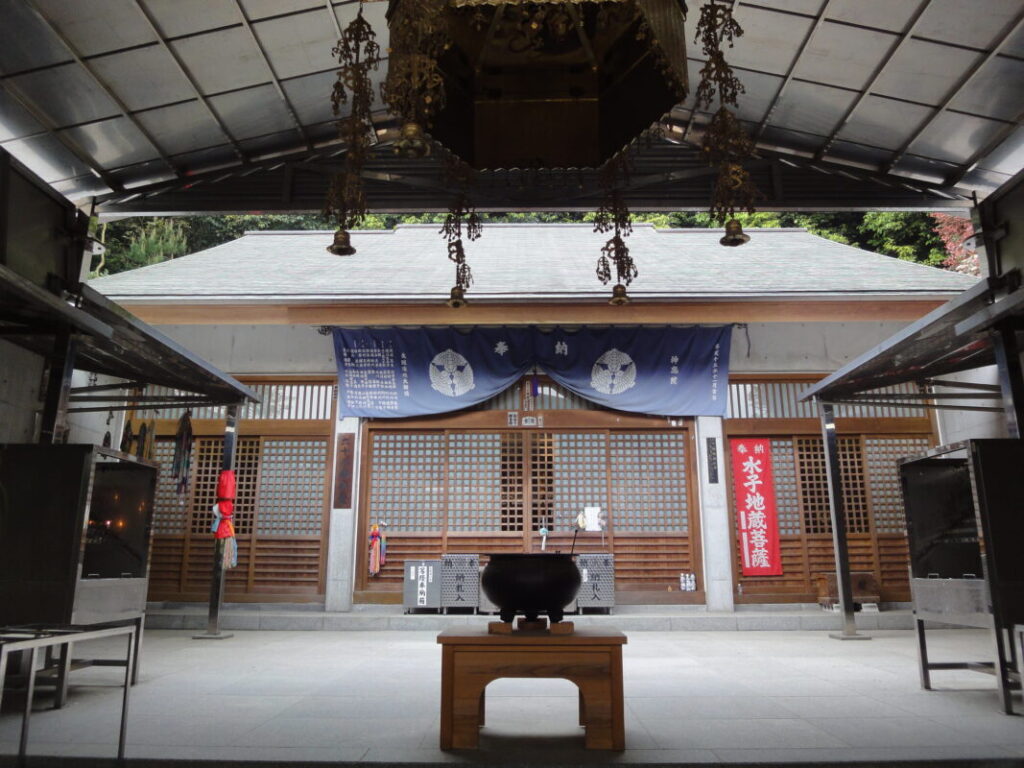
Next, I visited Kanon-ji, which shares the same grounds.
The temple is said to trace its origins to Jingū-ji, founded in 703. According to tradition, Kobo Daishi enshrined the Sacred Kanon and renamed it “Shippō-zan Kanon-ji.”
The main hall was built during the Muromachi period and is designated as an Important Cultural Property. Its historic architecture gives a sense of the temple’s long history.
The Differences Between Jinne-in and Kanon-ji
Jinne-in and Kanon-ji originally came from the same temple, but today they are separate stops on the Shikoku Pilgrimage.
Here are some of their main features:
| Temple 68: Jinne-in | Temple 69: Kanon-ji | |
|---|---|---|
| Main deity | Amida Nyorai | Sacred Kanon |
| Features | A temple relocated to its present grounds | A temple with a historic main hall |
| Highlights | Unique concrete main hall | Main hall designated as an Important Cultural Property and peaceful grounds |
After visiting both temples, I went to the temple office.
The two temples share the same office, so I was able to receive the pilgrimage stamps for both Jinne-in and Kanon-ji in one place.
Kotohiki Park and the Kan’ei Tsuho Sand Art
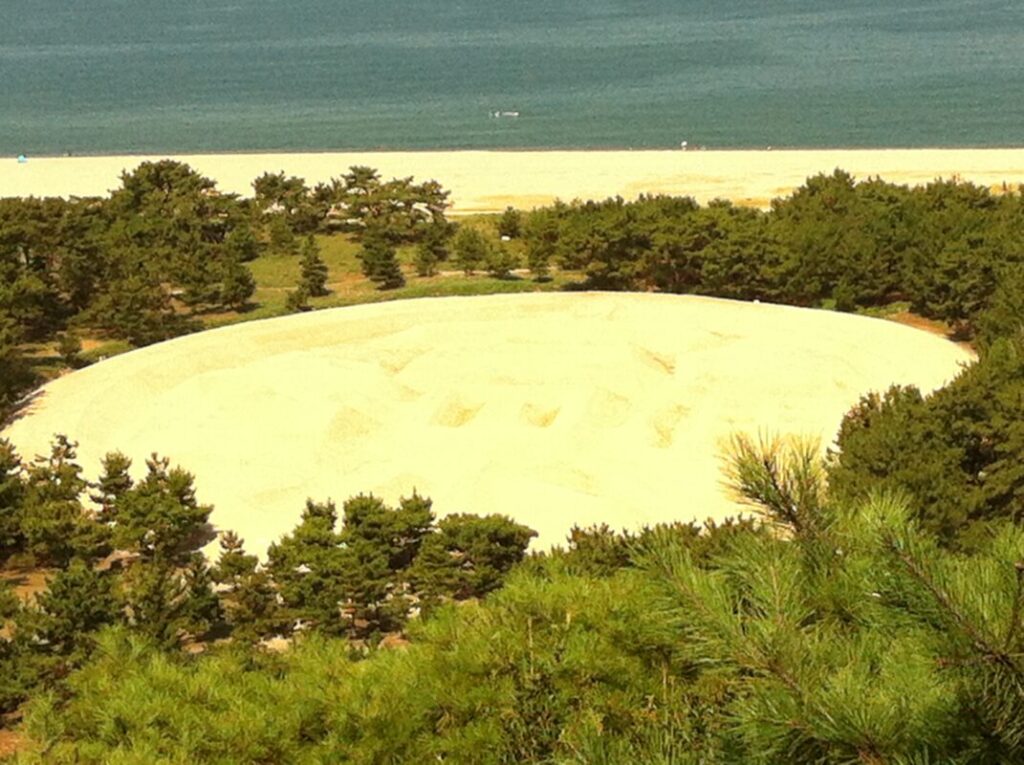
Kotohiki Park is located just behind Kanon-ji and is an easy place for pilgrims to visit.
The park is famous for its giant sand art called “Kan’ei Tsuho,” which is shaped like an old Japanese coin. From the viewing platform, the design looks like a huge coin drawn on the beach.
I stopped by to see it, but perhaps I had chosen the wrong time to visit. Unfortunately, I couldn’t get a clear view of the Kan’ei Tsuho design.
Walking Along the Zaita River to Motoyama-ji
My next destination was Temple 70, Motoyama-ji, about 5 km east of Kanon-ji.
After leaving Kanon-ji, I followed the pilgrimage route along the Zaita River.
The river opened up the view, allowing me to see far into the distance. Many waterbirds could be seen along the river, creating a different atmosphere from the mountain trails and rural paths I had walked earlier.
Local people were out walking along the riverbank, and some stopped to talk to me.
“Motoyama-san is just over there,” one person told me.
Their friendly words made me feel that Motoyama-ji was a temple loved by the local community.
Visiting Temple 70, Motoyama-ji
I arrived at Motoyama-ji at 9:50 a.m.
The Only Temple on the Shikoku Pilgrimage with Horse-Head Kanon
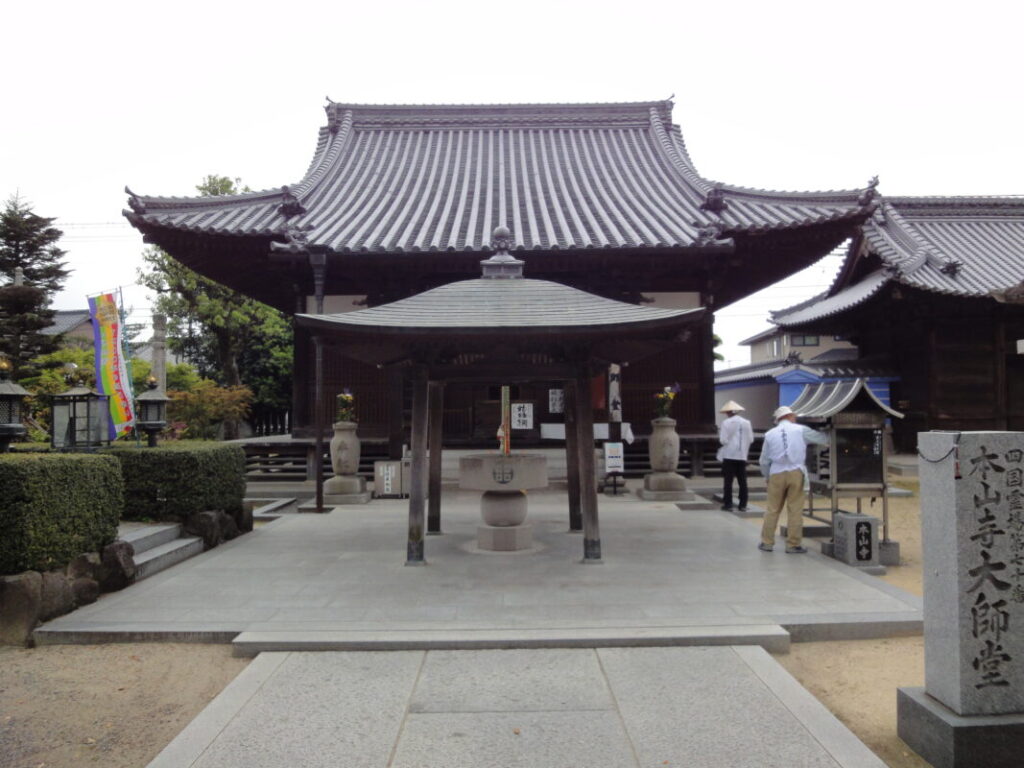
One special feature of Motoyama-ji is that it is the only one of the 88 temples to enshrine Batokanon, the Horse-Head Kanon, as its main deity.
Batokanon is a unique form of Kanon, with a horse’s head above its own head. There is also a statue of a horse near the main hall.
During this visit, I chanted the mantra of Batokanon for the first time.
The mantra was different from the ones I usually chant, so it felt a little unfamiliar. Still, I felt fortunate to have the chance to connect with a deity that can only be found here on the pilgrimage.
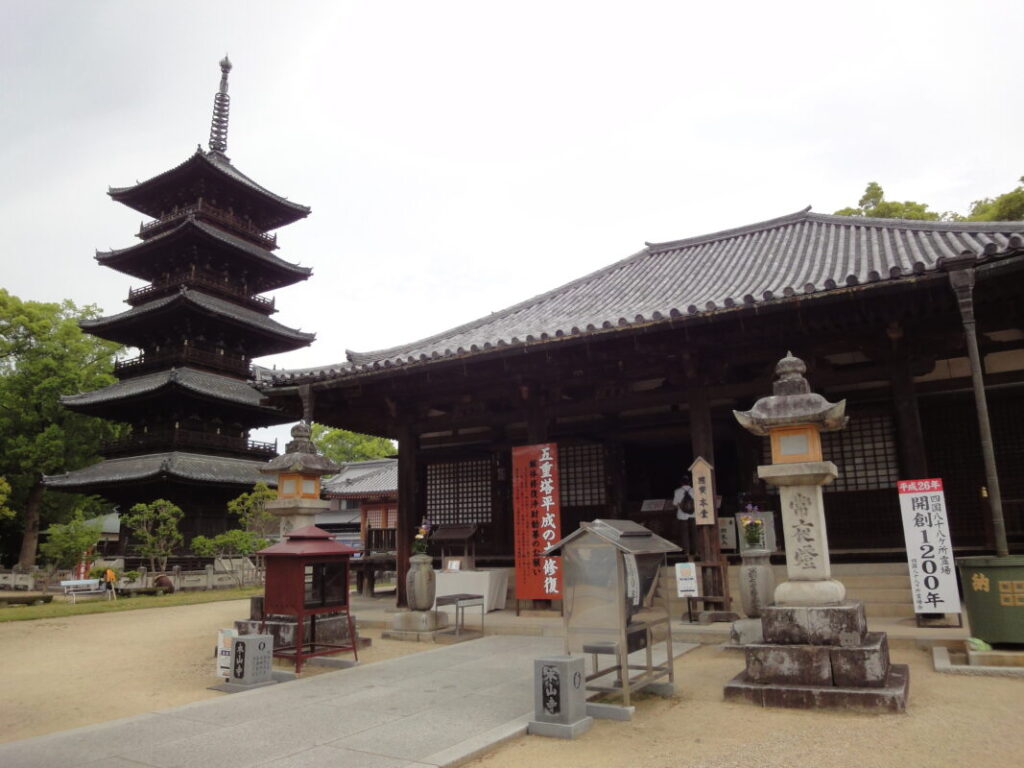
Main Hall
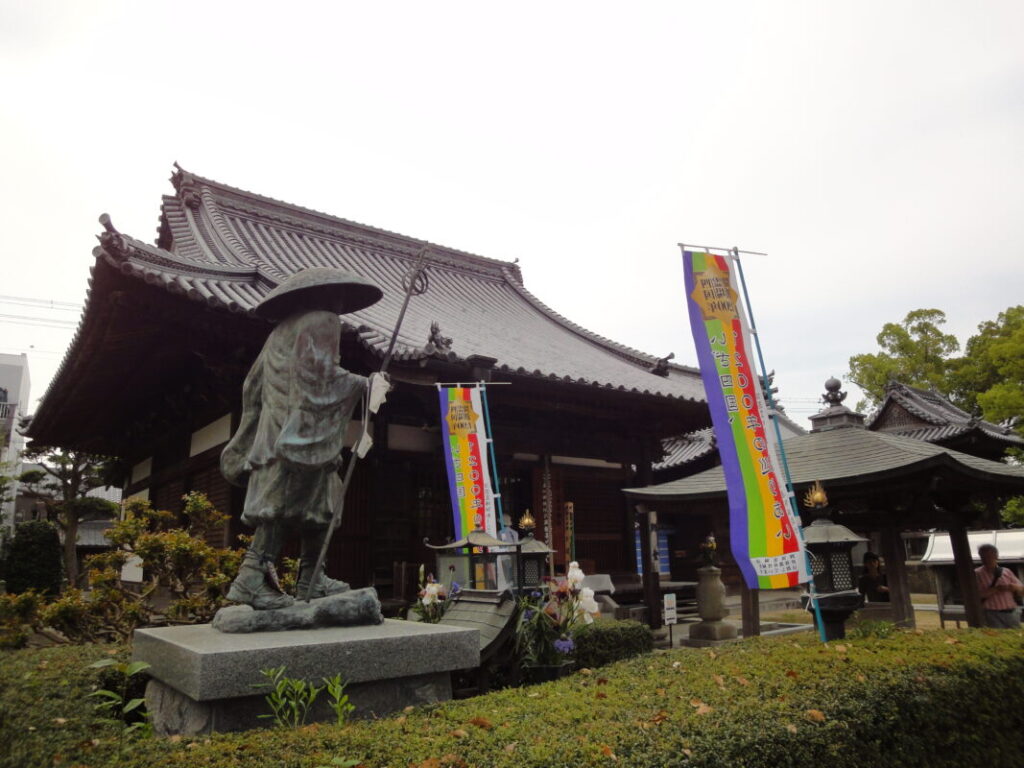
Daishi Hall
The National Treasure Main Hall and Five-Story Pagoda
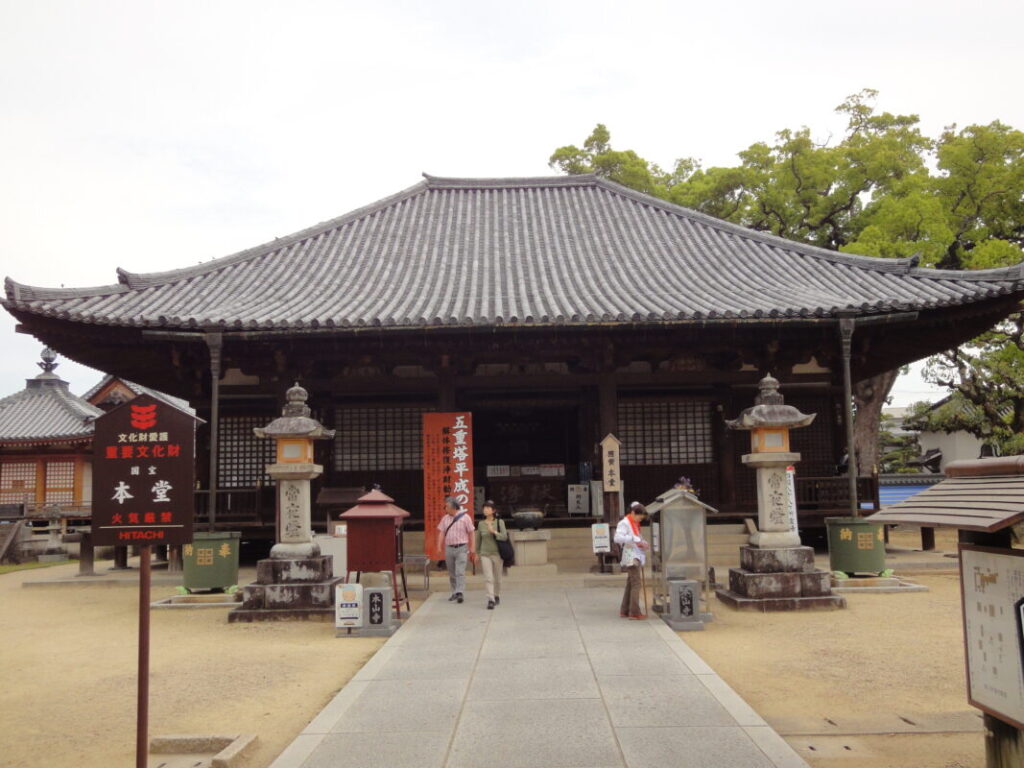
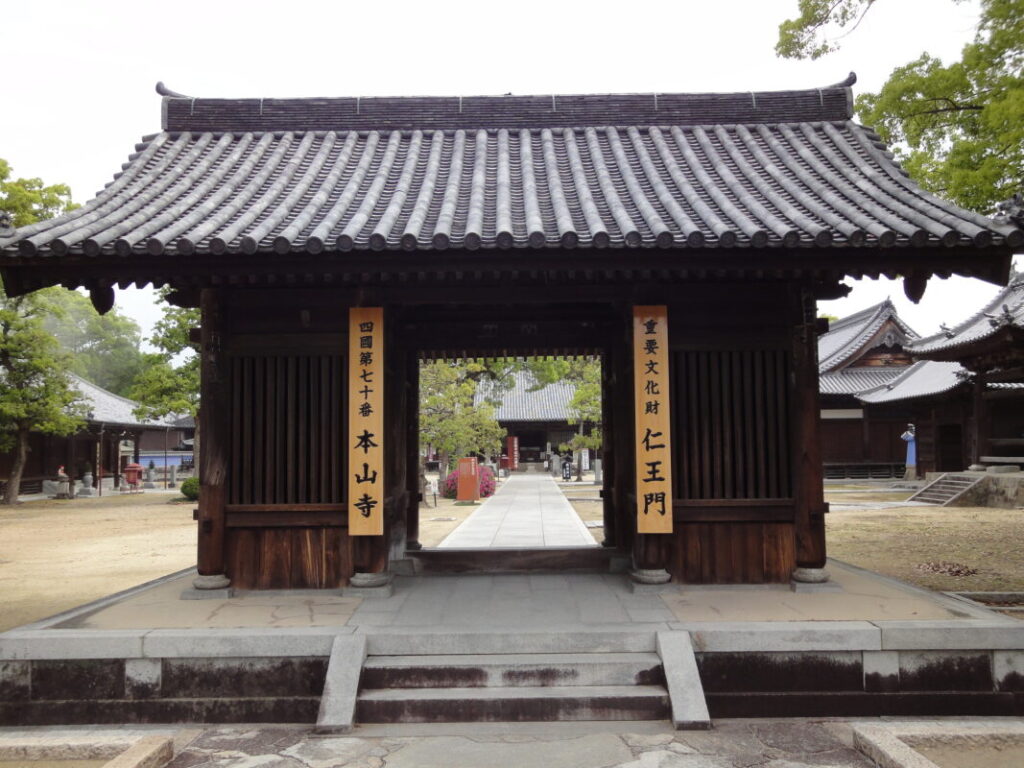
The temple grounds are home to many historic buildings, including the main hall, a National Treasure, as well as the Niomon Gate, the five-story pagoda, and the Daishi Hall.
The five-story pagoda is especially impressive. Only a few temples on the Shikoku Pilgrimage have one, making it one of Motoyama-ji’s most famous buildings.
The current pagoda was rebuilt in 1910. Standing in the temple grounds, it gives a sense of the long history that Motoyama-ji has carried forward.
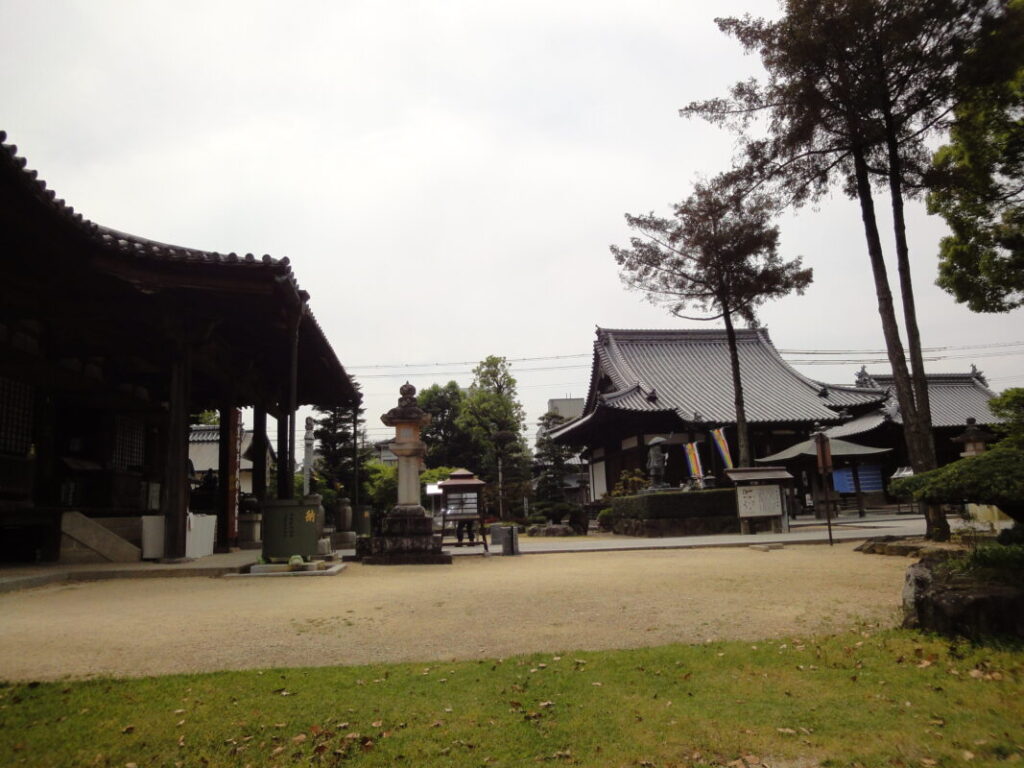
The grounds cover about 20,000 square meters, with many halls and buildings spread across the site. This temple still shows signs of its past as a large and important temple.
On to the Next Temple: Iyadani-ji
The next destination is Iyadani-ji, the 71st temple on the pilgrimage route, about 11 km north of Motoyama-ji.
Continuing along National Route 11 would mean taking a detour, so I choose a route that branches off onto a prefectural road along the way.
The landmarks to look for are a large pond and a stone pillar farther along the national highway. Turn left there and follow the prefectural road, which leads onto a peaceful pilgrimage path winding through residential neighborhoods and farmland.
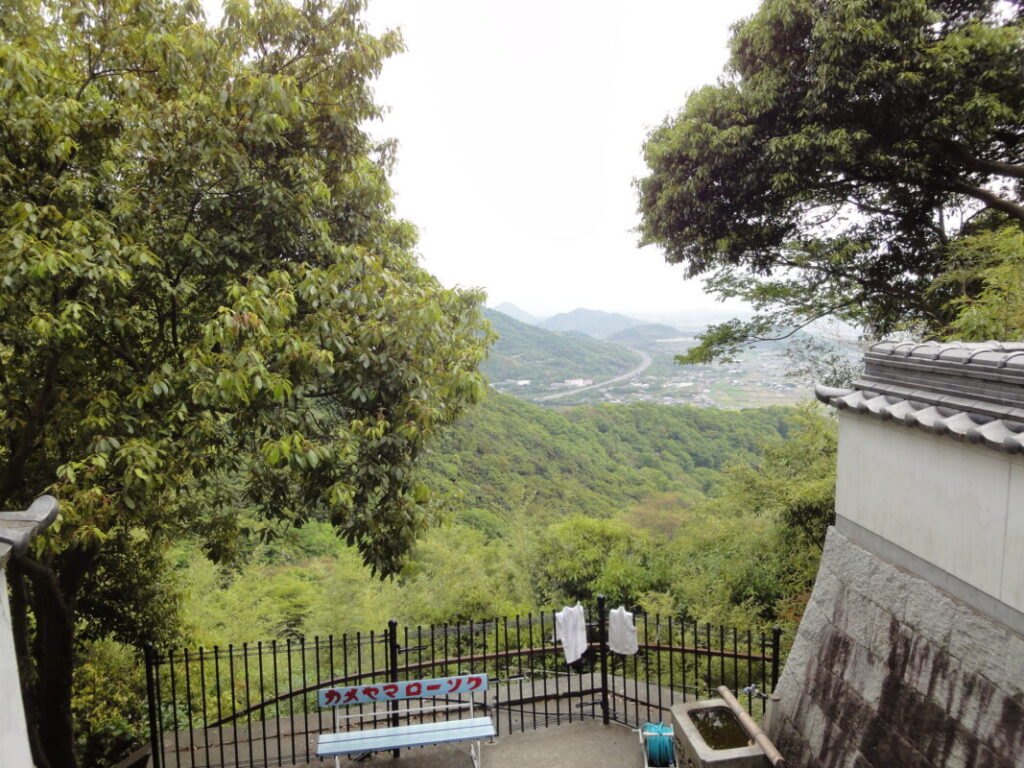
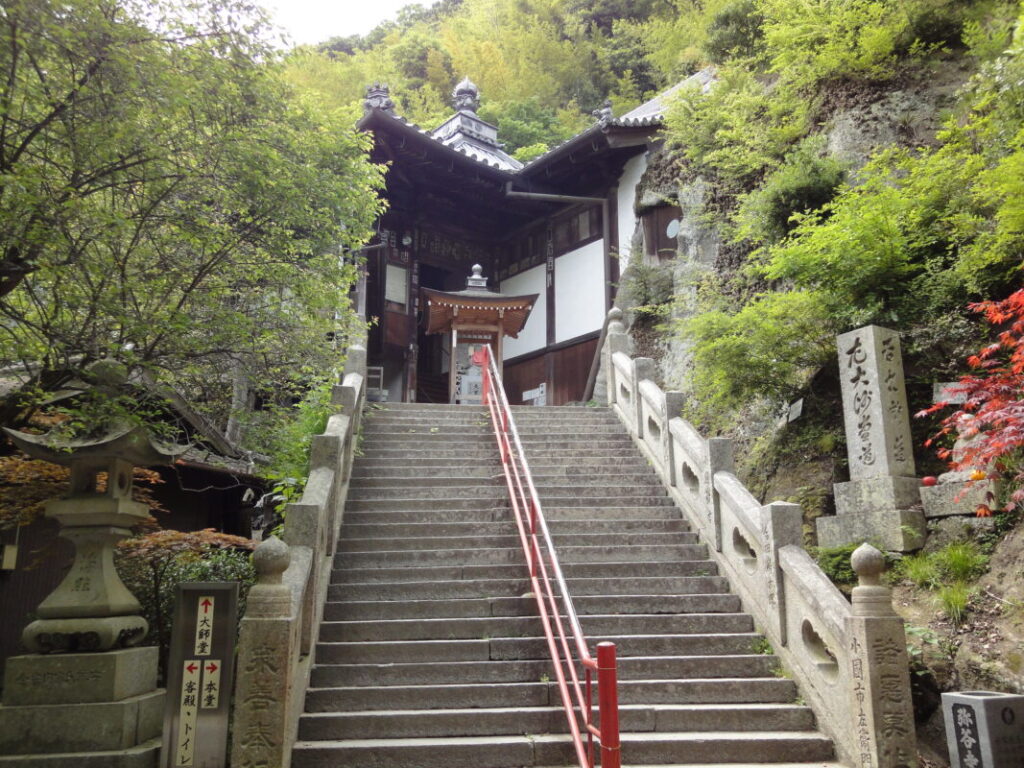
Iyadani-ji stands halfway up Mount Iyadani, and the approach to the temple grounds involves a series of steep uphill slopes. To reach the main hall, I must also climb approximately 540 stone steps.
Just because the temple is close to town doesn’t mean I can let my guard down.
Visiting Temple 71: Iyadani-ji
At 1:30 p.m., I finally arrived at the grounds of Iyadani-ji.
After climbing the long flight of stone steps, I took off my backpack and rested for a while. Once I had caught my breath, I began exploring the temple grounds and paying my respects.
An Ancient Temple with 1,300 Years of History
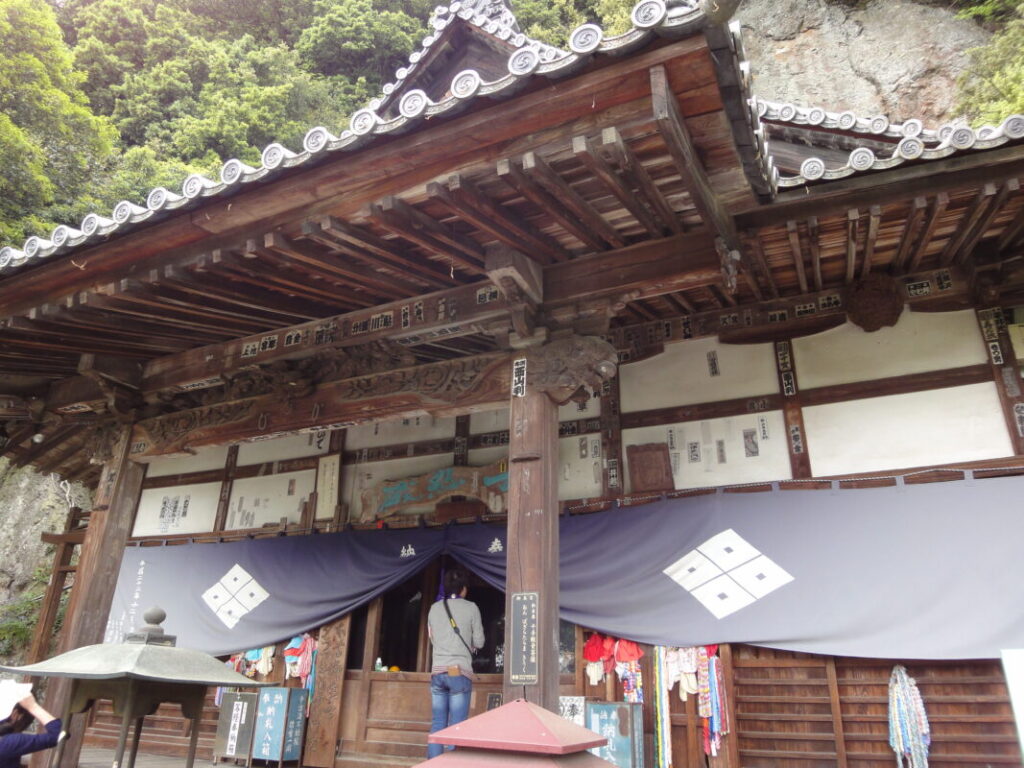
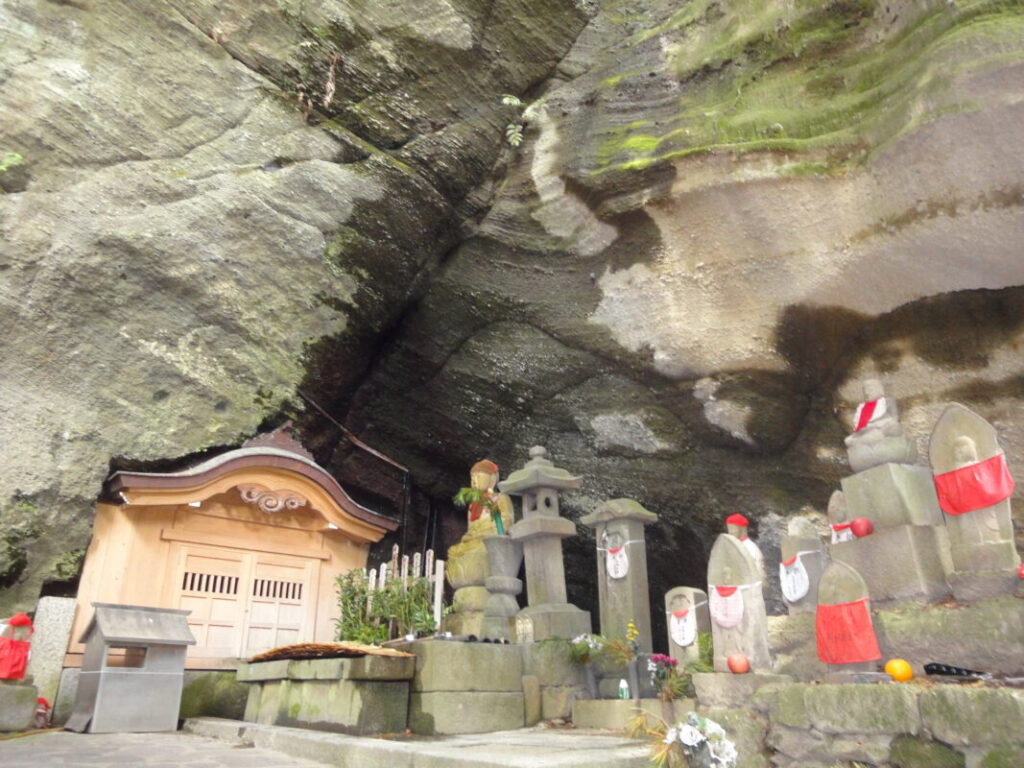
The main hall of Iyadani-ji stands against a towering, vertical rock face.
Its appearance, almost as if it were part of the rocky mountain itself, gives it a unique sense of solemnity. The approach, winding along the mountainside, and the halls built close against the exposed rock are equally impressive.
Unlike many of the other temples on the pilgrimage, this place has a distinct atmosphere of mountain worship.
Rock-Cut Buddhas and Sacred Mountain Worship
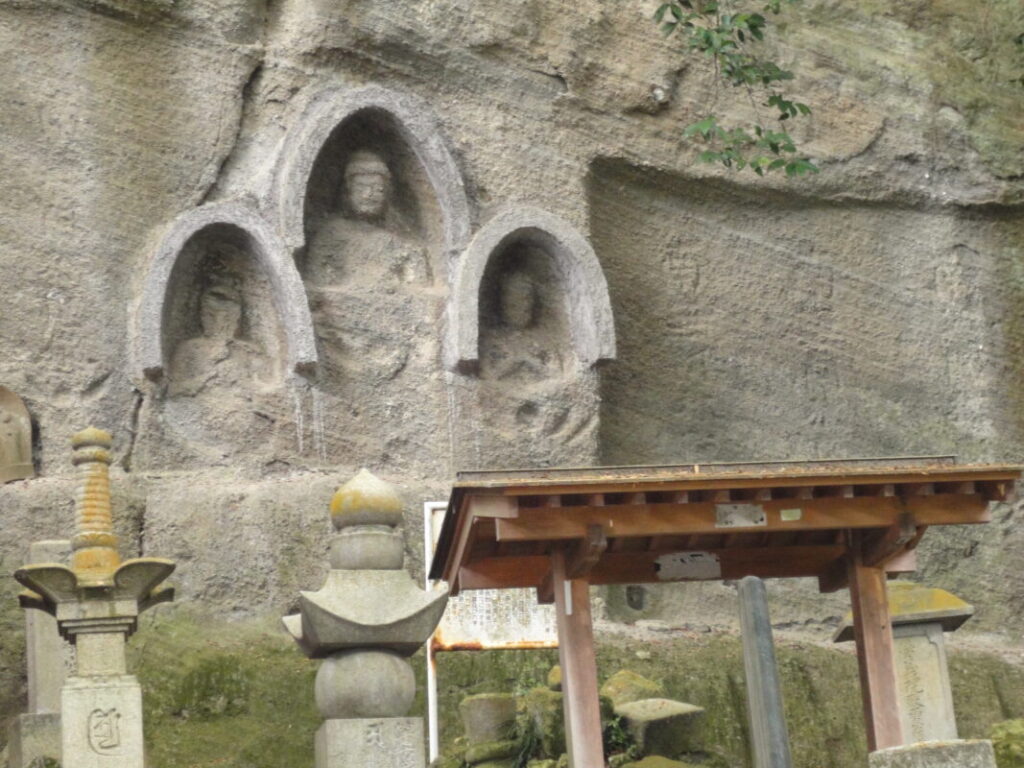
One of Iyadani-ji’s main attractions is the numerous Buddhist images carved into the rock and the caves scattered along the approach.
The spring water that emerges from crevices in the rock face has long been an object of religious devotion. Buddhist images and sutras have also been carved into the cliffs and along the path, bearing witness to the time when this mountain served as a place of ascetic training for Buddhist practitioners.
As I gaze at the Buddhas carved into the rocky mountainside and the temple buildings designed to make use of the natural rock formations, I can sense the history of a faith nurtured over many centuries.
The First Temple on the Seven-Temple Pilgrimage
Iyadani-ji is also known as the first temple on the Nanakasho-mairi, a traditional pilgrimage route in Kagawa Prefecture.
The route takes pilgrims to seven temples, from Temple 71, Iyadani-ji, to Temple 77, Doryu-ji. It is a pilgrimage unique to Kagawa that can be completed in a single day.
Behind the Daishi Hall lies Shishi no Iwaya (Lion’s Cave), which is said to be where Kobo Daishi studied and practiced Buddhist asceticism during his childhood.
The opportunity to encounter legends surrounding Kobo Daishi’s early years is another highlight of this temple.
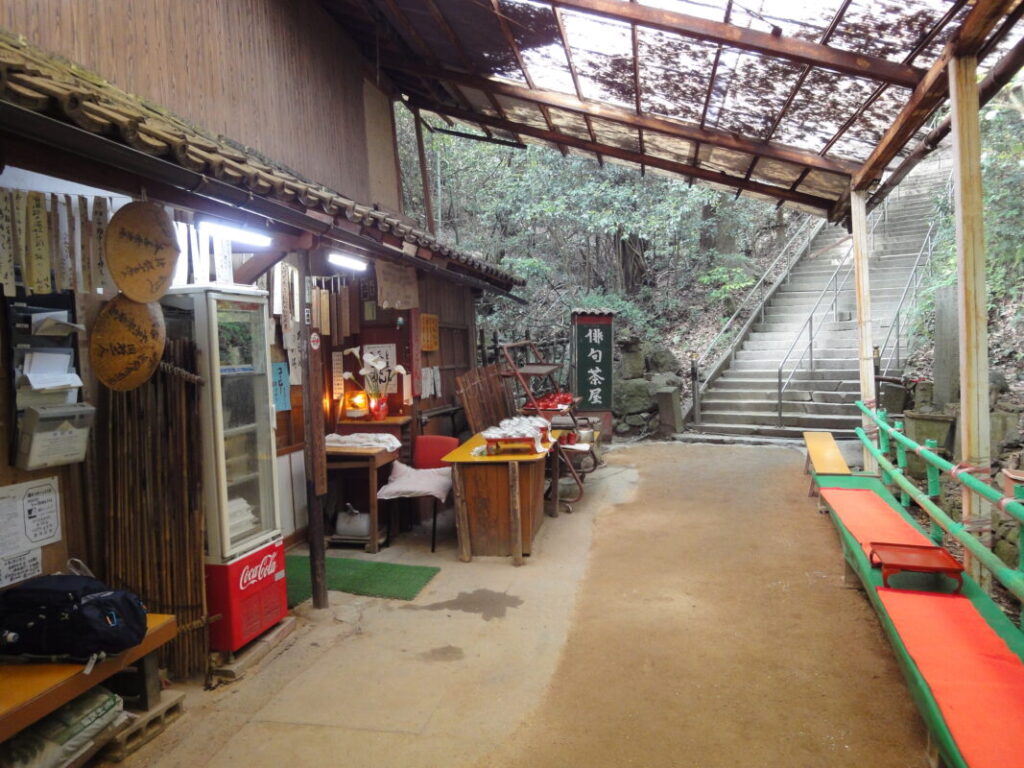
The Haiku Teahouse Today
Along the approach to Iyadani-ji, there was once a haiku teahouse beloved by pilgrims and other visitors.
Even when I visited, I was struck by the sight of many pilgrims taking off their backpacks and resting here before continuing up into the temple grounds.
However, the Haiku Teahouse has since relocated, so visitors who remember it from previous visits should take note.
It is now reportedly operating at Kaigan-ji, north of Iyadani-ji. If you plan to visit based on memories of the old location, it is worth checking the details in advance.
The Haiku Teahouse Before Its Relocation
On to the Next Temple: Mandara-ji
After finishing my visit to Iyadani-ji, I set off for Mandara-ji, the 72nd temple on the pilgrimage route. It lies about 4 km to the east.
At the bottom of the stone steps, a pilgrimage path branches off toward Mandara-ji. This is a welcome route for those traveling on foot, as it avoids a long detour along the roads.
Along the way, there is a pedestrian tunnel that passes beneath the Takamatsu Expressway, allowing pilgrims to cross safely.
As I walk along the edge of a pond, I enjoy the peaceful scenery typical of Kagawa. Stone monuments related to the Seven-Temple Pilgrimage still stand beside the path, reminding me that countless pilgrims have walked this very route over the years.
Visiting Temple 72: Mandara-ji
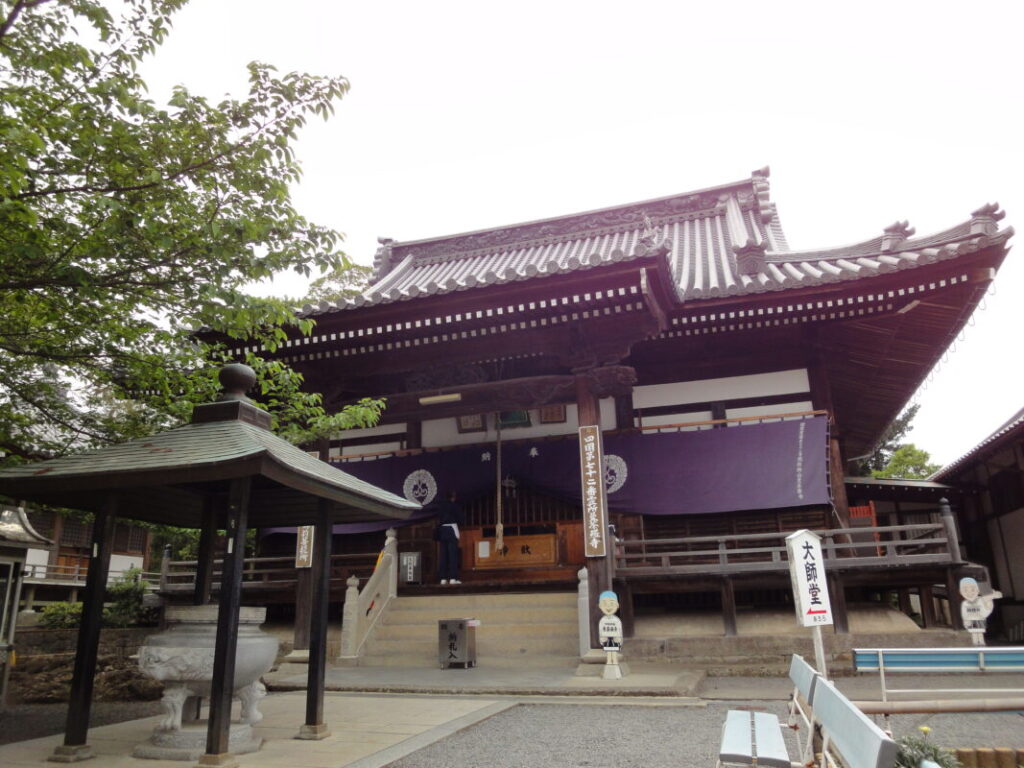
I arrived at Mandara-ji at 3:00 p.m.
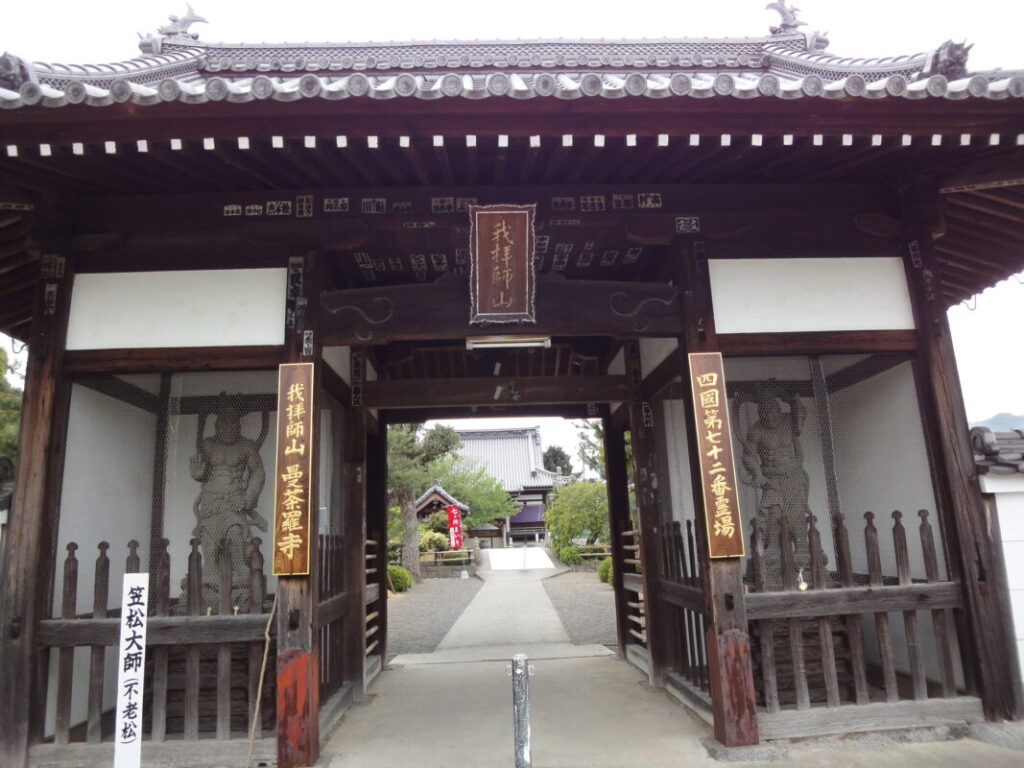
Kasamatsu Daishi: A Connection to Kobo Daishi
One of the things that left the strongest impression on me was the statue known as Kasamatsu Daishi.
Mandara-ji was once home to a pine tree called Furō no Matsu, said to have been planted by Kobo Daishi around 1,200 years ago. Sadly, the tree has since died, but part of its trunk has been preserved.
An image of Kobo Daishi has been carved into the surviving trunk, which is still lovingly enshrined as Kasamatsu Daishi.
Looking at the remains of a pine tree that lived for so many centuries, I couldn’t help but feel a connection to Kobo Daishi.
A Warm Atmosphere Rooted in the Local Community
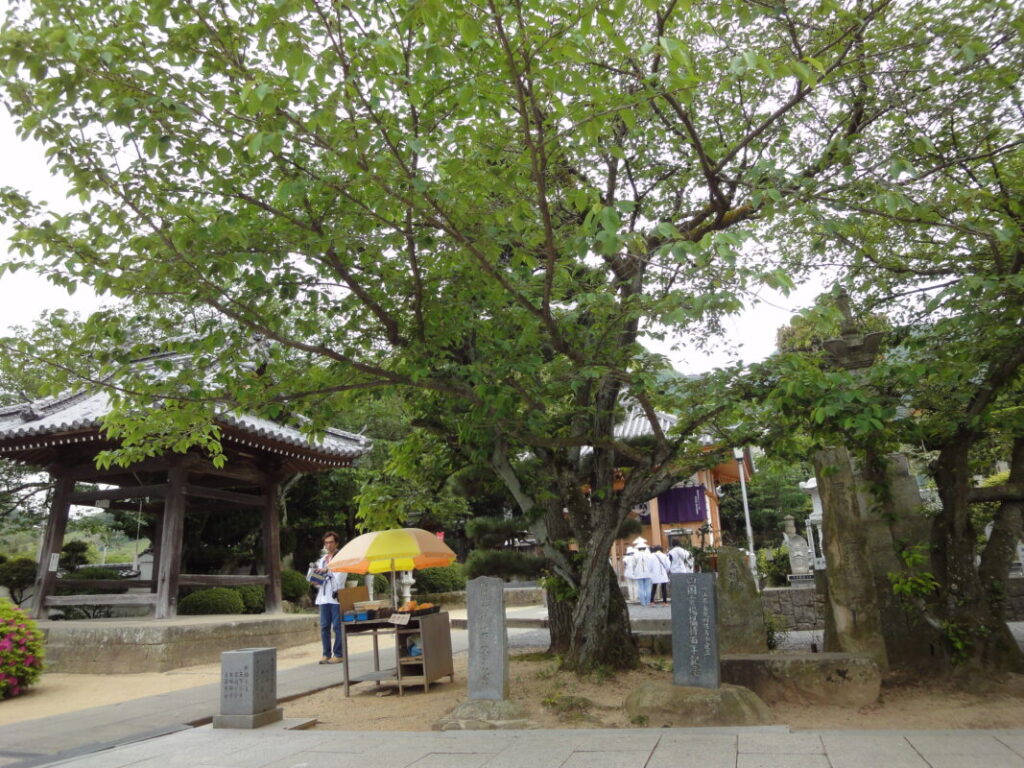
When I visited, there was an unmanned stand selling mandarins within the temple grounds.
This simple, everyday sight gave me the feeling that Mandara-ji is a temple cherished by the local community.
What stayed with me was its warm, down-to-earth atmosphere, rooted in the rhythms of everyday life rather than the glamour of a tourist destination.
On to the Next Temple: Shushaka-ji
The next destination is Shushaka-ji, the 73rd temple on the pilgrimage route. It is only about 500 meters south of Mandara-ji, making it a very short walk.
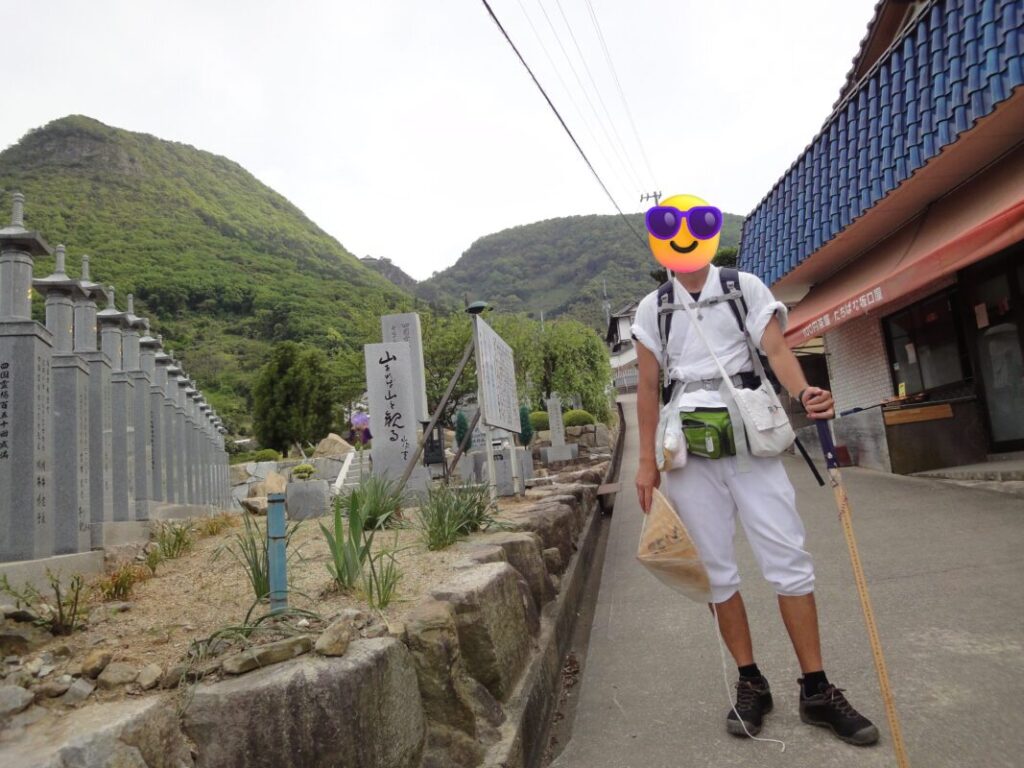
After walking uphill along a gentle slope for about ten minutes, I come to the steps leading up to the temple grounds.
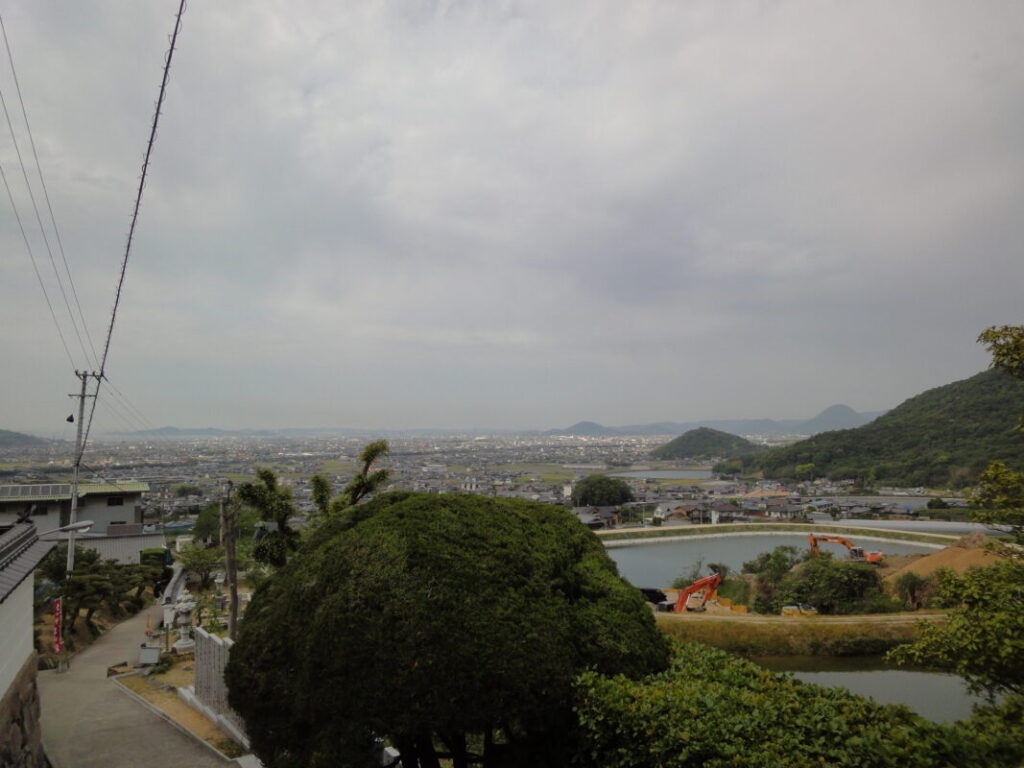
There is a small pond beside the parking lot, and beyond it, I can see Sanuki Fuji in the distance. Together with the rural landscape stretching across the Sanuki Plain, it is a wonderful spot to enjoy the scenery characteristic of Kagawa.
Visiting Temple 73: Shushaka-ji
I arrived at Shushaka-ji at 3:40 p.m.
Shashin-ga-take: A Legend from Kobo Daishi’s Childhood
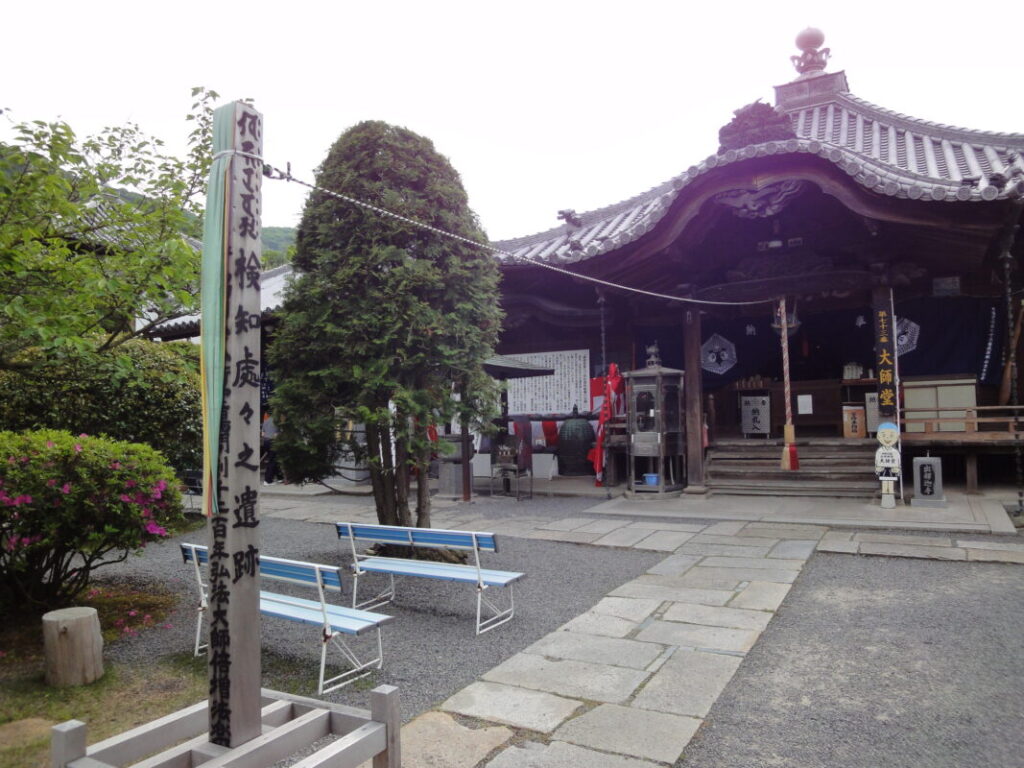
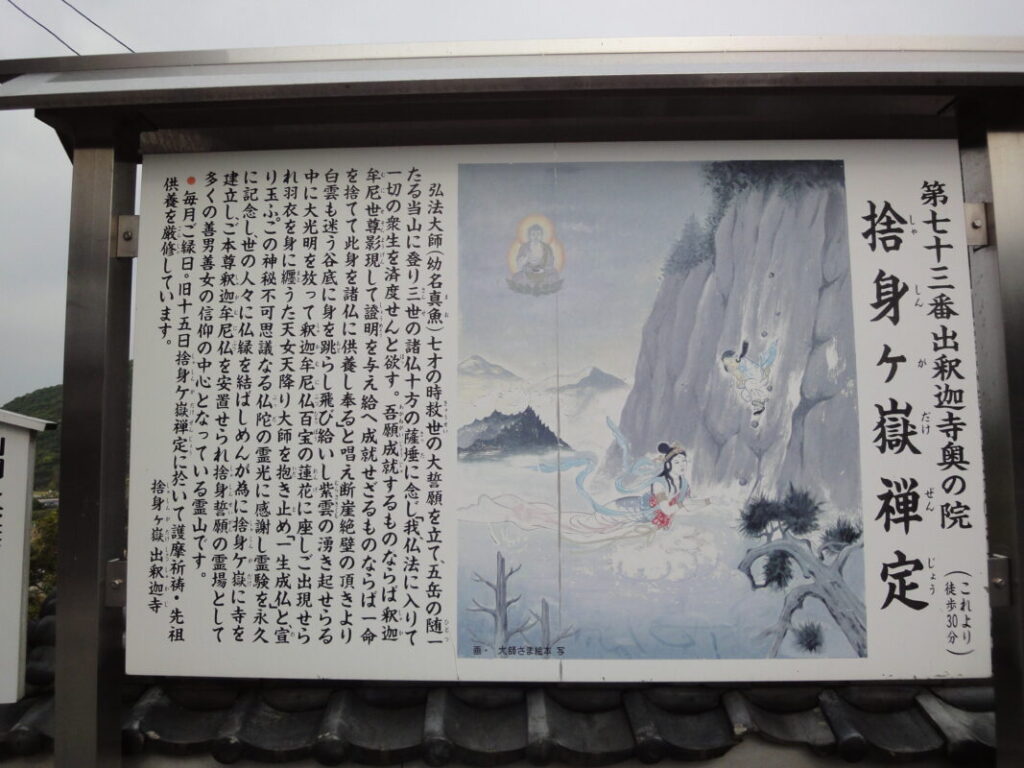
Shushaka-ji is known for the legend of Shashin-ga-take, which is associated with Kobo Daishi’s childhood.
According to the legend, when Kobo Daishi was seven years old, he prayed, “If there is a purpose to my being born into this world, the Buddha will surely save my life.” He then threw himself from a cliff on Mount Gahaishi.
A celestial maiden is said to have appeared and caught him before he fell.
The place where this legend is said to have unfolded is known as Shashin-ga-take. It holds special significance along the Shikoku pilgrimage as a symbol of Kobo Daishi’s deep faith.
A Place of Training in the Kokūzō Gumonji-hō Practice
Shushaka-ji is also known as a place where Kobo Daishi practiced Kokūzō Gumonji-hō, a Buddhist ritual said to involve reciting the mantra of Kokūzō Bosatsu one million times.
The site associated with this practice, known as Shashin-ga-take Zenjō, is the temple’s inner sanctuary, or Okunoin. It lies farther up the mountain trail beyond the main temple grounds, and reaching it requires both time and physical stamina.
Beyond the inner sanctuary, the path continues toward Shashin-ga-take, where there are reportedly sections requiring the use of chains and steep, rugged climbs. Anyone planning to visit should be well prepared.
I have yet to make the climb myself, but I have heard that the view from the summit is spectacular. If I have the chance to visit Shushaka-ji again someday, this is one place I would very much like to explore.
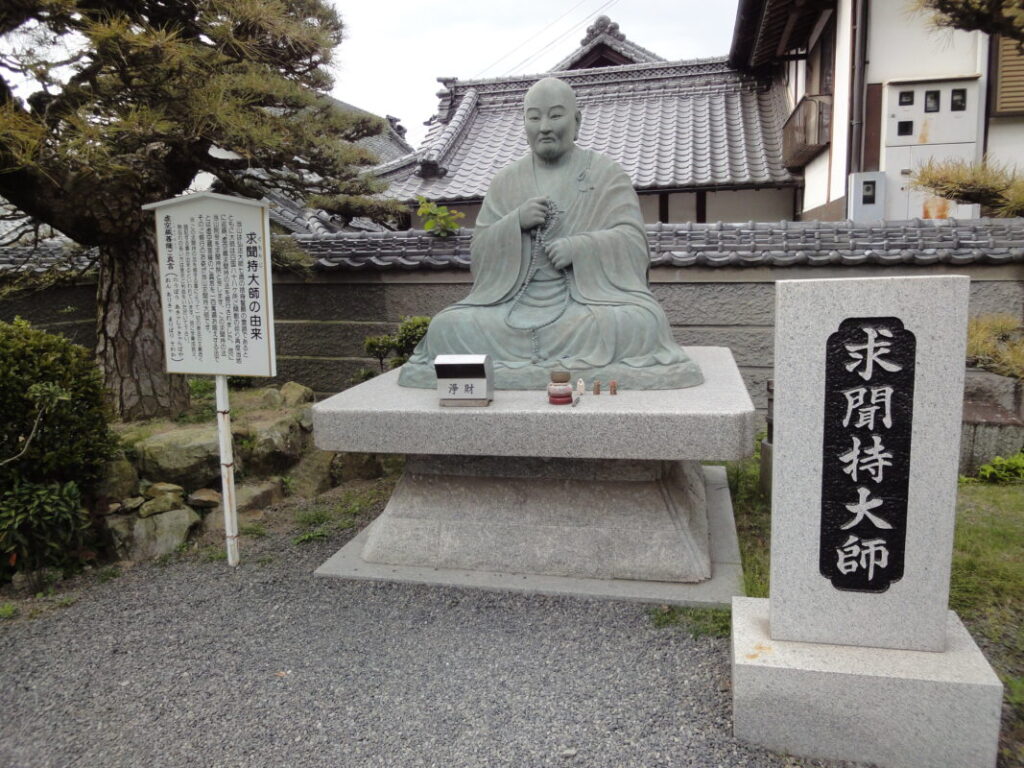
A statue known as Gumonji Daishi is also enshrined within the temple grounds. Although I couldn’t make it to the inner sanctuary this time, I was still able to feel a close connection to the history of Buddhist training associated with Kobo Daishi.
Would I Be Able to Stay at Zentsu-ji’s Pilgrim Lodging?
By the time I finished visiting Shushaka-ji, it was already past 4:00 p.m.
The next temple, Koyama-ji, was about 2 km away. Considering that I still had to visit Koyama-ji and then make my way to Zentsu-ji, time was running short.
Even so, it looked as though I might just manage to reach my goal for the day.
Feeling a little relieved, I called the pilgrim lodging at Zentsu-ji. Fortunately, I was able to secure a reservation, and I could finally breathe a sigh of relief.
I had just two temples left to visit: Koyama-ji and Zentsu-ji. I needed to keep going and stay focused until the very end.
Visiting Temple 74: Koyama-ji
Leaving Shushaka-ji, I found myself surrounded by open countryside and rice fields.
In the distance stood Mount Kabuto, the mountain that gave Koyama-ji its name. Bathed in the light of the setting sun, the mountain made a striking impression on me. I felt almost as though it were guiding me toward the temple.
I arrived at Koyama-ji at 4:40 p.m.
Considering the temple’s visiting hours, I had made it just in time.
Kobo Daishi and the Reconstruction of Manno Pond
Koyama-ji is known for its connection to Kobo Daishi and the reconstruction of Manno Pond, one of Japan’s largest irrigation reservoirs.
According to tradition, in 821, during the Kōnin era, Kobo Daishi was commissioned by the imperial court to oversee the reconstruction of Manno Pond.
It is said that he secluded himself in a cave on Mount Kabuto to pray for the successful completion of the project. There, he carved an image of Yakushi Nyorai, the Buddha of Healing, and performed Buddhist rituals.
Learning about Kobo Daishi’s involvement in such a major civil engineering project makes me reflect not only on his religious devotion, but also on his efforts to support the daily lives and livelihoods of the people of his time.
A Cave Associated with Kobo Daishi
One of the highlights of Koyama-ji is the cave to the left of the Daishi Hall.
The cave is said to extend approximately 12 meters into the rock. According to tradition, this is where Kobo Daishi prayed for the successful reconstruction of Manno Pond.
Inside, an image of Bishamonten, said to have been carved by Kobo Daishi himself, is enshrined.
The temple grounds have a peaceful, understated atmosphere. Rather than impressing visitors with grandeur, Koyama-ji quietly conveys the history and traditions associated with Kobo Daishi.
The Final Destination: Zentsu-ji
With that, I had completed my visits through Temple 74, meeting my goal for the day.
It was now past 5:00 p.m., and the sun was already sinking low. Only one temple remained: Temple 75, Zentsu-ji.
From Koyama-ji, Zentsu-ji lies about 2 km to the southeast.
I followed the river flowing in front of me, heading south. Using the school sports grounds and the large buildings of a hospital as landmarks, I continued walking until I reached the entrance to Zentsu-ji.
I had missed the cutoff time for receiving a temple stamp at Zentsu-ji, but I could always pay my respects the following morning.
At least I had managed to secure a bed at the temple’s pilgrim lodging for the night. That alone made all the rushing and hard walking to get here worthwhile.
Arriving at Temple 75: Zentsu-ji
I arrived at Zentsu-ji at 5:40 p.m.
The first thing that struck me was the sheer size of the temple grounds. Covering approximately 45,000 square meters, the complex is divided into two areas: the eastern precinct, known as Garan, and the western precinct, called Tanjō-in.
Known as the birthplace of Kūkai, or Kobo Daishi, Zentsu-ji holds a special place among the 88 temples of the Shikoku Pilgrimage.
As I walked through the grounds in the evening light, a deep sense of accomplishment welled up inside me. I had finally made it here.
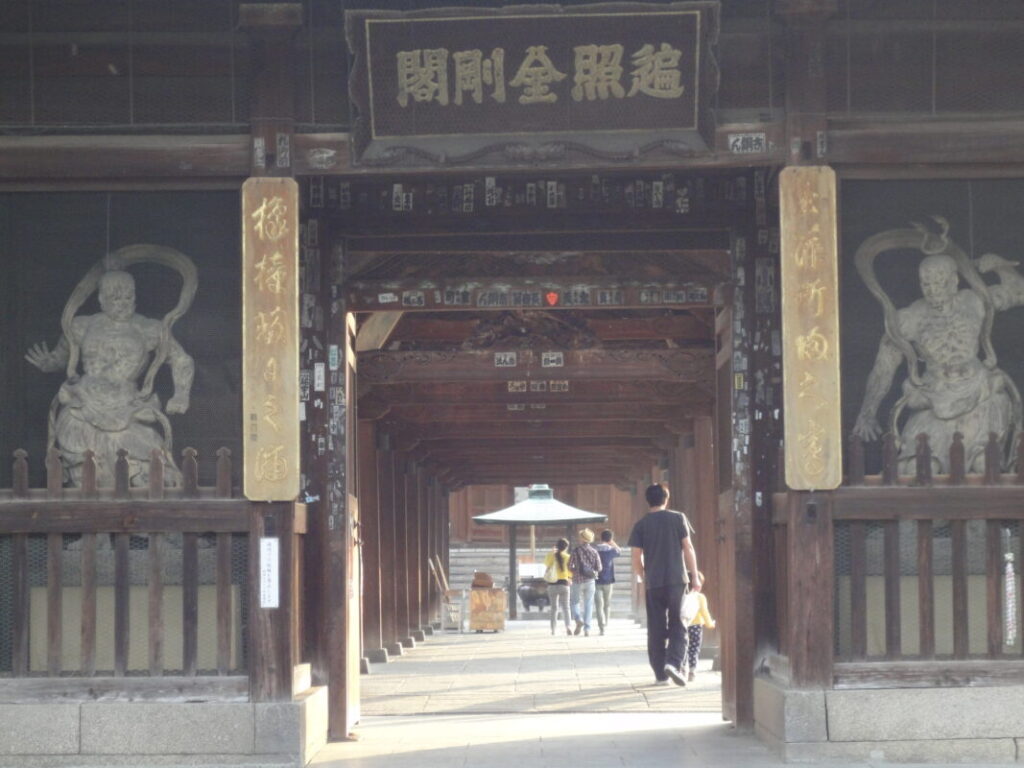
A Corridor Depicting the Life of Kobo Daishi
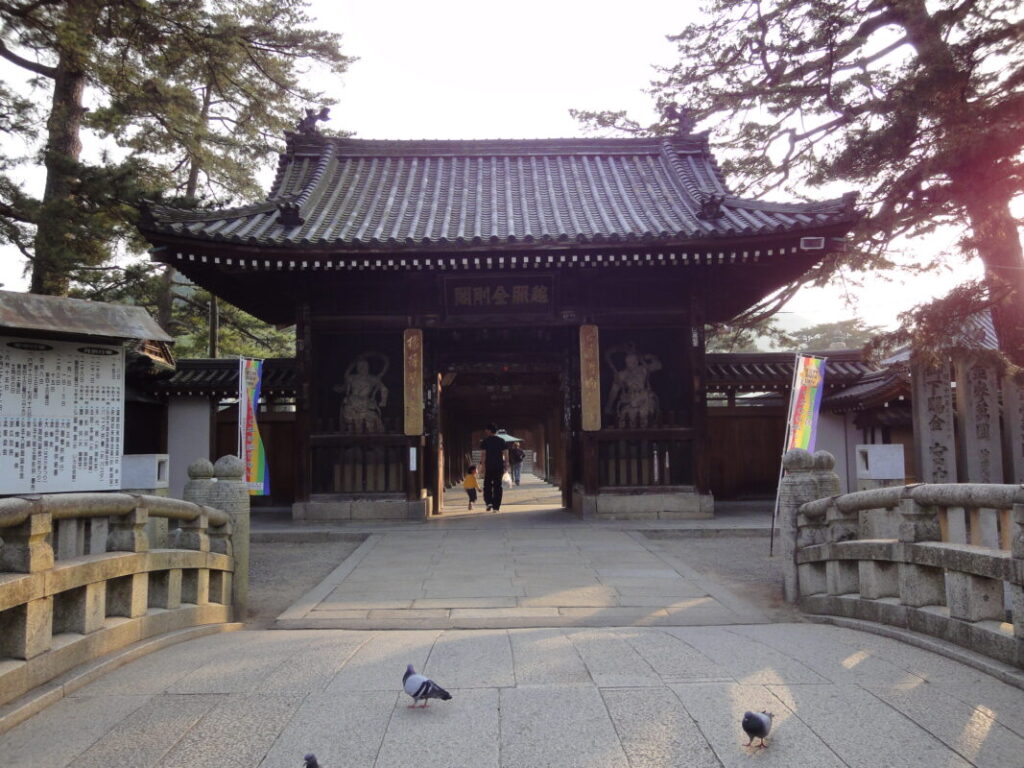
One feature that caught my eye was the covered corridor stretching from the Niō Gate to the Daishi Hall.
Paintings depicting the life of Kobo Daishi are displayed on the ceiling, allowing visitors to follow his journey as they make their way through the temple.
It is a distinctive feature of Zentsu-ji, befitting its status as his birthplace. I decided that I would take my time exploring it properly the following morning.
As I continued wandering around the grounds, darkness gradually fell.
There was no need to push myself any further today. I would return early the next morning to pay my respects.
With that, I headed to the temple lodging.
Staying at Iroha Kaikan, Zentsu-ji’s Pilgrim Lodging
Zentsu-ji has its own pilgrim lodging called Iroha Kaikan. Staying here had been one of my goals for this trip.
I had made a reservation in advance, but given the day’s itinerary, I was truly relieved to have arrived safely.
Iroha Kaikan is a modern building, with clean and well-maintained facilities. It offers private rooms and a large communal bath, making it a relatively spacious facility for a temple lodging.
The previous day, I had crossed Mount Unpenji. Today, I had been walking since 5:00 a.m. Although I had covered around 30 km, what had really worn me out was the need to keep an eye on the time while visiting seven temples along the way. My feet were utterly exhausted.
I washed away the sweat in the large communal bath and took my time relaxing my tired body.
The next morning, I planned to attend the morning Buddhist service, which was open to overnight guests.
Looking forward to an experience unique to Zentsu-ji, I went to bed at 8:00 p.m.
Temple Information
- No. 68
- No. 69
- No. 70
- No. 71
- No. 72
- No. 73
- No. 74
- No. 75


Comments