
Hello, I’m Taka.
This time, I’ll share my experience from Day 5 of my walking pilgrimage.
Day 5 turned out to be the most challenging day so far.
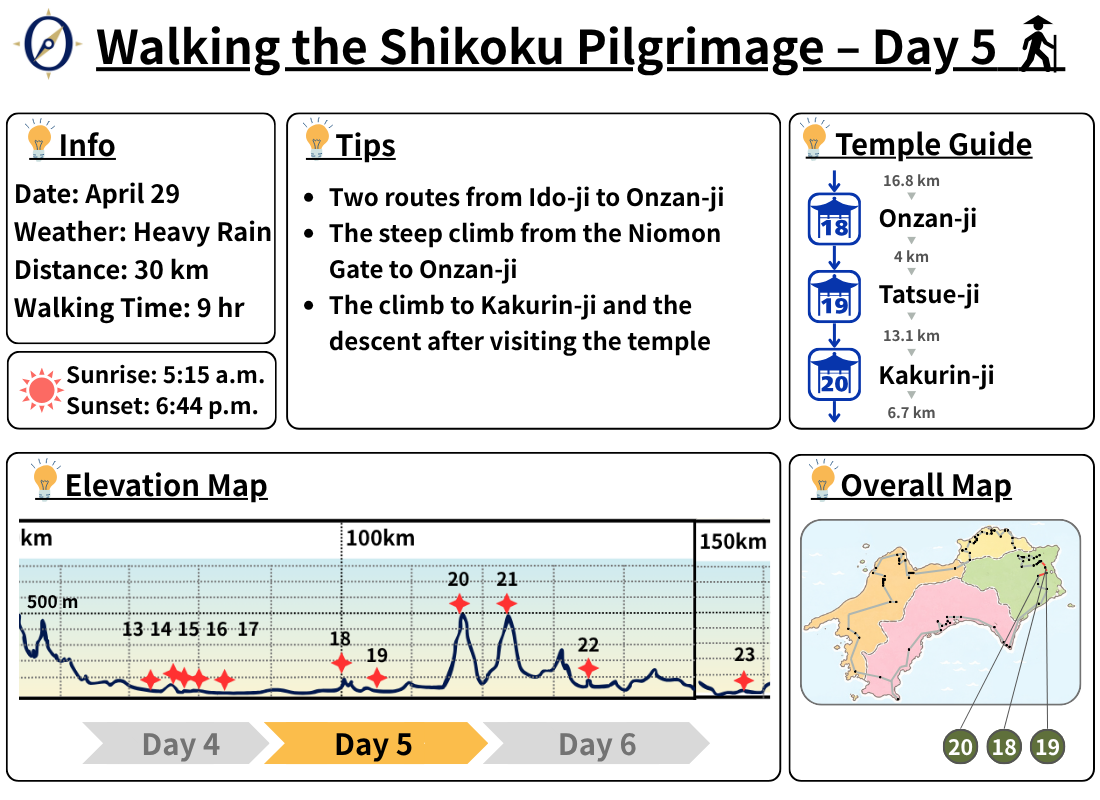
The route from Temple 18 (Onzanji) to Temple 20 (Kakurinji) in Tokushima may look like a standard 30 km journey, but in reality, the combination of weather, mountain paths, and elevation gain makes it far more exhausting than expected.
In this article, based on my actual experience, I will clearly explain:
- The route and itinerary
- The difficulty of Kakurinji (Henro Korogashi, one of the toughest sections)
- Risks and precautions for walking in the rain
If you’re planning to take on the walking pilgrimage, I hope you’ll find this helpful.
- Itinerary
- Day 5 Plan: Temples 18–21 and Overnight Stay
- 5:30 AM: Depart Hachiman Onsen for Temple 18, Onzanji
- 8:50 AM: Arrived at Temple 18, Onzanji
- Route from Temple 18 (Onzanji) to Temple 19 (Tatsueji)
- Route from Temple 19 (Tatsueji) to Temple 20 (Kakurinji)
- Heading for Oi Rest Area: Camping in the Rain
- 5:00 PM: Arrived at Oi Rest Area
- Temple Information
- Summary
Itinerary
- 5:30Departure
- Hachiman Onsen
- Tsuyugamoto Rest Area
- 8:50Temple No. 18, Onzan-ji
- 10:40Temple No. 19, Tatsue-ji
- Katsura Roadside Station
- Trail to Kakurin-ji
- 15:30Temple No. 20, Kakurin-ji
- Trail Down from Kakurin-ji
- 17:00Oi Rest Area
Overnight stay
Day 5 Plan: Temples 18–21 and Overnight Stay
April 29. The rain continued from the previous day.
I woke up at 5:00 a.m. As I entered Day 5, I was gradually getting used to the early-to-bed, early-to-rise routine.
When most nights are spent camping during a walking pilgrimage, there’s not much to do once the sun sets.
With the accumulated fatigue, I naturally found myself falling asleep around 8:00 p.m.
It felt like my body was finally adapting to this lifestyle.
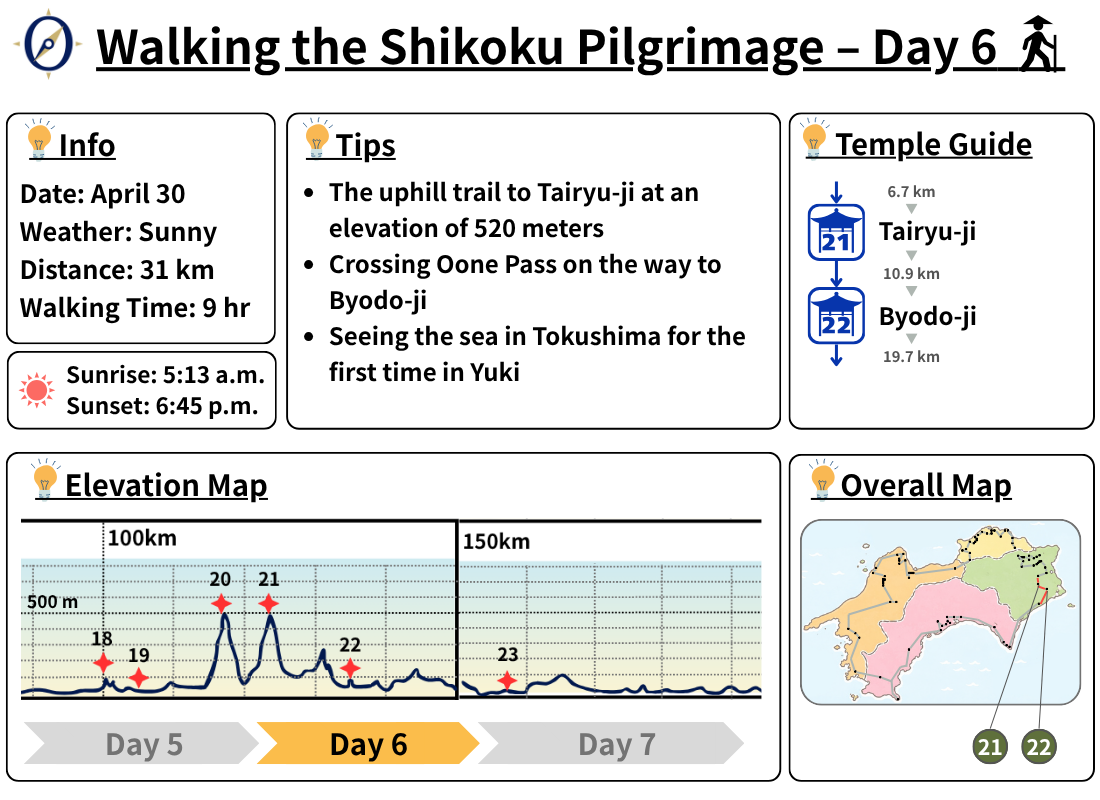
Today’s goal is to reach Temple 20, Kakurinji, and Temple 21, Tairyuji—both known as challenging sections of the route.
Hopefully, the rain will stop by the time I head into the mountains…
Kakurinji to Tairyuji: One of the Toughest Sections of the Pilgrimage
Temples 20 (Kakurinji) and 21 (Tairyuji) are both known as “Henro Korogashi”—notorious difficult sections of the walking pilgrimage.
Kakurinji involves a steep climb up to about 500 meters in elevation, quickly draining your energy.
From Kakurinji to Tairyuji, the route descends sharply into the Naka River valley to around 50 meters above sea level, then climbs again to approximately 520 meters. This creates a total elevation change of about 1,000 meters, making it one of the most demanding sections of the entire pilgrimage.
In rainy conditions, the trail becomes slippery and significantly more dangerous, requiring not only physical endurance but also careful footing. It truly feels like a path of ascetic training.
The overnight stay was undecided
Due to the bad weather and the expectation that the latter part of the route would be quite demanding, I chose not to book accommodation in advance. Instead, I decided to stay flexible and make decisions based on the conditions along the way.
5:30 AM: Depart Hachiman Onsen for Temple 18, Onzanji
Hachiman Onsen is a day-use hot spring facility located in Hachiman Town, Tokushima City, Tokushima Prefecture.
It lies beyond the Jizogoe route, in the southeastern area of Mount Bizan.
After heading south for a while, the Sonose River comes into view. Following the river leads you to National Route 55, which you can continue south along.
My shoes and rain gear were still damp from the previous day’s rain.
They had absorbed water and become heavier, and I could already feel the extra strain after walking only a short distance.
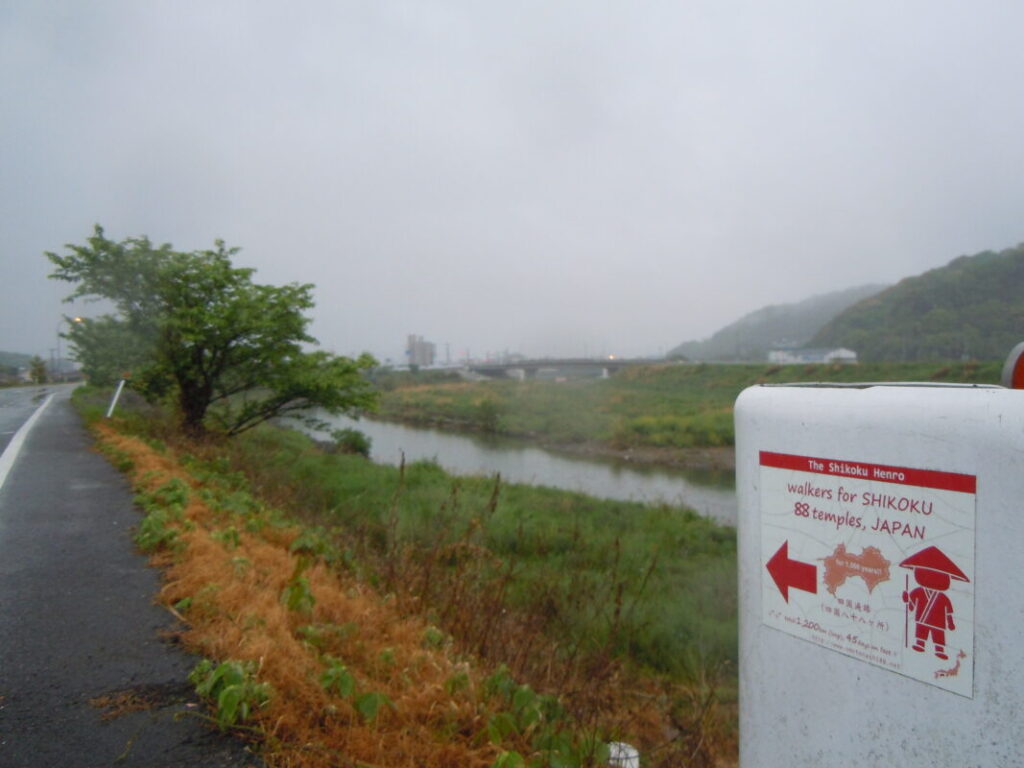
Break at Tsuyugamoto Pilgrim Rest Area
Heading south along National Route 55, I crossed a large bridge.
Right after crossing it, I spotted a small rest area and instinctively rushed in.
I still had enough energy, but being completely soaked made me want to take a break.
Even though I was wearing a raincoat, the steady downpour since morning had slowly seeped through. Before I knew it, even my white pilgrimage clothing was drenched. My shoes were completely soaked as well—I could feel water pooling inside with every step.
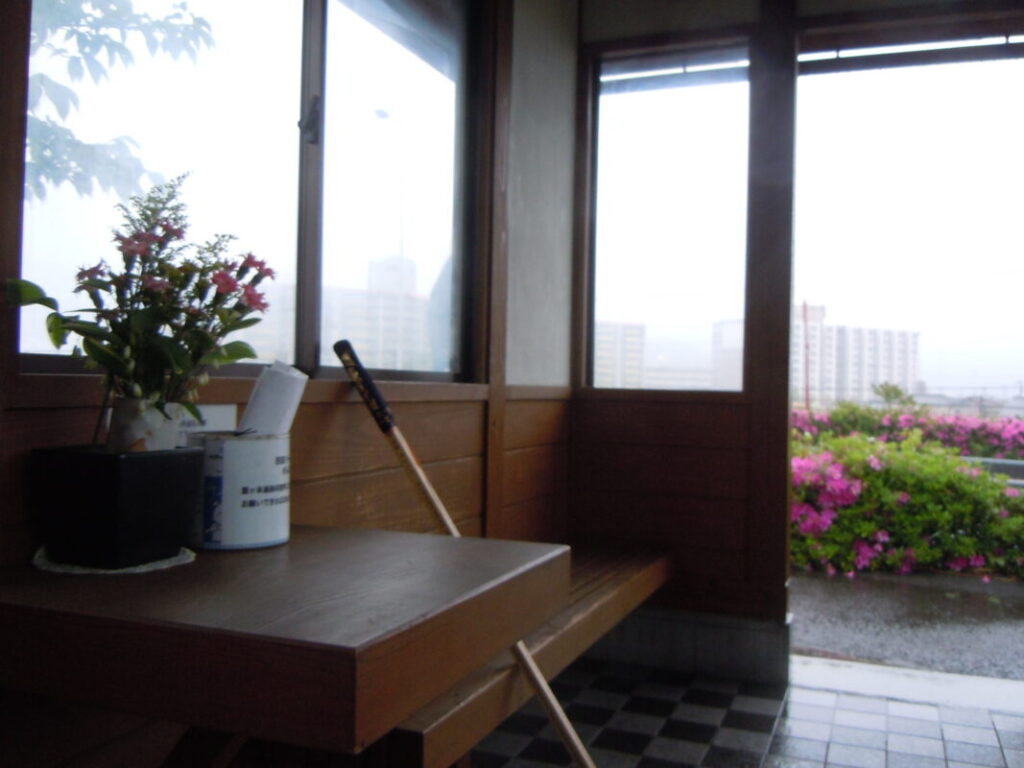
A Strange Moment I Experienced in the Rain
The rain grew heavier, and the wind began to pick up. I walked with my head slightly lowered, trying to keep my hat from being blown away. My mind was filled with negative thoughts: “This is uncomfortable,” “This is tough,” and “My feet hurt.”
Then I noticed another pilgrim walking ahead of me. He was wearing a sedge hat with a clear plastic bag over it, with a hole cut out for his face. The scene looked almost like a moment from a Hiroshige or Hokusai woodblock print depicting rain.
I suddenly had a strange feeling.
“He has become one with nature.”
He didn’t seem to be fighting against the rain. Instead, he seemed to simply accept the conditions and keep walking.
About ten minutes later, something strange happened. The negative thoughts that had filled my mind just disappeared.
All I could hear was the steady sound of the rain and the tapping of my walking stick. Without realizing it, the tension in my face had also disappeared. I simply kept walking, feeling the drops of rain running down my face.
Perhaps that pilgrim had given me a small lesson without saying a word.
For a brief moment, I found myself in a state of mind I had never experienced before.
8:50 AM: Arrived at Temple 18, Onzanji
Onzanji is located at an elevation of about 80 meters, and just before reaching the temple, there is a steep slope to climb.
These short but sharp inclines appear frequently along the pilgrimage route, and each one quietly wears you down.
“Another hill…” I found myself muttering.
I arrived later than planned. The heavy rain and the pain in my feet made it difficult to keep up the pace.
I reminded myself not to push too hard, but I couldn’t help wondering if I would be able to reach my goal for the day—Tairyuji—at this rate.
It was starting to feel tough.
Route from Temple 18 (Onzanji) to Temple 19 (Tatsueji)
The distance from Onzanji to Tatsueji is about 4 km. You simply head south, following the waymarkers along the route.
Under normal conditions, it’s a relatively flat and easy walk. However, the rain and wind grew stronger, turning it into almost typhoon-like conditions.
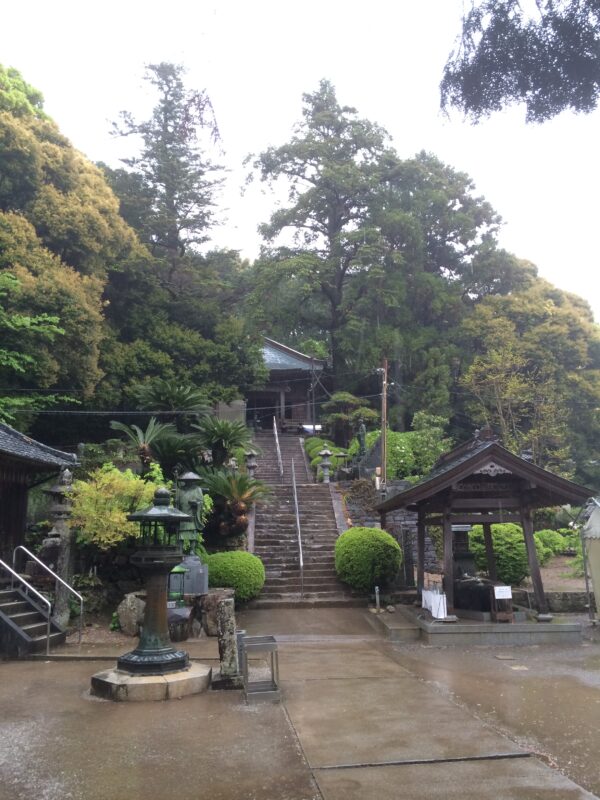
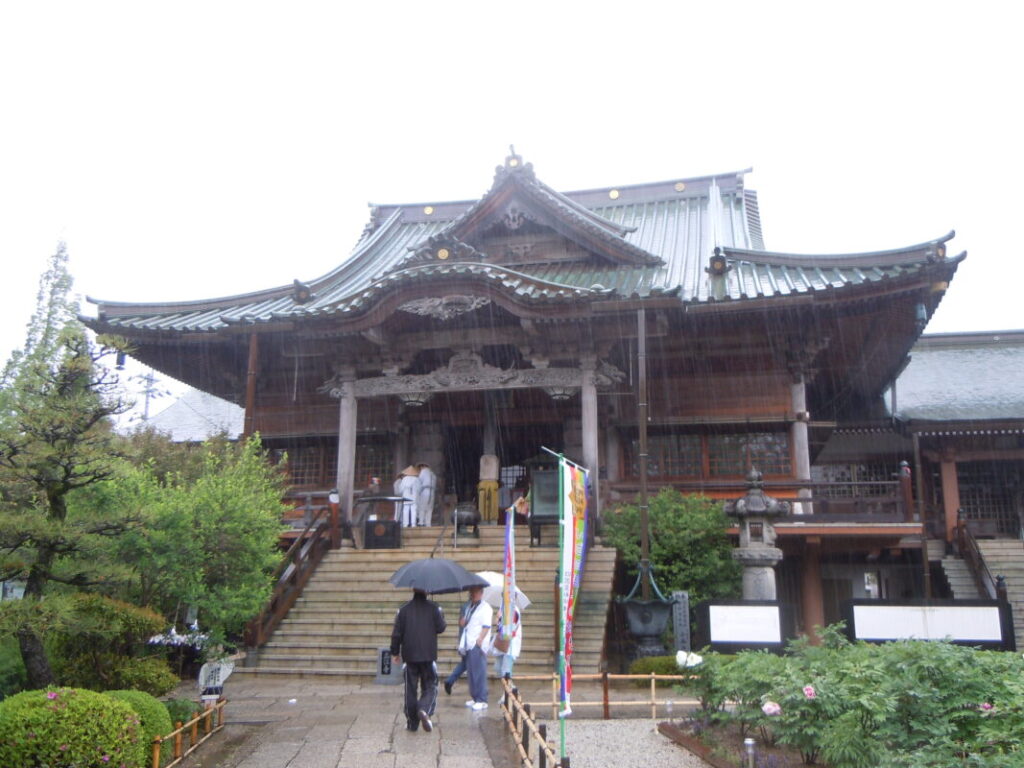
Along the way, I found a container-style rest shelter and decided to take a break there for a while to wait out the rain.
Pausing at a Rain Shelter: The Moment of Doubt—Go or Stop
The time was 10:20 a.m. I wiped down my soaked body with a towel and finally began to calm down.
The dirt floor of the shelter was marked with wet footprints—clear signs that other pilgrims had stopped here before me.
While eating a sweet bread I had bought at a convenience store, I spread out my map and reconsidered my plan.
Crossing the mountains today might be too difficult. Should I stay overnight at the base? Or stop here for the day?
At the same time, thinking about my overall goal for this section—to reach Cape Muroto—made it hard to justify stopping now.
Even as I hesitated, time kept passing.
After going back and forth, I made my decision:
“I’ll go as far as I can.”
So I started walking again.
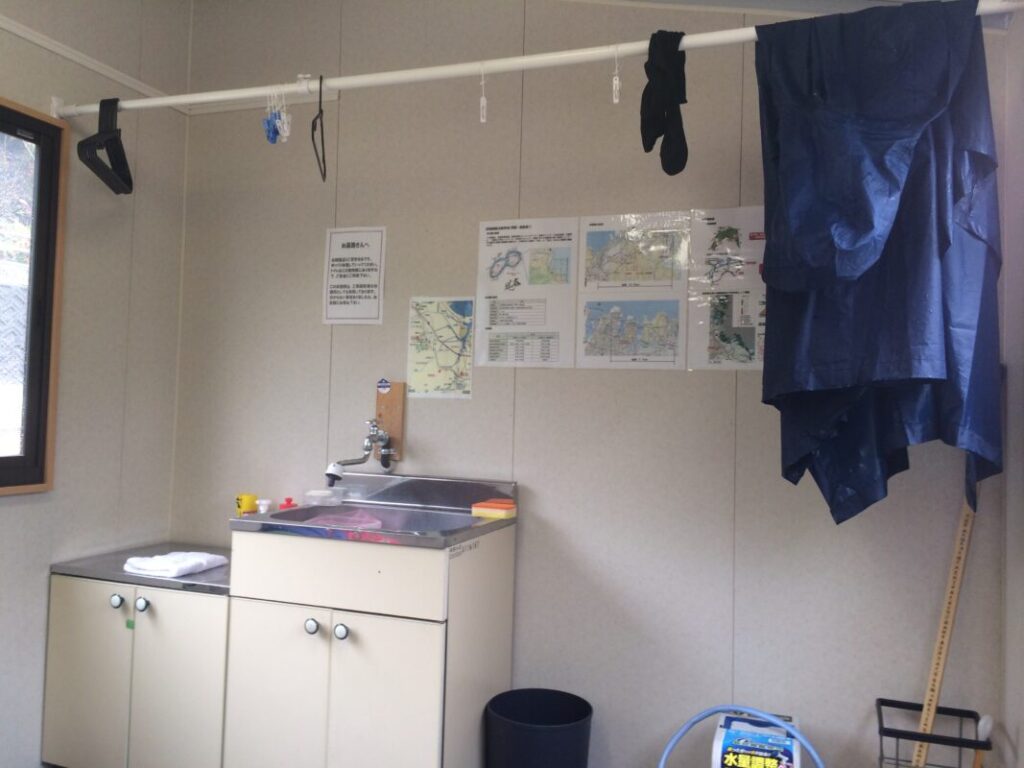
10:40 AM: Arrived at Temple 19, Tatsueji — Praying in the Rain
Worshipping in the rain was far more difficult than I had imagined.
Each time I handled my offering slips with wet hands, they became soaked again.
Even under the eaves, the wind drove the rain in, and my body gradually became wetter.
I opened my waist pouch to look for candles and a lighter.
Even that simple action felt frustrating in my haste.
Calm down.
I told myself.
Route from Temple 19 (Tatsueji) to Temple 20 (Kakurinji)
The route from Tatsueji to Kakurinji is about 13 km.
First, head southwest until you reach the Katsura River. From there, follow the river for about 4 km, where you will find the entrance to the pilgrimage trail. From that point, the route turns into a mountain path, climbing about 500 meters.
Before entering the mountain trail, you’ll pass a roadside station called “Hinanosato Katsura.” It’s a good place to stock up on food and use the restroom before heading into the mountains.
The Reason to Keep Going: Determined to Reach Cape Muroto
At a rest stop along the way, I saw many pairs of shoes and kongō-zue (pilgrimage staffs) lined up.
It was 2:30 p.m.
Everyone was resting. They had probably given up on reaching Kakurinji for the day.
For a moment, the thought crossed my mind—maybe I should rest too.
But no… I can still walk.
I passed by them and kept moving forward.
Entering the Mountain Path to Kakurinji
At last, I stepped onto the mountain trail leading to Kakurinji.
Standing in the pouring rain and looking up at the mountain, a thought crossed my mind:
What if a landslide happens?
A sense of unease briefly entered my mind.
But I pushed it aside and continued into the mountains.
Because of the rain since the previous day, the trail had turned into a flowing stream.
In some places, it even looked like a small waterfall.
Even with trekking shoes, one careless step could cause a slip.
I carefully watched my footing and climbed slowly, one step at a time.
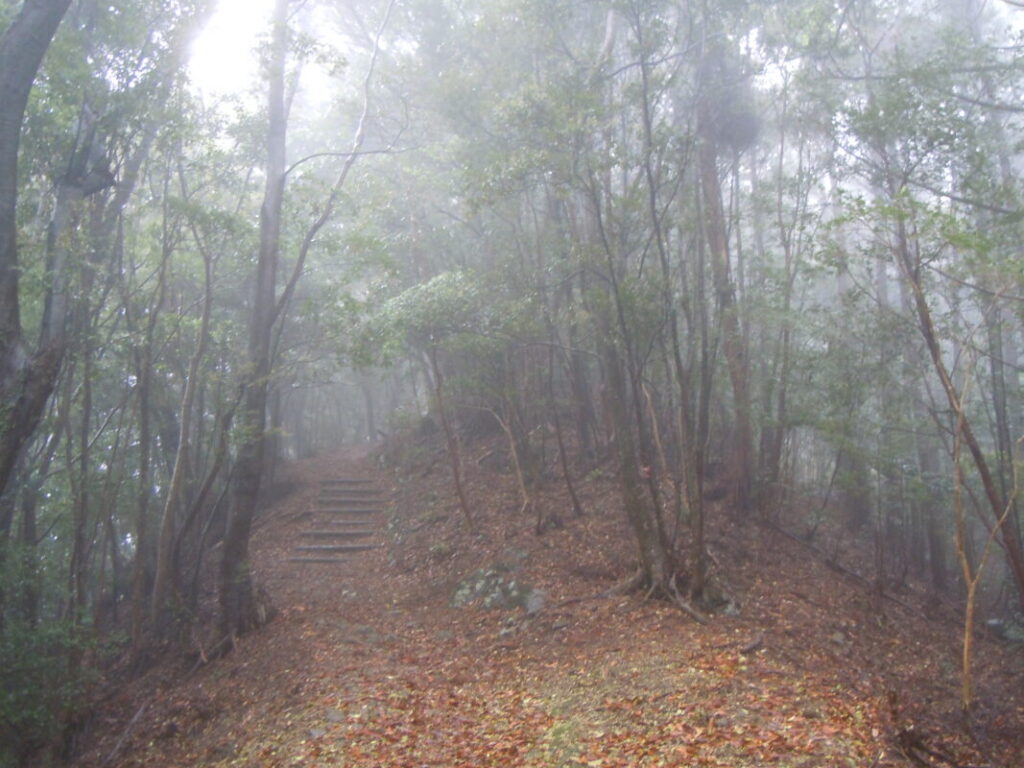
As I climbed higher, fog started to surround the trail, and visibility gradually worsened.
I paid close attention not to miss any waymarkers.
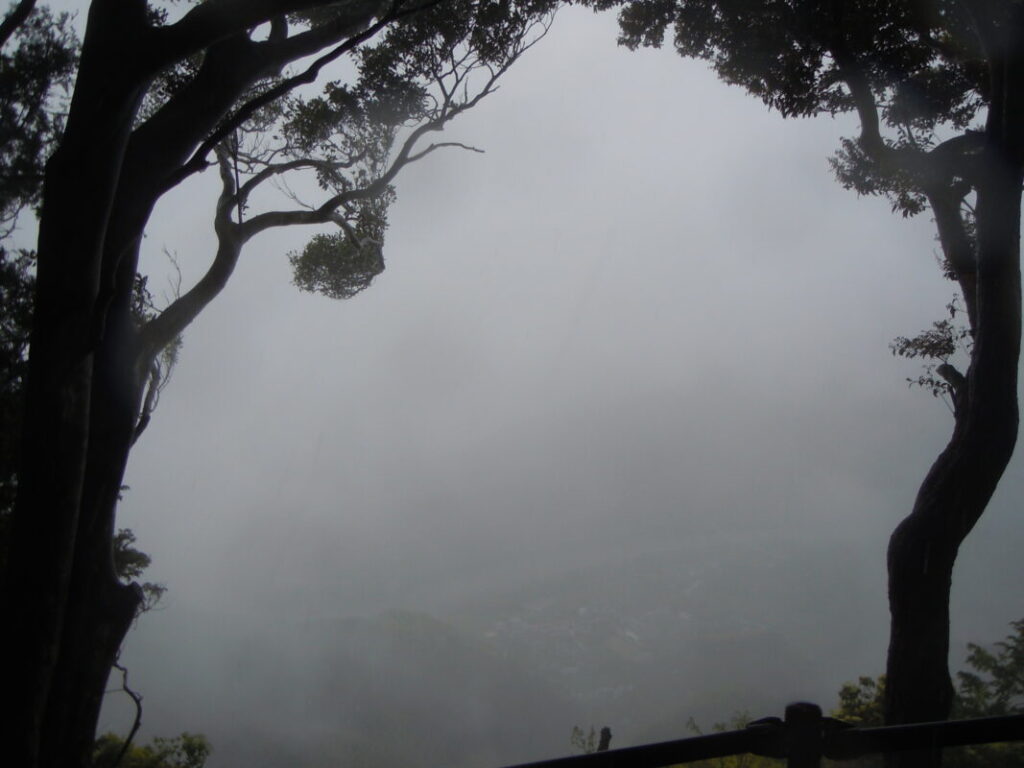
Eventually, I reached an open area. Normally, I should have been able to see the town below, but it was completely hidden in the fog.
With the heavy rain, I couldn’t even sit down to rest.
I would stop briefly, then start walking again—repeating this over and over as I slowly made my way upward.
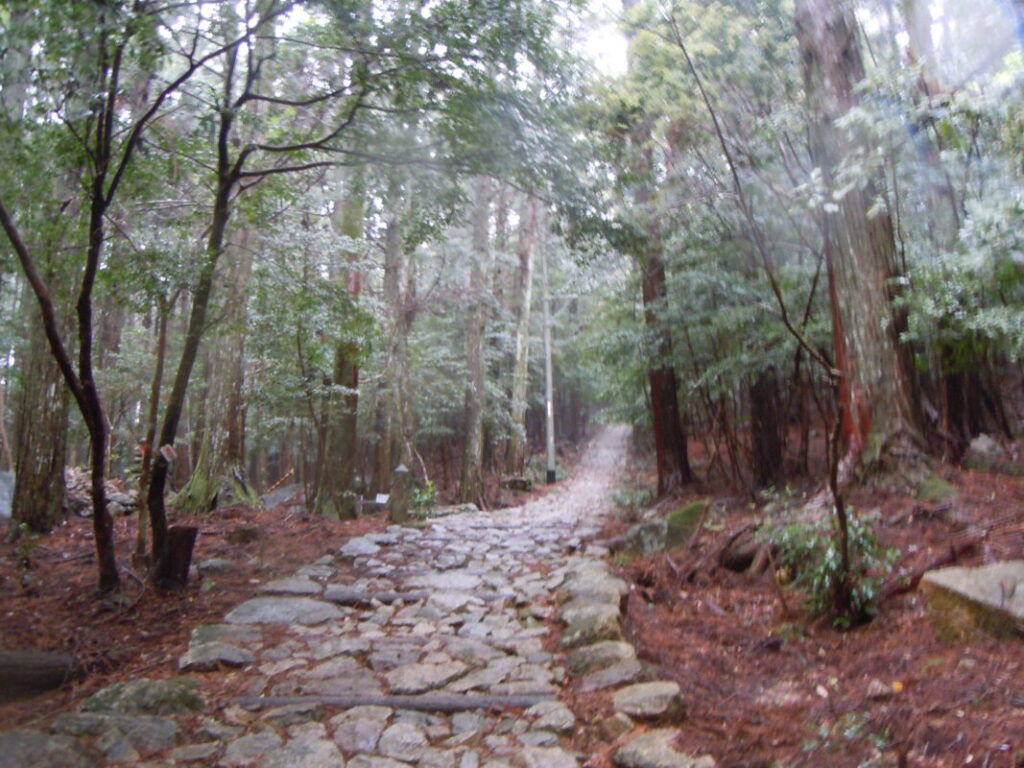
There were also sections paved with stone.
They reduce the strain of uneven ground, but when wet, they become slippery and require extra caution.
3:30 PM: Arrived at Temple 20, Kakurinji
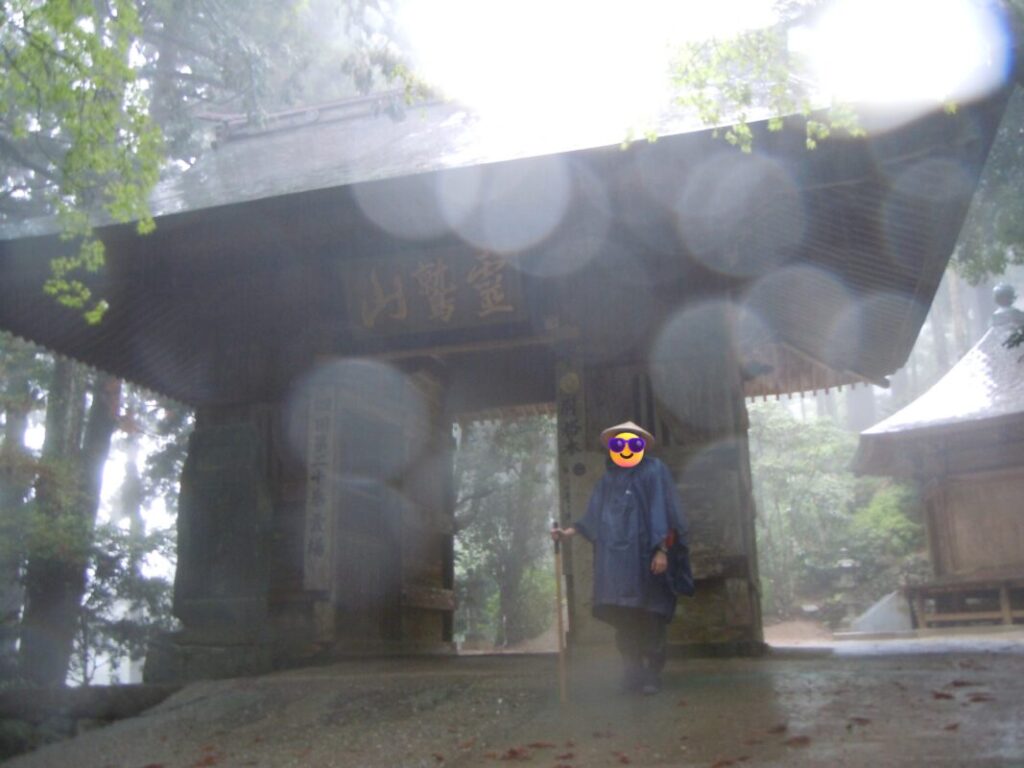
In the continuing rain, I found myself the only visitor there.
No Lodging—The Only Option Is to Go Down
I had walked about 26 km that day.
Since leaving at 5:30 a.m., I had spent nearly 10 hours walking continuously in the rain, and had already climbed a mountain with an elevation gain of about 500 meters.
The moment I finished praying, the tension I had been holding onto suddenly released, and exhaustion hit me all at once.
Now, what should I do?
At the temple office, I asked—half expecting the answer:
“Is the temple lodging available?”
“No, it’s not. There are a few inns at the foot of the mountain. Would you like me to call a taxi?”
That answer made my decision clear.
—I have no choice but to go down.
“Thank you.”
I expressed my gratitude and received my goshuin book.
To head from Kakurinji to Tairyuji, I first needed to descend about 450 meters into the Naka River valley.
There might be a few places there where I could camp, but whether they would offer shelter from the heavy rain was uncertain.
Still, that was the only option.
At that moment, that was the decision I made.
I put on my rain gear, tightened the cord of my sedge hat, and prepared to set off again.
Heading for Oi Rest Area: Camping in the Rain
Pushing Past My Limits on a Rainy Mountain Trail — Entering a “Flow State”
Descending a mountain trail in the rain is especially dangerous.
Although the tension had briefly eased at the summit, I tightened my focus once again.
In many places, the stone steps had turned into small streams.
I needed to reach a safe place as quickly as possible.
They say that when people are pushed to their limits, something inside them switches.
At that moment, I felt like I had reached that point.
I entered a level of concentration I had never experienced before.
Even on the complex mountain slopes, I could instantly tell where to place my feet and where to plant my staff.
Normally, these steep, slippery paths would require slow and careful descent.
But somehow, my body kept moving forward, almost as if driven by something beyond my control.
Despite having walked all day, I barely felt any fatigue.
In that unexplainable state, I descended the mountain at an incredible pace.
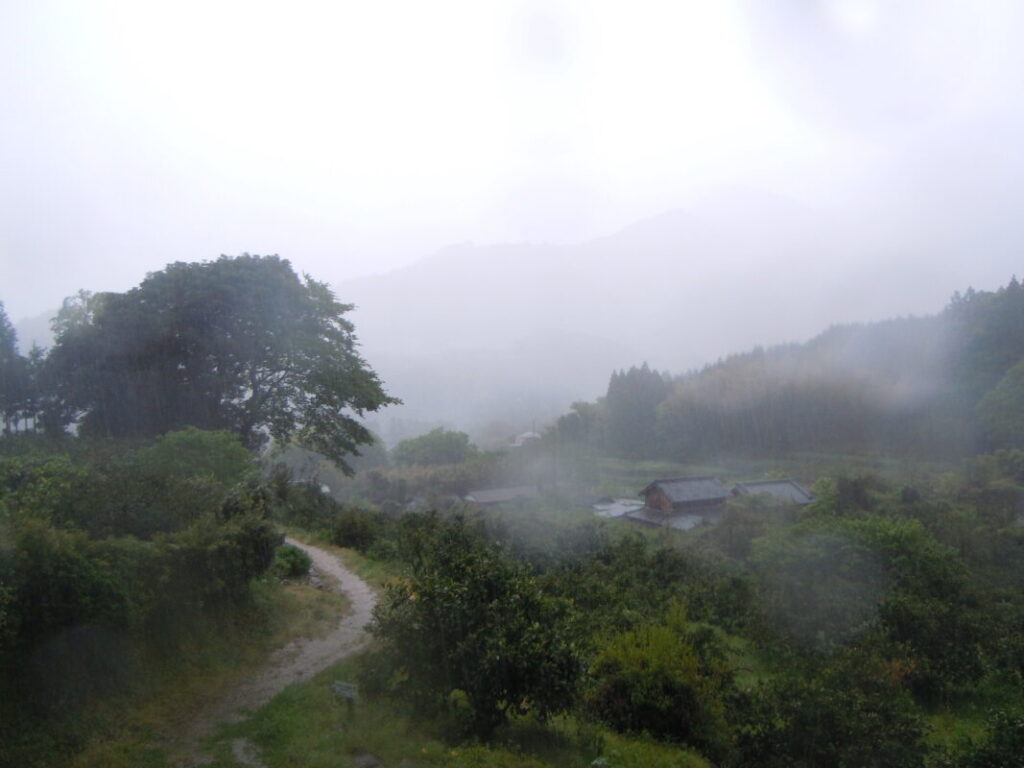
Before I knew it, I had reached the Naka River valley.
When I looked back, the mountain I had just come down stood tall, wrapped in mist.
Holding back a surge of excitement, I stood there for a while in the rain, quietly gazing at it.
5:00 PM: Arrived at Oi Rest Area
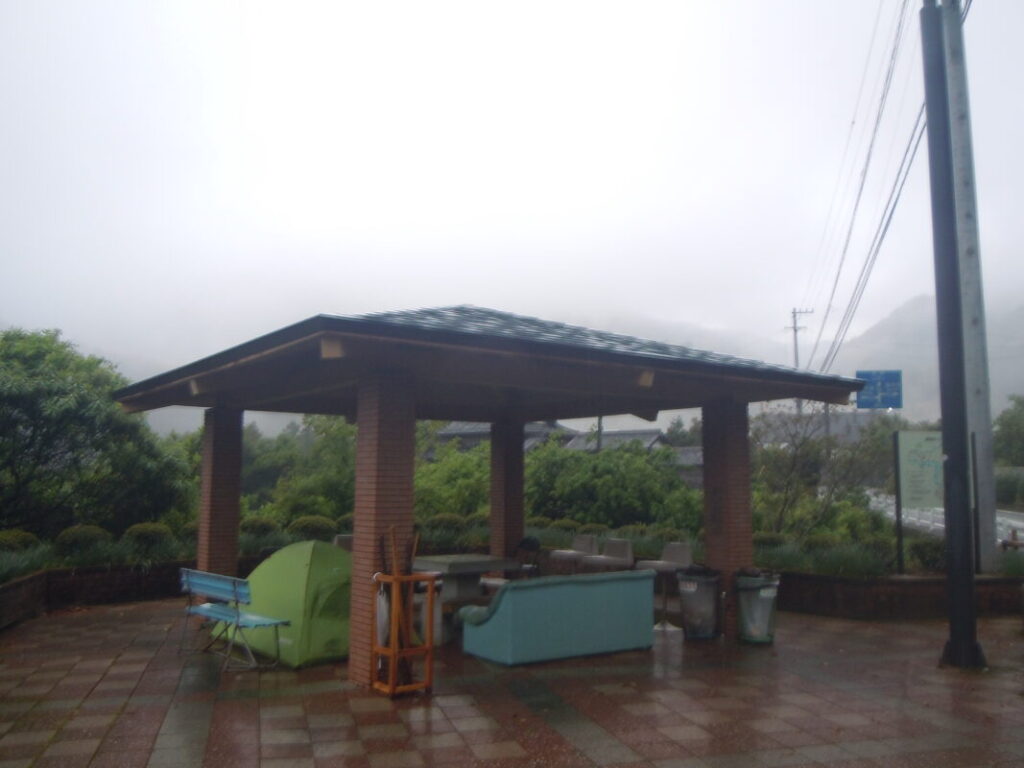
Oi Rest Area was a pavilion with a large roof. There was also a restroom nearby, so it was suitable for camping.
However, since there were fixed tables and benches, the space for pitching a tent was limited to the corners.
After descending the mountain all at once, the tension left my body completely.
I couldn’t move anymore. I had no choice but to camp here for the night.
When I took off my raincoat, everything underneath—my white pilgrimage clothing and even my underwear—was completely soaked.
When I removed my socks, my feet were waterlogged, pale and wrinkled, to the point where it was hard to tell blisters from skin.
While it was still light, I planned for the next day.
I took out my map from my bag—parts of it were already wet from the rain, so I handled it carefully to avoid tearing it.
Tomorrow, I would head first thing in the morning to Tairyuji, at an elevation of about 520 meters.
I needed to recover my strength.
With that in mind, I looked toward the direction of Tairyuji.
The rain showed no sign of stopping.
A Night of Food Shortage: The Value of a Single Candy
After a while, once I had settled down, hunger suddenly hit me.
That’s when I realized—I had almost no food left.
I had passed convenience stores along the way, but in my haste, I had missed the chance to stop and buy anything.
Of course, there were no restaurants or stores nearby.
Tomorrow morning, I would have to climb a mountain of about 520 meters—would I have enough energy?
I searched through my bag and found a few candies and chocolates I had received as osettai (kind offerings) along the way.
That would have to be my dinner.
The candy I put in my mouth tasted better than ever.
As I ate, I naturally remembered the people who had given them to me and the moments when I received them.
“Thank you.”
The words of gratitude came to me quietly, from the heart.
Then, I found a canned CalorieMate that I had bought at Shosanji.
I decided to save it for tomorrow—for the moment when I would need it most at Tairyuji.
Midnight Siren — Trapped in the Mountains, Unable to Move
In the pitch darkness of the night, a siren suddenly echoed through the mountains, jolting me awake.
“What’s going on?”
I checked the time—it was around 11:00 PM.
It was likely a dam discharge warning due to the heavy rain.
A wave of anxiety hit me—Is it safe to stay here?
But I had no idea where I could evacuate to.
Trying to move through the mountains in these conditions would be even more dangerous.
I didn’t know what the right decision was.
All I could do was close my eyes and try to recover my strength for what lay ahead.
Temple Information
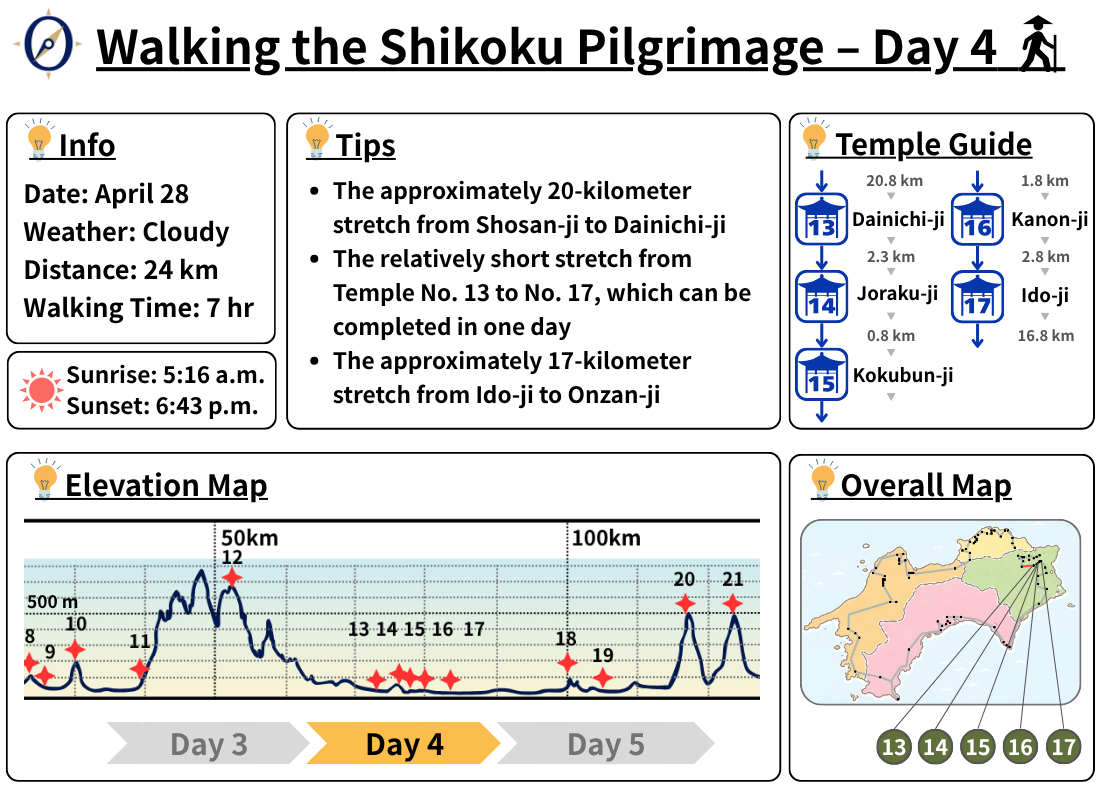
- No. 18
- No. 19
- No. 20
- No. 21
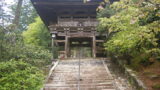
Temple No. 19, Tatsue-ji Guide
Summary
Day 5 of my walking pilgrimage turned out to be the most physically demanding day so far.
- Long-distance walking in heavy rain (about 30 km)
- One of the toughest sections, known as Henro Korogashi (Kakurinji to Tairyuji)
- Camping overnight with very limited food
Pilgrimage in the rain tests not only your physical strength, but also your judgment and decision-making.
At the same time, it’s true that only in such extreme conditions can you experience certain realizations and states of mind.
If you’re planning to take on a walking pilgrimage, I strongly recommend pacing yourself and putting safety first when creating your plan.
Comments