
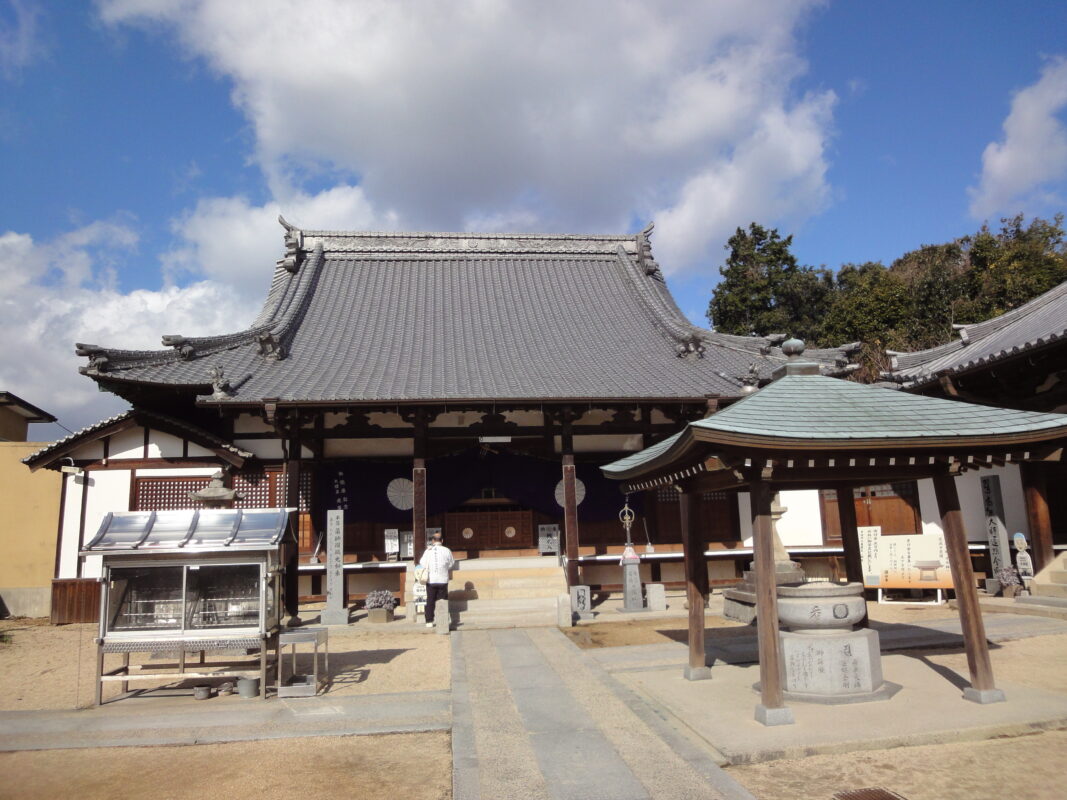
Kokubunji Temple Information
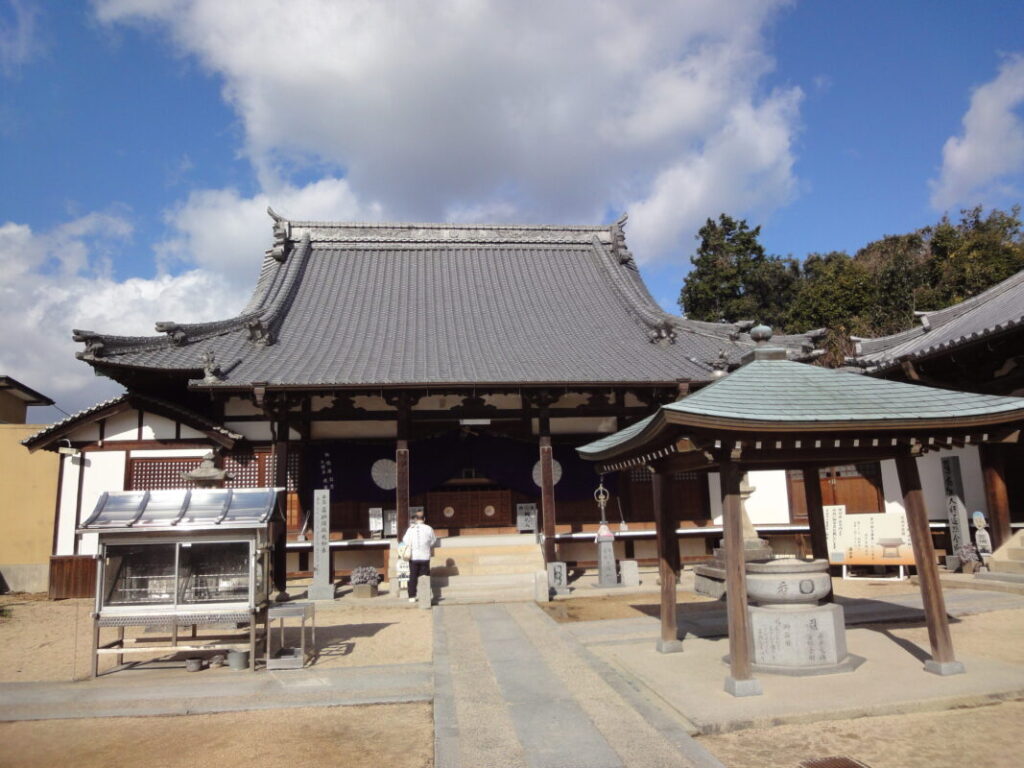
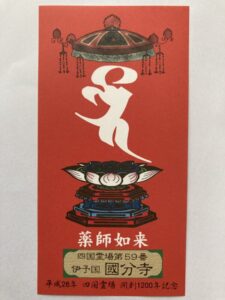
Goshuin
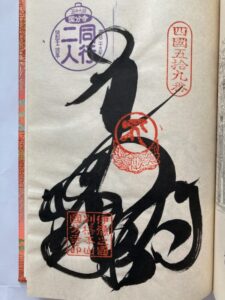
- Omie
- 1,200th Anniversary Edition
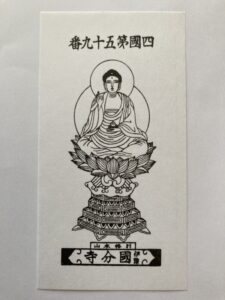
Basic Information
| Principal Deity | Yakushi Nyorai |
| Elevation | 10 m |
| Google Maps | MAP |
Accommodation
| Shukubo (Temple Lodging) | Not Available |
| Tsuyado (Free Pilgrim Shelter) | Not Available |
History & Highlights
Kokubunji is said to have been founded by Gyōki under an imperial decree issued by Emperor Shōmu and served as the central provincial temple of ancient Iyo Province. Although it declined after repeated wars and fires, the temple was later restored. Today, it remains a historically significant pilgrimage site, preserving cultural treasures and the ruins of the original Iyo Kokubunji, which continue to tell the story of its ancient past.
Notes
Parking fee: ¥200
Route Map, Distance & Travel Time
You can switch between the tabs to view the routes to the previous and next temples.
Select “Driving Route” from the map’s upper-left menu to display the driving route.
Click the Full Screen icon in the upper-right corner of the map to open it in Google Maps for a larger, easier-to-view map.
- From Previous Temple
- To Next Temple
Previous Temple: Senyuji
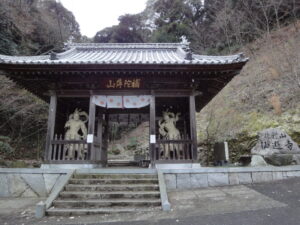
| Distance | 6.1 km |
| Walking | 1 hr 45 min |
| Driving | 30 min |
Next Temple: Yokomineji
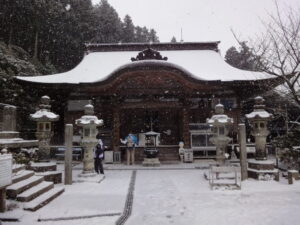
| Distance | 27 km |
| Walking | 10 hr |
| Driving | 1 hr 30 min |
Transportation Guide
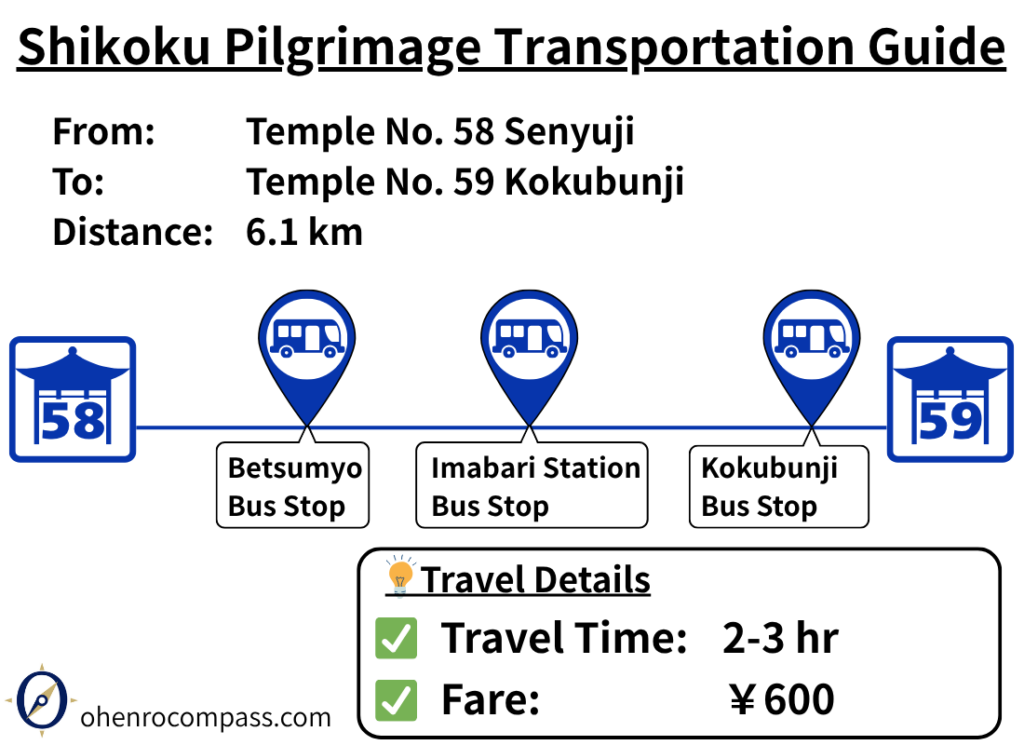
Travel from Senyuji (58th Temple) to Kokubunji (59th Temple) by bus in about 2–3 hours for ¥600. Includes bus stops, transfers, timetables and a comparison with walking.
My Walking Experience
Kokubunji is located about 6 km (3.7 miles) northeast of Senyuji. After descending from the mountain temple, the route changes dramatically into a peaceful countryside landscape, making this a varied and enjoyable section of the pilgrimage.
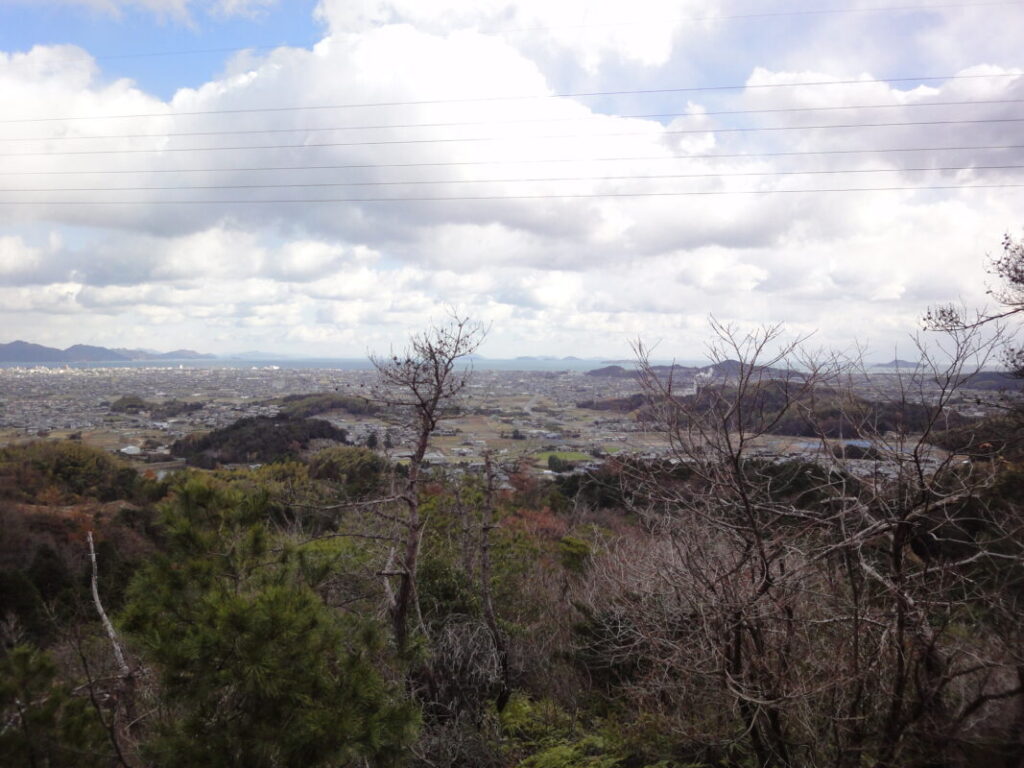
The walk begins with a descent from Senyuji. Near the temple gate, there is a pilgrimage trail that cuts through the forest and provides a shorter route than the road. Along the way, several open viewpoints offer beautiful views of the town below and the islands scattered across the Seto Inland Sea in the distance.
When I was climbing toward Senyuji earlier that day, hail was falling and the sky was covered with dark storm clouds. By the time I was walking toward Kokubunji, however, the weather had completely changed. The clouds gradually cleared, and warm sunshine returned.
After leaving the mountain trail, continue straight for about 2 km (1.2 miles) toward Iyo-Tomita Station. After crossing the railway crossing near the station and heading south, signs for Kokubunji begin to appear.
Highlights of Kokubunji
One of the most unusual features of Kokubunji is a statue of Kūkai (Kōbō Daishi) with which visitors can shake hands. Opportunities to shake hands with Kōbō Daishi are certainly rare, so I made sure to do so myself.
The temple’s chōzuya (purification pavilion) is also particularly distinctive. Water flows from a vessel modeled after the medicine jar carried by Yakushi Nyorai, the Medicine Buddha. Compared with the more traditional designs found at many temples, it has a stylish and refined appearance that blends religious symbolism with thoughtful design.
On the eastern side of the temple grounds are the remains of the Iyo Provincial Temple (Iyo Kokubunji) from the Nara period. The massive foundation stones that remain today give visitors a sense of the scale and grandeur of the original temple complex that once stood here.
Nearby Accommodation
If you plan to stay near Kokubunji or between the surrounding pilgrimage temples, see the article below.
Related Articles
Shikoku 88 Temple Pilgrimage Route: Full List, Distance & Walking Time Guide.
Temple List and Full Route
Why Do Some Temples Have the Same Name on the Shikoku Pilgrimage?
Why Do Temples Have the Same Name?
Comments